Cotton

Cotton image 4

Cotton ~ A Short Story by Allen Kopp 

There were five of us: me, a brother and three sisters. When we were old enough, we were taken away one after the other. I think my mother was a little glad to see us go. She was getting old and wanted only to lie in the sun and take uninterrupted naps.

As with all of us, a big one came to get me. He smelled funny but he handled me gently as he put me into a carrier and closed the door. I cried a little and pulled at the door with my paws but I knew it wouldn’t do any good—I wouldn’t be let out again until I was in my new home.

The car ride made me sleepy and made me forget that I had to pee. I had ridden in a car before on a couple of different occasions and I knew how it either makes you want to throw up or go to sleep. I curled up in a tight ball, making myself as small as I could, and went to sleep.

The car went a long, long way from where we started but finally it came to a stop. When the big one got out, I stood up in anticipation of being let out. I was knocked off my feet again, though, when he picked up the carrier, carried it inside the house and set it down on the floor. (A rough but short ride.) Right away I smelled all kinds of awful smells that I couldn’t identify. Was it the smell of another cat? My heart started to pound. All I wanted was to go back to the safety of my mother.

When the big one saw I didn’t want to come out of the carrier, he stuck his big hairless, pink face through the door and spoke the terrifying language that to me sounded like a dog barking. I crouched down and backed up into the corner.

He upended the carrier—I tried holding on but there was nothing to hold to—and I went sliding out against my will. I stood up and took a few steps, stretched my muscles and licked my paw. The big one seemed to approve.

Just then a different big one, a “she” big one, came out of nowhere and scared me with her loud voice. I started to run for cover but she scooped me up in her paws. Now, I have to tell you it’s an odd sensation to be picked up by something fifty times bigger than you are. I meowed a couple of times to let her know I didn’t like what she was doing to me, but she nuzzled me and started scratching my neck and ears. In spite of the bad smells that made me want to gag, I began to purr a little.

The “he” big one said something to the “she” and they both made that hideous sound that I was to recognize later as laughter. They gave me some water out of a little red bowl and, after I took a good long drink, I was directed to the litter box, which I was very glad to see. I scratched in the box for a few seconds, sat on my haunches, made a tiny wet spot and covered it up so it didn’t show.

The two big ones began playing with me, even though I was in no mood. They had a toy mouse on a string that they dangled in front of my face. I thought I smelled another cat on the toy mouse, but I obliged them anyway by batting at it with my paw and trying to catch it in my mouth. After they tired of this game, they gave me some food, which I was barely able to eat because it didn’t smell like anything I had ever eaten before. I guess I was still too nervous to eat, anyway.

Later on they left me alone to do some exploring on my own. I went into the next room and then the room after that. I jumped up on a big table but there was nothing there that interested me so I jumped down. I walked the length of the couch and the chairs in the living room, exploring every inch of the stinky fabric; I stuck my paws in the dirt of some plants and then I climbed on the TV. I crawled under the couch and came out with dust stuck in my whiskers that caused me to sneeze. I jumped onto the counter in the kitchen, nosed into the sink and took a couple of licks out of a greasy skillet on the stove.

I went into the bedroom, which seemed to be the best room of all. The bed was soft with enough room for a hundred cats like me. As good as the top of the bed was, the underside was even better. It was dark and there were some boxes and things that offered complete concealment from any dangers that might still be lurking. I was thinking it would make a good place for a nap when Finley jumped out at me and scared me so bad I jumped sideways and took a few spider-like steps backwards. The fur ruffled up on my back and my tail puffed out to three times its normal size.

Finley was a young cat, not quite full grown, but bigger than me. He was a long-haired cat that made him seem bigger than he was and he had a mane like a lion. He let out a couple of guttural meows that to me sounded like war cries and came running toward me. I wouldn’t let him get near me, though. I ran into the other room with him chasing me. I didn’t know if he was going to kill me or just hurt me.

I dove under the couch and I knew right away it was a smart move because Finley wouldn’t fit. He could see me, though, and he knew I wasn’t going anywhere and that if I came out he would know it. Every now and then he stuck his paw under to try to grab at me, but I pulled away out of his reach.

I discovered then that Finley was the most patient cat in the world. He stood guard there, stalking me, for the rest of the day and most of the night. I was hungry and thirsty and I had to use the litter box, but I was still too scared to come out. When the big one tried to coax me out by shining a flashlight in my face, I just ignored him.

Finally, in the morning, with the big one there to keep Finley at bay, I came out. The big one picked me up and set me on the table in the kitchen to feed me. He spooned some food into a bowl and I began eating. When Finley, who knew everything that was going on, realized I was eating what he thought of as his food, he tried to get at me to push me away. The big one had to make him stay away from me so I could eat. (That’s when I learned how to eat and growl threateningly at the same time.) After I ate, I had a good drink of water and a satisfying couple of minutes in the litter box, while the “she” big one held Finley in her arms and whispered in his ear.

After a couple of days I was feeling more courageous and I stood up to Finley, nose to nose. Instead of hurting me, as I thought he was going to do, he licked me on the face and head. I guess I discovered then that he wasn’t as bad as I thought he was going to be. What I thought at first was meanness and aggression was more curiosity and playfulness, with just a little jealousy thrown in.

I was still leery of him for a week or so, keeping my distance and hiding from him if I found him a little too overbearing, but I began to get used to him after a while. If he wants the spot on the couch that I’ve made warm, he makes no qualms about trying to take it from me, but more often than not I’m willing to move to another spot and let him have it.

Cold weather was coming on. Cats, as you probably know, are always looking for extra warmth. Finley makes a really good sleeping partner. Not only is he warm, but he has the softest fur I’ve ever felt. Sometimes we sleep head to head or cheek to cheek or crossed over each other like a couple of earthworms. Sometimes I use his belly for a pillow or he uses mine. When winter comes and the nights are really cold, the big one lets us sleep under the covers with him in the bed. There is no warmer place in the house.

Finley and I are now inseparable friends. We play together a lot and keep each other company. We’re a lot alike but also a lot different. Sometimes we eat together out of the same bowl, but most of the time he lets me eat first before he eats. If anybody ever knocks on the door, I run and hide but Finley stays right there to find out what is going on. When we both are taken to the doctor at the same time, I’m still scared but not as scared as I would be if Finley wasn’t with me. When I hiss, he hisses, like two parts of the same hissing machine.

Copyright © 2014 by Allen Kopp

A Journal of the Plague Year ~ A Capsule Book Review

A Journal of the Plague Year cover

A Journal of the Plague Year ~ A Capsule Book Review by Allen Kopp

English author Daniel Defoe (1660-1731) was a literary late bloomer. He wrote his three famous novels (Robinson Crusoe, Moll Flanders and A Journal of the Plague Year) after the age of sixty. A Journal of the Plague Year was first published in 1722 and is an account of the London plague epidemic in 1665, when Defoe was only five years old.

A Journal of the Plague Year is fiction but is told in first person, as if the narrator is there at the time of the epidemic. The fictional narrator doesn’t leave London when he has the chance when the plague starts, as many sensible people do, but stays behind. He is spared the infection but witnesses firsthand the horrors of the epidemic and lives to tell about them. Defoe supposedly drew on the journals of his uncle, one Henry Foe, in writing the novel. That is obviously what gives the story its sense of authenticity and immediacy.

People can have the plague and not even know it, so are spreading it to everybody they come into contact with. Is it airborne or does it come about only through contact with an infected person? In 1665, nobody seemed to know for sure. Those who have someplace to go outside the city leave before the epidemic takes hold. It’s mostly the poor people who have to stay behind, so they are the principal victims.

So many people are dying during the height of the epidemic that the niceties of burying the dead in coffins are dispensed with. With a thousand or more people dying a day, “dead-carts” are dispatched to round up the dead and dump them into a huge pit. The only requirement for the pits is that the dead be buried at least six feet deep. As the lucky people who collect the bodies sicken and die themselves, new people have to be found all the time to fill the job. (It sounds even worse than a job as a technical writer for a restaurant chain.)

As with any human tragedy, there are stories of heroism and sacrifice along with the stories of opportunism and charlatanism. Quack doctors prey on the poor and uneducated, selling them fake “medicines” that are supposed to be a surefire remedy against the plague. Houses of the sick are ransacked by thieves. Unscrupulous “nurses” murder the sick people they have been hired to care for. Infected people willingly spread the disease to those they know are uninfected. On the other hand, caring people risk their own lives to stay behind and care for the sick in the “pest houses.” Charities are set up that provide food and necessities to the poor to see them through the epidemic.

There isn’t much plot or story to A Journal of the Plague Year, but that doesn’t mean it’s dull reading. A plague epidemic in a large seventeenth-century city is dramatic enough without much embellishment. Once you get used to the old style of sentence structure, it’s a fascinating reading experience. I bought a paperback of the novel when I was in college for sixty cents (new, not used—so you know how long ago that was). I read a hundred or so pages of the novel back then but for some reason didn’t finish it. That’s why I undertook to read the entire book (a breezy 240 pages) this summer, and I’m glad I did.

Copyright © 2014 by Allen Kopp

One Hundred Years of Solitude ~ A Capsule Book Review

One Hundred Years of Solitude cover

One Hundred Years of Solitude ~ A Capsule Book Review by Allen Kopp 

The novel One Hundred Years of Solitude was written by Colombian author Gabriel García Márquez (1927-2014), first published in 1967, and translated to English in 1970. It tells the story of seven generations of the Buendía family, whose patriarch, José Arcadio Buendía, founds the town of Macondo (the city of mirrors that will reflect the world around it) in search of a better life. Ursula, José Arcadio Buendía’s wife (and first cousin), lives for 130 years and is a dominant character in the life of the family. (Incest is a recurring theme throughout the novel.)

One Hundred Years of Solitude can be read and enjoyed as merely a chronological sequence of events in the lives of the Buendia family, but it helps to know something of the underlying meaning. Gabriel García Márquez uses a fantastic fictional story as an expression of reality, with myth and history overlapping. Myth serves as a vehicle to transmit history to the reader. For example, the characters in the novel experience the Liberal political reformation of their colonial way of life, the arrival of the railway, the Thousand Days’ War (1899-1902), the corporate hegemony of the “banana company,” the cinema, the automobile, and the massacre of striking workers.

The inevitable and inescapable repetition of history is a dominant theme in One Hundred Years of Solitude. Márquez reiterates the metaphor of history as a circular phenomenon through the repetition of names and characteristics belonging to the Buendía family. The characters are controlled by their pasts and the complexity of time. Throughout the novel the characters are visited by ghosts that are symbols of the past and the haunting nature that the past has over their lives.

Another major theme is solitude. Macondo is in the remote jungles of the Colombian rain forest. The solitude of the town is representative of the colonial period in Latin American history, where outposts and colonies were, for the most part, not interconnected. The Buendías, isolated from the rest of the world, grow increasingly solitary and selfish. With every member of the family living only for himself or herself, they become representative of the aristocratic land-owning elite of that period in Latin American history.

Whether you’re interested in the political and historical implications or not, One Hundred Years of Solitude is still a multi-layered and entertaining story with many interesting characters. (Sometimes the names of the characters are difficult for the reader to keep straight because of the repetition of names.) José Arcadio Buendía and his wife Ursula are parents of José Arcadio, Colonel Aureliano Buendía, and Amaranta. Colonel Aureliano Buendía is a warrior and revolutionary leader. He starts thirty-two unsuccessful wars and fathers seventeen sons by seventeen different women. All of the sons have the name Aureliano with their mothers’ last names. He marries Remedios Moscote while she is still a child; she dies soon after the marriage during her first pregnancy.

Rebeca is the orphaned daughter of Ursula’s cousin who comes to live with the Buendías. She carries the bones of her parents in a bag and eats earth and whitewash off the walls. She eventually marries her adoptive brother José Arcadio and lives a life of seclusion after his death.

Arcadio is José Arcadio’s illegitimate son, a schoolteacher who assumes leadership of Macondo after Colonel Aureliano Buendía leaves. When Liberal forces in Macondo fall, he is shot by a Conservative firing squad.

Aureliano José is the illegitimate son of Colonel Aureliano Buendía. He joins his father in several wars but deserts to return home to Macondo because he believes he is in love with his aunt Amaranta. He is eventually shot to death by a Conservative captain midway through the wars.

Santa Sofía de la Piedad is a beautiful virgin girl who marries Arcadia Buendía. After her husband is executed, the Buendías take her in, along with her children.

Remedios the Beauty is Arcadio and Santa Sofía’s first child. She is so beautiful that several men die of love (or lust) for her. She is so naïve that she is perceived as being mentally retarded. Too beautiful and perhaps too wise for the world, she ascends into the sky one afternoon while folding a white sheet.

José Arcadio Segundo and Aureliano Segundo are twins born to Arcadio and Santa Sofía. José Arcadio Segundo plays a major role in the banana workers’ strike and is the only survivor when the striking workers are massacred. After the massacre, he spends the rest of his days studying the parchments of Melquiades (a history of the family written in Sanskrit, which is mentioned repeatedly throughout the novel) and tutoring the younger Aureliano. (The two twins die at the exact same time.) The twin brother, Aureliano Segundo, marries the beautiful and bitter Fernanda del Carpio and takes as his mistress Petra Cotes. After the long rains (four years, eleven months and two days), his fortune dies up. He begins searching for buried treasure, a pursuit that nearly drives him to insanity. He dies of throat cancer.

Renata Remedios, who is called Meme, is the second child and first daughter of Fernanda and Aureliano Segundo. To placate her mother, she learns to play the clavichord as well as a professional performer. When Meme falls in love with a mechanic named Mauricio Babilonia, her mother has him shot as a chicken thief and sends Meme off to a convent, where, a few months later, she gives birth to Mauricio Babilonia’s child. Her mother, Fernanda, takes the baby (Aureliano) and claims he was a foundling who came delivered in a basket to cover up her daughter’s promiscuity.

José Arcadio II (the only possibly gay character in the novel) is raised by Ursula, who wants him to enter the priesthood and become pope. He studies in Rome but doesn’t become pope. He eventually returns to Macondo and discovers buried treasure, which he wastes on lavish parties and escapades with adolescent boys. He plans to set up his nephew, Aureliano Babilonia, in business but is murdered in his bath by the adolescent boys, who ransack his house and steal his gold.

Amaranta Ursula is the third child of Fernanda and Aureliano. She never knows that the Aureliano Babilonia, the child sent to the Buendía home, is her nephew, the illegitimate child of Meme. Amaranta Ursula and Aureliano Babilonia become best friends in childhood and enter into a passionate affair when they are older, in spite of Amaranta Ursula having a husband, Gaston. Amaranta Ursula has a baby by Aureliano, which is born with a pig’s tail, as was prophesied. This baby, which is eaten by ants (also according to the prophesy), is the last of the Buendía line. As the line dies out, the town of Macondo is destroyed in a hurricane.

One Hundred Years of Solitude has become a classic of world literature and is the most famous work by Nobel Prize-winner Gabriel García Márquez, who died in April 2014 at the age of 87.

Copyright © 2014 by Allen Kopp

The Hundred-Foot Journey ~ A Capsule Movie Review

The Hundred-Foot Journey

The Hundred-Foot Journey ~ A Capsule Movie Review by Allen Kopp 

An Indian family, the Kadams (father, three grown children and two smaller children), are displaced from their home and restaurant business in Mumbai, India, due to political unrest. Traveling in France, looking for a place to call home, they decide to stay in the little French village of Saint-Antonin-Noble-Val after their van breaks down near there. After living in the village for a while, they open a restaurant and call it Maison Mumbai. One of the grown sons in the family, Hassan, will be the chef. Hassan learned everything about being a chef from his deceased mother and is really good at which he does, but how will an ethnic restaurant fare in such an obviously traditional place, especially since right across the road is an established restaurant run by one Madame Mallory (Helen Mirren)?

Right away Madame Mallory is not happy about having an Indian restaurant so near her own establishment. She doesn’t like the music, the bright lights, the gaudy embellishments and the disruption. A sort of war erupts between the two restaurants, with Madame Mallory playing little tricks on the Kadams such as buying up all the crayfish from the market, while the Kadams counter with trying to lure some of Madame Mallory’s customers away. When Maison Mumbai is firebombed and Hassan’s hands are injured in trying to put out the fire, Madame Mallory suspects that one of her employees is behind the incident. She fires him and decides it’s time for her and the Kadams to come to some kind of an arrangement whereby they might all peacefully co-exist.

The Hundred-Foot Journey is about the clash of two cultures and how those cultures might benefit each other by way of a little understanding. The romantic complications are predictable and resolve themselves predictably. Since Hassan is handsome and young, he just has to have a love affair with a pretty French girl, doesn’t he? (The girl is a rival chef, so that adds another dimension to the story.) Toward the end of the story when Madame Mallory and Papa Kadam seem to be drifting toward each other romantically, it’s a little bit cringe-inducing, especially since there seems to be so little chemistry between them.

The accents in The Hundred-Foot Journey are difficult to understand for people who speak American, but if you like European-based “art” films and are a fan of Helen Mirren, you’ll probably enjoy this movie enough to make it worth the time and effort. The food is exotic and pretty to look at, even if you don’t know what it is. What is that purple thing that looks like the bottom half of a bird? Do I eat it or display it on my mantel?

Copyright © 2014 by Allen Kopp

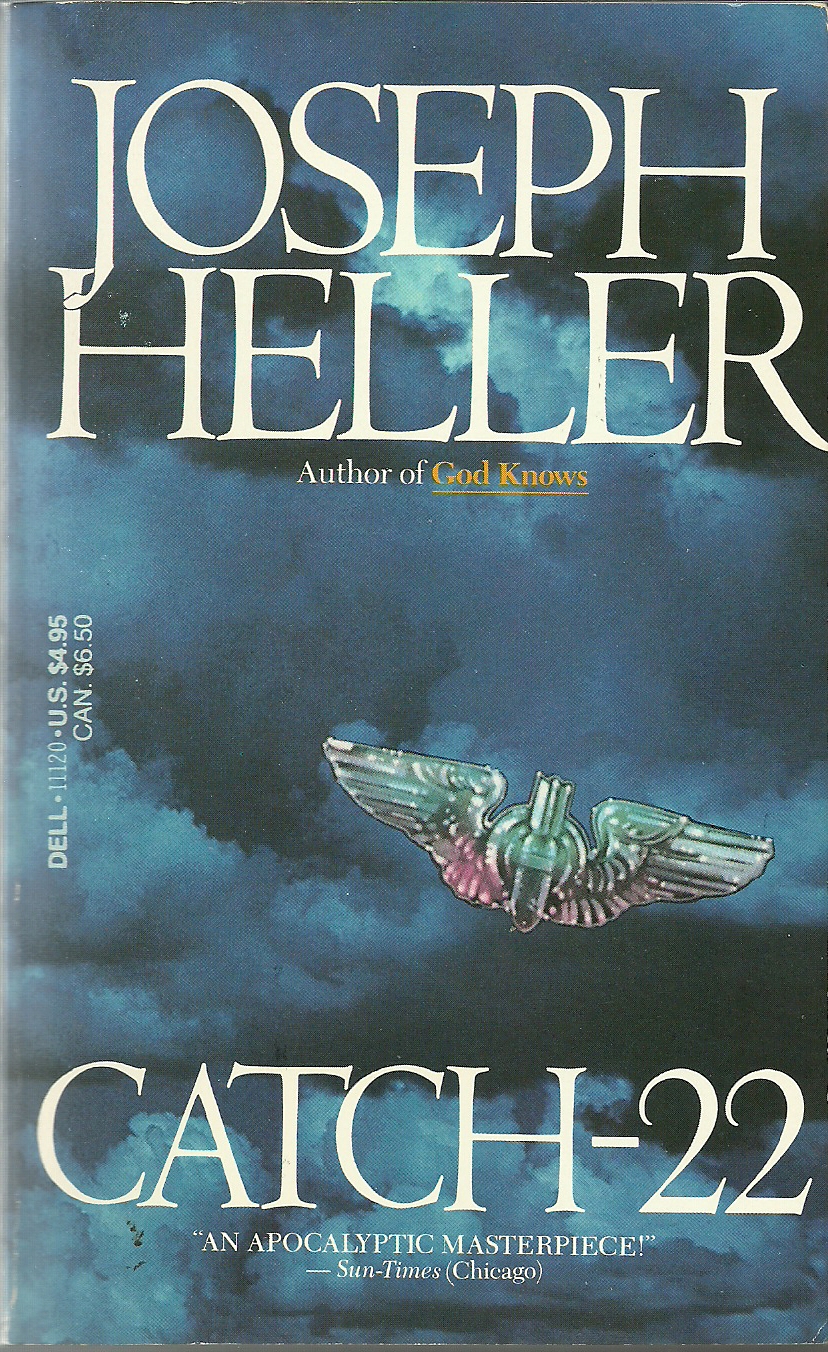
Catch-22 ~ A Capsule Book Review

Catch-22 cover

Catch-22 by Joseph Heller ~ A Capsule Book Review by Allen Kopp 

Catch-22 by Joseph Heller was first published in 1961 and is one of the landmark American novels of the twentieth century, ranking number seven on the Modern Library’s list of the hundred best books in the English language of the twentieth century. It is an irreverent account of one man’s experiences in World War II on the fictional island of Pianosa in the Mediterranean Sea off the coast of Italy.

John Yossarian is a twenty-eight-year-old American bombardier of Assyrian descent who isn’t a hero or a patriot, but is more of an antihero. He seems not to care much about the war or who wins it. He has flown a certain number of bombing missions over Italy to fight the Germans and he believes he has flown enough. He wants nothing more than to survive the war and to be sent home while he is still alive. Anytime he completes the requisite number of missions, an ass of a superior officer raises the number of missions in an effort to bring glory to himself and to impress his superior officers (possibly have an article about himself in the Saturday Evening Post). Yossarian is told he might be relieved of flying more missions if he makes such a request to a senior officer, but the only trouble is that only crazy people can be relieved of flying more missions and anybody who asks to be relieved isn’t really crazy and so can’t be relieved. This is the “catch-22” in the situation. There are many catch-22s throughout the novel.

The army in Catch-22 resembles more a lunatic asylum than a disciplined fighting force. The officers in charge are vain, pompous, petty, self-serving, insecure, vindictive and jealous. (Just like in the real world, these people exist everywhere.) With such as this in charge, how can you go right?

Catch-22 is filled with satire, irony, paradox and dark humor. Besides the maddeningly memorable officers, there are whores (one of whom tries to kill Yossarian because she believes he is responsible for the death of her boyfriend), an insecure chaplain, a young man who is cut to ribbons by the propeller of a plane when he attempts to touch the bottom in a playful gesture (his severed legs lie on the beach and nobody wants to go near them), a mess officer who corners every market including Egyptian cotton, a patient in the hospital who is so encased in bandages that nobody can be sure if there’s anybody inside or not, and a seductive nurse with whom Yossarian has an affair until she decides he’s not the kind of fellow she should be associating with. A memorable cast of characters that you might meet in your bad dreams. If war is hellish idiocy, the people who conduct the war are worse.

Copyright © 2014 by Allen Kopp
Begin Again ~ A Capsule Movie Review

Begin Again

Begin Again ~ A Capsule Movie Review by Allen Kopp 

Gretta (Keira Knightley) is an English girl, a singer/songwriter who is going along for the ride with her handsome, successful pop singer boyfriend named Dave Kohl (Adam Levine). Dave has girls crawling all over him and—guess what?—he’s unfaithful to Gretta with an Asian girl named Mim. Gretta slaps the you-know-what out of Dave (he deserves it) and leaves. She is staying with a platonic male friend when she is coerced into singing a composition of her own in a New York club. A frizzy-headed, unkempt, down-on-his-luck recording executive named Dan (Mark Ruffalo) just happens to be present in the club the night Gretta performs. He desperately needs a successful artist that he can promote to his boss and he sees in Gretta the raw talent that nobody else can see or appreciate. The best scene in the movie is when Gretta is singing her song (about being alone in the city) with just a guitar and Dan is visualizing an arrangement with other instruments. He “sees” the piano being played, although there is nobody playing it, along with double base, violin, cello and other instruments.

When Dan meets Gretta, he has just been fired from his job for a five-year run without discovering a successful recording artist. And his personal life is no better than his professional one. He lives in a dark, depressing apartment; he is estranged from his wife (Catherine Keener); his fourteen-year-old daughter goes to school dressed like a whore. He talks Gretta into recording an album of her songs and, since they don’t have the money for a recording studio and musicians, they will record at various locations around New York City with musicians who are willing to work for free.

You might expect a romance to develop between Dan and Gretta, even though he is a lot older than she is, but that isn’t where this story is going. He gives her confidence in her musical talents and she gives his professional career a much-needed boost, but we don’t have to see them smacking their lips together and rolling around together in bed. (Thank goodness!) You have to hand it to the creators of this film for eschewing the customary romantic sparks.

Begin Again is a pleasant, lightweight movie that won’t give you a headache unless you already have one. There’s lots of music in this movie, some of it good and some of it on the annoying side. I like Keira Knightley’s singing voice and screen persona. She has appeared in costume dramas (Anna Karenina and Pride and Prejudice) and more contemporary fare (Never Let Me Go and Seeking a Friend for the End of the World). I hope she never gets her teeth fixed because it’s natural not to have perfect teeth. There are too many unnatural-looking, perfect teeth in the world.

Copyright © 2014 by Allen Kopp

Billie Jo, Betty Jo and Bobbie Jo

Billy Jo, Betty Jo and Bobbie Jo image 1

Billie Jo, Betty Jo and Bobbie Jo ~ A Short Story by Allen Kopp 

I always wanted to watch Petticoat Junction on TV and couldn’t. We only had one TV and I never got to choose what was watched, except on the rare occasions when I happened to be at home by myself. Our TV was almost always tuned to westerns, war or police dramas, or, of course, the news. Comedies were unacceptable. Anybody who wanted to watch a situation comedy had severe mental problems, or worse (especially if it had the word “petticoat” in the title). If you were a “normal” person you didn’t want to see a show that you could laugh at and talk about at school the next day. Life was just too serious for that. If you weren’t seeing men on horses shooting guns or men fighting battles with other men, you just weren’t entertained. That’s the way the cards were stacked at our house.

Anyway, Petticoat Junction was so cheery and so far removed from reality that it made you forget your problems for a while. It was set in the country (as opposed to a city or town), presumably somewhere in the United States, but what state or what part of the country it was in was never specified. (The nearest town was called Hooterville, if that helps at all.)

In this country setting was a hotel called the Shady Rest, run by an old woman named Kate. The actress Bea Benadaret played Kate. She also played the part of cousin Pearl Bodine in The Beverly Hillbillies and did the voice for Wilma Flintstone. No matter which side of the fence you are on regarding Miss Benadaret, you have to admit that is quite an impressive track record for any thespian!

So, Kate the country hotel owner didn’t have a husband but had a trio of perky daughters, named, appropriately, Billie Jo, Betty Jo and Bobbie Jo. They were the reason we watched the show in the first place. They were apparently in their teens but, unlike teens in the real world, they were perfectly groomed—never a hair out of place—and were never sullen, angry or angst-ridden. They never seemed to go to school or do much of anything, but they did, however, swim in the water tank beside the train tracks, as evidenced in the show’s opening every week, slinging their petticoats over the side—hence the title Petticoat Junction.

Also part of the Shady Rest family was irascible Uncle Joe. He had a big belly and wore a bow tie and a funny hat; took a lot of naps in the rocking chair on the porch and could be counted on to say funny and inappropriate things, stimulating the laugh track more than anybody else. He was played by the gravelly voiced character actor Edgar Buchanan, who, during his movie career, was in a lot of westerns and played the helpful friend, Applejack, of Irene Dunne and Cary Grant in the tearjerking movie Penny Serenade in 1941.

When Kate needed food for her guests at the hotel, she bought it from Sam Drucker, a skinny, baldheaded man who wore a garter on his sleeve and a long apron. His general store, right out of the nineteenth century, had a potbellied stove, a phone with a crank (just turn the crank and you’ll get Sarah, the telephone operator), a display of brooms for sale, and shelves of canned goods behind the counter. Sam Drucker might have been a love interest for Kate as there seemed so few eligible men around, but, on second thought, he probably wasn’t.

And then there was the train, the Cannonball, which we usually saw or heard about when the action moved outside the hotel. More often than not, the Cannonball brought interesting guests to the hotel, such as a sick child and her overly protective mother, an old beau of Kate’s from her youth, or the mean old miser who wanted to buy the Shady Rest and tear it down. The engineer and the conductor of the train were two old country gents who, like Uncle Joe, could be counted on to elicit laughter. Their names were Smiley Burnett and Rufe Davis. They weren’t very smart but we didn’t care because nobody else was smart, either.

As the sixties wore on, Petticoat Junction changed, and not for the better, either. It went from black and white to color, as did every other show on television. The actresses who played the three gals weren’t always the same. When there was a different Billy Jo, Betty Jo, or Bobbie Jo from what we were used to, I think we weren’t supposed to notice, but we did, and it was disturbing. (One of the gals, we heard later, was the girlfriend of Nat King Cole.) When Bea Benadaret became ill and died, the show tried to continue without her, but her absence was felt too much to retain the feeling it once had.

Given the popularity of Petticoat Junction, it was inevitable that there would be an offshoot. It was called Green Acres and it had the same pastoral setting and even some of the same characters as Petticoat Junction, including Sam Drucker. It was about a sophisticated New York couple who moved to the country and set themselves up on a farm. The best thing about Green Acres was Eva Gabor, the Hungarian-accented Park Avenue socialite who had to adapt herself to being a farm wife. (“Darling, I love you, but give me Park Avenue!”)

Eventually the kind of gentle, unsophisticated rural humor of Petticoat Junction fell out of favor with audiences and was replaced by more caustic, politically conscious offerings like All in the Family. The simple sixties passed away and became something else entirely. Would I want to go back and live the sixties over again? Not if it means I have to repeat the hellish ninth grade.

Copyright © 2014 by Allen Kopp
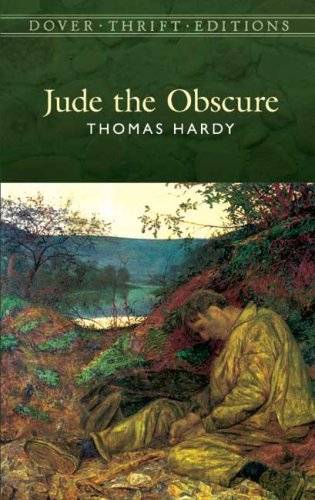
Jude the Obscure ~ A Capsule Book Review

Jude the Obscure image 1

Jude the Obscure by Thomas Hardy ~ A Capsule Book Review by Allen Kopp 

English writer Thomas Hardy (1840-1928) is known for a handful of novels including Tess of the D’Urbervilles, The Return of the Native, Far from the Madding Crowd, and the Mayor of Casterbridge. His novel Jude the Obscure was released in book form in 1895 after appearing in serialized form in a magazine.

Jude the Obscure is a fascinating study of class distinction, conscience, and morality in the Victorian era. Young Jude Fawley is a country lad without family or connections, raised by an elderly aunt who cares little for him. He longs to become an educated man, or even a minister, but, because of who he is and where he lives, he has little chance of ever being more than a stonemason, a trade he has chosen to provide enough money to support himself. He views the college town of Christminster (Oxford), twenty miles away, as a center of learning and all that is fine in life. Jude’s old schoolmaster, Richard Philottson, whom he admires and looks up to, has gone to Christminster. (Mr. Philottson will play a significant role in Jude’s future life, and not in a good way, either.)

While Jude is saving his money to eventually go to Christminster and enroll in school, his way is made more difficult by one Arabella Donn, an unrefined country girl who, because she is has nothing else to do, “sets her cap” for Jude. (He would have been better off if he had never met her.) After he is “intimate” with her, she tells him she is going to have his baby, so he marries her, to discover sometime later that there is no baby; the pregnancy was just a ruse to trap him into marriage.

The marriage is an unhappy one, so Jude and Arabella eventually go their separate ways, although they remain married. When Arabella immigrates to Australia with her family, Jude believes (wrongly, as it turns out) that he has seen the last of her. He eventually makes his way to Christminster, several years later than he intended, and finds that the doors to higher learning are mostly closed to him. He is advised to stick to his trade and not try to rise above his station. (Thanks for the encouragement!)

While in Christminster, Jude finds his old schoolmaster, Mr. Philottson (who doesn’t remember him from all the boys he taught), but, more importantly, he finds his cousin Sue Bridehead and is instantly drawn to her in a way he knows he shouldn’t be. Sue is attractive but, we discover later, emotionally unstable and volatile, with an overly developed sense of right and wrong in the world.

Jude falls in love with Sue Bridehead, in spite of his better judgment. Sue also loves Jude in her strange, on-again, off-again way. Mr. Philottson aids Sue in finding a teaching position and becomes romantically interested in her himself, even though he is eighteen years older than she is. Jude and Mr. Philottson, in effect, become rivals for Sue.

Jude wants to marry Sue (even though they are first cousins) but can’t because he is still married to Arabella, who he believes he will never see again because she has gone to Australia. Sue would marry Jude, but, when he tells her in a moment of candor that he is already married, her sense of morality is outraged and she agrees to marry Mr. Philottson instead, even though she finds him physically repugnant.

As expected, Sue and Mr. Philottson’s marriage is not a happy one. Mr. Philottson knows that Sue really loves Jude, so he agrees to magnanimously “release” her from her marriage vows and grants her a divorce. This act will essentially ruin his teaching career and his standing in the community.

In the meantime, Arabella has turned up again unexpectedly in England. She seeks Jude out and asks him for a divorce because there is someone else she wants to marry. Jude will finally be free, he believes, to marry his one true love, Sue Bridehead.

But, wait a minute! There’s something else. In the final stages of her marriage to Jude, Arabella became pregnant, which she didn’t know about until she had left for Australia. She brings the child back to England and expects Jude to take him off her hands because, she says, he is the boy’s father.

Jude takes the boy (who is called Father Time because he seems old beyond his years), believing that he and Sue will get married and raise the boy as their own. This would have been a happy conclusion to the novel, but, of course, it wasn’t meant to be.

Jude and Sue are both free of their original marriages and are free to marry again, but Sue prevents it. She views marriage as a trap and believes that marriage between her and Jude will spoil their love. They live together as man and wife, giving the outward appearance they are married when in fact they are not. (We know this kind of arrangement will not go over well in Victorian England.) When they are discovered to be “living in sin,” Jude has trouble finding work or a place for them to stay.

They eventually have two children (with a third on the way) that are “bastards” in the eyes of the world. When tragedy strikes the children, Sue believes that she and Jude are “cursed” because of the way they chose to live. She believes the only way she will ever be redeemed in the eyes of God and society is for her to return to her original husband, Richard Philottson (even though her heart tells her otherwise), and for Jude to return to his first wife, Arabella.

Jude Fawley is a flawed, tragic character in that he is never able to find true happiness or fulfillment of his dreams. He is undone, not by one woman, but by two. He is a victim of his own weakness and humanness. He dies believing he should never have been born in the first place.

Sue Bridehead is too flighty and “moral” for this world. She seems uncertain of what she wants out of life. She prates on and on about doing one thing and another, only to end doing nothing. (She doesn’t seem to know how to help herself or anyone around her.) She wants to be Jude’s wife and then she decides against it. She wants to marry Richard Philottson and then she wants out of the marriage, only to return to him in the end. She’s a dizzy dame that any man with any sense should stay away from. (She says toward the end of the book that her attractiveness to men has been her undoing in life.)

The only character who seems to find happiness is the amoral Arabella, who uses people to suit her purposes. She’s the only person who seems unscathed by the tragic events that take place. At the end of the novel, she’s flirting with a doctor. We get the impression that she will be all right no matter what and will not be bothered too much by anything that happens.

Jude the Obscure is highly readable classic of English literature, a nearly perfect novel with plenty of heartbreak. At 320 pages, it moves along at a fairly fast clip. Of course, it contains some language and syntax that seem archaic to us today, but that’s to be expected for the time in which it was written. Reading it does not require a tremendous expenditure of time and effort. A lot of writers of Thomas Hardy’s time said a lot less in a lot more pages.

Copyright 2014 by Allen Kopp 

Bye Bye Blackbird

Bye Bye Blackbird image 1

Bye Bye Blackbird ~ A Short Story by Allen Kopp

The year Nellis Folts was eleven years old was the year he decided he would enter the school talent contest. He chose Bye Bye Blackbird for the number he would perform, and he wouldn’t just stand there and move his lips to some stupid record the way some people did. He would actually sing the song. He asked Miss Mullendorfer, the assistant music teacher, to accompany him on the piano and she readily agreed, saying that she thought it was “simply splendid” that a boy like Nellis, who was usually so standoffish, was going to participate in something she knew was going to be “lots of fun.”

“I’m not doing it for fun,” he said. “I’m doing it for the prize money.”

That evening when Nellis told his mother at the dinner table that he was going to perform in the talent show, she was less than enthusiastic.

“Are you sure you want to be up there on the stage in front of all those people?” she asked. “They’ll laugh at you.”

“I know. They laugh at me anyway.”

“I didn’t know you could sing.”

“Well, I can.”

“I’ve never heard you.”

“I want you and father to come to the talent show. You can hear me sing then.”

“I’m sure your father will be too tired to go out after having worked all day, but I’ll try to come if it’s a night I’m free.”

“You’re free every night.”

For two weeks before the talent show, he practiced Bye Bye Blackbird every night in front of a full-length mirror in his bedroom, with hand gestures and a couple of dance steps that he made up himself. He sang in a quavery tenor that sometimes verged on the soprano:

Pack up all your cares and woes.
Here I go, singin’ low.
Bye bye blackbird!
 
Where somebody waits for me,
Sugar’s sweet and so is she.
Bye bye blackbird!
 
No one here can love or understand me.
Oh, what hard-luck stories they all hand me!
 
So make the bed, light the light!
I’ll be home late tonight.
Blackbird byyyye byyyye!
 

(At the end of the song, he held out his arms and went down on one knee.)

For his clothes, he would wear black pants, a white shirt, and, from a trunk in the attic, a decades-old yellow sport jacket with wide shoulder pads and a red-and-yellow bow tie. Just the thing.

The night of the talent show brought with it heavy rains and thunderstorms. Nellis’s mother heard on the radio that storm warnings had been issued, but Nellis was not to be deterred. At six o’clock, one hour before the talent show was to begin, he put on his yellow plastic patrol-boy raincoat and, with his satchel containing the clothes he was going to perform in, walked the half-mile to school. He was soaked all the way through when he got there but was gratified to see that a lot of people had already shown up and taken their seats in the auditorium. The school was abuzz with excitement, in spite of the weather.

Without speaking to anyone, Nellis went into the deserted boys’ room to prepare. He took off his raincoat and set his satchel on the floor and opened it. His hair was still wet, so he took a wad of paper towels and dried it off the best he could and poured some Vitalis into his palm, rubbed his hands together and smoothed down his thick mess of dark hair. He then combed his hair exactly the way Sammy Davis Junior would have combed his if he had been there. He felt certain that anybody who owned a television set could not fail to make the comparison.

After dressing, he checked himself in the mirror and, when he was satisfied with the way he looked, especially the bow tie, he went “back stage,” where he and all the other contestants had been told to gather at seven o’clock sharp to draw their numbers out of a hat to determine in what order they would appear on stage. When he picked his number from the hat and realized he was last, his heart did a little thump-jump inside his ribcage. But no matter, he told himself. He didn’t mind being last; he would be freshest in the minds of the judges.

To begin the show, Mrs. Pepper, the music teacher, went out on the stage and waved her flabby arms to shush the audience. She was only four-and-a-half feet tall and almost as wide. Somebody in back of the auditorium whistled at her and yelled “Oh, baby!” but she pretended not to hear.

“Welcome to the annual school talent show!” Mrs. Pepper said in her whiny voice, training her myopic gaze on the middle distance. “It looks like we’ve got a capacity crowd! I’m happy to see that so many of you have braved the bad weather to be with us tonight! And I don’t think you’ll be disappointed! We’ve got a great show for you!”

The public address system squawked and sputtered, eliciting whistles and hoots from the audience.

She tapped on the microphone before continuing. “To make our competition a little more interesting,” she intoned, “our first-place winner, as decided by our three judges, will win a prize of fifty greenbacks. Our second-place winner will win twenty-five greenbacks, while our third-place winner will receive a complementary pass for dinner for two at the Lonesome Pine Restaurant and Grill on Highway 32.”

“Woo-woo-woo!” somebody in the audience yelled. Mrs. Pepper frowned for a moment before resuming her smile. “So, without further adieu,” she said, “we now bring to you our little show.”

The first contestant was Cecelia Upjohn, wearing lots of makeup, even though she was only twelve years old, and a skin-tight, glittery costume with red-white-and-blue diagonal stripes. She twirled her baton to a recording of I’m a Yankee Doodle Dandy, all the time with a fixed, doll-like grin on her face. When she tossed the baton high above her head, she somehow caught it without even looking at it. She finished her routine with a perfect split, one leg in front and the other behind as she went down on the floor with seemingly no effort at all. The audience rewarded her with resounding applause.

Then Ralph Krupperman with his hair the color of a new penny and Belinda Cornish took to the stage to do their Fred Astaire and Ginger Rogers dance routine. He wore a tuxedo with a swallow-tail coat and she a curly blond wig and a satiny white dress that clung to her immature body and dragged the floor. He flung her around and around at a dizzying pace to keep time with the music as the tails of his coat flapped and she tried hard to keep from falling. After a frenetic five minutes, the music ended and the routine was over. Ralph and Belinda clasped hands and smiled like onscreen lovers as they took their bows and exited stage left to polite applause.

When Curtis Bellinger came onto the stage, a questioning murmur arose from the audience because he carried a chair in one hand and a saw in the other. (What was he going to do? Saw the chair in half?) He carried the chair to the middle of the stage and set it down. Then he sat on the chair, put the saw between his knees, and, producing a violin bow, began playing Some Enchanted Evening. The audience was transfixed as the mournful sounds of the saw carried over their heads and out the doors into the rainy night. When the song was over, the audience applauded enthusiastically—more for the novelty and daring of the act than for its musicality.

(As Curtis Bellinger was leaving the stage, a huge crack of lightning caused everybody to gasp and the lights to flicker, but the lights stayed on, and the moment of danger, if that’s what it was, was forgotten in the wake of the next act.)

Three large-for-their-age girls, who looked enough alike to be sisters but weren’t, came onto the stage, their hair in snoods and dressed in women’s army uniforms. They stood side-by-side, looking silly and self-conscious as they waited for their music to begin and, when it did, they began swiveling their hips and moving their arms like marionettes. They moved their lips to Boogie-Woogie Bugle Boy, while everybody (even the most naïve person in the audience) knew they weren’t really singing.

The next act was Gus Goldblatt, a fifth grader who already weighed over two hundred pounds and wore men’s clothes. His grandfather had started teaching him the accordion when he was only two years old and since that time he had become steadily more proficient with that instrument. He favored the audience with Lady of Spain, segueing smartly into I’m Just a Vagabond Lover. The audience was most appreciative.

Gus Goldblatt’s exit brought Bertha Terhune to the stage. She was dressed in a black, full-body leotard with red ribbons in her hair and what appeared to be a bedroll under her arm. She curtsied in the direction of the audience, and, spreading out the bedroll that was really a tumbling mat, began her routine. She did a series of cartwheels, then forward somersaults and backward somersaults. She jumped into the air one way and then the other, twirled, twisted, leapt, spun, and turned, all with the agility of a flea and so fast that she was only a blur. The audience hooted and whistled.

Nellis watched all the acts from the wings as he waited to go on. He stood near a window and was aware of the storm, but what the weather might or might not do was the least of his worries. He knew he could remember all the words to Bye Bye Blackbird, but what he was worried about was “putting the song over,” as they say. The audience had sat though a lot of acts. Would they be ready for his? Would they laugh at him, as his mother had said? Would they boo him off the stage? Suddenly he wanted the whole thing to be over and to be back home where it was safe and quiet. He took deep breaths, felt light in the head, and hoped he wouldn’t be sick.

Miss Mullendorfer was standing beside him with her sheet music when Mrs. Pepper came to him and told him it was time for him to go on. He took a deep breath and walked out onto the stage. When he was installed behind the microphone, he looked out at the audience and tried to smile and they looked back at him, waiting to see what he was going to do. Two hundred eyes trained just on him, waiting for him to begin. Could he remember how the song began?

When Miss Mullendorfer from the piano played the little intro she had worked out, Nellis opened his mouth to let out the first notes. That’s when the storm hit with all its force and fury. The row of windows behind the audience blew inward as if from an explosion. The audience screamed, a prolonged wail of terror, and, as if being awakened from a dream, jumped to their feet and began running in every conceivable direction, except toward the exits and safety.

Nellis was stunned. He didn’t know what was happening. He looked over at Miss Mullendorfer at the piano to see if she might give him some cue as to what he should do, but she was gone. He was all alone on the stage, grasping the microphone stand in both hands. The thing sputtered and sparked. He might have been electrocuted if the power hadn’t failed at that moment, bringing him to the reality of the situation. He was just able to make his way out of the building in the dark as the roof was picked up and deposited someplace else and the walls around him began to collapse like a house of cards.

Copyright © 2014 by Allen Kopp

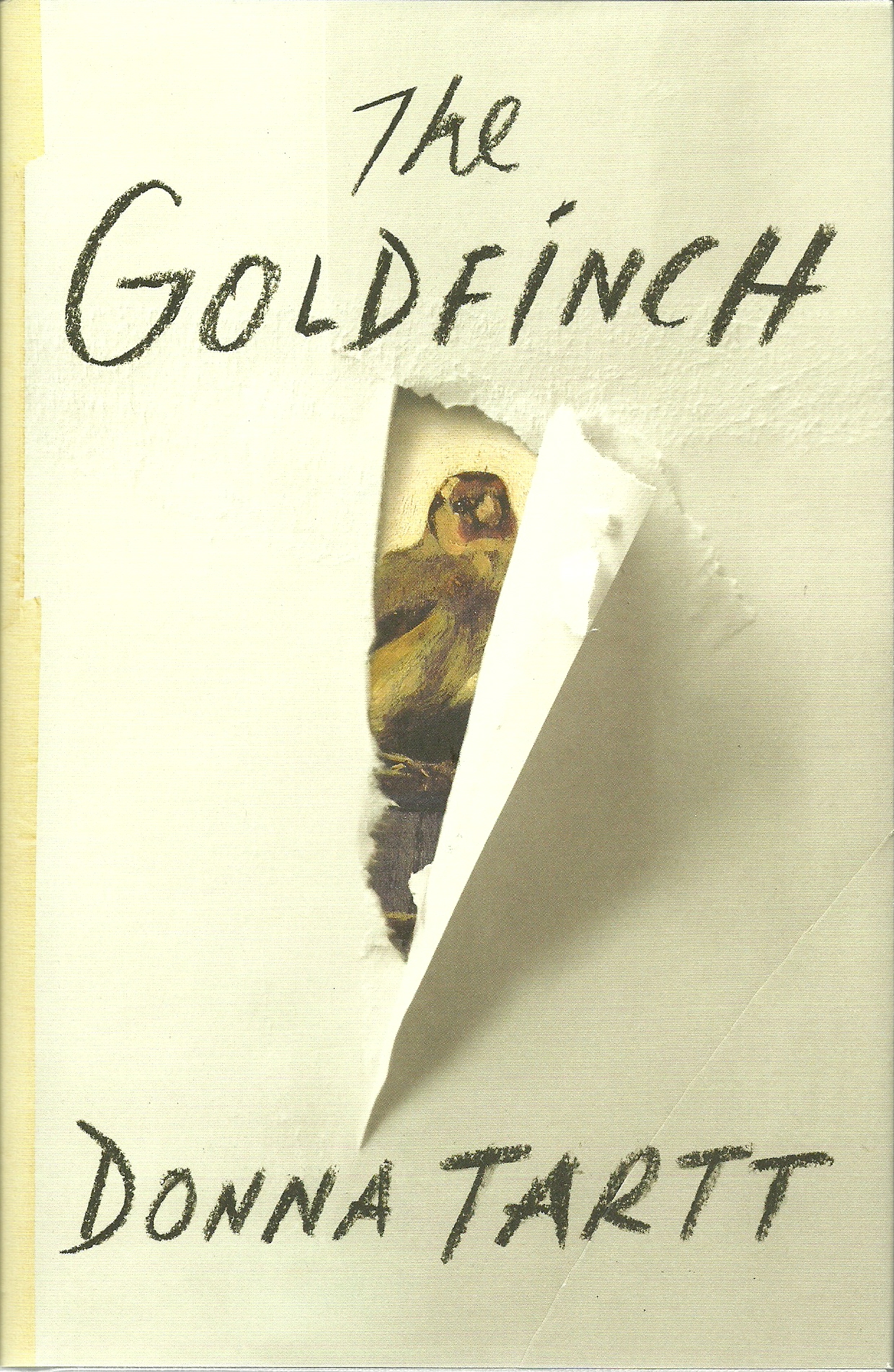
The Goldfinch ~ A Capsule Book Review

The Goldfinch cover

The Goldfinch ~ A Capsule Book Review by Allen Kopp 

The Goldfinch by Donna Tartt won the Pulitzer Prize for best fiction book this year. It’s a contemporary American story with a Dutch painting from the seventeenth century at its core and a central character, one Theodore Decker, for whom chance or fate or luck—whatever you choose to call it—plays a significant role.

Theodore, or “Theo” as he is called, is twelve years old when the story begins. He is with his mother at a New York City art museum (his parents are divorced and his father has long since departed) when a terrorist’s bomb kills his mother and several other people and destroys a large part of the museum. Theo, through circumstance (chance?), narrowly escapes being killed himself.

Right before the blast, Theo’s mother goes off alone to look at something in another part of the museum. Theo is compelled to stay behind because he is intrigued by a young girl with red hair with an old man, possibly her grandfather. (When the blast occurs, Theo doesn’t know right away that his mother is killed but thinks she will have gotten out safely and will wait for him at home.) Theo goes to the aid of the old man and the girl with red hair (the man dies but not before giving Theo a ring he is wearing; the girl is badly injured). This chance meeting (chance again) significantly alters Theo’s future.

In the after-explosion confusion, Theo finds his way out of the wrecked museum alone and is largely ignored by the rescue people. Before he leaves, however, he sees a small, priceless painting, The Goldfinch (that he and his mother had been looking at a short time before), hanging out of its frame. He slips the painting into the school bag he is carrying, in effect stealing it. He doesn’t know why he takes the painting or what he plans to do with it. (Chance makes the thief.)

The Goldfinch is an actual painting by gifted Dutch painter Carel Fabritius, who was a student of Rembrandt’s. Fabritius was killed at age 32 in 1654 when a gunpowder storehouse exploded in Delft, destroying one-quarter of that city. All but a dozen or so of the paintings of Fabritius were destroyed. (These two violent explosions, one real and the other fictional, bookend the painting.)

Finding himself without family or anyone to care for him, Theo remembers a school friend, one Andy Barbour, that he at one time felt close to. The Barbours are a snooty, upper-crust Park Avenue family, but they (rather reluctantly) take Theo in—for the time being, anyway—because he has no place else to go. He shares a room with his old friend Andy Barbour and tries to resume his life the best he can, living without his mother with a strange family. While he is living with the Barbours, he allows the ring that the old man at the museum gave to him to lead him to the home, in another part of the city, of one James Hobart (or “Hobie,” as he is known). Hobie is the partner in the antiques business of the old man killed in the museum blast. He is kind to Theo and begins to introduce him to the antiques business, specifically furniture restoration.

Through Hobie, Theo becomes acquainted with the red-haired girl who made such an impression on him the day of the museum bombing. Her name is Pippa and, when Theo discovers her, she is recovering from her injuries, as is he (his more emotional than physical). Over the years, his obsession for Pippa grows, even though their lives take divergent paths.

When Theo’s good-for-nothing father, Larry, reappears to assume his parental duties, he has a creepy girlfriend in tow named Xandra. (It seems that Larry is interested, above all, in how he might benefit from his late wife’s estate.) Larry and Xandra take Theo out of the Barbours’ home to live with them in Las Vegas.

Theo’s life takes a decided turn for the worse in Las Vegas. His father is volatile and unreliable; Xandra a self-obsessed bitch who is in no way a mother figure. Theo befriends a Russian boy his own age, Boris, who is, at best, a terrible influence on him. Boris leads Theo down a path of illegal drug use, shoplifting, binge drinking, and other disgusting activities that teenagers without parental authority are sometimes left to engage in.

Theo’s father eventually meets his sad end (we saw it coming), causing Theo to take the wrapped-like-a-mummy The Goldfinch (which he has kept hidden in his room all this time) and take a bus to New York City, with Xandra’s tiny dog, Popper.(It seems that Xandra isn’t even responsible enough to care for a small dog.) He ends up at the home/business of Hobie, who was so kind to him when he was younger. Not having anyplace else to go, he lives in a room at Hobie’s house and learns the front end of the antiques business, while Hobie works with the behind-the-scenes restoration.

In a short time, Theo turns the antiques business into a success but not without some shady business dealings on his part that Hobie doesn’t know about. Outwardly he shows all the signs of success (expensive suits, hobnobbing with wealthy antiques patrons), but inwardly he is never really happy (his philosophy of life being that it’s better never to have been born). He begins using drugs heavily and becomes engaged to a frosty society bitch named Kitsey Barbour (even though he secretly pines for Pippa), who just happens to be the daughter of the family who took him in after his mother died.

During these years of growing into young adulthood, Theo believes he has The Goldfinch with him, although he never takes it out anymore and looks at it. He puts the painting, or what he believes is the painting, in a storage locker for the safekeeping of art objects. Hearing of other cases where art thieves receive stiff prison sentences, he is naturally afraid of what will happen to him if it is discovered he has the lost painting. He isn’t even able to explain why he took it in the first place. He would never be able to sell it or own it in the usual sense.

When Theo’s friend Boris from his Las Vegas days shows up in New York (he hadn’t heard from Boris since he left), Boris tells him, much to his surprise, that he (Boris) “stole” the painting from him when they were still high school students in Las Vegas. The wrapped-up article that Theo believes is the painting is, in reality, an old civics book. (“I thought you knew,” says Boris.) It seems that gangsters and high-level drug dealers use stolen art as “collateral” to get financial backing for their enterprises. In trying to recover the painting, Theo is drawn into the shadowy world of art theft.

The problem with the painting (what to do with it, how to turn it in to authorities without winding up in jail, etc.) is eventually resolved for Theo, after many twists and turns and a near-suicidal trip to Amsterdam at Christmas. Boris is such bad news for Theo most of the time but more often than not turns out to be his salvation. He (Boris) is a kind of tarnished, bad angel, who goes recklessly through life in his own way, ignoring all the rules that “good” people follow.

The Goldfinch is an interesting—if overly long—reading experience. It is so long, in fact (771 pages), and reading it requires so much time and effort that the less dedicated reader might give up before he/she begins. That’s not to say that it’s a boring book or that it’s not written in an easy, readable style. It is compulsively readable most of the time and only in the last couple of hundred pages did my interest begin to flag. (The eighty or so pages in Amsterdam seem to be overly drawn out.) When I was wanting the book to finally end, it seemed to me to go on and on and on. It’s a book, though, that if you do undertake to read it, you will feel at the end that you are better and smarter for having done so.

Copyright © 2014 by Allen Kopp