
The Queen Bee of Café Society

The Queen Bee of Cafe Society image 1

The Queen Bee of Café Society ~ A Short Story by Allen Kopp

It’s early November and the nights are getting colder. Ouida Longworth makes her way through the dark city streets to the only place left to her. She struggles up the stairs, through the door, and stops before a low table with an old woman sitting behind it.

“Need a bed,” Ouida says.

“All full up tonight.”

“Got one left,” a man’s voice says from the shadows. “A lady checked out a little while ago.”

“All right,” the old woman says. “You know the rules. No smoking, cussing, gambling or alcoholic beverages. No fraternizing with the other guests. You got to be out by nine o’clock in the morning.”

“Thank you, madam.”

“Go down them stairs and hold your nose.”

Ouida isn’t sure if she has the strength to find the one empty bed, but find it she does and when she comes to it she sits down heavily and takes off her shoes and rubs her feet. They are so numb she can hardly feel them—one day they will stop working altogether. Holding her shoes against her abdomen to keep them safe, she gets under the covers to lose herself in sleep for a few hours.

A roomful of sleeping women and a few children. It is semi-lit, one bulb high up on the wall in a little metal cage, and quiet except for a few rustles like the sounds mice make. The wild-haired woman in the bed next to Ouida raises herself on her elbow, eyes glowing in the dark. Ouida is certain the woman is going to speak to her, so she covers her head with the musty blanket and is left only with herself and her recollections of the life she had before the one she has now.

She was once the wife of Franklin Longworth, a man of many millions. She wore glittery gowns, smoked custom-made cigarettes in a foot-long holder and articulated in a faux English accent. Besides having a penthouse apartment on Park Avenue, the Longworths spent a part of each year at one of their homes in the South of France, Switzerland or Italy.

Ouida Longworth was one of the leading lights of her social set, which included sixty or so of the best people. During the social season, she gave parties or attended them nearly every night. On off nights, there was always the opera, the theatre, or any one of the fashionable cafés and clubs. The revels often lasted until dawn and nobody was written up in the society columns more than Ouida Longworth. To be seen in her company—and especially to be photographed with her—was much desired by those hoping to get a leg up in society. Any man of letters, painter, or actress was fortunate to be taken up and admired by her.

One such man was a fellow named Ricky Beaumont. Establishing himself as a playwright proved to be more problematic than he anticipated. His one play that he managed to have produced folded after six performances. He was badly in need of a patroness, someone to pay his liquor bills and leave him alone while he cultivated his untapped genius.

Ouida claimed to be the “discoverer” of Ricky Beaumont. He was, she said, the most gifted young playwright of his generation and she would see that he had every advantage. Men of genius should not be bothered with worldly matters such as how to pay the grocery bill and the rent.

She started out advising Ricky in his career, but soon her professional interest turned personal. Helping matters along were his youth and the fact that he had piercing blue eyes, a head full of thick brown hair and stood six feet, two inches tall in his stocking feet. He recalled to Ouida the thrilling days of her youth, before she married stodgy Franklin Longworth, when she could have any man for the taking and there were plenty willing to be taken.

She began being seen everywhere in Ricky Beaumont’s company. Rumors abounded. Some of her friends reviled her, while most were blasé in the matter. A silly older woman with a rich and serious husband falling for a good-looking younger fellow who, everybody could see, was taking her for a ride. It’s been happening since the beginning of time.

She admitted to her husband before a roaring fire in his study after a large dinner that she was in love with Ricky Beaumont and he was in love with her.

“Has it ever occurred to you, my dear,” her husband said, “that Ricky Beaumont might be more in love with what you can do for him than he is with you?”

“Only a person with a vile mind would think of such a thing,” she replied.

“I’ve known for a long time that you weren’t happy in our marriage.”

“It isn’t so much that, Frank. It’s just that I’m young and pretty and I want to be with a man who thrills me.”

“You’re forty-seven.”

“My age doesn’t matter. I don’t look a day over thirty.”

“Age has a way of catching up with you when you least expect it.”

“I’m not surprised that you turn the conversation into something as trivial as age.”

“Does Ricky also believe the age difference to be trivial?”

“Ours is a love for the ages! That I’ve lived a few years longer than he has is absolutely inconsequential.”

“All right. We’ll meet with my attorney and arrange for you to get your divorce.”

Always one to be generous, Franklin Longworth settled ten million dollars on his wife. Almost before the ink was dry on the divorce agreement, Ouida and Ricky Beaumont were married at city hall in a simple ceremony. She wore a modest navy suit and a small hat with a veil. No photographers were present.

They rented a villa in Tuscany, where they spent the first few months of their married life. From there they went to Monte Carlo, Barcelona, Paris, Vienna, Budapest, and Berlin. After a few months in London, Ricky was tired of the rain and cold, he said, so they moved on to sunnier climes.

Before they had celebrated their first wedding anniversary, Ouida began to notice a change in him. Instead of being charming all the time, as she expected him to be, he was moody and withdrawn. He abandoned his writing career, which she had hoped he would pursue. He went for days at a time without speaking to her and insisted on separate bedrooms. When she asked what was wrong, he became violent and accused her of being an old nag. He slapped her in the mouth on more than one occasion and blackened both eyes.

He began drinking heavily, alone, and then with male companions that to Ouida seemed unsavory. He was sometimes gone overnight and when he returned in the morning he was always dirty and disheveled. He lived a separate, secret life apart from hers and remained drunk much of the time.

To have something to do to pass the time, he took up gambling. At first it was races and sporting events and then he began frequenting casinos. He was, she soon discovered, addicted to the roulette table and other games of chance. He squandered huge sums of money every night and never gained a cent.

“Our money does have a limit, you know,” she said to him during one of his infrequent sober periods. “As does my patience.”

“Can’t you leave me alone for just one minute?” he said.

“What will we do when you’ve squandered all our money and we have nothing left?”

“I’m not going to do that, I promise.”

“I can see now that our marriage was a mistake,” she said. “I gave up a good man for you.”

“Oh, shut up.”

“I gave up everything for you.”

“Go stick your head in the oven.”

When she was just on the verge of trying to figure out a way to extricate herself from the marriage, he came to her one night in her bedroom with tears in his eyes.

“I’m afraid I have some bad news, old girl,” he said.

“You’re in trouble with the police?”

“Worse than that. We’re broke.”

“We’re what?”

“All our money is gone.”

“What? How are we going to live?”

“I know what I’m going to do. It’s every man for himself now.”

That was the last time she saw him. In the morning he was gone and he didn’t tell her where he was going. He didn’t even bother to take any of his belongings with him.

She sold what jewelry she had left to pay a few outstanding debts and to buy a plane ticket home. When she arrived back in America, all the people in her crowd had moved on. There was no one to whom she could turn for help. Anybody who had known her wouldn’t recognize her anymore. She had gained weight and let herself go. Her hair was gray, her skin sallow, her appearance haggard. Age had caught up with her, as Franklin had told her it would.

Her small reserve of money was dwindling. She tried to find a job but couldn’t. Nobody wanted a fifty-year-old waitress or sales girl with no experience. In her previous life, she had never learned to do anything and had never envisioned a time when she would be forced to earn her own living.

The hotel where she was staying locked her out of her room when she stopped paying. They kept her bags and clothes, which they would be happy to return after she paid the money that was owed.

She began walking the streets, learning where other people like her congregated. She learned the safe places to hide out, to get a bite to eat or a bed for the night. Few had ever fallen so far and so fast.

She awakes in the long, low room with all the beds. It’s daylight, time to get up and move on. When she reaches for her shoes to put them on, they are gone. The wild-haired woman in the bed beside her is also gone.

She begins crying uncontrollably. “How could this happen to me?” she sobs.

“Are you all right, honey?” a woman with a little girl asks her.

“Somebody took my shoes! What am I going to do now?”

“See the lady at the desk. She’ll fix you up.”

The old woman from the night before has a cardboard box of discarded shoes under her desk. Ouida looks through it until she finds a pair of red tennis shoes that fit her.

“Thank you for your kindness,” she says. “I’m all right now.”

She goes out into the bright, cold air and begins walking. The streets are crowded, the time of morning when people are headed for their places of business. Somebody is certain to notice her and hand her some money, enough to get a decent breakfast, without her having to ask for it. These things happen much more often than she might have imagined.

She rarely looks directly at individual people, but she can’t help noticing an older man walking toward her, a man unlike anybody else. He wears an overcoat and a bowler hat. He has an air of assurance and respectability. When she realizes it’s Franklin Longworth, her heart skips a beat. She makes a sharp turn to the left to try to avoid him, but he has already seen her.

“Ouida!” he calls. “Is that you?”

“Hello, Franklin,” she says.

“Why didn’t you let me know you were in town?”

“I don’t know.”

He looks her up and down. “Things not going so good?” he asks.

“Well, I…”

“Let me buy you breakfast. We can talk.”

“Well, I…”

He takes her by the arm and leads her to a restaurant down the street.

“You’re looking well,” she says, after they are seated.

“I wish I could say the same for you.”

“I know. I’m not the person I was.”

“You and Ricky all washed up?”

“Yes. I’m finished with him. Or rather, he’s finished with me.”

“Did you hear I got married again?”

“No, I hadn’t heard.”

“Her name is Katherine. You’d like her. She was a widow, has two sons. I’ve come to think of them as my own.”

“I’m happy for you, Frank.”

“Where are you staying?”

“Well, I was staying at the Fulbright Hotel, but…”

“You could no longer afford it?”

“You always had a way of seeing right through me, Frank.”

“Can I help in any way.”

“You were always so good, Frank, and I was such a fool. You gave me everything a woman could possibly want and I threw it all away.”

“For love?”

“For love.”

“Well, it’s all in the past now,” he says. “Time to move forward.”

“Yes, move forward.”

“We have an opening for a maid if you’d be interested.”

“A maid?”

“Yes.”

“You’d hire me as a maid?”

“I don’t see why not. Nobody has to know about your past. We’ll keep it between ourselves.”

“What would your wife think?”

He takes a pad out of his pocket and begins writing. “I got rid of the old place,” he says. “Too many painful associations. We now live at this address.” He rips a page from the pad and hands it to her.

“You’ve always treated me better than I deserve, Frank,” she says.

“You won’t have to start to work right away. Take some time to get yourself rested up. A couple of weeks, if you want.”

“Thank you.”

“Now, if you’ll excuse me,” he says, “I was just on my way for an appointment. I’m late as it is.” He takes his wallet out and hands her a fifty-dollar bill. “Order anything you want to eat.”

“Always so thoughtful, dear.”

“Come to us when you’re ready. I’ll tell my wife you’re coming and she’ll make the necessary arrangements.”

“It’s been wonderful seeing you again, Frank.”

He pats her on the hand and smiles and then he’s gone.

She leaves the restaurant a few minutes after he does with the fifty-dollar bill in her hand and the piece of paper on which he has written his address. When she sees a man on the street who looks worse than she does, minus a leg, she gives him the money. As for the address, she lets the wind take it from her hand and watches as it blows into the gutter. After she has done these things, she fades into the crowd and is seen or heard of no more.

Copyright © 2015 by Allen Kopp

An American Son ~ A Capsule Book Review

An American Son

An American Son ~ A Capsule Book Review by Allen Kopp 

Marco Rubio was born in Miami in 1971. His parents came to the United States from Cuba during the 1950s, in search of a better life for themselves and their children. They had no formal education and job skills that would only ever allow them to work in menial jobs, but they were determined that their four children would have better lives than they had had. They survived as Americans without exactly thriving and saw their son Marco become an attorney, a family man with four children of his own, and a successful and powerful politician.

An American Son is Marco Rubio’s story, from his modest upbringing in Miami to his hard-fought election in 2010 as Florida’s junior senator. He began in Florida politics when he was elected to the West Miami City Commission. From there he went to the Florida House or Representatives, where he was eventually elected speaker of the house. When his term of office ended there, he considered leaving politics for good and concentrating on his law practice, but the opportunity came up for him to run for the United States Senate. At a time when nobody believed he could win, he challenged a powerful and popular sitting governor, Charlie Crist, for the nomination of his party to run in the general election. Defying the odds and also conventional wisdom (not to mention a barrage of vicious personal attacks), he won the nomination of his party and went on to the win the general election in a three-way race. It’s a story of perseverance, of not giving up in the face of overwhelming odds.

Too often politicians in Washington, with their $1500 suits and their luxury vacations, come across as elitist and out of touch. Marco Rubio might prove over time to be a different kind of politician. He wasn’t born into a privileged environment. He has lived in the real world and he knows what it’s like to struggle. He comes across as a decent man, maybe overly ambitious but not overly egotistical. He’s not perfect, he makes mistakes, and he’s figuring out the way as he goes along the same as everybody else.

An American Son is breezy reading, never ponderous or bogged down in unnecessary detail. I found the whole book interesting but especially the second half where Marco details his up-and-down campaign for the Senate where he was attacked daily by the opposition. Some politicians have the job dropped into their laps because of what their names are, while others have to work for it, night and day, over months and sometimes years. It’s not an easy road and it takes a certain kind of person to want to do it. Somebody with plenty of drive and ambition but also with the conviction he can make a difference in the world.  

Copyright © 2015 by Allen Kopp

A Cross-Eyed Woman

A Cross-Eyed Woman

A Cross-Eyed Woman ~ A Short Story by Allen Kopp

“Did I tell you I’ve got a new girlfriend, grandpa?”

“Is that so? What’s her name?”

“Lucille Meisenbach.”

“How much does she weigh?”

“A hundred and thirty.”

“How old is she?”

“She’s a year younger than me, grandpa.”

“Don’t be in no hurry to marry a person with a name like Lucille Meisenbach.”

“I’m not. I only just met her.”

“Make sure you know everything about her before you marry her. Her people, too.”

“I’m not going to marry her.”

“What’s wrong with her?”

“Nothing, except that she’s cross-eyed.”

“You don’t want to marry no cross-eyed woman.”

“Okay, I won’t.”

“Cross-eyed woman is a sign of trouble.”

“How do you know, grandpa?”

“I’m seventy-three years old. I’ve seen everything and what I haven’t seen I’ve heard about.”

“I wouldn’t want to marry her, anyway.”

“Why not?”

“She’s got six toes on one foot.”

“How many on the other?”

“Just five.”

“Eleven toes is bad luck. It’s a mark of the devil.”

“If you say so, grandpa.”

“You don’t think you’d want to marry her after you’ve known her for a while?”

“No, sir.”

“You say that now, but if she gets it into her head to marry you, she’ll find a way to ensnare you against your will.”

“I don’t think that’s going to happen, grandpa.”

“Why not?”

“She’s not very smart.”

“You don’t have to be smart to be evil.”

“I wouldn’t exactly say she’s evil, grandpa.”

“You probably just don’t know her well enough to see her evil side.”

“If I start to see it, I’ll dump her.”

“Maybe she won’t let you dump her.”

“If I want to dump her, she can’t stop me.”

“I see you know very little about women.”

“I know enough.”

“Just make sure you find out everything there is to know before you marry her. If she’s got them two flaws, she’s bound to have others.”

“I haven’t seen any others.”

“Well, she’ll be setting her trap to catch you.”

“I don’t think so, grandpa.”

“Well, don’t say I didn’t warn you.”

“I went to dinner at her house on Sunday after church. We had fried chicken. Her mother’s name is Vera Meisenbach.”

“How old is she?”

“Forty-three.”

“How much does she weigh?”

“Two hundred.”

“A big woman.”

“Yes, sir. Big and tall. Broad shoulders. A wild look in her eye. Kind of scary.”

“And that’s not all, is it?”

“No, sir. She’s got a hump on her back.”

“Uh-oh! A big woman with a hump on her back has a cross-eyed daughter with eleven toes. Freakishness runs in the family. That’s not good.”

“I can’t claim to be perfect myself.”

“You’ve got the right number of toes, you’re not cross-eyed and there’s no hump on your back.”

“That’s true.”

“Count your blessings.”

“Yes, sir. I also met Lucille’s daddy. He’s a little bitty man like a midget.”

“A pattern has been established.”

“Lucille told me he’s got a metal plate in his head that lets him pick up radio transmissions. I tried to keep from laughing.”

“How much does he weigh?”

“Ninety-four pounds.”

“His wife weighs more than twice what he weighs?”

“Yes, sir.”

“Not pleasant to contemplate. How old is he?”

“He’s forty-nine years old.”

“And his name?”

“Luther Meisenbach.”

“Any other progeny besides Lucille?”

“A brother named Norland Meisenbach. He’s sixteen.”

“Is he cross-eyed?”

“Not that I noticed, but I didn’t pay that much attention.”

“How much does he weigh?”

“A hundred and ten.”

“That’s small for sixteen, isn’t it?”

“I guess so.”

“Anything freakish about him?”

“He’s got a turned-in foot and he doesn’t talk much because he’s got a stutter.”

“So there’s something wrong with every one of the Meisenbachs.”

“Yes, sir. I guess you could say that.”

“If you take my advice, sonny, you’ll get as far away from that bunch as you can. They’re not wholesome to be around.”

“Yes, sir. I don’t really care that much for Lucille, anyway. When she looks at me, it looks like she’s looking over my shoulder.”

“She’s probably looking to her master for direction.”

“You sure have opened my eyes, grandpa. I’m glad we had this little talk.”

“Not at all, sonny. I’m always glad to give you the benefit of my superior knowledge. That’s what grandpas are for.”

Copyright © 2015 by Allen Kopp

The Yack-Yack Club

The Yack-Yack Club

The Yack-Yack Club ~ by Allen Kopp 

When you’re making your way home in rush-hour traffic after a demoralizing day at the office, it’s scary to think that as many as twenty to thirty percent of drivers on the road are yapping or texting on cell phones. They don’t signal when they should and their driving is erratic, at best. Not only are they jeopardizing their own life and limb, but they are also jeopardizing yours. There are statistics about traffic accidents caused by driver inattention, but how many of those are caused by driver inattention due to cell phone use?

People like me who are not addicted to cell phones don’t understand the attraction. I have a cell phone that I use only for emergencies, and I hate it. I have never sent or received a text message because I have no desire to do so. I can be reached on the phone when I’m at home, but when I’m out somewhere there is nobody in the world I care to talk to. Being away from home means I cannot be reached by phone and I don’t want to be bothered. Leave a message and I’ll call you back when I get home if I feel like it.

Like it or not, I’ve seen advanced cases of cell phone addiction. On the first day of a new job, when I was introduced to a woman who was to be my co-worker, she was yacking on the cell phone and couldn’t put it down long enough to meet me. She yacked on her cell phone almost the entire time I knew her. She told me she never turned her cell phone off, even when she was sleeping, meaning that she was available to receive callers, not only during the day, but also all night long. When we flew on a business trip, she was indignant that airline safety regulations required that her cell phone be turned off. She turned it back on the first second she was allowed to—you could see the relief written all over her. Just think of the important calls that came in when she was thirty-five thousand feet in the air!

And then there are the people who wear the cell phone in their ear all the time, without having to hold it in their hands. When you’re at the mall or in some other public place and someone comes near you and says something, you think, wrongly, that they are talking to you. What they are doing is merrily pretending you don’t exist while regaling you with their idiotic cell phone banter in a very loud voice. (“Well, I’m at the mall. Where the f**k do you think I’m at? Don’t you remember I said I was going to the f**kin’ mall? Well, where the f**k are you at? Well, what the f**k are you doing there? Don’t you remember you were supposed to…”) Did they forget their manners, or did they just not have any manners to begin with?   

Speaking of bad manners, what about the person you’re having lunch with who drags out his cell phone and gets or receives a call right after placing the order with the waiter? Does he think I came out to lunch with him to sit silently while I listen to his inane conversation with his ex-wife or his teenage son? I might as well be back at my desk listening to the fluorescent light hum above my head.

I’ve heard people yapping into cell phones in public places in Chinese or other foreign languages. I’ve heard people yapping into cell phones at five-thirty in the morning when I’m lucky to be able to put one foot in front of the other. I’ve seen a woman bring out a cell phone at the movie theatre during a very loud movie and talk over the movie. I’ve seen people who can’t leave their cell phones alone long enough to have their kidney stones irradiated, vote, or renew their driver’s license. I’ve seen a woman talking into a cell phone while eating a salad and nursing a baby at the same time. I’ve seen people on roller skates talking on cell phones. (If alien intelligences are picking up all the cell phone jibber-jabber from earth, they will conclude that the planet does not have intelligent life on it as previously thought.) I sometimes wonder what all those people are saying and who they are talking to. All I know for sure is they are not talking to me.

Copyright © 2015 by Allen Kopp

Funeral Rites ~ A Capsule Book Review

Funeral Rites

Funeral Rites ~ A Capsule Book Review by Allen Kopp 

Funeral Rites by Jean Genet (1910-1986) is set in France at the end of World War II when France was ridding itself of German occupation. There were some French people, mostly teen boys and men in their early twenties, who collaborated with the Germans against their own country. They positioned themselves on rooftops and functioned as snipers, shooting at Frenchman who were fighting for, or loyal to, France. These collaborators were naturally hated by the French.

Jean G. is narrating Funeral Rites. He confusedly switches from third person to first person and back again, so we don’t always know who’s who. He also switches back and forth in time, so he eschews the structure of the “traditional” novel. His twenty-year-old lover, Jean Decarnin, has been killed by one of the Frenchman who was acting as a German collaborator. Jean G.’s grief at the loss of Jean Decarnin drives the narrative. He sees a newsreel that shows a young French collaborator who is caught and the punishment that is meted out to him. Jean G. “imagines” the collaborator’s name is Riton. He is seventeen years old and, in Jean G.’s words, he is “beautiful.” Thereupon, the story (what there is of it) is about Riton and the young German invader, Erik Seiler, with whom Riton becomes infatuated. It seems at times that Riton and Jean G. are one and the same.) Riton claims to love Erik, even though Erik is the invader, the rapist, the occupier, the oppressor. (Genet constantly reverts to the theme of how sex and death are intertwined.) Erik is also the lover of Jean Decarnin’s mother, a silly Frenchwoman who doesn’t seem to care that she is consorting with the enemy. She doesn’t care very much that her son has been killed, either.

Jean Genet was born without a father to a prostitute, who gave him up for adoption when he was a few months old. Early in his life, until he turned to writing, he was a vagrant and petty criminal and spent much of his time behind bars. Funeral Rites is partly autobiographical and reflects Genet’s nontraditional approach to life. He is now considered a giant of twentieth century French literature. His other important works include Our Lady of the Flowers, Querelle and The Thief’s Journal.

Funeral Rites was first published in 1947 and wasn’t translated into English until 1953. At 256 pages, it’s challenging to read but not overly difficult, as long as you’re not bothered too much by the nonlinear structure. It’s often distasteful, as in the episode with the cat, but also has some flashes of humor, as when Jean Decarnin’s “stout” mother releases her bodily “wind” into the air of her boudoir. Most readers will find the sexual content (between men) mild by today’s standards. If you were going to be offended by that, you wouldn’t be reading this book anyway.

Copyright © 2015 by Allen Kopp
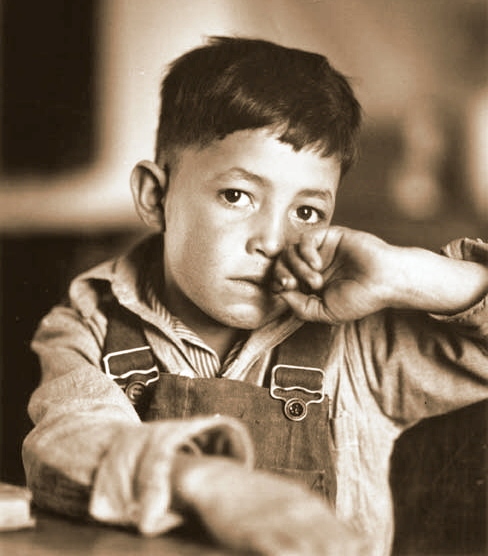
In the Fullness of His Years

In the Fullness of His Years

In the Fullness of His Years ~ A Short Story by Allen Kopp 

A man named Cyril Johns, age seventy-eight, lived in the basement apartment of an eighteen-story apartment building. He once was the janitor of the building but had been forced to stop working because of his age. Upon his retirement, the owner of the building gave him a deluxe television set and allowed him to keep his basement apartment for a nominal rent. He had, of course, to turn over all his tools and keys to the man hired to replace him.

He used to have lots of friends, people to help pass the time and make the day brighter, but just about everybody he knew had died or moved out of the neighborhood. He no longer had anybody to play cards with or talk over the baseball scores or how the fools in Washington were messing up the country. The TV droned on, but he ignored it.

The new people were a speeded-up version of the old ones. They were mostly young, with lots of small children. They would sooner knock a person down than wait for him to get out of the way. The young mothers eyed him in a funny way, he thought, as if he had it in mind to grab one of their screaming brats and gut it like a catfish. They had never been taught to show respect for an old person.

Patsy Ruth was different. She smiled at him, spoke to him, asked him how he was. She didn’t mind when he touched her frail-looking little boy, named Frankie, on the face or picked him up and held him in his arms. She didn’t have a dirty mind like the others. She knew he meant no harm.

When they finally had a chance to speak, Patsy Ruth told him she had grown up on a farm.

“That’s why you’re not like the others,” he said.

“I’m having a hard time adjusting to this place,” she said. “I’ve never lived in the city before.”

“If I can ever be of any help,” he said. “I’ve lived here my whole life.”

She was afraid to ride downtown on the bus with Frankie alone. She asked Cyril if he would go with them the first time and then afterward she wouldn’t be afraid.

“I’ll pay you for your time,” she said.

“You’ll do nothing of the kind.”

They took Frankie for his doctor’s appointment and afterwards had lunch at a nearby café.

“It was good of you to come with me,” Patsy Ruth said. “I hate being such a baby.”

“What’s wrong with the little fellow, if you don’t mind my asking?”

“He was born at seven months. He’s always had weak lungs.”

“Won’t he outgrow it?”

“That’s my hope, but we don’t know yet. He might be sick his whole life.”

Knowing his mother was talking about him, Frankie looked at her with his bright, inquisitive eyes. “When I’m five I can go to school,” he said solemnly.

“So, you want to go to school?” Cyril asked.

“Sure,” Frankie said. “I want to learn how to read.”

“He sees the other kids playing,” Patsy Ruth said. “He wants to join in but they’re twice his size and I’m afraid they’d hurt him.”

“They wouldn’t hurt me, mother.”

“When you’re older, you can play with the bigger kids.”

“Because I’ll be bigger myself.”

When they left the café, Cyril insisted on picking up the tab.

“I should be buying your lunch,” Patsy Ruth said.

“I get a check in the mail every month that I don’t have to work for,” he said. “I have more than I need.”

For five days after the doctor’s visit he didn’t see Patsy Ruth or Frankie in the courtyard and began to be worried that something was wrong. He coaxed the manager with a five-dollar-bill to give him Patsy Ruth’s apartment number.

He took the creaking elevator up to the fourteenth floor and found the apartment. He knocked and Patsy Ruth opened the door only as far as the chain would allow. When she saw it was him, she unfastened the chain.

“I thought it might be you,” she said, smiling.

“I didn’t think you’d mind if I came by to see how you were doing.”

“Of course not. Come in.”

She moved some stuff off the couch to make a place for him to sit. “Sorry the place is still such a mess,” she said. “We’re still getting settled, deciding where to put things.”

“When I didn’t see you for a few days, I thought maybe the tyke wasn’t doing very well.”

“No, the tyke is fine. We’ve been staying indoors because of the rain and cold wind.”

“Where is he now?”

“He’s taking his nap.”

“I wanted to tell you if you want me to go downtown with you and Frankie on the bus again, I’d be happy to.”

“I might take you up on that.”

“I hope you do.”

“Would you like a cup of tea?”

“Sure.”

He followed her into the kitchen and sat at the Formica-topped table next to the window while she boiled the water.

“You’re living among the clouds,” he said, looking out.

“I know. I can’t get over the feeling I’m going to be sucked out the window into the void.”

“If there’s a bad enough storm, you’ll want to go down to the bottom floor. That’s what people usually do. Until the storm passes. Of course, you don’t have to if you don’t want to.”

“I’d rather not even think about storms.”

“When it comes, it’ll seem worse than it is.”

“My husband will be home in a couple of hours and I need to start my dinner.”

“Oh, okay. I’ll go.”

“No, stay a while.”

When the tea was ready she brought it to the table and sat down across from him.

“Of course, I don’t have to worry about storms,” he said, “living in the basement apartment as I do.”

“Must be pretty lonely down there for you.”

“I’m used to being on my own. My wife has been gone for fifteen years. It’s probably a terrible thing to say, but she’s not the one I miss the most. It’s friends I miss. You know, my pals. They’ve all either died or moved to a better place.”

“You could move to a better place, too.”

“I don’t know where I’d go. I’ve lived here for so long I’d feel like a fish out of water. You stay where you feel at home.”

“I don’t think I’ll ever feel at home here,” she said. “This place scares me.”

“Why?”

“Too many people. Too impersonal. Too much crime, dirt and noise. And then there’s Frankie.”

“What about him?”

“If he’s ever going to have a chance to get better and live a normal life, it won’t be in a place like this. He needs clean air and wide-open spaces where people aren’t so crowded up together. And then, when he’s older, I worry about the kind of influences he’ll have here.”

“Why don’t you move back to the place where you grew up?”

“My husband would never agree to that.”

He had been going to suggest that she leave her husband and take Frankie and go live in the country, but he knew that wasn’t the right thing to say. You don’t go around giving married women that kind of advice.

“You can always hope for something better,” he said.

“Ever since we came here, my husband and I have been fighting. We’ve been married for eight years. It never has been what I would call a happy marriage, but since we came here it’s been worse. You reach a point where you can’t fight and argue any more and then there’s silence, which, I suppose is not as bad as the fighting. He sometimes doesn’t even come home at night. When I ask him where he’s been, he gives me a threatening look and tells me he’s been working so Frankie and I will have a home and food to eat.”

“I’m sorry for you.”

“Don’t be. We all choose our own path in life. Or it chooses us.”

“Well, listen, I have to go,” he said. “I have some phone calls to make. Thanks for the tea.”

He lied, of course. He didn’t have any phone calls to make, but it was a lie that allowed him to make a graceful exit. He was hurt by talk of how bad her marriage was.

He began seeing Patsy Ruth every day and, if for some reason he didn’t, he was disappointed. He began spending more time on his personal grooming, getting more frequent haircuts, cleaning his nails, making sure the collar of his shirt looked clean and, if it didn’t, putting on a fresh one. He didn’t think about what he was doing. He just did it because he wanted to.

He went downtown on the bus with Patsy Ruth and Frankie a couple more times and had lunch at the same place. They went to an afternoon movie and stood in line in the rain to buy their tickets, he holding out the tail of his coat to keep Frankie dry. Most often, though, they sat on a bench in the sun and talked. She told him about her past life, growing up with six brothers and sisters in a small farmhouse. Her older sister drowned when she was seven and one of her brothers spent time in prison. For his part, he told her about getting married when he was too young, getting divorced, and a few years later getting married again. After his wife died, he was through with women.

“I guess I’m a born bachelor,” he said. “I never minded being alone.”

When Patsy Ruth had him to dinner one night so he could meet her husband, he felt strained and awkward. He couldn’t speak to Patsy Ruth as freely as he was used to doing with her husband looking on. He was afraid, with a  movement or a word, that he would betray what he was thinking, and what he was thinking was how mismatched they were and how tragic that they were married. He left the first chance he got and went to a bar and drank.

And then he became sick. It was a reoccurrence of an old problem with his liver. The day before he went into the hospital, he met Patsy Ruth and Frankie in the park. He told her he was going in for some tests, not letting on how sick he was. He gave her the key to his apartment, asked her to keep an eye on things for him and water his plants.

“I’ll be home in a few days,” he said.

“I’ll miss you,” she said.

“Me, too,” Frankie said.

“If I die,” Cyril said.

“You’re not going to die!”

“I know, but if I do, I want you to know something.”

“What is it?”

“In the closet is an old suitcase with your name on it. If I die, I want you to go immediately to my apartment and take it before somebody else gets it.”

“What’s in it?”

“Never mind. You don’t need to know that now, but you’ll find out soon enough.”

“All right, but I wish you’d tell me what this is all about.”

“I just want you to know that I’ve had the best time with you and Frankie that I’ve had in years.”

Those were the last words he ever spoke to her.

As he lay in his hospital bed looking at the ceiling, he knew he was dying and he didn’t mind so much. Almost everybody he had ever known was dead and now it was his turn.

He dozed and when he woke, a nurse stood beside his bed.

“I used to gamble,” he said.

“Uh-huh,” she said.

“I used to place bets on horses and sporting events. I had an instinct for it. I won a lot more than I lost.”

She smiled and looked at her clipboard.

“Every time I got an extra twenty or fifty or hundred-dollar bill, I’d stash it in an old suitcase in my closet. Last time I counted, I had over two hundred thousand dollars.”

“My goodness!” she said. “You should have invested it. You could have been drawing interest.”

“No. That isn’t my way of doing things. If I can’t see my money and hold it in my hands, it doesn’t seem like it’s mine.”

“Somebody might have robbed you.”

“I was never worried about that.”

“Is your wife keeping an eye on it for you while you’re away?”

“My wife died many years ago.”

“Oh.”

“I believe people meet for a reason, don’t you?”

“I’ve never really thought about it. I suppose so.”

“The money is for my daughter and grandson after I’m gone. My grandson is only four and he isn’t well. My daughter needs to take him away so he can breathe the air and have a chance to grow up. That’s what the money is for. I believe people meet for a reason, don’t you?”

“You rest now, Mr. Johns,” the nurse said and then she was gone.

He turned his head toward the window. He could see a patch of blue sky and white clouds. Two pigeons lighted on the window sill and seemed to look in at him. He smiled. He knew he was dying and he didn’t mind it so much.

Copyright © 2015 by Allen Kopp

The Second Best Exotic Marigold Hotel ~ A Capsule Movie Review

The Second Best Exotic Marigold Hotel

The Second Best Exotic Marigold Hotel ~ A Capsule Movie Review by Allen Kopp 

The Best Exotic Marigold Hotel (2011) is about a group of British retirees (or, let us say, “older people”), including Maggie Smith, Judi Dench, Tom Wilkinson, etc., who go to live in a broken-down hotel in Jaipur, India, for different reasons. (Maggie needs a hip replacement, Judi is an impoverished widow looking for a way to live more economically, Tom wants to reconnect with a lost love.) It’s based on a novel called These Foolish Things and was successful enough that it has spawned a sequel named, appropriately, The Second Best Exotic Marigold Hotel.

All the same characters are back (except, of course, Tom Wilkinson, who died in the first movie). The Evelyn Greenslade character (Judi Dench) is still the love interest of Douglas Ainslie (Bill Nighy), even though she is seventy-nine and he looks about fourteen years younger. Douglas’ wife, Jean (Penelope Wilton), witnessing the burgeoning dalliance between Evelyn and her husband, departed in a huff (or maybe it was a minute and a huff) in the first movie. She returns in the sequel, briefly, to ask Douglas for a divorce because, she says, men won’t want to date her if she’s a married woman. (This is a bit of self-delusion—men wouldn’t want to date her anyway.) Muriel Donnelly (Maggie Smith) had just about given up on life, feeling cast out after her employer no longer needed her. She finds a new life, however, helping feckless Sonny Kapoor (Dev Patel) manage the hotel. She has the business sense (that he is lacking) that makes the hotel a going concern.

And then there’s the hotel itself. They (the British retirees) wouldn’t have gone there in the first place if they hadn’t been made to believe it was something it wasn’t. Hotel owner Sonny Kapoor makes up in enthusiasm what he lacks in competence. After he (with a strong assist from Muriel Donnelly) makes the hotel a success, he wants to expand the operation to a second hotel. He is undercut by a rival, though, who buys the building out from under him and also tries to steal his fiancée. (Once again, Muriel Donnelly steps in with her working-class, no-nonsense approach.) To compound Sonny’s problems, there’s an American guest at the hotel (Richard Gere), who might or might not be a hotel inspector who could cause a lot of trouble if he wanted to. But—wait a minute!—there’s romance in the air for the would-be inspector, so maybe he won’t be so terrible after all!

The Second Best Exotic Marigold Hotel isn’t quite up to the original, as far as story goes. That’s because the original was based on a novel and the sequel is based on the original. It is, however, a pleasant couple of hours, pretty to look at with a beautiful music score by Thomas Newman. The best thing about this movie, though, is that Ben Stiller, Adam Sandler, or Will Ferrell are nowhere to be found.

Copyright © 2015 by Allen Kopp

Pink Eye

Pink Eye

Pink Eye ~ A Short Story by Allen Kopp 

Alvin Fritchie lived on a farm a few miles outside of town. He had so many brothers and sisters that nobody knew exactly how many. He missed a lot of school because he had to depend on his mother or some other family member to drive him in and sometimes their car was broken down or the creek was up and they couldn’t get across the little bridge that separated their property from the highway. I thought Alvin was lucky that he got so much time off.

One day in our fourth grade class we noticed that Alvin kept rubbing his eye, first one eye and then the other. When you looked right at him and he looked back, he looked “sick out of his eyes,” as my grandmother would have said. Finally our teacher, Miss Meeks, called him out into the hallway to have a word with him. When Miss Meeks came back in and Alvin wasn’t with her, we knew she had sent him to the nurse’s office.

In a little while the nurse, Miss Bullard, knocked on the door. Miss Meeks stopped what she was doing and went to the door and the two of them talked for a couple of minutes in voices too low for us to hear. We were sure it had something to do with Alvin, but, of course, Miss Meeks didn’t tell us what it was. She was too good at keeping secrets.

The next day two other people had eye trouble and were sent home. The day after that, there were three others. After conferring with the nurse, Miss Meeks informed us that it was an epidemic (or starting to become an epidemic) of something called the pink eye (the very mention of which reminded me of white rabbits). Not exactly the plague but something you didn’t want to catch, no matter how bad you wanted to miss school.

Miss Bullard wanted us to believe she was on top of the situation. She had the janitor bring in scrub brushes, rags and disinfectants and watched him as he went over every inch of Alvin’s desk and the desks on either side. She showed us a film on the proper way to wash one’s hands by using plenty of soap and hot water, frequently throughout the day, but especially after using the toilet. She sent a letter home with each of us, informing our parents of the existence of pink eye in our school but assuring them it wouldn’t be a problem as long as proper sanitation was observed.

“Above all,” Miss Bullard said, her enormous breasts jutting out in front of her like guided missiles, “if your eyes itch and start to get red, don’t scratch them! Don’t even touch them!”

“Roo-roo-roo!” a boy named Leonard Scallion said from the back of the room, but everybody ignored him.

That evening at the dinner table, my mother examined my eyes with a magnifying glass until I was squirming in the chair to get away from her.

“Leave me alone!” I said.

“I don’t see any sign that he has the disease,” she said to my father. “As far as I can tell.”

“Do your eyes itch?” he asked me.

“Not yet.”

“But you think they will?”

“Just about everybody in my class has it,” I said. This was an exaggeration, of course, but, like everybody else in my family, I was prone to exaggeration.

“What do you want to do?” my father asked my mother. “Keep him at home until this passes?”

“That sounds like a good idea to me!” I said.

“No,” she said. “We’ll just let him go to school and check his eyes every day.”

“Thanks a lot!” I said.

I didn’t get the pink eye, but the next Monday morning when I woke up and started to get dressed for school, I had spots on my chest that extended up to my neck and shoulders. When I showed my mother, she took my temperature and, finding I had a fever of a little over a hundred, called the doctor. He said it sounded like the three-day measles. I was to stay in bed and rest and keep away from other people because it was contagious.

“How on earth did you get the measles?” she asked.

“How should I know?” I said.

Having the measles wasn’t as bad as having a cold or the flu. I could have anything I wanted to eat and everybody left me alone to do as I pleased. The only thing I didn’t like about the measles was that I had to stay away from the TV.

My spots (or my fever) didn’t go away after three days, so I ended up getting the whole week off from school. When I went back on the following Monday, a few people were still out with the pink eye (taking full advantage, I knew). I learned that two others besides me (so far) had the three-day measles. One had returned and the other was still out.

I noticed that Alvin Fritchie, the one who started the whole pink eye thing, hadn’t returned to school yet. I asked several people what happened to him, but nobody knew. I figured he got the three-day measles on top of the pink eye. He might have died and nobody would even know or care. I wouldn’t have been surprised if they had given his desk to somebody else.

Finally Alvin returned without fanfare after more than two weeks. I looked for him at recess and found him standing by himself, as usual, over by the fence.

“How do you feel, Alvin?” I asked.

“I feel all right.”

“Get over the pink eye?”

“Yeah.”

“Why were you gone for so long?”

“My mother died.”

“Oh? Did she have the pink eye, too?”

“I came back just for today to tell everybody I’m leaving and I won’t be back.”

“Where are you going?”

“I’m going to live with my aunt in Kansas. I guess I’ll be going to school there.”

Those were the last words I ever heard him say. He left at the end of the day without saying a word to anybody. No goodbyes or anything else. Nobody ever mentioned him again. He just faded away like something you thought was there that really wasn’t.

Copyright © 2015 by Allen Kopp