Busy Will You Wait

Busy Will You Wait image 1

Busy Will You Wait ~ A Short Story by Allen Kopp

Dot Crandall kicked off her shoes after one hour behind the desk and put on her fleece-lined mules. “My dogs are barking already,” she said. “I don’t know if I’ll make it to the end of the day.”

“You have to make it,” Zora Costello said. “You ain’t got any choice.”

“One day I’m going to show them who’s got a choice and who hasn’t!”

“Maybe you ought to buy a different kind of shoes if they hurt your feet all the time that way.”

“It’s not my shoes. It’s my feet. They’re not normal”

“Nothing else about you is normal, either.”

Before Dot could take exception to Zora’s remark, there was a chirp-chirp sound, meaning the phone was ringing.

“Goodapple and Rood,” Zora said. “I’ll connect you.” Pause. “Busy-will-you-wait?” Click.

“People are calling here all day long with their problems,” Dot said. “It makes me sick.”

“I know, but that’s the world of business.”

“I don’t think I can stand much more of it.”

ChirpChirp.

“Goodapple and Rood,” Zora said. “I’ll connect you.” Pause. “Busy-will-you-wait?” Click. “Okay, I didn’t want to talk to you, anyway!”

“Nobody’s waiting?” Dot asked.

“They just hang up.”

“My, but people are impatient today!”

“I’m glad they hang up,” Zora said. “Then I don’t have to deal with them.”

ChirpChirp.

“Goodapple and Rood,” Zora said. “I’ll connect you.” Pause. “Busy-will-you-wait?” Click.

“I’ve got a pain in my side,” Dot said.

“Pregnant, I’ll bet.”

Dot’s laugh was a sudden release of air, as from a gas bag. “Now, that would be a miracle!”

“Call that old man of yours and tell him you’re got a little bundle of joy on the way.”

“Not that one! He’s got alcoholics’ disease and, if that isn’t bad enough, his brain has gone soft from watching too much TV. When he’s asleep he dreams he’s watching Bonanza.”

“Well, that’s what happens to old men, isn’t it?”

“I suppose so, but I’m not ready to take care of an old man yet. I’m still young.”

“You’re not as young as you’d like to think you are.”

“You should talk!”

“I know. We’re both old.”

“And still going to work every day. That’s the sad part.”

“How long do we have to go until we can retire?” Zora asked.

“I don’t think that day will ever come,” Dot said. “We’ll both still be here when we’re ninety-five.”

“You’ll be ninety-five before I will!”

“We’ll die chained to these desks and nobody will even notice.”

“We’re already dead and in hell. That’s the only explanation.”

ChirpChirp.

“Goodapple and Rood,” Zora said. “I’ll connect you.” Pause. “Busy-will-you-wait?” Click.

“Fix your face, honey! Here comes that cute postman!”

With the precision of an acrobat, he came through the door, deposited the mail on the desk and went out again, all without looking up.

“I wish I could get him to look at me just once,” Dot said.

“Why?”

“I think he’s cute. Don’t you think he’s cute?”

Zora hooted with laughter. “If he looks at you, he would probably only be noticing the resemblance to his great-grandmother.”

“If I was only twenty years younger, I could go for him in a big way.”

“If you were forty years younger, it would still be a stretch.”

“He looks like a boy I was crazy about when I was fifteen. He was a couple years older than me and he wouldn’t give me a tumble.”

“He probably liked other boys.”

“You never forget your first love.”

“Are you sure he was the first?”

“I wonder what his name is.”

“You were in love with him and you didn’t know his name?”

“No! The postman! I wonder what his name is.”

“You could always ask him,” Zora said.

“I’m too shy. I wouldn’t be able to get the words out.”

“Do you want me to ask him for you? It’s probably Nelson or Kenny or something like that. Or maybe Kenny Nelson.”

“I think he looks like a Freddie.”

“Okay, then, we’ll say his name is Freddie.”

“One day when he comes in here,” Dot said, “I’m going to ask him if it’s raining. You know, engage him in conversation.”

“The janitor is more your type.”

“He’s too much like my husband and, anyway, he’s married.”

“Yeah, all the good ones are taken.”

ChirpChirp.

“Goodapple and Rood,” Zora said. “I’ll connect you.” Pause. “Busy-will-you-wait?” Click.

“They hung up?”

“I think it was Freddie the postman calling to see if you would answer.  It sounded like his breathing.”

“If he calls again, tell him I’m waiting for him to make the first move.”

“Tell him yourself! He’s your love interest.”

“The pain in my side is getting worse,” Dot said. “Now I’ve got the same kind of pain in my head. I think I’ll go home sick for the rest of the day.”

“And leave me here to cope all by myself? I don’t think so!”

ChirpChirp.

“Goodapple and Rood,” Zora said. “I’ll connect you.” Pause. “Busy-will-you-wait?” Click.

“Hung up again?”

“Yeah.”

“I think you’re pushing the wrong button, honey. When you try to put them on hold, you’re disconnecting them.”

“Which button am I supposed to push?”

“This one.”

“I’ve been pushing that one.”

“That’s why they all seem to hang up. You’re cutting them off.”

“Well, isn’t that funny? Hah-hah-hah! The joke’s on me! Hah-hah-hah!”

“You’d better not let Mr. Goodapple know you’ve been hanging up on his clients. He wouldn’t like it.”

“You know what Mr. Goodapple can do! I’ll just say there’s something wrong with the phone.”

“The problem isn’t with the phone but with the person using the phone.”

“Yeah, who cares? I’m hungry.”

“Me too. I didn’t eat any breakfast this morning.”

“Maybe we could slip out and get a real sit-down lunch today.”

“We can’t both be gone at the same time. We’ll have to go one at a time or one of us will have to bring back.”

“I’ll go.”

“And leave me alone to answer the phone? I don’t think so!”

“You go, then. Bring me back a bacon and tomato on whole wheat toast, a large Coke and a pack of Luckies.”

Their thoughts were just then interrupted by the smell of Mr. Goodapple’s cologne and the sound of his footsteps in the hallway coming toward them. Dot opened a ledger and began studiously copying figures from it onto a pad. Zora opened her desk drawer and began rearranging the things inside.

“Well, well, well!” the great man boomed. “How are we all doing today?”

“Just fine, Mr. Goodapple!” Zora said.

“Very good, sir!” Dot said.

“Keeping busy, are we?”

“Oh, yes, sir!

“I like to check up on the girls in the front office and make sure things are running smoothly.”

“We’re getting along swimmingly,” Dot said.

“We’ve been so busy this morning!” Zora said. “Hardly time to catch our breath.”

Haw-haw-haw!” he laughed, showing his mule-like teeth. “That’s the way we like it, isn’t it?”

“Oh, yes, sir!”

“The busier we are, the more we feel we’re earning our pay.”

“I was saying that very thing a little while ago,” Zora said. “We do love our jobs so.”

“You’ve both been here a long time, haven’t you?”

“Oh, yes, sir! Many, many years in fact.”

“More years than we can count,” Dot said.

“Some people just can’t stand to ever think of retiring, can they?” he said.

“I don’t know what I’d do if I didn’t have my job to go to every day,” Zora said.

“I feel the same way,” Dot said.

Mr. Goodapple smiled in his self-satisfied way. “I like to see dedication in my people,” he said. “And loyalty. Nothing is more important.”

Somebody came up behind Mr. Goodapple and tapped him on the shoulder and he left. Zora and Dot let out their breath with relief.

“That bastard!” Zora said. “Spying on us!”

“He’s got his nerve!”

“He thinks he’s so important and he’s just the white on top of old chicken doodle.”

“The smell of his cologne makes me sick.”

“For two cents I’d tell him what I think of him!”

“The pain in my side just got worse!” Dot said. “I have to get out of here!”

She stood up and shuffled in her mules down the hallway to the ladies’ room. When she came back, she was pale and her intricate hairdo had come undone.

“I was just sick in the bathroom,” she said. “The stress is too much for me.”

“You’d better go home and lie down, then, honey,” Zora said. “I can cover for you.”

“You’re right,” Dot said. “I guess maybe that’s the thing I ought to do.”

After Dot was gone, Zora combed her hair and fixed her face. Then she left the office to get herself a good lunch. She would take as long as she wanted, if not the entire afternoon, and if Mr. Goodapple didn’t like it, well, she’d be glad to tell him what he could do about it.

Copyright © 2015 by Allen Kopp

The School on Heart’s Content Road ~ A Capsule Book Review

The School on Heart Content's Road cover

The School on Heart’s Content Road ~ A Capsule Book Review by Allen Kopp

I first became a fan of Carolyn Chute when I read her novel The Beans of Egypt, Maine many years ago. Then Letourneau’s Used Auto Parts, Merry Men and Snow Man. Her most recent book (not that she’s published but that that I’ve read) is The School on Heart’s Content Road. She has another book out, Treat Us Like Dogs and We Become Wolves (just out in 2014) that I haven’t yet read but that I intend to read as soon as I’m ready to tackle another 700-page novel. (The Goldfinch by Donna Tartt, last year’s Pulitzer Prize winner, is 769 pages.)

The thing about Carolyn Chute is that she’s not like other writers. Nothing bores me any faster than stories of yuppie angst and heartbreak (multiple marriages, affairs, fears about growing old, screwed-up kids because their parents are screwed up, blah, blah, blah). Carolyn Chute writes about the other end of the spectrum: people on the fringe, the dispossessed, the poor, illiterate (what’s called in the South white trash but is called something else in Maine where her books are set). These people are fascinating, and in The School on Heart’s Content Road we have a whole assemblage of fascinating characters. Characters who are much more concerned about survival than about their stock portfolios or what wines to have for dinner or what college two-year-old Muffy will apply to when the time comes.

The School on Heart’s Content Road is set, for some reason, in the year 2000. It is not about a school but instead centers around four characters: Michael (known as “Mickey”) Gammon, Jane Miranda Meserve, Richard York (likes to be called “Rex;” his mother calls him “Ricky”) and Guillaume (known as “Gordon”) St. Onge.

Fifteen-year-old Mickey Gammon smells bad (he doesn’t bathe) and he can’t read, even though he goes to school (or seems to). He lives with his half-brother Donnie Locke and Donnie’s family. Donnie works in an unidentified “chain” (like Wal-Mart) store and is understandably unhappy. He and his wife Erika have a sick child, Jesse, who is bound to die with cancer, whether he has treatments or not. They hardly have enough money for pain medicine for the sick child. Also living with them are Mickey and Donnie’s mother, Britta (she has three kids by three different men, none of whom she was ever married to), their younger sister, Elizabeth, and several of Donnie’s kids from a previous marriage (referred to throughout the novel as the “girl gang”). Donnie throws Mickey out of the house. (“You can’t live here anymore,” he says.) Mickey lives for a while in a tree house with Maine winter setting in. He begins spending time with Rex York, a fifty-year-old Vietnam veteran who has a military bearing and a soldierly attitude toward life (he doesn’t eat desserts and maintains his trim body with exercise). Rex is head of the True Maine Militia. This is a “separatist” group that doesn’t trust the government (with good reason) and will use force if necessary to “take back” (with plenty of guns and ammo) the country that they believe was stolen from them by greedy politicians and an even greedier corporate structure that “steals from them and tries to sell back what they have stolen.” They are a fringe group and have been much maligned by the mainstream media, whose job it is to stir up fear in the public imagination against them.

Gordon St. Onge is about ten years younger than Rex York, but they have known each other since they were young. (They consider themselves almost brothers.) Gordon is called (among other things) the “Prophet,” because he is a head of the “Settlement,” a sort of commune/co-op where a bunch of people live and work. Gordon is charismatic and is loved by most of the people who know him and feared by many because he has a lot of (not legal) wives and many children by those wives. It seems that nothing disturbs the public as much as the thought of “polygamy” and a “cult” in which young girls are made to have “relations” with much older men (it isn’t like that in the Settlement). Life seems to be pretty harmonious in the Settlement and the people living there are happy. Still, though, there is the idea that they will overthrow the government in an ugly way if (and when) they have the chance, or possibly even try to secede from the Union. For this reason they are disliked and feared.

Jane Meserve is a six-and-a-half-year-old, half-black girl (her father was a black musician with whom Jane’s mother, Lisa Meserve, had one encounter) who is suddenly left without a mother when Lisa is hauled off to jail on a drug charge. When Jane is wearing her heart-shaped, white-framed glasses that allow her to observe things that others can’t see, she is secret agent Jane, adding a lighter touch to the proceedings. She is a wry observer of everything going on around her, smart and clever beyond her years. She and her mother serve to illustrate how unfair and brutal police are (can be) to poor, powerless people. When her mother goes to jail, apparently forever, Jane is taken in by a Settlement family.

The School on Heart’s Content Road is always engaging reading. The “set piece” of the novel, toward the end, is a long, long (too long) sequence about an open house kind of event at the Settlement where everybody is invited. Hundreds of people show up; there are music, food and drinking. When Gordon speaks, he works the crowd up into a frenzy with his rhetoric about taking back the country and not standing for the government’s lies and double-dealing anymore. There are federal agents everywhere, and word has been circulated that somebody is going to try to kill Gordon. We know something is going to happen but we don’t know what until it happens. It’s not what we expected.

If you are a reader of “serious” fiction (as opposed to a reader of Harold Robbins or Jacqueline Susann), you will like The School on Heart’s Content Road. If it was a movie, it would play at art houses instead of at your neighborhood multiplex where they have Ant Man and Jurassic World and all the latest rom-coms. Some of us just want more out of life and we’ll do whatever we have to do to get it.

Copyright © 2015 by Allen Kopp

Find Out Where the Train is Going

Find Out Where the Train is Going image 4

Find Out Where the Train is Going ~ A Short Story by Allen Kopp

We’re in a long room that was once used for something else. There are thirty beds in two rows. These are accommodations for guests of the state: check bouncers, bigamists, shoplifters, pickpockets, prostitutes. You could go on and on calling out their misdeeds, but why bother? They are the morally bankrupt repeat offenders who are not beyond being redeemed or reformed. Give them two years, or four or five, and they’ll be out if they’re lucky. Redeemed? Not very likely. The really bad ones, the hardened criminals, the murderers, the ones that would throw acid in your face and enjoy doing it, are in another part.

Juniper Tarrant has only been in residence for a few days. She didn’t do anything. She is innocent. She was left with some hash or something—she wasn’t even sure what it was called—that belonged to her boyfriend, a man named Ed King. He disappeared and she went to jail, no matter how many times she told them it wasn’t her fault. Her one hope is that he comes back and tells them what really happened. Of course, she’s going to stick a knife in his ribs if she ever gets the chance, but that’s something that is going to have to wait.

On her fifth or sixth day (she has lost count already), her lawyer, an elderly man named Arthur Lux, comes to see her. She meets with him in a tiny room with a table and two chairs. A blank-faced guard stands against the wall, a silent observer. As she tells the lawyer again everything that happened, he writes it all down.

“When I woke up,” she says, “he was gone.”

Who was gone?” the lawyer asks. “You have to be specific in your answers.”

“Ed King.”

“Was that his real name?”

“It’s the name he gave me.”

“Did he use any other names?”

“I don’t know. Why would he do that?”

“How long had you known him?”

“I don’t know. A few months.”

“How many months?”

“About six.”

“You didn’t know he was involved in the selling and distribution of drugs?”

“No! And if he was, I wasn’t!”

“Do you have any reason to believe he deliberately framed you?”

“No! Why would he do that?”

“So, the two of you were living in this hotel together. What was it called?”

“The Excelsior. And I wouldn’t say we were living there. We were staying there for a few days.”

“For what purpose?”

“Why does anybody stay in a hotel?”

“Hotel records show the room was registered in your name alone.”

“Ed always took the room in my name.”

“Why is that?”

“He always had the feeling that somebody was following him. Watching him.”

“And you suspected nothing?”

“No. I stayed out of his business.”

“After the Excelsior Hotel, where were you planning on going?”

“I don’t know. If Ed knew what our next move was, he hadn’t told me.”

“So, you traveled around with him from place to place and you didn’t know what kind of activities he was involved in?”

“He told me he was a salesman.”

“What did he tell you he sold?”

“In his day he sold cars, washing machines, life insurance policies and other things, too. He didn’t like to talk about it.”

“And you didn’t question him?”

“Why should I?”

“And you thought he was a perfectly legitimate salesman?”

“I had no reason to believe otherwise.”

Arthur Lux closes his notebook, puts his pen away and places one hand on top of the other. “Would you be able to identify him if you saw him again?” he asks.

“Of course!” she says.

“Were you in love with him?”

“I thought I was but right now I hate him so much I could kill him.”

“Did you give him money?”

She shrugs and pushes her hair back out of her face. “All I had,” she says.

“How much?”

“Five thousand dollars and some change.”

“It looks like he did you a dirty deed.”

“If he would only come back and square me with the police,” she says. “Tell them the truth about what really happened. That’s all I ask. I would never bother him again.”

“Maybe you should be more prudent in your associations in the future,” Arthur Lux says with a sad smile.

“Thanks for the advice. It’s a little late.”

“We’re doing all we can but, in spite of our best efforts, we haven’t been able to locate him.”

“You’ve got to find him!”

“There’s no indication that he even exists.”

“What are you saying? Do you think I made him up?”

“I’m not saying that at all. I’m saying that he probably gave you a false name and that he planned on running out on you from the very beginning.”

“I fell for his line. I was such a fool.”

“We’re all fools.”

“Can’t you pull some strings to get me out of here? Some writ of habeas corpus or something? I don’t belong in prison.”

Arthur Lux reaches across the table and pats her arm. “Don’t despair, my dear. Something is bound to turn up.”

Now, every night at nine-ten, just before lights out, a passenger train goes by the prison. For fifteen or twenty seconds the long room with the thirty beds is filled with the clatter and excitement of a train on its way to some undisclosed location. Some of the prisoners cover their heads with their pillows to try to drown it out, while others wait to catch a glimpse of it and, if the light is just right, to catch a glimpse of some of the people riding on it. The train goes by so fast that it is just a blur, but some of the prisoners claim to have seen passengers on the train that they recognized. One woman said she saw her husband who was supposed to be in a mental institution but was obviously out having a good time. Another claimed to see the daughter and son, twins, that she gave up for adoption at the time of their birth twenty-seven years earlier.

Juniper Tarrant falls into the habit of watching the train every night. She is one of those, who, for a few seconds at least, feels a curious sense of release and possibility as the train goes by in the night. As long as trains carry happy people from city to city, the world cannot be all terrible and bad. Some day I’ll be free and I’ll be the one on the train.

After a week or so of watching the train, she sees Ed King, looking out at her from one of the sleek passenger cars that glides through the night like a bullet. She sees his face so clearly she cannot be mistaken: the dark hair with a little gray mixed in, the brown-green eyes, the little scar above the right eyebrow, the commanding chin. He is wearing a gray suit with a light-blue shirt and a red tie. She remembers the tie. It was the one tie of his that he liked the best.

She turns away from the window, lets out a little cry and is sick. Lying on the floor, she has a kind of seizure. The prisoner in the bed next to her calls for help and she is taken to the infirmary. When the doctor examines her, he tells her she is going to be a mother in about seven months time.

She is given a sedative and kept in the infirmary overnight for observation. In the morning she is desperate to talk to Arthur Lux, her lawyer. When she asks to call him, she is denied. (“What do you think this is? A sorority?”) One of the matrons will try to get a message to him if she can. The message is simple: I saw Ed King on the train. Find out where the train is going and there you will find Ed King.

Copyright © 2015 by Allen Kopp

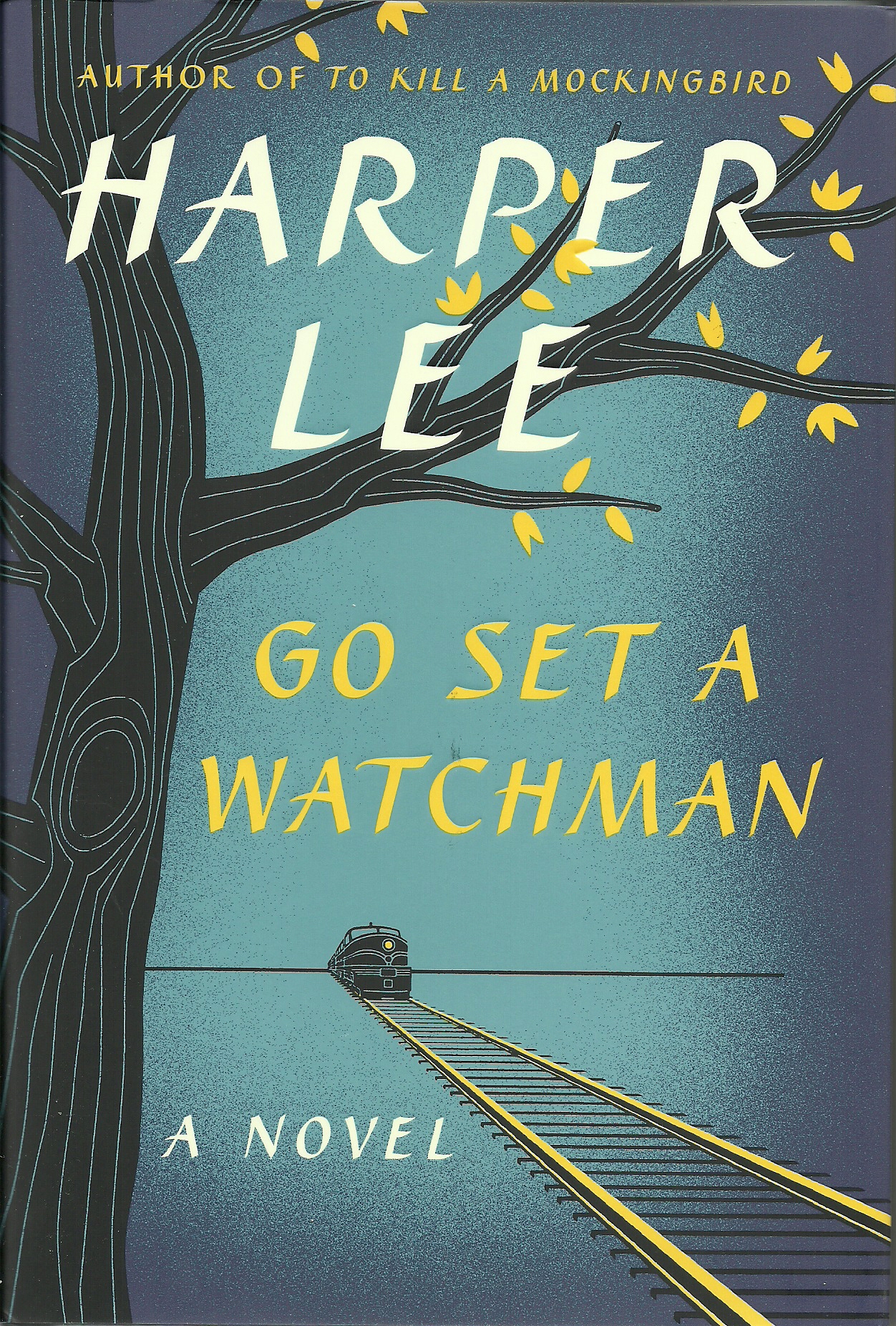
Go Set a Watchman ~ A Capsule Book Review

Go Set a Watchman cover

Go Set a Watchman ~ A Capsule Book Review by Allen Kopp

Harper Lee is famous for writing To Kill a Mockingbird but also for something else: she was friend and confidante to Truman Capote and has been portrayed by not one but two Hollywood actresses in movies about Capote and his writing of In Cold Blood. Truman Capote and Harper Lee were childhood companions in the tiny town of Monroeville, Alabama and remained friends until his death in 1984. While Capote became as famous for his eccentricities (his appearances on The Tonight Show) and his partying lifestyle as he was for the books he wrote, Harper Lee eschewed the limelight and has been, like other writers of her generation, notoriously reclusive. At age 89, she still lives in the tiny town of Monroeville, Alabama. You get the impression that fame hasn’t changed her very much.

With the phenomenal success of To Kill A Mockingbird and the equally famous movie that followed the publication of the novel, Harper Lee might have “cashed in” on her fame; she might have written other books or a sequel, but she didn’t. In the foreword to the thirtieth anniversary printing of her famous novel, she said simply that she didn’t have anything else she wanted to say. It doesn’t happen very often, especially when there’s money to be made.

Now, oddly enough, all these years later, in the futuristic year of 2015 (it would have seemed so in 1960), a new Harper Lee book has emerged, Go Set a Watchman. The title is from a passage in the Book of Isaiah: For thus hath the Lord said unto me, Go, set a watchman, let him declare what he seeth. Every man’s island, the book tells us, every man’s watchman, is his conscience.

At first glance, Go Set a Watchman seems to be a sequel to To Kill a Mockingbird because it’s set twenty years after the earlier novel, but Harper Lee didn’t intend it as a sequel. It is, we are told, a first draft of To Kill a Mockingbird. It was apparently shelved for a different version and hasn’t seen the light of day until now. The publisher, HarperCollins, must have recognized the enormous amount of interest (and the cash potential) in a new book by Harper Lee, even if it is a book written sixty years ago.

The girl in To Kill a Mockingbird, Jean Louise “Scout” Finch, is an adult in Go Set a Watchman. When she is twenty-six, on her yearly summer visit to her hometown of Maycomb, Alabama, she witnesses many changes. Her father, seventy-two-year-old Atticus Finch (the hero of To Kill a Mockingbird) suffers from debilitating arthritis and is not as vigorous as he once was. Calpurnia, the black maid who kept house for him for many years, is too old to work anymore and has been replaced by Alexandra, Atticus’s bossy sister. Calpurnia’s grandson is in trouble for running down in his car (and killing) a drunken white man. Jeremy (known as “Jem”), Jean Louise’s older brother, has succumbed at an early age to the hereditary heart condition that claimed his and Jean Louise’s mother’s life. Henry Clinton, a young attorney and protégé of Atticus Finch (four years older than Jean Louise and a lifelong friend of her brother’s) wants to marry her, but she isn’t sure if he’s the right sort or not. The most significant change, however, is in the social and political landscape of the South. Black people, spurred on by “outside interests,” are demanding their civil rights. The white people who have taken for granted the “status quo” in the South for generations are going to have to adjust to a new order of things. It’s a transitional period in the South, not unlike the period of Reconstruction after the Civil War. It’s in this atmosphere of change that Go Set a Watchman is set.

Most people will probably agree that Go Set a Watchman is not as compelling or as nearly perfect as To Kill a Mockingbird. Instead of a five-star novel, it’s a four- or a three-star novel at best. That’s not to say, however, that it’s not worth the time and effort it takes to read it, especially for those who have read To Kill a Mockingbird and/or seen the movie version and would like to know what becomes of the characters twenty years later.

Copyright © 2015 by Allen Kopp

The Idiot ~ A Capsule Book Review

The Idiot by Dostoevsky cover

The Idiot ~ A Capsule Book Review by Allen Kopp

The title character in Dostoevsky’s 1869 novel The Idiot is Lyov Nikolayevitch Myshkin, or “Prince Myshkin,” as he is generally known. He is fair-haired, about twenty-eight, frail and unwell, an epileptic given to seizures at unexpected moments. For the last few years he has been living as a charity patient in a sanatorium in Switzerland. When the novel begins, he is released from the sanatorium, although he is not well, and is returning by train to his native Russia.

He comes into some money (less than he at first thought) that allows him to live without working. In Petersburg, he falls in with a collection of characters and finds himself so completely out of his depth because he is so unlike any of them. He seems to the others naïve and unworldly, trusting and good (in a world where there isn’t much that’s good). He earns the appellation “idiot,” not for lack of intelligence but for his simplicity.

Prince Myshkin befriends a family known as the Epanchins. The matriarch of the family, Lizaveta Prokofyevna Epanchin, is a distant relative of his and is in fact “Princess Myshkin.” The Epanchins have three daughters in their twenties. Prince Myshkin seems drawn to the youngest daughter, Aglaia. Whether she is drawn to him in return is not immediately clear, not even to her. The Epanchins waver in their belief that Prince Myshkin is an acceptable son-in-law. If they start to have a favorable opinion of him, something always happens to make them change their minds. His potential marriage to Aglaia is an on-again, off-again proposition.

In the meantime, Prince Myshkin has fallen in love (or thinks he is) with Natasya Filippovna Barashkov. She is a flighty, changeable woman who is known for her beauty but, more notoriously, for being the “kept” mistress of a wealthy man. She is both reviled and admired at the same time. Prince Myshkin decides he wants to marry this woman, although he hardly seems to know her. For her part, she is lukewarm toward him. She thinks at times about marrying him while at other times she makes fun of him for being an “idiot.” (If he had any sense, he would get as far away from her as possible.)

Also in love with Natasya Filippovna are Gavril Ardalionovitch Ivolgin (known as “Ganya”) and Parfyon Semyonovitch Rogozhin (on the train with Prince Myshkin when the novel begins and with him also at the end, playing an important role in how the story is resolved). Gavril Ardalionovitch Ivolgin is the older son of the Ivolgins. His father, General Ardalion Alexandrovitch Ivolgin, is one of the most colorful characters in the book. He tells improbable stories about historical events in which he played a part in his younger days (one a long, involved story about being a “page” for Napoleon when Napoleon’s armies invaded Russia).

The introduction of The Idiot states that it’s a “digressive” novel, meaning there’s a lot that happens that doesn’t have anything to do with the plot. It’s a long book (559 dense pages) that could have been shorter if it hadn’t seen so “digressive.” That’s the way with Russian novels, though. Forget tight plotting and economy of words. In one of the digressions, the character Ippolit Terentyev, who is dying of consumption, writes a long, long “explanation” of his life, which he then reads to a roomful of people, for no apparent reason. That’s not to say it’s not interesting, but it just doesn’t seem to serve any purpose.

There’s a character list at the beginning of the book that helps to keep the characters straight, especially since the same character will be referred to by one name in one place and then referred to by another name in a different place. For example, the person we have come to know as “Prince Myshkin” is called “Lyov Nikolayevitch” a little farther along. I found myself referring to the character list a lot.

For the dedicated reader of “heavy” reading (not “light,” not “breezy”), or for the fan of Russian novels, The Idiot is a fascinating reading experience. I was really glad to get to the last page. The next book I read will be something fun and easy.

Copyright © 2015 by Allen Kopp

Baby

Baby

Baby ~ A Short Story by Allen Kopp

Louise was gone for three days. When she returned home, she was carrying a bundle in the crook of her arm.

“Where have you been all this time?” Theodore asked. “I was about to call the police.”

“Oh, you silly man!” Louise said. “Where do you think I’ve been? I’ve been giving birth to your son.”

She lifted the corner of the blanket to show him the baby’s face.

“This one has blue eyes,” Theodore said.

“He has your eyes.”

“My eyes are brown.”

“I think I’m going to name him Nathaniel,” she said. “After Hawthorne.”

“Name him whatever you want.”

“If I give him the name of a great writer, he might turn out to be a great writer himself.”

“Uh-huh.”

“You like that name?”

“It’s as good as any other, I suppose.”

She laid the baby down gently on the couch and took off her coat and laughed. “Believe me,” she said. “It’s not easy carrying a newborn baby home on the uptown bus. I had to stand up the whole way, holding the baby in one hand and trying to keep from falling with the other. You’d think a gentleman might have given me his seat, but nobody even noticed me.”

“I could have come down and met you.”

“Oh, that’s all right,” she said. “I managed perfectly fine. And, anyway, I wanted to surprise you. What do you think of our new son?”

“He’s, uh…I can’t seem to find the words. I’m speechless.”

“I know! It’s a shock, isn’t it? Seeing him for the first time?”

“Especially since I didn’t know he was expected.”

“But that makes it that much more fun, doesn’t it?”

“If you say so.”

“Now, don’t you be an old grump puss! I’m going to need lots of help from you with this baby. Feeding him, changing his diapers, bathing him, and all the rest of it.”

“I don’t think that baby is going to be any trouble at all,” he said.

“No, of course not! He’s such a good baby! I can tell already, as young as he is.”

Theodore played piano in a jazz combo in a bar, so he had to leave to go to work. “Don’t wait up for me,” he said.

“Have a good time,” she said, “and don’t worry about me. The baby and I will be here when you get back.”

With Theodore gone, Louise was glad to have some time alone with the baby. She carried him into every room in the apartment, talking to him all the while, even though she knew he didn’t understand a word she said. She fed him, bathed him, and put him to bed in the crib at the foot of her own bed.

She slept until one o’clock, at which time she got up and fed him again. After she put him back in his crib and got back into bed, she had trouble going back to sleep. She kept thinking about how Theodore didn’t seem very happy about the baby. Well, men, she thought. You can’t ever tell what they’re thinking or how they really feel. They keep it all bottled up inside.

At two o’clock she still hadn’t gone back to sleep. She got up and checked on the baby and when she saw he was sleeping peacefully she knew the problem wasn’t with the baby but with her. She was lonely and sad. She picked up the sleeping baby and put him in the bed beside her. After that she was able to go to sleep.

Theodore came home about three-thirty. He undressed quietly and got into bed and after he had lain there a couple of minutes Louise began to cry.

“What’s the matter?” he asked.

“I’m not going to have any more children,” she said.

“Okay.”

“I don’t think you love them.”

“Could we postpone this conversation to another time? I’m very tired.”

“Take Nathaniel and put him with the others. They need to get acquainted.”

“I just got into bed. Can’t you do it?”

“You’re the father.”

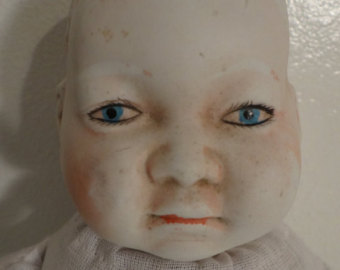
He sighed and got out of bed again without turning on the light. He picked Nathaniel up by the neck and carried him out of the room and down the hallway to another room. In this room was a bed with six lifelike plastic dolls lying side by side, all exactly like Nathaniel. He added Nathaniel to the collection and went back to bed.

“Better now?” he asked Louise.

“Yes.”

“And this is going to be the last one?”

“Yes, I think so. Seven is my lucky number.”

Copyright © 2015 by Allen Kopp

The Pat Hobby Stories ~ A Capsule Book Review

The Pat Hobby Stories

The Pat Hobby Stories ~ A Capsule Book Review by Allen Kopp

F. Scott Fitzgerald was, among other things, a writer of magazine stories. He wrote the seventeen Pat Hobby stories in this collection for Esquire magazine. The stories were published for seventeen consecutive months between January 1940 and May 1941, the last five appearing after Fitzgerald’s premature death at the age of 44 in December 1940. And it wasn’t for love of writing that he wrote them or for “art.” He wrote them for the money they brought in.

As the thirties come to a close, Pat Hobby is a studio hack, a screenwriter who reached his peak in the Silent Era and has been on a downward slide ever since. He drinks to excess and has three ex-wives. Where once he was a high-flyer pulling down three thousand big ones a week, now he is lucky to get two or three weeks at two hundred and fifty a week doing rewrites. Whatever writing talent he ever had is gone. He still dishes out a line of malarkey, though, and can bluff his way through almost any situation. Give him somebody he wants to impress and he impresses them; that is, if they don’t already know what he’s like.

Fitzgerald was drawing on his own experiences in Hollywood when he wrote the character of Pat Hobby. Fitzgerald himself, of course, drank to excess, had plenty of marital problems with his wife Zelda, and worked on the scripts (without garnering screen credits) for several movies of the era, including Marie Antoinette, The Women, and A Yank at Oxford. He co-wrote the screenplay for the 1938 Robert Taylor movie Three Comrades, based on a novel by Erich Maria Remarque. After writing his novels The Great Gatsby, This Side of Paradise, and Tender is the Night, he was definitely beneath himself in Hollywood.

Fitzgerald himself wanted the seventeen Pat Hobby stories to be collected in one volume. If they don’t exactly make a novel, they do make a cohesive whole, and if they lack literary merit, they at least provide a glimpse into the mind of one of America’s most celebrated writers at the end of his life.

Copyright © 2015 by Allen Kopp

Insidious: Chapter 3 ~ A Capsule Movie Review

Insidious

Insidious: Chapter 3 ~ A Capsule Movie Review by Allen Kopp 

Insidious: Chapter 3 is another venture into “the further,” the dark place where malevolent spirits dwell. You may visit “the further” if you know how and if you have a good reason, but chances are a malevolent spirit will attach itself to you and will be with you when you come back. Insidious: Chapter 3 is a different story with mostly a different set of characters than the ones in Insidious and Insidious: Chapter 2. The characters who repeat themselves in all three movies are Elise Rainier (played by Lyn Shaye), the psychic, and Specs (Leigh Whannell, who wrote all three Insidious movies and directed this one) and Tucker, the ghost hunters who record (or try to) all the paranormal activity going on and provide comic relief whenever it’s needed.

When Insidious: Chapter 3 begins, Elise Rainier is a disillusioned psychic. She has given up using her “gift” because a malevolent spirit has threatened to kill her if she helps any more living people rid themselves of the dead. When a high school girl named Quinn Brenner visits her, though, she decides to give Quinn a little reading because she seems like a nice girl. Quinn wants to reach her mother in the spirit world. When Elise tries to reach Quinn’s mother, she reaches instead a malevolent spirit. “When you contact one of the dead,” she tells Quinn, “you contact them all.” She warns Quinn against trying to contact her mother on her own; Quinn confesses she has already tried it but without success.

Quinn lives in an a vintage (old) apartment building with her father and younger brother in an unnamed location. A man who committed suicide in the building a long time ago is now a malevolent spirit and is living in the air vent that leads into Quinn’s room. It seems that Quinn drew his attention in her efforts to contact her deceased mother. The malevolent spirits are tired of their dark world and desire more than anything a living person to attach themselves to. The man who committed suicide in the building desires Quinn.

Quinn is hit by a car on the street and nearly dies. When she is recuperating at home with both her legs broken, the ghostly occurrences only increase. Knowing how much Quinn is in trouble, Elise decides to end her enforced retirement and help her. She will go into “the further” and make the malevolent spirit leave Quinn alone any way she can. She is putting her own life and reputation on the line.

I like horror movies as long as they’re believable (make you want to suspend disbelief) and are not about attractive vampires and are not slasher movies with jiggling teenagers. Insidious: Chapter 3 is a solid entry in the horror genre and a worthy successor of Insidious and Insidious: Chapter 2. It’s well-made and intelligent with a lot of the creepy tension that distinguished the first two movies. It ends in such a way that there is probably going to be an Insidious: Chapter 4 if this one generates enough revenue at the box office. Even if there isn’t a chapter 4, though, the first three movies make a memorable trilogy to watch at Halloween or any other time.

Copyright © 2015 by Allen Kopp

Martha Beck and Ray Fernandez

Tony and Shirley

Martha Beck and Ray Fernandez ~ A Commentary on The Honeymoon Killers by Allen Kopp 

True story. Grumpy, overweight nurse Martha Beck meets suave gigolo Ray Fernandez through a lonely hearts club. Martha isn’t pretty but she has other qualities that are perhaps more important to Ray: she has a black heart and she’s smarter than the others. She dumps her elderly mother in a rest home, quits her nursing job, and she and Ray embark on a criminal enterprise of cheating silly, vulnerable women out of their money and jewelry and killing them if necessary. All these women have one thing in common: they are lonely and they can’t believe their good fortune that Ray has come into their lives. He’s young, dark and handsome, with an accent that is most appealing.

First there’s the mannish schoolteacher. When she and Ray are married, Martha goes along for the ride as his “sister.” A man having his sister along when he gets married doesn’t seem to arouse the suspicions of the schoolteacher. When Ray doesn’t sleep with her on their wedding night, however, she begins to suspect that something isn’t quite as it should be. The next morning she is chagrined to discover that the two thousand dollars she brought along with her is missing, along with some rings. When she demands the return of these things, Martha coolly offers her a cup of coffee. The schoolteacher wisely packs her things and leaves, wearing a silly-looking hat, but not before threatening Ray and Martha with legal action. They know—and we know—that she is only bluffing and they won’t be bothered with her again. Fairly easy.

Next is the silly (note that “silly” is the operative word here), cleavage-showing, middle-aged woman with the Southern accent. She says she is going to have a baby, apparently not knowing or caring who the father is, and she wants to marry Ray so her family won’t know what a whore she is. When she becomes obstreperous, Martha (again along as Ray’s “sister”) starts to give her pills to calm her down. Whatever the pills are, they must be really strong because soon the woman is dead.

When next we meet Martha and Ray, they are with a horse-faced blonde he met through the lonely hearts club. They are at a river or lake somewhere, preparing to go in swimming. Ray looks better in his swim briefs than he has any right to. Martha looks like a baby hippo in her ruffled bathing suit. Ray and the horse-faced blonde are lying on a blanket at the river’s edge. When Martha observes from a distance that Ray and the horse-faced blonde are close together in a private tête-à-tête on the blanket, she panics. To draw Ray’s attention, she goes farther out into the water than she should, being such a heavy girl, and begins to struggle. Rays sees what’s happening and, leaving the horse-faced blonde behind, plunges into the water to save Martha. The horse-faced blonde, who is maybe a little smarter than Ray has given her credit for, stands on the river bank and observes Ray “rescuing” Martha in the lake. As Ray holds fat Martha in his arms and kisses her, upset at the thought that he might have lost her, the horse-faced blonde sees that they are acting anything but brotherly and sisterly toward each other, connects a few dots and wisely departs.

Then there’s the silly old widow who lies and tells Ray she’s fifty-six when really she is older. He tells her his name is Charles Martin. “Isn’t that cute?” she coos. Ray (or Charles, as she believes) tells her he is forty-five and puts some gray highlights in his dark hair to prove it. Again the old widow doesn’t question the presence of Martha as the sister of her husband-to-be. On the night before they are to be married the next day, Ray entices the old widow to sign over all her assets to his name. “I’m going by the bank early in the morning,” he says. “It will make things easier if we take care of the business tonight.” Suspecting nothing, the old widow does as Ray says. After they retire for the night, though, she begins to worry and can’t sleep. Martha tells her to relax, that everything will be taken care of in the morning, but the old widow isn’t buying it. She gets out of bed and starts making a fuss. She can tell from the way that Ray and Martha are acting that she is in danger. When she says she wants to go out for a walk, even though it’s the middle of the night and she’s in her nightdress, Ray gives Martha a hammer and Martha knows what she is to do with it. She hits the old widow in the back of the head. She screams and goes down but is by no means mortally wounded. “Hit her again!” Ray screams. After they have killed the old widow, Ray is sweating. He sheds the pajamas he’s wearing and begins drinking from a whiskey bottle. Martha goes into the bedroom and gets into bed. We see Ray from behind as he goes into the bedroom where Martha is. He is naked and carrying the bottle. “Are you going to turn the light off?” Martha asks. “Leave it on,” Ray says. “I want to make love.” Sex and death here walk hand in hand.

We see by now that Martha is in love with Ray in her own twisted way. Ray has no interest in his female victims other than what he can get out of them—“I despise those women,” he says—and Martha will make sure it stays that way. She becomes jealous and possessive in the way of women in love. When Ray hooks up through the lonely hearts club with a young widow with an eight-year-old daughter, though, Martha begins to suspect that there is more between them than she finds acceptable. In the interim before the marriage, the young widow confides to Martha as her future sister-in-law that she is carrying Ray’s child. She and Ray just couldn’t keep from “sleeping together” when they were alone in the house. Martha tries to get her to miscarry the baby and when that doesn’t work she shoots her in the head and kills her. When the eight-year-old daughter comes home from school and asks where her mother is, Martha takes her into the basement and kills her, too. Ray then believes that everything will be all right and they can just move on to the next victim, but Martha can’t go on, knowing that Ray has “slept” with—and impregnated—another woman. She calls the police and turns herself and Ray in. They go to jail, of course, and are executed for their crimes. So ends their story.

How much longer could they have gone on if Martha hadn’t learned that Ray was “cheating” on her? She can rob people of their money and kill them when she believes she must, but she absolutely draws the line at infidelity.

Think what Ray and Martha could have done if they had had the Internet. All to the accompaniment of Gustav Mahler.

Copyright © 2015 by Allen Kopp

I Don’t Want to Miss Any of This

I Don't Want to Miss Any of This image 2

I Don’t Want to Miss Any of This ~ A Short Story by Allen Kopp

Alva Fritchie, age ten, tap danced in his tennis shoes on the bare wood floor between the kitchen and dining room. He didn’t seem to be able to stand still anymore but always wanted to be dancing. When his mother called told him to come to supper, he danced his way to the kitchen table, where his mother, father and sister were already seated.

“I’m going to get taps put on my shoes,” Alva said as he sat down.

“I don’t think so,” mother said. “They make marks on the floors.”

“Does it matter?”

“It matters if you have to get down on your hands and knees and try to get rid of them.”

“Dancing is for sissies,” father said. “What do you want to dance for?”

“He’s not really dancing,” Cecelia, his sister, said. “He’s only imitating what he’s seen on TV.”

Cecelia was sixteen. She had washed and pinned up her hair after school and had a scarf on her head, peasant style. She also had an outbreak of acne on her chin.

“I can so dance, pimple face,” he said. “I’m good at it. I can give you a demonstration any time you want.”

“That would be never,” Cecelia said.

“I like to dance. It makes me feel young.”

“You are young,” mother said.

“Anybody can stand and move their feet,” father said. “That doesn’t make it dancing.”

“He’s such an idiot,” Cecelia said.

“Don’t call your brother that,” mother said. “We should be glad he isn’t an idiot. I’ve seen idiots and they’re no laughing matter.”

“Isn’t Bobo Mitchell an idiot?” his father said.

“I think he might be a moron. Or maybe an imbecile. A long time ago I knew the difference but I guess I forgot.”

“I guess you forgot,” father said mockingly. “I’ve forgotten more than you’ll ever know.”

“That’s stupid,” Cecelia said.

“Don’t be disrespectful to your father.”

“He’s disrespectful to me. You hear all the time about kids being disrespectful to their parents. What about parents being disrespectful to their kids?”

“I guess that doesn’t matter so much,” mother said.

“Life’s a bitch,” Alva said.

“We don’t use that kind of language at the supper table,” mother said. “It’s a vulgar, ugly word.”

“Kids at school say it all the time.”

His mother shook her head. “And that’s today’s ten-year-olds,” she said. “I never heard that kind of language until I was married to your father.”

“That’s a kindergarten word compared to the things I hear,” Cecelia said.

“What do you hear?” Alva asked.

“Never mind,” mother said. “Eat your stew.”

“I don’t like it. I want a hamburger.”

“Well, then, why don’t you just hop in your car and run downtown and get yourself one while the rest of us sit here and eat this stew?”

“I don’t have a car,” Alva said. “If I did, I’d get in it and drive a long way from here.”

“Where do you think you’d go?” Cecelia asked.

“I’d go to Hollywood, California and get a job dancing in the movies.”

“Hah!” Cecelia said. “Who’d pay money to see you? You’re a freak!”

“What is this obsession with dancing?” father asked.

“I don’t know,” mother said. “It’s something he saw on TV. Tomorrow it might be something different.”

“All I want to do is dance, dance, dance!” Alva said.

“If you only knew how stupid you look,” Cecelia said.

“Shut up!”

You shut up!”

“Both of you shut up and finish your dinner,” father said.

Alva took a couple bites of the tepid stew and said, “Birdie Leonard went to the bathroom in her pants today at school.”

“Oh, my!” mother said. “Why didn’t she ask to be excused to visit the restroom?”

“I guess she didn’t know she had to go until it started coming out on its own.”

“I’m not sure that’s a fit subject for conversation at the dinner table.”

“What was funny, though, was she started blubbering. Miss Gottschalk slapped her across the mouth.”

“She did not!” Cecelia said. “Teachers aren’t allowed to do that anymore. They can get into a lot of trouble.”

“Well, she wanted to slap her. I could tell she was thinking about it.”

“So, you know what people are thinking now?”

“Sometimes I do.”

“You’re a liar.”

“So they had to call Birdie’s mother to come and get her and take her home. When Birdie got home, she washed off and put on some clean underpants.”

“How do you know what she did when she got home?” Cecelia asked.

“Well, isn’t that what you’d do if you went to the bathroom in your pants at school?”

“Whatever I did, it wouldn’t be any of your business.”

“That’s enough of that kind of talk at the table,” mother said.

“Why don’t you go study up for your driving test so you can fail it again?” Alva said.

“Mother, make him shut up!” Cecelia said.

“You both shut up!” father said. “You’re making my headache worse.”

“He’s such a little weasel.”

“At least I didn’t fail the driving test six times.”

“It was not six times!”

“How many was it then?”

“None of your business! That’s how many it was!”

“You’re a sloppy pig. You’ve got pimples all over your face. You look like a whore!”

“Why don’t you go dance yourself over a cliff and make us all very happy?”

“Don’t you ever let me hear you call your sister a whore again,” mother said. “Do you understand me?”

“I didn’t call her a whore,” Alva said. “I said she looked like a whore.”

“I don’t even want to hear that word.”

“It’s a good word,” father said.

“Don’t encourage him!” mother said.

“I saw her getting into a black car with a man down at the corner,” Alva said.

“Shut up, you little liar! You did not!”

“She was standing there all by herself. She didn’t know I was watching. A man drove up in a black car and stopped. When he got out and walked over to where she was standing, she became all girly and giggly. She flapped her arms and rolled her eyes and waggled her hips.”

“I did not!”

“They talked for a minute and then they both got into the black car and he peeled out.”

“He did not!”

Mother took a deep breath. “What are you saying?” she asked.

“I saw it all and I wished I had had a camera so she wouldn’t be able to lie her way out of it.”

Mother turned and looked closely at Cecelia. “Anything to this?” she asked.

“Oh, he’s got it all wrong. It wasn’t anything like he said.”

“So you did get into a black car with a man you didn’t know?”

“Who said I didn’t know him?”

Hah-hah-hah!” Alva laughed.

“You little snake!” Cecelia said. “I’m going to slit your throat the first chance I get!”

“You’d better explain yourself while your head is still attached to your shoulders,” father said.

“It was Alice Terry’s brother. He’s home on leave from the navy.”

“How old is he?”

“I don’t know. About twenty-two, I guess.”

“What were you doing with him?”

“He was just giving Alice and me a ride to the library.”

“Alice wasn’t there!” Alva said.

“Oh, yes, she was, you little turd! She was in the back seat.”

“I didn’t see her.”

“That’s because her brother has tinted windows on his car.”

“I’m not liking the sound of this,” father said.

“It was all perfectly innocent, believe me.”

“Why should anybody believe a big liar like you?” Alva said.

“That’s enough, Alva!” mother said. “If you’re finished eating, you may go to your room.”

“I want some dessert and, besides, I don’t want to miss any of this.”

“Give me Alice Terry’s telephone number,” mother said. “I’m going to call her and see if she confirms what you’re telling me.”

“She isn’t home.”

“Where is she?”

“She’s going to be in a play at school. They’re having rehearsal tonight.”

“I will be talking to Alice Terry and her mother,” mother said, “even if I have to wait until midnight to do it.”

Cecelia threw down her fork. “Why are you all picking on me?” she said. “I haven’t done anything!”

She began bawling in much the same way that Birdie Leonard had done when she went to the bathroom in her pants at school. Her eyes bulged tragically and bits of food came out her thin-lipped mouth and dripped off her chin. She reminded Alva at that moment of a frog, but he kept it to himself. He would have a new name to taunt her with later, though.

Cecelia ran out of the room with mother right behind her. “Women!” father said to himself. He threw his napkin down disgustedly and went out the back door.

Alva was left alone at the table. He stood up and danced his way to the refrigerator, where he opened the freezer and helped himself to a generous bowlful of chocolate ice cream.

While he sat at the table and ate it, he heard the drama going on upstairs: Cecelia’s wailing, slamming doors and hurried footsteps. Mother would be trying to console Cecelia, as she always did, but Cecelia, at this moment, would be inconsolable.

When he was finished, he left the bowl on the table, pushed the chair in and danced in the big space between the table and the sink. The floor was tile and good for dancing. He was working on some new steps that he made up himself. He would dance the night away if only he could.

Copyright © 2015 by Allen Kopp