Happy Starfish

Happy Starfish ~ A Short Story by Allen Kopp

Did I tell you how I hate school? This morning in zoology I had to dissect a starfish. The inside of the starfish is green. That’s disgusting enough, but the thing that got to me is the fishy smell. It’s a smell that lingers in my head and my nose. I don’t think I’ll ever be able to eat any kind of fish or seafood again for as long as I live without being reminded of the green insides of a starfish.

The world is very cruel. That little starfish was probably just minding its own business on a beach somewhere when somebody picked it up and put it in pickling solution where it instantly died. One minute a happy starfish and the next minute a laboratory specimen to be cut open and have its insides probed. If I was a starfish, I would want to live on a faraway island where there were no people and I could die of old age.

After zoology was American history, but I skipped. I thought I was going to vomit and I didn’t want anybody to see me. I went to the boys’ toilet on the third floor where it was quiet and went into a stall and latched the door. I put my hands on my knees, leaned forward and closed my eyes, trying not to think about that starfish.

In a minute somebody came into the toilet whistling. I hate to hear people whistle. It spoiled my concentration, so I just spit into the toilet and flushed without vomiting. I opened the stall door and went to the sink and started to wash my hands.

“What do you think you’re doing?” somebody to my left said.

I turned and saw it was Claude Qualls. If there’s anybody in school I hate, it’s Claude. He’s the class president and a snitch. Mr. Do-Gooder. Mr. Over-Achiever. Mr. Perfect. He has somehow taken it upon himself to keep the rest of us in line. Probably someday he’ll be a congressman or a senator or something if somebody doesn’t kill him first.

“Washing my hands,” I said. “What does it look like?”

“That’s not what I meant, smartass! What are you doing out of class?”

“I’m sick.”

“You don’t look sick.”

He took his eyes off himself in the mirror and leaned in close to me, sniffing.

“Get away from me!” I said. “What I have is probably contagious.”

“Aren’t you supposed to be in American history?”

“What business is it of yours?”

“As class president, I’m supposed to report anybody skipping class.”

“Go to hell!” I said.

He grabbed me by the collar and pulled me toward him, holding his right arm back like he was going to hit me in the face. “What did you just say to me?” he said.

“You heard me. I said: Go to hell, bitch!

He roughed me up a little bit but didn’t hit me. He finished by pushing me into the sink. The fingers on my left hand bent back painfully.

“You stupid little baby!” he said. “You can be sure that this little episode will be reported.”

“You’re the big man, aren’t you?” I said. “The big man will always be there to tell the rest of us what to do, won’t he?”

“Shut up, you little freak!”

“No, you’re the freak, Claude! Not me! Everybody hates your guts!”

“I’m going down to Mr. Ludlow’s office right now and write up a report stating that you’re loitering in the bathroom when you’re supposed to be in class.”

“I hope you break your leg going down the steps,” I said.

I went to the library to hide out for the rest of the period. I knew that if I sat at one of the tables out front, anybody coming in would spot me right away, so I wandered around in the dusty stacks for a while and then went all the way to the back where nobody ever ventured and sat down on the floor in the corner. I opened a book on my knees so if I heard anybody coming I’d pretend to be reading.

I was starting to feel a little less like vomiting. The quiet and the smell of old books made me sleepy, so I leaned my head against the wall and dozed off like a bum sleeping it off in an alley.

“Here he is!” I heard somebody say in a loud voice.

I jerked awake and saw Claude Qualls looking down at me. Behind him was Mr. Ludlow, the principal.

“I was sure he’d be hiding out somewhere!” Claude said.

“What do you think you’re doing?” Mr. Ludlow scolded. “Sleeping on the floor in the library!”

“I was feeling sick,” I said, standing up.

“You haven’t been drinking, have you?”

“Of course not!”

“Aren’t you supposed to be in class?”

“American history class,” Claude said.

“I was going to vomit,” I said. “I didn’t want to be in class when it happened.”

Mr. Ludlow took hold of my arm above the elbow and squeezed. I was sure I would have a bruise there and I was sorry that Claude was the only one present to witness this rough treatment.

“Skipping class will not be tolerated in this school,” Mr. Ludlow snarled in his best warden-of-the-big-house voice. I could smell his cologne and it was worse than the starfish. “Do you want a suspension?”

“No,” I said. “I just want my high school years to be over.”

“Do you need me to help you with him?” Claude asked.

“No, thanks, Claude,” Mr. Ludlow said. “I can take it from here.”

“Before you tell somebody else to go to hell,” Claude said to me with his demonic smile, “think about who you’re talking to.”

“That’s fine, Claude,” Mr. Ludlow said. “You may go now.” To me Mr. Ludlow said, “Proper disciplinary action will be taken at the appropriate time but, for now, you may go to your next class, and if you even think about skipping class again you’ll be faced with a three-day suspension. Think what that will do to your scholastic record and to your chances of getting into a good college.”

My next class was gym class, which I hated more than all my other classes put together. I went to the locker room and changed out of my “street clothes” into the ridiculous gym togs: baggy red shorts that hung down to my knees, a stretched-out tee shirt and grass-stained high-top tennis shoes that were too small for me and made my toes hurt.

While we were all standing around waiting for the teacher to arrive so the class could begin, I spotted Claude Qualls about twenty feet away, bouncing a basketball. When he saw me, he gave me a look of bemused hatred and I mouthed the words go to hell. There wasn’t any way he could not know what I was saying.

The physical education teacher was Mr. Upjohn, or “coach,” as he liked to be called. He was four feet, eleven inches tall and he looked like a troll in a fairy story who hides under a bridge.

“All right now, everybody!” he yelled and blew his whistle. “Time for warm-up!”

As bad as the warm-up was, it wasn’t as bad as the game of volleyball or basketball that followed. We stood in rows as Mr. Upjohn faced us and directed us in the knee bends, sit-ups, pushups, and jumping jacks.

It was during the jumping jacks that I vomited on the floor, a thick green mass that looked exactly like the insides of the starfish. Everybody stopped jumping up and down and looked at me. I bent forward to vomit again and fainted face down in what I had just deposited on the floor. It was only the second time in my life that I had ever fainted. The first time was when I was eight and had the flu.

When I regained consciousness, they were all standing around in a circle watching me. I had really spiced up their boring old gym class. Mr. Upjohn was kneeling beside me, waving a bottle of smelling salts under my nose.

“He’s coming around,” he said.

“I want to go home,” I said.

“Can you make it to the nurse’s office?”

“She doesn’t like me. I pushed her down the stairs once.”

As I stood up, Mr. Upjohn took hold of my arm. “Go get dressed,” he said, “and go see the nurse.”

“I don’t know,” I said, wobbling for effect. “I feel like I’m going to faint again.”

“Claude!” he barked. “Go with him and help him get dressed!”

Claude stepped forward, ready once again to fulfill his role as student leader.

“I don’t need any help from him!” I said. “Just give me time!

I went down to the deserted locker room, cleaned the vomit off my face and out of my hair and put my clothes back on. As I was leaving the locker room, I noticed the door to Claude’s locker was partway open. I approached the locker, pulled the door open all the way and looked inside. There, on the top shelf, was Claude’s expensive gold wrist watch. I slipped the watch into my pocket and deposited it in a trashcan on my way to the nurse’s office.

I walked into her office and vomited again, all over the floor. Now, I have to tell you, there’s nothing like vomiting to get people’s attention. You can say you’re sick, but dramatic vomiting leaves no room for doubt.

The nurse dropped what she was doing and came running with a kidney-shaped metal pan. She told me to lie back on the cot and she put a wet cloth on my head. When she took my temperature and saw I had a fever, she called my mother and told her to come and get me.

When I got home, I kicked off my shoes and got into bed. My mother stood in the doorway and harangued me, as usual.

“Why did you choose today of all days to be sick?” she asked.

“I figured it was time,” I said.

“Algebra test today?”

“No, I failed that last week.”

“Well, I have to tell you,” she said, “sometimes when you say you’re sick I don’t believe you, but today you look sick.”

“Thank you,” I said.

She called the doctor and described my symptoms. From my bed, I could hear her yapping into the phone in the other room for a good ten minutes. After she hung up, she came back into my room. I pretended to be asleep until I heard her breathing and opened my eyes.

“He said it sounds like you have a virus that’s making the rounds,” she said. “It’s contagious and he said to keep you at home in bed for a few days.”

“I always liked Dr. Fain,” I said.

“He said that after the nausea passes I’m to give you anything you want to eat or drink.”

“I want a champagne cocktail,” I said, “and a steak medium rare.”

“But the main thing,” my mother said, “is to keep you quiet and in bed.”

I groaned for good effect and my mother went out of the room and closed the door.

I remembered my conversation earlier in the day with Claude Qualls in the boys’ toilet. He had stuck his snoot in my face and I hope he caught what I had, only ten times worse. He would be distraught at the thought of missing any school, while I, on the other hand, loved it better than anything.

Copyright © 2017 by Allen Kopp
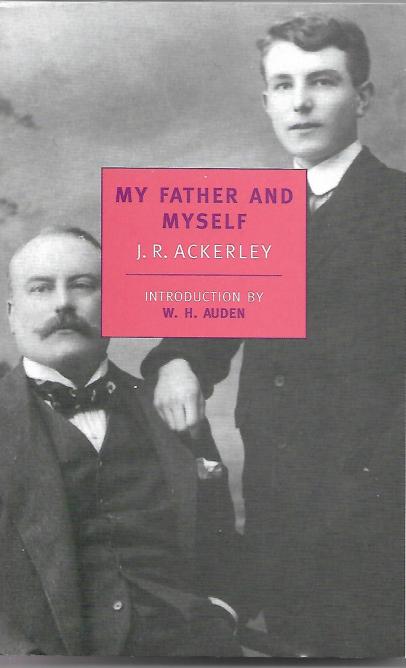
My Father and Myself ~ A Capsule Book Review

My Father and Myself ~ A Capsule Book Review by Allen Kopp

R. “Joe” Ackerley was a British writer and editor who lived from 1896 to 1967. His nonfiction book, My Father and Myself, is a “memoir” published in 1968 after his death. It is about Joe Ackerley’s strange quest in life to find the “Ideal Friend” and his even stranger relationship with his family, especially his father, Roger Ackerley.

This book begins with the sentence: “I was born in 1896 and my parents were married in 1919.” This sentence sets the tone for what is to come. Joe was one of three children. All three of them, Joe learns from an aunt (his mother’s sister) were “accidents.” Joe’s father is a prosperous businessman, an importer of fruit, earning him the nickname “The Banana King.” His mother is a garrulous featherhead, with whom, Joe says, he never has a serious conversation in his life. Joe’s brother, Peter, is killed in World War I, with Joe not far off when it happens. Joe’s sister is an unpleasant girl who fights and argues incessantly with her mother. She ends up marrying, and divorcing, an American. The sister hardly shows up as a blip on Joe’s emotional radar, which could also be said about any other female in Joe’s life.

Yes, Joe prefers members of his own gender and is open about, at a time when it is unlawful in Britain. While he has access to dozens of willing participants, he is never able to find the right one. He always feels restrained, as if something is missing. He hopes to find the “Ideal Friend,” and, though he may come close a couple of times, never does.

Joe discovers after his father’s death in 1929 that his father had a secret life, about whom Joe never had an inkling. Roger Ackerley had a “mistress” and with her three daughters. He is somehow able to keep his “real” family and his “secret” family separate and apart. When he dies, both families discover that he didn’t have as much money as they thought. (Keeping up two families takes more money than anybody suspected.) Joe also discovers that, in his father’s younger days, he very likely had liaisons with other men, including a count with whom he eventually had a falling out.

Joe Ackerley recounts his school days, his experiences in the First World War, and his later experiences working for the BBC. Toward the end of the book is a funny section about renting a flat from an eccentric, “Dickensian” trio (two brothers and a sister) in a working-class section near the Thames.

My Father and Myself is a full of self-deprecating humor. We don’t see a monstrous ego at work in Joe Ackerley, but rather an insightful, self-analytical and nervous man who, though he tries, never seems to find the secret to happiness, in his personal or his professional life.

Copyright © 2017 by Allen Kopp

Until We Meet Again

Until We Meet Again ~ A Short Story by Allen Kopp

(Published in The Corvus Review.) 

During the years that Hulga Van Sipes took care of Isadore, her invalid husband, he wasn’t able to speak or barely to blink his eyes. She did everything for him: got him up in the morning and put him to bed at night, bathed him, dressed and undressed him, lifted him in and out of his wheelchair (he had always been a small man), cooked his food and fed it to him (all he had to do was swallow), and talked to him as if he might answer. She read to him, sang to him in her wheezing soprano, and sometimes she put a little rouge and lipstick on him to make him seem more alive.

When Isadore finally died in his sleep, Hulga had his body cremated without fanfare. She put his ashes in a large-sized Hellman’s mayonnaise jar and kept the jar on a shelf of the curio cabinet next to the TV where she could always see it.

Hulga thought she could go on with her life (what was left of it), but she found it was just too bleak and lonely—empty, so empty—without Isadore. She had been married to him for fifty-two years and most of them were good, fine years. She wasn’t able to erase all those years and go on her merry way as if nothing had happened.

At a store called Under the Sun on Skid Row Boulevard that sold just about anything, she bought a full-sized male mannequin (also known as a doll) with fully articulated arms and legs. She took the mannequin home with her in a taxi.

Of course the mannequin looked nothing at all like Isadore. Everything about him was shiny. He had shiny black hair (complete with pompadour) painted on his head, shiny black eyes (sparkling, like the glass eyes of a stuffed mountain lion), and a shiny skin with red spots on both cheeks. His shiny lips were slightly parted, showing tiny, perfect teeth which, of course, were shiny.

At first Hulga was put off by the difference between the mannequin and Isadore, but after a few days she came to accept the difference and appreciate it. The mannequin was a young man and at times she was able to think of herself as a young woman worthy of him (even if the mirror told her otherwise). And, even though he was inanimate, he was for the most part no more inanimate than Isadore had been.

Hulga Van Sipes was happy again or, if not happy, she felt useful and not quite so lonely. At mealtimes, she propped the mannequin up at the table and put little dabs of food on his plate which, of course, she ended up eating herself or putting down the garbage disposal. She was delighted that her grocery bills were smaller because the mannequin really didn’t eat all that much.

As she chewed her food, with the radio playing lively dance music in the background, she looked over at the mannequin and smiled and he always smiled back. He was never grumpy or out of sorts. He never dribbled food out of his mouth down his front. He was the perfect dining-table companion. How fortunate she was to have found him!

She left him in his place at the table while she washed the dishes, and when she was finished she wheeled him into the living room and lifted him onto the couch, propped his feet up and covered his legs with an afghan. (He had always been susceptible to chill, especially in the lower extremities.)

They both liked the same programs on TV. If she laughed while watching, she looked at him to see if he was also laughing. If she cried, he also cried, and if she became bored with a program and wanted to change the channels, he was always compliant.

After the weather report, she switched off the TV, took the mannequin into the bedroom and got him into his pajamas and into bed. She pulled the covers up under his chin, kissed him on the forehead and turned off the light. She always left his door open a little bit so she would hear him if he stirred.

After several months of unchanging days, the line between Isadore and the mannequin became blurred for Hulga and then disappeared altogether. The mannequin became no longer a substitute for Isadore but Isadore himself. Hulga forgot that Isadore had died (she put his ashes in the basement where she wouldn’t have to look at them). He had been with her all the time. It was a leap that she made in her mind as easily as breathing.

In October the days were warm and the sky as blue as it had been all year. Hulga wanted Isadore to have some time outdoors before winter set in again. She dressed him warmly and took him for a stroll in the park where he might observe the beauty of nature. The little outing went so well, and they both enjoyed being out of the house so much, that she took him again the next day and then the day after that.

On the third day of Hulga pushing Isadore through the park, a woman came and stood in front of the wheelchair and Hulga was forced to stop. She thought the woman was going to ask her for change because she was that kind of woman, a bum or a homeless person.

“What’s the matter with you?” the woman asked.

“What?” Hulga asked.

“What are you, deaf? I said: What. Is. Wrong. With. You?”

“Why, nothing’s wrong with me,” Hulga said, thinking she was being indulged in a joke of some kind.

“Are you an escapee?”

“Am I a what?”

“You are such an asshole!” the woman said. She was very short and fat, wore a filthy knit cap on her head and a man’s wool overcoat, even though the day was warm. She brandished a lighted cigarette like a knife.

“What was that you called me?” Hulga said.

“Every day for the last three days I’ve seen you pushing that dummy around in that chair.”

“Dummy?” Hulga asked.

“Yeah! Him!” the woman said, pointing at Isadore.

Looking down at Isadore to see if the woman was upsetting him, Hulga said, “He’s my husband.”

“Your husband!” the woman said with a hoot of laughter. “One of us is nuts and I don’t think it’s me!”

“If you’ll just let me pass, miss.”

“It’s time you woke up and smelled the roses, dearie!” the woman said. “That dummy ain’t nobody’s husband!”

A small group of people, sensing that something interesting was happening, had gathered around to listen.

“We’ve been married for fifty-two years,” Hulga said. “Not that I think it’s any of your business.”

“Well, I hope you’re married for another fifty-two and I hope he don’t give you a bit of trouble, neither.”

“That’s silly,” Hulga said.

The people who had gathered around laughed and the woman with the cigarette bowed like a courtier and went away as quickly as she had appeared.

Hulga felt the people looking at her, laughing at her the way they would laugh at a freak. She wanted to get herself and Isadore away as quickly as she could, back to the safety and security of their own home. How ugly the world was! How cruel people could be!

Feeling shaken, she stopped the chair and sat down on a bench to rest before going home. The air had suddenly grown colder and the sun, shining so brightly just a little while ago, had receded behind gray clouds.

“It was a mistake to bring Isadore out into the world,” she said. “He doesn’t need this any more than I do.”

She pushed her fingers lightly into Isadore’s upper arm and he tilted crazily against the arm of the wheelchair in such a way that only a crazy person would think he was a real man.

“You aren’t real, are you?” she said. “I’ve only been fooling myself all along.”

She began to be afraid somebody might report her and they—the bureau of crazy people, maybe—would come and take her out of her home and make her stay in a mental home against her will. They might even shoot volts of electricity into her head, as she had witnessed on TV. The thought made her feel frightened and helpless.

She dumped the mannequin (not really her Isadore, after all) out of the wheelchair under a tree and hurried away before she changed her mind.

On her way out of the park, an old man shuffled toward her.

“Can you spare a dollar?” he asked.

She looked at him and smiled. “Isadore?” she said.

“Name’s Boo-Boo,” he said. “At least that’s what my friends call me.”

“Would you like to come home with me?”

She touched the sleeve of the jacket, slick with dirt. He pulled back as if uncertain what she was might do.

Gunsmoke is on tonight,” she said. “It’s your favorite show.”

“What time is it?” he asked.

“It starts at eight o’clock,” she said.

“You really want me to come home with you?”

“Yes.”

“What’s the catch?”

“No catch.”

“Could you fix me some bacon and eggs?”

“Sure.”

“Got any beer?”

“You never drank before.”

“Could I have a bath and some clean socks?”

“Anything you want.”

She pointed to the wheelchair. He sat in it and twisted his head around and smiled up at her.

“This is all right!” he said. “Very kind of you, I’m sure. It’s only fair to warn you, though: I ain’t much of a lover.”

She patted him reassuringly on the shoulder and began pushing toward home. She thought how light he was, how easy to push, and how much she had missed him the whole time he had been away.

Copyright © 2017 by Allen Kopp

Mother Witch, Father Ghoul

Mother Witch, Father Ghoul ~ A Short Story by Allen Kopp

Jock and Lena had been married for eighteen years when their first child came along, a boy they named Finley. They had resigned themselves to being childless, so Finley was something of a surprise. Lena was sick the whole time she was carrying Finley and she wondered secretly if childbirth was worth all the trouble and fuss. She had been happy without children and wondered if she would ever be happy again.

Always a reader, she read book after book on child-rearing and parenting, hoping that the words on the printed page would make her feel inspired, but they had no effect in that direction. She woke up every morning during her pregnancy hoping that the little thing growing inside her would—if not exactly die—just not be there at all.

When Lena told Jock she was going to have a baby that neither of them expected, he was so dismayed he couldn’t speak. He shook and felt weak and had to sit down. When he recovered his senses, he demanded a scotch and soda and a steak medium-rare and accused Lena of having a secret affair with the obese man who cleaned the carpets.

The birth was a difficult one and Lena thought she would die. When the nurse at the hospital placed Finley in Lena’s arms for the first time, Lena fainted and fell out of bed; the nurse caught Finley just in time before he hit the floor. When Lena woke up from her faint, she had temporarily lost her senses.

Jock and Lena readied an upstairs room in their spacious house for the baby. They bought all the requisite furniture and all the little things they thought a baby would like. They had the room painted a cheerful yellow color and bought new curtains with elephants and giraffes on them; they spared no expense.

On the day Lena brought Finley home from the hospital, a few curious neighbors dropped in to see him. Lena wore a tight smile and welcomed the visitors graciously. Jock locked himself in his study and drank whiskey and wrote atrocious poetry.

Finley was a beautiful, perfect child with abundant light-brown hair and a full set of teeth. It was his strange, green-and-amber eyes, though, that people noticed first. He looked searchingly at any visitor who came into the room, as if he were studying them and knew things about them that nobody else knew. When people talked, he moved his lips and smiled, pretending he too was talking. Frequently he pointed at something across the room and when people turned to look at what he was pointing at, there was nothing there except the blank wall. He was seeing things that nobody else saw.

At about three weeks old, Finley began moving objects around the room by pointing at them with his tiny index finger and pursing his lips. If a floppy yellow bunny was sitting on the chest of drawers, he could make it fall to the floor or float across the room and fall into his bed, at which time he would grab it and stick it in his mouth. When a wasp came into this room, he pointed at it and flicked his tongue and the wasp fell dead in mid-flight.

“I don’t see anything of myself in him,” Jock said. “Nobody in my family ever had eyes that color.”

Lena was hurt anytime Jock suggested that somebody else was Finley’s father. The marriage, which before had been tolerable, was strained to the breaking point. Jock went out of the room when Lena entered and spoke to her only when it couldn’t be avoided. He blamed her for Finley’s existence and came to see their marriage as a mistake. He tried to warm up to Finley but believed that the two of them would only ever be strangers. He couldn’t visualize Finley living in his house for twenty or so years until reaching adulthood.

Despite Lena’s misgivings about parenthood, she tried to be a good mother to Finley. She fed him, bathed him and spent most of her waking hours looking out for him. There was always something about him, though, that to her didn’t seem right. It seemed he didn’t need her. He was attuned to something or someone else besides her. At times he would look longingly outside the window and point his finger and warble at something that only he could see.

At six months, Finley was walking and at nine months talking in complete sentences. He asked for pencil and paper and began drawing pictures of birds, castles, airplanes and elephants.

“How could you know about such things?” Lena asked.

When Finley was less than a year old, a relative gave him a picture book with farm animals and jungle animals. He looked appreciatively at all the pictures and then asked for a book with words.

“What kind of a book would you like?” Lena asked, stunned that a baby would make such a request.

“It doesn’t matter,” Finley said. “Just something I can hold in my tiny hands and turn the pages.”

She didn’t want to give him anything too “adult,” so she gave him a juvenile book about the Pilgrims and the first Thanksgiving. He read the book in one afternoon and asked for another one.

“Where did you learn to read?” Lena asked. “You haven’t been to school yet.”

“Some people are just born knowing things, I guess,” he said.

At one year, Finley was dressing and bathing himself and getting his own food. Lena kept a little stepstool within easy reach of the refrigerator. He never dropped any crumbs or spilled anything on the floor, and when he was finished eating he washed his own dishes, standing on a chair at the sink.

He learned to turn on the TV when nobody was around and watch on his own. He wasn’t interested in anything where people were talking. He wanted to hear music and see movement: pictures of animals, cars, airplanes, trains—anything but people.

One day, when Finley was one year and two months old, someone knocked on the door in the middle of the afternoon. Opening the door, Lena saw a strange-looking man and woman standing on the porch peering in at her. The man was very thin and pale and dressed in formal attire. (He seemed like a holdover from the Third Reich.) The woman was taller and broader than the man and wore a very old-fashioned kind of lady’s hat with a red feather and a veil. The chimpanzee she held by the hand wore an aviator cap with goggles and a little leather coat.

“You have the wrong house,” Lena said.

“I’m Mrs. Miggles and this is my husband, Julian.”

“Charmed,” Julian said.

“Whatever you’re selling, I’m not interested.”

“We’re not selling anything, but we would like to speak to you.”

“I’m very busy right now.”

“You’re going to want to hear this,” the woman said. “It concerns your son.”

When Mrs. Miggles said the words your son, she inclined her head toward the chimpanzee.

Lena allowed them into the living room and asked them to sit down. The woman began by saying, “The boy’s name is Armand. Say hello to the lady, Armand.”

The chimpanzee took two steps toward Lena and held out his hand for her to shake.

“How do you do?” Lena said.

Armand rolled his lips back over his teeth and gave a little squawk.

“Is your husband at home?” Mrs. Miggles asked. “We really wanted to speak to both of you.”

“He’s out right now,” Lena said. “Just what is this about?”

“I don’t know quite how to say it.”

“Just say it. Isn’t that usually the best way?”

“Well, you can probably tell we’re not like anybody else. I’m a witch and my husband here is a ghoul.”

“A ghoul?”

“Yes, a ghoul.” Mrs. Miggles faltered and then continued. “You had a son on the last day of August last year, I believe.”

“How do you know that?”

“I also had a son on that day.”

“And you’re a witch?”

“Yes, ma’am.”

“Witches have children?”

“Sometimes they do.”

“All right. So you had a son on the same day as me. How does that concern me?”

“Well, to put it bluntly…”

“Yes.”

“I have your child and you have mine.”

“What?”

“The child that you have that you think is yours is really mine. He’s half-witch and half-ghoul.”

“All right, if that’s true, then where is my child?” Lena asked.

“This is him,” Mrs. Miggles said, picking Armand up and setting him on her lap.

“You’re telling me I gave birth to a chimp?”

“Oh, no, no, no! You gave birth to a human child on the same day that I gave birth to my child, who isn’t really human in the sense that you mean it.”

“Then where is my child?” Lena asked.

“I just told you! Your child is Armand!”

“I’m going to have to ask you to leave my house now.”

“Well, perhaps I should backtrack and explain a little further.”

“I think you must!” Julian said in his odd croaking voice.

“When your attention was diverted for just a tiny second, my sister, who is also a witch, stole your baby and replaced him with mine.”

“That’s not possible.”

“Oh, witches can trick you very easily, I assure you!”

“I don’t believe a word of this!”

“She switched babies, and then do you know what she did? To get back at me for something I did to her a long time ago, she turned your baby into a chimp!”

Mrs. Miggles and Julian both laughed heartily.

“Nobody took my baby,” Lena said. “If such a thing had happened, I would have known.”

“It has taken me all this time to find you!” Mrs. Miggles said. “Of course, I had to torture my sister to get it out of her!”

“I’m going to call the police,” Lena said.

“And what do you think they’ll do, my dear!”

“My husband is behind all this, isn’t it? He’s playing an elaborate Halloween hoax on me because he never wanted a baby in the first place.”

“I’ve never spoken to your husband.”

Lena looked down at Armand who was sitting at Mrs. Miggles’s feet. When he realized he was being looked at, he smiled sweetly and yawned.

“So, if your sister turned my child into a chimp,” Lena asked, “why can’t she turn him back again?”

“That is a very reasonable question, my dear,” Mrs. Miggles said. “The truth is that the spell was hers and I don’t know how to reverse it.”

“Can’t you get her to reverse it?”

“Oh, no! I had to kill her!”

“You killed your own sister?”

“Oh, my, yes! She was a terrible trickster! If I hadn’t killed her, she would have killed me in the end!”

“She was a poor jealous thing,” Julian said. “She couldn’t have children of her own.”

“So, if you’ll just go and get your little fellow, whatever his name is,” Mrs. Miggles said, “we’ll make the switch and be on our way!”

“Do you think I’m going to turn my baby over to a couple of crazy people and take a chimp in return?” Lena asked.

“We prefer that you didn’t call him that,” Julian said.

Finley, who had been standing at the top of the stairs the whole time hearing every word, came running into the room.

“Mother! Father!” he said. “I knew you’d come for me on Halloween!”

During the embraces and kisses, Mrs. Miggles turned to Lena and said, “Now do you believe me?”

Armand went and stood beside Lena and took her by the hand. She reached down and picked him up in her arms and he kissed on her cheek, the way Finley was doing with Mrs. Miggles and Julian.

“At last, everything is right in the world!” Mrs. Miggles said.

Copyright © 2017 by Allen Kopp

Baby

Baby ~ A Short Story by Allen Kopp

(Published in the literary journal, Streetcake, Issue 43.)

Louise was gone for three days. When she returned home, she was carrying a bundle in the crook of her arm.

“Where have you been all this time?” Theodore asked. “I was about to call the police.”

“Oh, you silly man!” Louise said. “Where do you think I’ve been? I’ve been giving birth to your son.”

She lifted the corner of the blanket to show him the baby’s face.

“This one has blue eyes,” Theodore said.

“He has your eyes.”

“My eyes are brown.”

“I’m going to name him Nathaniel,” she said. “After Hawthorne.”

“Name him whatever you want.”

“If I give him the name of a great writer, he might turn out to be a great writer himself.”

“Uh-huh.”

“You like that name?”

“It’s as good as any other, I suppose.”

She laid the baby down gently on the couch and took off her coat and laughed.

“Believe me,” she said. “It’s not easy carrying a newborn baby home on the uptown bus. I had to stand up the whole way, holding the baby in one hand and trying to keep from falling with the other. You’d think a gentleman might have given me his seat, but nobody even noticed me.”

“I could have come down and met you.”

“Oh, that’s all right,” she said. “I managed perfectly fine. And, anyway, I wanted to surprise you. What do you think of our new son?”

“He’s, uh…I can’t seem to find the words. I’m speechless.”

“I know! It’s a shock, isn’t it? Seeing him for the first time?”

“Especially since I didn’t know he was expected.”

“But that makes it that much more fun, doesn’t it?”

“If you say so.”

“Now, don’t you be an old grump puss! I’m going to need lots of help from you with this baby. Feeding him, changing his diapers, bathing him, and all the rest of it.”

“I don’t think that baby is going to be any trouble at all,” he said.

“No, of course not! He’s such a good baby! I can tell already, as young as he is.”

Theodore played piano in a jazz combo in a bar, so he had to leave to go to work. “Don’t wait up for me,” he said.

“Have a good time,” she said, “and don’t worry about me. The baby and I will be here when you get back.”

With Theodore gone, Louise was glad to have some time alone with the baby. She carried him into every room in the apartment, talking to him all the while, even though she knew he didn’t understand a word she said. She fed him, bathed him, and put him to bed in the crib at the foot of her own bed.

She slept until one o’clock, at which time she got up and fed him again. After she put him back in his crib and got back into bed, she had trouble going back to sleep. She kept thinking about how Theodore didn’t seem very happy about the baby. Well, men, she thought. You can’t ever tell what they’re thinking or how they really feel. They keep it all bottled up inside.

At two o’clock she still hadn’t gone back to sleep. She got up and checked on the baby and when she saw he was sleeping peacefully she knew the problem wasn’t with the baby but with her. She was lonely and sad. She picked up the sleeping baby and put him in the bed beside her. After that she was able to go to sleep.

Theodore came home about three-thirty. He undressed quietly and got into bed and after a couple of minutes Louise began to cry.

“What’s the matter?” he asked.

“I’m not going to have any more children,” she said.

“Okay.”

“I don’t think you love them.”

“Could we postpone this conversation to another time? I’m very tired.”

“Take Nathaniel and put him with the others. They need to get acquainted.”

“I just got into bed. Can’t you do it?”

“You’re the father.”

He sighed and got out of bed again without turning on the light. He picked Nathaniel up by the neck and carried him out of the room and down the hallway to another room. In this room was a bed with six lifelike plastic dolls lying side by side, all exactly like Nathaniel. He added Nathaniel to the collection and went back to bed.

“Better now?” he asked Louise.

“Yes.”

“And this is going to be the last one?”

“Yes, I think so. Seven is my lucky number.”

Copyright © 2017 by Allen Kopp

When He Saw They Were Dead

When He Saw They Were Dead ~ A Short Story by Allen Kopp

(This ghost story I wrote was published in an anthology called Legends: Paranormal Pursuits 2016, by Grey Wolfe Publishing.)

His name was Edgar Delong and in 1921 he was fifteen years old. He had an accident in his sleep and his mother and father wouldn’t stop laughing at him. They called him baby and said he ought to be ashamed of himself. They kept it up all day. Finally he went and got a shotgun they didn’t know he had and, at seven minutes after four in the afternoon, he shot both of them in the chest, his mother first and then his father. When he saw that they were dead, he went up the stairs in the old house to the attic. He found a rope, climbed up on a table and tied one end of the rope to a rafter and the other end around his own neck. After pulling on the rope to make sure it would hold at both ends, he stepped off the table into the void. As he strangled to death he said, “This is the thing I’ve always wanted.”

It was written up in all the newspapers. People loved talking about it, recounting and embellishing all the details. The house where it happened stood vacant for years and was said to be haunted. Weeds grew up in the yard. Small boys threw rocks at the windows. The front porch began to sag. People claimed to hear demonic laughing coming from the house, gunshots and screams.

Finally a man bought the house and fixed the sagging porch, the broken windows, the missing shingles and the peeling paint. He lived with his large family in the house for more than twenty years. Then there were other families after that to put their imprint on the character of the house. The day would come when the only people who remembered Edgar Delong and what he had done were the superannuated.

Edgar Delong still existed, though, in the world the living cannot see. Every day in the house his mother and father laughed at him and every day he went and got the shotgun they didn’t know he had and, at seven minutes after four in the afternoon, shot both of them to death, first his mother and then his father. Every day he heard the startled cry from his mother right before he shot her and the strangled shout from his father. Every day he climbed the creaking old stairs to the attic, tied a rope around his neck and hanged himself. Every day he relived the whole thing, even though he was dead. Every day the same, the days unending.

More than eighty years after the death of Edgar Delong, a writer named Charles Delong rented the house for the summer. He was the grandson of Edgar Delong’s father’s brother and, so, a cousin of Edgar Delong. He had grown up hearing the stories and, when he began researching and writing a book about sensational murders, he knew he had to include a chapter in the book on the Delong double murder and suicide. He believed that by living in the house, if just for a few weeks, he would feel close to Edgar Delong and would understand him a way that no other living person could.

The house proved a wonderful inspiration to Charles Delong. While he didn’t believe in ghosts, he did believe that something of Edgar Delong remained behind in the house. Using newspaper accounts and photos of the day, along with family reminiscences and his own grandfather’s diary, he wrote an inspired and chilling account of the crime, to which he added a personal slant. “I am related by blood to the murderer,” he wrote, “and am writing about his crime in the house in which it occurred.”

He finished his book ahead of schedule and was sure it would be a success. He sent it off to his publisher and began working on his next book, a novel and a complete departure from crime. He still had a couple of weeks on his lease in the Delong house—which technically hadn’t been the Delong house for decades, although he still thought of it in those terms. He stocked up on groceries and planned to spend a quiet time alone.

Except that he wasn’t alone. Edgar Delong, his murderous young cousin, was there in the house with him, watching him, standing behind him, sometimes touching him on the shoulder or the back of the head. Edgar Delong would make himself known to Charles Delong when he believed the time was right.

The house had a soporific effect on Charles Delong. He took to taking naps on the couch in the afternoon, hearing only the ticking of the clock, the wind outside rustling the trees or the faraway barking of a dog. One afternoon during one of these naps he was made to see the thing that happened every day at seven minutes after four. He thought he was dreaming as he saw Edgar Delong emerge from the back of the house bearing a shotgun and walk with it toward his parents as they sat in the room they called the parlor. His mother drew back instinctively and gave a startled cry when Edgar shot her. His father began to stand up and emitted a strangled shout as the bullet entered his chest.

After he had killed them both, Edgar Delong turned to his cousin Charles Delong and said, “It’s always the same.”

Still believing he was dreaming, Charles Delong said, “I don’t understand.”

“Every day the same. They laugh at me and I keep killing them but I can’t make them stop.”

“None of this is real,” Charles Delong said. “You’re a figment. You don’t exit.”

“Maybe it’s a figment to you. To me it’s real and I can’t stop. I want to stop. I want you to help me to stop.”

“How can I do that?”

“Let me come into your body so I can have the means to leave this house.”

“No, I would never do that! It’s impossible!”

“I can make you see it every day. Live it every day. As I do.”

“No, it’s out of the question!”

“You wanted to know what it was like to be me.”

“You’re a murderer. I don’t want to be you.”

“We’re cousins. We’re the same blood.”

“No!”

“I’m going up to the attic now and hang myself, as I have thousands of times before. I want you to come along and watch.”

“No!”

“I think we’ve reached the point where there’s no longer a choice,” Edgar Delong said and raised the gun and shot his cousin Charles Delong squarely in the chest.

The body of Charles Delong wasn’t found for five days. When the police were called in to investigate and were unable to find a murder weapon or a motive, they deduced that the murderer was somebody that Charles Delong knew and had willingly admitted to the house.

And so it continued. Every day at seven minutes after four in the afternoon, Edgar Delong shot and killed first his mother and then his father, after which he climbed the stairs to the attic and hanged himself from a rafter. The only difference now was that he had his cousin Charles Delong there to experience the whole thing with him. Without end and ad infinitum. 

Copyright © 2017 by Allen Kopp

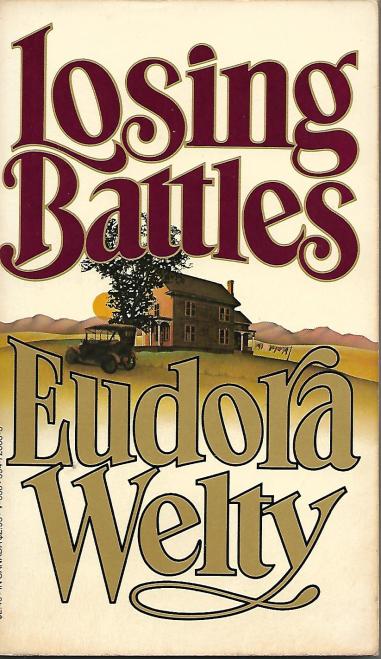
Losing Battles ~ A Capsule Book Review

Losing Battles ~ A Capsule Book Review by Allen Kopp

It’s Granny Vaughn’s ninetieth birthday. Her large Mississippi family has gathered on a hot Sunday in August to mark the occasion. It’s the Depression era, 1930s, and nobody has much money, but Beulah Renfro, Granny Vaughn’s granddaughter, spreads a sumptuous meal for the hundred or so attendees. They eat like it’s going out of style.

Jack Jordan Renfro is the star of the reunion. He has plenty of aunts, uncles, cousins—besides his parents, his sisters and his granny—to fawn over him. He just got out of the penitentiary. We learn that he escaped the day before he was supposed to be released because he didn’t want to miss granny’s birthday celebration. He also has a wife named Gloria and a baby daughter, Lady May. Gloria was his schoolteacher he married before he went into the penitentiary. Gloria was an orphan child; nobody knows for sure who her parents were. One of the surprising things that’s revealed during the reunion is that she and Jack might be first cousins.

There are some surprise guests at the reunion, some old-time preaching, some arguing and much laughter, but, more than anything, there’s talk: talk about how Jack came to be sent to the penitentiary; talk of an old-maid schoolteacher, Miss Julia Mortimer, who has just died and whose funeral will be the day after the reunion; almost everybody at the reunion went to school to Miss Julia and they have stories to tell of her hardness and her dedication to teaching. There’s also talk of hard times and good times and bad times, births and deaths. Everybody likes to talk and they all have much to say.

Losing Battles is an unconventional novel because it takes place all in one day and part of the next day, which means there isn’t much story or plot. Get a hundred people from your family together for one day and then write down everything they say and do during that one day, and you’ll know what I mean. It’s an interesting book because of its setting (the South during the 1930s) and because it was written by a venerated American writer (her last novel), but it could have been more interesting if the action had been opened up a little bit, making the story less static.

Copyright © 2017 by Allen Kopp

Blade Runner 2049 ~ A Capsule Movie Review

Blade Runner 2049 ~ A Capsule Movie Review by Allen Kopp

The 1982 sci-fi classic Blade Runner is notable for its spectacular futuristic vistas, its haunting music score and brooding tone. You probably know (or maybe you don’t) that the story in Blade Runner is about those delightful synthetic humans called “replicants” that are so close to being real that nobody can tell them apart. Replicants were manufactured as a disposable work force, but, only trouble is, they were so highly evolved that they developed a will of their own, staged an insurrection, and murdered a lot of real humans, after which the manufacture of replicants was banned. (We saw this same premise used, but not as effectively, in the HBO television series Westworld.)

Now, thirty-five years later (can it really be that long?), there is Blade Runner 2049, a sequel, of sorts, to the earlier movie. The main character is called K (played by Ryan Gosling). He doesn’t have a name because he is himself a replicant, but he’s the good kind, not the kind that goes around murdering humans. K is a Blade Runner, meaning it’s his job to hunt down and kill the replicants that are still living and walking in the world, disguising themselves as real people. K is so human-like that he has human emotions. This is going to get him into trouble.

Before the production of replicants was banned all those years earlier, the mad scientists who made them added a new wrinkle: a replicant woman was able to mate with a human man and have a child, which is exactly what happened. Remember the character Deckard (Harrison Ford) from the 1982 Blade Runner movie? At the end of that movie, he fell in love with a replicant named Rachel and absconded with her. It turns out that Rachel was one of those replicants who could have a baby with a human father. Well, we find out in Blade Runner 2049 that, not only did Rachel have a baby by Deckard, she had twins, a boy and a girl, after which Deckard disappeared. Can K be the half-human/half-replicant boy that was born to Rachel and Deckard thirty years earlier? If he is, where is the twin sister? What happened to her?

In Blade Runner 2049, K spends a lot of time literally flying around in these futuristic cityscapes to a pounding (heavy on the kettle drums) music score, looking for pieces to the mystery that consumes him. Holograms are very popular in this world. There are holograms of Elvis Presley, Liberace and Frank Sinatra, and holograms just about every place else, including a fifty-foot-tall, pink, naked lady with blue hair by the side of the road who promises that you will see everything you want to see and hear everything you want to hear. Oh, and one of the most prominent features of this world is that it’s dark all the time and rainy because, well, the atmosphere has been messed up.

There’s lots of information thrown at the audience in Blade Runner 2049, maybe too much, which makes the story murky at times. (For example, what do the beehives mean?) The writing could have been tighter and the length could have been shortened by thirty or forty minutes. Otherwise, it’s a wild sci-fi trip to a dystopian future world that you might have to see more than once to absorb everything in it.

Copyright © 2017 by Allen Kopp

What Belongs to You ~ A Capsule Book Review

What Belongs to You ~ A Capsule Book Review by Allen Kopp

He’s an American teacher living in Sofia, Bulgaria, teaching English at a prestigious American school. We never know his name. He is telling the story in his first-person voice. The story revolves around the narrator’s destructive relationship with a rent boy named Mitko, and, while their relationship is a sexual one, we never have to suffer through any explicit details.

The narrator comes to love Mitko, knowing all along that he is a user, a liar, and a self-aggrandizing manipulator; he is charming and good-looking and he knows how to use these qualities to his benefit. He can also at times be menacing and threatening when he doesn’t get his way. We see a portrait here of a mentally unbalanced young man who knows how to manipulate people to achieve his ends.

We come to see that Mitko has a terrible life, and, despite his youth, is in failing health. While the narrator tries to live a respectable life in his apartment, going to work every day, Mitko shows up periodically at his doorstep whenever he wants something. He frequently lies to get money, which makes him an extortionist, among all the other things he is. The love that the narrator feels for Mitko soon turns to pity as he sees that Mitko is falling apart. He cannot deny Mitko anything, knowing all along that lies and betrayal are a part of everything Mitko does.

While What Belongs to You is the story of a friendship, it is also a story about the nature of destructive and obsessive love. One of the best novels I’ve read in a while and unlike anything I’ve read before. Written in a unique, compelling and accessible style by a writer named Garth Greenwell. There are a lot of words in this novel, but never too many, always just right. Every word rings true.

The first-person narration is all introspective but never self-indulgent or whiny, as it could have been. On a different level, it’s a story, which I found fascinating, about life in modern-day Bulgaria, a country of 7.2 million in southeast Europe, a country that is collapsing and crumbling in many ways, a country that has lived through Soviet occupation, a country that is not what it once was. As a stranger in a strange land, the narrator navigates his way through two different health clinics, knowing only a smattering of the language, the public transportation system, and everyday life in a foreign capital. Some books are so good and so different from anything else that reading them is like being given a gift. This is one of them.

Copyright © 2017 by Allen Kopp 

At the Rise of the Hill

At the Rise of the Hill ~ A Short Story by Allen Kopp

(Published in The Literary Hatchet.)

Freddy Chickwell’s mother called him at seven o’clock on Sunday morning, before he was even out of bed.

“I need you to come over right away!” she said.

“I can’t, mother!” Freddy said. “It’s too early. I don’t even have my eyes open yet.”

“You’re going to want to see this.”

“What is it?”

“I can’t tell you on the phone. You have to see for yourself.”

“I’m going back to bed, mother. Please don’t call me until the sun is all the way up.”

“I never ask you for anything,” she said pitifully. “I’m asking you this one thing politely.”

“I’ll come, but only if there’s bacon and French toast.”

“How can you think of food at a time like this?” she asked.

“A time like what?”

He lay back on the bed and groaned. He had planned on going back to sleep but now that he was wide awake, he got up and dressed himself. He hated jumping out of bed and driving someplace first thing in the morning, but it appeared he had no other choice.

As he drove the six miles to his mother’s house, he thought of the different things that might have elicited such a call at an early hour: a large rat (spider) in the basement (bathtub); a bill that came in the mail for a large sum that she says she doesn’t owe and has no intention of paying; Aunt Jeanette has a tumor on her gallbladder; a large crack has appeared overnight in the foundation.

He pulled into the driveway and his mother came out the front door and down the steps, toward his car in a pink terrycloth bathrobe and fuzzy slippers; her hair was sticking out in spikes.

“Prepare yourself!” she said.

“For what?” he asked.

“He’s come back!”

“Who has?”

“Need you ask?”

Freddy walked into the house behind her and there, sitting in the living room in the middle of the couch, was his father, who had been dead for a year. Freddy looked at his father and his father looked at him. There were no words.

His mother motioned Freddy into the kitchen. “What do you suppose is going on?” she asked.

“Who is that?” Freddy asked.

“Who do you think it is?”

“Well, I know who it looks like!”

“He’s been raising all kinds of Cain with me ever since he came back.”

“Why?”

“He says I went off and left him.”

“Left him where?”

“I told him I would never do that.”

“Mother, something’s not right here,” Freddy said. “People don’t just come back from the dead after a year.”

“Apparently some of them do!”

“Is he a ghost?”

“I don’t think so. He ate a big breakfast and then had to go to the bathroom. I don’t think ghosts do that.”

“If he’s not a ghost,” Freddy said, “it must mean he was never dead in the first place. How do you account for it?”

“I don’t account for it! I saw him go into his grave.”

“The only other explanation I can think of is that he’s a zombie come back to eat our flesh.”

“Oh, I don’t think he would ever do that!”

“I’m calling the police,” Freddy said.

“And what could they do?” mother asked. “They’d never believe he was dead in the first place. They’d just think we were a bunch of lunatics.”

“Then call his doctor.”

“He died, too. Right after your father.”

“Maybe he’s a hallucination that we’re both having,” Freddy said. “We were both so poisoned by the man all the years he was alive that we’re being affected by him from beyond the grave.”

“I just don’t know,” mother said. She sat down at the table with her cup of tea, lit a Pall Mall cigarette, and sniffled back tears. “I cared for your father while he was alive—truly I did—and I missed him after he was gone, but now that I’ve become used to having my freedom, I just don’t think I can go back to the way things were before.”

“I’m hungry,” Freddy said. “I haven’t had any breakfast.”

He ate quickly, pushed the plate back when he was finished eating, and fanned away his mother’s cigarette smoke. “Now that I’ve had a little time to think about this dispassionately,” he said, “I’ve decided on a plan of action.”

“What is it?” she asked anxiously.

“We’ll kill him. It’s as simple as that.”

“Oh, Freddy! Your own father?”

“Well, he’s already dead, isn’t he? If you kill somebody who’s already dead, it’s not really wrong, is it? Not really a crime?”

“I’m not sure how the law would look at it,” mother said. “Killing is killing, whether the person you kill is already dead or not.”

“I don’t expect you to do any killing. I’ll do it.”

“But how? I don’t want a mess in the house that I’ll have trouble explaining later.”

“Remember Echo Hill?”

“That old place? I haven’t been there for years.”

“I haven’t, either. If it’s like it was when I was in high school, it would be the perfect place to kill a person that’s already dead.”

“Oh, Freddy, I just don’t know about this.”

“Remember how they used to tell us kids how dangerous it was to go up there because of the air holes?”

“What are air holes?”

“It’s places where you can fall through the earth down into the old mine if you’re not careful. There are probably some new ones that have formed since.”

“That sounds dangerous!”

“Yes, but it’s the perfect place to hide a body. If a body falls down an air hole, it would never be found. The old mine is as big as the whole town and there’s deep water in places.”

“It sounds very forbidding.”

“We can take him for a Sunday drive up to Echo Hill. We’ll get him out of the car and walking around, and—boom!—he’s gone down an air hole. Just like that.”

“And what if somebody sees us?”

“They won’t, and if they do they won’t know what they’re seeing.”

“While I’m getting dressed,” she said, “you go in and visit with your father.”

Freddy went into the living room and sat down in the chair facing the couch. “How have you been doing?” he asked father.

“There’s some weeds growing along the back fence,” the old man said. “Somebody needs to get out there and pull them up, and I guess that somebody is going to be me.”

“I wouldn’t worry about any weeds, if I were you,” Freddy said.

“The whole place is goin’ to hell!”

“So, tell me. What have you been doing this past year?”

“What do you mean?”

“Well, you’ve been…away, haven’t you? I just wondered what things were like where you were.”

The old man looked at Freddy with something like contempt. “What things?” he asked. “I don’t know what you’re talking about.”

Mother came down from upstairs wearing a yellow pantsuit and matching wig that made her look like Doris Day. “Well!” she said brightly. “How are we getting along?”

“About like always,” Freddy said. “Not much in the way of communication.”

She bent over toward the old man and said very loud, as if being dead for a year might have made him partially deaf, “We thought it would be lovely to go for a little drive! It’s such a beautiful day!”

“Huh?” the old man said.

“Remember Echo Hill? We used to go up there for picnics with Betty and Waldo when we were young.”

“I don’t know what you’re talking about,” the old man said. “I never did.”

“Wouldn’t you like to get out of the house? Go for a little drive?”

The two of them together helped the old man off the couch, out the door and into the car. With him installed in the back seat, mother got into the front seat with Freddy.

“I just don’t know about this,” she said as Freddy started the car.

“It’ll be all right,” he said. “I think I know what I’m doing.”

He drove out to the edge of town, past the bowling alley, the abandoned funeral home, the roller rink, a used car lot, a couple of taverns, and into farm country, where there were barns, silos, cows and young horses grazing in fields.

“Not much traffic today,” Freddy said.

He looked in the rearview mirror and saw that the old man was asleep in the back seat, his head lolled to the side.

“Isn’t this fun?” mother said. “I just love going for a drive in the country on a pretty day!”

Freddy came to the turnoff to go to Echo Hill, and it was exactly as he remembered it. “Won’t be long now!” he said.

He took a couple of turns onto old country roads that became narrower and more tree-encroached. Finally, he came to the end of the blacktop and turned onto a dirt road. There was a gate across the road, long-since fallen into disuse.

“Just like pioneering days!” mother said. “This reminds me of my childhood!”

At the big hill, the road was very rough; Freddy slowed to ten miles an hour to prevent any damage to the tires.

Mother rolled down the window. “Just smell that country air!” she said. A bumble bee flew in and she screamed.

After what seemed a very long, slow climb, Freddy came to the top of the hill from which one could see into the next state. The dirt road ended there, so he pulled the car onto a little rise off to the right that seemed dry and firm and didn’t have a lot of weeds growing on it. It was a place where he could easily turn around when the time came.

“How about if we get out here and scout around a bit?” Freddy said, giving mother a wink.

He started to open the door but was arrested by a sound that he didn’t identify, a sound of dirt sifting. Then the front end of the car lurched forward significantly.

“What on earth!” mother said.

Freddy wanted to see what was happening to the front end but, as he put his hand out to open the door, the ground gave way and the car slid downward, front end first, into a hole just big enough to admit one mid-sized car.

Down, down, down went the car, into darkness complete. Mother gasped and grabbed onto the dashboard as if she could arrest the car in its flight. The old man in the back didn’t make a sound. Freddy had a few seconds before the car hit the water in which it all became clear, all the pieces of the puzzle fit into place. Everything that had ever happened—his whole life—had been preparing him for this moment when it would all come to end.

Copyright © 2017 by Allen Kopp