Sanctuary ~ A Capsule Book Review

Sanctuary book cover

Sanctuary
~ A Capsule Book Review by Allen Kopp ~

William Faulkner (1897-1962) was the supreme American literary stylist of the twentieth century. Some of his books are notoriously difficult to read. His 1930 novel, Sanctuary, is one of his more accessible books, but still not always easy to read.

Temple Drake is an affluent college girl around 1929. She loves to remind people that her father is a powerful judge. She has a date with Gowan Stevens to go to a dance. Gowan is a high-powered lush. When he stops off with Temple to buy some bootleg hooch, that’s when Temple’s problems begin.

Gowan’s bootlegger operates out of the shattered remnants of a Civil War-era mansion.  (Southern Gothic to the hilt.) Inside the bootlegging operation are several unsavory characters that Temple would have been better off not to meet. Chief among them is Popeye, one of Faulkner’s most memorable villains. Popeye is malformed (his mother had syphilis before he was born) and he’s impotent (can’t perform sexually). While Temple’s escort, Gowan Stevens, lies in a drunken stupor, Popeye overpowers Temple Drake and rapes her with a corncob.

A kind black man named Tommy (said to be a halfwit) tries to protect Temple from Popeye. Popeye kills Tommy and blames it on the bootlegger, Lee Goodwin. Lee Goodwin’s long-suffering common-law wife, Ruby Lamar, is also in residence in the broken-down mansion. She apparently loves Lee Goodwin and will stand by him in the face of a false murder accusation. She has an ailing baby, who doesn’t seem long for this world.

Popeye takes innocent, young Temple Drake to Memphis, and sets her up in a whore house, run by a fat whoremeister known as Miss Reba. Miss Reba provides lots of comic relief at this point in the dark story. She loves her beer and her two yapping little dogs.

Since Popeye is unable to perform sexually, he brings in a “stud,” a man of his acquaintance named Red. He forces Temple to have sex with Red while he watches. Finally he becomes jealous of Red and murders him.

In the meantime, Lee Goodwin has been put in jail for the murder of Tommy the halfwit (which he didn’t do). Horace Benbow has been hired as Lee Goodwin’s lawyer. Lawyer Benbow has problems of his own including an unhappy marriage. He knows that Lee Goodwin won’t be able to pay him, but he takes the case anyway. He and Ruby Lamar discuss the possibility that she will pay him by having sex with him.

Lee Goodwin is tried for the murder of Tommy the halfwit. Public sentiment in the town is decidedly against him when people learn that he raped Temple Drake with a corncob. (He didn’t do it, of course; Popeye did it.) Lee Goodwin refuses to defend himself. This is not going to end well for him.

This is a dark story with dark elements: rape, abduction, prostitution, plenty of sex, a sensational murder trial. Only the brilliant Southern writer William Faulkner could have written such a story in 193o and make it artful instead of tawdry.

Copyright © 2023 by Allen Kopp

Things I Must Have ~ A Short Story

Things I Must Have
~ A Short Story by Allen Kopp ~

Mrs. Koenig lay near death. Her four grown children had taken it upon themselves to gather in her house to discuss the disposition of her personal belongings.

“I want the Tiffany lamp,” Gwendolyn said.

“I already said the Tiffany lamp is mine!” Cupcake said.

“I’ve loved that lamp since I was a baby!”

“So? It’s still mine!”

“I want the dining room table and chairs,” Kent said. “Mother said I could have them.”

“Not so fast!” Gwendolyn said. “She said I could have them.”

“When did she say that?”

“I don’t know. Last Christmas, I think.”

“Well, she just told me last month that I could have them, so I guess that cancels you out.”

“I get the antique bed and dresser that were grandma’s,” Cupcake said. “Mother told me when I was fifteen that she wanted me to have them.”

“Well, isn’t that funny, Miss Cupcake!” Gwendolyn said. “I always thought I would get the antique bed and dresser.”

“I want the complete set of Dickens and the set of Britannica,” Kent said.

“You can have them!” Gwendolyn said. “Nobody cares about books.”

“I care. The Dickens set is over a hundred years old. It’s valuable. I’m going to sell it and buy a car I’ve been wanting.”

“Why don’t you keep the Dickens books and pass them on to your children, chowderhead?”

“I don’t have any children. Remember?”

“Oh, that’s right! There’s something funny about you, isn’t there?”

“There’s something even funnier about you!”

“I get the set of antique china,” Cupcake said, “and I’m not going to sell it, either.”

“What are you going to do with it, dear?” Gwendolyn asked.

“I’m going to keep it. What do you think? I also want the china cabinet. What good is the china without the cabinet?”

“I want the rolltop desk,” Cupcake said. “Mother told me in high school when I made the honor roll that I could have it.”

“I think the rolltop desk should go to me!” Kent said.

“And why is that?” Cupcake asked.

“It’s a man’s desk. I’m a man. Remember?”

“Oh, yes, darling! I keep forgetting!”

“I get the piano,” Gwendolyn said. “I’m the only one who plays.”

“You haven’t played since you were twelve years old,” Kent said, “and you were horrible! You used to cry when mother made you practice, and then she cried when she heard how bad your playing was.”

“Well, maybe I’ll take it up again. I always feel there’s something lacking in my life. Maybe it’s the piano.”

“Maybe it’s good judgment and common sense!” Cupcake said.

“Oh, and I also get the antique vase from China,” Gwendolyn said. “Mother’s piano wouldn’t be mother’s piano without the vase sitting on it.”

“Wait a minute!” Cupcake said. “I’m the only one here who knows antiques. I think I should get the antique vase from China.”

“I want mother’s photo albums and the big picture in the attic of grandma and grandpa,” Kent said. “Also the hall tree, the antique sideboard, the library table and the brocade sofa.”

“You can have them!” Gwendolyn said. “I never liked them, anyway.”

“Excuse me!” Cupcake said. “The library table is mine! I’ve already decided where I’m going to put it!”

“I’ll tell you where you can put it!” Kent said.

“I must have mother’s silver that she only used for special occasions,” Cupcake said. “The china is nothing without the silver to go with it.”

“I’m going to take the grandfather clock,” Kent said. “I’ve had my eye on it for  a long time. I’m sure mother wanted me to have it.”

“Then why didn’t she say so when she was in her right mind?”

“She did! She said it to me!”

“Don’t you think it’s funny she never told any of the rest of us?”

Dickie was the fourth and youngest child. He had not spoken until now. “You should hear yourselves!” he said. “Squabbling like a bunch of old hens over things! Mother’s not even dead yet! She may recover! She may come home from the hospital! She may live many more years!”

“We’re just trying to be prepared for when the time comes,” Kent said.

“These are the things we grew up with,” Gwendolyn said. “They’re meaningful to us. We want to make sure they end up in the right hands.”

“Meaning your hands,” Dickie said.

“Don’t you want to stake your claim to the things you want to keep” Cupcake asked. “To remember mother by?”

“No, I don’t want any of this stuff!”

“Why not?” Gwendolyn said.

“This stuff isn’t your stuff and it’s not my stuff!”

“What are you talking about?” Kent asked. “Of course it’s our stuff! Who else would it belong to?”

“I am in possession of some information that the rest of you sons-of-bitches don’t know!”

“What are you talking about?” Gwendolyn asked.

“Have you lost your mind?” Cupcake asked.

“No, I haven’t lost my mind. Mother’s lawyer called me yesterday. On the phone. Mother knew you would be fighting over her things, so she made a last-minute provision to her will. She wants everything in the house sold at auction and the money—all of it!—to go to charity.”

“What?” Cupcake said.

“I don’t think mother would do that!” Gwendolyn said.

“I don’t believe it!” Kent said. “You’re making this up out of spite!”

“And that’s not all!” Dickie said. “She donated the house to the church.”

“Church?” Cupcake said. “What church?”

“People from the church talked to her many times about giving them the house when she died. They finally broke her down and got her to sign an agreement.”

“This isn’t right!” Gwendolyn said. “Mother wasn’t right in the head! We can contest it! We can file a lawsuit! We can hold it up for years in the courts!”

“I don’t think so,” Dickie said. “It’s all legal and valid. If you don’t believe me, call mother’s lawyer. His name is Kenneth Ormiston.”

“Mother disinherited us!” Kent said, as if in a daze. “We don’t get anything!”

“Mother wouldn’t do that!” Cupcake said. “Not to me! I was always her favorite!”

“She won’t get away with this!” Gwendolyn said. “I’m going to have her buried face-down!”

“I don’t think it’ll make any difference to her,” Dickie said, “one way or another.”

“I don’t think I can walk!” Cupcake said, sobbing. “I need somebody to take me home!”

“Dickie, you bastard!” Gwendolyn said. “Look what you did to your sister! I’m going to kill you!”

Copyright © 2023 by Allen Kopp

Porch Light ~ A Short Story

Summer Evening by Edward Hopper

Porch Light  
~ A Short Story by Allen Kopp ~ 

(This short story has been published in Dew on the Kudzu: A Journal of Southern Writing.)

Nola was reading a book sitting beside an open window in the quiet house when she heard a soft knock on the door. It was eleven o’clock at night and she wasn’t wearing very much, but she went to the door and opened it anyway. She was feeling lonely, and a little blue, and was glad for the chance to talk to someone.

“Oh, hello,” she said, when she saw Roy standing there. She was neither happy nor unhappy to see him.

“Is she asleep?” he asked.

“For hours.”

“Why don’t you come out and talk to me. I’m not in any hurry to get home just yet.”

“Oh, all right. I suppose I could for a little while.”

She turned on the porch light and stepped out the door.

“What is that you’re wearing?” he asked. “Is that what you sleep in?”

“Of course not! After I took off my uniform, I put this on to try to keep cool. I wasn’t expecting any callers.”

“It looks like your brassiere and your step-ins. And pink, at that!”

“Well, you shouldn’t be looking. If your delicate sensibilities are offended, I’ll go put on a robe.”

“No, no, no, I don’t care what you have on. It’s your porch and you’re a grown-up person and it’s too hot to wear a robe.”

“It was over a hundred degrees today and will be again tomorrow.”

“It’s hotter here than the Sahara Desert in Africa. Did you know?”

“We’ve still got two more months of summer,” she said. “I don’t know if I’m going to last. I just wish it would rain.”

He looked up at the clear, star-laden sky and held out his hand. “Not a chance,” he said.  He sat on the porch railing and she leaned her backside against it beside him. A moth fluttered crazily around the light.

“Do you want a cigarette?” he asked.

“I’ll just take a puff or two off yours.”

He lit up and handed the burning cigarette to her.

“I might call Nellie in the morning,” she said, “and tell her I’m sick and can’t make it in. It won’t be too much of a lie.”

“I thought you were going to quit that job.”

“I can’t quit until I have another job lined up.”

“Let’s go to the park,” he said. “It’s too hot to go home. We can spend the night under the stars.”

“I can’t. I have to get up in about six hours and go to work.”

“I thought you were going to call in sick.”

“Well, I haven’t definitely made up my mind about that yet.”

“I’ll have you back in time to go to work.”

“I can’t stay awake all night and work all day.”

“You won’t sleep anyway in this heat.”

“I’m usually able to forget how hot it is and go to sleep about two o’clock.”

“And then you have to get up at five.”

“And the whole rotten routine starts over again. What a life.”

“Let’s run away together.”

She laughed and blew out a spluttering stream of smoke. “Where to?” she asked.

“I don’t know,” he said. “We could hop a freight train somewhere.”

“Oh, sure! That sounds worse than what I have now. As lousy as my life is, I at least have a bed to sleep in and food to eat.”

“If you ran away, you’d be free of everything here. You could start over somewhere else.”

“What would I do about my mother?”

“Send her a postcard.”

“You’re not being very practical.”

“That doesn’t get you anywhere.”

A police car drove past, slowed almost to a stop, sped away again.

“Must be looking for somebody,” she said.

“I didn’t do anything,” he said.

“Are you still looking for a job?”

“Off and on. I could maybe go to work for my uncle if I wanted to, but I don’t want to.”

“Doing what?”

“Moving furniture.”

“That doesn’t sound very promising.”

“I applied for a job as an usher at a movie theatre downtown, but I probably won’t get it.”

“Why not?”

“Don’t want it.”

She watched the fireflies in the yard and didn’t say anything for a while. “Can you see us going on this way for the next forty or fifty years?” she asked. “Until we die?”

“I don’t think about it much,” he said.

“I think there has to be more to life.”

“Maybe tomorrow will be better. That’s what you have to hope for.”

“I might get married to somebody someday,” she said, “but it’s going to have to be to somebody who can take me away from all this.”

“You wouldn’t marry me?” he asked. She knew he was joking.

“No,” she said. “You’re a bum like everybody else I know.”

“Well, that can always change. I haven’t completely given up on life.”

“Go to school and become a doctor or a lawyer,” she said. “Then I’ll consider marrying you.”

“I’m lacking some necessary ingredients for that,” he said. “Namely, money and ambition.”

“You can’t be a bum all your life.”

“Who says? My father has been a bum all his life and his father before him.”

“Maybe you’re better than that.”

“My mother wants me to join the army. She’s threatened to throw me out of the house if I don’t do something.”

“Maybe that’s what you need.”

“If she tosses me out, can I come and live with you?”

“No. You and my mother wouldn’t get along.”

“You see how it is? If it’s not my mother giving me grief, it’s somebody else’s.”

“What a life,” she said.

“Are you sure you won’t go to the park with me?”

“It’s late. I need to try to go to sleep so I can get up and go to work in the morning.”

“What a life,” he said. “My room is so hot I can’t stand to lie on the bed. I put a quilt on the floor underneath the window and sleep on it naked until the sun comes up.”

“I really should be going in now.”

“Will you go to the park with me tomorrow night?”

“Maybe.”

“Something good is going to happen tomorrow,” he said. “I just know it. Maybe a thunderstorm.”

“Good night,” she said.

“Good night.”

She knew he would leave whenever she told him to. He wouldn’t try to kiss her or touch her, the way some would. He never did that; he wasn’t that kind of a boy. She had known him so long. He was more like the brother she never had.

She went back inside and turned off the porch light, locked the door. She went to the door of her mother’s room to make sure she was still sleeping and then she walked through the dark house she knew so well and got into her bed. Far off in the distance she heard the low rumble of thunder that could only mean one thing. If she stayed awake long enough, she might see lightning and hear some rain on the roof.   

Copyright © 2023 by Allen Kopp 

The Only Red Dog in the Neighborhood

The Only Red Dog in the Neighborhood
~ A Short Story by Allen Kopp ~

(This short story has been published in The Literary Hatchet.)

Grandma lived in the city so we only saw her every two or three years. She had an apartment high up in a city building on a busy street and she worked as a manager in retail. She went to nightclubs and the theatre and wore a fox fur with little glass eyes. She had been married six times but, to be fair, she was married to one of her husbands twice, so she only had five husbands.

She always smoked a lot of Philip Morris cigarettes, ever since she was young. When she was in her sixties, she got what they call emphysema of the lungs. Doctors didn’t know yet if it would kill he or if she’d get over it. She kept on smoking, even though she might die from it, but she began using a six-inch cigarette holder. She believed the holder would make the cigarettes less harmful to her lungs.

Since her health was in decline and she was finished, finally, with marriage (she was separated from her most recent husband and then he conveniently died), she moved to the small town of Echo Bend where we lived, to be near, she said, her only living child (my mother) and her two grandchildren (my brother and me). She bought a house near the school, within convenient walking distance of our house. She never drove a car and was not about to learn in old age, so she walked every place she went or took taxi cabs.

A lot of Echo Bend people didn’t know what to make of grandma; some of them were openly contemptuous of her, refusing to speak to when they met her on the street. They knew about her many marriages and considered her a woman of loose morals. (Some of the ladies believed that grandma would make a play for their husbands if given the chance.)

When she dressed casually, she wore men’s dungarees and loose shirts from the army surplus store and sandals with socks. (Who wears sandals with socks?) At church on Sunday she always wore bright colors—orange, red, yellow, or green—while the other ladies wore their somber Puritan hues. She also favored hats with feathers or some other kind of ornamentation such as a bird in flight or realistic-looking cherries that hung down and jiggled when she moved her head. And, of course, there was always the cigarette holder, which most thought a Hollywood-inspired affectation. (Who does she think she is anyway? Gloria Swanson?)

Grandma wasn’t used to living alone and she didn’t like to cook, so two or three nights a week she walked up to our house for dinner. After the meal was over and the dishes washed and put away, mother and grandma would sit at the kitchen table and gab and smoke cigarettes. Then when grandma was ready to go, mother would take her home in the car.

One Saturday afternoon grandma arrived at our house for dinner crying, limping and gasping for breath.

“What happened?” we asked.

“A big red dog bit me.”

“That would be Red Rover,” I said. “He belongs to the Tutwilers.”

“Bit you where?” mother asked.

“On the leg.”

Grandma pulled up the leg of her dungarees. On her calf was the perfect imprint of a dog’s mouth. It was bleeding a little bit and beginning to swell.

“We have to get you to the doctor,” mother said.

“No, no, no! I’m not going to any doctor!” grandma whined.

“You might have rabies.”

Grandma groaned. Her face was pale and she looked as if she might faint.

“Did you do anything to provoke the dog?” mother asked.

“Of course not! I was just walking past. He came from around the house and barked at me a couple of times. I thought it was because he didn’t know me. I talked to him and I thought I could get him to calm down if he saw I wasn’t going to hurt him. He wagged his tail and when I reached down and started to pat him on the head, he snapped at my hand. I turned around and tried to get away from him and that’s when he bit me on the leg.”

“Did you run from him? That’s the worst thing you can do.”

“When a dog comes at you baring his teeth, wouldn’t you run from him?” grandma asked.

Mother got a pan of hot water and a washcloth and bathed the place on grandma’s leg the best she could and then poured alcohol over it. Grandma gripped the back of the couch and gritted her teeth as if a bullet was being pulled from her flesh.

“I’m going to call the doctor,” mother said.

Dr. Overman wasn’t in his office because it was Saturday, but she left a message and he called back a few minutes later. I was listening in on the extension.

“Keep her calm and cleanse the wound,” Dr. Overton said.

“I already did that,” mother said.

“Bring her down to my office first thing Monday morning. I’ll take a look at the bite and give her a tetanus shot, but the most important thing right now is to observe the dog and make sure it doesn’t show any signs of sickness. Do you know who the dog belongs to?”

“His name is Red Rover. He’s a neighborhood dog.”

“Good. Go to the owner and tell him what happened and that the dog must be absolutely confined for a few days and observed for any signs of sickness. If the owner won’t cooperate, called the sheriff.”

“My dog?” Tut Tutwiler asked when mother told him. “Are you sure it was my dog?”

“It had to be Red Rover,” I said. “He’s the only red dog in the neighborhood.”

“Who did he bite?”

“He bit my mother,” mother said. “She’s an old lady and she just moved here from the city. She isn’t very well anyway. This could be serious.”

“He never bit anybody before. What did she do to him?”

“She didn’t do anything. She was just walking past.”

“I’m sure he didn’t mean anything by it. He’s a gentle dog.”

“Yes, he’s so gentle that he goes around biting people!”

“All right, now. Calm down.”

“The doctor says to keep the dog confined for a few days and watch him to make sure he isn’t sick.”

“I guess I could do that.”

“It’s not a request, Mr. Tutwiler. I don’t think you want a lawsuit on your hands, do you?”

“Okay, I’ll keep him in the garage for a few days, but I’m not going to let you destroy him. He’s the kids’ pet. They love him.”

“Nobody said anything about destroying him, Mr. Tutwiler. Just keep him locked up and keep an eye on him for now.”

After dinner grandma had regained her composure, but she was still spooked and didn’t want to go home by herself, so mother installed her in the back bedroom to keep an eye on her and make sure she took care of herself.

Grandma’s leg swelled up and she laid in bed and complained about how much it hurt and how worried she was that she would never walk again.

“It’s not that bad,” mother said. “I think you’ll live.”

If grandma wanted a lemon, a root beer, a bowl of Rice Krispies, or some scrambled eggs, one of us had to take it to her. She enjoyed being waited on, I could tell, although she never let any of us forget how uncomfortable she was. She loved having somebody sit and listen to her talk as she recounted every dog-bite story from her long life, going all the way back to when she was three years old. (Most of the stories had a tragic ending.) When she wanted to smoke, one of us had to sit with her and breathe her smoke and make sure she snuffed the cigarette out in the ashtray and didn’t set the bed on fire.

On Monday morning mother got grandma out of bed early and took her downtown to see Dr. Overman. They were gone all morning and when they came back home, grandma wanted to go to “her” room to rest.

“What did the doctor say?” I asked.

“She has an erratic heartbeat.”

“What does that mean?”

“It means she isn’t well.”

“She’s a drama queen.”

“You should have known her mother.”

“What about the dog bite?”

“It’s not going to kill her. The doctor told us to keep it clean, as if we didn’t already know that. He gave her a shot.”

“I’ll bet she screamed, didn’t she?”

Five days after the dog bite, grandma said she felt well enough to go back home the next day. She thanked us for taking care of her but said it was time to go back home and take care of herself. She didn’t like leaving her piano, antiques, books, and glass figurines unattended. House breakers were probably already having a field day with her things.

“Thank goodness!” mother said.

We checked with Tut Tutwiler every day to see how Red Rover was getting along. He showed no signs of sickness, other than disgust at being locked up. He would escape with his life this time, but with a warning. If he bit anybody else, intentionally or not, it was probably going to be the end of him. Mr. Tutwiler promised to keep him in the yard or chained to a post if he didn’t behave himself.

On the morning of the day that grandma said she was going back home, she didn’t get up in time for breakfast. Mother went in about nine o’clock to wake her up. Grandma was, as the saying goes, “unresponsive.” Mother called an ambulance and they came and took grandma away to the hospital.

The doctor who examined grandma said she died of a heart attack in her sleep. She didn’t know anything. She didn’t feel anything. It was a blessing to go that way.

People in the neighborhood began saying that Red Rover killed grandma. They would drive by and see him in the yard and say, “That’s the killer dog that killed that old woman. They say he ripped her to shreds.” People will believe what they want to believe as long as it makes them happy.

Copyright © 2023 by Allen Kopp

Cotton ~ A Short Story

Cotton image 1
Cotton
~ A Short Story by Allen Kopp ~

(This short story has been published by Grey Wolf Publishing.)

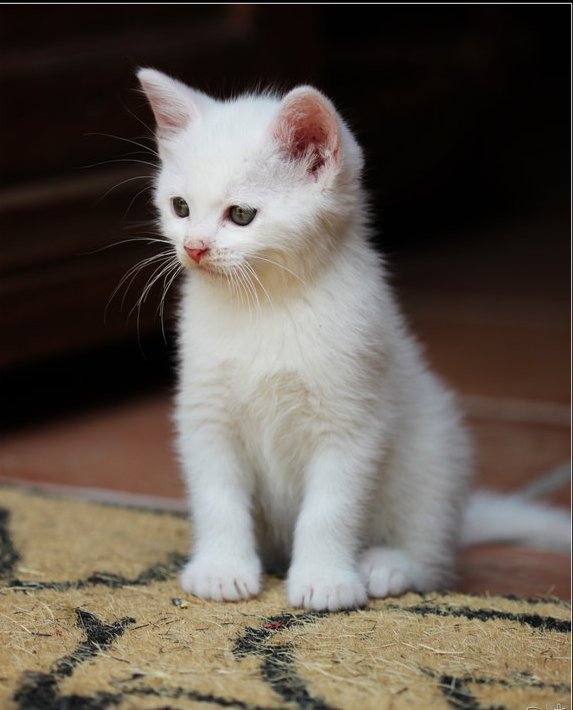
There were five of us: me, a brother and three sisters. When we were old enough, we were taken away one after the other. I think my mother was a little glad to see us go. She was getting old and wanted only to lie in the sun and take uninterrupted naps.

As with all of us, a big one came to get me. He smelled funny but he handled me gently as he put me into a carrier and closed the door. I cried a little and pulled at the door with my paws but I knew it wouldn’t do any good—I wouldn’t be let out again until I was in my new home.

The car ride made me sleepy and made me forget that I had to pee. I had ridden in a car before on a couple of different occasions and I knew how it either makes you want to throw up or go to sleep. I curled up in a tight ball, making myself as small as I could, and went to sleep.

The car went a long, long way from where we started but finally it came to a stop. When the big one got out, I stood up in anticipation of being let out. I was knocked off my feet again, though, when he picked up the carrier, carried it inside the house and set it down on the floor. (A rough but short ride.) Right away I smelled all kinds of awful smells that I couldn’t identify. Was it the smell of another cat? My heart started to pound. All I wanted was to go back to the safety of my mother.

When the big one saw I didn’t want to come out of the carrier, he stuck his big hairless, pink face through the door and spoke the terrifying language that to me sounded like a dog barking. I crouched down and backed up into the corner.

He upended the carrier—I tried holding on but there was nothing to hold to—and I went sliding out against my will. I stood up and took a few steps, stretched my muscles and licked my paw. The big one seemed to approve.

Just then a different big one, a “she” big one, came out of nowhere and scared me with her loud voice. I started to run for cover but she scooped me up in her paws. Now, I have to tell you it’s an odd sensation to be picked up by something fifty times bigger than you are. I meowed a couple of times to let her know I didn’t like what she was doing to me, but she nuzzled me and started scratching my neck and ears. In spite of the bad smells that made me want to gag, I began to purr a little.

The “he” big one said something to the “she” and they both made that hideous sound that I was to recognize later as laughter. They gave me some water out of a little red bowl and, after I took a good long drink, I was directed to the litter box, which I was very glad to see. I scratched in the box for a few seconds, sat on my haunches, made a tiny wet spot and covered it up so it didn’t show.

The two big ones began playing with me, even though I was in no mood. They had a toy mouse on a string that they dangled in front of my face. I thought I smelled another cat on the toy mouse, but I obliged them anyway by batting at it with my paw and trying to catch it in my mouth. After they tired of this game, they gave me some food, which I was barely able to eat because it didn’t smell like anything I had ever eaten before. I guess I was still too nervous to eat, anyway.

Later on they left me alone to do some exploring on my own. I went into the next room and then the room after that. I jumped up on a big table but there was nothing there that interested me so I jumped down. I walked the length of the couch and the chairs in the living room, exploring every inch of the stinky fabric; I stuck my paws in the dirt of some plants and then I climbed on the TV. I crawled under the couch and came out with dust stuck in my whiskers that caused me to sneeze. I jumped onto the counter in the kitchen, nosed into the sink and took a couple of licks out of a greasy skillet on the stove.

I went into the bedroom, which seemed to be the best room of all. The bed was soft with enough room for a hundred cats like me. As good as the top of the bed was, the underside was even better. It was dark and there were some boxes and things that offered complete concealment from any dangers that might still be lurking. I was thinking it would make a good place for a nap when Finley jumped out at me and scared me so bad I jumped sideways and took a few spider-like steps backwards. The fur ruffled up on my back and my tail puffed out to three times its normal size.

Finley was a young cat, not quite full grown, but bigger than me. He was a long-haired cat that made him seem bigger than he was and he had a mane like a lion. He let out a couple of guttural meows that to me sounded like war cries and came running toward me. I wouldn’t let him get near me, though. I ran into the other room with him chasing me. I didn’t know if he was going to kill me or just hurt me.

I dove under the couch and I knew right away it was a smart move because Finley wouldn’t fit. He could see me, though, and he knew I wasn’t going anywhere and that if I came out he would know it. Every now and then he stuck his paw under to try to grab at me, but I pulled away out of his reach.

I discovered then that Finley was the most patient cat in the world. He stood guard there, stalking me, for the rest of the day and most of the night. I was hungry and thirsty and I had to use the litter box, but I was still too scared to come out. When the big one tried to coax me out by shining a flashlight in my face, I just ignored him.

Finally, in the morning, with the big one there to keep Finley at bay, I came out. The big one picked me up and set me on the table in the kitchen to feed me. He spooned some food into a bowl and I began eating. When Finley, who knew everything that was going on, realized I was eating what he thought of as his food, he tried to get at me to push me away. The big one had to make him stay away from me so I could eat. (That’s when I learned how to eat and growl threateningly at the same time.) After I ate, I had a good drink of water and a satisfying couple of minutes in the litter box, while the “she” big one held Finley in her arms and whispered in his ear.

After a couple of days I was feeling more courageous and I stood up to Finley, nose to nose. Instead of hurting me, as I thought he was going to do, he licked me on the face and head. I guess I discovered then that he wasn’t as bad as I thought he was going to be. What I thought at first was meanness and aggression was more curiosity and playfulness, with just a little jealousy thrown in.

I was still leery of him for a week or so, keeping my distance and hiding from him if I found him a little too overbearing, but I began to get used to him after a while. If he wants the spot on the couch that I’ve made warm, he makes no qualms about trying to take it from me, but more often than not I’m willing to move to another spot and let him have it.

Cold weather was coming on. Cats, as you probably know, are always looking for extra warmth. Finley makes a really good sleeping partner. Not only is he warm, but he has the softest fur I’ve ever felt. Sometimes we sleep head to head or cheek to cheek or crossed over each other like a couple of earthworms. Sometimes I use his belly for a pillow or he uses mine. When winter comes and the nights are really cold, the big one lets us sleep under the covers with him in the bed. There is no warmer place in the house.

Finley and I are now inseparable friends. We play together a lot and keep each other company. We’re a lot alike but also a lot different. Sometimes we eat together out of the same bowl, but most of the time he lets me eat first before he eats. If anybody ever knocks on the door, I run and hide but Finley stays right there to find out what is going on. When we both are taken to the doctor at the same time, I’m still scared but not as scared as I would be if Finley wasn’t with me. When I hiss, he hisses, like two parts of the same hissing machine.

Copyright © 2023 by Allen Kopp