Paranormal Horror, An Anthology

Spasm Valley Paranormal Horror Anthology 2

Paranormal Horror, An Anthology

Available in a Kindle Edition at Amazon for only $0.99 or £0.77:

http://www.amazon.com/Paranormal-Horror-An-Anthology-ebook/dp/B00AMSLRV6/ref=sr_1_2?ie=UTF8&qid=1355408964&sr=8-2&keywords=elle+pryor

Contents:

Introduction

Adam Sickmiller (“Clean Cut”)

Allen Kopp (“Without Sin”)

Chris Mawbey (“No Room for Three”)

Wendy L. Schmidt (“Peer Pressure Plus Puffy”)

A. A. Garrison (“The Clearing”)

James Cagwin “(Ghost Busted”)

Matthew Wilson (“The Town that Stood Alone”)

Katanie Duarte (“Him”)

Larry M. Mason (“A Grave Robbery”)

Chris Castle (“The Gang of Four”)

Hal Kempka (“The Way Nature Intended”)

Glenn Rolfe (“Sins of My Past”)

Jessica Lynne Gardner (“Death Juice”)

James Cagwin (“Burial Site”)

T. L. Sherwood (“Aspen Lullaby”)

Gary Clifton (“Pew Monsters”)

Jenean McBrearty (“My Neighbor’s Keeper”)

Arpa Mukhopadhyay (“The Return of the Curse”)

Elle Pryor (“I’m Not Me”)

Information About Authors

People of Few Words, Volume 4

People of Few Words

People of Few Words, Volume 4

Paperback: $6.66

Available at www.lulu.com

People of Few Words, Volume 4 is the fourth collection of work by contributors to the Short Humour Site from across the world. It contains one piece of 500-word “Short Humor” by each of fifty writers, together with a brief biography of each writer.

The Teddy Bear Phase

The Teddy Bear Phase image 2

The Teddy Bear Phase ~ A Short Story by Allen Kopp

Phillip stood behind the door in his pajamas, clutching Elfie to his chest. He was listening to his parents arguing in the kitchen.

“You should have consulted me first,” father said.

“I didn’t think I needed to ask your permission,” mother said.

“If you had, I wouldn’t have given it.”

“He’s all that’s left of my family. I think we can tolerate him for a couple of days.”

“Yes, but why did you have to invite him at Christmas?”

“Christmas is a time for families to reunite. I can see my mother smiling down at me from heaven for inviting her only brother into my home.”

“What makes you think she’s in heaven? And it’s our home. Not my home.”

“Should I put him in the guest room or do you think he’d be more comfortable in the spare bedroom?”

“How about in the shed outback where we keep the gardening tools?”

“Once you get to know him, you’ll like him.”

“I don’t want an alcoholic around Phillip and Chickie.”

“He’s a recovered alcoholic.”

“How about if I just take them to a hotel and you can have the house to yourself with your wonderful uncle?”

“We’ll welcome him as a family. That’s what he needs.”

So it was decided that mother’s long-lost Uncle Benny would come for a Christmas visit. Father said that if he didn’t leave by the day after Christmas at the latest, he was going to grab him by the throat and throw him into the street. There was to be no extended visit.

When Uncle Benny arrived by taxicab on the day before Christmas, he had a box of candy for mother (she was dieting), a box of Havana cigars for father (he had no intention of smoking them), and Groucho glasses and a flashlight for Phillip and Chickie. Chickie was only five and was enchanted by the flashlight. She shone it all around the room, in her own mouth, in the dog’s face.

Phillip was a little frightened of Uncle Benny from the first time he met him. He was tall, slightly stooped, and had a wrinkled face; he wore a black wig that looked like it belonged on somebody else’s head. His dentures were too big and looked as if they might fly out of his mouth with a life of their own.

“Who is this little chappy?” Uncle Benny asked.

“This is Phillip,” mother said, standing behind him and putting her hands on his shoulders. “He’s our oldest.”

“And how old is Phillip, may I ask?”

“He’s eight.”

“And what is that thing he’s holding in his arms?”

“That’s Elfie, his teddy bear,” mother said. “It’s his favorite toy. He takes it with him everywhere he goes. He can’t go to sleep without it.”

“I see,” Uncle Benny said. “Don’t you think he’s a little old for a teddy bear?”

Mother laughed. “We indulge him in his teddy bear phase,” she said. “I expect it’ll pass after a while.”

“I think we need to take that thing away from him and throw it in the river,” Uncle Benny said, twisting Elfie’s furry ear.

Phillip felt Elfie stiffen in his arms. When he went into the bathroom to wash his hands for dinner, he locked the door and set Elfie beside the sink.

“I don’t like him,” Elfie said. “He’s a jerk and he smells funny.”

“I don’t like him, either,” Phillip said, “but he’ll only be here until day after tomorrow. He’s family so we have to be nice to him.”

“Bah!” Elfie said.

After dinner it was snowing, so mother opened the curtains and turned off all the lights in the living room except the ones on the Christmas tree. Father read in the newspaper that it was going to get down below zero, a record low for Christmas Eve, so he built a big fire in the fireplace.

“It feels exactly the way Christmas should,” mother said.

Chickie wanted to open her presents but mother told her she had to wait until after Santa had had a chance to drop by. She fell asleep on the couch while she was watching the snow out the window, so mother put her to bed.

Mother served eggnog to father and Uncle Benny, adding a little harmless (she thought) whiskey for “body.” Uncle Benny took a drink and said it was too weak; he asked mother to bring the bottle of whiskey in from the kitchen so he could flavor the eggnog to his own liking. She and father exchanged a significant look, but she went and got the bottle anyway and set it on the table next to Uncle Benny.

Father had one glass of eggnog, but Uncle Benny kept drinking. Each time mother refilled his glass, he added a generous amount of whiskey from the bottle. Mother and father could see him getting drunk, but they said nothing. To anybody else she would have said, “Don’t you think you’ve had enough,” but she couldn’t bring herself to say that to Uncle Benny. He was family and she didn’t want to offend him.

Phillip was bored with Uncle Benny; he knew that he was spoiling the fun that he and Chickie would be having on Christmas Eve. He wanted to turn on the TV, but mother said it was rude to have it on when company was present. She made him a cup of cocoa and a bowl of popcorn and told him he could sit by the fire for a while longer with the grownups but he would have to go to bed soon because tomorrow was a big day.

Uncle Benny was telling mother and father about all the places he had been. He had worked as purser on a passenger ship and had been all over the world.

“I had to get out of the country,” he said. “My ex-wife was after me for back alimony payments. They couldn’t touch me as long as I was at sea.”

“Didn’t they get you when you came back?” father asked.

“No, because by that time the old girl had found some other sucker to marry and had dropped the suit against me. She was my third wife and I learned from that experience never to get married again, although I had plenty of chances, believe me. Haw-haw-haw!”

“Whatever happened to your daughter?” mother asked.

“The last I heard, she was living in Texas, but that was years ago. She wants nothing to do with me.”

“If I knew her address, I’d write to her. After all, she’s the only first cousin I have.”

“You’d be wasting your time, I’m afraid,” Uncle Benny said.

Further conversation revealed that he had been living in a cheap rooming house but was going to have to move because the landlady had rented to his room to another man.

“Where will you go?” mother asked.

“Oh, don’t worry about me,” he said. “I’ve always got irons in the fire. I always land on my feet.”

When grownups were talking endlessly, or “visiting” as they called it, Phillip had a knack of blocking out the words so the voices began to sound like dogs barking off in the distance or the drone of a machine. After he finished his cocoa and ate all the popcorn, he fell asleep on the settee, holding Elfie in his arms.

He awoke with a start. Uncle Benny was bending over him, smiling at him with those big teeth.  Mother and father were out of the room.

“I’m going to do you a big favor, now” Uncle Benny said, slurring the words.

He wrenched Elfie out of Phillip’s arms and, taking three quick steps to the fireplace, threw him in the fire. Phillip jumped up off the settee and screamed as if he himself had been thrown into the fire. As mother came running in from the kitchen, Phillip fainted and fell to the floor unconscious.

When he came to, he was in his bed in his room but he didn’t remember how he got there. All the lights were off but the room was very bright from the drapes never having been drawn and the snow outside. He remembered what happened to Elfie and began crying.

The door to his room opened silently—he could see the bar of light from the hallway—and then closed again. He was surprised—and rapturously happy—to see Elfie climb up on the bed and sit down beside him just inches from his face.

“You’re all right!” he said, reaching out and touching Elfie on the head to make sure he wasn’t dreaming.

“Mother took the andiron and pulled me out before I caught on fire,” Elfie said. “Happy to say, I’m made from nonflammable material.”

“The house is quiet now,” Philip said. “I don’t hear a thing.”

“Mother and father have gone to bed. Uncle Benny is outside smoking a cigarette in his pajamas and bathrobe. He’s as drunk as a coot and it’s killing cold outside. If he couldn’t get back inside for some reason, he’d freeze to death and they wouldn’t find him until morning. I can see him walking down the street in his bedroom slippers trying to get help and falling and busting his hip. There’s nobody around on Christmas Eve. Too bad.”

Phillip threw back the covers and stood up. “I’ll be back in just a minute,” he said. “I think father forgot to lock the door.”

Copyright © 2012 by Allen Kopp

Hitchcock ~ A Capsule Movie Review

Hitchcock

Hitchcock ~ A Capsule Movie Review by Allen Kopp 

In the new movie, Hitchcock, Anthony Hopkins plays the famed movie director and Helen Mirren his long-suffering wife, Alma. Alfred Hitchcock is sixty years old and is looking for a project to direct after the success of North by Northwest. When the novel Psycho, by Robert Bloch, is brought to his attention, he decides that will be his next picture, a decision that meets with a chorus of opposition. The movie studio executives don’t like the idea of filming Psycho and won’t back the project. The office of censorship tells Hitchcock he will never get away with showing his lead character hacked to death in a shower in a motel. Members of the press believe that Hitchcock has lost his deft touch as the master of classy suspense films such as Strangers on a Train and Vertigo and has been reduced to making schlock. Even Hitchcock himself believes that he has possibly been cheapened by his association with television and has lost whatever it was that made him unique.

In spite of all the problems put in his way, Hitchcock perseveres. He mortgages his own house to finance Psycho. It’s an enormous gamble for him. If the film fails, not only is he ruined financially, but all the naysayers will have been proved right and his reputation as a director will be ruined.

Much of the one hour and thirty-eight minutes of Hitchcock is taken up with behind-the-scenes stuff about the making of Psycho. If you are a movie fan, a Hitchcock fan, or a Psycho fan, this is fascinating stuff and fun to watch. Ed Gein, the creepy Wisconsin serial killer who inspired the character of Normal Bates in Psycho, becomes a sort of alter-ego for Hitchcock during the making of the movie. The actors who play Anthony Perkins, Janet Leigh, and Vera Miles are all perfect. We see Hitchcock terrorize Janet Leigh with a butcher knife in the shower scene to elicit believable screams from her.

Of course, Alfred Hitchcock proved everybody wrong. Psycho was a critical and financial success. It is now considered his best movie of the dozens he directed and one of the best American movies of all time. If he had given in to those who were telling him it couldn’t be done or shouldn’t be done, we might have been denied the piece of pure cinema that is Psycho.

A companion piece to the movie Hitchcock is a film that HBO aired a while back called The Girl, a movie about the making of The Birds, which was Hitchcock’s next movie after Psycho. The “girl” in question is Tippy Hedren, who Hitchcock chose to star as his blond leading lady in The Birds. Apparently she was never the same again.

Copyright © 2012 by Allen Kopp

Anna Karenina ~ A Capsule Movie Review

Anna Karenina

Anna Karenina ~ A Capsule Movie Review by Allen Kopp 

There have been many film versions of Leo Tolstoy’s novel Anne Karenina, most notably the 1935 (Greta Garbo) and 1948 (Vivien Leigh) versions. There was also a big-screen 1997 version and several adaptations for TV, including the memorable twelve-part Masterpiece Theatre adaptation in the 1970s. It’s an accessible story with fascinating characters that lends itself well to filmic adaptation. In 1870s Imperial Russia, aristocratic Anna is married to stodgy government official Karenin. Karenin is a “good” man who follows the rules; he believes a wife is a wife for life. Anna meets young cavalry officer Count Vronsky and the earth moves for her and for him. She engages in an adulterous affair with him, has his child, leaves her husband, and in the course of all this shocks St. Petersburg society. The story is simple and almost operatic in its themes of love, duty, honor, obsession.

The latest 2012 film version is true to Tolstoy’s original story but is different from every other film version that has gone before. It has all the traditional elements of a big-budget costume drama (elaborate sets and costumes, stirring music, beautiful photography), but it has something more: it takes a deliberately “stagey” approach to the story. It is, at times, as if we’re watching a play. At the end of a scene, the actors will walk from one set to another or walk backstage to get to where they need to be for their next piece of business. We see stagehands changing the scenery and, at times, it’s as if we’re observing the action taking place on a stage from the audience. Since Anna Karenina is a novel and not a play, this is a highly stylized approach and it works beautifully. It must be seen to be appreciated.

Copyright © 2012 by Allen Kopp
Sanctuary ~ A Capsule Book Review

Faulkner - Sanctuary

Sanctuary ~ A Capsule Book Review by Allen Kopp

Many readers find William Faulkner’s work difficult to navigate. His style is very dense at times and we don’t always know at first what he is saying. Whereas many writers walk the reader step by step through what is going on, Faulkner leaves the reader to make certain connections that aren’t always easy to make. For example, in his 1931 novel, Sanctuary, the character Horace Benbow mentions Little Belle, his stepdaughter, on numerous occasions. Little Belle seems to be extremely important to Benbow but we never really known why. Is he in love with her? Does he lust after her? Why has he run away from his wife, Little Belle’s mother? Why does the subject of Little Belle come up with him so much? Why does Benbow have such a contentious relationship with his sister, Narcissa? Is Narcissa his conscience?

These small things aside, Sanctuary is (along with As I Lay Dying) one of Faulkner’s most accessible works, at 250 pages. I first read it many years ago and, after seeing the sanitized 1935 film version, called The Story of Temple Drake, I dug the book out of a box in my basement and read it again. It’s a sordid story about bootleggers (it takes place, after all, during Prohibition), prostitutes, and a fallen woman. Over everything looms the presence of a character named Popeye (we never know him by any other name). Popeye is a sociopath with a misshapen body (he was sickly as a child and never developed properly).

Bootlegger Lee Goodwin operates out of the shattered shell of an antebellum mansion. He has a woman with him (apparently they are not married) and a baby that’s sick all the time. Several nefarious types, including Popeye, hang around Lee Goodwin’s place. His “woman” cooks for them, complains all the time, and takes care of the baby.

Pretty college girl Temple Drake goes to Lee Goodwin’s with a male friend to buy some illegal booze. When the male friend becomes permanently drunk and can’t be relied upon to remove Temple from this awful place, she finds she is in for an extended stay, whether she likes it or not. She tries to get somebody to take her back to town, but it seems that isn’t going to happen anytime soon. She captures the attention of the low men who inhabit the place, including Popeye.

In the course of sexually assaulting Temple, Popeye shoots and kills Tommy, a halfwit who has taken it upon himself to protect Temple. Popeye then leaves with Temple and installs her in a Memphis whorehouse. Lee Goodwin, the bootlegger, is assumed to have killed Tommy and jailed to await trial, although he is innocent of the charge.

At the whorehouse where Popeye has taken Temple, she becomes mentally unhinged. She seems to have given up on being able to return to her old life. Is she willing to let Popeye do whatever he wants with her, or is she only pretending? We learn later that Popeye is not able to perform sexually. (In his initial assault of her, he used a corncob.) At one point he uses a man named Red to engage sexually with Temple while he watches and then shoots Red in the head and kills him.

The whorehouse gives Faulkner the chance to add some humor to the story, especially in the person of Miss Reba, who runs the house. She has two little yapping dogs named Reba and Mr. Binford. (Mr. Binford is a long-dead sweetheart of hers.) In one of the chapters that provides a comic interlude, Reba and two lady friends have just come from the funeral of Red and are getting drunk. One of the ladies has a small boy with her whom they call Uncle Bud who has an unusual (for a child) fondness for beer.

Horace Benbow defends Lee Goodwin in his trial for killing Tommy, but it is a miscarriage of justice. Lee knows that Popeye killed Tommy but won’t say so. When they bring in Temple Drake, she testifies that she saw Lee Goodwin kill Tommy. She is afraid of what Popeye will do to her if she tells the truth. Her testimony seals Lee Goodwin’s fate.

Popeye leaves town but, we learn, his past catches up with him when he is apprehended someplace else for an earlier murder he committed. Temple is free of Popeye but apparently her life is ruined. She is beyond redemption.

Copyright © 2012 by Allen Kopp 
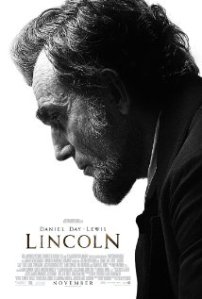
Lincoln ~ A Capsule Movie Review

Lincoln ~ A Capsule Movie Review by Allen Kopp

Lincoln, the new movie directed by Steven Spielberg, is a talky, though engaging, account of the last few months of Abraham Lincoln’s life. When the movie begins, Lincoln has just been re-elected to a second term as president. The Civil War has been raging for four years and politicians in Washington are wondering how it can be brought to an end. Can there be a negotiated peace with the South? Will the South surrender? It seems the biggest problem is what to do about the four million slaves who will suddenly be free citizens when the war ends. How can they be assimilated into society?

Lincoln desperately wants Congress to pass the anti-slavery Thirteenth Amendment to the Constitution, which, he believes, will settle the question of slavery once and for all. Pushing the amendment through Congress is politically risky. The Southern states that seceded want to be readmitted to the Union when the war is over, but they will do whatever they can to prevent passage of the Amendment. Lincoln’s Republican Party controls the House of Representatives (it seems the bill has already passed the Senate), but the Amendment needs a two-thirds majority to pass, so it needs support from the opposition party. Much of the action of the movie is taken up with the political wrangling that goes on behind the scenes to coerce recalcitrant members of Congress to vote for the Amendment. Some of them lack the courage to support it when they know their constituents back home are opposed. They’re damned if they do and damned if they don’t.

Daniel Day-Lewis plays Lincoln with a folksy charm and humility, and he is by far the best thing about the movie. Despite holding an office that is “clothed in immense power,” there is nothing grandiose or swell about him. He has a “common” touch and the people, both black and white, love him for it. It seems he always has time for everybody, no matter how insignificant. He loves telling stories and is not above using ungrammatical English, which is altogether in keeping with his character.

The war takes a tremendous personal toll on Lincoln. (In a scene that takes place toward the end of the war, Ulysses S. Grant tells Lincoln that in the last year he has seen him age ten years.) In addition to dealing with the immense problems the country faces, he has family problems that he must contend with. His oldest son, Robert, wants to enlist (against both parents’ wishes), even though the war is about over. His unhappy wife (played by Sally Field) is still grieving the loss of a son, Willie, three years earlier, and is certain that Robert will be killed if he becomes a soldier. She has terrible headaches and she never lets Abe forget how she much she despises being the wife of the president and living in “this awful house.”

Lincoln is rich in period detail, a vivid recreation of a fascinating chapter in American history when the country was at a crossroads. One unwise or miscalculated decision could have meant the end of the Union. The country was fortunate to have a true leader at the helm, one who was up to the task. He brought the country through the war, intact, though it cost him his life.

Copyright © 2012 by Allen Kopp

Seventy Years Ago ~ The Coconut Grove Fire

Seventy Years Ago ~ The Coconut Grove Fire 

This week marks the seventieth anniversary of the worst nightclub fire in American history, the Coconut Grove fire in Boston, in which 492 people were killed and dozens of others injured.

On the night of Saturday, November 28, 1942, Thanksgiving weekend, the popular Coconut Grove nightclub was jam-packed with about a thousand people, more than twice as many as the building was supposed to accommodate. When a fire broke out on one of the lower levels of the sprawling complex (supposedly accidentally started by a busboy striking a match to see), it spread quickly among the flammable palm trees, draperies, and other frippery that was supposed to add “atmosphere” to the place.

When people realized what was happening, panic became general. (In Fire in the Grove, a fascinating account of the fire and its aftermath, author John Esposito explains the “group psychology” of people in a panic situation.) Among the narrow hallways and staircases of the various “lounges” of the club complex, many people were simply not able to find their way to safety. Many who died were trampled to death or died from the poisonous gases that the fire released into the air. Others died from breathing the super-heated air. To make the situation worse, there was a revolving door at the main entrance to the club that became jammed and inoperable with people trying to escape. Many of the victims were found in and around the revolving door.

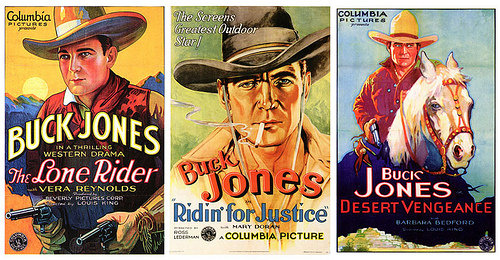
Most of the victims of the Coconut Grove fire were young, in their twenties and thirties. The youngest victim was fifteen. Servicemen on leave from the war were among the victims. A cowboy movie actor named Buck Jones also died. A young couple who perished had been married earlier in the day. Their wedding day became the day of their deaths.

The Coconut Grove fire did for fire safety laws what the Titanic sinking had done for maritime safety laws thirty years earlier. It focused attention on things that were wrong that needed to be fixed. When Titanic sank and 1500 people lost their lives, never again would a boat be able to set sail without having adequate life boats for everybody on board. The Coconut Grove fire assured that owners of nightclubs and other public venues would never be allowed to put patrons in danger by violating common-sense fire safety codes.

Copyright © 2012 by Allen Kopp 

The Same Chair at the Same Table

The Same Chair at the Same Table ~ A Short Story by Allen Kopp 

He was losing another job, the third in five years. The job didn’t matter so much—in fact he hated it—but it meant he would have to start looking again and money would be tight for a while. He was going to have to tell his mother but would wait for the right time; ill-timed bad news could keep her from sleeping.

He was dozing in the recliner in front of the TV when he heard her voice from the kitchen.

“Frank,” she said, “supper is on the table.”

He went to the table without bothering to put on his shoes, rubbing his eyes.

“Aren’t you getting enough sleep?” she asked.

“I don’t know.”

“If you were getting enough sleep at night, you wouldn’t need to sleep during the day.”

He looked at the plate of food she set in front of him, another one of her recipes cut out of the newspaper: a brown-and-greenish mass swimming in watery gravy. She used to be a good cook but now hardly made the effort.

He picked up the fork and began eating, looking across the table at her. She had just passed the threshold of sixty and he could see her creeping toward old age. She had put on a lot of weight and she didn’t seem to care. Pockets of flesh hung from her jawbones like a bulldog. When he was in high school, all those many years ago, she used to be pretty.

“Lon called me today,” she said, “and we had a long talk.”

“What about?”

“He wants me to lend him five thousand dollars. Of course, with him, ‘lend’ means ‘give’.”

“What for?”

“Mary Ann needs some expensive dental work, the car needs repairs, and now they have a leaky roof they have to get fixed. I told him not to have more than two kids, but do you think he ever listens to his mother?”

“Did you tell him you’d give it to him?

“I told him I’d think about it.”

It seemed the perfect time to tell her she should hang on to her money because he no longer had a job, but he kept silent. He rarely ventured an opinion. He was the grown-up child safely delivered to adulthood and, since he didn’t have a family of his own and had never ventured into the world on his own, nobody cared what he thought. He seemed to exist only on the margins of other people’s lives.

“Do you know what Sunday is?” she asked.

He looked at the calendar on the wall. “It’s the twenty-third,” he said.

“It’s your father’s birthday. I want to go visit his grave and I want you to drive me and Aunt Louise out there. I told him not to buy cemetery plots way out there because it was too far for me to go, but he never paid any attention to what I wanted. Being buried in a country cemetery was some whim of his, as if it mattered.”

“What time on Sunday?”

“We’ll go about two o’clock and stop someplace and eat on the way back so I won’t have to fix any supper.”

“All right. If I’m here.”

“What do you mean ‘if you’re here’? Are you planning on being someplace else?”

“One never knows.”

“What kind of way is that to talk? ‘One never knows’.”

“I was just making a little joke.”

“I hope they’ve done a better job of keeping the grass trimmed around his headstone than the last time I was there. Honestly, as much money as it takes to be buried there, you’d think they could at least keep the grass neat.”

He had been sitting in the same chair at the same table in the same kitchen his entire life, listening to his mother talk. What she was saying today sounded exactly the same as what she was saying when he was a little boy in grade school. It was a record he had heard so many times it was indelibly etched into his psyche.

“I spoke to Mabel Groat today in the grocery store,” she was saying. “She doesn’t look anything like she used to look. She’s so thin and pale. She had heart surgery about six months ago and never quite got over it. And she has to go into the hospital next week for more tests. She said she had just been to the funeral home and bought one of those pre-paid funeral plans for herself. I suppose I should do that, too. I don’t want my children to have to be bothered with planning for my funeral. I hate to think what the bunch of you together would pick out. To save a few greenbacks, you’d have me stuffed into one of those cheap caskets that’s made out of pressed paper. I cringe to think of the state I’d be in after I’d been buried in one of those things for a while. Yes, I’d rather do it all myself while there’s still time. At least my final resting place is assured. That’s a blessing.

“Did I tell you that Bernice Pullman had a stroke? And she’s only a few years older than me. She’s completely paralyzed and they say she’s just like a vegetable. They had to put her in a nursing home. I suppose I should get out there to see her before she dies, but they say she doesn’t know anybody. If she doesn’t know who I am, what’s the point in going? They’re having to sell her house and car and all her belongings to help pay the bills. If I ever get in that state, I would just rather die right now and get it over with than to be helpless and run through a fortune in medical expenses when there really isn’t anything that can be done. I don’t know why life has to be so cruel sometimes.

“You remember Podge Halliday, don’t you? I grew up with him and he was a distant cousin of your father’s. He was just the sweetest guy in the world and so handsome! All the girls were just crazy about him. He had a heart attack last year on Christmas Day and has never regained consciousness. I don’t know why they don’t just pull the plug on him and let him die with dignity so people can remember him as he used to be and not as some lifeless vegetable in a hospital bed. They say his wife just sits beside his bed all day long and cries. I think she needs to buck up and tell Podge goodbye and get on with what’s left of her life.

“Podge’s daughter from his first marriage goes to our church. She’s about thirty and has a sweet face but she’s as big as a boxcar. She’s got two kids that she dresses up like little dolls. People say she never bothered to get married and that each of her kids is by a separate father. It was such a mistake to allow young girls to start thinking it was all right for them to have children on their own without getting married. In my day, having a baby out of wedlock was the worst thing a girl could do. She was marked for life and so was the child.”

“I don’t know any of those people you’re talking about,” he said.

“That’s because you never pay any attention to me when I’m talking.”

“What’s for dessert?”

“There’s some canned peaches in the cabinet. All you have to do is get up off your butt and get them and open them and, voila!, there’s dessert.”

“Isn’t there any chocolate cake?”

“We need to watch our figures.”

After he finished eating he went upstairs to his bedroom and locked himself in. He turned on the light, opened the dresser drawer and took out a small handgun that he kept concealed underneath some pajamas he never wore. Looking at himself in the mirror, he held the gun to his temple in his right hand, pulled back the hammer and released the trigger; he found the click it made an altogether satisfying sound. When the time was right, he would get some bullets and, together with the gun, they would make beautiful music.

When he went back downstairs, his mother was lying on the couch in a semi-comatose state, watching TV. He went out the back door quietly and began walking down the street.

He walked for more than a mile until he came to the bridge that led over into another part of town, the part where the taverns, cheap hotels, and whore houses were. It was where one might get a tattoo or purchase some illegal substance or other; where one might just as easily get knocked in the head from behind and wake up with a terrible headache and empty pockets. He came to a place called Uncle Willie’s beside a shuttered theatre and went inside. (He could not have known that Uncle Willie was a woman.)

He sat at the bar and had a drink and then another and another. He liked the darkness, the anonymity, the seedy quality of the place. He found solace in the quiet company of the people there; he believed they were his kind and would understand him if only given the chance.

When he finally decided to go home, he was drunker than he had ever been in his life and it had started to rain. Suddenly he longed for his bed and the safety of his home, for the reassuring presence of his mother. He wasn’t sure if he remembered the way back in the dark.

At the bridge that he had crossed earlier in the evening he became sick and disoriented. He stopped for a moment and looked all around, not sure if it was the same bridge. The light that illuminated the far end seemed to have gone out. Nothing looked as it had looked earlier. He couldn’t see his feet.

He miscalculated distance, believed he was at the end of the bridge when he was in the middle. He didn’t know why the rail was in his way and scaled it. He fell thirty feet to the water and drowned. His body was carried away on the current and wasn’t recovered until two days later.

Such were the facts of his death, but he perceived them in a different way. From the moment he stepped off the bridge he lost consciousness. He was on the other side and there was no rain. It was daylight again. The blue of the sky was inexpressibly beautiful. The trees in the distance glowed in golden light like edifices made of emeralds.

A bus came down the road with barely a sound and stopped. He turned toward it and the door opened. He looked up at the driver but couldn’t see the face of the driver because there was a blinding light there. Without words, he knew he was being given a choice to get on the bus—that he didn’t have to do it if he didn’t want to. He hesitated for only a moment and then climbed the four little steps, shielding his eyes from the light. He heard the door close behind him and felt the bus accelerate under his feet as he settled comfortably into a seat beside the window. He had never felt so happy in his life.

Copyright © 2012 by Allen Kopp

Happy Thanksgiving!

Thanksgiving ~ A Classic American Poem by Ella Wheeler Wilcox (1850-1919)

We walk on starry fields of white
And do not see the daisies,
For blessings common in our sight
We rarely offer praises.
We sigh for some supreme delight
To crown our lives with splendour,
And quite ignore our daily store
Of pleasures sweet and tender.

Our cares are bold and push their way
Upon our thought and feeling;
They hang about us all the day,
Our time from pleasure stealing.
So unobtrusive many a joy
We pass by and forget it,
But worry strives to own our lives,
And conquers if we let it.

There’s not a day in all the year
But holds some hidden pleasure,
And, looking back, joys oft appear
To brim the past’s wide measure.
But blessings are like friends, I hold,
Who love and labour near us.
We ought to raise our notes of praise
While living hearts can hear us.

Full many a blessing wears the guise
Of worry or of trouble;
Far-seeing is the soul, and wise,
Who knows the mask is double.
But he who has the faith and strength
To thank his God for sorrow
Has found a joy without alloy
To gladden every morrow.

We ought to make the moments notes
Of happy, glad Thanksgiving;
The hours and days a silent phrase
Of music we are living.
And so the theme should swell and grow
As weeks and months pass o’er us,
And rise sublime at this good time,
A grand Thanksgiving chorus.

~~~~~~~~~~~~~~~~~~~~~~~~~~~~~~~~~~~~~~~~~~~~~~~~~~~~~~~

Psalm 95:1-6

O come, let us sing unto the LORD: let us make a joyful noise to the rock of our salvation. Let us come before his presence with thanksgiving, and make a joyful noise unto him with psalms. For the LORD is a great God, and a great King above all gods. In his hand are the deep places of the earth: the strength of the hills is his also. The sea is his, and he made it: and his hands formed the dry land. O come, let us worship and bow down: let us kneel before the LORD our maker.

Psalm 100

Make a joyful noise unto the LORD, all ye lands. Serve the LORD with gladness: come before his presence with singing. Know ye that the LORD he is God: it is he that hath made us, and not we ourselves; we are his people, and the sheep of his pasture. Enter into his gates with thanksgiving, and into his courts with praise: be thankful unto him, and bless his name. For the LORD is good; his mercy is everlasting; and his truth endureth to all generations.