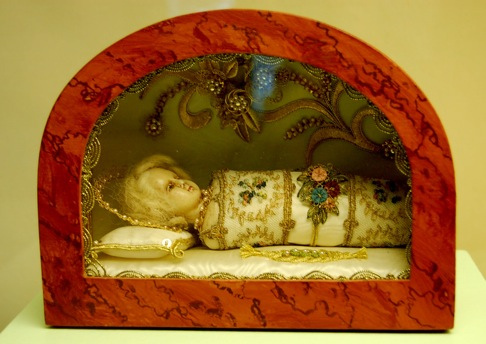
Curtain of Night

Curtain of Night image 2

Curtain of Night ~ A Short Story by Allen Kopp

She didn’t know how far she had walked, but it seemed more than a mile but not quite two. Finally when she came to an old house at the end of a dirt road with a split tree she knew she had come to the right place. She walked up rickety wooden steps to the front door and knocked timidly. In a moment an old woman came and peered out at her through the screen.

“Yes?” she said.

“Mrs. Wakes?” the girl asked.

“Yes.”

“I’ve walked all the way from town to see you.”

“Do you have any chocolate on you?”

“Why, no.”

“Are you alone?”

“Yes ma’am.”

“Well, come on in, then. And make sure you don’t have no mud on your shoes.”

Stepping in out of the bright sunlight, she could barely see. It was the darkest house she ever saw. The windows were covered up on the inside.

“Come on back to the kitchen,” Mrs. Wakes said.

She pulled a chair out from a table and gestured for the girl to sit. She took a glass and filled it with ice-cold water and put it on the table in front of her. “Better tell me who you are,” she said. “I like to know who I’m dealing with.”

“My name is Ernestine Bird. I live in town with my papa and my mama and my younger brother Gaither. My papa owns the feed and grain store. I go to church every Sunday.”

“What can I do for you, Ernestine Bird?”

“People say you’re a witch.”

“Uh-huh.”

“Are you a witch?”

“Do I look like one?”

“I’ve never seen a witch so I couldn’t say.”

“Some call it one thing. Others call it something else. If you feel good calling me a witch, then go ahead and do it.”

“You sell potions and things.”

“I don’t call them potions. They’re medicines, restoratives, mixtures, compounds and what-not. Whether or not they work is very often in the mind of the person using them.”

“Do you have something that could cause a person to die mysteriously, but really fast and without any pain or choking or fits or anything?”

“There is something called ‘Curtain of Night’ that brings instantaneous death to those that take it. I don’t give it to just anybody, though.”

“That’s the thing I want.”

“Just who is it you want to die?”

“It’s for me.”

Mrs. Wakes looked directly at her face as if studying her. “I don’t usually give it to people who want to use it on themselves,” she said. “It’s mostly always used for a sick family member who can’t get well or for revenge against an enemy.”

“I promise you nobody will ever know where I got it.”

She sat down at the little table and took Ernestine’s right hand in her own and turned it palm up.

“Are you going to read my fortune?” Ernestine asked.

“Nothing as silly as all that,” she said. She rubbed her palm against Ernestine’s palm. “Your hand is all sweaty.”

“I walked a long way.”

“Drink the water.” She pushed the glass toward Ernestine and watched as she drank.

“Now,” she said when the glass was empty, “tell me your foolishness, whatever it is. I’ve heard it all in my day.”

“There’s this boy I want to marry.”

“Oh, so it’s about love, then. Why am I not surprised?”

His name is Phillip Andrew Clague. He’s older than me. I’ve been out on dates with him exactly three times. He has a Ford that we ride in with the top down. One time we went to the picture show and the other two times for a drive in the country.”

“And he took advantage of you when you were least able to resist and now you’re in trouble, is that it?”

“Oh, no, that’s just the thing. He keeps his distance. He acts like I’ve got the plague or something.”

“So, he doesn’t like you very much, or not enough to suit you? Is that what you’re saying?”

“Yes, ma’am.”

“And you want to die because of it.”

“Recently he’s started stepping out with a girl named Hester Risley. She’s a whore but he doesn’t know it yet. I’ve heard from somebody who knows Hester that she’s got it into her head that she’s going to marry him. I can’t let that happen.”

“Is it worth dying over?”

“If I can’t have him I don’t want to go on living.”

Mrs. Wakes sighed. “Oh, foolishness, thy name is woman!” she said. “Take the word of an old harridan four times older than you. You don’t want to die over the first boy that bats his eyelashes at you. He’ll move out of your life and then somebody else will move in and, before you know it, you won’t even remember the name of the one you were willing to die for. It’s the way of young people. Go on home now and forget you were ever here.”

“I’ll pay you all I have. Twenty dollars.”

She leaned over and spit into a lard bucket on the floor against the wall. “Has it occurred to you,” she said, “that there might be some other way besides doing away with yourself?”

“I have the feeling you’re laughing at me.”

“I can give you a love elixir that will make any boy fall in love with you. Even one who thinks he doesn’t like you at all.”

“Is that possible?”

“It happens all the time. If you’re able to give him the elixir and take some yourself at the same time, he will love you throughout all eternity. Your spirit will be locked together with his as though you are one, forever and ever.”

“I’d like some of that, please.”

“Not so fast. You have to ask yourself if you really love him that much. You have to be sure because there’s no way to undo it.”

“The answer is yes.”

“How much do you know about him?”

“I know enough.”

“Do you know what his personal habits are like? Does he keep his word? Is he kind to animals? Is he kind to his mother? Do you know his opinions on the important subjects of the day? Is there anything going on in that head of his behind his pretty face?”

“I know enough, I tell you.”

“I want you to think about these things. Go away and come back in one week. After a week’s reflection, you might change your mind.”

“I don’t have one week and I won’t change my mind! If he decides he’s going to marry Hester Risley, it’ll be too late.”

“It’s your funeral. Don’t say I didn’t warn you.”

“So you’ll let me have it, then?”

“I don’t know yet. Only on the condition that you’ll think about it for a while before acting.”

“I will.”

“And, also, you’ve got to understand there are no guarantees.”

“Are you saying it might not work?”

“It’s not a hundred percent foolproof. Most of the time it works but not always.”

“If it doesn’t work, will you give me back my money?”

“After you leave here, you assume full responsibility for what happens or doesn’t happen. By the time you get back to town, you’ll forget that I exist or that you were ever here. You’ll have the love elixir but you won’t know where you got it.”

“How is that possible?”

“It’s something I do to you. In fact, I’ve already done it and you didn’t even know it.”

“You cast a spell on me?”

“Call it whatever you like.”

“Since the love elixir might not work, I want the Curtain of Night, too. Just in case.”

“I want you to make sure you understand the seriousness of the step you are about to take. You’re not playing a child’s game.”

“I know that.”

“Very well. Go into the next room and lie on your back on the bed. I’ll be with you in a few minutes.”

The room off the kitchen was just as dark as the rest of the house, but a small chink of light, enough to see by, came through at the top of a window. Against the far wall was a small bed with one pillow and a coverlet. She lay on the bed as Mrs. Wakes had instructed her to do and folded her hands over her abdomen. She breathed out and breathed in. Soon she was asleep.

When she came awake, she was on the road back to town with the odd sensation of not being able to remember how she got there, as if she had woken up while in the act of walking.

“She really is a witch,” she said to herself.

By the time she got back to town, though, she couldn’t remember Mrs. Wakes at all. When she got home and found the two tiny bottles in her pocket, one marked Love and the other Death, she couldn’t remember where they came from but she knew what they were for and how she was going to use them when the time came.

Copyright © 2013 by Allen Kopp

Happy Easter!

Jesus_006

Proverbs Chapter 22, Verse 11 and 12 ~


He who loves purity and the pure in heart and who is gracious in speech–because of the grace of his lips will he have the King for his friend.


The eyes of the Lord keep guard over knowledge and him who has it, but He overthrows the words of the treacherous.


The Man Who Prepared Himself for Death

The Man Who Prepared image 1

The Man Who Prepared Himself for Death ~ A Short Story by Allen Kopp

(Published in The Zodiac Review.)

I’ve always lived a thousand miles from the ocean, so it’s rather a novelty for me to be able to stand on the beach with the surf lapping at my feet and look at out the endless horizon where water meets sky. At night when I get into bed, I can hear the waves, which for me is the sweetest kind of blankness to drop off to.

I have a beautiful room—more of a suite, really—on the eighth floor. Except for bellboys, waiters, and the maid who picks up in my room in the morning, I haven’t spoken a word to anybody since I’ve been here. I’ve almost forgotten what my own voice sounds like, which is altogether fine with me.

I gave my son, my only living relative, what I thought he deserved. When I gave him the keys to my house and car, I told him I was going away and never coming back. He asked me jokingly if I was going on an expedition to another planet and I told him that, yes, in a way I was. He could sell or keep all my possessions—it made no difference to me. When he could see I wasn’t joking, I thought I saw a flicker of concern pass over his face; it lasted only a second and then was gone. We shook hands whenever we parted as if we were business partners instead of father and son.

On Friday evening I get dressed and go down for dinner. The restaurant is an enormous room—I’m told it used to be a ballroom—with a thirty-foot-high ceiling. The outside wall, including part of the ceiling, is all glass, giving the illusion that one is both indoors and outdoors at the same time. The only difference is the tropical plants outside are growing in the ground and inside they are in huge planters. Off to the side is a pianist on a little raised platform. One has to twist one’s head all the way around to get a glimpse of him. He plays softly and tirelessly from the French repertoire: Ravel, Satie, and Debussy.

Everybody in the restaurant is seated alone. I suppose it would be possible for two or more people to sit together at one table, but nobody ever does. Something else that you might find peculiar is that everybody is facing the same direction, toward the glass wall. And, since everybody is a party of one, there is no conversation except with the waiters who move efficiently among the tables in what seems a sort of dance.

The dinner with its various courses takes upwards of two hours. In all that time I can’t help but notice the people in my line of sight, although all I can see are backs of heads and the occasional profile. They are mostly very ordinary people, like me; people you would see on any street in America. There are the well-heeled bottle blondes and the middle-aged men who don’t wear their clothes very well because of their lumpy bodies.

A few of the people stand out, for one reason or another: The large woman dressed all in black with a veil over her face. I wonder how she is going to eat with her face covered, but then her food arrives and she raises the veil like a curtain. (When the show is over, the curtain comes down again.) The distinguished-looking gentleman with the eye patch and the terrible limp who obviously has an artificial leg under his trousers. The platinum blonde in the glittery gown who, you realize on the second or third look, is really a man. The “movie star” with his perfect black hair (a wig?) and finely chiseled features. (No autographs, please!) Even with my limited knowledge of movie actors, I recognize him from movies he was in ten or fifteen years ago. I believe he’s what is known as a “has-been.”

The one person who stands out the most (for me, anyway) is the midget. Unlike other midgets I’ve seen, he’s perfectly proportioned; his head is a perfect oval shape and is not too big for his body. With his pencil-line moustache and his evening attire with top hat, cane and gloves, he resembles a doll or a ventriloquist’s dummy. You almost want to take him on your lap and see what happens. After he has been seated, he removes the top hat and places it upside-down on the corner of the table with the gloves inside and the cane beside the hat.

All the people in the room, like me, have been schooled in the art of closing themselves off from others. While sitting alone in a room with a hundred or so other people, you are able to radiate the illusion in your every movement that you are the only person present.

One by one, over the course of the next several days, those people who stand out for me cease to exist, along with others who merely seemed like ciphers. Every evening at dinner in the restaurant I notice new people who were never there before and an absence of those who were there when I first came. First the fat lady in black takes her leave; then the glamorous platinum blonde who is a man. Then, conspicuous in his absence is the gentleman with the limp, followed by the fading movie star. They all got what they came for.

For several days thereafter I continue to see the midget every evening when I’m eating my swordfish or filet mignon. Even though we’ve never met or spoken a word to each other, I feel some kind of a connection with him, a familiarity. I know, without knowing, that he has a fascinating story to tell; I’m sure I would like him and he me. Then, one evening when I take my place at my tiny table and look across the room to find him with my eyes, he, too, is gone. I think maybe he is just late in coming, but then he doesn’t come at all.

After dinner that evening I am unnerved and maybe even a little despondent. And I had been doing so well since I came here. At one a.m., I still haven’t been able to go to sleep, so I call the night attendant. I think he can give me a pill or speak a few words of encouragement.

“What’s the problem?” he asks as he comes into my room and sits down in the chair by the bed, puts his elbows on his knees and clasps his hands together. He wears a form-fitting blue shirt that shows his muscular frame. His name is Paul.

“I’m a little unsettled,” I say.

“Stomach bothering you? I can give you a bromide.”

“No, it’s not that. My stomach is fine.”

“Would you like a massage? It’ll help you to relax.”

“No, I don’t like being touched.”

He looks at me as if he’s trying to figure me out. He could break me in half if he wanted to.

“Do you want me to sing to you?” he asks.

“Does anybody change their minds after they get here? Decide they don’t want to go through with it?”

“You know that’s not possible,” he says. “That’s why they subject you to all that counseling and screening so you know before you get here that there’s no turning back.”

“Do you know how they do it?”

“No, I don’t, and you don’t want to know either. You’re not supposed to worry about that at all. You’re not supposed to even think about it or talk about it.”

“I wasn’t worried about it until this evening after dinner.”

“Did something happen at dinner?” he asks.

“No, it’s just that a friend of mine who had always been there wasn’t there anymore.”

“You didn’t come here to make friends,” he says with a sad smile.

“I know. I just can’t seem to help myself.”

“I can give you a pill if you like.”

“Is it the pill? The pill to end all pills?”

He laughs. “No, it’s not that,” he says. “That’s not my department. It’s just a simple little sleeping pill.”

He takes a little bottle out of his pocket and shakes a pill into my palm. He goes into the bathroom and gets a glass of water and when he comes back I take the pill like a trouper.

“I’ve been here now for two weeks,” I say. “I’m a little concerned about how much longer I’m going to have to wait.”

“The wait is making you nervous?”

“A little.”

“Everybody is different,” he says. “When the decision is made that you’re ready, your wait will be over.”

“I’m ready now. I was ready on the day I arrived.”

He surprises me by patting my hand. “You have absolutely nothing to worry about. Maybe you’re just feeling a little lonely. Do you want me to sit with you for a while until you go to sleep?”

“If you have nothing better to do.”

He makes himself comfortable in the chair and in a minute or two he’s snoring. I must have fallen asleep right after that because that’s the last thing I remember.

When I wake up I look at the clock and am surprised to see it’s nearly noon. Paul is gone, of course, and I haven’t heard him leave. I  have lost ten hours or more in sleep that seemed like ten minutes. I don’t know what was in the pill he gave me, but it was very effective. Oblivion in a bottle.

I force myself to get out of bed and take a few steps. I feel groggy and my legs feel like lead. When I open the curtains, I see the sky is gray instead of the customary brilliant blue; it’s raining out and foggy.

Unlike most people, I like the rain and the fog, so I get dressed and go down in the elevator and outside. I’ll walk for a while and then maybe I’ll feel like eating a light lunch.

The surf is choppy and I don’t see the usual small boats. It promises to be an interesting day, I think. We’ll see what all this weather brings. I feel a tiny bit of exhilaration, something I haven’t felt for a long time. Something is in the air; I’m not sure what.

I walk a half-mile or so down the beach from the hotel. I don’t see anybody, not even any gulls. I plan on going down just a little farther and then turning around and going back. I like the spirit of adventure, being out in wind, rain and fog that nobody else will brave. Take me for the fool I am.

As I continue walking, I hear a rushing sound, like a rush of air. I think it’s the wind picking up but when I turn and look out at the ocean I see a huge wave that seems to be coming right toward me. The wave is so big I know I can’t outrun it. I stand rooted to the spot and close my eyes and wait for the wave to crush me. My last thought is: So this is how they do it!

I don’t know how much time goes by. Time has lost its relevance. I’m lying in shallow water. I open my eyes and see people standing on a small pier looking down at me. Somebody jumps into the water and raises me up. I see right away it’s Paul, the night attendant who gave me the pill. He lifts me out and places me on my back on the pier. I choke and gasp for air. When I have revived a little bit I look up at the people standing over me. It’s the fat lady in black, the faded movie star, the gentleman with the eye patch, and the glamorous platinum blonde who is really a man. Someone is straddling my chest to force the water out of my lungs. I think at first it’s Paul but then I realize it’s the midget with the pencil-line moustache.

Copyright © 2013 by Allen Kopp

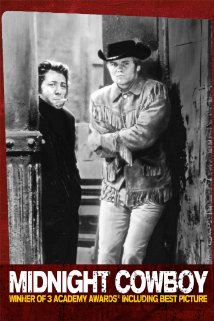
Midnight Cowboy ~ A Capsule Movie Review

 Midnight Cowboy poster

Midnight Cowboy ~ A Capsule Movie Review by Allen Kopp

Midnight Cowboy was made 44 years ago, in 1969. That was the year man first set foot on the moon. You’d think we would have at least conquered Mars by 2013, but the space program went awry after that. I guess after the moon there wasn’t much interest in taking that next step and, anyway, politicians in Washington were busy (and still are, but on a much larger scale) squandering obscene amounts of our money for their “constituents” back home so they will be sure and get re-elected next time. (The more “entrenched” a politician becomes, the more “powerful” and corrupt, but that’s a different story.) If all the money that has been wasted in Washington in the last 44 years had been used for space exploration, we probably could have conquered all the planets in this solar system and might have encountered some kind of intelligent life elsewhere, since there isn’t much of that here.

So, think of Midnight Cowboy being made in 1969 in this atmosphere of bold adventuring. We had conquered the moon for the good of mankind. There was no telling what would come in the years that followed. We would see people colonizing Mars in the way Europeans colonized the New World in the 16th and 17th centuries.

Midnight Cowboy was, in itself, a bold adventure in moviemaking. When you come to think of it, who wants to see a movie about a dimwitted, though physically gifted, Texas dishwasher named Joe Buck who goes to New York City to become a male prostitute and befriends a nasal-voiced bum with a runny nose and a limp named Ratso Rizzo? (His real name is Enrico Salvatore Rizzo; he doesn’t like being called Ratso.) That’s just too repellent, isn’t it?

Well, it turned out that a lot of people wanted to see it because it’s a terrific movie with an intelligent script and great acting (a fascinating gallery of secondary characters, including Cass, the wily dame who pulls a fast one on Joe Buck; Mr. O’Daniel, the street preacher who Joe Buck is tricked into believing is a pimp; Townie, the mama-obsessed old queen who is in New York for a little fun, damn it!) and is made with such care that it just has to be good. When it came out, it generated a lot of controversy because it was given an X rating and it was just so different from what had gone before. (Isn’t that what “art” is all about?) Changes that were taking place in the world were being reflected in the entertainment industry. (Soon the X rating was taken up by the pornography industry and was no longer used for “legitimate” movies.) When the Oscars came out for 1969, Midnight Cowboy was named Best Picture of the Year, with good reason.

If there’s ever an award for Best Actor in a Lead Role Playing a Bum, Dustin Hoffman wins it hands-down for playing Ratso Rizzo. He lives in a derelict building that has been marked for demolition. He steals overcoats in theatres. His skin has an unhealthy sheen. He’s filthy and his hair is greasy. He has a game leg and a bad limp. His voice is an annoying nasal whine. But, in spite of all these things, he makes us feel for him. Underneath the dirt and squalor is a person we recognize. We somehow end up liking him and wishing he would get well and live a happy life.

No less impressive is Jon Voigt as Joe Buck, the naïve Texas hustler. When he leaves his dishwashing job in Texas and boards a bus for New York City, we know he is headed for some heartbreak. He is a babe in the woods. The first few people he encounters who are supposed to pay him for his services don’t work out the way he hopes; he ends up spending more money than he makes. When he runs out of money and is put out of his hotel room, he casts his lot in with Ratso Rizzo, who had swindled him out of some of his money when they first met. From then on it becomes a story of survival and friendship and the desire for a better life. (If only they can make it to Florida and escape the New York winter, everything will be all right.) These two characters are possibly the most memorable pair of misfits ever captured on film.

Copyright © 2013 by Allen Kopp

The Doctor Will See You Now

The Doctor Will See You Now image x

The Doctor Will See You Now ~ A Short Story by Allen Kopp

(Published on The Short Humour Site and in People of Few Words, Volume 4.)

The old man sat in a straight-backed wooden chair against the wall. In front of him a few feet away a nurse sat writing behind a desk, her face without expression. She wore a white peaked nurse’s hat and a white uniform. The old man studied the nurse, noting the web of fine lines around her eyes and the stubble on her upper lip, but she never once looked back at him or gave any indication that she knew he was there.

A woman came in with a little girl and sat down to the old man’s left. He smiled at the woman and the little girl, but neither of them looked back at him. The woman was very fat and she wore a blue dress with white flowers. She sat down in a chair and settled her dress over her knees and spread her legs wide apart and picked up a romance magazine and began reading it.

With one empty chair between them, the little girl sat to the old man’s left. She looked all around the room and, finding nothing of interest, settled her attention on the old man. She stared at him with bug-eyed intensity while he looked straight ahead at the nurse. Finally she reached over and put the tip of her forefinger on his arm, causing him to turn and look at her.

“Are you a man or a woman?” she asked. “How old are you? How much do you weigh?”

The fat woman turned the page of the romance magazine and, without lifting her eyes from the page, said, “Leave the old man alone, Patsy. He might have some disease.”

The little girl laughed and covered her mouth with her hand. “Do you have a disease?” she asked.

The old man said nothing but just looked straight ahead at the nurse, who still showed no sign that she knew he was sitting there.

In a little while he began to feel dizzy. The color drained from his face and he slumped forward and fell off the chair onto the floor, unconscious.

The nurse behind the desk looked over the edge of the desk at the old man on the floor and wrinkled her nose with distaste. She picked up the phone and said, “Got one down on the floor up here. Better send somebody up.” She hung up and went back to her writing.

The inner door to the office opened and a young nurse stood there with her hand on the knob. Her eyes looked straight ahead and her face was empty, as though in a trance.

“Miss Arbuckle,” she said, “the doctor will see you now.”

The fat woman stood up and pulled the little girl to her feet. They both stepped over the old man lying on the floor and passed into the inner office. The young nurse yawned and jerked the door closed, wishing it was time to go home.

Copyright © 2013 by Allen Kopp

Late of Cherry Street

 Late of Cherry Street image x

Late of Cherry Street ~ A Short Story by Allen Kopp

(Published in Burial Day Books.)

Cora Sue Hightower developed a summer cold, which turned into pneumonia and then into something worse. She was supposed to get better but she didn’t. She faded very fast and died in her own bed on a lovely afternoon in late June with her mother, father, and younger sister at her side. She was only eighteen years old.

Ashenbrenner and Sons came in their shiny black hearse within minutes of being called and took Cora Sue away underneath a blanket on a stretcher. They worked over her body for a day and a half in their basement laboratory, drawing the blood out of her body and replacing it with embalming fluid. They called in a hairdresser and a makeup artist to work their magic and dressed her according to her mother’s explicit instructions. In short, they did all they could to make sure she would look in death exactly as she had looked in life.

Almost everybody who had ever known Cora Sue in her life came for the visitation and viewing: friends past and present, school teachers, acquaintances of her parents who saw her maybe one time when she was five years old, a slew of third and fourth cousins from out of town, and on and on. So many people showed up, in fact, that Ashenbrenner and Sons had to send out for more chairs from the church across the street.

When the visitation was over and everybody had gone home, Manny Ashenbrenner turned off all the lights except for one floor lamp at the foot of Cora Sue’s casket; he always left that one lamp burning overnight whenever he had a body lying in state to keep the place from being so lonely. He left to go home just as the clock was striking eleven.

With everyone gone and the place shut down for the night, it couldn’t have been quieter if it had been on the surface of the moon. It was an almost other-worldly quiet. If a feather had been floating through the air, you would have heard it land on the thick gray carpet. If a mouse had walked across the floor, you would have heard its tiny footfalls.

Some slight sound—was it the wind?—caused Cora Sue to open her eyes. She thought she was in her bed at home and was waking up from a dream. She was aware that she had been surrounded by a lot of people earlier, but she thought they were only dream people and hadn’t been bothered by them. She was just glad when they finally went away with their waggling tongues and hot breath and left her alone.

Her bed seemed awfully narrow and unfamiliar; when she tried to move her hips from side to side, she couldn’t. With some difficulty she pulled herself to a sitting position. When she looked around in the dim light, she knew she wasn’t in her own home, in her own bed, but in a place that was unknown but oddly familiar. She expected her mother or father to be there when she woke up, but there was no one; she was all alone.

Oddly enough, she could smell flowers, chrysanthemums especially. She had always liked chrysanthemums but ever since she was a small child she had associated the smell of them with trips to the funeral home when they went to visit somebody who had died. This gave the flowers a significance that the other flowers, however lovely, didn’t possess. She reached over and took a huge chrysanthemum bloom between her hands and inhaled deeply of its scent. Smiling and feeling happy, she extricated her legs and planted her feet on the floor.

She didn’t feel quite herself—no doubt from being in that cramped little bed—but after she had stood upright for a few seconds and took a few steps, she felt fine again. She walked backwards and forwards in a straight line, heel to toe, when she noticed all the chairs but no people. She thought she must be at the bus station or the library or the medical clinic after they had closed down for the night; nothing felt lonelier. She didn’t want to be the only person in such a place after everybody else has left.

She looked around for a pay phone to call her mother to come and get her, but, even if there had been a phone, she wouldn’t have been able to use it because she didn’t have any money. All she could think to do was walk home on her own, no matter how far it was.

She went outside to the street in front of the building and stopped and looked both ways. To her left was darkness but to the right were lights far off in the distance, so she began walking in that direction. Lights meant people and people meant being able to ask for directions. She would get a taxi to take her home and ask the cab man to wait while she went inside to get some money from her mother. She pictured her mother sitting alone on the couch in her pink chenille bathrobe, waiting for her to come home and relieved to see her. She would be happy to pay the cab man.

Everything she saw was strange to her yet oddly familiar. She didn’t know where she was but she had the feeling of having been there before. Objects—buildings, trees, streetlights, cars—existed just outside her field of vision, but when she looked directly at them they seemed to become something other than what they had been. A house became a tree; a telephone pole became a white cat with black spots; a car with people in it became a cloud of dust. She passed a house with a yellow porch light and apple trees in the yard that she was certain she had passed a few minutes earlier. Or did she? If she was simply going around in circles, she hadn’t been aware of turning any corners. Wherever she was, the ordinary rules of things remaining true to themselves didn’t seem to apply.

After a period of walking—had it been hours or only minutes?—she came to a part of town that she was sure she had never seen before except maybe in a dream. There were bars and cafes, bright lights and lively music; people enjoying themselves everywhere—talking, laughing, standing around in bunches. In a doorway a tall man in a uniform was kissing a woman, both of them apparently oblivious to what was going on around them. A monkey dressed as a policeman walked past, rolling its eyes and tootling a horn. Across the street a boy danced while an identical boy accompanied him on an accordion. A small group of onlookers tossed coins, which the accordion player then picked up. A roman candle shot up into the sky and everybody stopped what they were doing and watched it. When it reaches its apex, it exploded with a pop into a ball of golden fire.

She passed a movie theatre with a crowd of people under the marquee waiting to get inside, a crowded penny arcade aglow with yellow light, a dancehall from which music was piped to the street, a liquor store that sold foreign and domestic beers, wines, liquors. She came to a little stand where an old man was selling ice cream cones. He gave her a kind smile, which emboldened her to ask for directions.

“I live on Cherry Street,” she said. “Can you tell me where that is from here?”

“Haven’t ever heard of no Cherry Street, girlie,” he said.

“I’ve lived in this town my whole life and I’ve never seen this part of it.”

“You don’t tell me.”

“Do you know if there’s a telephone around here where I can call my mother to come and get me?”

“You might try the all-night drug store, but last I head their phone was busted,” he said. “Here, have a cone. It’ll make you feel better.” He extended a cone with two dips of chocolate, which, as good as it looked, she didn’t want to take.

“I’m sorry,” she said. “I don’t have any money with me.”

“That’s okay. You can pay me the next time around.”

She knew the opportunity of ever seeing him again was highly unlikely, but she took the cone anyway and continued on her way, eating it. The old man might not have known where Cherry Street was, but he was right about one thing: eating the two-dip chocolate ice cream cone made her feel quite a lot better.

She came to a hotel that had its doors opened invitingly to the street so she went inside. The lobby was cool and hushed like a museum or a library. She went to the sign-in desk and asked the clerk if there was a telephone she might use.

“Pay phones over there,” he said, pointing.

“I don’t have any change,” she said. “Isn’t there any other phone I could use?”

He looked at her and sighed and reached behind the counter and placed a phone on the desk in front of her. “Don’t let the manager see you.”

She dialed the number that she knew so well and when she heard the phone ringing she felt a wave of relief. At last she would hear her mother’s voice and everything would be all right again. After a few rings, though, she heard a recorded voice telling her: Your call could not be completed as dialed. She dialed the number three more times and the same thing happened every time.

“You couldn’t get through to your party?” the clerk asked, watching her the whole time.

“Line’s busy,” she said.

She left the hotel and continued on her way, feeling a little hopeless. She didn’t know what time it was but it seemed late and she wanted to get home and go to bed. Before she went to bed, though, she would have a ham sandwich and a Coke and a couple of chocolate chip cookies at the table in the kitchen while her mother paced the floor in a cloud of cigarette smoke and lectured her about staying out late on a school night. Or—wait a minute—was it a school night? Was she even still in school? She seemed to remember something about finishing school for good and not having to ever go back again. Oh, she was confused all right. How could a person not know if she was still in school or not? She was thinking that maybe she had been hypnotized the way they do in the movies, or that somebody had given her a drug in a drink that she didn’t know about. When she did get home, she would have a lot to tell her parents. Her mother would want to take her right to the doctor to make sure she was all right.

Passing a pet store, closed for the night, she saw a bunch of blue-gray puppies asleep in the window and stopped to get a better look. There were six puppies in all; they couldn’t have been more than a few weeks old. They were so perfect and so artfully grouped together that they might have not have been real except every now and then one of them moved its head or its paw slightly. They seemed close enough that she could touch them except for the glass that stood between her and them. She was hoping that one of them would open its eyes and look at her, when she felt someone standing behind her.

“You’re thinking about Smoky, aren’t you?” a man’s voice said.

She jumped a little, startled, and just stopped short of letting out a little yelp. She always did hate having somebody sneak up on her. “What was that you said?” she asked, turning around and getting a good look at him.

He was older than her but not by much. She thought she had never seen him before but she couldn’t be sure of anything. She realized she should probably be afraid of a man she had never seen before approaching her on the street, but she wasn’t. You can’t always assume that strangers are going to do you harm.

“I said they remind you of Smoky,” he said.

“I was just thinking I’d like to take one of them home with me but I wouldn’t know which one to take. I would want them all.”

“Greedy girl,” he said.

She gave him a little smile and continued on her way. She was a little surprised when he began walking in step beside her.

“You seem kind of lost,” he said.

“I’m not sure if that’s the right word. I woke up in a strange place hours ago—or maybe days ago—and I’ve been trying to find my way home. Everything I see seems kind of familiar but not so familiar, if you know what I mean. I’ve lived in this town my entire life and I’ve never seen this part of it before tonight.”

“Come along with me and I’ll buy you a something to eat,” he said.

“I don’t know if I should.”

“It’s all right, believe me. There’s nothing to worry about.”

He took her to a little restaurant called Afterlife. They sat at a table for two with a white tablecloth and linen napkins. They had a fish dinner with wine served by a mustached waiter in a white apron. It all seemed very fancy to her.

“I never knew this place was here,” she said.

“It’s an out-of-the-way place.”

“It’s funny,” she said. “I don’t know your name.”

“You can call me Boris if you must call me anything.”

“I never knew anybody named Boris before.”

“I didn’t say it’s my name. I said it’s what you can call me.”

“You’re a strange kind of person.”

“You have to get used to things being different now.”

“Why? What do you mean?”

“You’ll have to find out on your own. If I were to tell you, you wouldn’t believe me.”

“I know my family is worried about me. I wish I could call them.”

“You don’t need to worry about them. They know where you are.”

“I feel like I’m having one of those dreams that lasts all night long. You’re somebody that I know I met a while back but I can’t remember your name or much about you. For some reason, you’re in my dream. You’re not real and neither is any of this.”

“You’re giving me a headache,” he said.

“What was that you said about Smoky when you first came up behind me?”

“I said those young pups in the window made you think of Smoky.”

“How is it that you know about Smoky? Who are you, really?”

“I’ve already told you. I’m Boris.”

“That’s not who you are. That’s just a silly name you made up.”

“Smoky was a dog your family had when you were little. He was really old. When you came home from school one day in third grade, Smoky was gone. Your father told you he had gone to heaven, and someday if you were a good person you would see him again.”

“A stranger wouldn’t know that.”

“Did your mother ever tell you you had a brother?”

“I don’t have a brother.”

“You had a brother. He died when he was three weeks old from a heart defect. That was four years before you were born.”

“I don’t believe it. My mother would have told me.”

“Some people are harder to convince than others. Your mother didn’t tell you because she didn’t want to ever talk about it. It was her right to keep it to herself, wasn’t it?”

“I suppose so, but she never kept anything else to herself. What was my brother’s name?”

“If you don’t eat your fish, they’re going to take it back to the kitchen and give it to somebody else.”

When they left the restaurant, he took her to yet another part of her home town she had never seen before. They passed buildings, cars, and people, all of which were something of a blur to her. They ended up walking a long way in the dark. When she flagged, he took her by the hand and pulled her along. She was getting awfully tired but she didn’t complain.

He took her to a train station where, it seemed, the train was ready to pull out. People were everywhere, some waiting to get on the train and others seeing passengers off. She was happy she was with him because he seemed to know where he was going, while she didn’t have a clue. He took her to a certain car on the train and put her in a window seat and sat down beside her.

“Not everybody goes by train,” he said. “Some go by boat, or plane, or car—some even by hot-air balloon. It’s just a matter of where you’re leaving from.”

“Will it be a short trip?” she asked. “I need to be getting home.”

He laughed and picked up a magazine from the back of the seat in front of him and began turning the pages. In a minute the train started to move, slowly at first and then faster. She settled back in the seat and closed her eyes. She would sleep for a while. When she woke up, she would know then where she was going.

Copyright © 2013 by Allen Kopp
Oz the Great and Powerful ~ A Capsule Movie Review

Oz the Great and Powerful poster

Oz the Great and Powerful ~ A Capsule Movie Review by Allen Kopp 

Oz the Great and Powerful takes place before The Wizard of Oz, so there’s no Dorothy or Toto, no Cowardly Lion, Tin Man, or Scarecrow. There are, however, a Wizard, flying monkeys, the Emerald City, Winkie Guards, Wicked Witches (yes, more than one), singing Munchkins, a hot-air balloon, a cyclone, and a land as beautiful as heaven must be where just about anything might happen.

The story begins in Kansas in 1905 in a carnival. (The first fifteen minutes or so of the movie are in glorious black and white, on a narrow little screen to look the way movies used to look before there was such a thing as wide-screen format.) Oscar Diggs (played by James Franco) is a not-very-convincing carnival magician. It seems he has a penchant for the ladies and finds himself in some trouble when he tries to romance the strong man’s wife. With the strong man in pursuit, he jumps into a waiting hot-air balloon to get away. A fierce storm is brewing just at that time, so the balloon, with Oscar in it, is swept away to parts unknown. Oscar thinks he is going to die, but he finds himself in the magical Land of Oz where everything is different from what he’s used to and where everything is not as it appears. (At this point the screen expands to its usual enormous size and the black and white becomes color.) Right away he discovers that the people of Oz believe he is the long-awaited Wizard that will save them from evil. (Is there a Christ parallel here, or is that just my imagination?)

Oscar learns that when he becomes Wizard, a huge storehouse of gold and treasure will become his. The catch is that he must kill the Wicked Witch to become Wizard, or at least destroy her wand, which will render her powerless. He doesn’t know how he is going to kill the witch, but at least he doesn’t have to do it alone; he has Glinda the Good Witch to help him (who believes in him when he hardly believes in himself), along with Little China Girl (whose legs he glues back on) and a sympathetic flying monkey named Findley. From then on, the story is about the struggle between good and evil.

Oz the Great and Powerful is, according to the credits, based on the works of L. Frank Baum and not on the 1939 The Wizard of Oz, which is, apparently, all tied up with copyrights, including the ruby slippers that Dorothy wears and the wart on the Wicked Witch’s chin. In 3D, it’s expensive-looking and that’s because it’s expensive (two hundred million dollars). The filmmakers have given the Land of Oz depth and dimension and have made it a beautiful place to visit, unless, of course, you are an old crab, don’t like going to the movies at all, and would rather stay at home and watch TV.

With the Wizard installed on the throne as the Wizard of Oz and the Wicked Witch effectively out of the picture (at least for the time being), the Wizard should be expecting a visit any day from a certain Dorothy Gale and a few of her unusual acquaintances. 

Copyright © 2013 by Allen Kopp
Two “Stupid” Quotes

1274333_11635352_lz

Two Quotes on a Subject We are All Familiar With ~


Never attribute to malice that which can be appropriately explained by stupidity.
(Variously attributed to science fiction writer Robert Heinlein and others.)


Two things are infinite: The Universe and human stupidity. About the Universe I’m not so sure.
(Variously attributed to Albert Einstein and others.)


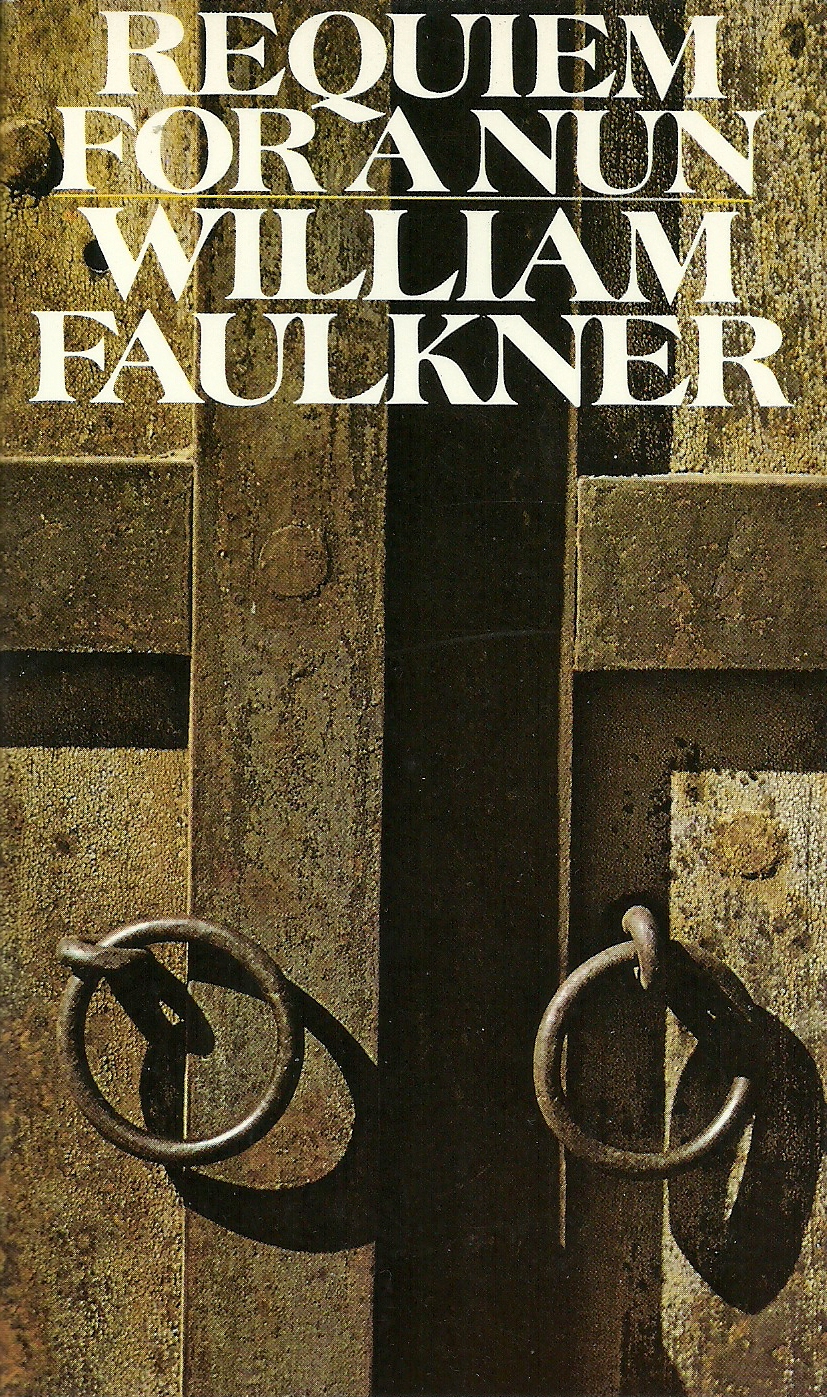
Requiem for a Nun ~ A Capsule Book Review

Requiem for a Nun cover

Requiem for a Nun ~ A Capsule Book Review By Allen Kopp

William Faulkner, the master of twentieth century Southern American gothic writing, wrote Requiem for a Nun as a sort of sequel to his novel Sanctuary, meaning that it’s a brief glimpse into the life of fallen woman Temple Drake eight years after the close of Sanctuary. Requiem for a Nun was written around 1951, when Faulkner was 54 years old, about twenty years after Sanctuary.

Requiem for a Nun is an odd little book, not a traditional novel. The story is told in dramatic form, meaning that reading it is like reading a play. That’s not all, though. The “acts” of the novel are interspersed with some of Faulkner’s dense prose; dense in the sense that sentences are frequently half-a-page long or longer, and you won’t know what he’s saying unless you’re reading carefully and go back and break down the sentences into their various parts. Faulkner is the master of interjectional writing. Great writer though he was, it’s as if his mind was so twisted with interweaving thoughts that he couldn’t finish one thought before he started in on another. I suppose this is part of his “innovation,” although not easy on the reader.

The “narrative” portions of the book that are interspersed with the “dramatic” portions are about the fictional history of the fictional town of Jefferson, Mississippi, in fictional Yoknapatawpha County; specifically the jail, the courthouse, and how the town was begun. These fictional historical details actually have nothing to do with the “story” told in dramatic form.

Readers familiar with the character Temple Drake from Faulkner’s earlier novel Sanctuary know that she ended badly. She was witness to a murder and lied on the witness stand to defend the real murderer, a deformed thug named Popeye, who took her to Memphis and set her up in a whorehouse to keep her from going to the police and telling them what she knew. Requiem for a Nun picks up her story eight years later. She is free of Popeye (he was hanged for another crime that he apparently was innocent of) and is married to her drunken male companion, Gowan Stevens, from Sanctuary. They have two children, an infant daughter and a slightly older son.

Temple has taken a black woman named Nancy Mannigoe, former drug addict and prostitute, into her house as a sort of governess for her two small children. Temple believes she is saving Nancy from her terrible life and giving her a chance to have a better one. When the action of Requiem for a Nun begins, Nancy has murdered Temple and Gowan’s baby daughter in her crib and is going to be executed in a few days for her crime. Temple decides within two days of Nancy’s execution that she herself is responsible for the murder of her own baby, beginning with her actions eight years earlier, and attempts to save Nancy’s life. There is one very long scene where she and her husband’s lawyer uncle go and see the governor of the state in the state capital in the middle of the night to plead for Nancy’s life, even though Temple knows there is no use.

Since there is no nun in Requiem for a Nun, I’m not sure what the title means, although I’m figuring it refers to Nancy Mannigoe. She goes to her death serenely because she believes she deserves to die and because she is a “believer.” Nancy’s serenity is something that Temple Drake cannot touch, understand or share. She is a tormented woman and we get the distinct impression that she will never be anything but that.

Copyright © 2013 by Allen Kopp  

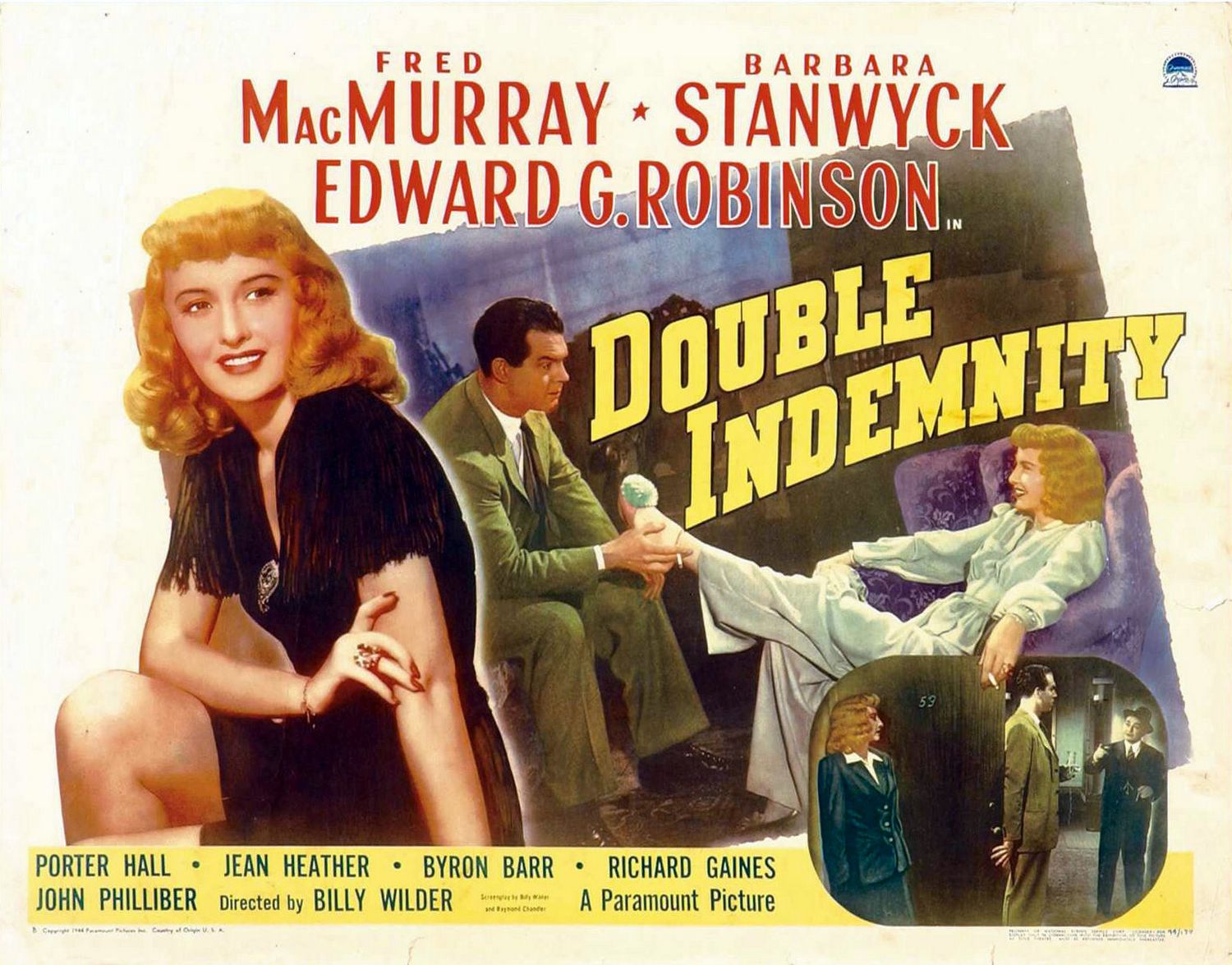
Double Indemnity ~ A Capsule Movie Review

double_indemnity_ver2_xlg

Double Indemnity ~ A Capsule Movie Review By Allen Kopp 

Bored 1940s California housewife Phyllis Dietrichson (Barbara Stanwyck) uses her bewigged allure to get malleable insurance salesman Walter Neff (Fred MacMurray) to help her kill her repulsive husband for the insurance money and for “love.” After Phyllis and Walter execute as neat and ingenious a murder as has ever been committed to celluloid, their happiness is short-lived. Astute claims investigator Barton Keyes (Edward G. Robinson), who works with Walter, does not believe the story that is being put forth about how Phyllis’s husband died and contests payment of the insurance money. As the story progresses and as the figurative noose tightens around Walter’s neck, we learn that Phyllis is not all we thought she was (or not all Walter thought, which is the same thing) and has only been using Walter to attain her ends. She has been messing around with her stepdaughter Lola’s boyfriend, Nino Zachetti, and has probably murdered before. And will murder again if she gets the chance.

Double Indemnity is a genre film and is the best of its genre, which can loosely be classified as film noir. It was made in 1944 and appropriately reflects the cynical wartime mood the country was in. It is such a perfect movie (if such a thing is possible) that seeing it for the first time is something of a revelation. Barbara Stanwyck, Fred MacMurray and Edward G. Robinson are at the top of their form. Screenwriters Billy Wilder (who also directed) and mystery novelist Raymond Chandler take a good story by James M. Cain and make it even better. It is a perfect example of lean writing without any fat. Down to the tiniest detail (cinematography, music, art direction), Double Indemnity is meticulously and beautifully crafted. On a high-definition TV (as broadcast by TCM), it is as clear and crisp as if it was made yesterday instead of sixty-nine years ago.

Copyright © 2013 by Allen Kopp