~ Vintage Oddities ~
Unexpected and without explanation.



The Spoils of Poynton by Henry James ~ A Capsule Book Review by Allen Kopp
Henry James was an American writer who lived from 1843 to 1916. If he seems more an English writer than American, that’s because he did most of his work while living in England and, late in his life, gave up his American citizenship and became a British subject. He wrote about twenty novels, the most famous of which are The Golden Bowl, Wings of the Dove, and Portrait of a Lady. He is one of the key figures of nineteenth century literary realism.
The Spoils of Poynton is a short (for Henry James) novel first published in 1897 that touches on the themes of greed, friendship, the nature of love and the strength of familial connections. Mrs. Gereth is a headstrong widow who lives on her estate called Poynton. Poynton is filled with “treasures” (these are the “spoils” of Poynton) that Mrs. Gereth and her late husband collected, including furnishings, tapestries, old china, paintings, object d’arts, etc. According to a silly and unfair English law, all the things in Poynton (including the house and estate) belong (upon the death of Mrs. Gereth’s husband) to her son, Owen. Owen can do as he pleases with his mother. He can put her out of the house of he wants to. He is under no legal obligation to her.
Owen is engaged to be married to one Mona Brigstock, whom Mrs. Gereth, his mother, loathes. Mrs. Gereth can’t stand to see Mona installed in Poynton with all the “things” that she considers her own. She would do almost anything to keep Owen from marrying Mona. This is where Fleda Vetch enters the picture. She is a friend of Mrs. Gereth’s and Mrs. Gereth’s choice for Owen to marry instead of Mona. After Owen and Fleda meet a few times, they admit they have “feelings” for each other. Could it be love?
Mrs. Gereth moves out of Poynton at the prospect of her son’s marriage to Mona and takes up residence in a place called “Ricks.” Ricks is all right in its own way but far inferior to Poynton. To mollify his mother, Owen tells her she may have a few (a dozen or so) of her favorite pieces from Poynton. She surprises everybody by taking literally everything. Owen is outraged and threatens legal action. (Apparently the desire for earthly possessions is more important than the mother-son bond.) Mona tells Owen the marriage is off until the things are returned to Poynton. She wants to marry Owen, it seems, only if Poynton and everything in it are part of the bargain.
Mrs. Gereth’s friend, Fleda Vetch, is faced with a dilemma. She loves Owen and he apparently loves her, but she believes it would be improper for her to take him away from Mona. The only way she will get Owen herself is if Mona chooses to break off with him. Owen believes it his duty to follow through on his marriage to Mona, even though he seems at times to prefer Fleda. Which way will he go? Will Mona tell him she no longer wants to marry him? What will happen to the “spoils” of Poynton?
Somebody once said that Henry James could find more drama in a raised eyebrow than most people could find in an earthquake. The Spoils of Poynton is a simple and engaging story told in Henry James’s inimitable grand literary style. If a thing could be said in five hundred words, he will more than likely use five thousand. Let’s see…how many ways are there to say the same thing?
Copyright © 2014 by Allen Kopp

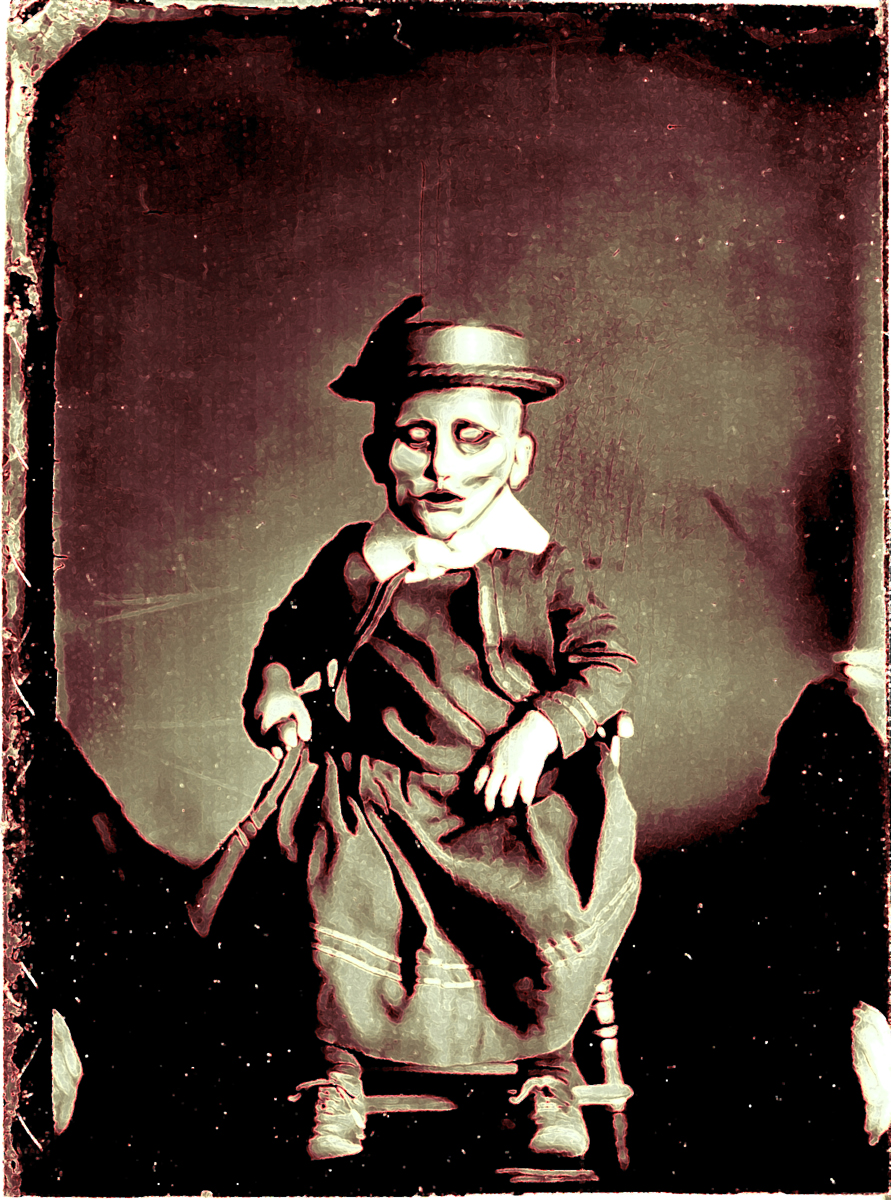
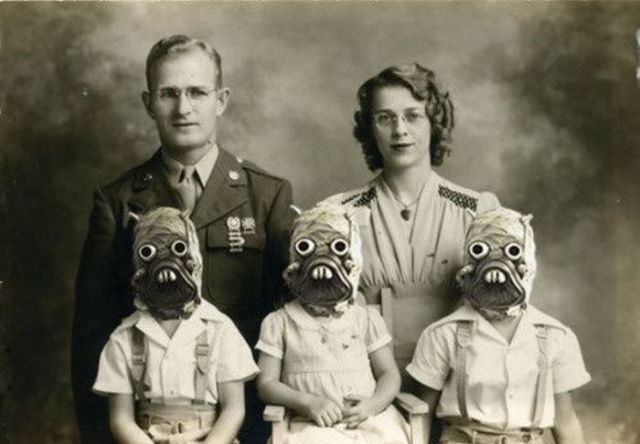
False Face ~
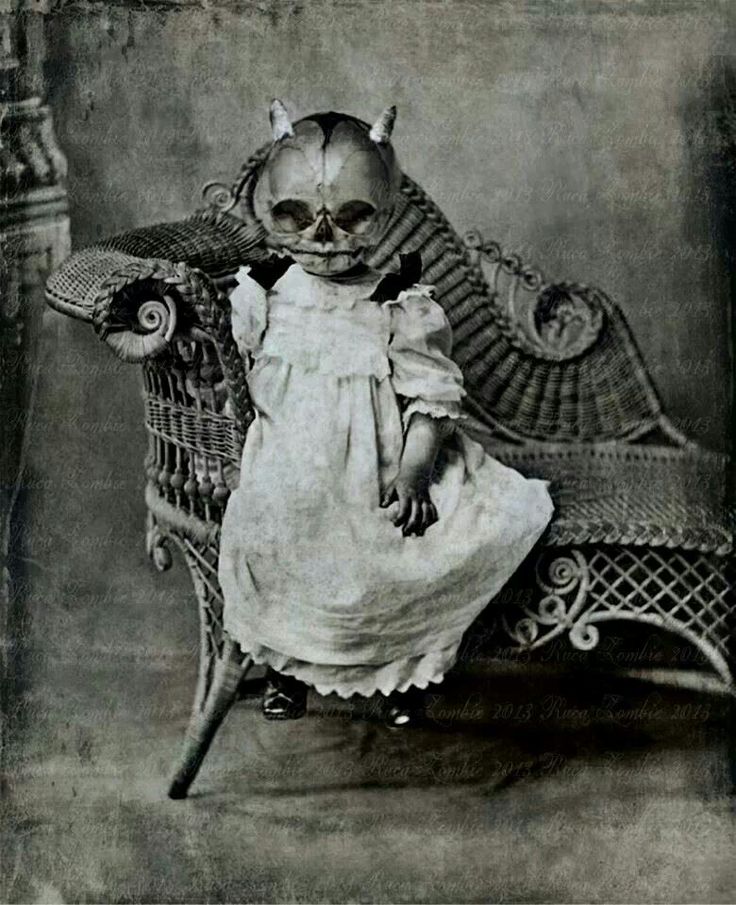
The right kind of a mask can make even the most innocent-seeming child look menacing and creepy.
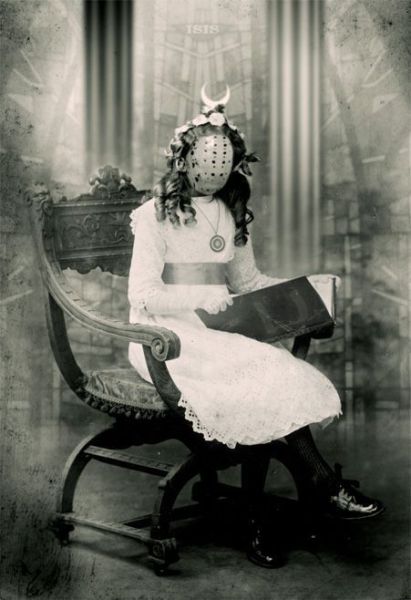
Mystery Girl ~
In this disturbing and undated vintage photograph, a girl whose face is completely covered by some kind of a mask–and whose hands are covered–appears to look at a book. If there is a meaning, we don’t know what it is.
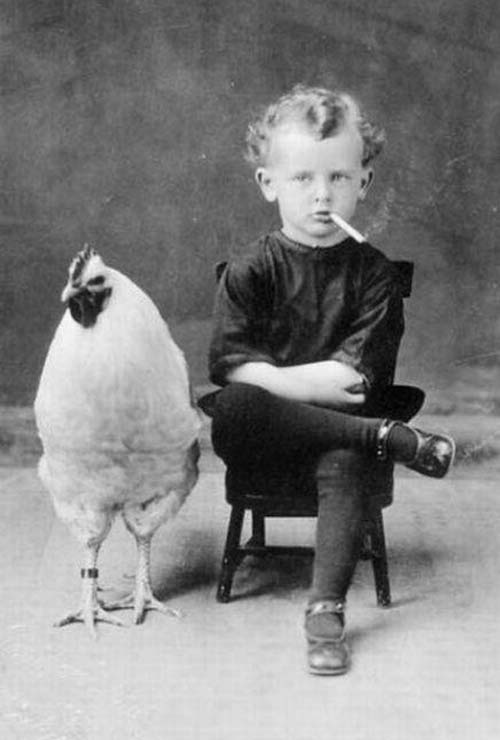
Smoking Boy ~
A small, curly-haired, pouty-faced boy wearing strap-over shoes has a lighted cigarette dangling from his lips while sitting next to a large white chicken. No explanation given or needed.
On This Day ~ A Short Story by Allen Kopp
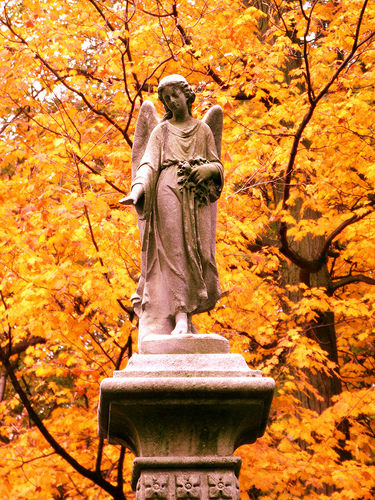
Traffic was light. Billie Rose Flint arrived at the cemetery at five minutes after three on a bright October afternoon. She knew the cemetery well and parked the car in the same familiar spot, underneath an old oak tree that at the moment was so suffused with sunstruck color that it was as pretty as any picture in a magazine. She breathed deeply of the pleasant leafy smell and, not even bothering to lock the car, walked up the hill that she knew so well, past the gravestones whose names she knew by heart.
By the time she came to her son’s grave, she was winded and her legs ached; she was, after all, getting old. She spread the blanket on the ground, kicked off her shoes and sat down facing the gravestone. It was a simple red-granite affair, not as showy as some of the others, with the name, Randall Wallace Flint, the date of his birth and the date of his death.
As always when she was in the cemetery and there was no one else around, she began to feel sleepy. She reclined on her back and looked up into the trees. The breeze on her face was fragrant and cooling. A little hump in the ground pressed comfortably into the small of her back as if it had been placed there especially for that purpose.
She dozed and in a moment she was aware of someone standing beside her. She opened her eyes and looked up into his face but the sun kept her from seeing him. He smiled and sat down beside her on the edge of the old quilt.
“How have you been keeping yourself?” he asked.
“Just peachy keen,” she said.
“I had a feeling you’d be here today.”
“It’s a special anniversary,” she said.
“Anniversary of what? You can say it.”
She looked at him and saw he was trying to keep from laughing, as if it was all a joke to him.
“Thirty years ago today,” she said, “you hanged yourself from a rafter in the garage after school.”
“Go on,” he said.
“I found you when I opened the door to pull the car in. You were just hanging there. There was a tipped-over chair. I knew right away it was too late.”
“And then what did you do?”
“I screamed. The woman who lived next door, Doris Ellsworth, was in her backyard and heard me. She came running to see what was wrong. When she saw what had happened, she closed the garage door and took me into the house and called an ambulance.”
“And then what?”
“They came and cut you down. By then, all the neighbors had gathered around to watch. The paramedics carried you out on a stretcher and put you into the back of the ambulance. They were moving very slowly because they knew there was nothing to be done.”
“What did you do then?”
“I drank a glass of scotch and called your father and told him he needed to come home.”
“And did he?”
“He was there in a few minutes. At first he didn’t believe you were really dead. He wanted to see to make sure for himself. They let him see you, with all those people watching, and then he turned to the ambulance driver and very calmly told him to take you to the funeral home. Then he made me get into the car with him and we drove there behind the ambulance and bought you a casket. Your father wrote a check to pay for it.”
“It was some funeral, though, wasn’t it?” he said.
“Yes, it was a big funeral.”
“Everybody from school was there. Standing-room only. There wasn’t a dry eye in the place. Suddenly everybody likes you when you’re dead.”
“They liked you before you were dead but you didn’t see it.”
“I was going through an adolescent phase. I thought I couldn’t go on.”
“If only there had been some way to help you before it was too late.”
“It doesn’t do any good to think that way. What’s done is done.”
“Was your life really so unbearable?”
“I was a misfit. I was failing algebra. I had acne. I couldn’t take being chosen last for basketball any more. Do you know how much I despise basketball to this day?”
“Those things would have passed. If you had only talked to me about what was bothering you, I could have helped.”
“Maybe not,” he said. “Who knows?”
“Insanity has always run in my family,” she said.
He laughed. “Do you think that’s what was wrong with me?”
“Who can say?”
“If that helps you to understand what I did,” he said, “I guess it’s as logical an explanation as any.”
“Do you think about all the things you missed?”
“Not much,” he said. “ I think more about the things I avoided. Like having to get a job, paying taxes and having a bad marriage.”
“What makes you think you would have had a bad marriage?”
“I don’t know. Aren’t all marriages bad in one way or another?”
“It depends on who you talk to, I guess.”
“You and father had a terrible marriage.”
“I wouldn’t say it was terrible.”
“You fought all the time.”
“Did we? I don’t remember.”
“I call that ‘convenient forgetting’,” he said.
“Anyway, it’s all in the past now and no longer matters.”
“Yes, all in the past.”
“I’m just glad you’re not in torment for what you did,” she said.
“No, not in torment. Not in heaven, either.”
“I won’t ask you what it’s like where you are because I don’t want to know. All I want to know is that you’re not being made to suffer for what you did.”
“Of course I’m not. There isn’t any such thing as hell.”
“Now you’re forty-five,” she said. “Or you would be if you had lived. When I look at you, I see a forty-five-year-old man. You look a little like your father but more like my side of the family.”
“You see what you want to see,” he said.
“The unhappy fifteen-year-old is gone. I can no longer even see his face.”
“Good riddance,” he said. “I never liked him much, anyway.”
“Are you sorry for what you did? I mean, ending your life before it even had a chance to begin?”
“If you say so, mother.”
She heard voices and when she turned her head to see who it was, she saw two very old ladies hovering over a fresh grave nearby. When she turned back to her son, he was gone. The spell was broken. He wouldn’t have wanted anybody else to see him.
She picked up her blanket and walked over to where the old ladies were and greeted them. One of the old ladies had an excess of makeup caked on her face and the other wore a man’s hat and suit, as if they had just come from a costume party.
“Lovely day,” the woman dressed as a man said.
“Fall is my favorite time of the year,” makeup face said.
“A sad day for me,” Billie Rose Flint said. “My son died thirty years ago today.”
“Oh, my!” makeup face said. “How sad! How old was he?”
“Fifteen.”
“Aww.”
She picked up a lily from the flowers that were left on the fresh grave and handed it to Billie Rose Flint. “In remembrance,” she said.
Billie Rose Flint took the flower and, in spite of herself, began crying uncontrollably, trying to cover her face with her handkerchief to keep the old ladies from looking at her. She opened her mouth to speak again but instead hurried off with the flower before she felt compelled to tell them the whole story.
Copyright © 2014 by Allen Kopp
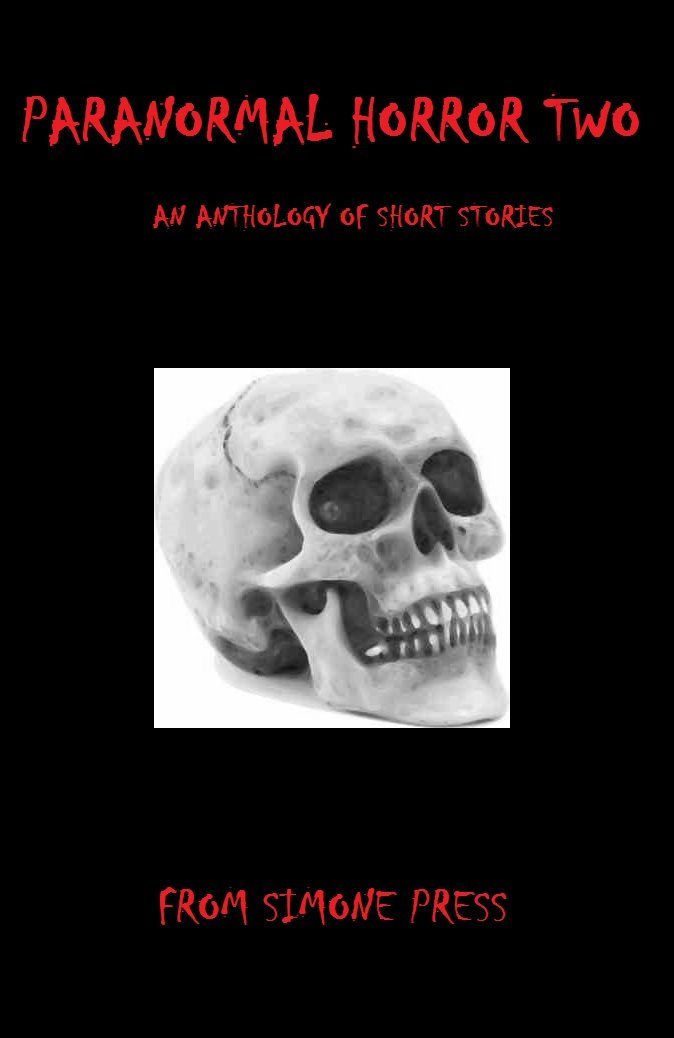
Paranormal Horror Tw0 ~ An Anthology of Short Stories from Simone Press
With terrifying stories about werewolves, stuffed humans, vampires, guardian angels, the devil and a variety of malevolent demons between its macabre pages. It’s the sequel to the popular “Paranormal Horror” anthology. It features new contributors Ed Ahern, Diane Arelle, Daniel Davis, W.K. Erwin, Jerry G. Erwin, John Haas and David Perlmutter. Their chilling tales will give you nightmares. Returning as authors are the writers that made the prequel so good: Jim Cagwin, Gary Clifton, Katanie Duarte, A.A. Garrison, Allen Kopp, Chris Mawbey, Jenean McBrearty, Matthew Wilson and Wendy L. Schmidt have written brilliant new tales. If you are interested in the paranormal and like being scared then this is the perfect book for you.
Available on Amazon in Kindle edition at $2.99:
http://www.amazon.com/Paranormal-Horror-Two-Jim-Cagwin-ebook/dp/B00NUAFUC0/
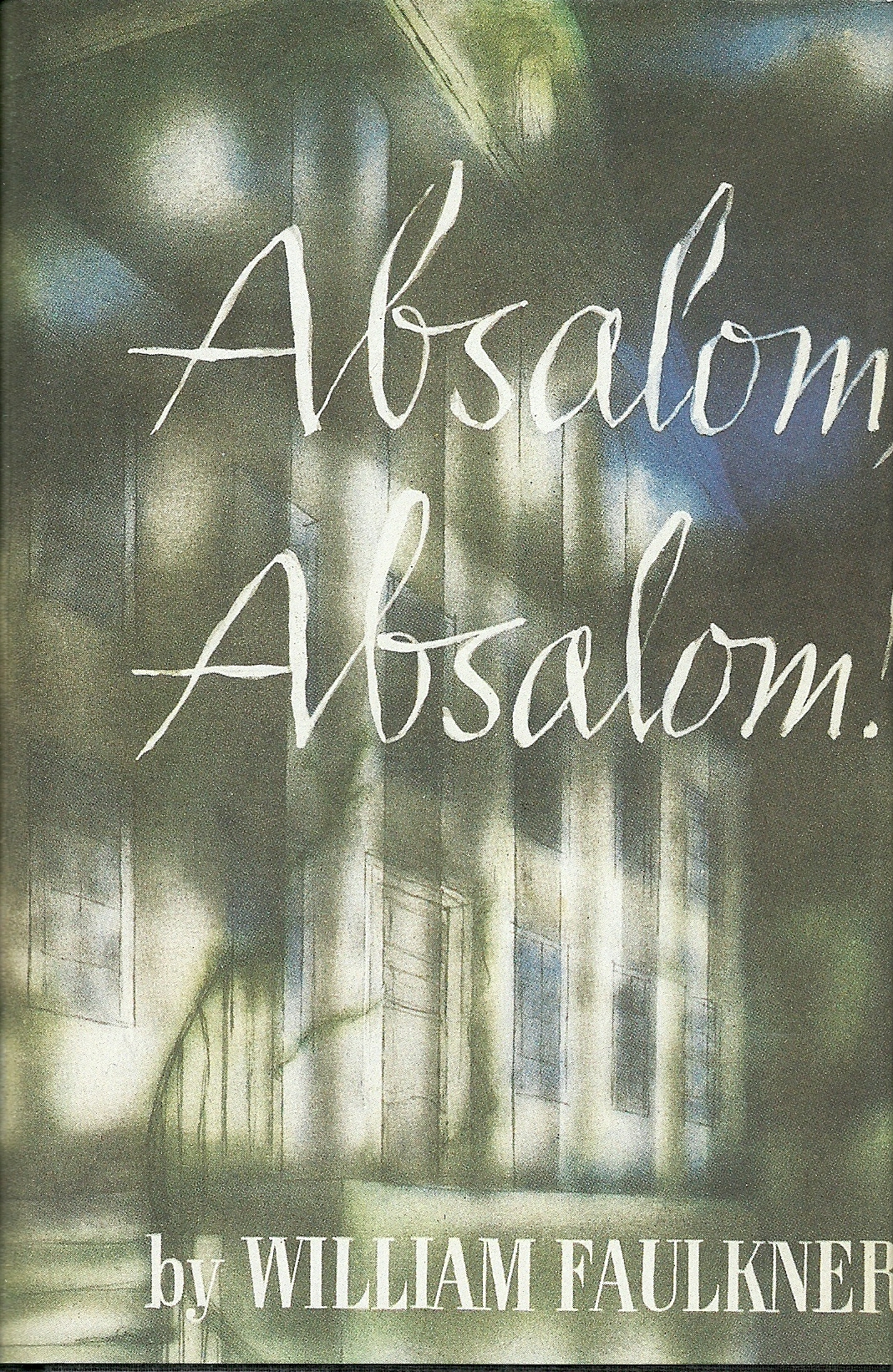
Absalom, Absalom by William Faulkner~ A Capsule Book Review by Allen Kopp
William Faulkner (1897-1962) is arguably the best American novelist of the twentieth century, the supreme literary stylist. His works are deep, cerebral, rich and complex. His style is dense, sometimes fragmented, wordy and difficult to read. He has the longest sentences and the longest paragraphs of any other writer. If you are trying to follow the thread of a sentence, you might have to go back and break it down into its many parts to figure out exactly what is being said. If reading a novel by Faulkner is frustrating and tedious at times (a painful slog), you must also know that it is worth the effort or you wouldn’t be doing it.
When I first started reading Faulkner’s 1936 novel, Absalom, Absalom, I found the first chapter (told in the voice of Miss Rosa Coldfield in 1909 when she is 64 years old) so difficult that I almost gave up. If you are able to make it through the first chapter, however, the following chapters are easier. Not easy, but not quite as difficult. (There’s no linear structure to the novel.)
Absalom, Absalom is the multilayered family saga of the Sutpen and Coldfield families in the American South in the decades leading up to the Civil War. Thomas Sutpen confounds the town of Jefferson, Mississippi—and particularly the Coldfield family—when he comes from nowhere and acquires a huge tract of land, called the Sutpen Hundred (square miles, not acres), and builds an enormous house on the edge of a swamp with the help of his band of wild black men and a French architect, who he more or less treats as a captive.
For years after the house is built, Thomas Sutpen entertains a band of his male friends with wild hunting and drinking parties and wrestling matches, until the day arrives when he decides he wants to acquire respectability in the form of a wife and children. He drives away his male friends and proposes to a town girl named Ellen Coldfield. (Faulkner compares her throughout the novel to a butterfly.)
To the unlikely union between Thomas Sutpen and Ellen Coldfield are born Henry and Judith. (Thomas Sutpen also has a half-black daughter named Clytemnestra, or “Clytie,” that he had with a slave woman.) Ellen Coldfield has a sister, Miss Rosa Coldfield, who is twenty-seven years younger than she is (younger than her own children). The first part of the story is being told by the elderly Rosa Coldfield to Quentin Compson, whose grandfather was the best friend of Thomas Sutpen. The part that Rosa Coldfield plays in the novel is more of an observer than active participant in what is going on.
When Henry Sutpen is grown (or almost grown), he goes away to college in Oxford, Mississippi. There he meets and becomes good friends with one Charles Bon. Charles is older and more worldly-wise and sophisticated than Henry. (Henry is clearly infatuated with Charles Bon. Faulkner later suggests more than just simple friendship between the two, especially on Henry’s part.) When Henry writes home about Charles Bon, his mother immediately sees Charles as a likely husband for Judith. Charles visits the Sutpen home with Henry on more than one occasion. His interest in Judith seems perfunctory. Will he propose to her or won’t he? We learn later a dark secret about Charles Bon, which I won’t reveal here, and that his association with the Sutpen family is part of an elaborate scheme of revenge. This element of the story drives the narrative for much of the second half of the novel.
The Civil War obtrudes upon the lives of the characters. The three principal male characters (Thomas Sutpen, Henry Sutpen, Charles Bon) all find themselves in battle. (Thomas Sutpen achieves the rank of colonel.) The war, of course, doesn’t turn out the way many Southerners hoped it would or expected it would. (Faulkner points out that the Southern army had the highest mortality rate of any army in history.) The men who survive, defeated not only in war but also in spirit, return home starving and in tatters to discover that everything they loved or cared about has been swept away. It is this defeat that is subtext to everything else.
Absalom, Absalom (the name derives from a character in the Bible) is a dark story, full of revenge, incest (or almost incest), miscegenation, family secrets, hubris, intentions gone awry, class distinction, loss and suffering. There’s no redemption for anybody, no life-affirming conclusion. Nobody writes about these things (or about the South) the way Faulkner does.
Copyright © 2014 by Allen Kopp

A Conversation Between Two Mothers ~ A Short Story by Allen Kopp
(I posted a slightly different version of this short story in April 2013.)
It was Madge’s turn to host the card party and she still had much to do. She had put her hair up in curlers and was tying a scarf around her head to make herself presentable to go and buy some last-minute items, when there came a knock at the back door. She huffed with impatience, snuffed her cigarette out in the garbage pail, and opened the door to a short, toad-like woman with frazzled red hair.
“Mrs. Simple?” the woman said.
“It’s Semple,” Madge said.
“Well, Simple or Semple or whatever it is, I need to have a word with you.”
“What about?”
“You have a son named Dakin?”
“That’s right.”
“He’s been picking on my Leslie.”
“Picking on your what?”
“On my son Leslie, dodo bird!”
“Oh. And who are you?”
“My name, if it should happen to be of any interest to you, is Mrs. Felton. My son is Leslie Felton.”
Madge sighed and stepped out the back door. “Maybe you’d just better tell me what happened,” she said.
“Leslie was riding his bicycle on the sidewalk, minding his own business. Dakin jumped out from behind a tree and yelled and scared him and caused him to wreck his bike. He cut a big gash in his leg that was pouring blood.”
“I’m sure that’s an exaggeration.”
“And that’s not all. When Leslie was lying on the ground howling in pain, Dakin took his bicycle.”
“Oh, he’s just playing. That’s what boys do.”
“Oh, is that so? Well, if you want to know the truth, I think Dakin is a lunatic! Only a lunatic enjoys inflicting pain on others.”
“Now, hold on a minute!” Madge said. “You don’t have any right to speak to me that way about my child!”
“Then when Leslie finally got his bike back, it had some scratches on it that weren’t there before. Caused by your brat!”
“Wait a minute!” Madge said. “Did you see Dakin do any of this?”
“He did it all right!”
“Did you see him do it?”
“Well, no, I was in the house, tending to my little girl. She’s got a rash all over her body and we don’t know what’s causing it.”
“If you didn’t see Dakin do it, how do you know he did?”
“Because Leslie said so. If you could have seen how upset he was, it would have broken your heart. If you have a heart.”
“Maybe Dakin didn’t do it. There are lots of boys in the neighborhood.”
“Leslie said he did it and if Leslie says a thing, it’s true! He came into the house crying with the blood dripping down his leg. He was so upset he couldn’t speak. When I held him on my lap and got him to calm down, he told me what happened.”
“So, you’re taking Leslie’s word that Dakin did it?”
“Hell, yes!”
“You can’t always go on what kids say. They have a way of distorting the truth. Sometimes you have to find out what happened on your own.”
“So you’re saying my boy is a liar?”
“Look, Mrs. Whatever-your-name-is, I’m very busy at the moment and I don’t have time to stand here and jaw with you all day, as lovely a prospect as that is. When Dakin comes home, I’ll speak to him and I’ll find out what really happened. If he did what you say he did, he will be made to apologize.”
“And that’s all?”
“You want a written confession in blood?”
“I have a good mind to call the police.”
“They’ll just laugh at you for being so trivial.”
“You tell that little ham-handed troglodyte of yours to stay away from Leslie and Leslie’s bike and anything that belongs to Leslie.”
“You’d better watch who you’re calling names! You’ve got a lot of nerve coming to my door and raising such a fuss over nothing!”
“So now you’re saying it’s nothing? First Leslie is a liar and now it’s nothing!”
“I told you the matter will be taken care of! Now, so help me, if you don’t get off my property right now, I’m going to throw something at you!”
“My, aren’t we hoity-toity, though? You think you’re better than me, don’t you? Well, I’ll tell you something. I have no intention of getting off your property until I’m good and ready.”
“Oh!” Madge said. She ran into the kitchen, looking for something to throw. The first thing that came to hand was a bag of grapefruits. She carried the bag out the door and began lobbing grapefruits at the woman, one after the other. The first one hit her in the chest but the rest missed her.
“I see where Dakin gets his craziness from!” the woman said. “Only crazy people throw fruit!”
When Madge had run out of grapefruits, the woman, as deft as a monkey, rushed her and punched her in the chin with her fist. The blow almost knocked her off her feet but she caught herself on the doorframe.
“I’ll give you fifteen seconds to get off my property,” she said. “That’s how long it’ll take me to go to the bedroom closet and get the loaded gun my husband keeps there.”
“Oh, my!” the woman said, taking a few mincing steps and waggling her hips in a demonstration of hoity-toity. “You can see how scared I am, can’t you?”
“You are the most repulsive woman I’ve ever seen!”
“Well, that goes double for me!”
The gun was in the exact spot in the closet where Madge thought it would be, high up where the kids wouldn’t find it. She checked to make sure it was loaded and then before she knew what she was doing she was outside again, pointing the gun at the woman.
When the woman saw the gun, she didn’t leave as Madge hoped she would but bent over from the waist and made a raspberry sound with her tongue and lips. Then she stuck her thumbs in her ears and waggled her fingers.
“Hah-hah-hah!” she said. “Are you supposed to be scaring me with that little pea shooter? I’ve had bigger guns than that pointed at me!”
The first bullet struck the woman in the breastbone, the second knocked her off her feet. She was lying on the ground, struggling to stand up, as Madge fired all the bullets in the gun at her, six in all.
When she was sure the woman was dead, she dragged her body by the ankles into the bushes in the overgrown neighboring yard where the house just happened to be vacant. It would be a while before anybody found her and, when they did, they wouldn’t know what had happened.
She put the gun back in the closet and checked herself in the mirror. No, she didn’t look as if she had just killed somebody. She went out to the garage and backed the car out and zoomed up the street, waving and smiling at some of the neighbors. It was getting late and she had to get to the store before they were out of the best cuts of meat.
Copyright © 2013 by Allen Kopp

Cotton ~ A Short Story by Allen Kopp
There were five of us: me, a brother and three sisters. When we were old enough, we were taken away one after the other. I think my mother was a little glad to see us go. She was getting old and wanted only to lie in the sun and take uninterrupted naps.
As with all of us, a big one came to get me. He smelled funny but he handled me gently as he put me into a carrier and closed the door. I cried a little and pulled at the door with my paws but I knew it wouldn’t do any good—I wouldn’t be let out again until I was in my new home.
The car ride made me sleepy and made me forget that I had to pee. I had ridden in a car before on a couple of different occasions and I knew how it either makes you want to throw up or go to sleep. I curled up in a tight ball, making myself as small as I could, and went to sleep.
The car went a long, long way from where we started but finally it came to a stop. When the big one got out, I stood up in anticipation of being let out. I was knocked off my feet again, though, when he picked up the carrier, carried it inside the house and set it down on the floor. (A rough but short ride.) Right away I smelled all kinds of awful smells that I couldn’t identify. Was it the smell of another cat? My heart started to pound. All I wanted was to go back to the safety of my mother.
When the big one saw I didn’t want to come out of the carrier, he stuck his big hairless, pink face through the door and spoke the terrifying language that to me sounded like a dog barking. I crouched down and backed up into the corner.
He upended the carrier—I tried holding on but there was nothing to hold to—and I went sliding out against my will. I stood up and took a few steps, stretched my muscles and licked my paw. The big one seemed to approve.
Just then a different big one, a “she” big one, came out of nowhere and scared me with her loud voice. I started to run for cover but she scooped me up in her paws. Now, I have to tell you it’s an odd sensation to be picked up by something fifty times bigger than you are. I meowed a couple of times to let her know I didn’t like what she was doing to me, but she nuzzled me and started scratching my neck and ears. In spite of the bad smells that made me want to gag, I began to purr a little.
The “he” big one said something to the “she” and they both made that hideous sound that I was to recognize later as laughter. They gave me some water out of a little red bowl and, after I took a good long drink, I was directed to the litter box, which I was very glad to see. I scratched in the box for a few seconds, sat on my haunches, made a tiny wet spot and covered it up so it didn’t show.
The two big ones began playing with me, even though I was in no mood. They had a toy mouse on a string that they dangled in front of my face. I thought I smelled another cat on the toy mouse, but I obliged them anyway by batting at it with my paw and trying to catch it in my mouth. After they tired of this game, they gave me some food, which I was barely able to eat because it didn’t smell like anything I had ever eaten before. I guess I was still too nervous to eat, anyway.
Later on they left me alone to do some exploring on my own. I went into the next room and then the room after that. I jumped up on a big table but there was nothing there that interested me so I jumped down. I walked the length of the couch and the chairs in the living room, exploring every inch of the stinky fabric; I stuck my paws in the dirt of some plants and then I climbed on the TV. I crawled under the couch and came out with dust stuck in my whiskers that caused me to sneeze. I jumped onto the counter in the kitchen, nosed into the sink and took a couple of licks out of a greasy skillet on the stove.
I went into the bedroom, which seemed to be the best room of all. The bed was soft with enough room for a hundred cats like me. As good as the top of the bed was, the underside was even better. It was dark and there were some boxes and things that offered complete concealment from any dangers that might still be lurking. I was thinking it would make a good place for a nap when Finley jumped out at me and scared me so bad I jumped sideways and took a few spider-like steps backwards. The fur ruffled up on my back and my tail puffed out to three times its normal size.
Finley was a young cat, not quite full grown, but bigger than me. He was a long-haired cat that made him seem bigger than he was and he had a mane like a lion. He let out a couple of guttural meows that to me sounded like war cries and came running toward me. I wouldn’t let him get near me, though. I ran into the other room with him chasing me. I didn’t know if he was going to kill me or just hurt me.
I dove under the couch and I knew right away it was a smart move because Finley wouldn’t fit. He could see me, though, and he knew I wasn’t going anywhere and that if I came out he would know it. Every now and then he stuck his paw under to try to grab at me, but I pulled away out of his reach.
I discovered then that Finley was the most patient cat in the world. He stood guard there, stalking me, for the rest of the day and most of the night. I was hungry and thirsty and I had to use the litter box, but I was still too scared to come out. When the big one tried to coax me out by shining a flashlight in my face, I just ignored him.
Finally, in the morning, with the big one there to keep Finley at bay, I came out. The big one picked me up and set me on the table in the kitchen to feed me. He spooned some food into a bowl and I began eating. When Finley, who knew everything that was going on, realized I was eating what he thought of as his food, he tried to get at me to push me away. The big one had to make him stay away from me so I could eat. (That’s when I learned how to eat and growl threateningly at the same time.) After I ate, I had a good drink of water and a satisfying couple of minutes in the litter box, while the “she” big one held Finley in her arms and whispered in his ear.
After a couple of days I was feeling more courageous and I stood up to Finley, nose to nose. Instead of hurting me, as I thought he was going to do, he licked me on the face and head. I guess I discovered then that he wasn’t as bad as I thought he was going to be. What I thought at first was meanness and aggression was more curiosity and playfulness, with just a little jealousy thrown in.
I was still leery of him for a week or so, keeping my distance and hiding from him if I found him a little too overbearing, but I began to get used to him after a while. If he wants the spot on the couch that I’ve made warm, he makes no qualms about trying to take it from me, but more often than not I’m willing to move to another spot and let him have it.
Cold weather was coming on. Cats, as you probably know, are always looking for extra warmth. Finley makes a really good sleeping partner. Not only is he warm, but he has the softest fur I’ve ever felt. Sometimes we sleep head to head or cheek to cheek or crossed over each other like a couple of earthworms. Sometimes I use his belly for a pillow or he uses mine. When winter comes and the nights are really cold, the big one lets us sleep under the covers with him in the bed. There is no warmer place in the house.
Finley and I are now inseparable friends. We play together a lot and keep each other company. We’re a lot alike but also a lot different. Sometimes we eat together out of the same bowl, but most of the time he lets me eat first before he eats. If anybody ever knocks on the door, I run and hide but Finley stays right there to find out what is going on. When we both are taken to the doctor at the same time, I’m still scared but not as scared as I would be if Finley wasn’t with me. When I hiss, he hisses, like two parts of the same hissing machine.
Copyright © 2014 by Allen Kopp

