What Better Night Than Christmas Eve?

What Better Night than Christmas Eve? ~ A Short Story by Allen Kopp
(Published in Ethereal Tales. This is a repost.)
Agnes Victoriana Wellington was, by all accounts, an incorrigible—some might even say an evil—child. As a baby, she would lie in her crib and scream hour after hour for no apparent reason until the neighbors would believe her mama was sticking pins into her flesh for amusement. At ten years old she was expelled from school because she was a perpetually disruptive influence in the classroom. Her mama and papa took her to a succession of doctors, all of whom assured them she was sound in mind and body, without any discernible physical or mental ailment that would cause her to behave in so frightful a manner. The only explanation that any of them could offer was that she might be possessed of a demon that wouldn’t desist until he had taken her back to hell with him.
Released from the imperative of attending school, Agnes was made to stay at home all the time, where she pushed her mama and papa to the limits of their endurance. She screamed and raged and fussed and threw any object that wasn’t too heavy for her to pick up. She tormented her younger brother and sister, Wallingford and Floretta, without mercy. She tied Wallingford to a tree and attempted to burn him at the stake. When Floretta was asleep in her bed, recovering from the scarlet fever, she glued her toes together and painted her lips with red ink. When her mother refused to buy her a new pair of boots, she took a kitchen knife and cut up her old ones. She called her papa an ignorant old fool. Her most hideous act of all, though, was taking all her clothes out of her closet and piling them in the middle of the floor and setting fire to them, putting herself and her family and all they possessed in grave danger.
After the fire, papa and mama were at the end of their tether. They could tolerate Agnes no longer. If they were to allow her to continue on the same path of destruction, they might very well all end up in a row of graves in the cemetery. They had little Wallingford and Floretta to think of, both of whom were blameless and deserving of a happy and peaceful life. As a final alternative and the only remaining hope, they agreed to place Agnes in the Mountainview Sanatorium for the Criminally Insane, where a certain doctor, a Doctor Pretorius, was known to have helped such patients with his progressive methods of treatment, about which nothing was known to the outside world.
Doctor Pretorius took Agnes in hand. He had her confined to a solitary room on the top floor of the Sanatorium and gave her anything she asked for and lots of good food to eat. After a lengthy period of carefully studying her and analyzing her and filling a notebook with his notes and consulting with a dozen other of his colleagues, he arrived at the conclusion that she was indeed possessed of a demon; a very unusual and rare type of demon that he had never seen before; a demon thousands of years old that was from a very deep and isolated station in hell. And, yes, it was true, as an earlier physician had suggested, the demon, for reasons known only to him, had claimed little Agnes as his own while she was still in the womb, his intention being to take her back to hell with him and make her his consort in evil. Evil was as much a part of her as her leg or her heart or her skin, which was as good an explanation as any that had ever been offered for why she was the way she was.
The question confronting Doctor Pretorius was how he was going to make Agnes the good and docile girl she should have always been and so return her to the bosom of her family to live a normal life. He tried many failed experiments with different anodynes, but nothing seemed to change Agnes for the better. One night, after a long and difficult day, he fell asleep in his study and, while asleep, he dreamed a vivid dream. In the dream, as he was walking along a lonely and deserted country road, he met a being surrounded by a kind of a glow, who told him that the only thing that was going to help poor Agnes was to eat human flesh and lots of it. Human flesh consumed daily was the only remedy that was going to keep the demon at bay and allow Agnes to live the kind of life that a child her age should be living.
Doctor Pretorius wasted no time in serving Agnes large portions of human flesh. In no time at all she began to show marked improvement. She began reading books, playing card games, working puzzles, and doing needlework like other little girls. She stopped having temper tantrums and throwing things and playing mean tricks on people. Doctor Pretorius and his staff were delighted with her progress.
Since the year was getting on to its close and the Christmas season was approaching, Agnes’s mama and papa asked Doctor Pretorius if Agnes might be allowed to return to her home and family for the blessed holiday. Doctor Pretorius harbored serious doubts about returning Agnes to the world and society just yet, but, after careful deliberation and prayer, he decided to allow her to go home for the last two weeks in December if, at the end of that time, she would return to the Sanatorium for continued rest and treatment.
Agnes’s papa, mama, brother and sister were surprised at how much she had changed in the Sanatorium (she had put on a lot of weight from her rich diet), but they were happy nonetheless to have her home again and happier still that she was docile, sweet and kind. The frightening, horrible little person that she had been was, for the moment at least, a thing of the past.
The next few days after Agnes’s return home were happy ones. She discovered she liked helping out in the kitchen and doing housework. She became reacquainted with Wallingford and Floretta, spending many happy hours talking, playing games, romping with the dogs and taking long walks around the countryside. She was never once tempted to eat them. At mealtime, she would decline the slices of roast beef or wedges of pork, saying she had become a vegetarian. She ate very modestly of vegetables and fruits, longing for the chance to leave the house to obtain the kind of sustenance she really needed.
It was after everybody had gone to their rooms and gone to sleep at night that Agnes slipped out of the house as quietly as she could to feed. On Doctor Pretorius’s advice, she walked miles away from home out into the countryside. People in the country weren’t as easy to find as in town, but the ones she found were choice, and she had the advantage of not being seen. She ate a twelve-year-old boy who was walking along the road at midnight (sweet and tender) and the next night a farmer’s wife who had insomnia (stringy but with lots of meat). There were a boy and a girl parked on lover’s lane (a rare double event), a young doctor out on a night call (muscular with a chemical taste), and a young married woman out to meet her lover in the middle of the night (a wild, gamy taste). Always she would get herself cleaned up and return home to her room before the sun came up. Nobody in her family ever knew of her nightly peregrinations.
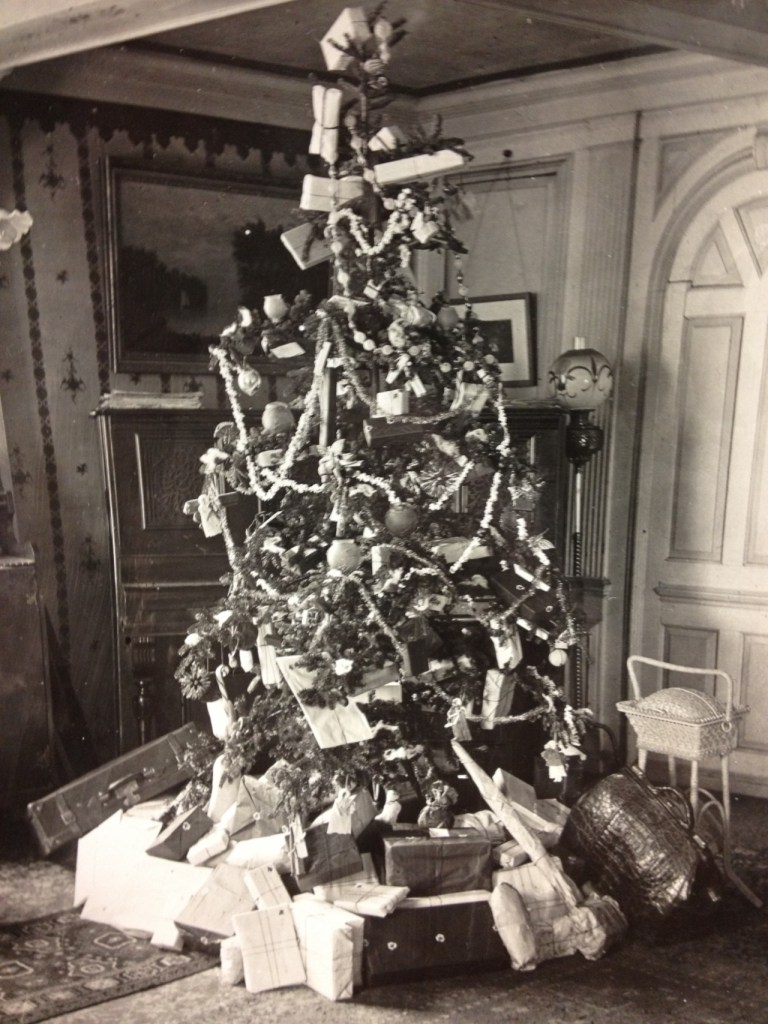
As Christmas was fast approaching, Agnes and the other children were making excited preparations. They put up a beautiful tall tree that they cut down in the woods near their home and decorated it with as many baubles and decorations as it would hold. Their mama had instructed them to each make a list to present to Santa Claus. Whether or not Santa Claus would comply with their lists was another matter. Agnes wrote on her list that she wanted a family of dolls and a perambulator to push them around in, a miniature tea set and a wooden circus set. In her earlier life, before she went to the Sanatorium, she would have asked for a set of knives, poison darts and a blowgun to shoot them, and a prosthetic leg.
On Christmas Eve, all the presents were wrapped and under the tree. The house was gaily decorated from top to bottom; snow was whirling past the windows, adding to the feeling of Christmas. Agnes went into her room to go to bed at the same time that Wallingford and Floretta and mama and papa went into their rooms, but she was too excited to sleep, and at about a quarter to twelve she went back downstairs. She somehow had the feeling that Santa Claus would arrive at midnight and she wanted to meet him face to face and have a few words with him; it might be the only chance she would ever have to see him up close.
She sat down in papa’s big chair facing the low-burning fire and covered up with a lap robe and went fast asleep without meaning to. The clock chiming midnight woke her up. She opened her eyes and saw a man standing in the middle of the room looking at her. She knew without being told that he was the demon. He looked like an ordinary man except that he had yellow eyes. If he had horns or a tail, she couldn’t see them because he was wearing a Derby hat and a long black topcoat.
“May I extend to you all the felicitations of the season,” the demon said cordially as she pulled herself up in the chair.
“What are you doing here?” she asked. “You can’t bother me as long as I’m eating human flesh. Doctor Pretorius said so.”
“Ah, yes, Doctor Pretorius. I have to commend him for discovering my one weakness. Eating flesh is the one thing I cannot abide. It’s something I would never do.”
“Well, that’s why I doing it,” she said. “To keep you away from me. I’m not doing it because I’m a ghoul. I don’t really enjoy doing it.”
“Why aren’t you out feeding your voracious appetite? You haven’t fed since last night and you’re nearly famished.”
“If it’s any of your business, I’m waiting to meet Santa Claus and after I’ve met him I’m going out to feed.”
“Ah, yes, the Jolly Old Elf himself. I know him well.”
“So why don’t you just leave now before papa wakes up and comes after you with his shotgun? You’re not wanted here.”
“I’ve come to take you with me. What better night than Christmas Eve?”
“I’m not going anywhere!”
“Do you think you can go on killing people forever just to keep up appearances? Think how it will affect your family when they find out you kill people and eat them.”
“That isn’t any of your business!”
“When they find out what you are and what you do, it will be the end of them. Do you want that on your conscience? It’s better that you come with me now to spare them the degradation.”
“I can scream and wake everybody up if you don’t leave!”
“How foolish you are! What good do you think that will do? You would just put everyone in danger.”
Just then Floretta came down the stairs on padded feet. “I heard a noise,” she said, “and I thought maybe it was Santa Claus.” When she saw the man standing in the middle of the room talking to Agnes, she stopped in her tracks.
“Who’s he?” she asked. “If that’s Santa Claus, where’s his bag of toys?”
“It’s no one,” Agnes said. “He was just leaving.”
“This doesn’t concern you, little girl,” the demon said. “Why don’t you just run along and mind your own business?”
“Go back to bed,” Agnes said. “Santa Claus won’t come until you’re asleep. He doesn’t want you to see him.”
“I’m going to get papa,” Floretta said.
“I can take two as easily as one,” the demon said.
“What’s he talking about?” Floretta asked. “Take two where?”
“He’s just talking nonsense,” Agnes said. “He’s not right in the head. And he’s just leaving.”
“All right,” the demon said, “I’ll go.”
“Good!”
“If you won’t go with me, though, I’ll take her.” He pointed his long finger at Floretta.
“You’re not taking her or anybody!”
“All right, then. You win. But before I go I want you to show me how it’s done. With her.”
“What are you talking about?”
“You know it’s past time for you to feed, and you are ravenous with hunger. You have this delicious little creature standing right before you. Show me how you do it and I’ll go away and leave you alone. Forever.”
“What does he mean?” Floretta asked.
“He’s just making a little joke,” Agnes said.
“You have two choices,” the demon said, “and you know what they are.”
“If I go with you, you won’t hurt her?”
“On my word of honor.”
“And if I were to eat her, as you want me to do, you would go away and not bother me again?”
“Do you have any reason to doubt?”
“It’s not a difficult decision. I’ll go with you, but on one condition.”
“And what is that, dear child?”
“That you never bother her or any of my family.”
“You have my solemn oath.”
“All right, then. I’ll go with you.”
“A wise decision. Come.” He held out his hand and Agnes stood up.
“Tell mama and papa I’ll be all right where I’m going and not to worry,” Agnes said to Floretta.
Floretta opened her mouth to ask Agnes exactly where it was she was going, but a commotion coming from the direction of the fireplace silenced her. She ran and stood in the corner, where she could duck down behind the sofa if she needed to.
With a great clatter, accompanied by a huffing and groaning, Santa Claus came into the room by way of the fireplace, careful not to let the flames touch his boots. When he was all the way in the room, pulling his huge bag of toys, he stood upright and straightened his cap and brushed the soot off his sleeves. That’s when he saw the demon standing across the room looking at him with his yellow eyes.
“What are you doing here?” Santa asked, recognizing the demon on sight.
“If it’s any of your business,” the demon said, “I came to keep a rendezvous with little Agnes here.”
“Is this true?” Santa asked Agnes.
“Well, in a way I suppose it is true, but that doesn’t mean I want to go with him! I just struck a bargain that I would go live with him in hell and be his consort in exchange for his promise to leave Floretta and the rest of my family alone.”
“My, my, my!” Santa said. “You should never strike a bargain with a demon!”
“I know it was stupid but I had no other choice.”
“My dear, you always have a choice,” Santa said and laughed his characteristic laugh.
“It’s been lovely chatting like this,” the demon said, “but it’s time we were going.”
“Whatever possesses you to transact this kind of business on Christmas Eve?” Santa asked the demon. “Have you no delicacy? Have you no respect for tradition?”
“Is there any way you can help me, Santa?” Agnes asked.
“Don’t worry, child! I have a plan.”
“You should just stay out of this,” the demon said. “It’s none of your affair. Why don’t you just drop off your toys or whatever it is you do and then be on your way? I’m sure your reindeer are getting impatient.”
Santa smiled broadly at the mention of his reindeer and opened his black bag and pulled out the corpse of a recently deceased girl-child. He laid her out on the rug in front of the fireplace and gestured dramatically with both hands.
“She got in the way of my sleigh,” he said, “and my reindeer trampled her to death not ten minutes ago. I hated to leave her lying in the snow for the wolves to tear apart, so I stuffed her into my bag. I planned to take her back to the North Pole and instruct my elves to give her a decent burial.”
With a gesture from Santa, Agnes approached the tiny corpse lying on the rug and devoured it whole in the blink of an eye. She had become expert at feeding with no mess and no spilled blood.
The demon bent over double as if he had received a blow to the back of the head. He held his stomach with both hands and retched violently. When he was able to speak again, he said, through clenched teeth, “I’ll get you for this!”
“Hah!” Santa said with a hearty laugh. “You’re no match for me and you never were! Go on back to hell where you belong and don’t bother these children again!”
“All right, I’m going,” the demon said, and to Agnes he said, “You may have won this battle, but you haven’t won the war. I’ll be back. On that you may depend.” Then he disappeared as if he had been a mirage all along.
“What just happened here?” Floretta asked, speaking for the first time since Santa came into the room.
“You really are a saint,” Agnes said to Santa with tears in her eyes.
“I help wherever I can,” Santa said modestly.
“I’m afraid the demon is right, though. He will be back. Maybe not today or tomorrow but when I least expect it. He’ll have his way with me in the end.”
“Wait a minute,” Santa said. “I have something else for you.”
He reached into his bag and pulled out an old-fashioned locket on a chain and handed it to Agnes.
“It’s lovely,” Agnes said, “but what is it?”
“It’s a Holy Relic. It contains a sliver of the shin bone of St. Peter. Wear it around your neck always and I guarantee the demon won’t be able to stand to come near you again.”
“How can I ever thank you enough?” Agnes asked, putting the locket around her neck.
“Make amends with the world,” Santa said. “Make yourself worthy.”
With those words, he went about his business of placing the presents under the tree and when he was finished he climbed up the chimney as nimbly as a squirrel and was gone.
“Imagine that!” Floretta said, not being able for the moment to think of anything else to say.
Agnes wore the Holy Relic locket around her neck throughout her long life and was never bothered by the demon again. To atone for the people she had killed and eaten (never-to-be-explained disappearances), she dedicated her life to helping others. Through her charitable works and her countless good deeds, she saved many more lives than she had ever taken. Floretta, for her part, woke up in her bed on Christmas morning believing the scene she had witnessed involving Agnes, the demon, and Santa had been nothing but a dream.
Copyright © 2017 by Allen Kopp
Mr. Ives’ Christmas ~ A Capsule Book Review
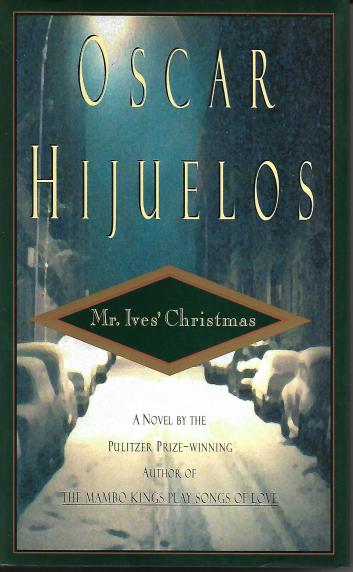
Mr. Ives’ Christmas ~ A Capsule Book Review by Allen Kopp
Oscar Hijuelos (1951-2013) was one of the best contemporary American writers. He was the first Hispanic writer to win a Pulitzer Prize for fiction, for his great novel The Mambo Kings Play Songs of Love. His 1995 novel Mr. Ives’ Christmas is a study of loss and the search for meaning and reconciliation.
Edward Ives has a job as an art director in a New York advertising agency. He has a wife, a son, and a daughter. He has deep religious convictions, instilled in him from his adoptive family, convictions that he passes on to his two children. His son, Robert, is a pious and intelligent boy who intends to become a priest. In 1967 when Robert is seventeen, he is senselessly murdered on a New York street right before Christmas by a fourteen-year-old thug named Daniel Gomez.
As a devout Catholic, Mr. Ives believes it is up to him to forgive Daniel Gomez. As a man, however, with religion removed from the equation, he has to ask himself this question: How can I forgive the ignorant scum who, on a whim, snuffed out the life of my son, a boy infinitely superior in intellect and purpose? Does Mr. Ives set an example to others with his forgiveness, or does he give in to his human instincts and immerse himself in hatred and vengeance?
Characteristically enough, he reaches out to Daniel Gomez in prison, sending him books and encouraging him to learn to read and write. He believes that, if somebody had only given Daniel Gomez a break in his early life, his son Robert would still be alive. His friends, on the other hand, think he’s crazy for wanting to help his son’s killer and inform him that, for as little as a few hundred dollars, a person can be dispatched to kill Daniel Gomez, and the scales of justice will be balanced.
In this book, as in life, there are no easy answers. There’s no satisfactory, Hollywood-type ending. The death of his son is something that Mr. Ives is not ever able to recover from; he carries it over into his old age. He has some satisfaction in knowing that Daniel Gomez gets his life straightened out to a certain degree, gets married and has children and is repentant for the terrible things he did. For himself, though, his own life is shattered, and nothing can change that except his own death.
Copyright © 2017 by Allen Kopp



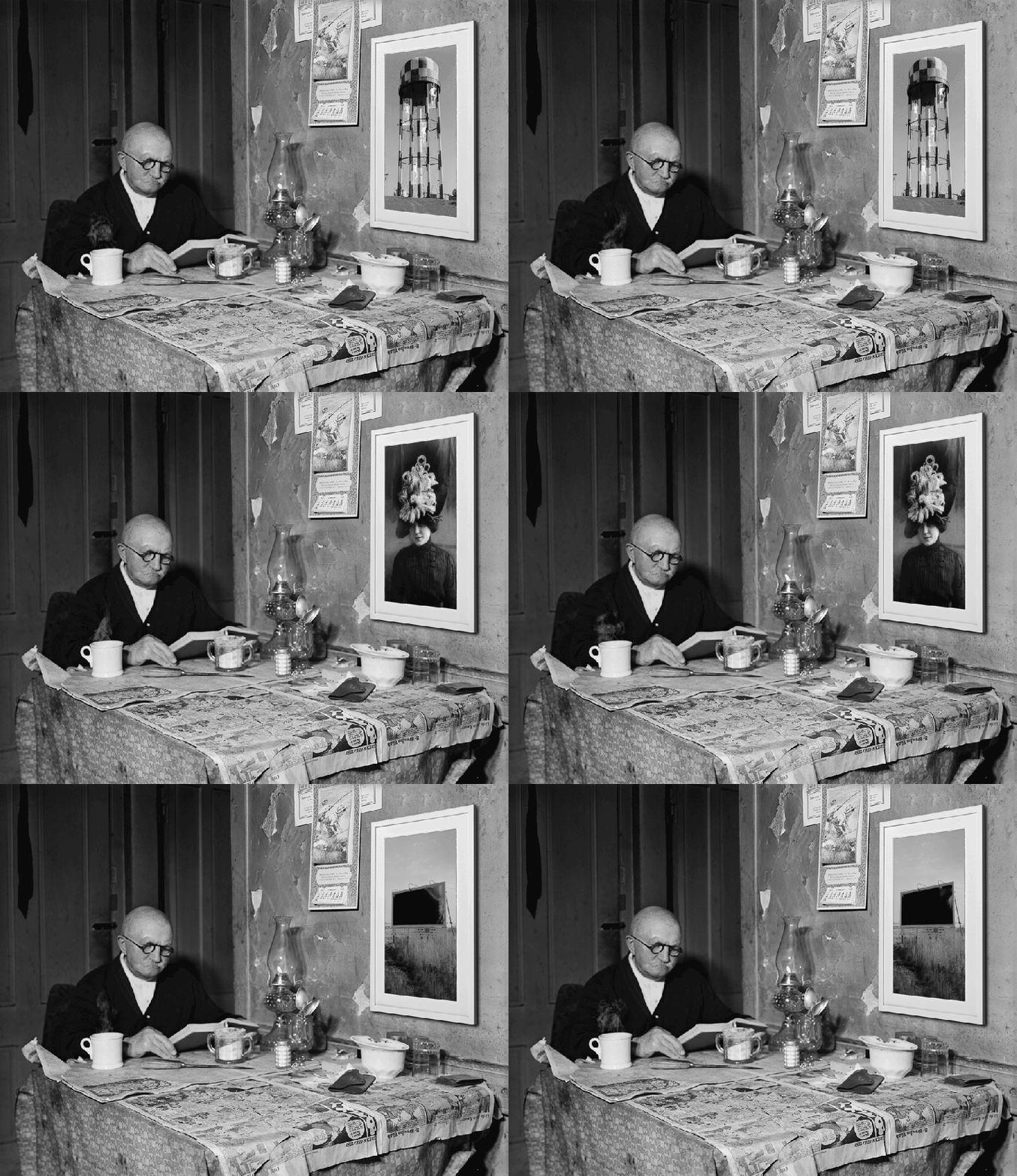
The Most Interesting Thing in the Room
By keeping his eyes on the book, the old man is missing the most interesting thing in the room.