


The Last Picture Show ~ A Capsule Book Review
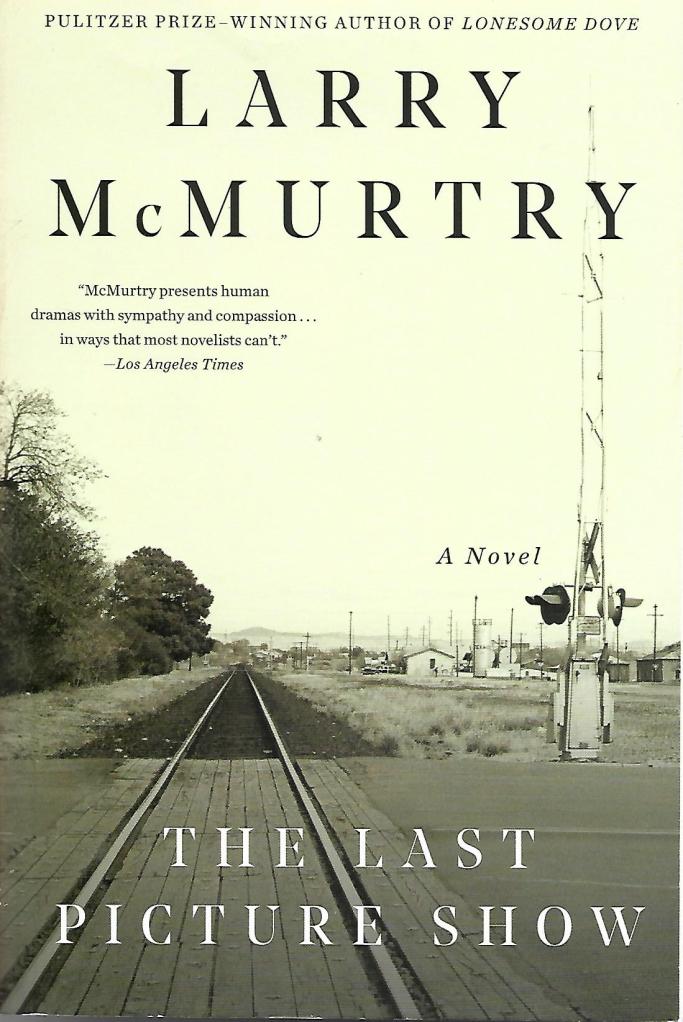
The Last Picture Show ~ A Capsule Book Review by Allen Kopp
Larry McMurtry’s 1966 novel, The Last Picture Show, is set in the fictional town of Thalia, Texas, in the 1950s. Thalia sits on the edge of the prairie where it’s windy and dusty and hot. There’s a Main Street with a picture show, a café, a poolhall, and not much else. In the way of small towns everywhere, the people of Thalia don’t have much to do, but there’s always gossip—everybody knows everything about everybody else—and if you happen to be different in some way from the other people in the town, you’d better watch out because they’re coming to get you.
Sonny and Duane are high schoolers and best friends. Sonny is sensitive and Duane is a brawler. They both like to drink and carouse and they don’t have to worry about what their parents think because they are both living on their own, free of family. Even though they’re both still in high school, they don’t let it bother them much. They aren’t much interested in education.
Sonny has an unattractive girlfriend named Charlene Duggs. She’s overweight and already possesses the bitchy qualities of a middle-aged shrew. Everybody who knows Sonny believes he could do better. Sonny secretly envies Duane, who dates the prettiest, most-stylish girl in school, Jacy Farrow. Jacy is self-centered, vain, manipulative, and she doesn’t care who she hurts as long as she gets what she wants. (We’ve all known people like this.)
When the good-ol’-boy football coach enlists Sonny to drive his wife, Ruth, to the clinic, Sonny sees that Ruth seems awfully lonely and unhappy. They begin a sexual affair—she’s forty and he’s seventeen—meeting afternoons in her bedroom while the coach is at school. Ruth experiences a sexual reawakening with Sonny. With the age difference, though, you know someone younger is bound to turn Sonny’s head and when it happens it’s none other than Jacy Farrow, who has broken up with Duane. Forty-year-old Ruth is easy for Sonny to put out of his mind when he can have Jacy.
There are other interesting characters in the novel, including Sam the Lion, a sort of father figure to everybody—he owns the poolhall, picture show and café; Genevieve, the world-weary waitress at the café whom the boys secretly lust after; Lois Farrow, Jacy’s smart-mouthed mother, who gave her husband so much hell he just had to go out and make a million dollars just to please her.
The Last Picture Show is a slice of small-town life and also a growing-up, coming-of-age story. It’s about change, the good kind and the bad kind that throws you for a loop and makes you wish you had never been born. It’s a breezy 245 pages that you can read without taxing your brain too much. And who can forget the 1971 movie version (two acting Oscars) of the novel, a good example of how to make a movie from a book and do it right.
Copyright © 2018 by Allen Kopp


1932 Duesenberg Model J Tourster
1932 Duesenberg Model J Tourster


Memoirs of Hadrian ~ A Capsule Book Review
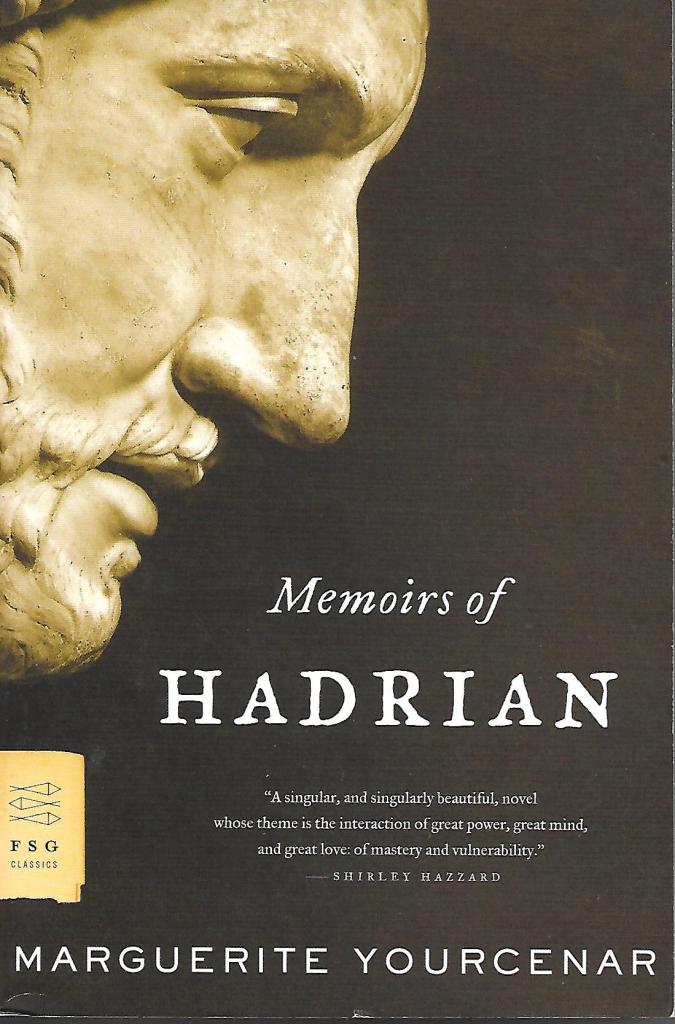
Memoirs of Hadrian ~ A Capsule Book Review by Allen Kopp
Hadrian was born in 76 A.D. and became emperor of the Roman Empire in the year 117, at age 41. His reign lasted until his death in 138, at age 62. Hadrian was known as one of the five “good emperors,” meaning he was known for his peaceful reign, rather than for cruelty or for the extravagant vices that some of his predecessors were known for. Hadrian is known mainly today for three things: his love for Antinous, a Bithynian youth (Bithynia is today part of Turkey), who died at age 19 by drowning in the Nile River; for having built the famous Pantheon in Rome (or at least having it finished); and for a wall he had built in Britain (parts of which still remain) known as “Hadrian’s Wall,” which was supposed to keep the “barbarian hordes” out of territory belonging to the Roman Empire.
Memoirs of Hadrian, by Marguerite Yourcenar, is a historical novel, a fictional account of Hadrian’s life and times. Although fiction, it is based on extensive historical research, which the Bibliographical Note at the end of the novel explains. It is told in Hadrian’s voice, from his point of view, as if he, from across the centuries, was writing it himself. It is an extended letter to 17-year-old Marcus Aurelius, future emperor-to-be.
Of course, as emperor of one-third of the earth’s population at the time, Hadrian had many problems, many ups and downs. The emperor was essentially a warrior, a general holding together the military factions of his empire and, as such, was often in peril of his life. There were always the greedy, the ambitious, the selfish who wanted to destroy the emperor in an effort to attain their own ends. Hadrian was by all accounts a modest man, not interested so much in being loved or admired. He believed that true love and admiration from the people must be earned, rather than automatically given just because one has fallen heir to a powerful position.
The most dramatic event in Hadrian’s life was his love for Antinous, the beautiful youth whom he watched grow into manhood. Antinous was Hadrian’s better self, his constant companion, the emotional axis of Hadrian’s life during the years they were together. Their love was a love for the ages, like that of Achilles and Patroclus centuries earlier. When Antinous committed suicide (apparently) by drowning himself in the Nile River at age 19, Hadrian was never the same again, living for about eight more years. He “deified” Antinous, building a city (Antinoopolis) in Egypt to his memory. Many statues, coins, and other works of art bore Antinous’s image. A cult was built up around his name and memory. When Hadrian died of a “dropsical” heart in 138 A.D., one can’t help but believe that the two of them were reunited in death.
Memoirs of Hadrian was first published in 1951, in French, and later translated into English. It is a glimpse into another time and place into the mind of a man who lived so long ago that it’s difficult for us to imagine. Despite its historical subject matter and its moderately dense prose, it is never very difficult reading, especially after the first fifty pages or so. Not for everybody, but if you make it through to the end, you will find it immensely rewarding and memorable.
Copyright © 2018 by Allen Kopp


