







Meditations of Marcus Aurelius ~ A Capsule Book Review
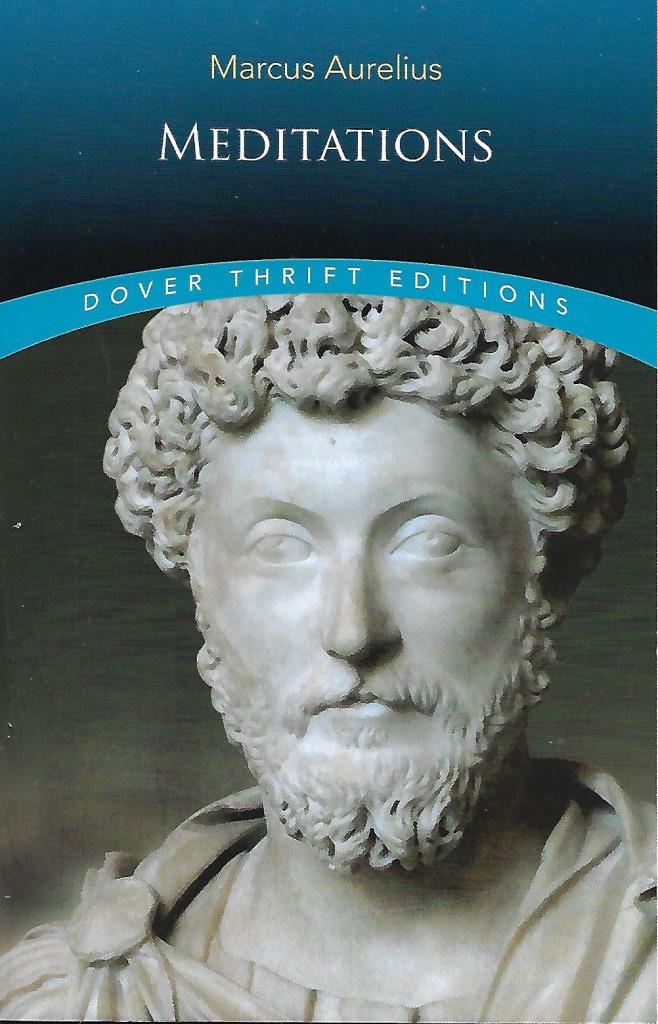
Meditations of Marcus Aurelius ~ A Capsule Book Review by Allen Kopp
Marcus Aurelius lived in the early Christian era, from the year 121 to 180. He was a Stoic philosopher and emperor of Rome from 161 until his death. He wrote his Meditations as a source for his own guidance and self-improvement. He was able “to write down what was in his heart just as it was, not obscured by any consciousness of the presence of listeners or any striving after-effect.” To put it another way, he probably never planned for Meditations to be published as a book and read by people nearly two thousand years later.
Meditations is divided into twelve books, each book representing a different period in Marcus Aurelius’ life. The books are not in chronological order. A central theme is the importance of analyzing one’s judgment of self and others, and the development of a cosmic perspective. In Marcus Aurelius’ own words, “”You have the power to strip away many superfluous troubles located wholly in your judgment, and to possess a large room for yourself embracing in thought the whole cosmos, to consider everlasting time, to think of the rapid change in the parts of each thing, of how short it is from birth until dissolution, and how the void before birth and that after dissolution are equally infinite.” Another important theme is maintaining focus and being without distraction, while maintaining strong ethical principles.
Marcus Aurelius’ Stoic philosophy advocated avoiding indulgence in sensory affections, which will free a man from the pains and pleasures of the material world. The only way a man can be harmed by others, he says, is to allow his reaction to overpower him. Order, or “logos” (the principle of divine reason and creative order) permeates existence, allowing one to rise above perceptions of “good” and “bad.”
Meditations is not exactly entertaining or breezy reading, but it’s interesting on a historical level because it was written by a Roman Emperor, it’s a product of its time, and it explains the Stoic philosophy, which is in itself quite interesting. Meditations held my interest (mostly) throughout its one hundred pages and I never once wanted to set it aside and read something else, but I was glad when I came to the end.
Copyright © 2020 by Allen Kopp

The Hound of the Baskervilles ~ A Capsule Book Review
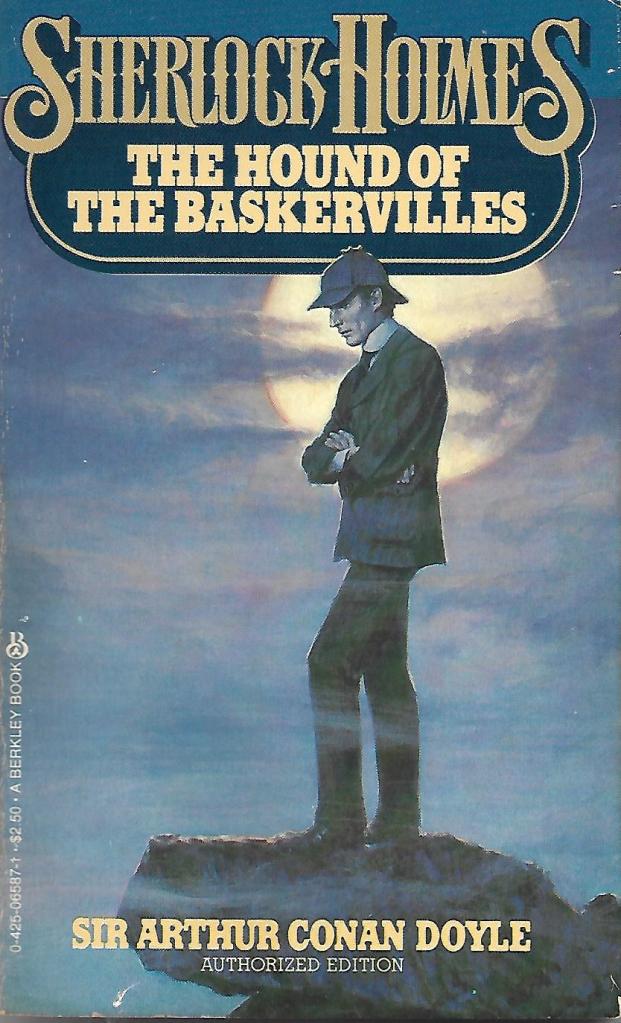
The Hound of the Baskervilles ~ A Capsule Book Review by Allen Kopp
Sir Arthur Conan Doyle (1859-1930) wrote five novels and over fifty short stories featuring the most famous fictional detective in literature, Sherlock Holmes. The Hound of the Baskervilles, first published in 1902, was the second novel of the five and is the most famous and popular.
The Hound of the Baskervilles is set (mostly) on the lonely, desolate moor in England, far from civilization. The wealthy Baskerville family has been plagued by a curse since the days of the English Civil War (1642-1651). According to the curse, a hellish hound has killed every male heir in the Baskerville line. The most recent heir to be killed was Sir Charles Baskerville; the devil hound never touched him, however; he died of fright when he believed the hound was pursuing him. The new heir is Sir Henry Baskerville. After the death of Sir Charles, he moves in to take over the Baskerville estate and fortune.
Believing his life to be in danger, Sir Henry Baskerville, along with his friend Dr. James Mortimer, enlists the aid of world-renowned detective Sherlock Holmes to solve the mystery of the hound. Since Holmes is busy with other cases in London, he sends his assistant and sidekick, Dr. Watson, down to the country to help make sure that Sr. Henry Baskerville doesn’t become the next victim of the fiendish hound.
From Baskerville hall on the moor, Dr. Watson uncovers what he can about the hell hound and the characters involved in the case and forwards written reports to Sherlock Holmes in London. The case is too fascinating for Holmes to stay away, however, and soon he makes an unexpected appearance in the middle of the proceedings. With his uncanny insights, he unravels the truth behind the hound of the Baskervilles and exposes the villain and the reasons for his villainy.
The Hound of the Baskervilles is a genre novel, classic detective fiction, easy to read at under two hundred pages, for the casual reader or the student of literature. It has served as the blueprint for many stories of its kind and has been made available in many different film versions. What actor could have made a better Sherlock Holmes than Basil Rathbone in the 1939 film version of the novel? It was the part he was born to play.
Copyright © 2020 by Allen Kopp
 Literary Fictions