

The Nickel Boys ~ A Capsule Book Review

The Nickel Boys ~ A Capsule Book Review by Allen Kopp
Colson Whitehead’s novel, The Nickel Boys, won this year’s Pulitzer Prize for Fiction. It’s a story about a fictional (but based in reality) boys’ reformatory in Florida, the Nickel Academy, in the early 1960s.
The principal character is a black teen named Elwood Curtis. Elwood lives with—and is raised by—his grandmother, Harriet, since his parents have run off and left him. Harriet works as a maid in a hotel.
Elwood is a “good” boy who doesn’t get into trouble the way some of his friends do. He works in a small store that sells newspapers, cigarettes, and candy and he understands the value of an education. When he is riding in a stolen car that he doesn’t even know is stolen, he is arrested and ends up being sentenced to the Nickel Academy.
Elwood is out of his depth at Nickel, meaning he doesn’t belong there. He meets all kinds of other boys, some of them friendly and others bullying and cruel. They all have one thing in common: they are all part of a cruel and unjust system that punishes young people, black and white, who haven’t yet reached adulthood. Boys are routinely mistreated (inadequate food), beaten, locked in solitary confinement or a “sweat box,” or sexually assaulted. Those who commit a serious enough transgression might be beaten and tortured to death and, after their bodies are furtively buried, reported to have “run off.”
When state inspectors come to Nickel for an inspection, management puts on a good show to demonstrate that they are taking good care of their charges, even to the point of serving good food with ice cream for dessert (on that day only). Elwood Curtis has a plan. He has been keeping a written record of what conditions are really like at Nickel and how people are really being treated. He hopes to slip the written record to one of the inspectors without any of the Nickel employees seeing. He’s taking a dangerous risk; if he gets caught, it could mean the end of him.
The Nickel Boys is a good book, but I think you will agree it’s not a great book. It’s the companion piece to a novel from three years ago called The Underground Railroad, which also won the Pulitzer Prize for fiction. (Colson Whitehead is one of only four writers to win two Pulitzer Prizes for fiction in their careers; the others are Booth Tarkington, William Faulkner, and John Updike.) Both novels deal with black issues while embracing universal themes of belonging, oneness, isolation, and functioning in a world that is very often unjust to anybody of any skin color.
Copyright © 2020 by Allen Kopp


The World That Comes After
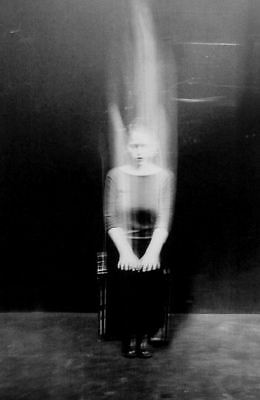
The World That Comes After ~ A Short Story by Allen Kopp
Katherine Isabel Burkhardt was born in 1898 and died of a summer fever in 1912 at the age of fourteen. When she found herself in the family vault, she was more afraid than she had ever been in her life. She didn’t know where she was or why.
“Hello!” she called. “Is anybody there? Hello! Mother! Father! Are you there? Do you see me? Can you figure out how to get me out of here? I don’t like it here! It’s spooky and I think I’m going to cry! I think there’s been some mistake! I don’t think I ought to be here!”
She was on the point of screaming when she saw an old woman standing over her. She didn’t know the old woman but was so relieved she wasn’t alone that it didn’t matter.
The words came out in a torrent: “Who are you? What is this place? Can you tell me where I am? I need to go home! My mother and father will be worried about me if I don’t come home for dinner!”
“Not so fast!” the old woman said. “All your questions will be answered, but only one at a time.”
“I don’t know where I am. I don’t like it here! I don’t remember how I…”
She stopped in the middle of a sentence because she saw, not having noticed before in her excitement, that the old woman had a mellow glow emanating from her chest.
“What is that?” she asked. “I’ve never seen anything like it! You’re glowing!”
“Of course I’m glowing,” the old woman said. “We’re all glowing. You’re glowing too.”
“What?”
When she looked down, she was delighted for a moment by her own glow coming from inside her.
“What is this?” she asked. “What does this mean?”
“It’s very simple,” the old woman said. “You’ve crossed over.”
“Crossed over where?”
“You’ve passed from the world of the living to the world that comes after.”
“The world that comes after? Are you telling me I’m dead?”
“Yes. You must accept it. Embrace it.”
“But I don’t want to be dead! I have things to do. I promised mother I’d clean out my closet. I have my schoolwork to do. I have my cats to take care of. I’m going to a church picnic on Saturday.”
“The picnic will go on without you. That’s what happens when we die. The world keeps right on spinning.”
“I don’t believe you. I think I’m just having a bad dream. In a little while I’ll wake up and everything will be fine.”
“It’s a dream, all right, but not the kind of dream you wake up from.”
“Who are you anyway?”
“I’m your grandmother. You never knew me because I crossed over before you were born.”
“Just what is this place? Where am I?”
“You’re in the family vault. In the cemetery.”
“I remember! I remember the family vault! Father showed it to us on one of our Sunday drives. It looks like a little church with spires.”
“That’s right. Your great-grandfather, my father, was a wealthy man and he had the vault built at great expense so all of us would have a place to go when we die.”
“That was very thoughtful of him, I’m sure. Now, can you tell me how to get out of here so I can go home?”
The old woman laughed. “You can’t get out. This is where you belong now. With us.”
“There are others?”
“Of course, there are others. You’ll meet them all soon.”
Katherine began to cry real tears, as opposed to tears for effect. “I didn’t get a chance to tell anybody goodbye because I didn’t know I was going to die! Mother and father and Boyd, my brother. My cats.”
“They knew what was happening. They were in the room. They all said goodbye to you, even though you didn’t know it.”
“Will I see them all again someday?”
“It doesn’t hurt to hope.”
“I’m worried about my cats. They’ll starve if I’m not there to feed them.”
“Don’t you think your brother will take care of them now?”
“Yes, I suppose he will. He was always quite fond of animals.”
“All your worldly cares are over. You are at peace. Peace like a river.”
“I’m feeling so sleepy now, as if I can barely hold up my head.”
“That’s right. Time to sleep. And when you wake up you’ll meet the others.”
A curtain descended as at the end of an act in a play, and Katherine knew nothing again until she was being led by the hand to meet the rest of the family.
She felt shy at being brought before a gallery of strangers. She was not at all surprised, however, to see that they all carried the mysterious and arresting glow inside them, the same glow that she now had.
Cousins Parry and Lomax, twins, were ten at the time they crossed over. (They went over a roaring waterfall in a rowboat on a flawless June day and drowned.) They looked at Katherine with wide-eyed wonder; each of them gave her a quick, unsmiling bow from the waist and then they were gone.
Great-grandfather was tall and broad, wearing his fancy dress suit and sporting the elaborate mustache and side whiskers for which he was known. He was a successful businessman, the millionaire who financed the family vault. On meeting Katherine, he tilted his head back and looked at her as if he couldn’t quite believe his eyes.
“I don’t think we’ve met, my dear,” he said. “How are you?”
“I’m dead, thank you, sir,” she said. “How are you?”
Uncle Evan, great-grandfather’s son, was handsome in his military uniform. He was only twenty-five when he crossed over during the Spanish-American War. He shook Katherine’s hand politely, gave her a grim smile, and receded into the background as his military training dictated.
Aunt Ida was a sad-faced woman carrying a baby. The baby, Augustus, crossed over at the age of three months when Aunt Ida was only in her twenties. Now that she had him with her again, Aunt Ida vowed that she and Augustus would never be separated again.
A formidable woman was Aunt Zel, great-grandfather’s sister. She had an elaborate coiffure piled high on her head and a stunning array of jewelry gracing her person. By her side always was her diminutive husband, Uncle Ivor; he was a hundred-and-twenty pounds when he was alive and eight inches shorter than Aunt Zel. He had lost his right arm, not on the field of battle, but to a rabid skunk when he was eight years old.
“I’m so happy to make your acquaintance, my dear,” aunt Zel said to Katherine. “I just know we’re going to be great friends.”
Uncle Ivor took Katherine’s hand in his and bent over and kissed it until Aunt Zel turned and gave him a warning look.
Uncle Jordan wore a dress suit with a diamond stickpin and silk cravat. He kissed Katherine on each cheek and then he was gone as if he had a pressing engagement elsewhere. The truth was that he avoided being around the other family members for long because none of them approved of him. In life, he had enjoyed himself a little too much, spent money freely that didn’t belong to him and died, deeply in debt, in young middle age of alcoholism.
Cousin Talbot’s appendix burst when he was thirty-two. Immediately after he crossed over, his beautiful young wife, Magdalene, married a man she hardly knew by the name of Milt Clausen. Magdalene did not honor Talbot’s memory in her widowhood. She was not in the family crypt and never would be. Cousin Talbot didn’t want her anywhere near him. He had renounced women and marriage for all eternity.
“If you were a boy instead of a girl, I’d advise you never to get married,” Cousin Talbot said to Katherine.
“I don’t think my gender makes much difference now,” Katherine said.
Cousin Emory was sixteen when he crossed over as the result of a crushed larynx sustained in an impromptu game of tackle football with some of his friends. The glow in his chest was a little brighter than anybody else’s and, indeed, extended upwards to his neck, face and head. His smile was infectious and he seemed all the time to be on the verge of laughter. When he touched Katherine’s hand, she felt he was a kindred spirit.
“How do you like being a ghost?” he asked her.
She shook her head and blushed, not knowing what to say.
“It was the same for me when I first came here,” he said. “I didn’t know why God would have me die so young. We learn not to ask why but just to accept things as they are.”
“I don’t like it here and I want to go home,” she said but she wasn’t sure if Cousin Emory heard her.
Before moving on, he leaned over and whispered in her ear, “I can show you around if you like. There’s a lot more than just this.” He held out his arms to take in the whole family crypt.
“If you find you have the time,” she said, “I think that would be lovely.”
There were others after Cousin Emory, but the truth was they blended together in a blur and Katherine couldn’t remember them after she met them.
The next time Katherine saw Cousin Emory, he showed her, much to her delight, that she could leave the family crypt at will (hers and not anybody else’s). All she had to do was press her body against the outer wall. Since the wall was solid and she was not, she could pass through it. He tried to explain the laws of physics involved, but she didn’t understand what he was talking about.
The cemetery was much larger than Katherine imagined. Cousin Emory took her to visit some of his spirit friends: a tall, criminally handsome policeman with a handlebar mustache who loved to tell stories about apprehending cutthroat desperadoes; a Civil War soldier who shook hands with Abraham Lincoln and spent ten minutes engaged in conversation with him; a victim of the Johnstown Flood (“the water came roaring down the mountain and swept away everything in its path”); a governor of the state who once had presidential aspirations; a group of twenty girls who died in an orphanage fire, all occupying the same grave; a twelve-year-old boy named Jesse who stood just outside his massive vault until another spirit came along and engaged him in conversation.
On one of their forays outside the crypt, they came upon a funeral on a hillside that resembled, with all the attendees dressed in black, an aggregation of crows.
“This is the fun part,” Emory said.
He walked among the mourners, pretending to kiss or touch or put his arm around certain of them. He also demonstrated the technique of coming up quickly behind them and making the more sensitive of them turn around to see who—or what—was there.
“They sense I’m there but when they turn around they’re not so sure.”
He made her laugh when he floated over a couple of old ladies in large feathered hats and, assuming a reclining position over them, pretended to pat them on the sides of their heads.
“I, for one, love being a ghost!” he said.
“Can I fly, too?” Katherine asked.
“We don’t really fly like a duck going south for the winter. What we do is float. We float because we’re lighter than air.”
“Can I try it?” Katherine asked.
“You can do anything you want, now,” he said.
He demonstrated his floating technique and they spent the afternoon floating all over the cemetery.
“Maybe there are some good things about being a spirit,” Katherine said.
“Of course there are!”
“No more head colds, sore throats or stomach cramps. No more trips to the doctor or dentist. No more nightmares or math quizzes. No more being made to play badminton with my little cousins. No more boring church sermons that make everybody cranky, and no more liver and onions for dinner ever again!”
Cousin Emory laughed, but then Katherine started thinking about all the good things she had left behind, such as her cats and her beautiful room at home and her mother and father and brother and all her friends, and she started to cry.
“I think it’s time to go back,” Cousin Emory said.
Katherine began venturing outside the family crypt often, either with Cousin Emory or on her own. And then, on a beautiful Sunday afternoon in October, she happened to be in the right place at the right time and she saw them.
She recognized father’s automobile and then she saw that all three of them were riding inside: father, mother and her brother Boyd. She floated after the car—it wasn’t going very fast—and attached herself to the back of it as it turned out of the cemetery and headed toward home.
She held on easily enough until father pulled into the driveway of the old house. She was happy to see that everything looked exactly the same. The first thing she did was to go around back and check on her kittens. They were all there and seemed healthy and happy, but they were now adult cats. She cried when they meowed and purred and recognized her and begged to be picked up.
Her room upstairs was the same. Everything was just as she left it, the books and pencils on her desk, the dolls and stuffed animals on the bed and the chair, the pictures on the wall, the lamp, the rocking chair, the clothes hanging in the closet. Mother hadn’t changed a thing.
She was home again! With her family! Of course, her physical self—her body—was back at the family crypt in the cemetery, but the most important part of her was here—in her childhood home that she loved and never wanted to leave.
She would stay with her family always. She floated over the dining room table as had their dinner. She floated over their beds at night when they were sleeping. Sometimes she went up behind them and gently blew air on the backs of their necks. At those times, they seemed to know she was there because they smiled and sometimes they turned all the way around.
When they were all away for the day, she would go from room to room, touching the beloved objects: the piano where she learned to play, the horsehair sofa that was so comfortable for a nap, the dishes in the China closet, the books on the shelves, the worn rug on the floor, the ferns and philodendrons. All the things that made home what it was.
She spent time every day with her cats. She watched them as they grew up and had their own babies. Some of them left and ventured out into the world on their own, as cats will do. She watched as they grew old and cried whenever any of them became sick and died.
The years went by but, since she was a spirit, there was no such thing as time. She remained the same, always fourteen years old, but her family changed, as families will. Boyd went through college and got a job in New York City and left home. He sent postcards and letters, saying how happy he was. Father became old and stooped; he had a heart attack and had to stop working and draw a pension. Mother’s hair turned gray and her shoulders were perpetually bowed. She still fixed three meals a day and worked always at keeping the house clean and running smoothly.
Katherine was standing beside father’s bed when he died on a January night. She believed that in the last minute of his life he saw her and knew she was there. He died happily.
Mother continued in the big, empty house on her own. Always busy, she was never one to give up. She continued to cook meals and clean a different part of the house every day, even though nothing was the same for her. In the evenings, she sat in the parlor alone and read, sewed, or knitted. Sometimes she would stand up and go to the piano and play a hymn or a popular song from her youth that she recalled. And always, Katherine was close by. She longed to reach out and fold mother in her arms and comfort her.
In the time that was no time, mother also died. The house was sold and all the furnishings moved out. A family with four children took up residence. They were noisy and quarrelsome. They went in and out all day long, slamming the doors every time. They had two large dogs that barked at the slightest provocation.
Katherine couldn’t stay in a house that was no longer hers. She didn’t like the family that moved in. They were nothing like her own family and had their own way of doing things. They removed mother’s drapes from the living room and dining room and replaced the wallpaper in Katherine’s room with a print with sailboats that she didn’t like.
There was nothing left for her to do but go but back to the family crypt. Her grandmother was right; it was where she belonged.
In living time, she had been away for decades, but to the other spirits in the family crypt, it was no time at all. They weren’t aware she had even been away.
She was sad when she went back to the crypt, but not sad for long. Mother and father were both there with their own glows. Why had she not thought of it before? Weren’t they part of the family? Didn’t it stand to reason that they would be in the family crypt the same as any other member of the family? She had just never thought of them as dead in the same way she was dead.
They were all on the same side of the Great Divide now between Life and Death. There would be no more leave-taking. One day Boyd would be joining them. His spot was waiting for him on father’s right side.
In the middle of Katherine’s joyous reunion with mother and father, she heard a small sound like mewing. It could only mean one thing. Yes, they were all there. Every cat she had ever owned in her life was waiting for her, no farther away than the length of her arm. Now, at last, heaven was upon her.
Copyright 2020 by Allen Kopp

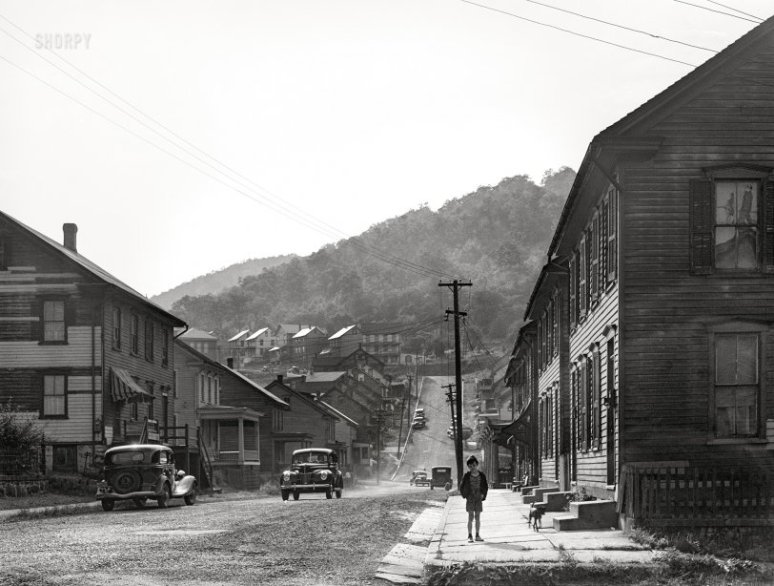
Prentiss Peckinpaugh Prefers Pornography

Prentiss Peckinpaugh Prefers Pornography ~ A Short Story by Allen Kopp
Miss Sullivan belched quietly into her handkerchief; the hamburger steak with onions she had for lunch didn’t quite agree with her. With the handkerchief over her mouth, she looked out over the thirty-two lost souls in her care until five minutes to the hour. They were all fifteen years old and most of them she would happily strangle if she could. She had been in the teaching profession for too long and was overdue for retirement.
Since it was Friday afternoon and everybody was waiting to be unleashed and unfettered until Monday morning, this group of ninth graders was engaged in what was called silent reading. Everybody must know that silent reading was serious business. You couldn’t write or giggle or daydream or think about what you were going to do when you got home or work on your algebra problems (it wasn’t study hall) or pass notes or whisper or gaze out the window or thumb through a magazine. You had to read a “good book,” preferably one from the reading list or one that Miss Sullivan herself had approved. You had to put the fifty-five minutes to good use, reading every word on every page, and absorbing what you read as if you would be tested on it.
Halfway through the hour, Miss Sullivan launched a surprise attack, suddenly standing up from her desk and walking the aisles between the desks, down one aisle and up another. If anybody was doing anything they weren’t supposed to be doing—reading a comic book or concealing a paperback of some kind behind a library book—she would catch them before they had a chance to hide it.
Prentiss Peckinpaugh was an odd boy from an odd family. He lived on a farm with his family; he had many brothers and sisters. His clothes always looked too big for him as if they had belonged to somebody else before he wore them. He always kept the top button of his shirt done up, even in warm weather. He walked with a cautious, forward tilt as if he had something wrong with his back.
Prentiss was sitting in the row of chairs against the wall. Miss Sullivan came upon him from behind, from the left, and her eyes fell upon the book he was reading, a paperback with a pink cover.
“What is that you’re reading?” she asked.
He closed the book so she could see the front cover. The title of the book was The Passionate Orphan.
“Where did you get that book?”
He shrugged his shoulders.
“May I see it?” she asked.
He handed her the book and she flipped through the pages and read several passages, standing there in the aisle between desks.
“You’re reading this book?” she asked.
“Yeah,” Prentiss said.
“It’s ‘yes, ma’am’.”
“Yes, ma’am.”
“How far along are you in the book?”
“Almost to the end.”
“Do you know what this book is about?”
“Yes, ma’am.”
“What is it about, then? Would you care to tell me?”
By now everybody in class had their attention focused on the conversation between Miss Sullivan and Prentiss Peckinpaugh.
“I don’t think I can say it,” Prentiss said.
“Don’t you know this book is not appropriate reading material for ninth grade English?”
“No, I didn’t know.”
“Who gave you this book?”
“Nobody gave it to me. It’s my book.”
“You don’t know where it came from?”
“No.”
“Did you steal it?”
“Why would I steal it when it already belonged to me?”
“Did a grown man give it to you? Maybe a friend of your father’s?”
“No. I already said nobody gave it to me. It’s my book.”
“Do you know the meaning of the word ‘pornography’?”
“No.”
“Well, that’s what this book is. It’s pornography and if somebody in this school gave it to you, we need to know who it was. This is a book that certainly doesn’t belong in a school, in a classroom, where other people can see it. Do you know what I’m saying?”
“I don’t see anything wrong with it.”
“How about if we go downstairs and show the book to Mr. Ball?”
“I have the feeling I don’t have a choice.” Prentiss Peckinpaugh said.
“Right you are,” Miss Sullivan said.
Miss Sullivan put the class in charge of Mavis Blaylock, a know-it-all, holier-than-thou toady who would stop at nothing to gain favor with the teacher and would take down names of those who misbehaved. Mavis smirked with superiority and took her place at teacher’s desk.
After an admonition to the class to continue their silent reading, Miss Sullivan escorted Prentiss Peckinpaugh down the three flights to the principal’s office.
Principal Ball was engaged on the phone, so Miss Sullivan and Prentiss had to wait for about five minutes until he was free. When at last they were ushered into the carpeted, wood-paneled office, Mr. Ball took one look at them, frowned and said, “What’s this?”
“Well, we’ve been having silent reading this hour,” Miss Sullivan said, “and I found this boy reading this book.”
She handed the book to Mr. Ball.
“Just what is this?” he asked.
“Well, as I was just saying to him…”
“What’s your name, boy?” Mr. Ball asked.
“Prentiss Peckinpaugh.”
“Say ‘sir’ when you’re speaking to me.”
“Prentiss Peckinpaugh, sir!”
“I was just saying to Prentiss here that this book doesn’t belong in school and should never see the light of day,” Miss Sullivan said.
Mr. Ball laid the book on the desk and turned over several pages, reading as he went.
“Who gave you this book, Mr. Peckinpaugh?” Mr. Ball asked.
“Nobody gave it to me. It’s my book.”
“Where did it come from?”
“It didn’t come from anywhere. It’s my book.”
“Don’t you know that a book like this is not allowed in school?”
“I don’t see anything wrong with it. Nobody sees it but me.”
“Do you have other books of this nature?”
“I don’t know.”
“You don’t know.”
“No, sir.”
“Well, we’ll let you off with a warning this time because you’re young and you didn’t know, but I want you to know that if you ever bring pornographic material into this school again, we will take disciplinary action that will include a three-day suspension. Now, do you understand what I’m saying to you?”
“Yes, sir.”
“When you’re on your own free time at home, you can read whatever you want, but in a school like this with hundreds of other students, you must follow our guidelines for what is acceptable and what is not. Am I getting through to you?”
“Yes, sir!”
“Take him to the library, to the fiction section, Miss Sullivan, and have him check out Of Mice and Men by John Steinbeck. That’s a good book and, more importantly, it’s an appropriate book.”
“I’ve read it,” Prentiss Peckinpaugh said.
“Well, read it again!”
“Are you going to give me back my book, sir, that you took from me?”
“No! I want to absorb it more thoroughly. I need to know what the students in this school are up to.”
The library’s one copy of Of Mice and Men was checked out, so Miss Sullivan suggested The Old Man and the Sea by Ernest Hemingway.
“I’ve read it,” Prentiss Peckinpaugh said.
“Well, read it again! And after you’ve finished, I want a solid book report on it.”
“Okay.”
“That’s ‘yes, ma’am’.”
“Yes, ma’am.”
During study hall next hour, Prentiss Peckinpaugh went back to the library and checked out Lady Chatterley’s Lover by D. H. Lawrence. He wanted to choose for himself what books to read. He liked The Old Man and the Sea fine, but he didn’t want to read it again.
While reading Lady Chatterley’s Lover, he could easily hide it behind The Old Man and the Sea and nobody would ever know the difference.
Copyright © 2020 by Allen Kopp

 Literary Fictions