

The Sun King ~ A Capsule Book Review

The Sun King ~ A Capsule Book Review by Allen Kopp
King Louis XIV was born in 1638 and became king of France in 1643 at age five. He remained king until his death in 1715. His reign of 72 years and 110 days is the longest reign in history for any European monarch. Beginning in 1682 and for about the last 32 years of Louis’s reign, the Palace of Versailles (about twelve miles from Paris) was the seat of French government and the home of the king, his family and the French court.
Louis XIV himself built the Palace of Versailles, starting with a small chateau with a moat, into the most lavish palace in Europe. It remained the seat of French government for over a hundred years, until the beginning of the French Revolution. Today it still stands as one of the most popular tourist destinations in the world.
Louis XIV was anointed by God, or so he believed (and so did everybody else). He was God’s representative on earth. People stood in awe of him; even his own children trembled in his presence. He was a tyrant when he needed to be, but he also had a more human side. He loved and hated in equal measure.
The Sun King by Nancy Mitford is an account of King Louis XIV and his life in the Palace of Versailles, his family and associates, his enemies, his weaknesses, his foibles, his hunting and eating habits, his mistresses, his children (legitimate and otherwise), his wars, and his political successes and failures. He was called the Sun King because he chose the sun as his personal symbol.
The Palace of Versailles was, at any given moment, home to hundreds if not thousands of courtiers, servants, hangers-on, members of the royal family and others. People were always seeking the gain the King’s favor. Most of the jobs in the palace, down to the most menial, were held by members of one family, from generation to generation. These positions were lucrative and much desired.
Life wasn’t always wonderful for the people living at the Palace of Versailles. Many people died young. Infant mortality rates were high. The King himself fathered seventeen children; ten of them died in infancy. Doctors were, at best, barely capable and many were incompetent. No matter what the illness, doctors “bled” the patient, which proved to be largely ineffective. People died of “stone” (kidney or gall). Smallpox was a constant threat, even among the highborn. The king himself had surgery for an anal fistula, without, of course, any anesthetic. He survived it, without complaint.
No matter what was happening in their lives, no matter what tragedy befell them, these lords and ladies loved to go out hunting. Pity the poor stags and other animals that lived in the woods nearby.
The Sun King is mostly fascinating reading. The narrative bogs down, in my estimation, when the focus is on politics and the political rivals of the king. It is sometimes hard to keep all the names straight because different people are referred to at different times by different names. There are so many children, grandchildren, nieces and nephews, friends and enemies of the king (some with unpronounceable and forgettable names) that we don’t always know who’s who, no matter how carefully we’re reading. For example, Mme. de Montespan (sometimes referred to as Athenais) is the King’s longtime mistress. Then the King marries Mme. de Maintenon. Montespan and Maintenon are both prominent characters in the King’s life and their names are almost interchangeable. Such is history.
Copyright © 2020 by Allen Kopp





Other Voices, Other Rooms ~ A Capsule Book Review
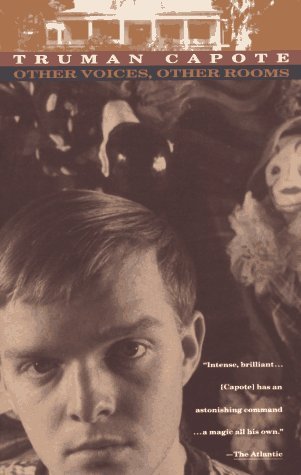
Other Voices, Other Rooms ~ A Capsule Book Review by Allen Kopp
Truman Capote (1925-1984) is one of those twentieth century American writers whose life nearly overshadows his work. In the 1960s and ‘70s he became a media celebrity and a New York fixture of the jet-setting social scene. He counted as his friends politicians, actors, artists, entertainers, and other writers (to whom he wasn’t always very charitable). He was known for his fey wit, his eccentricity, and his alcoholism, which eventually ended his life prematurely at age fifty-nine.
He was only twenty-three or so when he published his famous coming-of-age novel, Other Voices, Other Rooms. It is a floridly descriptive account of an odd thirteen-year-old boy named Joel Harrison Knox (Capote himself). Joel lives with eccentric relatives in New Orleans in, it is to be supposed, the 1940s. When his mother dies, his New Orleans guardian receives a letter from his father (supposedly), inviting Joel to come and live with him in another (unidentified) Southern state.
The place that Joel goes to live is called Skullys Landing, or simply “the Landing.” It is an old house without electricity on the edge of a swamp. It seems the swamp is reclaiming the house; it is slowly sinking (four inches last year). It is the perfect Southern Gothic setting.
The residents of the Landing are—you guessed it!—even more eccentric than the relatives Joel left behind in New Orleans. There’s Zoo, the black girl in her twenties who keeps house for the family. She has a scar on her neck where a bad man tried to slit her throat. She lives in fear that the man will escape from jail and finish the job. Zoo is kind to Joel, so the two of them become friends. Miss Amy is Joel’s stepmother; she is married to Joel’s father and is something of a nonentity. And then there’s flamboyant, fluttery, kimono-wearing Cousin Randolph. He apparently owns the Landing. He talks a lot about the past in flowery language because his present life is that of a shut-in.
But what of Joel’s father? Why is everybody being so mysterious about him? It takes a while for Joel to unravel the mystery of his father. The father does indeed exist but he’s a helpless invalid. (He didn’t write the letter inviting Joel to come and live with him; it was written by Randolph.)
In a long monologue (soliloquy?), Randolph tells the sordid story of the boxer Pepe Alvarez, a woman whom Randolph claimed to be in love with named Delores, Randolph himself, Joel’s father, Miss Amy, and how they all arrived at the point where they are now.
Joel meets other colorful characters while he’s living at the Landing: the rough-and-tumble, acid-tongued tomboy Idabel Thompkins, with whom he plans to run away; the black midget man over a hundred years old named Jesus Fever (he’s Zoo’s grandfather or something); Miss Wisteria, the vivacious, midget circus performer with whom Idabel becomes infatuated.
Other Voices, Other Rooms was a literary sensation when it was first published in 1948, mostly because Truman Capote was only twenty-three years old, it was his first novel and it launched his literary career. It is an essential work in the canon of twentieth century American fiction, not to be missed.
Copyright © 2020 by Allen Kopp