

Cleanness ~ A Capsule Book Review
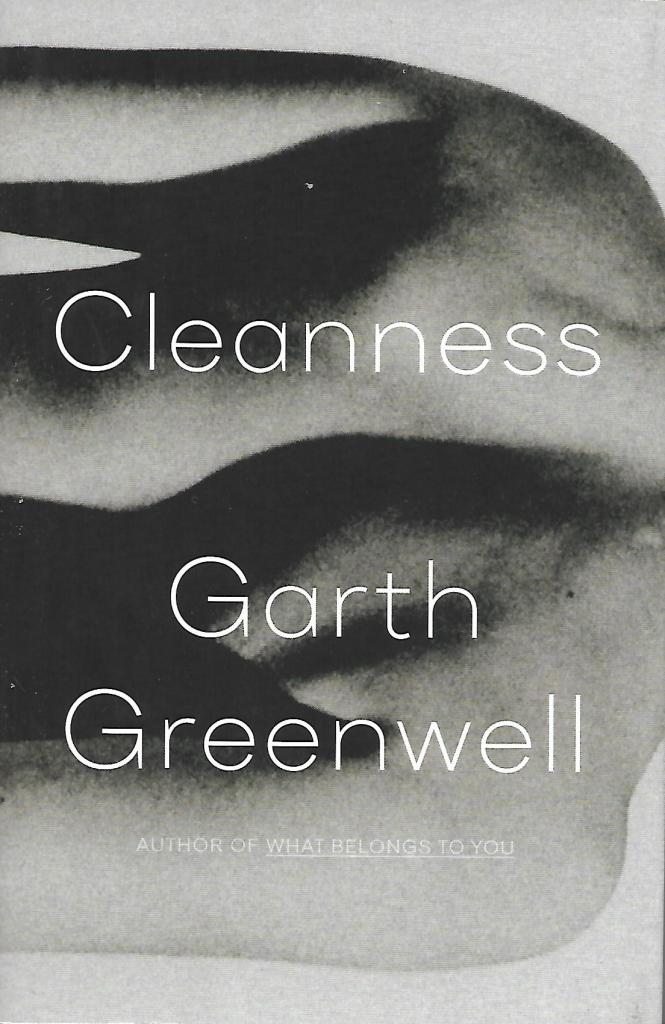
Cleanness ~ A Capsule Book Review by Allen Kopp
American author Garth Greenwell’s (born 1978) new novel, Cleanness, is told in the first-person voice of an American high school teacher in present-day Sofia, Bulgaria. The narrator of Cleanness never tells us his name. He is only ever known to us as “I” or “me.” Since I don’t know anything about Garth Greenwell, I strongly suspect he’s writing about himself and his own experiences in Bulgaria, since he seems to know the country—and the city of Sofia—so well.
Cleanness is more a collection of interrelated short stories than a plot-driven novel. Each chapter (story) is told in the same voice, the same point of view, but each story could stand alone. There is no plot to speak of, but that doesn’t mean it’s a dud as a novel. Each chapter is compelling in its own right; you don’t know where the whole thing is going until the end. At the end, we get a sense of completeness, of wholeness.
The narrator of Cleanness is gay but, since he lives in a former communist country that is not particularly welcoming to the gay way of life, he mostly is “closeted,” adhering, as a teacher of high school students, to a code of ethics. He never touches, or becomes too familiar with, any of his male students, no matter how much he might want to. In one chapter near the end of the book he and two of his male students go out drinking in clubs to celebrate his leaving; he is attracted to the older of the two boys, who is about eighteen (and the feeling seems to be reciprocated), but it never goes any farther than dancing together and flirting.
The narrator never mentions his age, but we assume he is in his thirties. He is not a particularly happy man. He alludes to, obliquely, an unhappy childhood that has left him scarred. We get the sense that he’s teaching school in Bulgaria to escape an unhappy life. He says he likes living abroad, so he is in a way a disaffected American. He has a “boyfriend,” known only as “R,” who is younger and from Portugal. He and R. are in love, the narrator says, but it’s a love that’s not going to work out, we see, because R. is young, unsettled, and doesn’t seem to know what he wants.
A couple of the chapters are intensely sexual. In one, the narrator (in trying to recover from a broken heart) has an encounter with an older man he has met on the Internet. The older man is frightening because he is a sadist who likes to inflict pain on his sexual partners. This episode ends up being repellent and distasteful. In another episode, the narrator meets a man who recognizes no limits when it comes to sex. He doesn’t care if his sexual partners are “old and ugly.” He doesn’t care if he gets sick; he only lives for the moment and wants only to be “used.” (This is a not a book I’d recommend to my ninety-year-old mother.)
Garth Greenwell’s previous novel, published in 2016, is What Belongs to You, which is also about an American man teaching high school in Sofia, Bulgaria. It also is told in the first-person point of view. The narrator, it seems, in both novels is the same. Cleanness if not exactly a continuation or a sequel to What Belongs to You, but the two books are enough alike to make a matched pair. For my money, the first book is the stronger of the two. It will be interesting to see what Garth Greenwell does for his next novel. Will he set it in Sofia, Bulgaria again, or some other highly unusual, foreign locale?
Copyright 2020 by Allen Kopp




A Room With a View ~ A Capsule Book Review

A Room With a View ~ A Capsule Book Review by Allen Kopp
E. M. Forster’s 1908 novel, A Room With a View, has as its heroine an upper-middle-class English girl named Lucy Honeychurch. Lucy is about twenty-two and is a product of her time. She has hairy armpits, plays the piano (too much Beethoven makes her cross), and is thoroughly conventional. She has a fussy mother and an obstreperous eighteen-year-old brother named Freddy.
Lucy is engaged to a fellow name Cecil Vyse. He is everything you might expect in a prospective match for Lucy: snobby, prissy, conventional, priggish. He has his own idea of the “feminine ideal” and expects Lucy to conform to it. He is constantly “correcting” Lucy to “make her better.” Lucy is all too willing to try to be what Cecil wants her to be. At first.
Lucy’s family, even though they’re not rich, have time and money to travel. When Lucy undertakes a trip to Florence, Italy, she takes as her “companion” and “chaperone” her cousin, Miss Charlotte Bartlett. Charlotte is described as a “nervous old maid.” She is annoyingly self-effacing and proper. When Lucy looks at Charlotte, she sees what she is likely to become herself in twenty or twenty-five years if she isn’t careful.
At their “pension” (small hotel) in Florence, Lucy and Charlotte encounter a problem with their room. They were promised a room with a view of the River Arno, but instead have only a view of a courtyard. Two “gentlemen” staying at the pension, Mr. Emerson and his son George, kindly offer to switch rooms with the two English ladies. Charlotte doesn’t think it’s “proper” to exchange rooms with two strange men, but she agrees in the end for Lucy’s sake.
Lucy doesn’t know what to make of the Emersons. Mr. Emerson is eccentric and seems to not have a full row of buttons; he is rumored to have murdered his wife. George is alarmingly uninterested in propriety or in what people might think of him. When he evinces a romantic interest in Lucy (culminating in a furtive kiss among a profusion of flowers on a hillside), she doesn’t know what to make of it. Her instinct is to run away.
Back in England, Lucy is preparing to marry Cecil Vyse, believing she has put the memory of George Emerson behind her. Wait a minute, though! George and his father are renting a “small villa” in the neighborhood where Lucy lives with her mother and brother. She and George will be neighbors and she’ll be running into him around every corner! Gasp! What’s a girl to do?
George and Freddy, Lucy’s brother, become friends. When Freddy invites George to the Honeychurch home for a round of Sunday tennis, George, cad that he is, steals another kiss from Lucy, this time on the “garden path” when he thinks nobody is looking. Now Lucy is completely thrown off-course! Can she go ahead and marry Cecil Vyse when she has such conflicting (hot and cold) feelings about George?
It seems that spending time in Italy has changed Lucy, made her look at life in a different way. She has “found her soul” and it’s all because of Italy. She is ready to slough off the stultifying convention of her age and upbringing. She is ready to step away from the straight-and-narrow course that has been laid out for her and step into a course of her own choosing.
E. M. Forster’s novels are gem-like, so carefully and precisely written; never pretentious or overly wordy. Every word has its place. There’s none of the extraneous claptrap and tortuously twisted sentences that you might find in the work of writers such as Virginia Woolf or Henry James. If you’ve never ready any books by E. M. Forster, you’re missing out on something good. If, on the other hand, you don’t give a rat’s ass about good writing or good fiction, you’re probably better off to have never heard the name.
Copyright © 2020 by Allen Kopp
This Morning It Looked Like Rain

This Morning It Looked Like Rain ~ A Short Story by Allen Kopp
It was the annual end-of-school picnic for the teachers. Another school year filed and put away. Ethel Fix, Pauline Schoonover, Grace Wolfe and Margaret Durfee sat with Mr. Goodapple, the school principal, at his table along with Mr. Goodapple’s son, Zeke. Of the four women, three were married. Only Margaret Durfee was without a husband. Knowing that Mr. Goodapple was a recent divorcee, she made no secret of the fact that she would make herself available to him if he so desired. Mr. Goodapple, for his part, wasn’t interested in Margaret Durfee or anybody else. Whenever he realized that she was looking at him with a secret and suggestive smile (suggestive of what?), the only thing he felt for her was embarrassment.
“It turned out to be a lovely day after all,” Grace Wolfe said.
“Yes, lovely,” Ethel Fix said. “It’s supposed to rain tonight, though.”
“When we’re all safely in our beds.”
“The park is lovely in the springtime,” Pauline Schoonover said.
“Summer is right around the corner,” Grace Wolfe said.
“What are you going to do this summer?” Ethel Fix said.
“My husband and I bought a camping trailer. We thought we’d take a few little trips. Fishing trips, mostly.”
“Do you fish?”
“No, mostly I swat mosquitoes.”
“I’m going to give my house a thorough cleaning during vacation. Do a little painting.”
“Oh, do you paint landscapes or portraits?”
“No. Walls.”
“I’m going to keep to town,” Margaret Durfee said. “I don’t really have any special plans, other than to relax. I’m not seeing anybody special or anything like that. I’ll be alone most of the time.”
“Goodness!” Pauline Schoonover said. “Don’t you get lonely?”
“Well, sometimes. Maybe a little.”
Young Zeke Goodapple, age thirteen, sighed loudly and yawned. All the ladies turned and looked at him.
“I think we’re boring Zeke to death with our talk,” Ethel Fix said.
“I’m sure he didn’t mean to be rude,” Mr. Goodapple said. “Did you, Zeke?”
“Huh?”
“Tell the ladies you didn’t mean to be rude.”
“No.”
“No, what?”
“No, I didn’t mean to be rude.”
“Do you have some interesting plans for the summer, Zeke?” Margaret Durfee asked.
“No.”
“That’s not true, now, is it, Zeke?” Mr. Goodapple said. “You do have some interesting plans.”
“What kind of plans?” Grace Wolfe asked.
“Tell them, Zeke,” Mr. Goodapple said. “Tell the ladies what you’re going to be doing this summer.”
“Um, I don’t remember.”
“Zeke will be taking a couple of remedial courses in summer school so he’ll be ready for junior high when school takes up again. English and math. And that’s not all, is it, Zeke?”
“What?”
“When he’s not in school, he’ll be taking swimming lessons at the YWMC.”
“Oh, won’t that be fun!” Pauline Schoonover said.
“I don’t have a suit,” Zeke said.
“A suit? Why do you need a suit?”
“A swimsuit.”
“Oh, yes! Of course!”
“I don’t really want to go into the pool,” Zeke said. “I’m afraid of the water. I have dreams where I can see myself being pulled out with hooks. Dead.”
“Oh, my!”
“The boy has a vivid imagination,” Mr. Goodapple said. “He reads horror stories every night before going to bed and I’m afraid they make him a little more morbid than he should be.”
“He probably misses his mother,” Margaret Durfee said. “He needs the steadying influence of a woman.”
“We get along fine,” Mr. Goodapple said. “We’ve adjusted quite well to the new order of things.”
“Do you like to read, Zeke?” Grace Wolfe asked.
“Sure. I like stories where all the characters get killed. I also like monster movies. I always want the monsters to win and kill all the people, but that never happens.”
“See what I mean?” Mr. Goodapple said with a laugh.
“Well, I like monster movies, too,” Margaret Durfee said, looking appreciatively at Zeke.
“Did you know my mother went off and left me?” Zeke asked.
“I don’t think we need to talk about that now,” Mr. Goodapple said.
“She married some guy I never met. He already has three kids so they didn’t have room for me.”
“We discussed it at length and decided it was best for Zeke to remain with me,” Mr. Goodapple said.
“That seems the sensible thing,” Pauline Schoonover said.
“They live in New Mexico,” Zeke said. “I don’t think I’d like living in the desert. I have sensitive skin. Mother says she’ll send me the money for a plane ticket so I can come out and visit her sometime and meet her husband and his kids. I’ve never flown in a plane.”
“That should be quite an adventure,” Grace Wolfe said.
“I’m not afraid to fly by myself. If the plane crashes, I’ll probably die quick without really knowing what happened.”
“The plane won’t crash. You’ll be fine.”
“And when you come back,” Ethel Fix said, “you can tell your friends at school all about it.”
“I don’t have many friends,” Zeke said. “I mostly just like to be alone.”
Mr. Goodapple took out a pack of cigarettes and lit up, blowing smoke over the ladies’ heads.
“I didn’t know you smoked, Mr. Goodapple!” Pauline Schoonover said.
“Never at school. Only when I’m out like this.”
“Might I have one, dear?” Margaret Durfee asked, in imitation of a screen vamp.
He handed her the pack and his lighter, avoiding her touch, and looked away as she lit her own.
“You never really know people until you have lunch with them,” Ethel Fix said.
When everybody was finished eating, the ladies started cleaning up.
“Would you like to walk down the hill to the soldiers’ memorial with me, Zeke?” Margaret Durfee asked.
“I’m kind of tired and I have a sore toe,” Zeke said, “but I guess it’ll be all right.”
“Well, let’s go, then!”
Margaret Durfee took him by the hand as if he was a small child, but when he showed her he didn’t like that, she settled with putting her hand on his shoulder.
When they were out of sight, Grace Wolfe leaned over and said confidentially to Mr. Goodapple, “I think Miss Durfee has a terrible crush on you!”
“Don’t you see what she’s doing?” Pauline Schoonover said. “She’s trying to get to you through your son!”
“I’d watch out for her if I were you!” Ethel Fix said. “She’s one of those crazy, passionate types and you never know what they’re up to!”
He had nothing to say, but only lit another cigarette and looked at his watch. The picnic was over and, thanks be to the Lord, it was time to go home.
Copyright © 2020 by Allen Kopp
 Literary Fictions