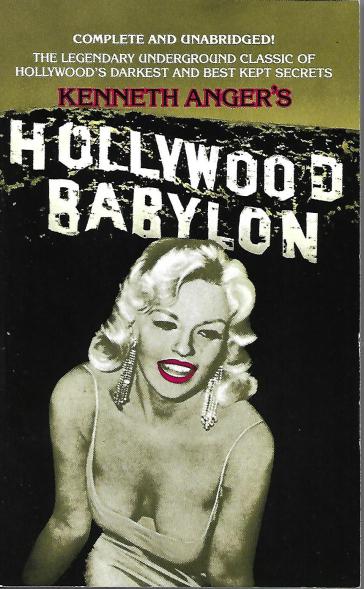
Hollywood Babylon ~ A Capsule Book Review

Hollywood Babylon ~ A Capsule Book Review by Allen Kopp

The silent screen’s greatest lover, Rudolph Valentino, was married twice, both time to lesbians, and neither marriage was ever consummated.

Movie director William Desmond Taylor was murdered in his Hollywood apartment in 1922. Investigation into his death revealed that he had been living a double life. All his colleagues were suspects in his death but, even with this plethora of potential murderers, the truth was never uncovered. The real murderer took the secret to his/her grave.

Silent screen comedian, jovial Roscoe “Fatty” Arbuckle, must certainly have wished he had never thrown a wild party in a San Francisco hotel room in 1921. The sexual shenanigans at the party led to the death of a trashy “starlet” named Virginia Rappe. Fatty was jailed and charged with first-degree murder in Rappe’s death. He was eventually cleared of the murder charge (after three lengthy trials), but his screen career was finished.

Thelma Todd, twenty-nine-year-old comedic actress (she starred with Laurel and Hardy and the Marx brothers), called the “Ice Cream Blonde,” was found murdered in the garage where she kept her car in 1935. Nobody ever found out what really happened, but Thelma was believed to have had an ongoing feud with gangster Lucky Luciano. Thelma Todd’s murder is one the most baffling unsolved murders in Hollywood history.

Twenty-five-year-old Olive Thomas, called “the most beautiful woman in the world,” was vacationing in Paris in 1920 with her husband Jack Pickford (brother of Mary Pickford) when, after a night of nightclubbing and drinking, she drank mercury from a bottle and died at a Paris hospital several days later. Evidence suggests that her poisoning was unintentional, but the story still persists that she killed herself on purpose.

In the late 1920s and early 1930s, Ramon Navarro was the biggest star in Hollywood. His most famous role was in the 1925 silent version of Ben-Hur. In 1968, age 69, he was brutally beaten to death in his Hollywood home by a pair of brothers out to rob him. The brothers were brought to justice but received only light sentences.

In 1932, would-be movie actress Peg Entwistle killed herself by climbing to the top of the famous “Hollywood” sign and jumping off. After her death, she became a symbol for Hollywood disillusionment and broken dreams.

Silent screen superstar Charlie Chaplin was quite a dog with the ladies. (Apparently he wasn’t too particular about which ladies.) In the 1920s, he impregnated sixteen-year-old, would-be actress Lita Grey. He did the right thing and married her, but the marriage was a disaster. It turned out that Lita Grey and her dear mama were planning on taking poor old Charlie for every cent he had.

Screen goddess Lana Turner’s sexy bad-boy boyfriend, Johnny Stompanato, was a shadowy underworld figure with an Oscar-sized tool in his pants. (Lana found him exciting.) In 1958, he was abusing Lana with his fists, when Lana’s fourteen-year-old daughter, Cheryl Crane, intervened with a big knife, stabbing pour Johnny to death in Lana’s Beverly Hills mansion. It was eventually ruled a “justifiable homicide,” but Lana and Cheryl experienced much unfavorable press coverage, not to mention the heartache.

Nearly every Hollywood scandal, from the silent era through the 1960s, is covered, however superficially, in the book Hollywood Babylon. It was banned when first published in 1965 but managed somehow to resurface ten years later. People find Hollywood Babylon objectionable because it makes no pretense of journalistic integrity. A lot of the purported “truth” in it is false, exaggerated, scurrilous, sensationalized and unfair. That’s not to say it doesn’t hold your interest from first page to last, though, as long as you read it with the proper attitude.

Copyright 2021 by Allen Kopp    

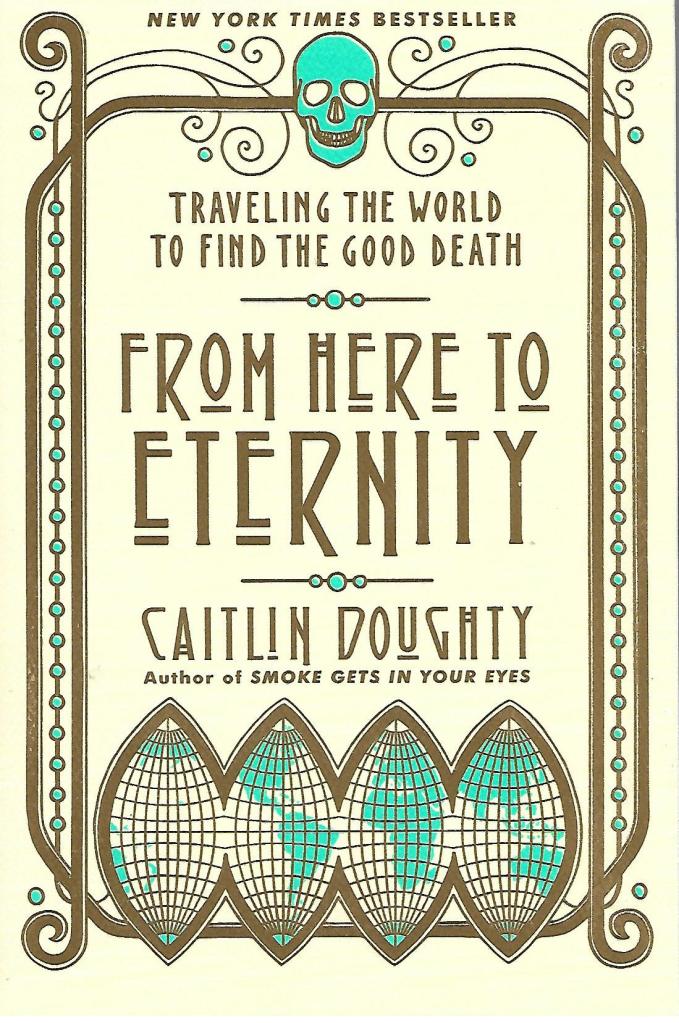
From Here To Eternity: Traveling the World to Find the Good Death ~ A Capsule Book Review

From Here To Eternity: Traveling the World to Find the Good Death ~ A Capsule Book Review by Allen Kopp

Did you know that 99.9% of people in Japan are cremated since a cemetery plot in Tokyo costs the equivalent of $53,000 American dollars? Did you know that there’s a “body farm” in North Carolina where people can choose to have their bodies “composted” after death? Did you know that the American funeral industry came into being with the sole purpose of selling you a casket? Did you know that, beginning in 2017, more Americans are choosing cremation over conventional burial? Did you know that the American funeral industry fears cremation because it’s cheaper (no embalming and no casket) than burial? Did you know that in Bolivia there are people who pray to human skulls, believing the skulls can intervene for them in heaven?

Did you know that cemeteries that require a casket to be buried in a steel or concrete vault do so to make maintaining the grounds easier? Did you know that in Colorado there’s a small town where you might have a “natural” cremation (as opposed to “industrial” cremation) for as little as $500? Did you know that many cemeteries have added a section for “natural” burial where (un-embalmed) bodies are buried in a wicker basket or a cardboard box? Did you know that, in Victorian times, crowded cemeteries in large European cities might have as many as twenty bodies in one grave and that dead bodies were frequently displaced to make way for somebody else? Did you know that these overcrowded cemeteries exuded noxious odors, especially after rainfall?  Did you know that, in a section of Indonesia, there are people who exhume the bodies of their long-dead relatives, talk to them, dress them, and bring them offerings of food?

These and other interesting nuggets of information are revealed in From Here To Eternity: Traveling the World to Find the Good Death, by author/mortician Caitlin Doughty. She writes on the grimmest of death-related subjects with humor and insight that only a person who works in the “death industry” could have. It’s an interesting, informative, nonfiction book that will expand your knowledge and make you ponder on your own mortality, unless, of course, you are planning on living forever, which I don’t think is a very pleasant prospect for most of us.

Copyright © 2021 by Allen Kopp

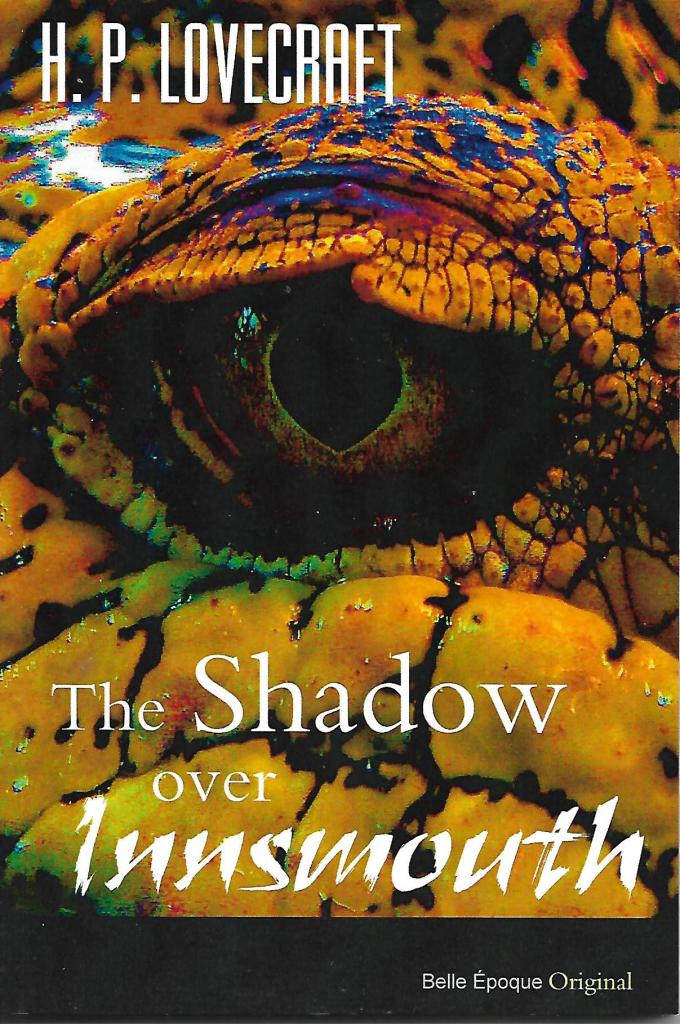
The Shadow Over Innsmouth ~ A Capsule Book Review

The Shadow Over Innsmouth ~ A Capsule Book Review by Allen Kopp

H. P. Lovecraft, the foremost American horror writer of the twentieth century, lived from 1890 to 1937. His imaginative novels and short stories are the stuff of which nightmares are made. This “Belle Epoque Original” contains the short novel (or extremely long short story) The Shadow Over Innsmouth, plus three (long) short stories: “In the Witch’s House,” “The Lurking Fear” and “The Rats in the Walls.”

Innsmouth of The Shadow Over Innsmouth is a coastal town in Massachusetts unlike any other. Once a thriving fishing community, it is now a hellish nightmare. The buildings are falling down because they are so old and untended. Most of the people (the ones with any sense) have left. A black reef offshore about one mile has been a curse to the town. The reef is inhabited by frog-fish creatures that come ashore whenever they want. I’m not sure what the frog-fish creatures do to the people of Innsmouth, but whatever it is, it isn’t pretty. (I think they mate with them to make more frog-fish creatures like themselves.)

The unnamed narrator telling the story is touring the region to study the architecture and comes across Innsmouth by chance. Innsmouth isn’t really where he intended to go, but it’s where he ends up on his way to some other place. He becomes more interested in the history and appearance of the town than is good for him and does some investigating (some would call it snooping), incurring the displeasure of the locals. He ends up having to stay the night in Innsmouth, in a creepy hotel; it’s not the kind of home-away-from-home experience he hopes to repeat any time soon. The frog-fish people are after him all night long, to do him great bodily harm. He never sees them up close, but that somehow makes them scarier.

In the short story, “In the Witch’s House,” a young student is staying in a house (because the rent is cheap) where a legendary witch once lived. He is a studying ancient folklore, travel to another dimension, and ancient mathematical secrets that have long since been forgotten by man. He is influenced by the long-ago witch that once occupied the space he now occupies. He becomes slowly unhinged. Is what is happening really happening or is it only happening in his mind?

“The Lurking Fear” is about the Martense family, a New England family that has cut itself off from the world and lives in a “haunted house” on a remote hill that is affected by violent thunder storms. With inbreeding, the family “degenerates,” into a path of reverse evolution. (Each family member has one blue eye and one brown eye.) When a kind of grotesque, mole-like creature is found living in the ground underneath the house, investigators deduce that this is what the Martense family members have become.

In “The Rats in the Walls” a man owns an ancient “priory” in England that goes back to medieval times. He makes a lot of repairs to the structure and makes it his home until he discovers there is a terrible problem with rats living, not only in the walls, but in the vast underpinnings of the priory. The rats living there are especially hungry and aggressive. It’s probably not a good idea to make them a part of your life.

The life and work of H. P. Lovecraft are frequently compared to that of Edgar Allan Poe (1809-1849). They both wrote on disturbing subjects, they were both New Englanders, they both had verbose writing styles, and they both died in their forties. During their lifetimes they were under-appreciated and under-recognized but achieved well-deserved literary immorality in death.

Copyright © 2021 by Allen Kopp