

Author: allen0997
Frida Kahlo (1907-1954)

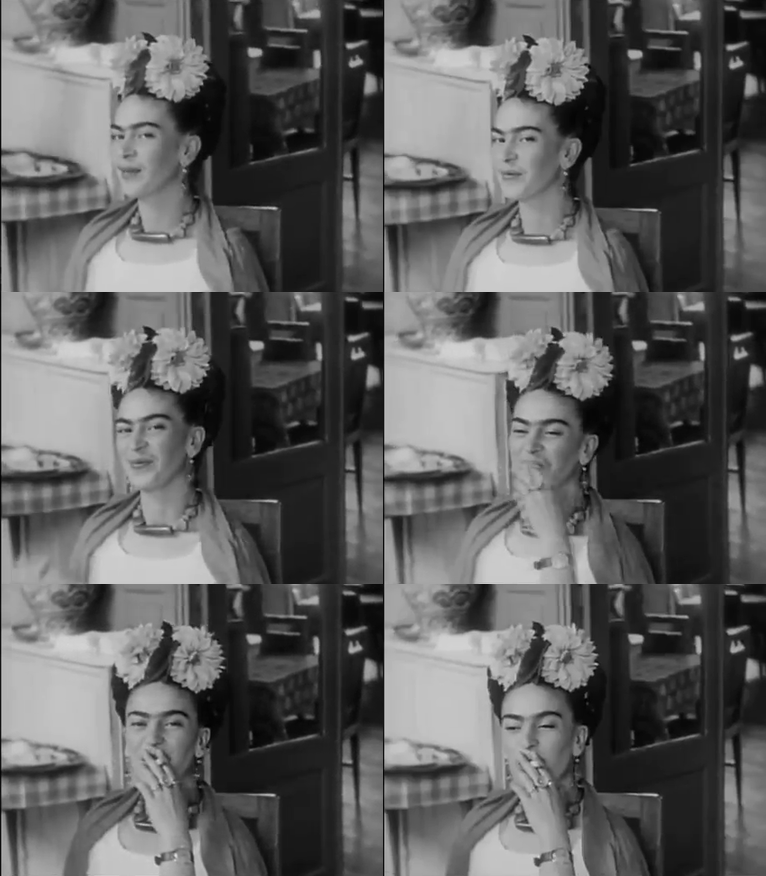
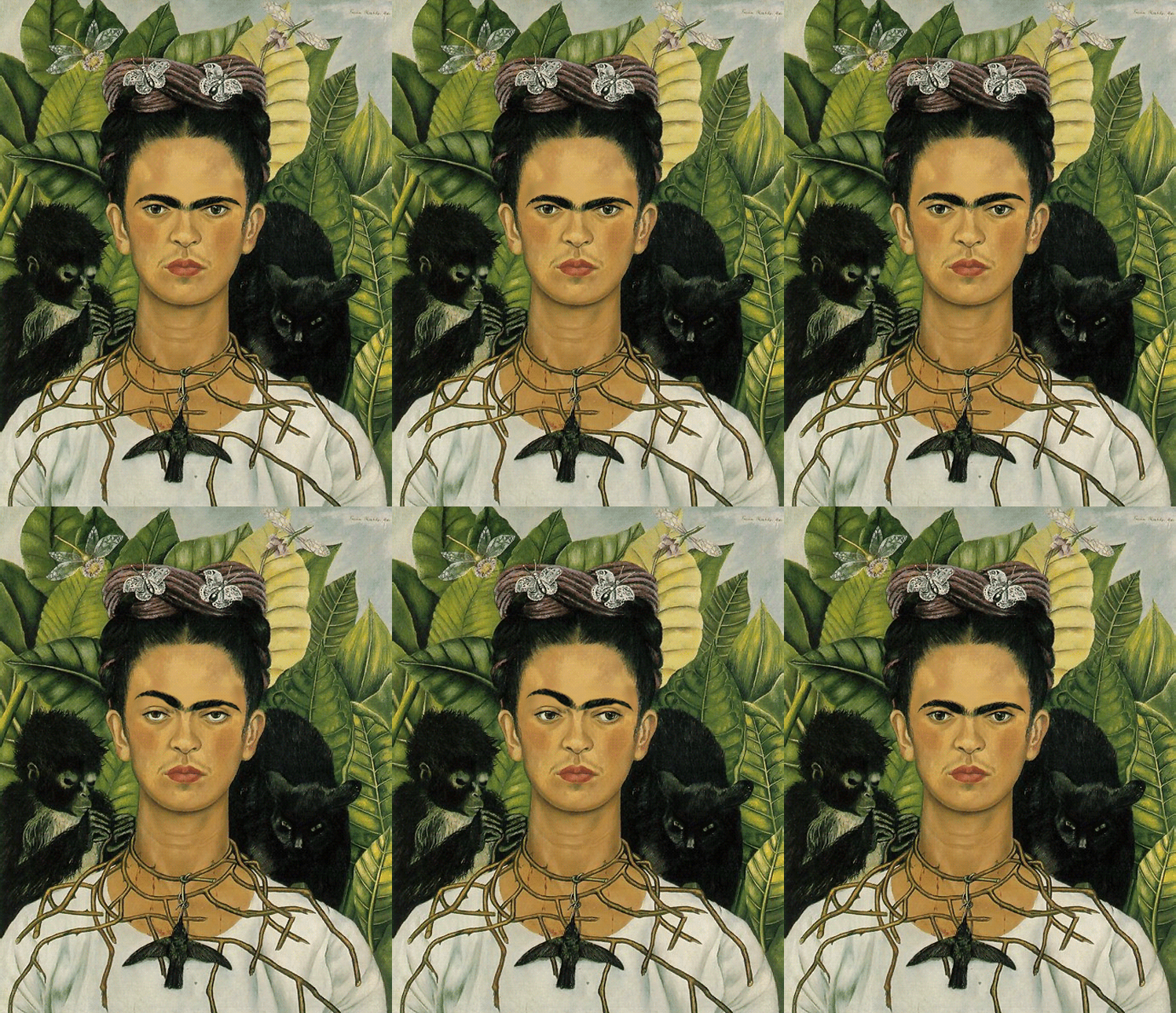
I saw an interesting movie on HBO about Mexican painter Frida Kahlo. She was in a trolley accident in Mexico City when she was fifteen, the injuries from which ravaged her body for as long as she lived. She was married to womanizing fellow-painter Diego Rivera, who was a Communist and gave her plenty of grief. The movie, Frida, from 2002, is as much about Mexican culture as it is about Frida Kahlo.


You Must Change Your Life ~ A Capsule Book Review by Allen Kopp

You Must Change Your Life ~ A Capsule Book Review by Allen Kopp
Rainer Maria Rilke was a German-speaking (Austrian) metaphysical poet (metaphysical meaning he wrote about abstract topics such as conscience and the meaning of existence) who lived from 1875 to 1926. He had a wife and a daughter named Ruth but was never very family-oriented, stating at one time that family was “annihilation to an artist.”
Rilke’s work included poems and lyrical prose. His work has been described by some critics as “mystical.” He wrote one novel, several volumes of poetry and several volumes of correspondence. He was a transitional figure between traditional and modernist writers. His work is still widely read and appreciated today, ninety-five years after his death.
Auguste Rodin, generally considered the founder of modern sculpture, lived from 1840 to 1917. His most notable sculptures clashed with predominant sculpture traditions (decorative or formulaic). His sculptures celebrated individual character and physicality. Among his most important and identifiable works are The Kiss and The Thinker. Rodin remains one of the few sculptors widely known outside the visual arts community.
What did Rilke, the poet, and Rodin, the sculptor, have in common? They came from different European countries; Rilke spoke German and Rodin French. They were thirty-five years apart in age. Rodin was large, outgoing and robust. Rilke was frail and nervous and spent a lot of his time being ill.
Early in his life, Rilke became an intense and ardent admirer of Rodin’s sculptures and of Rodin the man. Rilke saw Rodin as a kindred spirit, even though they were so different in a lot of ways. Rilke believed there was a connection between his own life and Rodin’s; their philosophy and approach to life were much the same; there was a lot to be learned from such a man. Rilke wanted to apply Rodin’s approach to sculpture to his own work of writing poetry. He went to live in Paris to be near the “master.” He learned to speak French, eventually giving up his native German language.
Rilke spent so much time in Rodin’s studio that Rodin eventually hired him as his private secretary. They became close companions, but after a while Rodin fired Rilke for what was, in fact, only a minor liberty that Rilke took without asking permission. Rilke was deeply offended and the two men didn’t speak for almost two years, although Rilke still deeply admired Rodin. Their rift was eventually healed and the two of them remained friends and associates for years, until Rodin died in 1917.
You Must Change Your Life, by Rachel Corbett, is a unique double biography of Rainer Marie Rilke and Auguste Rodin, but it’s also the story of the interesting times in which these two artists lived, a time of a great flowering in the arts, music and letters. Think Belle Epoque, the Eiffel Tower, the Moulin Rouge, Montmartre, and the Paris Exposition of 1900, in which Rodin had his own pavilion to display his sculptures. He was the only artist to be afforded such an honor.
Copyright © 2021 by Allen Kopp
Marrying Quintus Cavender
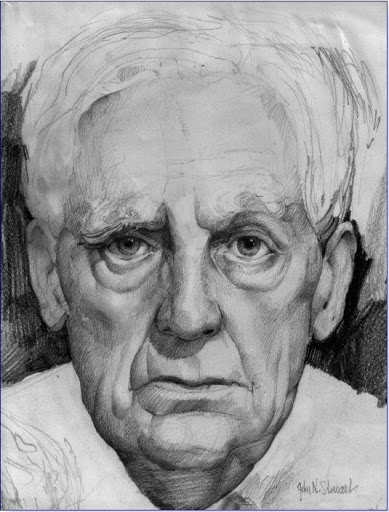
Marrying Quintus Cavender ~ A Short Story by Allen Kopp
Hulga Colley was afraid in the house alone at night. She heard voices and believed someone was trying to break in, even though she double-checked all the windows and doors before going to bed. And it wasn’t just the doors and windows; she was certain someone was hiding in the attic and would come down into her bedroom through the ceiling to get to her. They would spy on her and rob and rape her; they would tie her up and torture and impregnate her and then they would help themselves to whatever food was in the kitchen before leaving. As irrational as these fears seemed during the daylight hours, she seemed powerless to control them at night.
Part of the problem was the old house Hulga lived in. It was a ramshackle, tumbledown pile, to be sure, not conducive to happiness or cheer. There was a ghost or two still hanging on, she was certain. Sometimes she heard them laughing or taunting her. They liked to hide her glasses or the butter or the toilet paper. One day they would kill her in a horrible and unexpected way and her dead body would not be discovered for a long time.
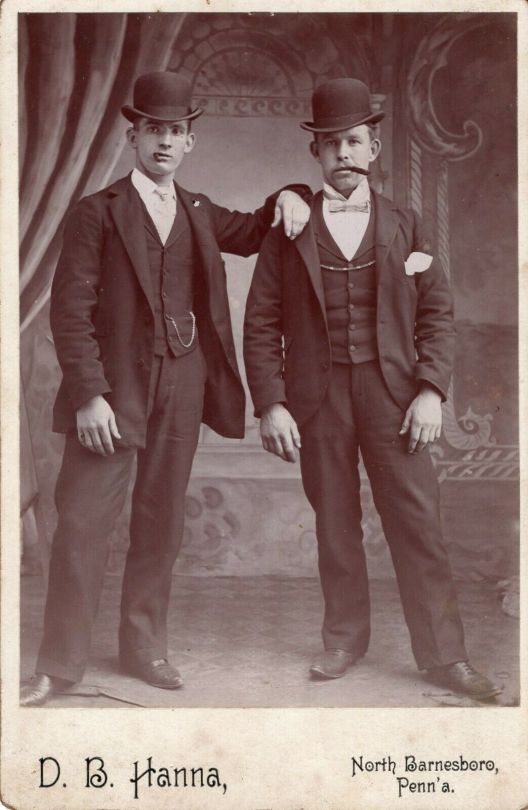
Hulga’s best friend was Irene Peebles. Hulga and Irene had known each other since high school. Irene was a widow who lived in a roomy, two-story house with her brother, a bachelor named Quintus Cavender. Quintus used to work as a foreman in a factory but had to stop working because of ill health and go on government disability. Irene kept house for him, washed his clothes and cooked his food. He was her only family, as she was his.
Irene was always ready to help a friend in need. When she heard that the furnace in Hulga’s house stopped working and needed expensive repairs, she invited Hulga to spend a few days in her guest room, until the furnace could be repaired. Hulga was all too happy to pack her suitcases and fire up the old Rambler and drive on over to Irene’s house in low gear.
Hulga loved the guest room. It was luxurious compared to what she was used to. It had its own bathroom, just like in a fine hotel. The flusher on the toilet always worked and the water came out of the faucets in a lusty gush rather than a brown trickle. The walls were all plumb and the doors hung precisely in their frames. There was no peeling paint, no shredded wallpaper and no furtive sounds coming from inside the walls. It was a little slice of heaven.
Best of all, she stopped hearing the voices that scared her so badly in the night. She stopped imagining that someone was trying to get to her to do bad things. She slept soundly all night long, from the time she went to bed until the twittering birds woke her up in the morning. Who would imagine that a change of scenery could make so much difference?
Every rose has its thorns, though, every bottle of wine its sediment in the bottom.
“I don’t think your brother likes having me here,” Hulga said to Irene one evening when they were washing the dishes after dinner.
“He’s an old crab sometimes, but he doesn’t mean anything by it,” Irene said. “He loves having you here. He said so.”
After a week, Hulga showed no signs of going home. At the dinner table, the only time the three of them were together in the same room, Quintus questioned Hulga bluntly about her plans.
“How much longer do you plan on being here?” he asked.
“I don’t know,” she said, brightly innocent.
“How is the furnace repair coming along?”
“Not so good,” Hulga said. “The man says I need to buy a new furnace. I told him I don’t have the money for that, so he’s sending away to Germany for the spare parts to fix the old one.”
“How long is that going to take?”
“He doesn’t know. He’ll get the parts as quick as he can.”
“You can’t rush these things,” Irene said.
“Do you know the Parklane Hotel over by the park?” he asked.
“No, I don’t believe I do,” Hulga said.
“I’d be happy to run you over there.”
“What are you saying?” Irene said. “Of course, I won’t have my dear friend staying in a hotel when she can stay here! Don’t be ridiculous!”
Alone in the guest room late at night after everybody had gone to bed, Hulga schemed. Irene—but especially Quintus—was expecting her to go back home soon. The truth was, though, that she didn’t want to go back home. She wanted to stay. For good. She didn’t want to leave the wonderful guest room with its luxurious bed, pristine walls, stain-free ceiling and movie-star bathroom. They were hers now (to her way of thinking) and woe to anybody who tried to make her part with them!
So, the question now was this: How might she sell her old house for what little it was worth and live permanently in Irene and Quintus’s house? She might get Irene and Quintus to sign the house over to her and then kill them, but that didn’t seem like a very practical plan; she had never killed anybody and she would be sure to get caught. No, the right way and the legal way to make it her house too was to marry Quintus! Of course, it was so obvious right from the beginning. She and Quintus would become husband and wife and then, according to the Napoleonic code of the state they resided in, the house would belong to her as much as to Quintus and Irene! So easy and so simple!
The key to the success of the plan was Irene. Once Irene saw the good sense and the practicality of it, the two of them could put the idea over to Quintus. He might take some convincing, but he was sure to come around in time.
When Hulga told Irene of her plan over a cup of tea and a slice of apple cake, Irene looked at her in astonishment.
“Are you making a joke?” she asked.
“No,” Hulga said. “Why would I joke about such a thing?”
“Quintus is a bachelor. He was born a bachelor. He will always be a bachelor. He will die a bachelor.”
“He’s not gay, is he?”
“If he is, he’s never told me.”
“Don’t you think you’d know it?”
“I don’t want to know it. It’s his own private business.”
“I see. So, you don’t think he’d marry me?”
“I don’t think he’d marry June Allyson.
“I could make him want to marry me.”
“How?”
“I could cook for him and give him back rubs. When he’s tired, he can put his feet in my lap and I’ll rub them for him. I’ll always encourage him and listen to his stories about his childhood and let him talk about himself endlessly without interrupting him. Men love to talk about themselves.”
“I don’t think even that would do it.”
“Well, I don’t have any money, but if I did I’d give it all to him.”
“Money won’t do it, either.”
“You’re not being very encouraging.”
“I’m just being realistic. I know him.”
“The three of us could live together in this beautiful house in happiness and contentment for as long as we live. We could take care of each other. We’d always be together and we’d never be lonely again.”
“I don’t think Quintus is lonely.”
“But you’re his sister. How could you know?”
“He’s always been a solitary person.”
“That’s because he doesn’t know any other kind of life. I could change all that.”
“So, you’re planning on not only marrying him, but also changing him?”
“Well, what’s wrong with that?”
“I don’t think men like women trying to change them.”
“You’ll see! I’m a very good cook and housekeeper. He’ll have no complaints on that score. And when it comes to sexual relations, I’ll be willing to do whatever makes him happy.”
“You’re able to think of him in a sexual way?”
“Of course! He’s an attractive man.”
“Quintus. Attractive?”
“I have to admit I’ve always had a little crush on him.”
“A crush? You have a crush on Quintus?”
“I know it’s difficult for you to believe, but it’s true. If he and I were together, I know I could make him happier than he’s ever been before in his life.”
“Why don’t you just ask him to marry you, then?”
“I’ve thought of that, but I don’t want to frighten him to death. I don’t want to overwhelm him. He needs time to think about it. I want you to smooth the way for me first. Give him a chance to get used to the idea.”
The next day Hulga was gone all afternoon. She drove downtown and had a long lunch at Woolworth’s lunch counter and then she did some shopping, which mostly amounted to looking at merchandise she couldn’t afford. When she was tired of shopping, it was too early to go back—she wanted to give Irene ample time to talk to Quintus—so she went to a matinee movie. It was a war movie that she didn’t like very much, but she cried at the end when everybody got killed.
Driving back in afternoon traffic, which always scared her a little, she felt a thrill in her abdominal muscles, radiating out to her arms and legs, because she was sure that Quintus had been thinking all along what she had been thinking and that, yes, he would love to marry her! He had been searching all his life for somebody like her and now the search was over! They were going to be so happy!
When she got back home (not her home, but Quintus and Irene’s), Quintus’s car wasn’t in the driveway or in the garage. She expected him to be there to greet her with open arms. Irene was in the house alone, playing Solitaire at the kitchen table.
“You’ve been gone all day,” Irene said.
“I did some shopping and saw a war movie,” Hulga said.
“Sit down and have a cup of tea.”
“I don’t want any tea. I want to know if you have any news for me.”
She pulled out the chair and sat across the table from Irene.
Irene said, “You should have known, deep down, that Quintus would never want to get married.”
“No? The answer is no?”
“I’m sorry, dear.”
Hulga turned away and started to cry. “I was hopeful,” she said. “I was so hopeful.”
“It just wasn’t a good idea from the beginning.”
“I thought it would be just the right thing for all of us.”
“I know, dear, but we don’t all think the same way.”
“Can I talk to him? Is he here?”
“He left. He won’t be back until next week.”
“Where did he go?”
“He went on a fishing trip.”
“When he comes back, if I could just talk to him myself…”
“It wouldn’t do any good, I’m afraid. His mind is made up.”
“I could at least apologize for being so silly and presumptuous.”
“I think we should just leave it as it is,” Irene said. She took a piece of paper out of the pocket of her sweater and pushed it across the table toward Hulga.
“What is this?” Hulga asked.
“It’s a check.”
“What is it for?”
“He wants you to have a new furnace. He’s going to pay for it.”
Hulga unfolded the check and dried her eyes. “Why, it’s a check for fifteen thousand dollars!”
“He wants you to have a new furnace.”
“Why, I can’t take this!”
“Of course, you can!”
“How could I ever repay him?”
“You don’t have to repay him. It’s a gift.”
Hulga was happy and sad at the same time. “Oh, I get it!” she said. “This money is to get me to go home! You don’t have to drop a ton of bricks on me! I know when I’m being asked to leave!”
Before Irene had a chance to say anything else, Hulga stood up from the table and went upstairs to the guest room. She had her bags by the front door and was ready to leave by four o’clock.
“You don’t have to go now,” Irene said. “Stay and have dinner.”
“I’m not hungry!”
Irene opened the door and Hulga squeezed through with her suitcases.
“I can help you carry those to the car,” Irene said.
“Don’t bother! I’m not helpless, you know.”
Hulga slammed the bags into the back seat of the car and drove off in a cloud of exhaust.
Back in her own cold, dark house, she cried for a couple of hours that her plan to marry Quintus didn’t work out the way she had hoped. After she cried herself out, she heated a can of pork and beans and ate them in front of her erratic television, whose picture came and went according to which way the wind was blowing.
At ten o’clock, she wanted to take a hot bath, but she knew she would just about freeze to death if she immersed herself in water, so she took two sleeping pills and got into bed and listened to the wind outside the window and the strange creaking sounds the house generated on its own.
She slept soundly for three or four hours and then awoke with a start, imagining someone calling her name. She got out of bed and walked around the bedroom in the dark, half-asleep, looking for something without knowing what it was. The cold drove her back to bed and soon she was lost in sleep again; that’s when the ghosts came out of the attic and the walls to do bad things to her. They tried to kiss her obscenely, their tongues hanging out of their mouths, but she fought them off valiantly and refused to let them have their lascivious way with her. One of them, she was sure, had the face of Quintus Cavender.
In running through the house from room to room trying to find an ax (or was it the phone she was looking for?), she fell twelve feet through the rotting floor into the basement. The fall broke both legs and other bones and she died within an hour. Her decaying corpse provided a feast for mice, silverfish, slugs, centipedes, roaches, spiders and a hungry rat or two, over many days to come.
Finally, somebody in the neighborhood asked the question that needed to be asked: Has anybody seen the woman that lives in that old house?
Copyright © 2021 by Allen Kopp

 Literary Fictions