

Author: allen0997


The Bridge of San Luis Rey ~ A Capsule Book Review

The Bridge of San Luis Rey
~ A Capsule Book Review by Allen Kopp ~
American author Thornton Wilder lived from 1897 to 1975. He wrote his most famous novel, The Bridge of San Luis Rey, in 1927, when he was thirty years old. The novel is set in Peru in 1714. A certain primitive bridge that had been constructed by the Incas a hundred years earlier falls into the ravine below, killing the five people who happen to be on it at the time. The question the novel poses is this: Was the collapse of the bridge just a matter of “chance,” or was there some “design” to the deaths of the five victims?
Those who die in the bridge collapse are male and female, young and old:
- The Marquesa de Montemayor is an aristocratic woman, all alone in the world except for a daughter who marries and moves to Spain. The mother and daughter do not get along well when they’re in the same location, so they communicate by letter, between Peru and Spain. Since it is the eighteenth century, a letter takes six months to reach its destination. She and her servant girl, Pepita, die in the bridge collapse.
- Pepita is a girl from the convent whom the Marquesa de Montemayor takes as a companion.
- Esteban has an identical twin named Manual. They have been educated in the convent and become scribes, writing letters for people for pay. Esteban and Manual are so close they develop a secret language between them. When Manuel falls in love with a famous actress in the theatre named Camila Perichole, the relationship of the twins is tested. Manuel meets a sad fate before Esteban dies in the bridge collapse.
- Uncle Pio is an old man who works for Camila Perichole, as a kind of all-purpose servant and father figure. Camila Perichole isn’t very kind to Uncle Pio, but he persuades her to let him take her only son, Jaime, to Lima with him to educate him.
- Jaime is with Uncle Pio on the bridge when it collapses. He is the fifth victim of the collapse.
After the bridge collapse, Brother Juniper spends years investigating the lives of the five victims to try to make sense of the collapse and to ascertain if there was any design in the accident or if it was all purely chance. Of course, in the end he realizes he has wasted his time and effort. It is a conundrum, a question without an answer.
The Bridge of San Luis Rey is one of the twentieth century masterpieces of American literature and ranks number 37 on The Modern Library List of the 100 Best Works of Fiction in English of the twentieth century.
Copyright © 2022 by Allen Kopp


A Short Life and a Merry One ~ A Short Story
A Short Life and a Merry One
~ A Short Story by Allen Kopp ~
I had my friend Calvin Pears. He was in my class at school. We were both twelve years old and had known each other since we were five. We spent a lot of time together. We were good friends because we were both shy and not popular in school.
Calvin and I always had a lot of things to talk about. We laughed a lot. We laughed about things that nobody else would have thought funny. We made fun of people behind their backs. Calvin was a good imitator. He imitated our teachers, whether they were male or female. He imitated the way they walked or talked or smoked. He wanted to have a show business career after he finished school.
It was a Friday evening in October. After being in school all week, it was time to get out of the house and have some fun. Calvin and I decided we’d rather go roller skating than see the western movie at the Bijou. I liked roller skating and could skate circles around Calvin. He usually said he was tired or his legs hurt and he wanted to call it a night.
We were a couple blocks from the roller rink when we saw two boys from high school standing on the street corner. I had seen them but didn’t know their names.
“Well, here’s a couple of little kids!” the taller of the two boys said when he saw us. “Does your mommy let you out after dark?”
“Hi, Lonnie!” Calvin said enthusiastically.
“How’s it going, little man?”
“I’m doing spectacularly well!” Calvin said.
“Well, glad to hear it! What’s your sister, Bimbo, up to these days?”
“Bimbo’s fine. She was rolling her hair up at the kitchen table when I left home.”
“She wasn’t going out on a date, was she?”
“No, I think she was just going to pop some popcorn and watch TV.”
“Well, you be sure and tell her old Lonnie said ‘hi’!”
“I will.”
Lonnie’s friend’s name was Brent. He had red hair and a sly look about him like a fox. When Calvin introduced me to Lonnie and Brent, they both shook my hand without irony. I was used to high school boys calling me names or making fun of me.
“Where you little hoodlums headed?” Lonnie asked.
“We’re going roller skating,” Calvin said.
“Well, that’s a kids’ thing, isn’t it?”
“I guess it is,” Calvin said. “It’s fun, though.”
“Yeah, I guess you would think it’s fun!”
“They are kids,” Brent said.
“Yeah, and we’re grown men, ain’t we?” Lonnie said. “Hah-hah-hah!”
“Let’s go!” Brent said. “I’m tired of just standin’ here!”
“Now, look here, you two little kids!” Lonnie said. “I’ve got my brother’s car parked over there. I don’t have my own car yet, but I will soon. We were just about to go for a little hell-raising adventure, if you two would care to join us.”
“What do we need them for?” Brent said.
“It’s just for a little while,” Lonnie said. “I need to find out some stuff about Bimbo.”
“Oh, you and your girls! You make me sick!”
“So, how about it?” Lonnie said. “Do you two little sixth graders want to go with us for a little ride?”
“Sure!” Calvin said.
“We’re not sixth graders,” I said. “We’re in the seventh.”
“Do you want to go?” Calvin asked me.
“I guess so. If you do.”
“Well, let’s get crackin’, then!” Lonnie said.
On the way to the car, Lonnie put his hand on Calvin’s shoulder and leaned down and talked in his ear. So, that’s what this is all about, I thought. Lonnie only pays any attention to Calvin and me at all because he’s interested in Calvin’s sister, Bimbo. I’d rather go roller skating.
Lonnie opened the door for Calvin and me to climb into the back seat. He and Brent got into the front seat and Lonnie started the engine and pulled away from the curb with a jerk.
“Where do you kids want to go?” Lonnie asked over his shoulder.
“Any place is fine with us,” Calvin said.
“Isn’t this fun?”
“I’ve never had so much fun in all my life!”
“Does Bimbo ever talk about me?” Lonnie asked. “I mean, like at the dinner table or anything?”
“I never pay any attention to anything Bimbo says,” Calvin said.
“Do you know if she’s seeing anybody right now?”
“Seeing anybody? I don’t know what that means.”
“Is she dating anybody regularly?”
“I don’t know. I don’t pay any attention.”
“Well, are there any guys that hang around?”
“I haven’t seen any. Except for the man who reads the gas meter.”
“If you see any, you be sure and let me know.”
“I will.”
We went through town, past the chemical plant, over the railroad tracks and the bridge, and in ten minutes we were out in the country. The road was dark, now, and hilly, with abrupt dips in the road and signs about watching for high water. There were sharp curves that couldn’t be seen until we were right up on them.
Lonnie angled around in the front seat so he could see Calvin’s face. “Does Bimbo go around much? With other girls, I mean?”
“Yeah, they have stupid slumber parties and they go to shows and things like that. They’re all hoping a talent scout from Hollywood will discover them and want to put them in the movies.”
“Yeah, I know what they’re like,” Lonnie said. “Completely unrealistic. I mean, how many people get discovered by talent scouts?”
“I never heard of anybody.”
“Watch this!” Lonnie said.
He got the speed up to sixty miles an hour (the limit was twenty-five) and then he turned off the headlights, and we found ourselves speeding blindly through absolute darkness. I held on to the door beside me and closed my eyes.
“Oh, my god!” Calvin gasped.
“Isn’t that the wildest thing you’ve ever seen!” Lonnie said.
“That’s a stupid trick, man!” Brent said. “What are you trying to do? Get us all killed?”
“If you don’t like it, man, I can always let you out here!”
“No thanks, man! It’s a long walk back to town! Just slow down a little.”
“Now it’s time for the roller coaster!” Lonnie said. “Don’t you kids in the back seat just love roller coasters?”
“Sure!” Calvin said.
He took a series of small hills at a high rate of speed, engine roaring. At times we were flying, all four tires off the road at the same time. We could hear the bottom of the car scraping the road in the low places.
“I’m glad this is not my car!” Brent said.
“Oh, my brother does this all the time!” Lonnie said. “He’s the one that told me about it!”
There was a sharp curve in the road and then another one. Lonnie had to fight the wheel to keep the car on the road.
“This is so much fun!” Lonnie said. “I’m going to turn the headlights off again!”
“Don’t be a jerk, man!” Brent said.
He didn’t turn the headlights off, but he went faster. There was a curve on a hill and then another curve going down the hill. There was a straightaway, then another hill.
“Isn’t this living!” Lonnie said. “It feels just like flying!”
He didn’t see the next sharp curve until it was too late and the car left the road. He struggled to regain control, but it was too late. The car glanced off a tree and kept going to the next tree—down a gulley, up the other side, taking out fence posts and small trees as it went. Finally it came to rest on a huge flat rock ten feet below the level of the road, smashed flat like a stepped-on bug.
I was thrown from the car. I didn’t know where the others were. I knew I was dead, but I also knew that I was aware of what was happening and that the same thing had happened to me before at an earlier time. All this went through my head in the briefest of flashes.
I was present at my funeral, and I don’t mean just as a dead body in a closed-up box at the front of the church. I saw the whole thing from up near the ceiling. My mother sat on the front row, a stunned look on her face. My father, divorced from my mother since I was four, sat on the other side of the room. Everybody from my seventh-grade class was there, even the ones who didn’t like me.
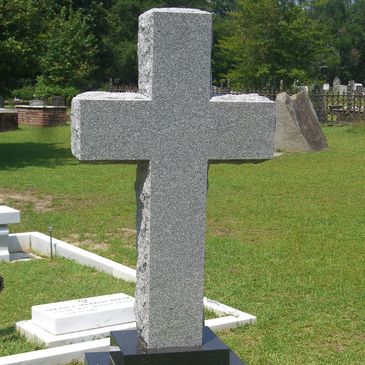
My mother, sparing no expense, had me buried in the Methodist cemetery beside my great-grandfather, who died long before I was born. I was dead, now, and buried and the people who had known me would soon forget about me.
The one person who remembered me years later was my father, though I had hardly known him in my short life. Since I was the only child he ever had, he became sentimental about me in his old age. When he was over ninety and aware that he was nearing the end, he had my body (what was left of it) disinterred from the grave where it had lain in for fifty years, flown halfway across the country, and cremated.
When he died a short time later, he had my ashes, along with his own, interred in a niche in a columbaria. Both our names were inscribed on the niche, along with the dates we were born and the dates we died. He had a long life and I had a short one. Father and Son. Together Forever.
Copyright © 2022 by Allen Kopp

 Literary Fictions