

Author: allen0997

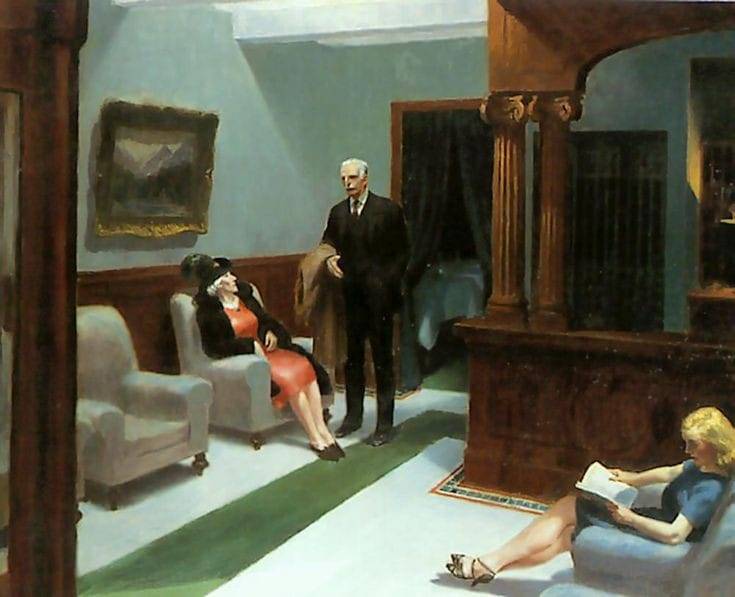
I Laughed, I Cried

I Laughed, I Cried
~ A Short Story by Allen Kopp ~
(This short story is a repost. It was published in State of Imagination magazine.)
*****
The world is ending, maybe in as little as two days. I feel strangely at peace; there’s some comfort in knowing that I—along with everybody else left in the world—will go out at the same time and in the same way. There’ll be no more bills to pay, no more car insurance, traffic jams, head colds, television commercials, doctor visits, taxes, corrupt politicians, backaches, family arguments, mosquito bites, or tough chicken. The list could go on and on, but I digress.
I’m in a huge shopping mall. People are going crazy, stealing everything they can carry. It’s an end-of-the-world dream come true. All that beautiful merchandise sitting there, waiting to be taken by whoever wants to take it. And who’s going to keep them from taking it? A large woman nearly knocks me down with an armful of blankets—she’s going to be warm for the end of the world. A man rushes by me for the door with a table lamp in one hand and a telescope in the other. And if you have a sensitive nature, don’t even bother looking toward the jewelry counter. Women are fighting each other over diamond necklaces, earrings and watches. There’s blood all over the floor. I see an old woman stuffing engagement rings into her bag while a couple of young girls, no more than twelve years old, tug at the bag to try get it away from her. The end of the world, I can see, brings out the very worst in people.
I’m in the book department. I see a couple of paperback books I want, but I don’t feel right just taking them without paying, even with the chaos that’s going on around me. I decide not to take them, even though I know I can, because I know I won’t have a chance to read them. Books don’t mean much now; nothing does.
On the other side of the book rack I’m facing, I see Clifford Devore. I went all the way through school with him and haven’t seen him for many years. If I had a best friend during school, it was Clifford. He’s wearing a purple-and-white striped knit cap, fastened underneath his chin. It’s the same knit cap he wore in eighth grade, a gift he received at a union Christmas party. It makes him look like a baby and I have the urge to laugh but I don’t.
“Hello, Clifford,” I say. I have to look up because he was always a few inches taller than me.
“Oh, hello, there,” he says, not smiling.
He doesn’t seem very happy to see me, but I know that the end of the world makes people behave in strange ways.
“I have to admit I’m a little afraid,” I say. “Will you stay with me?”
He just looks at me and doesn’t answer. I’m not sure if he heard what I said. A woman screaming behind me startles me and I turn around and look over my left shoulder. When I turn back to face Clifford, he’s gone, as if he disappeared into the air. I look around for him for a minute or so and then I realize it’s no use.
I see Buckwheat standing nearby, looking at me with his enormous eyes as if he knows me. He’s the little black child from Our Gang that I used to see on TV all the time when I was growing up. He’s wearing the little print dress he always wore that made me sometimes wonder if he was a boy or a girl (which I realized after seeing many times was really a long sweater that went down to his ankles, and not a dress) and curl papers in his hair. He doesn’t appear to be afraid, even though he’s surrounded by frenzied people yelling and stealing things. He has a serenity about him that tells me he’s taking the end of the world very well.
I’m ready to leave the mall to go home, so Buckwheat and I are on a moving conveyance that at first seems like an escalator and then is more like a roller coaster. We’re sitting in a comfortable seat—Buckwheat to my left—and we go up very high into the air. We pass over water down below and trains moving backwards. Now the roller coaster is more like a train and we’re on flat, regular ground. Somebody is standing at the front of the train car talking to the passengers about how the end of the world is coming, but nobody is paying any attention to what he’s saying. We’re past the time of having to listen to somebody we don’t want to listen to—another good thing about the end of the world.
The train stops and I get off, but I’m the only one who does; everybody else stays where they are. When I get to the door of the train and start to step down, I pause and look back over my shoulder at Buckwheat. He’s smiling and he gives me the high sign, which is back of hand to chin and waggling of the fingers. I give him the high sign back and get off the train.
When I get home, it’s my grandmother’s house that she lived in when I was in grade school. She’s sitting in front of the television, smoking Old Gold cigarettes and watching Liberace. He’s playing a grand piano with candelabra. The camera moves slowly around the piano, loving every inch of Liberace. He looks up as if he doesn’t know the camera is there and when he sees it he winks. Grandma thinks the wink is especially for her.
“Isn’t he just the cutest thing you ever saw,” she says.
I hear a thumping sound against the wall. “What’s that noise?” I ask.
“It’s those people that live in the other part of the house,” Grandma says.
“I didn’t know people lived there,” I say.
I go and open a door I never noticed before and, sure enough, there’s an entire other house there, with a kitchen, furniture, a dog, and a family I never saw before. I don’t know how they could have been so close all this time; seems like I would have heard or seen them before now. They seem to be having dinner; they look at me with annoyance. I apologize for bothering them and close the door as quickly as I can.
“What did I tell you?” Grandma says, not taking her eyes off Liberace.
My mother and sister are fighting, as usual; this time about my nephew, who has somehow mutated into an egg about two feet high. The egg that is my nephew is sitting on the couch. I try not to look at him because when I do I want to cry. The top of the egg is transparent and if you look down into the egg you can see my nephew’s face. He’s moving his mouth as if he’s trying to say something but no words come out; his tongue is flicking at the inside of the egg.
“He seems to want out of the egg,” I say. “Shouldn’t we try to crack it or something?”
“No,” my mother says. “All we can do is make him comfortable.”
“How do you make an egg comfortable?” I ask.
My sister stands up and I know now why my mother is so mad at her. She’s very cold and doesn’t seem to mind that her son has turned into an egg. In fact, I would say she’s glad he’s an egg.
“I’m leaving now,” she says.
My mother doesn’t say anything to my sister and doesn’t look at her as she goes out the front door. I’m thinking that my sister should never have been a mother in the first place, but I don’t say so.
As soon as my sister exits the scene, my great-great aunt, Fritzie Williams, enters. Aunt Fritzie is considerably more than a hundred years old. She’s wearing a long yellow coat made of knobby material, buttoned up to her neck; her fluffy white hair is arranged in a triangle on her head. She has two spinster daughters well into their eighties who are my third cousins.
“How are Esther and Josephine?” I ask.
“They’re spooked,” she says.
She launches into a long explanation of why she can’t take me home with her for the end of the world. While she’s talking, I visualize her house with its French doors between the dining room and living room, her big screened-in front porch, and her thick carpeting that’s the color of a Siamese kitten. When she’s finished talking, I just smile and nod my head. She turns and disappears into the wall. I know I won’t see her again.
I sit down on the couch beside the egg. He’s not making the slurping sounds with his tongue anymore so I figure he’s sleeping inside the shell. My mother also seems to be asleep, her chin on her breastbone. Grandma is still absorbed in Liberace on TV; I hear the strains of Warsaw Concerto. I look at the big grandfather clock that has been in the same place in the corner my entire life and I see that it’s stopped. I know without proof that all clocks, everyplace, all over the world, have stopped at the same time. Time doesn’t matter anymore.
The end comes that night while we are all in our beds. There’s no fireball from the sky; no tearing of the earth; no explosions or screaming. I don’t even wake up. I just have the feeling, in my sleep, of slipping out of one place and into another. When a thing really happens, it turns out to be so much different from what you imagined it would be. That’s one of the little tricks life plays on us.
I’m now in a place that must be the afterlife. The only people I’ve seen here are far off, men in dark suits and bowler hats and ladies in long ruffled dresses with parasols. If I try to approach them, they seem to get farther away.
I don’t feel hunger or thirst or any sensation of weariness. An ache I’ve had in a joint of my right foot for ten years is gone. I can lie on the ground and sleep—and the ground is more comfortable than any bed I’ve ever known—but I don’t have to sleep if I don’t want to.
Food is all around me in abundance, for the taking without effort, but eating is only for pleasure and not for sustaining life. I catch glimpses of beautiful animals—lions, peacocks, bears, elephants, giraffes—but when I look directly at them they hide from me and I don’t see them anymore.
Off in the distance on a hill I see a beautiful structure like a castle. With the sunlight shining on it just so, it appears to be made of gold. If I can just make my way over there, I’m sure I can find somebody who can tell me where I am, what it all means, and why I have the sensation of something lost that I must find again.
Copyright © 2022 by Allen Kopp
Bereavement Leave ~ A Short Story
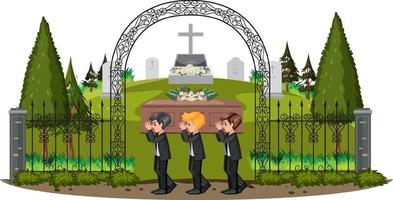
Bereavement Leave
~ A Short Story by Allen Kopp ~
(This short story is a repost. It has been published in The Dirty Pool literary magazine.)
*****
“I feel like firing somebody today,” Mr. P. said. “Who shall it be?”
“I don’t know,” Mr. C. said. “Go down the list and pick somebody.”
“Well, now, let me see,” Mr. P. said. “We have lots of suckers to choose from. Are there any standouts? Yes, there are many, many standouts. Anybody you’ve found especially offending lately?”
“Ed Boyce spends too much time in the men’s room,” Mr. C. said.
“He has a chronic bowel disorder,” Mr. P. said, “so I don’t think we could get him on that. He might counter with a lawsuit.”
“How about Frank Taplin? I’ve noticed him staring off into space a couple of times lately when he ought to be working.”
“He just lost his wife to an automobile accident. We gave him three days’ bereavement leave, but I think it takes longer than that to get over the accidental loss of a wife. Sometimes it’s a good idea to have a heart, or at least pretend we do.”
“Haw-haw-haw!” Mr. C. laughed. “You’re right, of course, as you usually are.”
“Always being right is the thing that got me where I am today!”
“Well, now, let me see,” Mr. C. said. “Who to fire? Who to fire? Betty Ballantine comes to mind. I don’t like the way she lounges around in the break room, showing her legs like a whore in a waterfront saloon.”
“Can’t fire Betty,” Mr. P. said. “She makes the best coffee in the office and her father is on the board at the country club. We don’t want to make him mad.”
“All right, then. How about Florence Smalls? She’s put on a lot of weight lately. That means she’s moving slow and isn’t working as efficiently as she might.”
“Lot of weight is right!” Mr. P. said. “She’s going to have a baby.”
“You don’t say! I just thought she had been eating too many donuts.”
“You can’t fire an expectant mother, no matter how much you may want to. Pick somebody else.”
“I’m starting to get one of my headaches,” Mr. C. said. “Finding somebody to fire is just too taxing! You pick somebody from the list. I’m going to take a little snooze before lunch.”
Mr. P. and Mr. C. believed in their heart of hearts that that they managed the company, but the truth was they did nothing. When there was any real work to be done, they put it off on one of their minions and sat back and took the credit (and the profits), if any was to be taken.
Mr. C. went into his private office and closed the door. Mr. P. continued studying the list for somebody to fire. When he grew weary and decided it was time to take a little break, he called one of his current girlfriends, one Pansy Ruff, on the telephone. Pansy was a failed actress and had spent some time behind bars for cashing other people’s checks.
Mr. P. and Pansy spoke for over an hour about sundry personal matters, including her two pet poodles and the lousy manicure she had from a manicurist who was obviously high on drugs. Then she told him about how she had been taxing her intellect looking at travel brochures, trying to decide on a vacation destination (the French Riviera, Rome, or both?) and grew pouty when he told her he didn’t know when he would be able to get away to join her.
“You don’t know how difficult it is to run a large corporation with thousands of employees,” Mr. P. said.
“Have one of your perky little secretaries take care of things while you’re gone,” Pansy said. She was referring, of course, to the dozens of short-skirted, large-breasted female employees of Mr. P.’s of whom she was jealous.
By lunchtime Mr. C.’s headache was better and Mr. P. had had enough of the office for one morning, so the two of them left to have a steak-lobster-martini lunch at the fanciest restaurant in town.
They made it a rule never to discuss office matters while lunching, so Mr. C. didn’t ask Mr. P. who, if anyone, he had chosen to fire. Mr. C. trusted Mr. P.’s judgment and he knew that Mr. P. would pick somebody who would be crushed at losing his job and would probably cry and throw things, maybe turn over some chairs, and would have to be removed by the security staff. It would certainly spice up the afternoon.
While they were lunching, though, they talked of personal matters. While Mr. C. had a dull, dowdy wife and three dreadful children in the suburbs, he lived vicariously through Mr. P.’s exploits with the opposite sex.
Despite Mr. P.’s penchant for the ladies, he had never married, believing it would be unfair to the female population to confine himself to just one. Also, he was afraid of how expensive a divorce would be for someone of his stature. No, he would continue to make himself available to large numbers of women and keep everybody—but mostly himself—happy.
After two hours of excellent food and drink—and after Mr. P. had ogled all the women in the place under the age of seventy—Mr. C. paid their tab and left.
Once back at the office, Mr. C. retired for a little siesta, while Mr. P. again sat down at his desk with the list. Now that his mind was clear after a good lunch and a spate of martinis, he would find the perfect candidate for termination.
In no more than five minutes, he settled on the name Paul Schiller. Paul Schiller had a German-sounding name and he wore hideous ties with birds on them and the American flag. He kept to himself and didn’t seem to enjoy the three-hour meetings that everyone was required to attend.
Mr. P. couldn’t wait to share the news with Mr. C. He buzzed Mr. C. to come into the main office and, when Mr. C. appeared looking sleepy-eyed, Mr. P. burst out with the news.
“Paul Schiller!” he said. “He’s the one we’ll fire.”
“Oh? Which one is he?” Mr. C. asked.
“He’s an accountant or something. He’s a mousy sort of a short man with a mustache. He didn’t get drunk and act like a pig at the office Christmas party the way everybody else did. In fact, he wasn’t even there.”
“I still don’t know who he is,” Mr. C. said.
“He always keeps his head down and doesn’t try to flirt with any of the ladies.”
“You’ll have to give a reason to fire him,” Mr. C. said.
“Well, word is he uses a lot of soap and paper towels when he’s washing his hands in the men’s room.”
“He must be really clean.”
“And that he has arrived for work five minutes late two times in the last year,” Mr. P. said.
“Well, that was the commuter strike and the snowstorm, I’m sure,” Mr. C. said. “Everybody was late those days!”
“Somebody else told me they saw him put a packet of sugar in his shirt pocket, obviously to take home with him. Now, when employees begin stealing sugar from the company, you know it’s time to take some action!”
“That is so true!” Mr. C. said.
“And, if all that weren’t enough, there’s simply something about the fellow I don’t like,” Mr. P. said. “I think it’s the way he carries himself when he walks. He seems just a little too sure of himself.”
“He’s cocky.”
“Yes, that’s it exactly!”
“Have your secretary show the man in, then, and we’ll get right to it!” Mr. C. said, rubbing his hands together.
Mr. P. and Mr. C. both greeted Paul Schiller with enthusiastic smiles, shaking his hand and patting his shoulder.
“Take a chair, please, sir,” Mr. P. said.
Paul Schiller sat in the large leather chair in front of Mr. P.’s desk, crossed his legs and folded his hands in his lap. Even now, Mr. P. thought, when he’s called into the boss’s office, this Paul Schiller person is entirely too sure of himself.
“What can I do for you gentlemen today?” Paul Schiller asked.
“You’ve been with the company now for about—what?—sixteen months?” Mr. P. said.
“That’s right,” Paul Schiller said.
“And how do you like it here?” Mr. C. said.
“Well, I have to say I’ve found it very enlightening,” Paul Schiller said.
“In what way?” Mr. C. asked.
“I’ve accomplished everything I’ve wanted to accomplish and more,” Paul Schiller said, smiling in a way that Mr. C. found disconcerting.
“That’s fine!” Mr. P. said. “The reason we asked you to come in and chat with us today is…”
“Well, I’m afraid whatever it is, it won’t matter much now,” Paul Schiller said. “I was just typing my letter of resignation when the secretary came and said you wanted to see me.”
“Oh? You’re leaving us?” Mr. C. asked.
“Yes. I didn’t think it would be necessary to give you the usual two weeks’ notice since my work here is finished,” Paul Schiller said, taking a folded letter out of his pocket and placing it on the desk in front of Mr. P.
“No, of course not!” Mr. P. said, not wanting to admit that he didn’t know what work Paul Schiller was talking about because he didn’t know what Paul Schiller’s job was.
“I’ve already removed my personal effects from my desk and said goodbye to my co-workers,” Paul Schiller said, “so I guess there’s nothing more to be said.”
He stood up and shook Mr. P.’s hand briskly and then Mr. C.’s hand and went out the door, leaving Mr. P. and Mr. C. at a loss for words.
“Well, I never!” Mr. C. said.
“That’s very disappointing!” Mr. P. said. “I thought we would at least see a temper tantrum from the fellow and have to call security.”
“You just never know about people!” Mr. C. said, shaking his head.
“Did you ever see anybody with more gall?” Mr. P. said. “He wouldn’t even let me fire him!”
“It takes all kinds,” Mr. C. said.
“I wasn’t even able to make him feel humiliated,” Mr. P. said, “and I’ve always been so good at that!”
“Well, pick somebody else from the list.”
“I’m afraid it’s going to have to wait until Monday. That fellow gave me a headache.”
“I’m going to take a little lie-down in my office,” Mr. C. said.
At four o’clock, with one hour left to go before time to go home, Mr. P. was relaxing in his big chair in front of the window, thinking about where he was going to have dinner and with whom, when he heard a commotion in the outer office. Before he had a chance to go and see what it was, three men, with several others behind them, burst into his office.
“Mr. Cornelius P.?” the tall man in front asked.
“Yes?” Mr. P. said, blusteringly. “And just who the hell might you be?”
“We have a warrant for your arrest, sir.”
“What?” Mr. P. said. “I believe there’s been some mistake!”
Mr. C., also hearing the commotion, emerged from his office.
“Are you Mr. Alonzo C.?” the tall man asked.
“Well, uh…” Mr. C. said, unable to go any farther.
“I’m afraid you’re both under arrest, sir!”
“What is this all about?” Mr. P. asked.
“You’ll have plenty of time to ask questions later,” the tall man said. “All we’re here to do is to take you in.”
“In where?” Mr. C. asked, his fingertips in his mouth.
Desperate for a stalling tactic, Mr. P. began grabbing articles and papers from his desk and throwing them in all directions. While the tall man and the others were trying to get out of the way of flying articles, Mr. P. grabbed Mr. C. by the arm and they ran out their private door into the hallway.
“What now?” Mr. C. said.
“I’m not going to jail!” Mr. P. said.
“Me, either!”
“To the roof, then!”
They ran up to the roof, both knowing in their hearts that it was all over for them; there was no way to get out of the trouble they were in. They had been embezzling money from the company for years and it had been so easy. They had no reason to believe they couldn’t go on in the same way forever.
Crying real tears, they joined hands, stepped to the edge, and leapt to their deaths, thirty-three stories to the street. They created an epic traffic jam in all directions and were the top story on the evening news.
While Mr. P. and Mr. C. were sitting in Satan’s outer office, waiting to be admitted to hell, Mr. P. said, “Maybe we shouldn’t have taken quite so much money. Maybe we could have treated people a little better. Showed some humility.”
“I think it’s too late for that now,” Mr. C. said.
“Maybe they’ll let us into heaven if we apologize and promise to do better,” Mr. P. said.
“I don’t think it’ll do any good. Once you’re in hell, I don’t think there’s any getting out.”
“Who would have ever guessed that Paul Schiller was a federal investigator?” Mr. P. said.
“There’s no way we could have known,” Mr. C. said.
“Who hired the fellow in the first place?”
“It was you!”
“No, it wasn’t me! I remember now! It was you!”
“What does it matter now?” Mr. C. said. “I do hope, though, that I get a well-appointed room with a private bath and a view.”
“As for me,” Mr. P. said, “I’m going to insist on a supervisory position.”
“Yes,” Mr. C. said. “We’ll let them know we’re not going to take this hell thing lying down. We can beat them at their own game.”
“Yes,” Mr. P. said. “We’re two very special and unique fellows. We’re not going to stand for any ill treatment here.”
Copyright © 2022 by Allen Kopp
Death Valley Superstars ~ A Capsule Book Review

Death Valley Superstars
~ A Capsule Book Review by Allen Kopp ~
I was looking for a book about Steve Cochran, who died at age forty-eight in 1965 on his yacht with an all-girl (and inexperienced) crew somewhere around Tahiti. The non-English speaking girls didn’t know how to navigate the yacht. They drifted until they were rescued, by which time Steve Cochran had been dead for ten days. His body was badly decomposed in the tropical heat; positive identification was difficult.
In case you’re wondering who Steve Cochran is, he was a movie actor in the forties and fifties who specialized in tough-guy roles. He was in a few good movies, such as White Heat and The Best Years of Our Lives, and plenty of bad ones. If you had ever seen Steve Cochran, you would remember him. He was dark, swarthy and dangerous-looking. He almost always wore a dark suit. He had thick black hair and smoldering eyes. If you messed with him, it would be at your own peril.
Nobody has ever written a book about Steve Cochran, though. The closest thing I found was a book of “essays” entitled Death Valley Superstars by a writer named Daryl “Duke” Haney. He is a writer and actor, born in 1963. The thing is, you have to read all the way to the end of Death Valley Superstars to get to the part about Steve Cochran. The essay about him is the last chapter in the book.
The subtitle of Death Valley Superstars is Occasional Fatal Adventures in Filmland. On the front cover we are told that it’s “A kaleidoscopic investigation of American pop culture and cinema; at turns dark, intimate and hilarious.” I was never once moved to hilarity in reading Death Valley Superstars. My interest was engaged by most of the essays in the book, even if I didn’t learn anything I didn’t already know before. If you don’t find Jim Morrison wildly fascinating, as so many people do, you can skip the chapter on the séance conducted in a Hollywood motel room where he was known to have stayed. If you just barely remember (or maybe not at all) a movie from the late 1960s called Zabriskie Point, starring a little-known actor named Mark Frechette, you can probably skip over the essay entitled “Pluto in the Twelfth House.” It’s the longest essay in the book and I thought it would never end. The most interesting thing about Mark Frechette (in my humble opinion) is that he robbed a bank to finance a proposed movie and died in prison bench-pressing weights at age twenty-seven.
The essay about actor Christopher Jones, “Catch Me,” is a glimpse at a would-be “star,” an “almost-star,” who quit acting just as he was solidifying his reputation as the “Next James Dean.” He was in a handful of movies, including Ryan’s Daughter and Wild in the Streets. He died at age seventy-two in 2014.
In between sections on Marilyn Monroe, which kicks off the book, and Steve Cochran, ending the book, are sections on:
- Hugh Hefner, a polarizing figure from the mid-twentieth century who revolutionized girlie magazine publishing while promoting the swinging lifestyle of a voraciously sexual bachelor.
- Errol Flynn’s son, Sean Flynn, born into show business, disappeared mysteriously in Vietnam in the 1960s.
- Lee Harvey Oswald, the “patsy” who (supposedly) assassinated President John Kennedy, was influenced by politically themed movies. (Does anybody really believe that Oswald acted alone? He was murdered to shut him up. What a story!)
- The author’s brief encounter as a child with Elizabeth Taylor at a public appearance event and then recounting her brief (and probably unhappy) marriage to a U.S. Senator from Virginia.
- William Desmond Taylor, a shadowy movie director murdered in Hollywood a hundred years ago. A whole list of suspects was assembled, but the murder has never been solved.
Books on Hollywood lore can make for interesting reading. Death Valley Superstars is not quite like any of the others. Don’t I have anything better to do that read books like this? Probably not, as I am a compulsive reader. Whenever I see a book online that interests me, I have to get my hands on it. Sometimes it’s a mistake but most of the time it turns out all right.
Copyright © 2022 by Allen Kopp

 Literary Fictions