

Author: allen0997

The Plague ~ A Capsule Book Review

The Plague
~ A Capsule Book Review by Allen Kopp ~
Oran is a large French port on the Algerian coast (Northern Africa) with a population of 200,000. The Plague by French writer Albert Camus is a novel (a fictional account) of a plague that inexplicably strikes Oran in the 1940s. It begins with an influx of dead and dying rats into the city that nobody understands. The rats are found everywhere, in the streets, on the stairs in buildings, in private homes.
Rats, of course, have fleas, and the fleas bite people and spread disease. The plague (pneumonic or bubonic) is an especially nasty disease that usually leads to agonizing death. As the death toll mounts every day, Oran has no choice but to close itself off from the rest of the world. Nobody can leave the town and nobody can enter. (How this is accomplished is not explained.)
The town is understandably thrown into a panic. How does a town quarantine the sick from the well? How can the sick be cared for with a limited number of people to help? How does the town keep people who might be infected from escaping the town? How can people in the town communicate with the outside world since letters might be infected with the disease? How long will the plague last? Is there any reason to hope the plague will go away as unexpectedly as it arrived? How much help can the town expect from the outside world? How can the people of the town be expected to carry on in the face of such awfulness?
Dr. Bernard Rieux is the main character in The Plague and the narrator of the story. His life every day is a living hell. He stands by helplessly as his friends and neighbors die of the disease. People look to him for answers he doesn’t have. He’s an unassuming man not given to heroics. His wife is ill (with something other than the plague) and in a sanitorium in another location.
The people of the town behave the way people usually do in a crisis. There are acts of bravery and sacrifice, while many people in the town try to enjoy themselves any way they can, because who knows who will be the next to go? One man plots his escape from the town to return to his lost love. Another man is happy, somehow, for the plague and thrives during the epidemic. Others go the fatalistic, religious route, believing the plague is a judgment from heaven. Some of the very good people die from the disease, while some of the bad people go unscathed. Isn’t that always the way?
The Plague, first published in 1947, is one of the most celebrated novels of the twentieth century. It’s a timeless and relevant story that might be set in any country in any time. It’s not always easy to read. Not for the faint of heart. After you’ve read it, you’ll feel like you’ve been to hell and back.
Copyright © 2022 by Allen Kopp


Fatherland ~ A Capsule Book Review
Fatherland
~ A Capsule Book Review by Allen Kopp ~
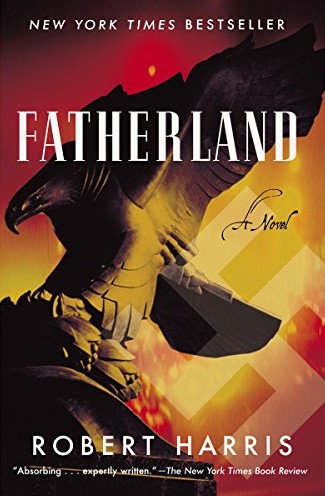
Imagine that Germany has won World War II. The Third Reich has absorbed many countries and extends all the way to the Caspian Sea. Berlin is the largest city in the world with ten million people, filled with magnificent monuments and buildings. German military might has never been equaled anywhere in the world. Adolf Hitler is 75 years old. He is revered as a God. His birthday is a national holiday called Reichstag. This is the “alternate history” premise of Fatherland, a novel by Robert Harris.
Xavier March is the principal character of Fatherland. He is a police inspector. Though a member of the “establishment,” he is a less-than-enthusiastic party man. He is always under suspicion. His ex-wife and his ten-year old son have both denounced him.
When the body of a high-ranking Nazi, Josef Buhler, is found on the banks of the Havre River outside Berlin, the plot is set in motion. As Xavier March investigates the death of Josef Buhler, he uncovers a conspiracy: Nazi Party officials are systematically being murdered. What do these men know, what did they see, and why are they being “removed?” Xavier March is the perfect police investigator to find out the answers because he isn’t a very good party member anyway. A truly loyal investigator would scuttle what he discovers and make sure the world never knows.
Divorced as he is, Xavier March needs a love interest. This is where Charlotte “Charlie” Maguire enters the scene. She is an American journalist. She and Xavier March make the romantic perfect pair to investigate the mystery. After many twists and turns, the two make a startling discovery: the Nazis who are being murdered all attended the Wannsee Conference in 1942, in which the “Final Solution” of the Jews was planned. The world doesn’t know about the Final Solution. It is a closely guarded secret that was never supposed to be made public.
Fatherland by Robert Harris is a (rather tedious at times) detective story (not exactly Agatha Christie, though). We have bad Nazis doing terrible things. (Are there ever any good Nazis?) We have an unseen Adolf Hitler, adored by his people. His birthday is a national holiday lasting several days. Our main character, Xavier March, is an individualist, and we know that individualism doesn’t go over very well with Nazis. Our message to him is this: Get out of Nazi Germany if you want to go on living.
The thing I liked best about Fatherland is the unreal quality of Nazi Germany having won the war and lording it over the whole world. In the alternative reality of Fatherland, Berlin is unequaled anywhere in the world for splendor and magnificence. In reading Fatherland, I was reminded of another alternate-history story, The Plot Against America, by Philip Roth, in which right-winger and Nazi appeaser Charles Lindberg becomes President of the United States in 1940, meaning that America never enters the war. After Lindbergh screws up the entire country, the lefties move in and save the day, however. This is truly alternate reality.
Copyright © 2022 by Allen Kopp

All the Spirits in the Place ~ A Short Story
All the Spirits in the Place
~ A Short Story by Allen Kopp ~
I always liked staying in a good hotel, even one that was falling apart and hadn’t seen a paying guest in fifty years. The Hotel Argyle was on the riverfront, in a cluster of other derelict buildings. It was twenty stories tall and could be seen from a long way off because the hotel name had been painted in huge letters on the side of the building. It stood as a symbol of urban blight. There’s nothing spirits love more than urban blight.
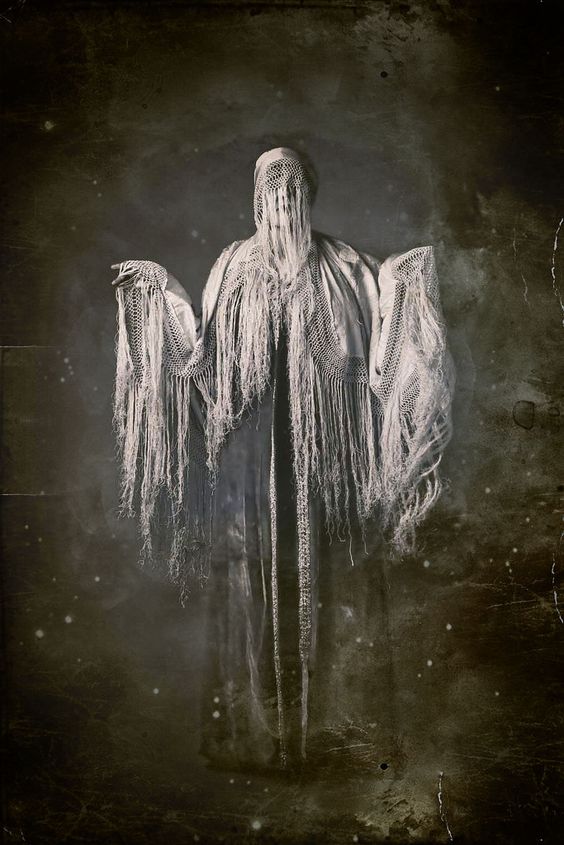
I walked into the lobby of the Argyle and was surprised to see a ghostly apparition at the registration desk. He seemed to be made of purple-and-green smoke. He gestured to the registration book and I knew what to do. It must have been somebody’s idea of a joke because spirits don’t use the names they had when they were alive. I made a little mark on the book. That seemed to satisfy him because he smiled his grotesque smile and gestured for me to take the stairs.
There were many vacancies at the Argyle. I would venture to guess that I could pick almost any room, on any floor, and it would be vacant. I went all the way to the top floor, the twentieth, and found the room I wanted at the end of the hall. It showed no signs of occupancy, so I took it as my own.
I was a tired old spook. I had traveled a long way to get here. I needed a rest, so I was happy for that reason that the hotel was quiet. The other spirits in residence were probably sleeping, since it was the middle of the day and the sun was shining brightly. If there’s anything a spirit hates, it’s bright sunlight.
I stared out the window at the skyline of the city for a while and then, hovering near the ceiling, I went into a trancelike state, which was as near as I ever came to sleeping. As long as I’m not disturbed, I can stay in this state for years at a time, but, of course, when you’re a spirit, a year means nothing. We think in terms of eternity. Time has no meaning.
In this trancelike state, I thought of—dreamed of—many things. I had been in the spirit world now for eighty years. I was only thirty-five when I crossed over. I had two wives when I was alive. I regret that I wasn’t very kind to either of them. I had a drinking problem. Luckily there were no children. I would have been a terrible father.
After my divorce, I had no job and no money, so I went back home to live with my mother. She and I never understood each other. We fought constantly. I should have known better, even if she didn’t. She nagged me about my drinking; she thought I could stop if I only tried. She wanted me to go to church with her the way I did as a child. She thought if I just read my Bible I’d be the kind of man God wanted me to be.
I got a part-time job driving a truck. I was never that keen on driving. I hated it. All my organs were pickled in alcohol. One hot July afternoon, my hundred-proof heart stopped when I was parked on a street downtown. I took off my shoes, put them side by side, laid down on the seat, and died. I knew I was dying and I didn’t care. I thought it was the best thing that could happen to me.
When I found myself in the spirit world, I was surprised there was any kind of existence after death. I thought it was punishment for all the bad things I had done. Everybody else went to heaven, I thought, but not me. That, of course, wasn’t true. The spirit world is teeming with spirits who never made it to heaven.
That night I met two of them. I was going out for a little city night life when I met them in the lobby of the hotel. I remembered them from before, a long time ago, in another incarnation. They went by the names Jocko and Howdy. They recognized me immediately and I them.
“We heard you were here,” Jocko said. “When did you get in?”
“A few days ago. I’ve been resting up in my room on the top floor.”
“We were just going out to do the town,” Howdy said. “Why don’t you join us for old time’s sake?”
“I’ll go if you promise not to scare me too much,” I said.
“Hah-hah-hah!”
On our way downtown, Jocko, Howdy and I walked side by side, as if we were living instead of dead. Howdy made a show of knocking people out of the way but, of course, they didn’t know he was there because he was invisible to them and, also, they were solid and he wasn’t. It’s only fair to mention that we met a few other spirits, but they were mostly in haughty groups and didn’t pay any attention to us. Howdy would get into a brawl with some of them if he could. He was a brawler and a mischief-maker.
On the way downtown, I asked Jocko and Howdy if the Hotel Argyle was a good place for a spook to live.
“It’s dead most of the time,” Jocko said.
“What do you mean?”
“Not much action there, man,” Howdy said.
“It seems perfect to me,” I said. “An abandoned hotel on the riverfront of a major city. Doesn’t it abound with ghosts?”
“Yeah, but ghosts are boring if they’re not doing anything,” Jocko said.
“So, you’re saying the ghosts in the hotel are all retired?”
“Well, something like that.”
“Don’t they like to scare little girls? Make them scream?”
“Yeah, but that’s the point. There aren’t any little girls to scare. What’s the fun of having the ability to scare people if there aren’t any people to scare?”
“You have to find out where the people are and scare them where they live,” I said.
“The people who own the hotel should turn it into a haunted-house attraction for Halloween,” Jocko said. “A lot of people would pay good money to tour a vintage hotel full of real ghosts instead of fake ones.”
“The people who own the hotel are dead,” Howdy said.
“The city owns the hotel,” Jocko said. “They’re just waiting for the right time to bring in the wrecking balls.”
“If they tear it down, they’re going to put a lot of ghosts out of a home,” I said.
“Not so many. Most of the spirits moved on a long time ago. Only losers stay at the Argyle now.”
“I was just beginning to like the atmosphere,” I said. “I had to leave my last home because a vengeful witch started throwing fireballs and burned the place down.”
“You have to watch out for those fireball-throwing witches!” Howdy said.
“The best way to deal with them is to cut off their heads and then burn their bodies,” Jocko said. “You have to be sure to remember to burn their bodies because some of them can go on living without a head.”
“Here, now!” Howdy said. “Let’s stop talking about witches and have some fun!”
Howdy was one of those spirits who engage in mayhem. He caused two cars to collide and then doubled over with laughter. When I asked him how he did it, he said it was a secret he learned during the war.
“What war was that?” I asked, but he didn’t answer me.
We couldn’t go to a bar or a restaurant and sit at a table the way other fellows do, so we walked all over downtown. We went into a movie theatre and watched part of the movie that was playing.
“I don’t like this movie!” Jocko said after a while. He then caused the projection equipment to break down when the movie was halfway through.
“That’s the way it’s done,” he said, laughing hysterically.
We entered a library and did some moaning and then we pulled down some shelves of books. Pretty tame stuff, but spirits have to make their own kind of fun.
Next we went to a dance hall where men buy tickets and use them to dance with weary-looking dames. It was a sorry-looking spectacle. I don’t know which was worse, the men or the women. What fools these mortals be.
We stood apart from the crowd against the wall. Knowing we were watching him, Howdy made as if to cut in on certain dancing couples, but he only brushed up against the ladies. They could feel it, of course, but not see it, so they were confused about what was happening to them. Some of them thought somebody was playing a trick on them. Maybe some of them knew it was spirits, but I doubt if any of them were smart enough to figure that out.
After the dance hall, we went to the oldest and biggest cemetery in the city. There were some really old corpses there—Civil War and before. The place needed some livening up. We built a small fire and joined hands and danced around it. We moaned and sang and chanted. Soon we had a couple of dozen spirits gathered around. They were delighted we were there. They were happy to join in any kind of foolishness. They danced and sang and were happy.
Howdy, always the smooth operator, found himself a lady spirit. She was wearing a long, flowing white dress and a tiara on her head. She looked like a queen. She made eyes at Howdy, he made eyes at her, and then they joined hands and went off together into the darkness.
“How will we find him when it’s time to go?” I said to Jocko.
“Don’t worry about Howdy. He’ll make short work of her.”
We made merry in the cemetery until the first traces of dawn began to light up the eastern sky. Then the spirits reluctantly began to drift back to wherever they came from. Surprised that the night had passed so quickly, Jocko, Howdy, and I went back to the Argyle. It had been a most enjoyable evening.
We returned often to the cemetery, where we made some good friends. The spirits there were always happy to see us. We brought the good times with us. I had never had so much fun before.
I began spending all my evenings with Jocko and Howdy, resting in my room at the Argyle during the daylight hours. We took in all the attractions that the city had to offer. We spooked people left and right, sometimes causing them to doubt their own sanity. Howdy was a spirit who enjoyed mayhem, such as causing traffic lights to malfunction or streets to flood for no reason. Because we were with him, Jocko and I were more often than not willing to go along with him.
In the winter we had some excitement at the humdrum Argyle. A team of paranormal investigators set up shop in the old ballroom on the tenth floor. They were investigating the existence of life after death. It gave us all a good laugh.
All the spirits in the hotel were excited at the prospect of proving, beyond a shadow of a doubt, that they had lived and that they went right on living after they died.
The psychic investigators (or ghost-hunters as they came to be called) had ultra-sensitive sound-recording equipment that would pick up the sound of a mouse breathing. They all left to go home at night but left their sound-recording equipment running to pick up every infinitesimal (ghostly) sound. In the mornings when they returned, they listened to what had been recorded during the night.
From the first night, all the spirits went to the ballroom with messages for the ghost-hunters. Some of them sang songs or recited poetry. Others laughed, moaned, or gave out with nonsense words of their own devising. Some of the spirits swore or made farting sounds. It was a lot of fun for everybody and a way to express our disdain for the living.
Regardless of what they said about the Argyle, I was beginning to like to and to think of it as home. And then something bad happened, and it wasn’t the wrecking balls, either. A fire started on one of the lower floors and soon spread to every floor. When all the spirits in the place realized what was happening, they all escaped out the windows. We all gathered outside and watched the place burn like a torch and collapse in on itself, all twenty stories. Whatever the cause of the fire, it saved the city a lot of trouble.
Jocko, Howdy and I bucked up the other spirits and urged them not to be downhearted. We had a plan.
We took them all, a procession of two hundred spirits or more (like a parade of the dead), to the cemetery, where we had been made to feel welcome before. All the spirits in the cemetery were delighted we had returned and had brought along lots of new friends. Everybody was welcome. The old cemetery had everything a spirit could want, and more.
Copyright © 2022 by Allen Kopp
 Literary Fictions