

Author: allen0997

The Literary Hatchet, Issue 34

The Literary Hatchet, Issue 34
The Literary Hatchet is an independent international journal devoted to emerging and established voices crafting provocative short fiction and thoughtful poetry and prose. Published three times a year! (Stefani Koorey, editor; Eugene Hosey, editor; Michael Brimbau, editor.)
Contributing writers and artists for Issue 34 include: Jaya Anitha Abraham, Scott J. Couturier, Holly Day, Barbara Demarco-Barrett, Michael Dittman, Holly Dunlea, Grim K. Deevil, David Greske, Nick Hart, Eugene Hosey, Gloria Keeley, Ngo Binh Anh Khoa, Allen Kopp, Aurora Lewis, Fabiyas MV, Rick McQuiston, Paul R. Ponossian, Jennifer Rood, Wayne Russell, Heather Sager, Rory Say, Wayne Scheer, Judith Skillman, Chris Slater, Bill Thomas, John Tustin, Zhihua Wang, Jim Windolf, Todd Zack, Lee Clark Zumpe.
Available for purchase for $12 a copy at this link on Amazon:
*****
(I have three short stories published in this issue of The Literary Hatchet: “Washed in the Blood,” “On the Third Day,” “Husband and Father, Deceased.”)
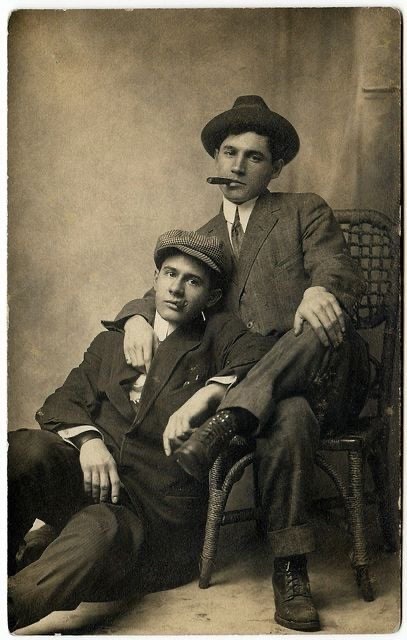

The People on the Ground ~ A Short Story

The People on the Ground
~ A Short Story by Allen Kopp ~
From where I sit at my desk I see Bram out the window cutting the grass. He wears loose-fitting khaki shorts with a belt and a white shirt tucked into the shorts. I mean, who cuts the grass wearing a white shirt?
With his old-fashioned haircut—sheered very close on the sides but longer on the top and combed straight back—he might have stepped out of another time and place; he might be the Arrow Collar Man from the 1930s. I wonder, as I have many times during the summer since he came to stay with us, if he knows how beautiful he is.
In a little while I hear the mower cut off and he comes into the house quietly. Then I hear the shower running upstairs in the bathroom. I imagine the spray of warm water over his chest and arms. I finish some work and when I go into the front room he is lying on the couch in his bathrobe with his eyes closed. The robe is open enough that I can see his underpants.
He opens his eyes when I come into the room. “What do you want for dinner, Tommy?” he asks.
“I don’t care. We might go out if you want.”
“I don’t think so. I’d rather stay home. I’m a little tired. I don’t feel like making myself presentable to go out.”
“Fine with me.”
“I can whip up something for us to eat. You know I can cook a meal from practically nothing.”
“Really, you don’t have to cook for me,” I say. “I’m not even very hungry.”
“I don’t mind.”
I’m sitting in the back yard doing trying to keep a mosquito from lighting on my arm, when he comes out and tells me dinner is on the table. I notice right away that he has changed into crisp black pants and a red shirt with stripes. I want to say something about how neat he always looks, but I hesitate before I can get the words out and the moment is gone.
He pours wine into my glass and cuts a huge chunk of steak in two that he has broiled and puts half of it on my plate. “I think you like it a little pink,” he says. “That’s the way I like it too.”
I take a bite of the meat and after I’ve swallowed it I see he is looking at me.
“I have some news,” he says, “to brighten your day.”
“What news is that?”
“I’ll be going away by the end of August. The job I wanted in California has come through for me. I start in two weeks.”
“Why would that brighten my day?”
“You must be sick and tired of having me around.”
“Not at all.” I want to say more, but the words become tangled in my brain before I can get them out.
“I’m sure mother will be glad to hear I’m finally getting somewhere with my life,” he says. “I was determined to be gone by my twenty-fifth birthday.”
“That’s in September, isn’t it?”
“Yeah, I’m not getting any younger.”
“You’re still young enough that you don’t need to worry about age.”
“I thought I’d be farther along by now.”
“Everybody thinks that. The thing is not to be so impatient. Just let it happen. It’ll happen when it’s supposed to happen.”
“You’re so wise,” he says.
“Not at all. And it’s not good news that you’ll be going away. Weemsy and I have loved having you here. You’ve been a lot of company for me when she’s away on her business trips.”
“I thought you liked being alone.”
“I do like being alone, but I also like having you here.”
“Why did you marry her?”
“What?”
“I said, why did you marry my mother?”
I was a little surprised by the question and didn’t know how to answer it.
“I don’t know,” I say. “I didn’t want to be alone, I guess.”
“That’s not a very good reason.”
“Why does anybody marry anybody?”
“Probably more for convenience than anything else.”
“Yes, I find it very convenient to be married to Weemsy. She minds her own business and doesn’t ask me a lot of questions.”
When we’re finished eating, he stands up. “I think I will go out for a little while this evening,” he says.
“All right.”
“You don’t mind being here all alone?”
“Of course not. I’ll wash the dishes for starters.”
“You’re a prince,” he says, and then he’s gone.
While I’m loading the dishes into the dishwasher, I can’t help but wonder where he might be going and who he might be going to see, which, of course, is absolutely none of my business. I’m only a stepfather. Not a parent at all.
I watch an old movie from the 1940s on TV and after that I take a shower and get into bed and begin reading a massive novel from the library that I don’t like very much and am thinking about giving up on.
About 11:30 I hear Bram’s car pull into the driveway and after that, little sounds, a creak on the stairs, that tell me I’m not alone in the house. I try, once again, to keep from wondering where he’s been for five hours. I turn off the light and look at the cracks in the ceiling that look like the coastline of South America.
When I married Bram’s mother eight years ago (my second marriage, her fourth), Bram was in high school and living with his father about three hundred miles away. He came to visit us a few times during summer and the holidays. He was a gangly teen boy with a spotty complexion. I hardly gave him a passing thought. I steered clear of him and I’m sure he felt the same way about me.
We didn’t see much of him during his college years. I would speak to him briefly on the phone when he called to talk to Weemsy. I gave him little thought, as always.
After college he got a job teaching high school English, but he gave it up after a couple of years and went into business with an acquaintance. The business failed and the partners went bankrupt. Bram could no longer afford the expensive apartment he was keeping. Weemsy, taking pity on him, told him he could move in with us until his finances improved. He was happy to have a comfortable place to stay, but he promised it would only be for the summer. He would be on his own again by Labor Day, he said.
I wasn’t enthusiastic about having Bram as a semi-permanent house guest, but he it turned out to be a good thing for me. He helped with the housework, cooking, laundry and grocery shopping. He was neat and orderly, quiet when I wanted him to be, and a good conversationalist. He had a surprising interest in politics, and he and I were of the same political stripe.
I began to think about him a lot, to think about how he and I might be together always. Maybe Weemsy will decide she likes Japan so much that she doesn’t ever want to leave it. Maybe Weemsy’s plane will go down over the ocean, with no trace ever found. Less tragic, maybe Weemsy will fall in love with a co-worker and decides she no longer wants to be married to me.
I’m thinking these thoughts and a hundred other things, wondering how I’m ever going to get to sleep, when the door to my room opens, soundlessly. When I look up, I see Bram standing in the doorway in his underwear.
“Anything wrong?” I ask.
“No,” he says.
He comes around to the other side of the bed, shucks out of his underwear, pulls back the covers and gets into bed beside me.
“What are you doing?” I asked.
“Mother will be home tomorrow. This is our last chance.”
“Last chance for what?”
“For what you’ve wanted to do all summer but didn’t.
“Oh. What makes you think…”
“The time for questions is past.”
He laughs, settling himself in the bed beside me.
“Don’t you have pajamas?” I ask.
“I do but I’d rather sleep naked.”
“Suit yourself. I don’t mind.”
My heart is pounding and I think I’m going to die. I don’t even know what I’m saying.
I reach for him and kiss him the way I always wanted to kiss him and run my hands along those taut muscles. Just to touch him in that way is more than I ever hoped for.
When I wake up in the morning in a tangle of bedclothes, he’s asleep in the bed beside me, inches away. I get out of bed without making a sound and go downstairs. I boil the water for tea and begin to make scrambled eggs and bacon for two. In a little while he comes downstairs in his bathrobe, his hair tousled, and sits down at the table.
“How are you feeling this morning?” I ask.
“I feel fine,” he says.
I put his mug of tea on the table in front of him with the teabag still in it. He smiles at me for an instant.
“Any regrets?” I ask.
“About what?”
“About what happened last night.”
“Of course not. Do you have any regrets?”
“No.”
“I was right, wasn’t I?” he says.
“You were right about many things.”
“What time does mother’s flight get in?”
“Ten after twelve.”
“That gives me plenty of time. I want to take a shower before we go.”
“You’re going with me to pick her up?”
“Of course.”
I’m pleased that he’s going with me. The airport always intimidates me a little. I can face it better if I have somebody with me.
“I’m thinking about telling Weemsy,” I said.
“Telling her what?”
“About what you and I did last night.”
“Suit yourself. It doesn’t make any difference to me.”
“It’s all right with you if I tell her?”
“Of course.”
“How do you think she’ll take it?”
“She won’t be surprised.”
“It is infidelity. You don’t think she’ll be concerned that I was unfaithful to her?”
“Let’s not play games, Tommy. We’re bigger than that. She doesn’t care what I do. She doesn’t care what you do.”
The traffic is all snarled up on the way to the airport, but we make it with time to spare. We make our way through the crowd to the appropriate gate.
Bram stands out in the crowd. He’s wearing a red shirt and black shorts. Red is definitely his color. I’m proud to be seen with him.
Weemsy greets me tepidly, even though she’s been gone for more than a month this time. I can tell she’s been drinking on the plane. Her words are slurred. I smell the alcohol when she leans in to give me a little peck on the cheek.
“How is everything at home?” she asks.
“Fine,” I say.
I keep my eyes on Bram as he walks in front of us to get Weemsy’s suitcase. I should be happy my wife has returned safely from an overseas trip, but all I can think about is how long it will be before I can be alone with him again.
Copyright © 2023 by Allen Kopp

Alexander Hamilton and the Battle of Yorktown ~ A Capsule Book Review
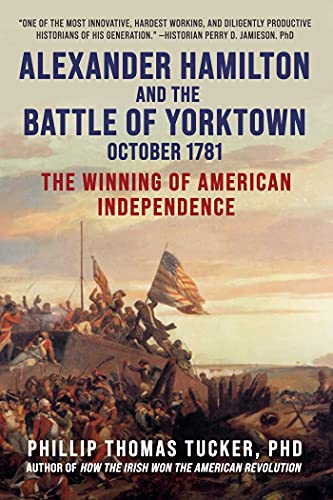
Alexander Hamilton and the Battle of Yorktown
~ A Capsule Book Review by Allen Kopp ~
Alexander Hamilton was born, impoverished and out of wedlock, on the island of St. Croix in the West Indies in 1755. Through his ambition, intelligence and industry, he immigrated to the United States and, still in his twenties, became a pivotal figure in the American struggle for independence from Great Britain.
Though he wasn’t a native-born American, there wasn’t anybody more eager to see this young country gain its independence than Alexander Hamilton. He rose through the ranks in George Washington’s army in an advisory capacity, eventually serving as Chief of Staff. Washington recognized his intelligence and his competence and always looked to him for strategic advice.
In the decisive Battle of Yorktown, Hamilton assumed more of a military role rather than an administrative one. He bravely led the surprise advance on General Cornwallis’ British army. American forces were able to gain the upper hand, thanks in part to the element of surprise, and routed the British army. It was the decisive battle of the war and meant that the United States would indeed gain its independence from the foreign invader.
Alexander Hamilton was influenced by Age of Enlightenment reasoning. While Washington and Jefferson saw slavery as a necessity to maintain a vibrant agrarian economy, Hamilton was an abolitionist. He believed that black soldiers who fought for the American cause should be given their freedom.
Alexander Hamilton and the Battle of Yorktown by Phillip Thomas Tucker is a minutely detailed account of the important and decisive Battle of Yorktown, which occurred in October 1781. Going into that battle, British forces under Lord Cornwallis had the upper hand in the Revolutionary War. Many people believed that, if Cornwallis could secure the country in the south, victory was easily within his grasp.
The British had built an impressive fort on the York River, made up of earthen fortifications called redoubts. The redoubts had wooden spikes sticking out of them, making them appear formidable and impenetrable. Unknown to the British inside the fortress, American soldiers were gathering in the dark to strike. It was an ingenious plan that caught the British off-guard and worked to perfection. Knowing no fear, Alexander Hamilton led one of the American regiments in the battle and emerged as one of the true heroes of the Revolutionary War. It was the moment of military success that Hamilton had longed for.
Copyright © 2023 by Allen Kopp
 Literary Fictions