Things I Must Have ~ A Short Story

Things I Must Have
~ A Short Story by Allen Kopp ~

Mrs. Koenig lay near death. Her four grown children had taken it upon themselves to gather in her house to discuss the disposition of her personal belongings.

“I want the Tiffany lamp,” Gwendolyn said.

“I already said the Tiffany lamp is mine!” Cupcake said.

“I’ve loved that lamp since I was a baby!”

“So? It’s still mine!”

“I want the dining room table and chairs,” Kent said. “Mother said I could have them.”

“Not so fast!” Gwendolyn said. “She said I could have them.”

“When did she say that?”

“I don’t know. Last Christmas, I think.”

“Well, she just told me last month that I could have them, so I guess that cancels you out.”

“I get the antique bed and dresser that were grandma’s,” Cupcake said. “Mother told me when I was fifteen that she wanted me to have them.”

“Well, isn’t that funny, Miss Cupcake!” Gwendolyn said. “I always thought I would get the antique bed and dresser.”

“I want the complete set of Dickens and the set of Britannica,” Kent said.

“You can have them!” Gwendolyn said. “Nobody cares about books.”

I care. The Dickens set is over a hundred years old. It’s valuable. I’m going to sell it and buy a car I’ve been wanting.”

“Why don’t you keep the Dickens books and pass them on to your children, chowderhead?”

“I don’t have any children. Remember?”

“Oh, that’s right! There’s something funny about you, isn’t there?”

“There’s something even funnier about you!”

“I get the set of antique china,” Cupcake said, “and I’m not going to sell it, either.”

“What are you going to do with it, dear?” Gwendolyn asked.

“I’m going to keep it. What do you think? I also want the china cabinet. What good is the china without the cabinet?”

“I want the rolltop desk,” Cupcake said. “Mother told me in high school when I made the honor roll that I could have it.”

“I think the rolltop desk should go to me!” Kent said.

“And why is that?” Cupcake asked.

“It’s a man’s desk. I’m a man. Remember?”

“Oh, yes, darling! I keep forgetting!”

“I get the piano,” Gwendolyn said. “I’m the only one who plays.”

“You haven’t played since you were twelve years old,” Kent said, “and you were horrible! You used to cry when mother made you practice, and then she cried when she heard how bad your playing was.”

“Well, maybe I’ll take it up again. I always feel there’s something lacking in my life. Maybe it’s the piano.”

“Maybe it’s good judgment and common sense!” Cupcake said.

“Oh, and I also get the antique vase from China,” Gwendolyn said. “Mother’s piano wouldn’t be mother’s piano without the vase sitting on it.”

“Wait a minute!” Cupcake said. “I’m the only one here who knows antiques. I think I should get the antique vase from China.”

“I want mother’s photo albums and the big picture in the attic of grandma and grandpa,” Kent said. “Also the hall tree, the antique sideboard, the library table and the brocade sofa.”

“You can have them!” Gwendolyn said. “I never liked them, anyway.”

“Excuse me!” Cupcake said. “The library table is mine! I’ve already decided where I’m going to put it!”

I’ll tell you where you can put it!” Kent said.

“I must have mother’s silver that she only used for special occasions,” Cupcake said. “The china is nothing without the silver to go with it.”

“I’m going to take the grandfather clock,” Kent said. “I’ve had my eye on it for  a long time. I’m sure mother wanted me to have it.”

“Then why didn’t she say so when she was in her right mind?”

“She did! She said it to me!”

“Don’t you think it’s funny she never told any of the rest of us?”

Dickie was the fourth and youngest child. He had not spoken until now. “You should hear yourselves!” he said. “Squabbling like a bunch of old hens over things! Mother’s not even dead yet! She may recover! She may come home from the hospital! She may live many more years!”

“We’re just trying to be prepared for when the time comes,” Kent said.

“These are the things we grew up with,” Gwendolyn said. “They’re meaningful to us. We want to make sure they end up in the right hands.”

“Meaning your hands,” Dickie said.

“Don’t you want to stake your claim to the things you want to keep” Cupcake asked. “To remember mother by?”

“No, I don’t want any of this stuff!”

“Why not?” Gwendolyn said.

“This stuff isn’t your stuff and it’s not my stuff!”

“What are you talking about?” Kent asked. “Of course it’s our stuff! Who else would it belong to?”

“I am in possession of some information that the rest of you sons-of-bitches don’t know!”

“What are you talking about?” Gwendolyn asked.

“Have you lost your mind?” Cupcake asked.

“No, I haven’t lost my mind. Mother’s lawyer called me yesterday. On the phone. Mother knew you would be fighting over her things, so she made a last-minute provision to her will. She wants everything in the house sold at auction and the money—all of it!—to go to charity.”

What?” Cupcake said.

“I don’t think mother would do that!” Gwendolyn said.

“I don’t believe it!” Kent said. “You’re making this up out of spite!”

“And that’s not all!” Dickie said. “She donated the house to the church.”

Church?” Cupcake said. “What church?”

“People from the church talked to her many times about giving them the house when she died. They finally broke her down and got her to sign an agreement.”

“This isn’t right!” Gwendolyn said. “Mother wasn’t right in the head! We can contest it! We can file a lawsuit! We can hold it up for years in the courts!”

“I don’t think so,” Dickie said. “It’s all legal and valid. If you don’t believe me, call mother’s lawyer. His name is Kenneth Ormiston.”

“Mother disinherited us!” Kent said, as if in a daze. “We don’t get anything!”

“Mother wouldn’t do that!” Cupcake said. “Not to me! I was always her favorite!”

“She won’t get away with this!” Gwendolyn said. “I’m going to have her buried face-down!”

“I don’t think it’ll make any difference to her,” Dickie said, “one way or another.”

“I don’t think I can walk!” Cupcake said, sobbing. “I need somebody to take me home!”

“Dickie, you bastard!” Gwendolyn said. “Look what you did to your sister! I’m going to kill you!”

Copyright © 2023 by Allen Kopp

Porch Light ~ A Short Story

Summer Evening by Edward Hopper

Porch Light  
~ A Short Story by Allen Kopp ~ 

(This short story has been published in Dew on the Kudzu: A Journal of Southern Writing.)

Nola was reading a book sitting beside an open window in the quiet house when she heard a soft knock on the door. It was eleven o’clock at night and she wasn’t wearing very much, but she went to the door and opened it anyway. She was feeling lonely, and a little blue, and was glad for the chance to talk to someone.

“Oh, hello,” she said, when she saw Roy standing there. She was neither happy nor unhappy to see him.

“Is she asleep?” he asked.

“For hours.”

“Why don’t you come out and talk to me. I’m not in any hurry to get home just yet.”

“Oh, all right. I suppose I could for a little while.”

She turned on the porch light and stepped out the door.

“What is that you’re wearing?” he asked. “Is that what you sleep in?”

“Of course not! After I took off my uniform, I put this on to try to keep cool. I wasn’t expecting any callers.”

“It looks like your brassiere and your step-ins. And pink, at that!”

“Well, you shouldn’t be looking. If your delicate sensibilities are offended, I’ll go put on a robe.”

“No, no, no, I don’t care what you have on. It’s your porch and you’re a grown-up person and it’s too hot to wear a robe.”

“It was over a hundred degrees today and will be again tomorrow.”

“It’s hotter here than the Sahara Desert in Africa. Did you know?”

“We’ve still got two more months of summer,” she said. “I don’t know if I’m going to last. I just wish it would rain.”

He looked up at the clear, star-laden sky and held out his hand. “Not a chance,” he said.  He sat on the porch railing and she leaned her backside against it beside him. A moth fluttered crazily around the light.

“Do you want a cigarette?” he asked.

“I’ll just take a puff or two off yours.”

He lit up and handed the burning cigarette to her.

“I might call Nellie in the morning,” she said, “and tell her I’m sick and can’t make it in. It won’t be too much of a lie.”

“I thought you were going to quit that job.”

“I can’t quit until I have another job lined up.”

“Let’s go to the park,” he said. “It’s too hot to go home. We can spend the night under the stars.”

“I can’t. I have to get up in about six hours and go to work.”

“I thought you were going to call in sick.”

“Well, I haven’t definitely made up my mind about that yet.”

“I’ll have you back in time to go to work.”

“I can’t stay awake all night and work all day.”

“You won’t sleep anyway in this heat.”

“I’m usually able to forget how hot it is and go to sleep about two o’clock.”

“And then you have to get up at five.”

“And the whole rotten routine starts over again. What a life.”

“Let’s run away together.”

She laughed and blew out a spluttering stream of smoke. “Where to?” she asked.

“I don’t know,” he said. “We could hop a freight train somewhere.”

“Oh, sure! That sounds worse than what I have now. As lousy as my life is, I at least have a bed to sleep in and food to eat.”

“If you ran away, you’d be free of everything here. You could start over somewhere else.”

“What would I do about my mother?”

“Send her a postcard.”

“You’re not being very practical.”

“That doesn’t get you anywhere.”

A police car drove past, slowed almost to a stop, sped away again.

“Must be looking for somebody,” she said.

“I didn’t do anything,” he said.

“Are you still looking for a job?”

“Off and on. I could maybe go to work for my uncle if I wanted to, but I don’t want to.”

“Doing what?”

“Moving furniture.”

“That doesn’t sound very promising.”

“I applied for a job as an usher at a movie theatre downtown, but I probably won’t get it.”

“Why not?”

“Don’t want it.”

She watched the fireflies in the yard and didn’t say anything for a while. “Can you see us going on this way for the next forty or fifty years?” she asked. “Until we die?”

“I don’t think about it much,” he said.

“I think there has to be more to life.”

“Maybe tomorrow will be better. That’s what you have to hope for.”

“I might get married to somebody someday,” she said, “but it’s going to have to be to somebody who can take me away from all this.”

“You wouldn’t marry me?” he asked. She knew he was joking.

“No,” she said. “You’re a bum like everybody else I know.”

“Well, that can always change. I haven’t completely given up on life.”

“Go to school and become a doctor or a lawyer,” she said. “Then I’ll consider marrying you.”

“I’m lacking some necessary ingredients for that,” he said. “Namely, money and ambition.”

“You can’t be a bum all your life.”

“Who says? My father has been a bum all his life and his father before him.”

“Maybe you’re better than that.”

“My mother wants me to join the army. She’s threatened to throw me out of the house if I don’t do something.”

“Maybe that’s what you need.”

“If she tosses me out, can I come and live with you?”

“No. You and my mother wouldn’t get along.”

“You see how it is? If it’s not my mother giving me grief, it’s somebody else’s.”

“What a life,” she said.

“Are you sure you won’t go to the park with me?”

“It’s late. I need to try to go to sleep so I can get up and go to work in the morning.”

“What a life,” he said. “My room is so hot I can’t stand to lie on the bed. I put a quilt on the floor underneath the window and sleep on it naked until the sun comes up.”

“I really should be going in now.”

“Will you go to the park with me tomorrow night?”

“Maybe.”

“Something good is going to happen tomorrow,” he said. “I just know it. Maybe a thunderstorm.”

“Good night,” she said.

“Good night.”

She knew he would leave whenever she told him to. He wouldn’t try to kiss her or touch her, the way some would. He never did that; he wasn’t that kind of a boy. She had known him so long. He was more like the brother she never had.

She went back inside and turned off the porch light, locked the door. She went to the door of her mother’s room to make sure she was still sleeping and then she walked through the dark house she knew so well and got into her bed. Far off in the distance she heard the low rumble of thunder that could only mean one thing. If she stayed awake long enough, she might see lightning and hear some rain on the roof.   

Copyright © 2023 by Allen Kopp 

The Only Red Dog in the Neighborhood

The Only Red Dog in the Neighborhood
~ A Short Story by Allen Kopp ~

(This short story has been published in The Literary Hatchet.)

Grandma lived in the city so we only saw her every two or three years. She had an apartment high up in a city building on a busy street and she worked as a manager in retail. She went to nightclubs and the theatre and wore a fox fur with little glass eyes. She had been married six times but, to be fair, she was married to one of her husbands twice, so she only had five husbands.

She always smoked a lot of Philip Morris cigarettes, ever since she was young. When she was in her sixties, she got what they call emphysema of the lungs. Doctors didn’t know yet if it would kill he or if she’d get over it. She kept on smoking, even though she might die from it, but she began using a six-inch cigarette holder. She believed the holder would make the cigarettes less harmful to her lungs.

Since her health was in decline and she was finished, finally, with marriage (she was separated from her most recent husband and then he conveniently died), she moved to the small town of Echo Bend where we lived, to be near, she said, her only living child (my mother) and her two grandchildren (my brother and me). She bought a house near the school, within convenient walking distance of our house. She never drove a car and was not about to learn in old age, so she walked every place she went or took taxi cabs.

A lot of Echo Bend people didn’t know what to make of grandma; some of them were openly contemptuous of her, refusing to speak to when they met her on the street. They knew about her many marriages and considered her a woman of loose morals. (Some of the ladies believed that grandma would make a play for their husbands if given the chance.)

When she dressed casually, she wore men’s dungarees and loose shirts from the army surplus store and sandals with socks. (Who wears sandals with socks?) At church on Sunday she always wore bright colors—orange, red, yellow, or green—while the other ladies wore their somber Puritan hues. She also favored hats with feathers or some other kind of ornamentation such as a bird in flight or realistic-looking cherries that hung down and jiggled when she moved her head. And, of course, there was always the cigarette holder, which most thought a Hollywood-inspired affectation. (Who does she think she is anyway? Gloria Swanson?)

Grandma wasn’t used to living alone and she didn’t like to cook, so two or three nights a week she walked up to our house for dinner. After the meal was over and the dishes washed and put away, mother and grandma would sit at the kitchen table and gab and smoke cigarettes. Then when grandma was ready to go, mother would take her home in the car.

One Saturday afternoon grandma arrived at our house for dinner crying, limping and gasping for breath.

“What happened?” we asked.

“A big red dog bit me.”

“That would be Red Rover,” I said. “He belongs to the Tutwilers.”

“Bit you where?” mother asked.

“On the leg.”

Grandma pulled up the leg of her dungarees. On her calf was the perfect imprint of a dog’s mouth. It was bleeding a little bit and beginning to swell.

“We have to get you to the doctor,” mother said.

“No, no, no! I’m not going to any doctor!” grandma whined.

“You might have rabies.”

Grandma groaned. Her face was pale and she looked as if she might faint.

“Did you do anything to provoke the dog?” mother asked.

“Of course not! I was just walking past. He came from around the house and barked at me a couple of times. I thought it was because he didn’t know me. I talked to him and I thought I could get him to calm down if he saw I wasn’t going to hurt him. He wagged his tail and when I reached down and started to pat him on the head, he snapped at my hand. I turned around and tried to get away from him and that’s when he bit me on the leg.”

“Did you run from him? That’s the worst thing you can do.”

“When a dog comes at you baring his teeth, wouldn’t you run from him?” grandma asked.

Mother got a pan of hot water and a washcloth and bathed the place on grandma’s leg the best she could and then poured alcohol over it. Grandma gripped the back of the couch and gritted her teeth as if a bullet was being pulled from her flesh.

“I’m going to call the doctor,” mother said.

Dr. Overman wasn’t in his office because it was Saturday, but she left a message and he called back a few minutes later. I was listening in on the extension.

“Keep her calm and cleanse the wound,” Dr. Overton said.

“I already did that,” mother said.

“Bring her down to my office first thing Monday morning. I’ll take a look at the bite and give her a tetanus shot, but the most important thing right now is to observe the dog and make sure it doesn’t show any signs of sickness. Do you know who the dog belongs to?”

“His name is Red Rover. He’s a neighborhood dog.”

“Good. Go to the owner and tell him what happened and that the dog must be absolutely confined for a few days and observed for any signs of sickness. If the owner won’t cooperate, called the sheriff.”

My dog?” Tut Tutwiler asked when mother told him. “Are you sure it was my dog?”

“It had to be Red Rover,” I said. “He’s the only red dog in the neighborhood.”

Who did he bite?”

“He bit my mother,” mother said. “She’s an old lady and she just moved here from the city. She isn’t very well anyway. This could be serious.”

“He never bit anybody before. What did she do to him?”

“She didn’t do anything. She was just walking past.”

“I’m sure he didn’t mean anything by it. He’s a gentle dog.”

“Yes, he’s so gentle that he goes around biting people!”

“All right, now. Calm down.”

“The doctor says to keep the dog confined for a few days and watch him to make sure he isn’t sick.”

“I guess I could do that.”

“It’s not a request, Mr. Tutwiler. I don’t think you want a lawsuit on your hands, do you?”

“Okay, I’ll keep him in the garage for a few days, but I’m not going to let you destroy him. He’s the kids’ pet. They love him.”

“Nobody said anything about destroying him, Mr. Tutwiler. Just keep him locked up and keep an eye on him for now.”

After dinner grandma had regained her composure, but she was still spooked and didn’t want to go home by herself, so mother installed her in the back bedroom to keep an eye on her and make sure she took care of herself.

Grandma’s leg swelled up and she laid in bed and complained about how much it hurt and how worried she was that she would never walk again.

“It’s not that bad,” mother said. “I think you’ll live.”

If grandma wanted a lemon, a root beer, a bowl of Rice Krispies, or some scrambled eggs, one of us had to take it to her. She enjoyed being waited on, I could tell, although she never let any of us forget how uncomfortable she was. She loved having somebody sit and listen to her talk as she recounted every dog-bite story from her long life, going all the way back to when she was three years old. (Most of the stories had a tragic ending.) When she wanted to smoke, one of us had to sit with her and breathe her smoke and make sure she snuffed the cigarette out in the ashtray and didn’t set the bed on fire.

On Monday morning mother got grandma out of bed early and took her downtown to see Dr. Overman. They were gone all morning and when they came back home, grandma wanted to go to “her” room to rest.

“What did the doctor say?” I asked.

“She has an erratic heartbeat.”

“What does that mean?”

“It means she isn’t well.”

“She’s a drama queen.”

“You should have known her mother.”

“What about the dog bite?”

“It’s not going to kill her. The doctor told us to keep it clean, as if we didn’t already know that. He gave her a shot.”

“I’ll bet she screamed, didn’t she?”

Five days after the dog bite, grandma said she felt well enough to go back home the next day. She thanked us for taking care of her but said it was time to go back home and take care of herself. She didn’t like leaving her piano, antiques, books, and glass figurines unattended. House breakers were probably already having a field day with her things.

“Thank goodness!” mother said.

We checked with Tut Tutwiler every day to see how Red Rover was getting along. He showed no signs of sickness, other than disgust at being locked up. He would escape with his life this time, but with a warning. If he bit anybody else, intentionally or not, it was probably going to be the end of him. Mr. Tutwiler promised to keep him in the yard or chained to a post if he didn’t behave himself.

On the morning of the day that grandma said she was going back home, she didn’t get up in time for breakfast. Mother went in about nine o’clock to wake her up. Grandma was, as the saying goes, “unresponsive.” Mother called an ambulance and they came and took grandma away to the hospital.

The doctor who examined grandma said she died of a heart attack in her sleep. She didn’t know anything. She didn’t feel anything. It was a blessing to go that way.

People in the neighborhood began saying that Red Rover killed grandma. They would drive by and see him in the yard and say, “That’s the killer dog that killed that old woman. They say he ripped her to shreds.” People will believe what they want to believe as long as it makes them happy.

Copyright © 2023 by Allen Kopp

Cotton ~ A Short Story

Cotton image 1
Cotton
~ A Short Story by Allen Kopp ~

(This short story has been published by Grey Wolf Publishing.)

There were five of us: me, a brother and three sisters. When we were old enough, we were taken away one after the other. I think my mother was a little glad to see us go. She was getting old and wanted only to lie in the sun and take uninterrupted naps.

As with all of us, a big one came to get me. He smelled funny but he handled me gently as he put me into a carrier and closed the door. I cried a little and pulled at the door with my paws but I knew it wouldn’t do any good—I wouldn’t be let out again until I was in my new home.

The car ride made me sleepy and made me forget that I had to pee. I had ridden in a car before on a couple of different occasions and I knew how it either makes you want to throw up or go to sleep. I curled up in a tight ball, making myself as small as I could, and went to sleep.

The car went a long, long way from where we started but finally it came to a stop. When the big one got out, I stood up in anticipation of being let out. I was knocked off my feet again, though, when he picked up the carrier, carried it inside the house and set it down on the floor. (A rough but short ride.) Right away I smelled all kinds of awful smells that I couldn’t identify. Was it the smell of another cat? My heart started to pound. All I wanted was to go back to the safety of my mother.

When the big one saw I didn’t want to come out of the carrier, he stuck his big hairless, pink face through the door and spoke the terrifying language that to me sounded like a dog barking. I crouched down and backed up into the corner.

He upended the carrier—I tried holding on but there was nothing to hold to—and I went sliding out against my will. I stood up and took a few steps, stretched my muscles and licked my paw. The big one seemed to approve.

Just then a different big one, a “she” big one, came out of nowhere and scared me with her loud voice. I started to run for cover but she scooped me up in her paws. Now, I have to tell you it’s an odd sensation to be picked up by something fifty times bigger than you are. I meowed a couple of times to let her know I didn’t like what she was doing to me, but she nuzzled me and started scratching my neck and ears. In spite of the bad smells that made me want to gag, I began to purr a little.

The “he” big one said something to the “she” and they both made that hideous sound that I was to recognize later as laughter. They gave me some water out of a little red bowl and, after I took a good long drink, I was directed to the litter box, which I was very glad to see. I scratched in the box for a few seconds, sat on my haunches, made a tiny wet spot and covered it up so it didn’t show.

The two big ones began playing with me, even though I was in no mood. They had a toy mouse on a string that they dangled in front of my face. I thought I smelled another cat on the toy mouse, but I obliged them anyway by batting at it with my paw and trying to catch it in my mouth. After they tired of this game, they gave me some food, which I was barely able to eat because it didn’t smell like anything I had ever eaten before. I guess I was still too nervous to eat, anyway.

Later on they left me alone to do some exploring on my own. I went into the next room and then the room after that. I jumped up on a big table but there was nothing there that interested me so I jumped down. I walked the length of the couch and the chairs in the living room, exploring every inch of the stinky fabric; I stuck my paws in the dirt of some plants and then I climbed on the TV. I crawled under the couch and came out with dust stuck in my whiskers that caused me to sneeze. I jumped onto the counter in the kitchen, nosed into the sink and took a couple of licks out of a greasy skillet on the stove.

I went into the bedroom, which seemed to be the best room of all. The bed was soft with enough room for a hundred cats like me. As good as the top of the bed was, the underside was even better. It was dark and there were some boxes and things that offered complete concealment from any dangers that might still be lurking. I was thinking it would make a good place for a nap when Finley jumped out at me and scared me so bad I jumped sideways and took a few spider-like steps backwards. The fur ruffled up on my back and my tail puffed out to three times its normal size.

Finley was a young cat, not quite full grown, but bigger than me. He was a long-haired cat that made him seem bigger than he was and he had a mane like a lion. He let out a couple of guttural meows that to me sounded like war cries and came running toward me. I wouldn’t let him get near me, though. I ran into the other room with him chasing me. I didn’t know if he was going to kill me or just hurt me.

I dove under the couch and I knew right away it was a smart move because Finley wouldn’t fit. He could see me, though, and he knew I wasn’t going anywhere and that if I came out he would know it. Every now and then he stuck his paw under to try to grab at me, but I pulled away out of his reach.

I discovered then that Finley was the most patient cat in the world. He stood guard there, stalking me, for the rest of the day and most of the night. I was hungry and thirsty and I had to use the litter box, but I was still too scared to come out. When the big one tried to coax me out by shining a flashlight in my face, I just ignored him.

Finally, in the morning, with the big one there to keep Finley at bay, I came out. The big one picked me up and set me on the table in the kitchen to feed me. He spooned some food into a bowl and I began eating. When Finley, who knew everything that was going on, realized I was eating what he thought of as his food, he tried to get at me to push me away. The big one had to make him stay away from me so I could eat. (That’s when I learned how to eat and growl threateningly at the same time.) After I ate, I had a good drink of water and a satisfying couple of minutes in the litter box, while the “she” big one held Finley in her arms and whispered in his ear.

After a couple of days I was feeling more courageous and I stood up to Finley, nose to nose. Instead of hurting me, as I thought he was going to do, he licked me on the face and head. I guess I discovered then that he wasn’t as bad as I thought he was going to be. What I thought at first was meanness and aggression was more curiosity and playfulness, with just a little jealousy thrown in.

I was still leery of him for a week or so, keeping my distance and hiding from him if I found him a little too overbearing, but I began to get used to him after a while. If he wants the spot on the couch that I’ve made warm, he makes no qualms about trying to take it from me, but more often than not I’m willing to move to another spot and let him have it.

Cold weather was coming on. Cats, as you probably know, are always looking for extra warmth. Finley makes a really good sleeping partner. Not only is he warm, but he has the softest fur I’ve ever felt. Sometimes we sleep head to head or cheek to cheek or crossed over each other like a couple of earthworms. Sometimes I use his belly for a pillow or he uses mine. When winter comes and the nights are really cold, the big one lets us sleep under the covers with him in the bed. There is no warmer place in the house.

Finley and I are now inseparable friends. We play together a lot and keep each other company. We’re a lot alike but also a lot different. Sometimes we eat together out of the same bowl, but most of the time he lets me eat first before he eats. If anybody ever knocks on the door, I run and hide but Finley stays right there to find out what is going on. When we both are taken to the doctor at the same time, I’m still scared but not as scared as I would be if Finley wasn’t with me. When I hiss, he hisses, like two parts of the same hissing machine.

Copyright © 2023 by Allen Kopp

His Butterfly ~ A Short Story

His Butterfly image
His Butterfly
~ A Short Story by Allen Kopp ~

(This short story has been published in The Literary Hatchet.)

Lieutenant Benjamin Franklin Pinkerton of the United States Navy had seen the world and known many woman. In 1902, while stationed in Nagasaki, Japan, he took unto himself a Japanese wife. She went by the name of Butterfly and she was young, innocent, untried and untested. Any objective observer might have said the marriage between Lieutenant Pinkerton and his Butterfly was a misalliance and doomed to failure.

Butterfly believed that Lieutenant Pinkerton would take her back to America with him—what American husband wouldn’t?—and she would be happy for the rest of her days. Happy knowing she was the perfect wife for her perfect American husband.

Forward-looking—and impelled by her desire to be a good American wife—Butterfly abandoned the religion of her Nipponese ancestors and converted to Christianity. Her family, never too keen on her marriage to an American in the first place, disowned and abandoned her. She believed, however, that her all-consuming love for Lieutenant Pinkerton would see her though any of life’s tribulations.

Lieutenant Pinkerton rented a pretty little house with sliding doors on a hillside in Nagasaki. He and Butterfly were blissfully happy for a few days, but then he was called away again. Such is the life of the navy man. Not to worry, though. He would be back and get his Butterfly and take her back to America with him and all would be well.

Butterfly waited. Days became weeks and weeks months. Every day she went to the top of the hill overlooking Nagasaki harbor and watched for signs of the return of Lieutenant Pinkerton’s ship, the U.S.S. Abraham Lincoln. Every day she returned to the little house with the sliding doors with a lump of disappointment in her throat, but with the belief and the hope that the next day would be the day of his glorious return.

Suzuki, Butterfly’s faithful servant, wanted to write to Lieutenant Pinkerton, wherever he was, and tell him he had a son, but Butterfly wouldn’t let her; she would tell him herself, whenever the time was right, and that would be upon his return to Nagasaki. (The boy, conceived on the wedding night, was called Sorrow. When his papa returned to claim him, he would be called Joy.)

Three years passed and still the U.S.S. Abraham Lincoln did not reappear in Nagasaki harbor. Butterfly could not help feeling sad at times, especially when the sun began to go down and she must face another long night alone, but she had much in life to make her happy—not the least of which was her son—and she was never without hope.

A wealthy man of Butterfly’s own race, having heard the talk of her erstwhile American husband, proposed marriage to her, but she turned him down. She already had a husband, she said, and she didn’t want another.

And then the day came, as Butterfly knew it would!

The American consul sent word that Lieutenant Pinkerton was back in Nagasaki! Her joy knew no limits. When she thought about the moment when she would lay eyes on him again, she felt that she would not be able to continue breathing. Her chest would not contain her wildly beating heart. She would die of happiness.

With Suzuki’s help and the help of her tiny son, Butterfly gathered flowers to adorn the house. The three of them put flowers everywhere, making the indoors seem like an extension of the garden.

Finally, after these hurried preparations, the moment arrived. Pinkerton was on his way up the hill. When she saw him far away out the window, she drew in her breath and covered her mouth with her hand. She asked the Christian God to give her strength.

When the knock came, Suzuki opened the door. There stood Lieutenant Pinkerton, much the same as the last time she saw him, his face a little thinner and graying at the temples.

He took a few steps inside the door, smiling and uncertain. Butterfly wanted to run to him, but that was not the way of her people. As she watched him remove his hat and walk nearer, her face clouded when she saw he was not alone. Coming through the door behind him was a stylish American lady in a beautiful white dress. In about three beats of her heart, Butterfly understood all.

“Everything looks lovely,” Lieutenant Pinkerton said, seeing the flowers. “This is the most beautiful place on earth.”

He was going to take Butterfly’s hands in his, but she bowed in front of him.

“I am honored,” she said.

“I want you to meet someone,” Lieutenant Pinkerton said. “This is Laura. My wife.”

The stylish American lady in the white dress stepped forward smiling. “How do you do?” she said. “I’m so happy to meet you!”

“I am honored,” Butterfly said, bowing again.

“I hope you have been well,” Lieutenant Pinkerton said formally.

“Yes. Well,” Butterfly said.

“I wasn’t sure if you would remember me after all this time.”

Butterfly turned away and Suzuki helped her out of the room.

When Suzuki came back a few minutes later, alone, Lieutenant Pinkerton was waiting.

“Butterfly asks to be excused at this time,” Suzuki said. “She extends every apology.”

“I’ve come for the child,” Lieutenant Pinkerton said.

“Child?”

“Yes, my son. I mean to take him back to America and give him the upbringing he deserves.”

“You don’t think he belongs with his mother?”

“He will have a mother. My wife.”

“Butterfly begs your forgiveness. She asks that you return tomorrow at this time, when she will be better able to converse with you.”

“Well, all right,” Lieutenant Pinkerton said. “I guess I can do that. But tell her I won’t tolerate any monkey business of any kind from her or any of her family. I’ll come back tomorrow at the same time to collect the child. Tell her to say her goodbyes and have his suitcase all packed. I won’t brook any further delay.”

After Lieutenant Pinkerton left, Suzuki went to the room at the back of the house where Butterfly was. She was standing at the window looking out at the trees.

“Japanese wife is a not real wife for American husband,” Butterfly said.

“He will come back tomorrow at the same time to take the boy,” Suzuki said.

“He will not take my son from me.”

“What will you do?”

“I know I can’t beat him in a court of law, so I will beat him another way.”

“What way?”

“After we dine, you will take the boy into the hills to the home of your mother and father. Don’t tell anybody where you are going. Stay there until I send word that it is safe to come back.”

“My family will be happy for me to pay visit with delightful boy,” Suzuki said.

During the unhurried meal that they took on the terrace, Butterfly informed the boy that he was going away for a few days to the country with Suzuki.

“Aren’t you coming, too?” he asked.

“Not this time,” Butterfly said. “I have to stay home and tend the flowers.”

“After we get to the river, we’ll take the boat the rest of the way,” Suzuki said. “You’ll like the boat.”

Suzuki put the things she would need and the things the boy would need into a bag, changed her shoes, and she was ready to go. Butterfly walked to the road with them, carrying the boy. At the point of departure, Butterfly handed him over to Suzuki.

Goodbye, goodbye, goodbye!” Butterfly said. She kissed the boy on his forehead and on each cheek and he began to cry.

“Soon you will be back home again,” she said. “You will not be lonely.”

“Don’t worry about us,” Suzuki said. “There is a full moon tonight and we have friends all along the way.”

When Lieutenant Pinkerton returned the next day with his American wife and the American consul, Sharpless, Butterfly greeted them graciously, as she would any old friend. She served them tea and poppyseed cakes and asked them questions about America and about their sea voyage. After an hour or so of small talk, Lieutenant Pinkerton, who had been squirming impatiently the whole time, asked where his son was.

Butterfly looked at him and smiled her sweet smile. “He is not here,” she said.

Not here?” Lieutenant Pinkerton said.  “Didn’t you hear what I said yesterday? I mean to take the boy with me and our boat leaves at four o’clock.”

“He is not here,” Butterfly said.

“Where is he?”

“He is not here and the time of his return has not been decided.”

Lieutenant Pinkerton stood up abruptly and glared at Butterfly. “I don’t know what you are playing at here, but whatever it is it’s not going to work. If you think you can defy me, you will feel the full force of American jurisprudence.”

“Have another cup of tea,” Butterfly said.

Lieutenant Pinkerton was not accustomed to having his desires thwarted, as Butterfly well knew. He would threaten or intimidate as he saw fit. She would stand against him like a small boat in a big storm. The Christian God stood beside her.

“If you stand in the way of my taking my son with me today,” he said. “I want you to know I will be back with a team of American lawyers trained in Japanese law. We Americans are very determined in all things.”

“I hope you have a most safe and pleasant journey back to America. I will tell my son upon his return that his father paid us a visit and inquired after his health.”

Sharpless and Lieutenant Pinkerton’s wife gave Butterfly sympathetic smiles. The wife approached Butterfly and wanted to shake her hand but Butterfly retreated to the far side of the room with downcast eyes.

Butterfly expected more raging from Lieutenant Pinkerton that day or the next, but she heard nothing. When she went to the top of the hill overlooking Nagasaki harbor, she was relieved to see the American ship had departed.

Suzuki and the boy returned home after four days in the country and it was a most joyous reunion. The boy had many stories to relate to his mother about boats on the river and about the farm animals he had seen.

He grew up to be a decent young man with the beauty of two races. Butterfly gave him the name Benjamin Pink, so he would never forget his American father. He got a job at the American hospital as an orderly and hoped to train as a doctor’s assistant. He married a comely Nagasaki girl and within five years they had three children, two boys and a girl. No matter how large the family became, he would always insist that Butterfly live with them. He couldn’t envision them ever living apart.

Butterfly heard many years later that Lieutenant Pinkerton was dead. She wrote his American wife, whose kind face she remembered, a letter of condolence. A month later she received a reply, telling her that Lieutenant Pinkerton had never stopped thinking about his little Japanese Butterfly and the little son he never laid eyes on. He hoped they might all of them meet together in heaven one day so he could beg their forgiveness.

After reading the letter, Butterfly wiped away her tears, the last she would ever shed for Lieutenant Pinkerton, and put the letter in a drawer where it wouldn’t be disturbed. Someday, when the time was right, she would get the letter out again and, as they all sat around the table, she would tell them what a fine American man he was and how lucky she was to have known him.

Copyright © 2023 by Allen Kopp

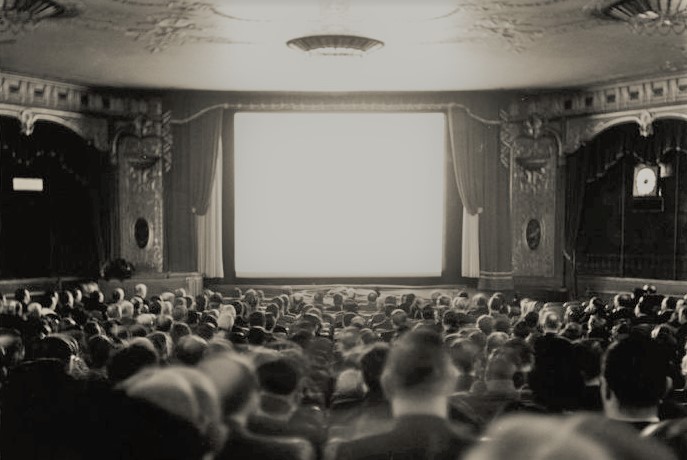
The Picture Is About to Begin ~ A Short Story

 The Picture is About to Begin image

The Picture is About to Begin
~ A Short Story by Allen Kopp ~

Mama came home from her job at Woolworth’s, flung off her saleslady smock and fluffed up her hair in the mirror.

“What a day!” she said. “I caught a couple of shoplifters. They were hiding makeup inside their coats. I didn’t waste any time. I told Mr. Gottschalk and he called security. They were just high school girls. I felt kind of sorry for them. You should have seen their faces when security nabbed them. One of them cried as if her heart would break. Serves her right, is what I say! You can’t go around taking what doesn’t belong to you!”

“What’s for supper?” Franklin asked. He was tired out from his day and was lying on the couch reading a magazine.

“You’ll have to make do with a sandwich or with whatever you can lay your hands on. I’ve got lodge tonight.”

“Can’t you tell those lodge ladies to stuff it?”

“You know I’d never do that. They’re my friends.”

“I’d like some fried chicken.”

“Well, cook it up yourself, then.”

“I don’t know how.”

“Maybe it’s time you learned.”

“I’ll just open up a can of beans or something.”

“Where’s Peachy?”

“She’s upstairs getting dolled up. She’s going out on a date.”

“Who with?”

“I don’t know. I hope it’s Jack the Ripper.”

“What time is this date supposed to arrive?”

“I don’t know. If he knows what’s good for him, he won’t arrive at all.”

Mama went upstairs and when she came back down, Franklin was pretending to be asleep so he wouldn’t have to talk to her anymore. She left a few minutes later and Franklin got up and went into the kitchen to find something to eat for supper. He opened a can of beets and began eating them out of the can with a fork.

He took the can back into the living room and set it on the coffee table and began thumbing through the newspaper to see all the latest happenings when someone knocked on the front door. That would be Peachy’s date for the evening.

At the second knock, he pulled himself up off the couch with a groan, and when he crossed the room and flung open the front door, he was amused by the startled look on the fellow’s face.

“Yes?” Franklin said. “We’re not buying any magazine subscriptions at this time.”

“I, uh, I’m here to pick up Peachy.”

“Pick up who?”

“Peachy. She and I are going out tonight.”

“Are you sure you have the right address?”

The fellow took a step back and peered at the house number to the left of the door. “Yes, I believe I do,” he said.

“Well, I’m not sure I know anybody by the name of Peachy,” Franklin said, “but you can come in as long as you’re not planning on murdering anybody.”

“Oh, no! I…”

The fellow stepped inside the door and Franklin slammed it shut.

“Just messing with you,” Franklin said. “I’m Peachy’s brother. My name is Franklin Terry. You can call me Franklin Terry.”

“I’m Curtis Wadlow,” the fellow said, offering his hand.

“The duchess is upstairs getting dressed. You can throw all caution to the wind and sit down and wait for her or, if you know what’s good for you, you can leave now.”

“I’ll wait, if you don’t mind,” Curtis Wadlow said. He sat in the big upholstered chair that matched the couch.

Franklin resumed his place on the couch, and the two young men regarded each other warily.

“I don’t think Peachy ever mentioned she had a brother,” Curtis Wadlow said.

“No, she wouldn’t. She wouldn’t want anybody to know I exist.”

“Why is that?”

“Well, I guess you could say she and I don’t like each other very much.”

“You can’t mean that. She’s a lovely person.”

“You don’t know her very well, do you?”

“This is our third date.”

“In how long?”

“Oh, a couple of months, I guess.”

“You don’t work very fast, do you?”

“No.”

“Where did you two meet?”

“At a young adults’ mixer in the church basement.”

“Oh, a church affair?”

“Yeah, I don’t usually go to those things, but if you’re shy, like me, it’s a good way to meet people.”

“I’ve never been to a church mixer,” Franklin said.

“You can meet some awfully nice people there. Generally speaking.”

“Where are you taking Peachy tonight?”

“We’re going to see a movie.”

“Yeah? Which one?”

Frankenstein and Bride of Frankenstein at the Odeon Theatre downtown.”

“I don’t think that’s such a good idea. Peachy doesn’t like horror movies. They keep her awake at night.”

“She said she wanted to go.”

“Well, you can never tell about her.”

“Maybe she’d rather go someplace else.”

“You don’t always have to do what she wants, do you? Women can be very selfish that way. Do what you want.”

“I don’t know. It doesn’t make much difference to me. I just like being with her, no matter where we are.”

“Are we both talking about the same person?” Franklin asked.

“She takes her time getting dressed, doesn’t she?” Curtis Wadlow said.

“Now you’re discovering the real Peachy.”

“I told her what time I’d pick her up. It seems rather inconsiderate of her not be ready at the time I specified.”

“Sometimes she takes hours getting ready to go out, and when she comes out she looks worse than before.”

“I think she could have a little more consideration for me. I want to see a picture from the beginning, the ‘directed by’ stuff and all that. I hate going in after a picture has already started.”

“You’d be better off waiting for a glacier than for Peachy.”

“If we don’t leave about right now, we won’t make it in time. Could you go and hurry her along? Tell her the picture is about to start?”

“It wouldn’t do any good. She doesn’t like to be hurried. Once she sees her own reflection in the mirror, she’s transfixed.”

“Are you saying she’s vain?”

Vain doesn’t even begin to cover it.”

“Well, I’ll wait a couple more minutes and if she’s not down by then, I’m going to go on alone.”

I like horror movies,” Franklin said. “I’m not doing anything tonight.”

“What? Are you saying you’d go to the Odeon Theatre with me?”

“Mister, I’d go to the moon with you!”

“I’ve never been to the movies with another fellow before.”

“I don’t mind if you don’t.”

“I think it’s good to keep yourself open to new experiences, don’t you?”

“I couldn’t agree more.”

“I can pay for your ticket if you want me to.”

“You get this one and I’ll get the next one.”

“I always pay for Peachy’ s ticket,” Curtis Wadlow said.

“Does she ever pay for anything?”

“She hasn’t so far.”

“She won’t, either. That’s just the way she is. She’s a ‘taker’ instead of a ‘giver’. Are we walking or riding?”

“I’ve got my car out front.”

“You have your own car?’

“Sure thing!”

“Well, let’s get going, then! If we leave now, we can just about make the ‘directed by’ stuff.”

“What will Peachy think when she comes down and finds out I didn’t wait for her?” Curtis Wadlow said. “I wouldn’t want her to think I stood her up.”

“Don’t worry about it,” Franklin Terry said. “She stood you up first.”

Copyright © 2023 by Allen Kopp

Cherry Hill ~ A Short Story

Cherry Hill image 3

Cherry Hill
~ A Short Story by Allen Kopp ~

(This short story has been published in The Literary Hatchet.)

My hometown doesn’t have much to recommend it. When I finally got away, I stayed away. I managed to return for a visit every three or four years and stay for three or four days. My father was dead, but my mother, nearly eighty, was remarkably the same. She was still the same mother she was when I was in second grade, only with more lines on her face and gray in her hair.

Mother liked to talk, but she lived alone, so she didn’t always have anybody to talk to. Talking to a person on the phone is not the same, she said, as talking to them in person. Whenever I saw her, she had always saved up a lot of things she wanted to tell me: Her great-niece in Calabasas had to have all her female parts removed; a woman in a nearby town shot her husband while he was sleeping and then shot herself in the heart; the one daily newspaper in town was shutting down after more than a hundred years; her hairdresser, a Portuguese woman named Vivian, was in a multi-car pileup on the highway in a rainstorm and broke her nose.

Mother’s idea of a good time was to bring down all the family pictures from the attic and sit at the dining room table and look at them one by one. She told me who was in each picture, even if I already knew. A lot of the pictures had stories to go along with them, stories I had heard many times before about long-dead aunts and uncles, weddings, deaths, births and fortunes gained and lost.  The picture-viewing session could easily take all day and far into the night. It was a tedious and sometimes nauseating journey down memory lane.

When my visit was nearly half-over, mother realized we didn’t have much time, so she went into the kitchen and prepared what she remembered were my “favorite dishes” when I was in high school: fried chicken and mashed potatoes, ham and scalloped potatoes, spaghetti and meatballs. She never bothered to ask me if those were the things I still liked or, if now, all those years later, I might have preferred something else. To her I would  always be sixteen.

When she needed things from the store, she asked me if I would drive her. I needed some time alone, so I generously offered to take the list and get the things on my own while she stayed home and relaxed. She gave me the list and hurried into the kitchen to make some chocolate cupcakes.

After I had the groceries safely stowed in the back of the car, I wasn’t in any hurry to get back. I drove around for a while in the town where I grew up, taking in the sights, such as they were.

The downtown business district was like a ghost town now. Most of the businesses were closed up and the buildings remained empty, some with boards covering the windows. A long time ago, when I was still in school, the town had a movie theatre, a couple of drugstores, some restaurants, a doctor’s office or two, two banks, clothing stores, a hardware, a Chevrolet dealer, a Woolworth’s and even a book store that sold magazines and newspapers. All of them long-gone.

I drove by the high school. The street was still familiar to me, but the building where I went to school has been replaced long ago by a sprawling, low, brick building that looked like a shoe factory. The old building at least had character; the new building had none. Not far past the school was the only hospital in town, the sight of which still scared me. Then there was the little park where we used to ride our bicycles and have Boy Scout wiener roasts.

Past the old train station, over the railroad tracks, across the river and on out the old highway into farm country, I kept going for a couple of miles until I came to Cherry Hill cemetery. I turned on my left turn signal and waited until it was safe to turn.

Cherry Hill was as old as the town. The oldest graves were from the 1870s. My grandparents and great-grandparents were buried there, along with various aunts, uncles, cousins, a few teachers I had in school and a couple of classmates who didn’t make it very far into adulthood. My own father, to spite my mother, was cremated and had his ashes dumped into the smelly river where he fished for bass as a child. I hope the fish enjoyed his ashes.

The cemetery was deserted and peaceful. I drove around for a while and parked under a majestic maple tree at the top of a hill and rolled down my window to breathe in the pure air. I heard a mourning dove cooing off in the distance and then another one answering the first one. The perfect sound effect for a country cemetery.

I got out of the car and walked down the hill among the gravestones, small ones and big ones, some ostentatious and some modest. I had always found cemeteries fascinating, just reading the names and dates off the stones: children, old people and all those in between. There was the grave of Siamese twin boys, born and died before World War I. Not far from there was the mass grave of children who died in an orphanage fire in town in 1911. Then there were  influenza victims from 1918 and a few soldiers killed in France in World War I. (The graves from World War II and Korea were in a different part of the cemetery.)

In the last row of graves before the fence, I found the lonely grave of Leta Bluet, a girl in my class in high school who died in eleventh grade. The granite stone, about eighteen inches high, had weeds growing around it. I pulled some of the weeds up by the roots and tossed them aside, disturbing a myriad of tiny insects living in the grass.

High school girls don’t usually die, but when they do there’s a good reason, such as illness or accident. In the case of Leta Bluet, her death was caused by another person, a man who worked as a janitor at the school named Curley Heinrich. I suppose Curley was a nickname. Somebody said his real name was Alphonse.

Curley didn’t fit the image of a school janitor. He was only about thirty, with dark hair and dark eyes. He hardly spoke at all but when he did speak he had a slight foreign accent. He walked with a pronounced limp, always wore a uniform, and was on the small side, no more than five feet, seven inches tall and a hundred and forty pounds. He was always sweeping the floors, cleaning up where somebody had vomited, or fielding complaints about the room being too hot or too cold.

When Curley wasn’t working at the school, we would see him driving around town in his blue pickup truck, smoking a cigarette. Most of the time he’d be alone but sometimes there’d be another person with him in the truck, a man or a woman. A lot of people found Curley interesting and mysterious, but I never paid much attention; I found him easy to ignore.

There were all kinds of rumors going around about Curley: He was a spy and was wanted by the FBI; he was serving a life sentence in a federal penitentiary and had escaped; he had a wife and several children but he didn’t live with them.

I had a couple of classes with Leta Bluet. I knew her well enough to know she lived with her mother, who was some kind of a nurse, and didn’t have a father. One day she came to school with a black eye and when I asked her what happened she said she and her mother had a fight and her mother hit her. She wore dark glasses until the eye cleared up.

Leta was moderately attractive but not what you would call pretty. If she had had enough money for good clothes and a stylish hairdo, she would have been among the more popular girls in school, but she claimed not to care about those things. Several of the less savory boys in school went out with her and she didn’t mind being seen with them, drinking beer and smoking cigarettes. She was the kind of girl my mother told me to not be seen with. I didn’t care, though; if somebody was my friend, I didn’t care what other people thought of them. In a small town, there are always lots of ignorant people.

One afternoon when I was walking downtown, I saw Curley drive by in his pickup truck. He had somebody in the truck with him and when I took a second look I knew it was Leta Bluet. He might have just been giving her a ride home, but I was sure there was more to it than that. I hoped she’d tell me about it the next day at school, but she didn’t mention it and I didn’t want to ask.

A few days later Leta asked me if I could keep a secret and when I said I could, she told she and Curley had been going out together on dates. Curley didn’t want anybody to know about it, though, because he was afraid he’d get fired for dating a student. I was a little surprised because he was about twelve years older than she was, but after I thought about it I saw that it made perfect sense. It was only natural she would want what everybody thought she shouldn’t have.

It was October and we were well into November when something happened to Leta Bluet. She didn’t show up for school and didn’t call in to say she was sick. It wasn’t like her to miss without a good reason. According to her mother, Leta hadn’t been home for two nights; she (the mother) was starting to get a little worried.

After Leta had been missing for a week, everybody assumed the worst. The police came and talked to us at school, first to the whole class and then to each of us individually. Whenever I saw Curley, changing fluorescent tubes or cleaning up a mess in the cafeteria, I thought he was the one person the police should be questioning; he probably knew more about what happened to Leta than anybody.

In the second week of Leta’s disappearance, her mother found her (Leta’s) diary, hidden in the closet. In the diary, Leta confessed that she and Curley had been intimate on several occasions and that she wanted to marry him, even if he was already married. (Was he?) When Leta’s mother turned the diary over to the police, Curley became the main suspect in Leta’s disappearance. (I imagined that the police subjected Curley to the kind of intense interrogation I had seen in the movies—the kind of grilling that makes you feel sorry for the suspect, even if he is a terrible rat.)

It was as if a bomb had hit the school. As awful as it was, it was the biggest thing ever to happen, in the school or in the town. If anything can spice up your life, it’s the murder of a person you know. It was all anybody could talk about. The principal closed the school and told everybody to go home and get it all talked out before returning to school the next day.

On the day of Leta’s funeral, we received the final piece of the puzzle: the police examination of Leta’s body showed she was in the early stages of pregnancy. The newspaper headlines and the TV coverage were lurid. The town ate it up.

So, everybody in our class went to Leta’s funeral; we were all officially in mourning, even those who would have nothing to do with her when she was alive. Curley didn’t go to the funeral; he was in police custody.

After a trial lasting about three months, he was found guilty in a jury trial of second-degree murder and sentenced to twenty-five years in a federal penitentiary. A lot of people thought it wasn’t enough. If he didn’t die in prison, he’d be out by the time he was sixty.

The furor died down after almost a year and eventually everybody moved on and stopped talking about what happened to Leta. Nobody would ever entirely forget it, though.

That evening while we were having dinner, I asked mother if she remembered Leta Bluet.

“Of course I remember her,” she said. “What an awful thing!”

“After I got the groceries today, I drove out to Cherry Hill.”

“Why did you do that?”

“Just looking around. I wasn’t looking for Leta’s grave, but I found it anyway. It’s in a lonely part of the cemetery. I pulled up some weeds that were growing around her gravestone.”

 “Her mother died a few years ago. Leta didn’t have any other family. They said her parents were never married.”

“It’s been almost thirty years since it happened,” I said.

“In a way it seems like no time at all. Did you know that man is out of jail now?”

“What man?”

“That foreigner that killed Leta.”

“How do you know?”

“Everybody knows about it and everything thinks it’s terrible,” she said. “He should have been given the electric chair.”

“Does anybody know where he lives?”

“He lives right here in town just as bold as you please. He’s got a young wife and children. They go around town as if nothing ever happened. It seems he would have wanted to live someplace else, where people didn’t know him.”

“He can live wherever he wants, I suppose.”

“It just doesn’t seem right.”

“I’d like to see him,” I said.

“Why?”

“Just to see him. See how much he’s changed.”

“That’s morbid,” she said. “You’d better not go anywhere near him.”

We moved on to other topics, but that evening I looked his name up in the phone directory. I didn’t expect him to have a telephone and if he did have one I didn’t think his name would to be in the book, but there it was, as plain as four fingers and a thumb: Alphonse “Curley” Heinrich.

Also his address, in a part of town I knew well.

The next morning I told my mother I had to go to the bank but instead went to the address given in the phone book for Alphonse “Curley” Heinrich. It was a two-story house with a white fence and big trees in the yard. I parked the car and went up and knocked on the door.

A plain-faced woman came to the door and looked at me.

“Mrs. Heinrich?” I asked.

“Yes?”

“Is your husband at home?”

“He’s in the basement. I’ll go get him. Would you like to come in?”

“No, thanks. I’ll wait here.”

I stood there on the front porch, peering into the dark house through the screen door. I heard voices, footsteps, closing doors. I must have stood there at least five minutes before I heard somebody coming toward me from the back of the house.

And then I saw the outline of a man and I knew it was him: the thirty-year-old man had become the sixty-year-old man. He still had the same dark hair, only now with a lot of  gray. There were lines around his eyes and wrinkles on his forehead.

“Yes?” he said.

“You haven’t changed much,” I said.

“What?”

“I said you haven’t changed much.”

“Who are you?”

“You don’t know my name and it doesn’t matter anyway.”

“All right,” he said. “What is it you want?”

“I don’t want anything. I was a friend of Leta Bluet’s. I wanted to see what you look like after all these years.”

He came out the door and took a couple of steps toward me until his face was inches from mine.

“Are you some kind of a ghoul?” he asked.

“No, I’m not a ghoul.”

“Well, there’s nothing here for you to see, so you might as well move on.”

“Doesn’t it bother you? I mean, about Leta?”

“Look,” he said. “That was all a long time ago. The past is dead and buried. I’ve moved on. We’ve all moved on.”

“All right,” I said. “The next time you don’t have anything to do, you might take a drive out to Cherry Hill cemetery and visit her grave, since you’re the reason she’s there.”

Then I turned around and started to walk away, but he extended his arm and blocked me.

“Just a minute!” he said. “How well did you know that girl?”

“We were friends.”

“Did you know she was crazy?”

“I don’t have to stand here and listen to…”

Again I started to leave and again he blocked me, this time with his body instead of just his arm.

“She threatened me. She was only sixteen. She was going to have a baby. She said it was my baby, but I knew it had to be somebody else’s. If she went around telling people it was my baby, she could cause me plenty of trouble since she was a minor.”

“You had a lot of time in prison to work up this story.”

“It’s the truth!”

“Why should I believe you?”

“Why should I care whether you believe me or not? Somebody needs to hear the truth! The cops wouldn’t believe me. Even my own lawyer thought I was lying!”

“It sounds like a lie to me, too!”

“You’re full of shit! You don’t know anything about it!”

He grabbed hold of the front of my shirt and I thought for a minute he was going to hit me.

“It doesn’t matter now,” I said. “I’m sorry I came here. I’m sorry I bothered you.”

“She wanted me to marry her. I told her I didn’t want to be married to her, or to anybody else. She continued to threaten me. She said she was going to the school board and tell them I impregnated her and that when she confronted me with it, I threatened to kill her.”

“Quite a story!” I said.

“It’s not a story. It’s true.”

“Well, thank you for sharing it with me. I really ought to be going now.”

“She told me she was going to kill herself if I didn’t marry her, but I didn’t believe her. While I was at work, she broke into my place, took off all her clothes and got into my bed and shot herself in the head with my gun. She set me up to get back at me for refusing to marry her. She killed herself, knowing that everybody would think I did it!”

“How did she know you had a gun? Had you threatened her with it before?”

“All I did was show it to her. I wanted to impress her. You know: Big Man with a Gun!”

“So, then, you did the stupidest thing imaginable. You took her body out to the woods outside of town and buried it to try to hide it.”

“I was scared! I knew nobody would ever believe what really happened.”

“So, you went to prison for thirty years for something you didn’t do!”

“She ruined my life. She set me up. She stole thirty years from me. So, if I don’t feel much in the mood to mourn her loss, that’s why.”

“I don’t really believe any of this,” I said. “She was an innocent young girl. She wasn’t capable of hatching such a devious plot against another person.”

“It doesn’t matter to me whether you believe me or not. I don’t know you. You don’t know me. Let’s keep it that way.”

“If what you told me is true,” I said, “you should try to get your name cleared so people in this town will stop thinking you’re such a demon.”

“I don’t care what people in this town think of me. They can go to hell. You can go to hell.”

I apologized once again for bothering him and got in my car and drove away.

Mother was talkative during dinner and all evening long. She wanted me to move back home and take care of her in her old age. I told her she’d probably live longer than me, so it was a moot point. We had standing rib roast for dinner. It was the last thing she would ever cook for me.

Copyright 2023 by Allen Kopp

The Drinking Song ~ A Short Story

 The Drinking Song image 2

The Drinking Song
~ A Short Story by Allen Kopp ~

(This short story was published in The Literary Hatchet.)

Lloyd Stott had a lead on a three-day job in a cemetery. When he called to inquire about the job, he was told to take the bus to a certain address to speak to the man doing the hiring. He took the bus, all right, but he got lost and became so confused he ended up in a place that couldn’t have been the right place. It was a neighborhood of beautiful houses with attached garages; spacious, well-kept lawns and overarching shade trees. It was a neighborhood that might have made a confused hobo believe for a moment he was in heaven.

He walked around for a while, garnering hostile stares. Anybody who saw him would know he was in the wrong place. And what would he do if someone called the police? He’d have to explain what he was doing there, and anything he said would not be believed.

He was going to knock at the back door of one of the houses and ask for directions when he saw a police car a block away coming toward him. When he turned in the other direction, he saw another police car. Somebody must have already called the police and reported a stray hobo in the neighborhood, ready to wreak unspeakable carnage! Even though he wasn’t doing anything wrong, they could nab  him for vagrancy and trespassing, just when he was only trying to get a job and get himself straightened out.

Across the way was a huge brick house with a spacious, park-like lawn—lots of trees and bushes. All he had to do was hide himself in the bushes for a half-hour or so, by which time the police would be gone, and then he could go back to where he came from and resume his career of racking balls at the pool hall.

Certain he hadn’t been seen, he ran into the yard and was looking for a good place to hide when a medium-sized dog, a black cocker spaniel, spied him and ran toward him barking. He was afraid of barking dogs, especially the ones that might possibly rip off a leg. He had heard that cocker spaniels were particularly vicious.

Heart pounding, he ran around the house away from the dog, hoping the dog would become distracted and not follow. Good boy! Good dog!

On the other side of the house were stairs to the basement. Down the stairs were a door and some trash barrels. Taking the steps two at a time, he crouched behind the barrels, hoping the dog would become bored with his attack-the-hobo game and go home.

The door beside which he was crouching had a window with a curtain. There were no sounds coming from beyond the door and the window was dark. Did that mean nobody was home? No, it probably meant that nobody was in the basement. The people who lived in the house were all upstairs.

Not thinking any particular thought, he stood up from his crouching position behind the trash barrels and put his hand on the door knob and turned it. The door wasn’t locked. He inserted his head as far as he dared. He saw a large, comfortable room with a television, a couch and some overstuffed chairs, a table for playing cards, some weight-lifting equipment, a bookcase with some books, a couple of lamps, a record player and some vinyl records. What a setup! Whoever lived here must be a movie star or a prince or something like that, he thought.

What caught his attention more than anything else, though, was a bar on the far wall. He never knew anybody before who had a full-sized bar in their basement. He approached the bar as quiet as a mouse, as grandma used to say, listening all the time for sounds from above.

Behind the bar on glass shelves were all shapes, sizes, and colors of bottles, as beautiful as any work of art. There were wines, liqueurs, vodka, tequila, rye whiskey, scotch, bourbon and other bottles with labels he couldn’t read because they were in foreign languages. He picked up a bottle of vodka, unscrewed the cap and took a generous swallow. He couldn’t resist. Then he had another drink of vodka and one of scotch. It was all of the best quality. No rot-gut stuff like they sell in his neighborhood.

He sat on the big couch, the bottle of vodka in one hand and the bottle of scotch in the other, and took a few more drinks, alternating between bottles. He thought: Man, this is living! I could get used to this shit!

Soon he was asleep. That’s the effect liquor had on him.

He awoke with a start, not knowing where he was. Neither did he know how long he had been asleep, but it had probably been too long. He remembered then that he was in the house of a stranger and he hadn’t been invited in, either. Technically he broke in, but he didn’t really have to break anything to get inside. It was so easy.

He should leave, but he hadn’t heard a sound from upstairs the whole time he had been in the house. What could it mean? It might mean that nobody was home. Might he go into the kitchen and grab something to eat before milord and milady came home? He hadn’t had anything to eat all day, and it was never a good idea to consume large amounts of alcohol on an empty stomach.

Realizing he was still holding liquor bottles in both hands, he set them on the bar and went quietly up the stairs, holding on to the wall. If there was anybody at home and they confronted him, he should be able to run out the way he came in before they called the police. Always a good idea to have an escape plan in mind.

At the top of the stairs was a hallway and then the kitchen. The kitchen was dark and quiet, orderly and neat. The refrigerator hummed quietly. He took a few steps and stood still, listening for any sounds coming from any of the other rooms. Hearing nothing, he proceeded.

Beyond the kitchen was the dining room and then a living room. Blinds were closed and curtains drawn. The air felt stale and uncirculated. Nobody was home, plain and simple. He could take as much time as he wanted and explore the entire house, but there was always a chance that whoever lived there would be coming back at any moment. He had to be constantly on guard for footsteps or voices.

And then he saw the note on the kitchen counter that liberated him:

Dear Geta, We’ll be back on the twenty-fifth. On the twenty-fourth, come in early to vacuum and dust, collect the mail, newspapers, etc. Make the house presentable. You know how I like everything perfect! Ha-ha! I do hope everything has been all right while we’ve been away and that nobody has broken in and made off with all our valuables! See you on the twenty-fifth. I hope you’ve made good use of your free time, as we discussed. Yours sincerely, Mrs. Penelope Poindexter.

So, he had the house to himself until the twenty-fourth! That gave him four days. He could have a good rest, get himself clean, eat whatever food was there, drink the liquor, sleep in a comfortable bed. When the people who lived in the house returned and saw that somebody had been staying there, they’d call the police, of course, but by then he’d be long gone. They’d agonize over it, have a locksmith come and change the locks, upbraid the maid for not securing the basement door, and then, in time, forget it ever happened. No real harm done.

First things first, though: the bathroom. What a luxury to sit on the toilet and do one’s business with nobody else around and then just flush the effluvia away as if it never existed. Surely one of life’s greatest pleasures!

Later he would have a bath, but first some food. He went to the refrigerator and opened the door. The shelves were mostly bare: a jar of pickles, some mustard, a couple of shriveled onions, a part bottle of wine. He reached for the pickles and the wine and sat down at the kitchen table and drank wine and ate pickles, digging them out of the jar with his filthy fingers, until he believed he would be sick. Then he put the pickles and the wine back in the refrigerator where he found them and opened the freezer, in which he found, among other things, a full carton of mint chocolate chip ice cream. Finding a spoon easily enough, he began eating the ice cream greedily right out of the carton. Nothing in his life ever tasted so good.

He was sick then, but he made it into the bathroom before he made a mess on the floor. What a pleasure just to be sick in such a spacious, clean bathroom! The lucky ones don’t know how lucky they are, he thought, as he rinsed out his mouth afterwards, regarding his frightening face in the mirror above the sink.

Standing in front of the mirror, he stripped off his clothes, not failing to notice the awful smell emanating from his body. After he had taken everything off, he didn’t want to see himself. He got into the tub and filled it with scalding water.

The hot bath was the closest he had ever come to bliss on earth. After scrubbing every inch of himself, he let out the dirty water and started over, but this time he reclined in the tub and took a long, luxurious soak, making it last as long as he dared.

Emerging from the tub, he dried himself all over with a beautiful pink towel and when he was finished, he felt like a different person in a different skin. He regarded his old clothes in a pile on the floor with distaste. He’d rather go unclothed than to put them on again. He didn’t know what to do with them so he kicked them out of the way where he wouldn’t have to look at them.

With the pink towel around his middle, he went into the bedroom at the end of the hallway to find something to wear. The men’s clothes he found in the closet weren’t right for him, too big and boxy; they swallowed him up. Since he was a small man, only five feet and four inches, he found the lady’s attire more to his liking.

Ever since he was a little tyke, he liked to dress in women’s clothes. His mother indulged him in this peculiarity, while his father beat him with a belt to discourage any feminizing ways. When his father went to prison for a twenty-year stretch, he was free to be either male or female, according to his mood.

Now he was getting on in years (over forty) and his indulgent mother was dead. He had found precious little opportunity in the last ten years or so to dress as a woman. Now, though, God had landed him in this rich person’s house for a few days where no one could see him and he could do as he pleased. Thank you, God!

The note he found in the kitchen told him that the lady who lived in the house was one Mrs. Penelope Poindexter. As he dressed himself in her clothes, (including frilly undergarments), he began to think of himself as the one, the only, Mrs. Penelope Poindexter.

What could be more comfortable after a bath than slipping into a silk Japanese lounging kimono with a  motif of red poppies, topped with a cascading, curly wig from the shelf in the closet? A prolonged examination of his mirrored image reminded him that his previous state of drunkenness had worn off in the act of bathing, and he knew that no good would come from being sober.

He had never considered himself an alcoholic, but he had known other alcoholics, including his father and two of his brothers, and what he had in common with all of them was that he couldn’t leave the stuff alone. Remaining drunk all the time was the only way he could live. When he was sober, he had to face the hard reality of his life: despicable, distasteful, insupportable. My life has become insupportable, he remembered hearing someone say. It might have been a line from a movie.

He drank a bottle of Jamaican rum and a bottle of tequila (small bottles) and then he tried on a cocktail dress of madame’s from the closet. He didn’t think the cocktail dress was quite right for him somehow, so he took it off and threw it on the floor and replaced it with a tea-length dress in a floral print. An auburn wig from madame’s wig collection set off the dress perfectly, calling for more ice cream. He ate the rest of the carton of mint chocolate chip and then he threw up again, barely making it into the bathroom.

As he finished each bottle, he lined all up all the empties on the table in the kitchen like a row of toy soldiers. It made a pretty picture and served as a visual reminder of just how much liquor he had consumed and how much more he had to go: there were still lots of bottles left in the basement.

He tried on some more of madame’s lovely clothes and then, realizing it was two in the morning—where does time go?—he carried the bottle of gin into the master bedroom and passed out on the king-sized bed.

When he awoke in the morning to the sound of birds singing, he didn’t know where he was, but he knew it was someplace good. He had a terrible headache but was able to stumble into the bathroom, where he found a bottle of aspirin in the medicine cabinet. After taking two aspirin without water, he fainted on the tile floor, where he lay unconscious for several hours.

So, in this way, Lloyd Stott passed his four days in the home of an unwittingly generous benefactor: modeling all of madame’s clothes from the closet (discarding them in a heap on the floor in the bedroom when he took them off), drinking all the liquor from the bar in the basement, eating all the food in the kitchen. How lucky he was that the liquor and the food lasted just as long as he wanted them to! And madame had just enough clothes that he didn’t have to model any of them more than once.

For his last night in the house—and he felt a little sad that he couldn’t stay longer—he wore madame’s shimmering, white, floor-length evening gown. And not only that, he saved one last bottle of his favorite rye whiskey. He would have a little going-away party. A party for one.

The maid would be in early the next morning, so he planned on being out well in advance of that time. He would doze until five or so and then get up and vamoose like a scared little rabbit while the world still slept.

He had a wonderful time his last night, drinking straight from the bottle, dancing with an imaginary partner to music from the radio, remembering some good times he had when he was younger before he gave up his life to drinking. When he was twenty-three he was married for a time and became a father. He had traveled and seen the world. He had seen New York City and the Gulf of Mexico and Niagara Falls.

At midnight he retired to the master bedroom, taking the bottle of rye whiskey with him. There was still a little left in the bottle and he wanted to finish it off before he left in the morning. Before going to sleep, he thanked God, again, for the four happy days in the wonderful house.

It was to be his last night on earth. He would not live to see another day. His heart, his stomach and his intestinal tract were overburdened by the huge amounts of liquor he had consumed. His heart stopped pumping and he died in his sleep; he didn’t know or feel anything.

When the maid, Geta, came in at nine o’clock in the morning, she saw the bottles lined up on the table in the kitchen and she knew something was wrong. Then she went into the master bedroom and saw the contents of the closet turned out on the floor and the strange figure in the bed wearing Mrs. Poindexter’s evening gown. It gave Geta quite a fright because she thought it was Mrs. Poindexter herself. Her hands shook as she went to the phone and called the police.

Copyright © 2023 by Allen Kopp

Fallen Angel ~ A Short Story

1 

Fallen Angel
~ A Short Story by Allen Kopp ~

In 1948, Alonzo Goldsmith and Isabelle Bird were married in a modest service in a small country church. He was twenty and she was nineteen. Neither of them knew anything of the world.

In less than a year, they brought forth a baby, a boy they named Timothy. The next year, they had a girl, named Peggy. Alonzo knew that, with two babies in less than two years of marriage, life was always going to be a struggle for him. Ten months after Peggy was born came Jesse, a stolid, dark-haired boy. When Jesse was barely walking, there came another girl; this one they named Storm. With two boys and two girls in less than five years or marriage, Alonzo declared there would be no more. One more would upset the balance.

Alonzo was never blessed with intellectual curiosity or an abundance of learning. He had to make a living for himself and his brood of children the best way he knew how. He got a job on an assembly line in a shoe factory. He stayed for thirteen years until, one day, he was told he didn’t need to come back; the factory was closing its doors.

After his time in the factory, he painted houses, worked in a lead mine, drove a school bus, worked as a janitor in a church, clerked in a hardware store, did cleanup work in a cemetery, and even for a while worked as a trash collector. No work was beneath him as long as it paid the honest dollar.

The growing-up years of his quartet of children passed in a kind of blur. They were starting kindergarten and then, before Alonzo knew it, he was putting on his blue suit and going to their high school graduations. Peggy and Storm were both out of the house and married by the time they were twenty and started having babies of their own.

Timothy, never much interested in the girls, moved to Alaska with a couple of his friends and got a job there. He sent greeting cards to Alonzo and Isabelle on Christmas and birthdays, but he would never come back home, he said, not even for a visit. He was happy in Alaska and didn’t want to be reminded of his growing-up years.

As a child growing up, Jesse was unlike any other. He was stubborn and uncooperative. He refused to sit still in school. He was a bully with his classmates. He defaced the walls. He pulled fire extinguishers down from the wall to watch them spray. Several times he ran away from school and was found wandering the streets. His name came to by synonymous with misdeeds.

At home, if anybody ever crossed him, he picked up the nearest object and threw it. He broke windows, dishes and mirrors, not to mention all his toys. He played cruel tricks on his sisters, putting a dead skunk in their closet or taking their clothes and books out into the back yard and setting fire to them. He called his mother vile names and painted obscenities on the wall of his room in his own blood.

His high school years were tumultuous. He cheated on tests, stole money, engaged in fistfights, threatened to kill a teacher for correcting him in class, slashed the tires on a school bus. At night, he went out drinking, sometimes not getting home in time to go to school the next morning. He shoplifted cigarettes and small food items. He had been barred from every drug store in town because he roamed their aisles and pilfered drugs.

Finally, he graduated from high school. He had the lowest scholastic record in his class and the highest number of days missed, but still he was allowed to graduate. The entire family attended his graduation and were happy for him. The next day he attempted suicide by slashing his wrists. He spent four months in the state mental hospital, after which he was said to be cured of whatever had been wrong with him and sent home.

His mother knew he was an aberration. Something that happens in the world. For every good in the world, there is a bad something or other. He was no more responsible for his actions than a wild animal in the forest. She loved him as much as she loved her other children, if not more. He was her fallen angel. He would come to a bad end, she knew. She could only hope for a merciful one.

After his stay in the mental hospital, he got a job as an apprentice meat cutter for minimum wage. In the evenings, he would come home wearing his white apron covered with blood, in which he seemed to take pride. Sometimes he brandished a meat cleaver in his mother’s or his father’s face, but they could ignore these things as long as he was going to work every day and staying at home in the evenings and watching television and napping in the recliner.

He began dating a checker named Maureen in the supermarket where he worked. In a few weeks, they announced they were going to be married. Maureen was going to have a baby, but she hoped nobody would notice until after the wedding. They rented a small house a few blocks from the supermarket where they both worked and, seven months after they were married, Maureen gave birth to a son, Matthew.

In the year after Matthew’s birth, Jesse began going around with other women, sometimes women he picked up on the street. He stole money from Maureen’s purse and began staying out all night, sometimes being gone for two or three days at a time. When Maureen confronted him over the loss of the rent money, he hit her in the head with a bottle and tried to strangle her. As he held her down on the floor, she slashed him across the face with a piece of glass and got away. After that, she filed for divorce, quit her job and took Matthew and went back to her childhood home to live with her widowed mother.

Alonzo was now in his mid-sixties and, after forty-five years, he had to give up working. He had a heart murmur, a fatty liver, arthritis, asthma, and deteriorating disks in his spine. Every movement for him was painful. He and Isabelle, sitting at the kitchen table, figured they could get by on what little money they had, since they only had themselves to take care of and didn’t need anything in the way of luxuries.

Just when Alonzo was looking forward to a serene old age, fatherhood was once again thrust upon him. Jesse lost his job, his home and his wife, and had no place to lay his head. Alonzo and Isabelle had to give him one more chance. They allowed him to move into his old room, but only if he could be the kind of responsible adult they expected him to be. If he engaged in any more of his destructive behavior, he would have to find another place to stay.

Jesse found a job as counter man in an auto parts store. He went to work every day and straight home afterwards and didn’t go out again at night. After a month of this good behavior he was stretched to the limit of his endurance and reverted to his old ways. He stole Alonzo’s pain medication and took grocery money from his mother’s purse. He stayed out all night and slept all day, forfeiting his new job. He was dirty and sloppy and his mother had to pick up after him the same way she did when he was a child. When she tried to speak to him, he called her a meddling old bitch and threatened to kill her.

When he broke a glass in the kitchen and sliced Isabelle’s arm with it, Alonzo told him he had to get out before the end of the day. His mother and father could no longer be responsible for him and he was going to have to make his own way in the world.

He got his things together, but before he left he had a few choice words to impart. They had always been against him, he said; they had hurt him and held him back by not loving him enough. They hadn’t seen the last of him, though. He’d be back and when they saw him coming they’d better say their prayers.

The next day they changed the locks on the doors and Alonzo bought two handguns, one for him and one for Isabelle. They took lessons on gun safety and made sure they kept plenty of ammunition in the house.

Two weeks after Jesse left, Isabelle was alone in the house when she heard a car out front. When she looked out the window, she saw Jesse getting out of the car with a shotgun. She heard him try to open the door and, when he found that his old key wouldn’t work, he began shouting and swearing.

“Go on now, son!” she called to him. “We don’t want any more trouble with you!”

“Let me in!” he yelled.

“No! If you don’t go away and leave us alone, I’ll call the sheriff! I swear I will!”

He banged and kicked at the door and when she still didn’t open it, he broke the glass out with the butt of his shotgun and reached through and undid the lock.

When he came through the door, she was ready for him. She believed that when he saw her pointing a gun at him, he would desist, but still he advanced on her, pointing his gun at her middle. She would never forget the look of hatred on his face.

She believed in that moment without a doubt that he would kill her and then kill Alonzo when he came into the house. Without thinking about what she was doing, almost by reflex, she leveled her gun at him and, from eight feet away, pulled the trigger. One bullet was all it took. He fell dead at her feet.

She called the police and told them calmly what happened. Ten minutes later, Alonzo came home. The story was in the newspapers and on television: Rural Woman Kills Mentally Ill Son in Self-Defense. No Charges Filed.

Alonzo and Isabelle had Jesse’s body cremated. There was no religious service. People heard about it and were disappointed there would be no funeral for them to go to. How could a mother kill her own son, they asked. Well, he was going to kill her. It was one or the other. What do you know about that? It takes all kinds.

Copyright © 2023 by Allen Kopp