

Author: allen0997
The Literary Hatchet, Issue 36

The Literary Hatchet, Issue 36
The Literary Hatchet is an independent international journal devoted to emerging and established voices crafting provocative short fiction and thoughtful poetry and prose. Published three times a year! (Stefani Koorey, editor; Eugene Hosey, editor; Michael Brimbau, editor.)
Contributing writers and artists for issue 36 include: Rick Hart, Wayne Scheer, Jim Windolf, Allen Kopp, Christopher Locke, Todd Zack, Jeff Beyl, Paul R. Panossian, Barbara Demarco-Barrett, Joseph Cobb, Ibn-Umar Abbasparker, Fabiyas mv, Jan Cronos, Shawn Chang, Robert Beveridge, Bill Thomas, Jane Hahn, Jennifer Fanning, [jp-p], Ngo Binh Anh Khoa, Aurora Lewis, Benjamin Baum, Colleen Anderson, Kushal Poddar, Daniel Kemper, Evan Peacock, Stephanie Smith, Michael Lee Johnson, John Kucera, Dee Allen, Muna Akther, Juan Marquez, Jr., Deborah I. Davitt, Gloria Keeley, Suzanne Kelsey, Jennifer Rood, Carlos Perez, Greg Huteson, Katie R. Yen, Scott J. Courturier, Lee Clark Zumpe, Paddy Raghunathan, Leonard Henry Scott, Steven McClain, James B. Nicola, Jessiey James, Gaby Bedetti.
Available for purchase for $12 a copy at this link on Amazon:
*****
(I have three short stories published in Issue 36 of The Literary Hatchet: “The First Day of Winter,” “Have You Seen This Man?” “The Look in His Eye.”)
Schizophrenia ~ A Short Story

Schizophrenia
~ A Short Story by Allen Kopp ~
The hallway was a gray tunnel with a black-and-white tiled floor. The boy kept his eyes on the window at the end to keep from having to look into any of the rooms as he passed them. When he and his father came to the last room on the left, his father pushed open the partly closed door and they went inside.
He hardly recognized his mother. Her hair was dirty-looking and flat, without the curl that he was used to seeing. She sat in a chair beside the bed, her face very pale.
“Say hello to your mother,” his father said.
The boy took two steps forward. His mother moved her eyes away from a spot on the wall and looked at his face and then looked away again as if she wasn’t interested.
“Shock treatments,” his father said. “It takes a while for them to wear off.”
“Hello, mother,” the boy said. “We came to see you.”
He touched her lightly on the wrist, believing that his touch might wake her up, but she didn’t respond.
“I don’t think she knows me,” the boy said. “What should I do?”
“Don’t do anything,” his father said. “She’ll remember later that you were here.”
“Why does she have to have shock treatments?”
“Schizophrenia.”
“I don’t like this place.”
“I don’t like it, either, but it’s where she needs to be right now.”
The boy sat in one of the straight-backed chairs against the wall. “Will I have schizophrenia, too, because she does?” he asked.
“I don’t see it in you the way I always saw it in her,” his father said, “but we’ll see. The first sign I see that you’re that way, I’ll have you committed.”
“When will they let her come home?”
“Maybe not for a long time yet. We’ll have to get along without her the best we can, at least for the time being.”
“Don’t you think she’d get well quicker at home?”
“How would we be able to take care of her?”
“I don’t know. Maybe the doctor could stop by every now and then and see how she’s getting along.”
“Doctors don’t do that.”
“I think she’d be all right,” the boy said, “if she just didn’t have to sit by herself in this dark room.”
“You don’t know what you’re talking about,” his father said, sitting down and taking a cigarette out of his pocket and lighting it.
“If she would just say something to me to let me know she knows who I am,” the boy said.
“Why is that so important?”
“I don’t know. It feels funny to have your mother stare off into space and not know who you are.”
“I think it’s good for you to see her this way.”
“Why?”
“You need to know what things are really like. Then when she comes home and seems normal, you’ll have the picture in your mind of what she was like when she wasn’t normal, and you’ll know what to expect when it happens again.”
“Maybe it won’t happen again.”
“Maybe not, but it’s something you’ll always be thinking about.”
“I just want her to be the way she was before she got the way she is now,” the boy said.
Outside, a lawn mower roared past the window. She turned toward the sound and pushed herself up out of the chair. The boy and his father watched her closely as she shuffled the few steps to the window in her old-lady slippers.
“She can walk!” the boy said.
“Of course she can walk,” his father said. “Schizophrenia doesn’t affect the legs.”
The boy went and stood beside her, to help her if need be. She watched the man outside pushing the lawn mower, first one way and then the other. When he was finished with that section of grass and went farther away where she could no longer see him, she turned toward the boy.
“I know that boy,” she said. “I used to go to school with him.”
The boy smiled at her and helped her back to the chair, happy that she had shown some signs of life.
“Do you want me to go get you a Coke?” he asked when she was sitting down again.
She shook her head and the boy was further encouraged.
“I think she does know who I am!” he said.
Soon visiting hours were over and the boy and his father had to leave. As they walked past the nurses’ station, two nurses were sitting there, a young one with red hair and an old one with a scowl on her face. The boy’s father stopped and leaned suavely on the desk.
“Well, hello there!” the redheaded nurse said when she looked up. “How’s your wife today?”
“Just peachy keen,” the boy’s father said. “Is her doctor in today? I’d like to have a word with him.”
“He was here earlier,” the nurse said, “but now he’s gone. He won’t be back until tomorrow. I can leave a note telling him you’d like to speak to him.”
“Would you do that?”
“Of course!”
“You know my name?”
“Yes, I believe so,” the nurse said. “It’s Mr. Dunlap, isn’t it?”
“Mr. Dunlap has a first name, you know.”
She giggled and her face turned a deeper shade of pink. “I think I know that, too,” she said. “It’s Dick.”
“Hah-hah-hah!” he laughed. “You get a gold star!”
“I’m very good at remembering names and faces,” she said.
“I suppose I should feel flattered. Your name is Miss Hull, isn’t it?”
“My friends call me Vilma.”
“That’s an unusual name, isn’t it? I don’t think I’ve ever known a Vilma before.”
“I think my mother knew somebody once by that name.”
“Well, it’s very pretty.”
“Why, thank you!”
“Well,” he said, “visiting hours are over and I have to leave, but I’ll be seeing you again real soon.”
“Why, yes!” she said. “I’m sure to be sitting right here the next time you come in.”
“I look forward to it,” he said with his most charming smile.
On the way home, the boy asked his father, “Who was that woman?”
“What woman?” his father asked.
“That woman you were talking to.”
“How should I know? She’s a nurse.”
“Do you think she’s pretty?”
“I don’t know. I guess so. Why?”
“Her lips were really red.”
“Were they? I didn’t notice.”
“You seemed to like her.”
“It always pays to be friendly to people.”
“You weren’t friendly with the other nurse sitting there. The old one.”
“What are you saying?”
“Why were you only friendly with the pretty one?”
His father took the cigarette out of his mouth and looked at the boy. “I will not be cross-examined by a twelve-year-old boy who doesn’t know what he’s talking about,” he said.
For the rest of the day, the boy gave his father the silent treatment. He refused to eat with him at the table. In the early evening he locked himself in his room. He took off all his clothes and, standing in front of the full-length mirror, examined every part of his body for any visible signs of schizophrenia.
Copyright 2023 by Allen Kopp
Adam the Man, Eve the Woman ~ A Short Story

Adam the Man, Eve the Woman
~ A Short Story by Allen Kopp ~
The first man and the first woman, Adam and Eve, lived in the garden paradise known as Eden, where they had the best of everything without ever having to struggle for anything. They had lived in Eden for a very long time and they saw that it was good. They had dominion over all the growing things and all the animals in Eden and they were surrounded by the dazzling beauty of nature wherever they turned. They lived without knowledge of sickness, pain, loss, or despair and they never grew a day older. They knew only peace and happiness and contentment.
Now, Eden was enormous, as big as a small country. If Eden had any boundaries, Adam and Eve had never seen them. They were allowed to move around freely and to go wherever they wanted and do almost anything they wished.
Adam and Eve had a father, whom they referred to as G. They never saw G, but they knew he was never far from them and they communicated with him on a regular basis. G wanted them to know that everything they possessed—everything they were, everything they beheld—was because of him. To elevate Adam and Eve above the animals and to keep them from being merely his playthings, G imbued them with a quality the animals didn’t have; he gave them a thing known as Free Will.
The Tree of Knowledge was in the exact center of Eden. G told Adam and Eve clearly that they must stay away from the Tree of Knowledge, and as long as they stayed away from it they would be fine. If they didn’t obey him in this one rule, though, and went to the Tree of Knowledge and ate its fruit, they would find themselves in more trouble than they were perhaps prepared to deal with. With all the space they had to move around it and all the freedom they possessed, staying away from the Tree of Knowledge should have been easy for Adam and Eve.
One day Adam was busy in the garden giving names to the animals. Eve was feeling bored and a little lonely, so she decided to go for a walk, without thinking much about where she was going or what she was doing. She walked and walked and finally ended up in the exact center of Eden, where she saw the Tree of Knowledge in all its magnificence. She was immediately struck with the singularity of the Tree. As beautiful as all the trees were, none could match the beauty and desirability of the Tree of Knowledge. She was irresistibly drawn to it.
She remembered that she had been told to stay away from the Tree of Knowledge, so it was with some trepidation that she approached it. Because of the warnings G had given her and Adam about the Tree of Knowledge, she had the idea that if she walked over to it and touched it she might be struck by a bolt of lightning. As she approached the Tree of Knowledge, she saw that it had growing on it the most beautiful and delightful apples she had ever seen in her life. Her mouth watered at the sight of them. She wanted to taste one of them, but she knew she wasn’t allowed to even think about doing such a thing.
She reached out her hand and touched the trunk of the Tree of Knowledge. She waited for the bolt of lightning to strike her, but no such thing occurred. She laughed then and started to walk away, but when she heard a sound and looked up into the Tree of Knowledge she saw a snake, or a serpent as they were sometimes called, crawling down the trunk toward her.
She had seen snakes before and, although she didn’t like them very much, she had no reason to be afraid of them. She watched the snake come toward her, fascinated by its movement, until its face was just inches away from her own face.
“Hello, my dear,” the snake said to Eve.
“My goodness!” Eve said. “You can talk?”
“Well, of course I can talk,” the snake said. “Whenever I have something to say.”
She saw then that the snake was like so many of the other animals in the garden, except that it could talk. She had never seen an animal talking before, so she was a little surprised. If Adam had seen animals talking, he had never mentioned it. She would have to ask him as soon as she saw him again.
“Have you ever seen more delicious-looking apples?” the snake asked Eve with a smile.
“No, I don’t believe I have,” Eve said.
“They’re yours for the taking. All you have to do is reach out your hand and pick one. I would pick it for you except that I have no arms and no hands.”
“Oh, I would never do that,” Eve said. “This is the Tree of Knowledge. I’m not even supposed to be here. If G knew I was here, he wouldn’t like it.”
“Believe me, my dear, G knows you’re here. And, as you can see, there’s not a thing he can do about it. He has given you the thing known as Free Will.”
“I have to go home now,” Eve said. “Going near the Tree of Knowledge is the one thing Adam and I are never supposed to do. I’m not sure what is supposed to happen if we do go near it, but I’m sure it wouldn’t be very pleasant.”
“Please, don’t go, my dear. We’re having such a pleasant conversation. And I’ve been waiting for you.”
“Waiting for me?” Eve asked, feeling a little flattered in spite of herself.
“That’s right. I want to have a little talk with you.”
“What about?”
“Do you ever notice that G keeps things from you?”
“I’ve spoken about that very thing to Adam on occasion,” she said to be agreeable.
“Now, do you think that’s fair?”
“No, I suppose it’s not.”
“G created everything, and yet he doesn’t let you in on any of his secrets, does he?”
“Well, he gave us all we have.”
“That’s true, but there’s so much he is keeping from you. He’s selfish in that regard. Wouldn’t you like to possess at least some of his power?”
“Well, I suppose so, but I don’t think that’s possible.”
“Of course it’s possible! All you have to do is eat just one of these apples. After all, this is the Tree of Knowledge. If you eat its fruit, the knowledge that is contained in it will be yours. It’s this knowledge that G so jealously keeps from you and Adam.”
“Do you mean that if I eat just one of the apples from the Tree of Knowledge I will know what G knows and be able to do what he does?”
“How quickly you grasp things.”
Let me think about it for a while.”
“What’s there to think about? I’m offering you the chance to do anything you want. To be everything you’re not but would like to be.”
“Well, I don’t know.”
“Why do you hesitate? Why do you doubt me?”
“I mean no offense.”
“You offend me deeply. Right to my very core.”
“Well, I don’t mean to doubt you, but I haven’t seen a single solitary thing that you can do. You’re only telling me to perform an act and I have no way of knowing if what you are saying is even true. On the other hand, I know what G is capable of. I see it everywhere and all around me. Adam and I wouldn’t even be here if it wasn’t for him.”
“Would I lie to you?”
“Since I don’t know you, how would I know that?”
“Well, now I’ve heard everything! You’re actually calling me a liar?”
“Not in so many words.”
“Here I am making the best offer to you in all of Eden, and you’re throwing it back in my face! It is absolutely beyond belief!”
“Well, all right, I’ll take one taste of the apple, if it will make you happy.”
“No, no, no! You said you wanted to think about it, so, by all means, take some time and think about it. Take as much time as you want. No, wait a minute! I have an idea. Why don’t you go and get Adam and bring him here. Then you can both taste the apple.”
“I think that’s a lovely idea,” Eve said. “Besides, I very much want him to see you, a snake who can talk! And I want him to see how impressive the Tree of Knowledge is and how delightful its apples are. I think I will go get him and bring him here!”
“Why don’t you do that little thing?” the snake said.
“All right, I will! We’ll be back before you know it!”
After Eve was gone, the snake had a good laugh at her expense. “What a dumbbell!” he said. “This is going to be even easier than I thought!”
Copyright © 2023 by Allen Kopp
Schooled in Depravity ~ A Short Story
Schooled in Depravity
~ A Short Story by Allen Kopp ~
John the Baptist was brought before King Herod Antipas and his wife, Herodias. He was disheveled from the rough treatment he had received at the hands of his captors, but he maintained his dignity and his composure. If he was afraid of what King Herod was going to do to him, he didn’t show it.
King Herod looked John up and down, a sneer on his lips. “Are you the Messiah everybody keeps talking about?” he asked.
“No, I’m not him,” John said. “He’s coming, though.”
“How do you know this?”
“How do I know the sun is shining? I know because it is.”
“The man is impertinent,” Herodias said.
“I hear you are a troublemaker,” King Herod said. “You preach sedition wherever you go.”
“Only peace,” John said.
“I hear you are dangerous.”
“I am but a voice crying in the wilderness.”
“You are a reckless cur!” Herodias spat out. “You should bow down before your master. You should kiss the hem of his garment and beg his forgiveness!”
“I have but one master,” John said quietly.
“What are we going to do with him?” King Herod said to himself, but out loud so everybody could hear him.
“Let’s burn him over a slow fire and hear him beg for mercy,” Herodias said.
“Is not your cup of abomination already full enough, woman?” John said.
“Are you going to let him speak to me that way?” Herodias screeched at her husband.
Salome, stepdaughter of King Herod, heard the commotion and knew something interesting was going on. She entered the room and stood beside her mother, Herodias.
“I heard you just insult my mother, the queen,” Salome said to John, a cruel smile on her lips.
“I just spoke what is the truth,” John said. “It’s time somebody did.”
“Don’t you know it’s dangerous to insult the queen, the wife of Herod Antipas?”
“When I look at you, child,” John said to Salome, “I see someone who is not yet entirely rotted through with the corruption that permeates this place and these people.”
“What kind of talk is this?” Salome said with a laugh. “It sounds as if you’re giving me some kind of a warning.”
“I am giving you a warning, child, for your own sake. Leave this wicked place tonight while there’s still a chance for you. Leave and never look back. I see when I look at you that you haven’t yet crossed the threshold that these others have crossed. They are beyond redemption, while for you there is still some hope because you are so young.”
“And if I left my home and my mother, just where would I go?” Salome asked.
“The Lord will guide you in your path if you let Him.”
“I have never heard such crazy talk in all my life!” Herodias said. “I say we kill him before he lives one more day. I say we have him tortured and listen to his bones crack!”
“No,” King Herod said quietly.
“What? Do you mean you’re going to let him live?”
“I mean I haven’t yet decided what I’m going to do with him. I want to keep him alive for now until we see how this thing with the Messiah plays out.”
“You coward!” Herodias shrieked. “You’re afraid of him! You’re afraid that the stories you’ve heard of him might be true. You believe he wields some kind of mysterious power that he might use against you.”
“Hold your tongue, woman,” King Herod said, “or I will make you wish you were never born.”
As the guards led John away to the dungeon, Salome watched him go. “I don’t like him,” she said. “He makes my blood turn to ice water.”
That night, when Salome was alone in her bedchamber, she couldn’t stop thinking about John. She imagined him beside her in her bed, his huge hands running over her body, his lips on hers. The thing about John, she realized, was that he moved her in some mysterious way that she didn’t understand. She hated the power he seemed to have over her but also in a way found it thrilling.
The next day was King Herod’s birthday. A huge feast was held in the palace with dozens of honored guests. The food was rich and abundant and the wine flowed freely. There were musicians, dancing girls, acrobats, even a trained bear. King Herod knew how to throw a memorable party.
All during the festivities, King Herod kept his back to Herodias and pointedly ignored her. He was disappointed in her as a wife. She was far too outspoken for her own good or for his; he cringed at the sound of her voice. She was becoming more and more like a thorn in his side that he couldn’t remove.
Salome, on the other hand, was becoming lovelier every day. She had left girlhood behind and was now a woman with a mind and a will of her own. For beauty and cunning, she could match any woman twice her age.
King Herod kept drinking more and more wine. The drunker he became, the more he abandoned caution. “Why don’t you dance for us, Salome,” he said, unable to take his eyes from her. “For me?”
Herodias bristled at these words, but Herod didn’t notice.
“I don’t feel like dancing,” Salome said petulantly.
“There is nothing I would like better at this moment than to see you dance,” King Herod said.
“Why should I?”
“Because your king requests it and today is the anniversary of your king’s birth. Won’t you grant your king a birthday wish?”
“What will you give me?”
“I’ll give you my entire kingdom.”
“And what would I do with it?”
“I have riches that your mother doesn’t even know about, jewels as big as a goose’s egg. They are yours if you will but dance for me.”
“Ho-hum,” Salome said comically, drawing a laugh from those who heard her.
“Anything I have, anything I can get, is yours.”
“You will give me anything?”
“You can name your price.”
Everybody knew that King Herod was being foolish but they watched in silent fascination to see what was going to happen. How far would he go to get Salome to dance?
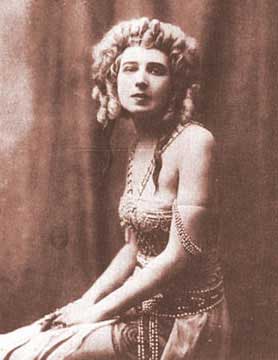
She stood up and assumed a dance posture, her face covered by a veil. As if it had all been rehearsed, the musicians began playing a dance tune.
Salome danced seductively for the assembled guests but especially for King Herod. She swiveled her hips, put her arms in the air, moved her head from side to side. She used her veils to great effect to show off her face and her body. She bent forward and balanced herself on her hands; backward and joined her head with the floor as if she had no bones in her body. She shimmied and she shook. She moved all about the room so as to be seen by everybody; there was no eye that wasn’t upon her. She demonstrated a skill and dexterity that nobody believed her capable of.
When she came to the end of her dance, everyone was silent with awe. King Herod stood up and held out his arms to her and she ran into them.
“That was heavenly!” he said. “It was divine! I’ve never seen anything lovelier. You may name your price, my child, and, no matter what it is, it will not be too great!”
“I’ll tell you what I want,” she said, speaking out so everybody could hear her.
“Yes, what is it, my child?”
“I want the head of John the Baptist on a plate!”
King Herod was surprised at her request. He thought at first she was making a joke. He had offered her untold riches. Why would she want a trophy as grisly as a severed head?
“I don’t think I heard you correctly, my dear. What was that you said you wanted?”
“You heard what I said and so did everybody else.”
“This is the thing you want above all others?”
“I said so, didn’t I?”
“And what will you do with the head of John the Baptist when it is presented to you?”
“I want to look at it.”
“Are you prepared to deal with the consequences, no matter what they are?”
“Yes, yes,” she said with an impatient gesture.
King Herod clapped his hands to summon the guard. He instructed two of his most loyal and obedient men to go below with a large sword and forthwith bring forward the head of John the Baptist on a plate to present to his step-daughter, Salome.
Within minutes, two men came into the banquet hall bearing a tray between them. On the tray was the severed head of John the Baptist. King Herod motioned for them to set the tray on the table on which he and the others had earlier been eating.
Salome approached the head slowly, her eyes glittering with bloodlust. She had never been happier in her life than she was at that moment. She picked up the head by its hair in both hands, the neck dripping warm blood. She looked into the half-closed eyes and kissed the dead lips passionately. The assembled guests, schooled in depravity as they were, were utterly enchanted. It was the best birthday party they had ever seen.
Copyright © 2023 by Allen Kopp
Keep the Car on the Road ~ A Short Story

Keep the Car on the Road
~ A Short Story by Allen Kopp ~
The mother was without warmth for her children. She treated them the same as she would any livestock. On the other hand, it must be admitted that she never mistreated them. She mended their clothes and cooked their meals and made sure no harm should come to them.
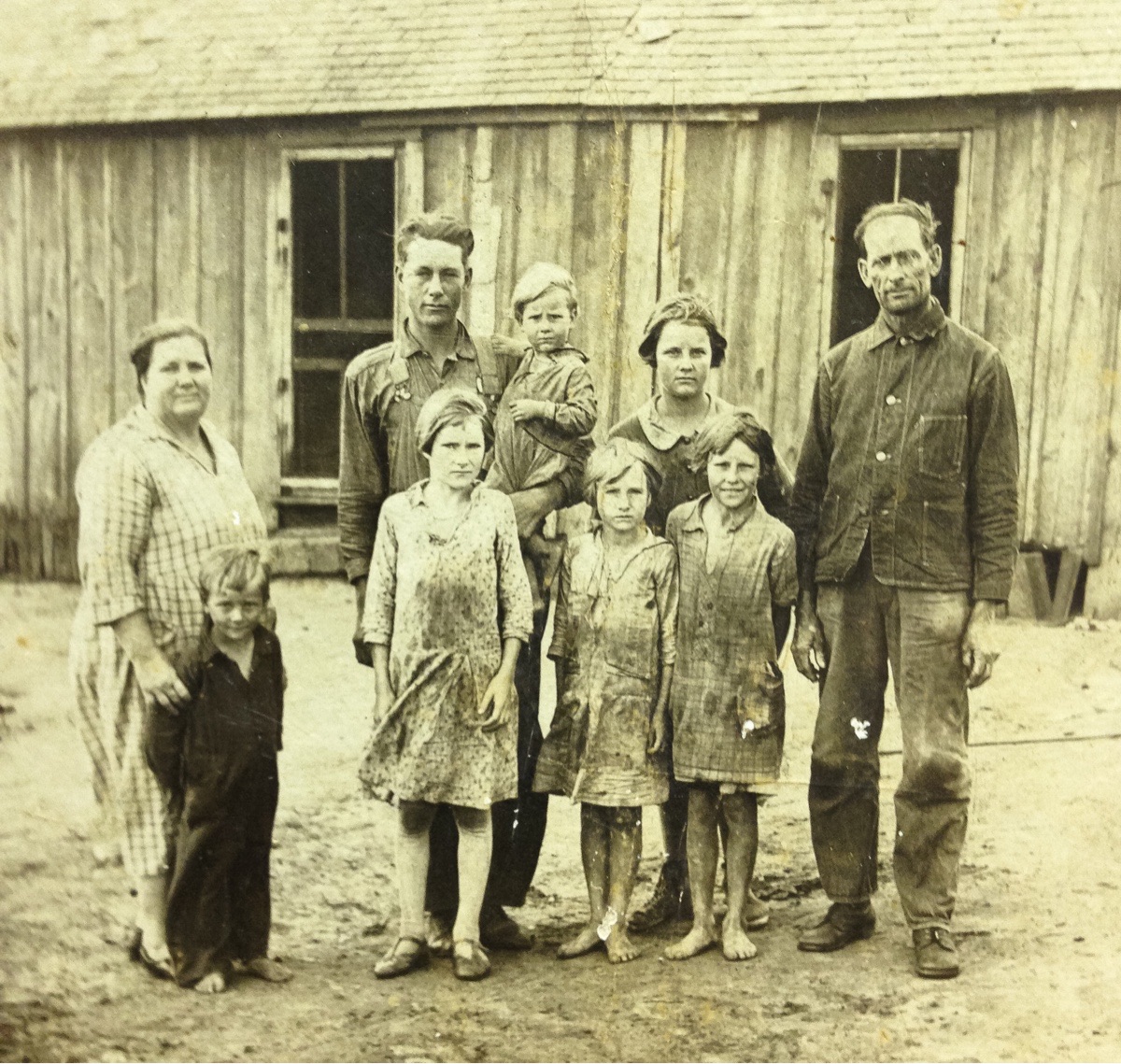
It was 1932. Woe lay upon the land. The farm used to be a going concern, but the topsoil had blown away. Nothing would grow anymore. The land was cursed, people said. Those who could left the land behind.
Ellsworth was sixteen, the oldest of the four children. One day the mother had a talk with Ellsworth that she didn’t want the others to hear.
“It’s time you left home and got out on your own,” she said.
“What do you mean?” he asked.
“You know what things have been like the last few years. We can’t carry you no longer. You’re the oldest. You need to take care of yourself. We don’t have any money coming in. We can’t take care of you no more. We have to think of the little ones.”
“Do you mean you’re making me leave?”
“You’re a man now. It’s time.”
“I never thought you would make me leave.”
“It’s with our good wishes. Your paw and me.”
“When do I have to go?”
“Don’t you think it’s better to just make a clean break?”
“But where can I go?”
“That’s for you to figure out.”
He began thinking about where he would go and what he would do. He packed his few meager belongings in his little valise and set the valise at the foot of his bed. He didn’t go the next day, but the day after, which was a Saturday.
He didn’t say anything to anybody. He knew the mother was looking at him, but she didn’t speak to him again after her talk with him. He said nothing to the father. There was nothing to say.
The sister and the two brothers were out in the back yard. He had been going to say goodbye to them, but he decided against it. The sister would cry, and the two brothers would be uninterested and unaffected. If there was any one thing that Ellsworth wanted to say to them, it was that their time was coming.
On a Saturday morning, without looking back, he left the only home he had ever known. He didn’t care if he never saw the place again, or the people in it.
He walked for hours without stopping. His legs seemed to move independently of the rest of his body. Finally he stopped at a small country store and bought a bottle of milk and a sandwich. He sat in the peaceful shade of an oak tree across from the store and ate. It was as fine a feast as he had ever eaten.
Yes, he had a little money that he had been saving secretly for years. It was all he had in the world. Thank God he had it now, or he would have been cast out without a penny. Little did the mother care, or the father. He thought of them now as a couple of selfish pigs. Without giving it a thought, they had had more children than they could reasonably care for. It would serve them right if they all starved now.
After eating, he kept on walking, trying to clear his mind of disturbing thoughts. He felt better now. He was cheered by the thought that he was on his own in the world for the first time in his life. And he would not fail. Failing would mean that he would die, and he didn’t want to die. Not yet anyway.
He kept walking after dark, unafraid of anything that might be out there that he couldn’t see. When he thought it was about ten o’clock, he stopped beside the road and found a spot where he might reasonably make a bed, on top of a little hillock covered with thick grass. He lay down in the grass and, finding it cool and dry and soft, soon went to sleep.
When the sun was just starting to come up, the birds woke him. He sat up with a start, not knowing at first where he was. In a rush it all came back to him. He no longer had a real bed. From now on, he would have to make his bed wherever he could. He no longer had a home. There was no longer a kitchen table where he could sit down and eat his breakfast. He started to cry a little bit and was glad there was nobody there to see him.
He continued to walk the way he started out. He didn’t know where he was going or what he would do when he got there, but the thought came into his head that God was watching out for him and would show him the way. He hoped it was true.
He walked again for hours. He had never walked so much in his life. It seemed he had walked a thousand miles and had been gone from home for weeks, but the truth was it had only been two days. He wished he had a watch so he might know the time. He would have to tell time the old-fashioned way by looking at the progress of the sun across the sky.
He didn’t know where he was. For all he knew, he might have crossed over into another state. He came to a small town that had a main street and a few stores. Ravenously hungry, he went into a diner. Two old men sitting on stools at the counter turned and looked at him and then looked away.
He sat at a crooked table with an oilcloth cover. A waitress brought him a glass of water and a menu. He gulped the water and asked for more.
“Been walkin’ a long way?” she asked.
“Yes, ma’am.”
“We have fried catfish today or beef stew with cornbread.”
“I’ll take the beef stew with cornbread.”
“I trust you have the money to pay.”
“I can pay.”
“Good. We get people in here who seem to think otherwise.”
“They’re hungry and the don’t have no money.”
“I guess so,” the waitress said.
He ate slowly. He was in no hurry to start walking again. His legs and his feet hurt, and he felt more tired than he had ever been before in his life. He didn’t know how much longer he could keep walking without knowing where he was going.
When he left the diner, he wanted only to find a place to rest, but he kept walking. Around dark, he came to the town of Warfield. It was a bigger town than he had yet seen. There was a constant commotion of automobiles; a town square with a courthouse, a hotel, a restaurant, and stores.
He sat down on a park bench in front of the court house and counted out his money. When he saw how little he had left, he cursed being poor and he cursed the failed farm that spawned him. He cursed his family, who caused him to be in such a terrible fix with no home to call his own. He wished he might die and not have to go on. He just didn’t have the will to go on.
He knew it was a terrible extravagance, but he wanted to get a room in the hotel. He wanted a hot bath and to sleep in a bed again, maybe for the last time. If he had a room, he could die in it if he chose to do so, quietly and privately.
Bucking up his nerve, he went inside and asked the desk clerk for a room.
“How old are you?” the desk clerk asked.
“Sixteen.”
“By yourself?”
“Yes, sir.”
“I can’t let you have the room unless you pay in advance.”
He laid the bills out on the counter and was given the key to a room on the fourth floor.
“Checkout time two p.m. If you’re not out by then, you pay for another day.”
The room was small but clean. Besides a neatly made bed with a pink chenille bedspread, there was a dresser with a spotted mirror, a chair and a small table. There were two windows looking out on the brightly lighted town square. Best of all, though, the room had its own bathroom.
He had never stayed in a hotel room before. He had never even seen a hotel room, and this one was his for as long as he paid for it.
He went into the bathroom and filled the tub with hot water. He stripped off his dirty clothes and submerged himself all the way in the water, including his head. He washed himself all over from head to toe with the lavender-smelling soap and when he was finished he did it all again.
When he was finished bathing and, wearing only his underwear, he got into the big bed and pulled the covers up to his chest. He turned off the light. There was a pleasant glow from the streetlamps four floors down. The sheet was cool on his skin. He had never known such luxury and comfort.
Tired as he was, he couldn’t keep from thinking. He wondered what his sister and brothers were doing and if they had eaten a good supper. He thought of the mother bustling around in the kitchen and the father sitting at the table smoking his pipe. He wished they could see him now.
Now that he was alone and lying in comfort, he was better able to make his plans. He had the room for one day. He had just enough money to get it for a second day. That should give him plenty of time to do what he had to do. It made him a little sad to think about ending his life, but he didn’t know what else to do. He didn’t know yet how he was going to do it—he had never even thought about it before—but when the time came he’d know what to do.
The next morning he awoke and dressed himself in the clean pants and shirt he had packed in his bag. Then, feeling hungry, he went down to the hotel lunchroom and had a light breakfast of toast and coffee. Then he went to the front desk and asked to keep the room for one more day. That left him about enough money for two more meals, as long as they were small ones.
When he was crossing the lobby to go back up to his room, a man in a dark suit stopped him. His heart leapt because he thought he was in some kind of trouble.
The man steered him to a chair. “You mind if I ask you a couple of questions, big fella?” he asked.
“What about?”
“Are you staying in this hotel?”
“Yes.”
“For how long?”
“Until tomorrow.”
“You with your folks?”
“Folks?”
“Yeah. Your parents or your family.”
“No, I’m not with anybody.”
“Here alone?”
“That’s right. Say, why are you asking me all these questions? I didn’t do anything.”
“Nobody said you did.”
“Well, if you’ll excuse me, I’ll be on my way.”
“If you don’t mind my asking, where are you headed?”
“Up to my room.”
“That’s not what I meant. When you leave the hotel, what is your destination?”
“I haven’t got one.”
“Well, you must be going somewhere.”
“I’m going to the city.”
“What city?”
“It doesn’t matter. Any city.”
“And what do you plan on doing when you get to the city?”
“Get a job.”
“What kind of a job?”
“I don’t know. Any job I can find.”
“Can you drive?”
“Drive what?”
“A car! What else?”
“No. I haven’t ever drove.”
“You haven’t ever driven. You must speak proper English.”
“No. The answer is no. I don’t know how to drive a car.”
“Would you like to learn if you had the chance?”
“I guess so.”
“I need a driver. If you can assure me you’re not wanted by the law, I can teach you to drive. It’s not hard. All you have to do is keep the car on the road and make sure you don’t run into anything.”
“You would pay me?”
“Well, I don’t expect you to work for me for nothing.”
“Yes, sir.”
“How old are you?”
“I’m sixteen.”
“Could you leave tomorrow?”
“I had something I was going to do tomorrow, but it can wait.”
“Meet me in the lobby at nine in the morning. We’ll have breakfast and then we’ll get started.”
Driving was easier than he expected. He surprised even himself with how steady and unafraid he was behind the wheel. After a couple of hours of “training” on country roads, they were off to St. Louis.
“There’s nothing to driving,” the man said. “Just keep the car on the road and don’t run into anything. You have to always watch out for the other fellow because you never know what he’s going to do. It’s not that hard. Just don’t get nervous. You’ll be fine.”
“What will do when we get to St. Louis?” Ellsworth asked.
He wanted to ask a lot more questions, but the man, his new-found employer, put his head against the seat back and went to sleep. And then it started to rain. He couldn’t keep from smiling. He was driving a car in the rain. It was the happiest moment of his life.
Copyright © 2023 by Allen Kopp
Poor in Spirit ~ A Short Story by Allen Kopp
Poor in Spirit
~ A Short Story by Allen Kopp ~
(This short story has been published in The Literary Hatchet with a different title.)
Nineteen twenty-one was the year mama lost her mind and went into the mental asylum and daddy, tired of being alone, found himself a woman friend and left home. If he had any misgivings about going off and leaving his son and daughter, he soon dispelled them. Phinis was fifteen, almost a man, and Isolde was seventeen, already a married woman. She had been married to Dexter Wooley for six months. Dexter was twenty-nine years old and had a job on a road crew.
Dexter was a steady-enough fellow but he drank too much. One night while drinking, he got into a fight with a fellow named Sutton from out of state and punched him so hard he knocked him into the river. Sutton flailed his arms and legs and screamed that he didn’t know how to swim, but Dexter ignored him. Sutton drowned and after that Dexter was wanted for second-degree murder by the local police. If that wasn’t bad enough, Sutton’s two brothers were looking for Dexter, saying that when they got hold of him they would hang him by the heels from the bridge during cottonmouth-infested high water.
So, Dexter went into hiding for a while; nobody knew where he was. Right after he left, Isolde discovered she was going to have a baby. She was little more than a child herself, weighing less than a hundred pounds. She would not have an easy time of it.
For the first time in their lives, Phinis and Isolde were left on their own. As brother and sister, they had never been especially good friends, preferring instead to go their own separate ways, but now they were all the family left and they had to rely on each other.
“Do you think mama will come home?” Phinis asked late one night when a thunderstorm woke him up.
“I think she will,” Isolde answered from the rocking chair. She was mending baby clothes and hadn’t been to bed yet.
“I wish we could go visit her.”
“It’s not that kind of a hospital where she is. They don’t allow visitors.”
“Why not? We’re family.”
“I don’t know. It’s more like a jail, I guess, than a hospital.”
“Mama’s in jail?”
“That’s just the kind of a hospital it is. They have to keep the patients locked up and apart from each other.”
“I wish we could go visit her.”
“After the baby’s born, we’ll all go visit and she can meet her grandson for the first time.”
“Do you think daddy will come home before the baby’s born and before mama comes home?”
“I think he will, but you never know with daddy.”
“Do you think Dexter will come home before the baby’s born?”
“I feel it in my bones. And won’t he be surprised when he sees his son for the first time? I can’t wait to see his face.”
This same conversation—the same questions and the same answers—occurred almost every day.
Isolde tried to keep busy but there wasn’t much she could do because she was weak and sick a lot of the time. She swept out the house every day and folded and refolded baby clothes and put them in a trunk and took them out again and looked at them. When the clothes, some of them decades old, started smelling musty again or looking dull, she’d wash them all over again from the beginning.
She liked to read. She had a few old newspapers and magazines that had somehow accumulated, mama’s King James’ Bible, and a battered copy of The Old Curiosity Shop by Charles Dickens. She had read The Old Curiosity Shop all the way through once and was reading it again. She was surprised at the things she learned from reading that she didn’t know before. Someday she hoped to go to the library at the county seat and see what books she could read.
On one of her good days, she said she was hungry and wanted a stew for supper. She sent Phinis to Ivan’s to buy a turnip, a little bit of beef, a couple of carrots and some celery. As always whenever food was needed, he went to the jar on the top shelf in the kitchen and counted out the money. When he saw how little was left, he kept it to himself. He didn’t want Isolde to have more to worry about; the baby was enough.
He spent longer than usual in the store. It was a friendly place and he liked the smells and the piles of stuff stacked on the shelves waiting to be bought. He walked up and down every aisle and looked at everything. It was just a little country store, but to him it contained unimaginable riches. Some day he would have enough money to buy anything he saw. As he was standing at the counter to pay, he saw some oranges in a crate and bought two, one for Isolde and one for him. They would be good for dessert after the stew.
While he was gone, Isolde had had another sinking spell. She was deathly pale and there was blood on her lips, meaning she had been vomiting blood again. He gave her the sack of stuff from the store and she began making the stew.
She ate hardly anything but smiled a lot and seemed happy. “I think I saw daddy and Dexter this morning,” she said.
“Where?” Phinis asked.
“Walking by on the road.”
“I don’t think it could have been them. They would have stopped in to see us.”
“I guess it couldn’t have been. Maybe I just dreamed it.”
“I have dreams about mama,” he said. “I hear her voice and when I get out of bed she’s cooking breakfast. I can smell it.”
“Dreams are funny sometimes.”
“Do you think we’ll die before mama and daddy and Dexter come home?”
“Why would we die?”
“I don’t know. Just something I think about sometimes.”
“I don’t feel like eating my orange now,” she said. “I’ll eat it later.”
A few days later, on a rainy Saturday, Isolde wasn’t able to get out of bed. She screamed with the pain and couldn’t keep anything down.
“Is it the baby?” Phinis asked.
“No, it’s not time for the baby. Dexter isn’t home yet.”
“If I knew where he was, I’d go and find him and bring him home.”
“If mama was here, she’d know what to do.”
“I’m going to go and get Miss Settles.”
Before he left, while he was putting on his coat and hat, she called him over to the bed and took his hand in hers, a thing she had never done before.
“I’m sorry to put all this off on you,” she said. “I don’t know what I would have done if you hadn’t been here.”
“It’s all right,” he said. “I’m the only one here.”
“You’re a better brother than I deserve.”
“Try to rest now. I’ll be back as soon as I can.”
Miss Settles had just washed her hair, but as soon as Phinis told her Isolde’s baby was coming, she grabbed her bag and was off in her old Ford car. He could have ridden with her but didn’t think about it until after she was gone. He rested for a couple of minutes on her porch and then ran home, getting there about the same time she did. With her was her assistant, a large albino woman named January Maitland who had a voice like a man and what looked like cotton dust on her upper lip.
As Miss Settles and January Maitland began working over Isolde on the bed, Phinis stood in the doorway, relieved now that he wasn’t the only one there.
“Brother, you don’t need to see any of this,” Miss Settles said to him. “You take yourself a long walk to the county seat and back and don’t come home until you’re good and tired.”
“Is she gonna be all right?” he asked. “There’s a lot of blood there.”
“We’ll do all we can.”
To the accompaniment of Isolde’s screams, he took some money out of the jar in the kitchen and left.
The county seat was a long walk and he was feeling tired before he even started, but he walked with a lightness in his step because the baby was coming and Isolde would stop being sick and be her old self again. The baby coming early would be the beginning of good things happening. Daddy would come home and they would all go and get mama out of the mental hospital and bring her home. Dexter would fix his troubles with the law and would walk a free man again. They’d all sit around the table, eating fried chicken and chocolate cake. Daddy and Dexter would smoke cigarettes and drink beer and mama would hold the baby on her lap and smile. When they heard how well Phinis took care of things while they were gone, they’d say good things about him until he blushed and had to hide his face.
Phinis had been to the county seat many times, but it was always a revelation to him with its cars and people and the little shops that sold everything from farm implements and cars to cigars and ladies’ dresses. He stopped at the movie theatre, closed now, and read the posters for the westerns and comedies and romances that would be playing there in days to come. He had never seen a movie in his life, but had read about them and wanted to.
He went into a working man’s lunch counter, sat at the counter and ordered a plate of eggs and ham and a root beer as if he had been ordering things in a restaurant all his life. From there he went to the drugstore where he bought a peppermint stick for the baby and a magazine for Isolde with stories for women.
He didn’t know how long he had been gone but it must be four hours at least and it would take him another hour to walk back home. The aching muscles in his legs didn’t matter; he could rest when he got home. He felt a happy anticipation when he thought about seeing the baby for the first time and making sure Isolde was all right. He hoped Isolde was right about the baby being a boy. His nephew.
It was just beginning to get dark when he turned off the lane toward the house. Miss Settles and January Maitland had just come out the door and were standing on the porch carrying white-wrapped bundles.
“Hey!” he called to them. “How’s the baby?”
“I’m sorry,” Miss Settles said. “I did all I could.”
“What?”
“The baby was born dead, a little boy, and the mama lost so much blood I couldn’t save her, either.”
“What was that you said?”
“I did all I could. You have my sympathy.”
“Do you mean Isolde died?”
“I am so sorry.”
“And the baby too?”
“He never felt nothing. He never knew nothing.”
He looked from Miss Settles to January Maitland and back again in confusion. “What do I do now?” he asked.
“You don’t need to do nothing,” Miss Settles said. “Try to get word to her husband.”
“I don’t know where he is.”
“Look,” she said, shifting her bag from one hand to another. “My little brother, Hiram Settles, will come by tomorrow to perform the burial. In the meantime, sit with her tonight. Say your goodbyes. That’s what family does. Light a candle and say a prayer for the repose of her soul.”
He put his hand on the doorknob, started to go inside, faltered.
“You don’t need to be afraid to go in there,” Miss Settles said. “There ain’t any mess. We cleaned it all up. The two of them are lying side by side now on the bed. They look just like they’re asleep. It was a hard struggle but she’s in a better place now.”
Isolde was lying under a sheet, clean and peaceful. He expected her to open her eyes and ask if he had seen Dexter. Beside her was the baby, fully formed, looking like one of the little dollies she used to play with when she was a small child.
He pulled up the rocker beside the bed and sat down. With nobody there to see it, he cried bitter tears. Isolde lying there dead with her little baby was the most pitiful thing he had ever seen in his whole life. He wished he could kill Dexter Wooley for doing such a thing to Isolde and then going off and leaving her. He would never do such a thing to any woman for as long as he ever lived.
He lit a candle as Miss Settles told him to do and read aloud from mama’s Bible: “The Lord is my shepherd. I shall not want. He maketh me to lie down in green pastures. He leadeth me beside the still…”
Rain began pounding the roof, shattering the silence. He sat beside the bed all night long, sleeping little. The candle burned down and went out.
At seven o’clock, Hiram Settles came with his young graveyard assistant. As they carried the empty coffin into the house, Phinis directed them to the bedroom. He looked away as they picked up the two bodies from the bed, first Isolde and then the baby, and placed them in the coffin and put the lid in place.
After Hiram Settles and his assistant extended their matter-of-fact condolences, Phinis held the door for them as they carried the coffin outside and loaded it into the back of the truck in the rain.
The truck made a terrible noise and belched out a cloud of exhaust. Phinis stood on the front porch and watched until it was out of sight and then he went back into the lonely house.
He was as tired as he had ever been in his life, numb with tiredness. He slipped out of his clothes and got into bed and slept until it was night again.
When he awoke, rain was again pounding the roof and it took him a while to remember all that had happened. Oh, yes, he was alone in the house. Isolde died, and her baby died, too. She was right. The baby was a boy.
He went into the kitchen to see what food was left. There wasn’t much, and only a little money left in the jar. He would starve to death if he stayed at home by himself. He couldn’t eat the leaves off the trees or the grass in the yard. He had to go find daddy and tell him all that happened, but find him where? He didn’t even know where to begin.
Mother had an older sister named Ruth. She lived in St. Louis. She was the only living family member that he knew about. He remembered seeing her once when he was only five or six years old He didn’t know exactly where she lived but he knew her name and would find her. She could maybe help him find daddy or tell him what he should do.
St. Louis was a hundred and seventy miles away. He didn’t have money for a bus ticket. He’d hitchhike, or walk every step of the way if he had to.
Having a plan was a good thing. St. Louis was a long way off, but he’d make it, for sure. He put a few things in the little suitcase that belonged to mama: the food that was left, the money jar, a change of clothes, an extra pair of shoes, mama’s Bible, The Old Curiosity Shop by Charles Dickens, pictures of mama and daddy and Isolde, a comb and a toothbrush. He needed to travel light.
He waited then for morning and, just as the sun was coming up, set out in a northerly direction. He didn’t know exactly how to get to St. Louis, but he’d figure it out as he went along.
He walked all day, hitching rides for a couple of short distances. At ten o’clock, it seemed he had traveled a long way from home, but still had a long way to go. He was thinking about where he might spend the night when a couple of boys came upon him out of the dark. They were some older than he was, but not much. They said their names were Freddy and Len. They wore cowboy hats and boots.
“Where you headed?” Freddy asked.
“St. Louis,” Phinis said.
“Do you live there?” Len asked.
“No, just sightseeing.”
“We’re looking to steal a car.”
“What for?”
“It beats walking, don’t it?”
“I don’t know,” Phinis said. “I never stole a car. I don’t think I’d care to go to jail.”
“You’re a real smart guy, aren’t you?” Len said.
“No. My sister just died and her baby. My mother’s in the mental asylum and my father went off and left us. I had to leave home.”
“Oh, what a shame!” Freddy said. “We’re orphans, too.”
“I didn’t say I’m an orphan.”
“If you’re not an orphan, what are you, then?”
“I don’t know. I’m tired. I need a place to stay tonight.”
“We’re camping over in them woods over there. Do you want to throw in with us?”
“I don’t know. I’m not stealing any car.”
“We’ve got a tent and a campfire and some food. There’s room for one more in the tent if you’d care to join us. We were just fooling about stealing a car.”
“No, I’ll just keep looking,” Phinis said.
“Did you ever rob a store? It’s real easy if you’ve got a gun.”
“No, I never robbed a store and I don’t want to. I don’t want to go to jail.”
“Did you ever rape a woman?”
“No.”
“I’ll bet you’ve never done anything, have you?”
“No.”
“Life ain’t been very fair to you, has it?”
“I never thought about it.”
“We’re not really rapers and robbers,” Cal said. “He’s full of shit for saying that. He’s play-acting like a little child.”
“You got any money?” Freddy asked.
“None to speak of,” Phinis said.
“The world is just an awful place, ain’t it?”
Copyright © 2023 by Allen Kopp

 Literary Fictions