

Author: allen0997
My Christmas Eve That Year ~ A Short Story

My Christmas Eve That Year
~ A Short Story by Allen Kopp ~
My parents got their divorce the summer I was fifteen and sold the house we lived in. My mother, my little brother, and I moved into a small, four-room flat in an old apartment building downtown. It was on the fifth floor and there were no elevators, so that meant we were constantly walking up and down the stairs.
The flat wasn’t big enough for me to have my own room, so we moved my bed into a little space off the kitchen, which was originally meant to be a pantry. It was tiny and cramped, but the best thing about it was that I had my own window with a good view of buildings and trees far off in the distance. I liked to lay in bed at night and look out at the sky. The best nights were when there was a full moon. When there were thunderstorms, it felt like the lightning was going to come in through the window and zap me into oblivion.
Now it was Christmas again, or almost. Our first Christmas in the apartment. Our Christmas tree stood in the corner of the front room, aglow with multi-colored lights and loaded down with tinsel and ornaments, stacks of presents beneath its branches. A sprig of holly hung in the doorway into the kitchen. On the front door was a wreath that would probably be stolen before Christmas morning ever arrived.
My little brother Georgie, age six, jumped up and down on the couch and screamed. He was wholly invested in Christmas. It was snowing out, he didn’t have to go back to school until after New Year’s, and he believed that Santa was going to be especially generous with him this year.
“You’d better calm down,” I said. “Santa will pass you by if he gets word that you’ve been bad.”
“I haven’t been bad!” he screeched.
My mother came in from her bedroom, where she had been putting on makeup and fixing her hair. She was afraid I was going to divulge the great secret that Santa doesn’t really exist.
“What did you just say to him?” she asked, looking at me threateningly.
“I didn’t say anything,” I said. “I just told him he’s giving me a headache.”
“Get down from there, Georgie! You know you’re not supposed to use the couch as a trampoline! The couch is for sitting, not for jumping.”
“All this Christmas stuff is making me puke,” I said. “A person can only take so much.”
“Well, it’s too bad you’ve forgotten what it’s like to be excited about Christmas,” she said. “I guess you’ve grown too sophisticated for your family.”
“He’s grown too sophisticated!” screamed Georgie.
“Shut up!” I said.
“When do we get to open the presents?” Georgie screamed.
“For the eighty-seventh time, we will open the presents on Christmas morning after we’ve had a good breakfast.”
“Why do we have to wait so long?”
“Because I said so, that’s why!” She sat on the other end of the sofa and patted her hair in back.
“I want to open one now!”
“No! We’ve been all through that a dozen times. You have to wait like everybody else.”
“Tomorrow’s Christmas and we haven’t heard anything from daddy yet,” I said.
“No, and you probably won’t, either. He’s probably laying up in some hotel room, drunk as a skunk.”
“Drunk as a skunk!” Georgie screamed.
“I thought he’d send at least send us a present.”
“You’re old enough to know you can’t count on him for anything.”
“We always had a good Christmas with him,” I said.
“I know, but those days are over. Your daddy is out of the picture now. He was the one that wanted the divorce.”
“I’m going to the movies tonight,” I said. “It’s a Christmas Eve horror double feature.”
“I don’t care what it is,” she said. “You’re not going to the movies on Christmas Eve. You’re going to spend the evening with your family.”
“But I’m meeting someone.”
“Call whoever it is and tell them you can’t make it.”
“Is he going to be here?”
“He has a name, you know.”
“Is Regis going to be here?”
“Yes, he’s going to be here in time to eat dinner with us and later we’re all going to church.”
“I don’t feel like going to church.”
“You feel like going to the movies but you don’t feel like going to church?”
“Church gives me a headache.”
“You’re insane.”
“If I am, I get it from you. Insanity runs in your family.”
“I think Regis is going to ask me to marry him.”
“Why would you want to marry Regis?”
“Why shouldn’t I marry him? He’s the sweetest, kindest man I’ve ever met and he’s got a good job.”
“He sells washing machines in an appliance store.”
“Someday he’ll be manager. There’s really good money in that.”
“What about daddy?”
“What about him?”
“You’re going to marry Regis without telling daddy first?”
“You’re a smart boy, but you just don’t seem to understand. There is no longer any connection between me and your daddy. We are kaput!”
“What does that mean?”
“Your daddy and I are finished with each other. All ties are severed.”
“All ties are severed!” Georgie shrieked.
“If you marry Regis, does that mean we can move out of this crummy apartment?”
“Not right away. Regis will probably move in here with us. His business hasn’t been so good lately. He’s a little strapped for cash at the moment. He expects things to pick up next year, though.”
“If Regis moves in here with us, I’m moving out.”
“Why don’t you like Regis?”
“He belongs to a bowling league.”
“A lot of men belong to bowling leagues.”
“He’s old!”
“He’s forty-three.”
“He wears cologne that smells like bug spray.”
“I’ll get him to stop wearing it after a while.”
“He has hairs sprouting out of his ears. Haven’t you ever noticed that?”
“Of course, I’ve noticed it. His grooming isn’t the best. That’s because he lives alone. All that will change after we’re married.”
“I think you should check with daddy first before you marry Regis. He might want to come back. If you marry Regis, it’ll be too late.”
“Your daddy is not coming back. Ever.”
“You might be surprised.”
“It’s time for you to face reality.”
“I am facing reality and I don’t like it.”
“I think I see Santa way up in the sky over there,” Georgie said, standing at the window.
“You’re hallucinating again,” I said.
“It’s too early for Santa,” mother said. “He won’t come until we’re all asleep. He doesn’t like for people to look at him.”
“I can certainly see why,” I said.
“I hope he remembers everything I wanted,” Georgie said.
Mother went back into the bedroom and in a little while came back out in her red Christmas dress that in my opinion was too tight. She had dowsed herself in perfume. When she saw me lying on the couch staring at the ceiling, she decided I needed something to do.
“I want you to go down to Friedlander’s market and buy a carton of eggnog for tonight,” she said, digging in her purse for some money.
“I don’t like eggnog,” I said.
“Well, are you the only one here? Regis says it’s not Christmas without eggnog.”
“Regis says. Regis says. What else does Regis say?”
“Can I go to the store, too?” Georgie asked excitedly.
“No! You stay here and help me wrap Regis’s present.”
“Regis, Regis, Regis,” I said as he went out the door. “He’s certainly a big man around here, isn’t he?”
The snow was falling heavier now. Cars made hissing sounds on the pavement as they passed by. Last-minute shoppers were still keeping the stores busy. With the setting of the sun, Christmas Eve had officially arrived.
The store only had one carton of eggnog left, so I grabbed it and went and stood in the long line to pay. When the cashier smiled at me and wished me a merry Christmas, I gave him a sour look.
When I got back home, Regis had arrived with presents for all of us. He was throwing Georgie up near the ceiling and then catching him on the way down. Georgie squealed with delight. Mother stood at the stove and beamed her approval.
Regis had brought Georgie a stuffed elephant and some other toys. My present from him, still wrapped in a big box with a red bow, was at my place at the table. Before I sat down, I picked up the box and set it on the floor.
“Aren’t you going to open your present from Regis?” mother asked.
“I’ll open it later. I have a headache now.”
When we were all seated at the table, mother insisted we join hands while Regis said grace. Regis’s hand felt clammy and unclean in mine. When he finally let go, I wiped my hand back and forth along my leg before I touched any food.
While we ate, I could see that mother was wearing a diamond engagement ring. This, of course, would be her Christmas present from Regis. So, it was official, then. He had proposed and she had said yes.
Regis talked about his day at work and laughed while we ate. Mother didn’t say much. Georgie kept looking out the window for signs of Santa. When Regis seemed to have run out of things to say for the moment, mother looked at me and said she had something she wanted to tell me and Georgie.
“What is it?” I asked with a sick feeling.
“Regis has asked me to be his wife and I’ve consented. We’re going to be married on New Year’s Eve.”
“What’s the rush?” I asked.
“I think it’s so romantic to be married on New Year’s Eve,” she gushed. “It will be a new start of a new year for all of us.”
She turned and looked at Regis. There were tears in her eyes. Regis took hold of her hand and pulled her in for a kiss. I knew he was getting ham grease all over her.
“I think I hear Santa’s sleigh outside!” Georgie said.
After we finished eating, mother told me to go put on my dress pants and a white shirt for church. She would help me with my tie before we left for church.
Except there wasn’t going to be any church for me. I grabbed my coat and hat and ran out the front door before she had a chance to see what I was doing.
The snow must have been five or six inches by that time. I still had on my tennis shoes and I could feel the snow soaking through to my socks after a few steps, but I didn’t mind. I needed to talk to daddy.
I knew that Colson’s Drug Store, about four blocks down from where we lived, had a pay phone. I had a pocket full of change especially for that purpose.
Right after the divorce, daddy gave me his private number where I could reach him any time. If I ever needed him, all I had to do was give him a call.
There were a lot of people at Colson’s, mostly at the pharmacy counter. Nobody paid any attention to me as I went all the way to the back, where the pay phone was.
I was sure he would answer. He would probably figure it was me calling on Christmas Eve.
The phone rang ten or twelves times, but finally he answered.
“Hello,” a little groggily.
“Daddy?” I said. “Is that you?”
“Who is this? Is this Evan?
“Yeah, it’s me. Evan.”
“I couldn’t hear you very well at first.”
“Can you hear me better now?”
“Yeah, I hear you fine now.”
“Well, since it’s Christmas Eve, I wanted to call and wish you a merry Christmas.”
“Merry Christmas to you, Evan!”
“Do you know where we’re living now?”
“No.”
“In an apartment downtown, on the fifth floor of an old building.”
“I’ve been wanting to come and visit you and Georgie, but I wasn’t sure where you were living. How’s Georgie?”
“He’s fine. Waiting for Santa to bring him everything he asked for.”
“Where are you now?”
“I’m in Colson’s Drug Store, near where we live. Do you know where that is?”
“Yeah, I’ve been to Colson’s a few times. Don’t you have a phone in the apartment?”
“We do, but I didn’t want mother to know I was calling you.”
“How is your mother?”
“She’s fine, but she’s the main reason I wanted to talk to you.”
“She’s not sick, is she?”
“No, she’s not sick. She’s getting married on New Year’s Eve.”
Daddy was silent for a moment and then he laughed. “Who is she marrying?”
“His name is Regis. He’s a creep. He smells funny. I don’t like him.”
“Maybe that’s because you don’t know him very well.”
“I want you to come and get me.”
“What?”
“I said I want you to come to Colson’s Drug Store and get me. I want to spend Christmas with you.”
“Wait a minute, Evan! I’m afraid that’s not possible. I’m not living in a very nice place. I don’t even have a tree.”
“That’s all right. I don’t need a tree.”
“If your mother doesn’t know where you are, she’ll be worried.”
“I’ll call her from your place.”
I started to cry like a blubbery crybaby. I hadn’t meant to cry, but I couldn’t seem to help myself.
“Is it that bad?” he asked.
“Mother just isn’t herself. I don’t want to be around her. She acts like Regis is some kind of a god. They make me sick.”
“All right. If it’s that bad, I’ll come and get you.”
“How long? How long will it take?”
“Give me a half-hour or so.”
“Colson’s Drug Store. I’ll be waiting outside for you.”
It was still snowing, harder than ever now, but I didn’t mind waiting in the snow for a half-hour. People coming in and out of Colson’s looked at me and then looked away. Maybe some of them thought I was going to try to rob them. I tried leaning back against the building, crossing my legs and putting my hands in my pockets. I tried to look casual, but I felt conspicuous.
I wasn’t sure what kind of car daddy would be driving, but I looked at every car. One of them would be him.
The half-hour passed and then an hour and then two hours. I was determined to wait as long as it took. I would wait all night. I would still be waiting on Christmas Morning if I had to. My fingers and toes were numb. I could no longer feel them. I wasn’t sure if they would ever work right again or not. I didn’t much care.
Copyright © 2023 by Allen Kopp

If You Don’t Tell Santa What You Want, You Won’t Get Anything ~ A Short Story
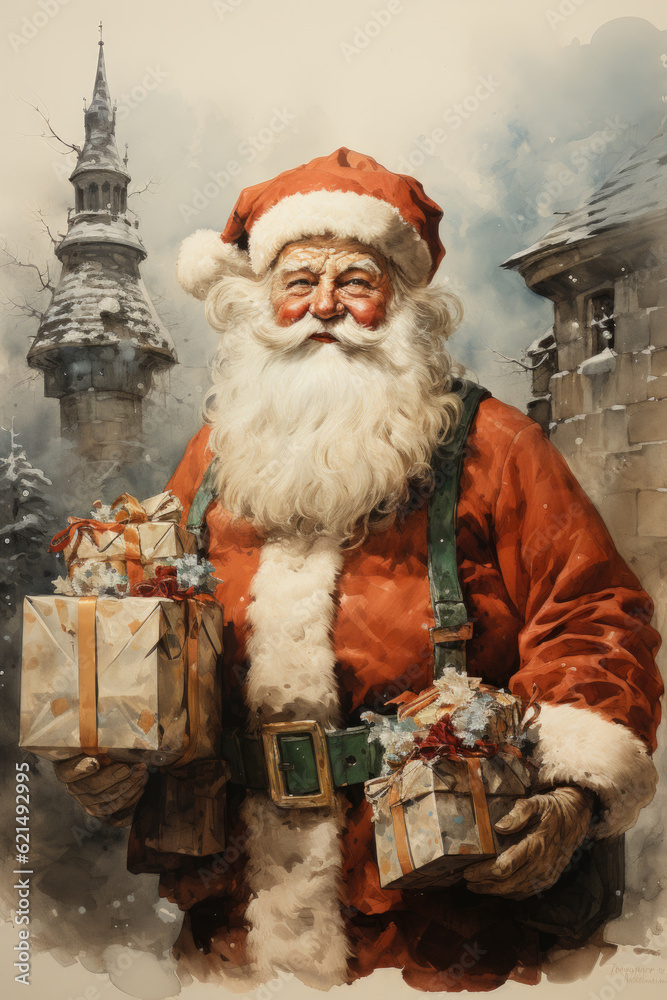
If You Don’t Tell Santa What You Want, You Won’t Get Anything ~ A Short Story by Allen Kopp
We lived in a small town with small stores, where there was no sit-down Santa to talk to. The nearest big stores were in the city two hours away. Every year my mother and grandma took my sister and me to see Santa and do some Christmas shopping.
I was little and didn’t know any better, so I liked the city, which was so unlike the town we lived in. I liked the cars and the crowds of people standing on the street corners waiting for the light to change so they could walk across; the tall buildings and the roaring buses that had a particular smell of their own. I liked the whistle of the policeman directing traffic and the clang of the bell-ringing Santa on the sidewalk (not the real Santa, I knew) who was trying to get people to drop money into his pot. Of course, it had to be cold weather (the colder the better) and not raining, or none of this would have held any appeal for me. Cold weather was absolutely essential to get the feel of Christmas.
I was seven and still firmly believed in the myth of Santa Claus. I also believed that if you weren’t able to talk to Santa and tell him what you wanted in the run-up to Christmas, you would be out of luck and would get nothing. No presents, no Santa, no nothing. I already knew the world was a hard place.
Mother had lived in the city before she was married so she knew her way around downtown. As she maneuvered the car through the traffic to get to where she wanted to park, I was still sleepy from the Dramamine I had been given before we left home but I didn’t feel like vomiting, so that was the important thing. She parked in a pay parking lot a few blocks from where we were going and we all got out of the car.
“They charge a dollar now for parking,” mother said. “I don’t know what the world is coming to. Just last year it was fifty cents.”
Grandma helped my sister and me on with our hats and gloves and we began the several-blocks walk down to the department store where Santa was.
This store was famous for its animated Christmas windows. We stopped to take a look at them but there were so many people crowded around that we couldn’t see them very well, so we went on inside the store. I was starting to feel little-kid anxiety about seeing Santa. I might freeze up when I sat on his lap and not be able to tell him what I wanted. I felt my throat constrict at the thought.
To get in to where Santa was, you had to walk through the “Winter Wonderland” that was supposed to be the North Pole. There was a wooden walkway to get through it and there were plenty of elves around to make sure nobody left the walkway and tried to walk on the fake snow, pull on the fake trees (trees at the North Pole?) or try to get a closer look at the reindeer. It was all very pretty, with Christmas music blasting over the sound system, but I couldn’t wait to get through it and in to see Santa.
After we passed through “Winter Wonderland,” There were ropes on poles to keep all the people in a neat line. It was about half adults and half kids. Some of the women held tiny babies or pushed them in strollers. You knew they were too young and would only waste Santa’s time. Most of the kids, you could tell, were trying to hold still and not squirm too much. A few of them looked as nervous as I felt.
In about fifteen minutes, we finally came to the place where we could see Santa on his throne. I breathed a sigh of relief when I was actually able to see him and know he was there. There were still about twenty more little kids in front of me, though, before it would be my turn.
Santa was flanked by yet more elves to keep the line moving and keep any one child from taking up too much of his time. Each child was placed on Santa’s lap, Santa leaned over to let the child speak into his ear for about twenty seconds and then the child was removed in an elfin movement of robotic efficiency.
My heart was beating too fast as I got nearer to Santa. I tried to keep in my mind what I was going to say, but I wasn’t sure if I’d be able to remember it. I knew my mother, sister and grandma were somewhere behind me, watching me, but I wasn’t thinking about them. I only wanted to get this over with.
Finally it was my turn. A burly elf with acne put his hands on either side of my rib cage and hoisted me up; I swung my legs over and found myself face to face with Santa. He smiled at me and I could see his thick lips through his whiskers. He breathed on the side of my head.
“What would you like for Santa to bring you?” he asked.
“Uh, I want a sled and a pair of cowboy boots and…”
“What else?”
“A Howdy-Doody puppet and a racing car set and some books and…”
“Yes?”
“That’s all I can think of right now.”
“Have you been a good boy this year?” he asked.
“Oh, yes!”
He gave me a candy cane, and the same elf who had lifted me up then lifted me down. I realized then how silly all this was.
After my sister had her turn with Santa, I rejoined mother and grandma. “Did you tell him everything you wanted?” mother asked me.
“Everything I could think of,” I said.
“Now, that doesn’t mean you’ll get everything just because you told him you wanted it.”
“How does he remember what people tell him without writing it down?” I asked.
“I guess he has a photographic memory.”
“He’s really something, isn’t he?”
We had lunch on the mezzanine level where you could look down and see hundreds of people moving around like ants. There was nothing like that back home. Then, after lunch, we had the rest of the day to concentrate exclusively on the serious shopping.
Copyright © 2023 by Allen Kopp
Pneumonia ~ A Short Story

Pneumonia
~ A Short Story by Allen Kopp ~
(This short story has been published in The Literary Hatchet.)
In third grade I wore a navy pea coat. Some of the kids in school made fun of me for wearing a kind of coat that nobody else had, but I didn’t care. I liked my pea coat. It made me look like a little navy man, like a junior-league Robert Taylor.
Any time I think about that pea coat I think about my mother lying sick in a hospital bed.
In November of that year, she slipped on gravel down the street from where she worked and hit her head on the sidewalk. She had a brain concussion and it made her plenty sick. Her doctor thought three or four days (a week at the most) in the hospital would fix her up, but she just kept getting sicker and the three or four days became weeks. (He eventually admitted she wasn’t getting any better and sent her to a hospital in the city, but that’s another story.)
Since I was only nine, I missed my mother while she was in the hospital. I wasn’t a baby and I could manage without her for a few days, but I was afraid she wouldn’t be out of the hospital in time for Christmas. My biggest fear, though, was that she would die in the hospital while I was in school and I’d be left alone with my father. He and I didn’t like each other very much. I don’t know why. It’s just the way it was.
We went to the hospital every evening to see my mother after eating our quick and meagre dinner (a tuna salad sandwich or Campbell’s chicken noodle soup). These visits were disheartening because she wasn’t like herself. She just lay there, hardly moving, and didn’t say much. She was pale, her hair looked terrible, and her eyes were hollow. When I asked her when they were going to let her come home, she just shrugged and didn’t seem to care one way or the other. I wasn’t the only one thinking she might die; she was thinking it herself.
Since it was November and the weather was turning cold, somebody at school was always sick, spreading germs all over the place. It was impossible to be in a closed, heated classroom and not breathe in some nasty germs. A couple of my friends came down with the flu or whatever was catching, and then, before I knew it, I was the sick one.
My mother noticed at the hospital during visiting hours that evening that I didn’t look quite right. She tried to get me to take my pea coat off, but I felt chilled and wanted to leave it on. My throat was raw and my chest hurt. I had developed a cough, which was impossible to hide.
“Aren’t you taking care of your son, Roy?” my mother asked my father.
“There’s nothing wrong with him,” my father said.
“Make sure he takes a hot bath and goes right to bed.”
“He thinks if he can convince you he’s sick, he won’t have to go to school.”
“I’m all right,” I said. “I’m not sick.”
The next morning I felt terrible and my cough was worse. My throat felt like I had been snacking on razor blades. I went to school and I sat in my seat all day long without telling anybody how bad I felt, but I was glad when the bell rang and it was time to go home at the end of the day. When I got home, I put on my pajamas and got into bed. I only wanted to shut everything out.
I hoped I would feel better in the morning, but I only felt worse. I got up at the usual time and went into the kitchen. My father was sitting at the table drinking coffee and smoking his Marlboro cigarettes. He barely looked at me.
“You’d better get a move on,” he said in his absent way, “or you’re going to be late for school.”
“I don’t feel like going to school today,” I said.
“What?”
“I said I’m sick and I don’t feel like going to school today.”
“You don’t look sick to me.”
“My throat really hurts and my chest hurts and I have a lump in my throat.”
“You’ll feel better after you get there.”
I sat down and poured some corn flakes into a bowl and got the milk out of the refrigerator, but I wasn’t able to eat anything.
“I’m running a fever,” I said. “I’m sure of it.”
“You’re just being a baby. There’s nothing wrong with you.”
“If mother was here, she’d take my temperature and know I’m too sick to go to school.”
“Well, she’s not here, so go brush your teeth and get dressed and get your little ass to school before I kick it up between your shoulder blades for you. I have to get to work. I don’t have time to mess with you.”
The wind and the cold air didn’t help my cough. By the time I got to school, I was wheezing and gasping for breath. I took my seat in the third row, as usual, and hoped I’d drop dead before too long.
I coughed and I coughed and I coughed some more. No matter how much I cleared my throat, that old frog seemed to have taken up permanent residence. Every time I coughed, somebody turned and looked at me with distaste. I couldn’t blame them. They were wondering what I had and if they were likely to catch it from me.
I hadn’t been sitting in my seat for long when Miss Goldschmidt came and stood over me and put her hand on my forehead.
“You don’t feel very well, do you?” she asked.
“I’m all right.”
She motioned for me to stand up and go along with her. She took me out into the hallway and down the stairs to the nurse’s office on the second floor.
“He’s too sick to be in school today,” Miss Goldschmidt said to Miss Bouchard, the school nurse.
Miss Bouchard looked at me and told me to sit in the chair beside her desk.
“Let’s see your throat, honey,” she said.
She took a tongue depressor and a flashlight and looked at my throat so long I thought I was going to choke.
“How long have you had this throat?” she asked.
“I don’t know. Three days, I guess.”
When she took my temperature, she found I had a fever of slightly over a hundred and two.
“I’m going to call your mother and tell her to come and get you.”
“She’s not home. She’s in the hospital.”
“Oh. What about daddy?”
“He’s at work.”
“Well, I guess we’re stuck with you, then, aren’t we?”
There was a cot made up like a bed against the wall. She told me to take off my shoes and get into the cot and cover up like a little baby. She would be in and out of the office all day long and if I felt worse to let her know.
She gave me two aspirin tablets and a cup of water and after I swallowed the tablets I covered up in the warm little bed and coughed my head off for a while but then my cough lessened and I went to sleep. I slept right through lunch and most of the rest of the day. When the bell rang to go home, I was surprised at how much time had gone by.
“Time to go home, little man,” Miss Bouchard said.
I sat up on the cot and put on my shoes and tied them.
“Do you feel like walking home?” she asked.
“Sure.”
“I can get the janitor to take you in the truck if you don’t feel like walking.”
“I can make it okay.”
“And don’t come back to school until you’ve seen a doctor.”
“What?”
“I’ve written a letter for you to give to your daddy. You need to see your doctor. We don’t want you in school if you’re sick. You might be contagious.”
“Yes, ma’am.”
Being told I could stay home from school the next day, and maybe the day after that, cheered me considerably. It was the best news I had heard in a long time.
When I got home, he was sitting at the kitchen table smoking a cigarette. He gave me a sour look and blew smoke out his nostrils like a deranged bull. I put the envelope from Miss Bouchard on the table in front of him.
“What’s this?” he said.
“A letter,” I said.
“From one of my many admirers?”
I wanted to tell him he didn’t have any admirers, but all I said was, “No, it’s from the school nurse.”
He read the letter and crushed out his cigarette angrily.
“So, you’ve been complaining at school about how sick you are?”
“I didn’t say anything. They knew I was sick. Some people pay attention to those things.”
“I don’t have time for this crap!” he said. “You’re a lot more trouble than you’re worth, you know that?”
“Yeah, I know.”
In the morning he took me to see Dr. Froberger. He was an old man with cold hands and I was a little afraid of him, but I liked him well enough. His office girl complimented me on my navy pea coat.
Dr. Froberger set me up on a high table and looked at my throat and into my ears and felt my neck. He took my temperature and listened to my heart and lungs.
“This boy’s got pneumonia,” Dr. Froberger said. “His lungs are filled with fluid.”
“I didn’t think he was that sick,” my father said. “He’s always been quite a pretender.”
“Well, he’s not pretending now! I want him to go to the hospital. We need to start treatment right away, or he’s going to be very seriously ill.”
“I don’t want to go to the hospital,” I said.
“It’ll be all right,” Dr. Froberger said. “We’ll take good care of you and you’ll be back to normal in a few days.”
They took me to a different hospital than the one my mother was in. I was worried that she wouldn’t know where I was, but my father said he’d tell her and he’d bring her to see me as soon as she was able.
They took my clothes and put me in a high bed in a room by myself and stuck needles in both arms and gave me oxygen. For a couple of days I felt like I was dreaming or floating through the air, but it didn’t matter to me if I was. Nothing felt real. My father came a couple of times to see how I was doing, but he didn’t stay long; he always had something more important to do.
After I had been in the hospital for a while, a nurse arranged for me to talk to my mother on the phone. She sounded better than she had in a long time. They were giving her a different kind of medicine, she said, and her doctor had decided to send her to a better, smarter doctor at a hospital in the city.
“How long before they’ll let you come home?” I asked.
“I’ll be home before you know it.” she said.
She wasn’t going to die after all.
When the doctor finally released me from the hospital after a week (that’s how long it took for my lungs to clear up), he said I couldn’t go back to school for a while (two weeks or so), which was altogether fine with me. I had to have somebody, a “sitter,” stay with me during the day when my father was at work, so that’s where Barbara Legaspi entered the picture.
Barbara was recommended by Dr. Froberger’s office. She had experience as a nurse’s aide and was used to dealing with sick people. I could tell my father didn’t like her because she was fat and had big arms and a dark mustache, but he hired her because it was the easiest thing for him to do.
I liked Barbara right away. She bought me candy and comic books. She lived with her parents and had never been married and had lots of funny stories about men she had dated. The men she liked didn’t like her or were married, and the men who liked her were unacceptable and undesirable for one reason or another (one had rotten teeth and another one was a midget).
When we got to talking about my father, she told me she had an “instinctive” feeling about him. He was a “negative” individual from whom “nothing good” would ever come.
“How do you know these things?” I asked.
She told me she was psychic and “an old soul” who lived “many times” before. I didn’t know what she was talking about, but I thought it sounded good.
I told her how when I became sick with pneumonia and my mother was in the hospital, my father didn’t want to be bothered with me and made me go to school because he thought I wasn’t really sick at all but only pretending.
“He never wanted to be your father,” she said. “People who have children they don’t want make me sick.”
“Me too,” I said.
“He doesn’t treat your mother well, either, does he?”
“No. I don’t know how she stands being married to him.”
“I can take care of him for you if you want me to.”
“What do you mean?”
“I can put a spell on him.”
“You mean, like, kill him?”
“No, that would be a curse. I’m talking about a spell.”
“You can put spells on people?”
“If I can’t, I know somebody who can.”
“What kind of a spell would it be?” I asked, fascinated.
“A kind of spell where he gets what he deserves.”
“That sounds good. I don’t want you to kill him, though, or burn him up in a car crash or anything like that.”
“No, I know what you mean. Moderation is the key.”
“Yeah. Fix it so he has stay in the hospital for about a week.”
“I think it might be arranged.”
My mother came home from the hospital in the city a week before Christmas. She wasn’t over her brain concussion yet, but she was getting better every day. She and Barbara Legaspi had a long talk at the kitchen table. When Barbara left for the last time, she said I was her favorite sick person and she and I would be seeing each other again. She winked at me when mother wasn’t looking and I knew it meant that she and I had a secret together.
My mother gave my father the silent treatment for not taking care of me the way he should have and for not keeping me home from school when I was obviously sick. She cooked his meals at mealtime and then she went out of the kitchen while he sat at the table and ate alone. She slept in the spare bedroom and didn’t speak to him unless she had to.
We had a happy Christmas that year. I was over my pneumonia and had returned to school. My mother was still taking lots of medicine and it seemed to be helping her. She was going to return to her job after New Year’s. She wasn’t a stay-at-home; she liked being around other people, she said.
In the middle of January, my father passed out at work. They came and got him in an ambulance and took him to the hospital. After the doctor examined him, he said he had “smoker’s heart” and was going to have to cut back on his Marlboros and go on a diet.
When my mother and I visited him in the hospital, I stood at the foot of his bed and smiled. He barely looked at me, but I knew he knew I was there. If he had known what I was thinking and why I was smiling, he would have had to light up another Marlboro and blow an angry stream of smoke out his nose.
Copyright © 2023 by Allen Kopp
Nothing But the Night ~ A Capsule Book Review
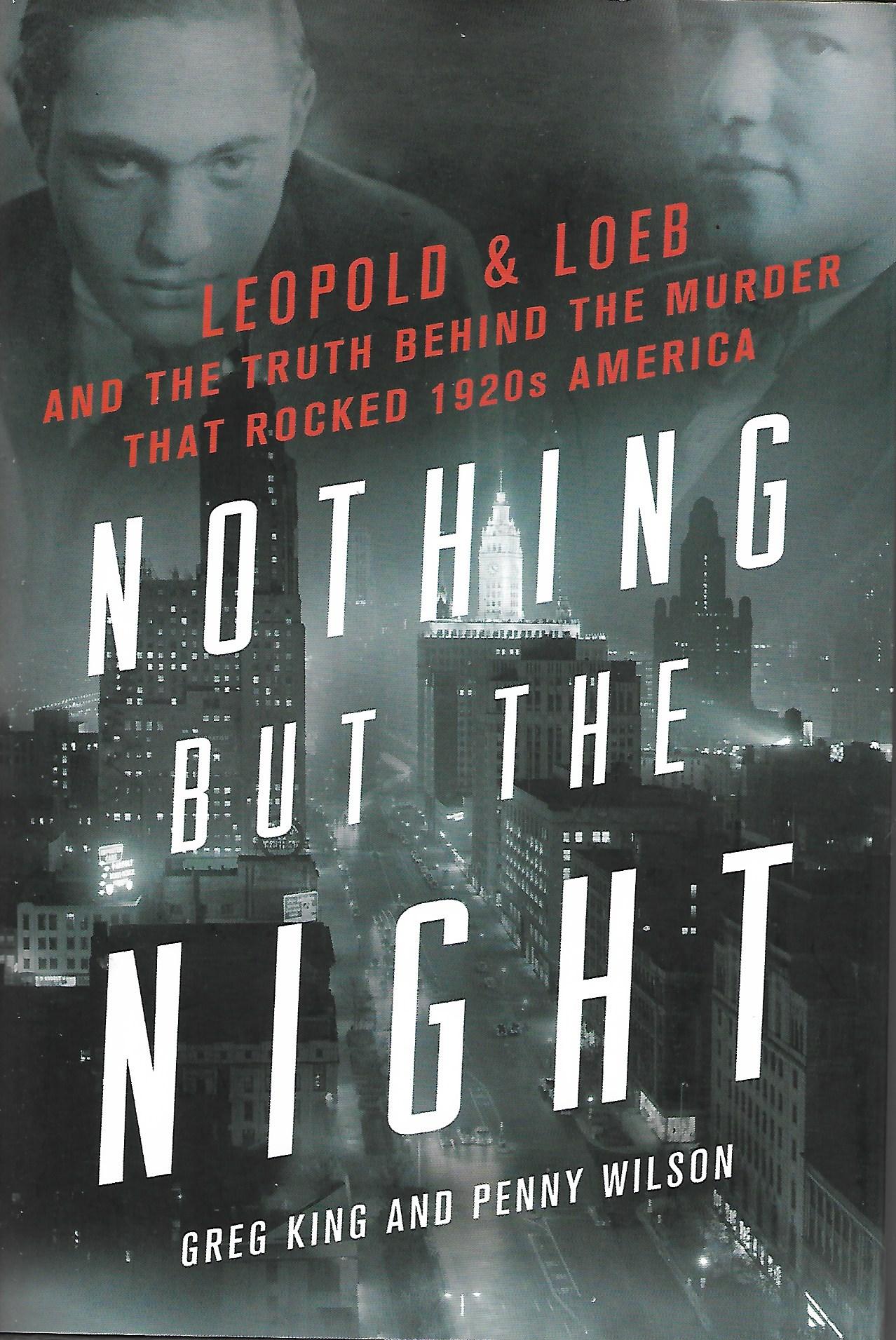
Nothing But the Night
~ A Capsule Book Review by Allen Kopp ~
The time is 1924. The place, Chicago USA. Nathan Leopold Jr. and Richard Loeb are both eighteen years old. They live in a Jewish enclave in Chicago called Kenwood with their wealthy families. They are both smart and well educated. The have everything in life that anybody could want. Yet, still, inexplicably, they kidnap and murder a fourteen-year-old boy named Bobby Franks, also from a wealthy Jewish family, also from the Kenwood neighborhood. They beat Bobby in the head with a chisel, force ether-soaked rags down his throat, and then pour hydrochloric acid all over his body. After they have killed him, they dump his body in a culvert in a wooded area outside the city.
There is no apparent reason for Leopold and Loeb to commit such a horrendous murder. It seems to be a crime without a motive. Leopold and Loeb both know Bobby Franks from the neighborhood and have no real reason to want to harm him.
The murder of Bobby Franks comes to be known as the “crime of the century.” Public interest in the murder is unprecedented, fed by the Chicago newspapers, which print any information on the murder they can come across, regardless of its journalistic merit. Soon the story spreads outside Chicago, and the entire country becomes fascinated by the crime.
Despite the supposed mental superiority of both Leopold and Loeb, and despite their wealth, they are soon suspects in the murder. Under police interrogation, Richard Loeb breaks down and confesses that he and Nathan Leopold, Jr. did, in fact, kill Bobby Franks. The murder is, ironically, solved within a week.
Since Leopold and Loeb confess to the crime, there will be no trial to determine guilt or innocence. There is a trial, without a jury, to present evidence and allow both sides to argue in favor of the death penalty or a life sentence in prison. After both sides argue their case, the final decision rests with the judge. It will be either the death penalty or life behind bars.
The Leopold and Loeb families procure the services of famed defense attorney Clarence Darrow, who is vehemently opposed to the death penalty, to defend “Dickie” and “Babe” in the trial.
Nothing But the Night by Greg King and Penny Wilson is a riveting, historical, true-life crime story, where truth is stranger than fiction. It comes in at a tidy 300 pages. The story is detailed and well-documented, but it never bogs down in details of police or court procedure. If you are a fan of true-life crime, as I am, you will find Nothing But the Night a very powerful reading experience.
Copyright © 2023 by Allen Kopp
Seascape ~ A Short Story

Seascape
~ A Short Story by Allen Kopp ~
(This short story has been published in Black Lantern Publishing.)
Blanca Longworth and her husband checked in on a brilliant, sun-infused day in early May. They had a delightful room on the fourth floor with a little balcony overlooking the ocean that from that distance was like a mirror reflecting the sunlight. Feeling tired from the long journey, Blanca lay down on the enormous bed to rest her eyes and soon she was asleep.
When she awoke, she knew from the way the sun slanted into the room that it was very much later than it had been. She arose and went into the bathroom and fixed herself up and then changed her clothes and waited for her husband to come back—back from wherever it was he had gone—to take her downstairs to dinner.
She waited for twenty or thirty minutes and, when her husband still hadn’t returned, she made up her mind to go and have dinner alone. She hadn’t eaten all day and was feeling faint from hunger. She was sure he would understand and would be able to get something for himself later from room service.
When she swept into the crowded hotel dining room, she noticed a few heads turn in her direction. She enjoyed being the woman alone, the woman with a slight air of mystery. For all anybody knew, she might be an heiress or a movie star or an important novelist. She seated herself at a pleasant table-for-two beside a window and a young waiter appeared at her elbow with a menu and an appropriately servile attitude.
After eating her spicy and too-heavy dinner, she left the dining room and, not feeling like returning to her room just yet, went into the cocktail lounge. She was irresistibly drawn by the sound of the music and chiming laughter and the clink of glassware.
Feeling slightly awkward and out of place, she sat at the bar and ordered a martini. She drank the martini quickly, finding it good for her digestion, and ordered another one. By the time she had taken a sip from her second drink, a young man seated himself beside her at the bar. She turned and looked at him with curiosity and when he smiled at her she smiled back at him.
He was perhaps ten or so years younger than she was, making him twenty-eight or thirty. Speaking with a slight foreign accent, he told her his name was Tibor. He had a charming smile and brown-blond hair combed straight back from his forehead that revealed the superb shape of his head and perfect small ears. They exchanged small talk for a few minutes and then he asked her if she would care to dance. She shrugged charmingly and consented.
While she was dancing with Tibor, she thought she had never felt more natural and more at ease with a stranger. As they moved around the dance floor, she felt the strength in his arms and shoulders. She tightened her hold on him and moved in a little closer.
When the dance floor came to be too crowded, they sat down at a small table in the shadows and ordered fresh drinks. After a while, he reached his hand across the table and placed it on her hand and asked if she would care to go someplace else with him. His soft eyes glistened in the romantic light.
She smiled sadly and, in answer to his question, held her left hand in front of his face and waggled her fingers so that he would see her wedding ring. Seeing it, his smile faded and his face clouded. He stood up and, bowing formally from the waist, apologized for his presumption and excused himself. Then he was gone.
After Tibor left, she was just another lonely middle-aged woman sitting pathetically by herself in a barroom. She continued to sit at the small table for a while longer, feeling the kind of sweet sadness she hadn’t felt since she was sixteen, and then she stood up and went back to her room.
Her husband still hadn’t returned yet, but she was glad in a way to be alone with her thoughts. She wouldn’t like having to explain that she had been dancing and drinking—however innocent—with a handsome young stranger. She went out on the balcony and breathed in the scent of the ocean and listened to the soothing sounds of the surf.
When she awoke at seven o’clock the next morning, the first thing she was aware of was that she was alone in the bed. Her husband still had not come back. She got out of bed and called down to the front desk to see if anybody had left any messages for her, but there were none.
She had a light breakfast and then took a long walk down the beach. She walked to an isolated spot and spread her blanket on a pleasant incline and lay down. She read her novel for a while and then, growing weary of reading, stared out at the ocean, the enormity of which had always frightened her in a way. Soon she became sleepy and fell into a light doze.
When she awoke it was to the sound of voices. A man and three children had come upon her but they hadn’t seen her yet, although she could see them. Her pleasant feeling of being isolated from the rest of the world was gone. She stood up and walked to the water’s edge, thinking to speak to the man and the three children, and that’s when she saw a sailboat gliding by about fifty yards out.
One lone man was on the sailboat. She could see him clearly until the sail shifted around in the wind and obscured him. In the couple of seconds she could see his face, she was sure it was her husband. He had the same gray hair and goatee, but he was too far away and moving too fast for her to be sure. She waved her arms, thinking to get the man’s attention, but he was occupied with navigating the boat and didn’t see her. Then he was gone.
Clouds were now obscuring the sun and a chill had come into the air, so she went back to the hotel. Before going to her room, she stopped at the front desk and asked the clerk if anybody had seen her husband, but he assured her nobody had. She told him that if he saw her husband to please be sure and tell him she was looking for him. The clerk nodded his head solemnly and scribbled on a pad, pretending to make a note, but after she left he tore the sheet off the pad and threw it away.
She had a prolonged, leisurely dinner, sitting at the same table as on the previous evening, and when she was finished she once again went into the cocktail lounge. She sat at the bar and ordered a scotch and soda, her husband’s favorite drink; she drank it down and ordered another.
She hadn’t dared to hope that she would see Tibor again but when she turned partway around and looked over her shoulder, there he was. He was sitting at a table toward the back with a blond-haired woman in a red dress. They were both sitting on the same side of the table and he had his arm draped over her shoulders and was nuzzling her neck and laughing. He was obviously quite drunk.
She left quickly, before Tibor could see her, but it was mostly her disappointment that she didn’t want him to see. On the way up to her room in the elevator, she laughed at her own foolishness.
In this way she passed an entire week at the hotel. Telling herself she didn’t care about Tibor but catching a glimpse of him every chance she got and seeing him with a different woman every night, all of them prettier and younger than herself. (Tibor never looked directly at her, so she couldn’t be sure if he knew she was there.) Taking walks on the beach, occasionally sunbathing (she never went into the water, as she was deathly afraid of drowning). Eating large, lavish, expensive meals (her loneliness seemed to increase her appetite). Alternately reading her book and dozing on the bed in her room. Shopping for things she didn’t need and spending all her ready money. Smoking cigarettes on the balcony of her room while watching people come and go on the beach a hundred yards away through binoculars she had purchased on an impulse. Most of all, though, she waited for her husband to return, wondering all the time where he had gone and why she didn’t hear from him. She took to asking every chambermaid, desk clerk, or bellboy if they had seen him, thereby earning a reputation for herself as a crazy woman.
On the morning of her seventh day in the hotel, just as she had dressed to go out, there was a knock at the door. She opened the door, seeing a small man, slightly cock-eyed, wearing a dark suit. He told her he was the assistant manager and he needed to speak to her. She had no other choice but to allow him to come into the room.
“Since you didn’t have a reservation for this room,” he began nervously, “we were wondering if you intended on staying past today.”
“I’m not sure,” she said. “You’ll have to ask my husband.”
“Is he here?”
“Not at the moment.”
“The thing is,” he said, clearing his throat loudly, “this room is reserved after today. I’m afraid I’m going to have to ask you to vacate this morning.”
“I couldn’t do that until my husband comes back.”
“The room is no longer available to you after today.”
“Might I move to a different room?”
“I’m sorry. The hotel is all booked up for the coming week. There’s a convention in town, you see.”
“So, you’re telling me I have to leave today?”
“I apologize for the inconvenience, but I’m sure you understand.”
“My husband isn’t going to like this.”
“If you’ll call down to the desk when you’re ready to check out, they’ll have your bill ready for you.”
After the little man left, she checked to see how much money she had left and discovered only a few dollars remaining in her purse. It was clear she wasn’t going to be able to pay the bill, which she was sure was sizeable by now.
She went down in the elevator to the lobby and walked past the front desk and out the hotel to the street that led away from the city. She began walking away from the hotel and didn’t look back.
After she had walked for more than an hour, looking straight ahead and never once stopping, an enormous black car pulled up alongside her and stopped at the curb. She could feel someone in the car looking at her, but she didn’t turn her head and kept walking. As she continued to walk, the car inched forward to keep pace with her. Finally she stopped and turned toward the car. A man inside had rolled down the window.
“You need a lift,” he said, a statement rather than a question.
He swung the door open and she got in beside him without hesitation and closed the door. As he sped off and for several minutes after, he was looking straight ahead and seemed to forget she was there. She studied him, though—the way the stubble grew on his cheek and the pout of his lips—and she was sure she knew who he was, even though he was pretending to be somebody else.
“Where you headed?” he asked.
“Nowhere,” she answered, taking her eyes off him and looking at the unreeling scenery.
“You just left everything behind, didn’t you? Everything you owned?”
“I don’t think that’s any of your business.”
“My name is Alvin.”
“No, it isn’t. Or at least that isn’t what you said before.”
“All right. If you say so.” He smiled and ran his fingers through his hair.
“I see you’ve dyed your hair and are not as suave and polished as before and have dropped the accent, but you’re not fooling me. I know who you are.”
“Is that so?”
“You’ve been watching me all week while pretending not to.”
“What?”
“I saw you with a different girl every night. You knew all the time I was there.”
“I don’t know what you’re talking about.”
“I was sure the name and the foreign accent weren’t real. You were like a made-up character in a story. Nothing about you was real.”
“Have it your own way. Everybody in this town is crazy in one way or another. You’re no exception.”
“Some people are not so easily fooled. Keep that in mind.”
“I will.”
She was silent for several miles and then, as if it just occurred to her that she was in a speeding car, she asked him, “Where are we going?”
“Someplace a long way off,” he answered. “Do you want me to let you out of the car?”
“No.”
“I didn’t think so. Do you have any money?”
“Not even the price of a pack of cigarettes.”
“Would you be surprised if I told you I have a dead body in my trunk?”
“Not very.”
“Just remember. I warned you.”
She moved over closer to him and put her hand on his arm and her head on his shoulder and let out a long sigh. “I knew you would come for me,” she said. “I never stopped believing.”
Copyright © 2023 by Allen Kopp
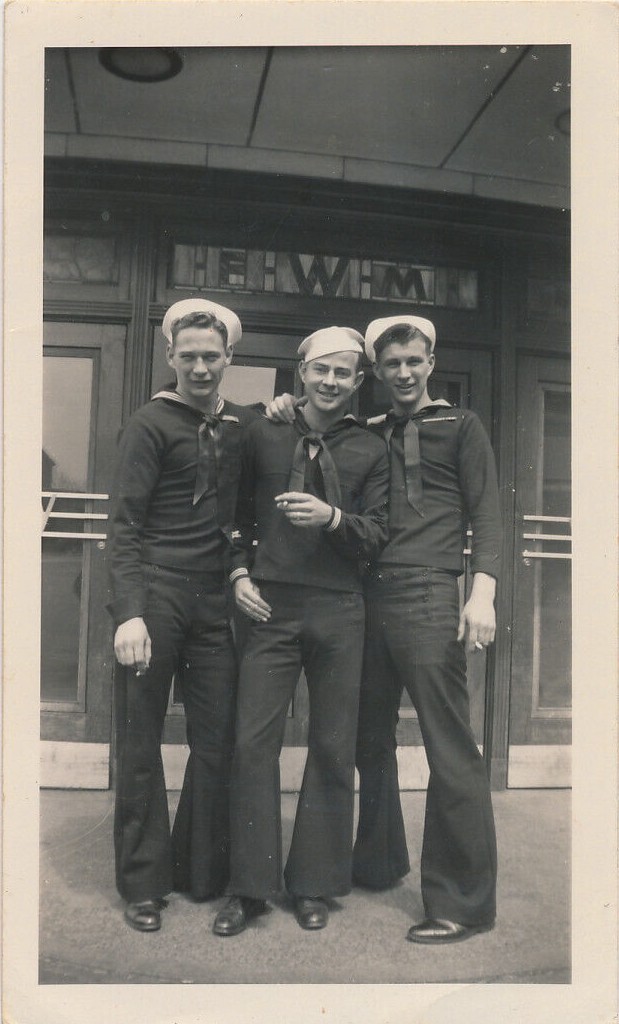
Moth-Eaten Furs and Tarnished Jewels ~ A Short Story

Moth-Eaten Furs and Tarnished Jewels
~ A Short Story by Allen Kopp ~
(This short story has been published in The Literary Hatchet.)
Blanche arrived on the ten-fifteen train. Stella was there to meet her. They greeted effusively. Blanche wept, held Stella tightly and covered her face with kisses.
“It’s just so wonderful seeing you!” Blanche said. “I can scarcely believe I’m finally here.”
“Was it a difficult trip?” Stella asked.
“Well, you know, the train always rattles my nerves and then there’s all this heat.
“Yes, New Orleans is hot,” Stella said.
“Right now there’s nothing I’d like better than to get into a tub of cool water and soak for hours!”
They stopped off for a drink, just a little nightcap as Blanche said, and seated themselves in a back booth at a little bar where they might talk.
“You’re looking wonderfully well,” Blanche said. “Married life seems to agree with you.”
“I wish I could say the same for you,” Stella said. “You look awfully pale and tired.”
“Oh, don’t look at me!” Blanche said, holding her hands up between her face and the light. “Daylight never exposed so total a ruin!”
“Is anything the matter? You’re not ill, are you?”
“No, not ill, exactly. No more than you might expect.”
“I heard all the talk about the vampires around the home place. I hoped you were all right.”
“Yes, I was fine. As well as might be expected, as the doctors say. But I’m afraid I have some very bad news.”
“What is it?”
“It’s about the home place.”
“Well, tell me. What is it?”
Blanche’s face clouded; she took Stella’s hand across the table in her own. “We’ve lost the home place.”
“What? Lost it how?”
“Everything had to be sold to pay off the debts. I’m afraid there’s nothing left.”
“Why didn’t you tell me things were so bad?”
“I didn’t to worry you, dear, and, besides, I knew there was absolutely nothing you could do, living here in the metropolis with your husband.”
“I could have come down for a few days and helped you sort everything out.”
“I managed all on my own.”
“Imagine that! The home place gone!”
“Yes, it took exactly a hundred and fifty years for our once-prosperous family to squander a considerable fortune and come to nothing. My greatest regret is there’s nothing left to pass on to you.”
“Oh, Blanche! I feel so bad about all this!”
“So do I, dear, but what’s done is done! The only thing to do now is to move forward. Life goes on, you know!”
“You’ve lost your home and everything! What on earth are you going to down now?”
“You needn’t worry, darling sister! I’m not planning on casting a pall on your happy home forever.”
“I know. That isn’t what I meant.”
“Just let me rest up for a few days in your comforting presence and I shall be right again in no time.”
“Of course, darling! For just as long as you need! Stanley travels a lot in his work and it’ll just be the two of us again, the way it was when we were young.”
“Sounds like heaven!”
In Stella and Stanley’s modest rooms on the ground floor of an old stucco apartment building, Stella installed Blanche in a tiny back room where there was a small bed, a bureau, a ramshackle chair and a closet that wouldn’t even begin to hold all her clothes. There was no door to the room so Stella hung a thick curtain that Blanche could pull closed whenever she felt the need of privacy.
For two days she stayed mostly in the little darkened room (“where the light doesn’t hurt my eyes”), lounging on the bed and listening to her tinny old phonograph records. Stella offered to fix her special dishes that would tempt her appetite, but she refused them. She was just getting over an illness, she said, and had no appetite.
On the third evening, Blanche came out of her room and, after spending a couple of hours in the bathroom soaking in the tub—hydrotherapy, she called it—she dressed to go out.
“Why, where are you going, dear?” Stella asked.
“I thought I would like to see what the world looks like outside these four walls,” Blanche said. “I hope you don’t mind.”
“Of course I don’t mind! Would you like me to come with you?”
“Oh, no, my dear! I’ll be fine!”
“But you don’t know the city. You might get lost.”
“I have an uncanny ability to find my way around in the strangest of places. Don’t worry about me.”
Stella waited up until two in the morning for Blanche to return and finally went to bed.
The next day Blanche slept all day. When she awoke in the early evening, Stella offered her coffee and various things to eat, but she would take nothing. She flitted about the apartment in her Japanese silk kimono, endlessly smoking cigarettes and looking nervously out the window, as though waiting for something or someone.
“Are you feeling rested now, dear?” Stella asked.
“Yes, I feel ever so much refreshed now. Thank you for asking.”
“Did you enjoy your evening out?”
“Oh, yes! I had a marvelous time!”
“What would you like to do this evening? We could go to a movie or play some gin rummy. If you’re still feeling tired, I could read to you while you rest.”
“I’m sorry, sweet. I’m meeting someone in just about an hour or so. That doesn’t give me much time.”
“Meeting who?”
“You don’t know them, dear.”
“Them?”
“Yes, I met up with some friends last night in my rambles about town.”
“I thought you didn’t know anybody in the city.”
“Well, it’s just the funniest thing! I didn’t know they were in the city, but they somehow knew I was here.”
“What did you do last night?”
“Oh, we talked and danced and laughed a lot. How we laughed! Just the way we did when we were young!”
“What did you find that was so funny?”
“We were just talking over old times. You know how it is when you meet people you knew from a long time ago.”
“Were they people from the home place?”
“Oh, no. I knew them after that.”
“What time are you planning on coming back? Should I wait up for you?”
“Oh, no! You go to bed and get your beauty sleep and, above all, don’t worry about me!”
The next day Stella was going to suggest a shopping trip, but Blanche slept all day again.
After five days of what Stella considered uncharacteristic behavior, she took Blanche by her cold hands and made her sit down at the kitchen table.
“I think it’s time we had a talk,” she said.
“Is something the matter, dear?” Blanche asked.
“Something’s the matter with you and I want to know what it is.”
“Why, there’s nothing the matter with me, dearest!”
“I don’t know you anymore. The Blanche I knew would never stay out all night and sleep all day.”
Blanche lit a cigarette. Her hands shook and her eyes looked glassy. “It’s true I’m not the person I once was,” she said.
“You’ve been through a difficult time, I know.”
“Yes, and it’s changed me greatly.”
“You’re not telling me everything, are you?”
“I planned on telling you when the time was right.”
“Now is that time.”
“Besides losing the home place, I also lost my job at the high school. They called me into a meeting of the school board and they fired me.”
“Oh, no, Blanche! Why did they fire you?”
“I became involved with one of my students. Romantically involved.”
“A high school boy?”
“More of a man, really.”
“Oh, Blanche! How could you!”
“I was desperately lonely.”
“How humiliating it must have been for you!”
“Words don’t begin to describe it! They said I was lewd and lascivious and a lot of other words that are too embarrassing to relate.”
“Oh, how awful!”
“They threatened to have me arrested. The only reason they didn’t was because I promised to leave town, never to return.”
“So that’s why you came here?”
“Not at first. I didn’t want to prevail upon you until things became really desperate for me. I was staying in an old railroad hotel about twenty miles from the home place, trying to figure out what my next move would be. I was as low as I had ever been in my life. I had about eighteen dollars to my name and some moth-eaten old furs and tarnished jewels. And then I met a man.”
“Oh, Blanche! Not another man!”
“I was drinking in the bar one night, alone, when he came in. He was not like any man I had ever seen before. He was young but not young, if you know what I mean. It’s impossible to describe.” She puffed on her cigarette and blew out a stream of smoke.
“Go on,” Stella said.
“I had heard stories about the vampires, of course, same as everybody else, but I didn’t know what they could be like.”
“So, you’re saying this man was a vampire?”
“His name was Alessandro.”
“Foreign?”
“Aren’t we all? I spent the next few days with him, doing the wildest and most unimaginable things. It’s all a blur now, thankfully, which I can barely recall. But the fact is that he lifted me out of my despair and made me want to live again.”
“Don’t tell me you let this fellow turn you into a vampire!”
“It was the only way I could survive all the blows that life had dealt me!”
“Oh, Blanche! You’re a vampire now?”
“Yes, dear, I’m afraid that’s the truth of it.”
“So that explains the odd behavior.”
“Yes, that explains it.”
“I don’t think you should be here, Blanche! There are people in New Orleans who kill vampires just became they are vampires!”
“I’m aware of that fact, and the last thing in the world I want to do is to endanger you or your husband or your home. I came here out of necessity, as you are my only living relative in the world.”
“When you go out at night, have you been killing people and drinking their blood?”
“Oh, no! Somebody else does the killing.”
“The friends you mentioned.”
“Yes.”
“And what happened to Alessandro, the man who made you a vampire?”
“He had to go away and leave me. He told me from the very beginning that it had to be so.”
“Where did he go?”
“He wouldn’t tell me.”
“Is he dead?”
“We’re all dead, dear. Even you. Even Stanley.”
“Since you speak Stanley’s name, I have to tell you that he’ll be back from his business trip tomorrow. He won’t be happy to hear there’s a vampire living in his house. He’s very traditional.”
“He doesn’t have to know I’m a vampire, does he?”
“How can he not know, with you gone all night and sleeping all day and never coming to the table and eating?”
“If there’s anything in the world I know, darling, it’s men. I can keep your precious Stanley from knowing about me.”
“I don’t want you to take this the wrong way, Blanche, but I’m afraid you’re going to have to leave before Stanley comes back! I have about seventy dollars in the house and you’re welcome to every cent of it.”
“That’s kind of you, precious, but I don’t think seventy dollars would get me very far. If you’ll just leave Stanley to me, I’m sure I’ll have him eating out of my hand in no time.”
“I’m afraid you don’t know Stanley.”
“Only trust me, dearest! That’s all I ask.”
Stella prepared a special dinner for Stanley’s homecoming. Blanche took a long bath and put on one of her most alluring dresses. She spent a lot of time at the dressing table fixing her hair and getting her makeup just right. She didn’t want to scare Stanley out his wits the very first time she met him.
Blanche had a picture in her mind of what Stanley would look like and she wasn’t far off. He was rather on the short side, muscular, attractive in a crude way. Earthy was the word she might use to describe him. She had known his type before. One wouldn’t be able to discuss books and music with him, but the important thing was to strike the right tone. Let him know you’re on his side and he’ll be on yours.
After the initial pleasantries were dispensed with, they sat down at the table for dinner.
“How do you like our little home?” Stanley asked Blanche.
“It’s very cozy,” she said, “but different from what I’m used to.”
“That’s right. You’re used to luxury and a big fancy house with lots of rooms and lots of servants to do all the things you don’t want to do yourself.”
“That wasn’t quite what I meant.”
“Well, we don’t have any servants. I work my ass into the ground to make a living for my wife and myself and my wife does all the work around the house, all the cooking and cleaning and anything else that needs to be done.”
“My goodness, Stanley!” Blanche said. “You don’t need to sound so defensive! I admire you, believe me I do! We all have our own struggles, no matter what station we’re born to in life. I would never look down on you!”
“And while we’re on the subject,” Stanley said. “I’d like to ask you a few questions about that big fancy house of yours with its many rooms and its many servants. How much of that whole layout is my wife entitled to as her share?”
“Stanley,” Stella said, “we don’t have to talk about that now. Blanche is here for a visit and we want to make everything as pleasant for her as we can.”
“Oh, so that’s the way it is, is it? I’m not supposed to mention anything to poor Blanche about what should rightfully belong to me and mine?”
“Of course, you can mention it, if you want to,” Blanche said weakly.
“In the state of Louisiana, we have what is known as the Napoleonic Code. It states that anything belonging to the wife also belongs to the husband, and vice versa.”
“I believe I’ve heard of that,” Blanche said.
“You’re being boorish, Stanley,” Stella said.
“I’m being what? What did you just say to me?”
“It’s just that Blanche has been terribly upset with things that have been going on in her life recently.”
“What things?”
“You might as well tell him, Stella,” Blanche said. “He has to know some time.”
“Tell me what?”
“The home place is lost,” Stella said. “There’s nothing left.”
“Lost? How?”
“Everything was sold to satisfy old debts,” Blanche said. “Every stick of furniture. All the family heirlooms. All of mother’s silver and antique china. Everything. There’s nothing left of the house, the grounds, or the family fortune.”
He slammed his fist down on the table. “Is this the crap you’ve been feeding my wife?”
“It’s all true. I have papers in my trunk of the various transactions. I can show them to you after dinner if you’d like to see them. If it would prove anything.”
“You may fool her, but you will not fool me! I know what you people are like. You think we’re stupid because we work for a living.”
“Oh, Stanley!” Stella said. “That’s carrying things too far! Blanche has always made her own living ever since college.”
“How is it that she went to college and you didn’t?”
“That’s getting off the subject. Could we please talk about something a little more pleasant? How was your trip?”
“It was bad, that’s how it was! When a man comes home, he wants to be able to relax in his own home and not have a couple of magpies saying things in his face that don’t make any sense.”
“I’d be happy to explain anything that isn’t clear,” Blanche said.
He noticed then that Blanche wasn’t eating but was only holding a half-filled glass of wine in her hand.
“What’s the matter with her?” he asked Stella. “Isn’t our food good enough for her?”
“She has an unsettled stomach, that’s all. She thought it best if she doesn’t eat anything just yet.”
“Our food isn’t fancy enough for her,” he said.
“Now, Stanley, dear,” Blanche said flirtatiously. “There is a reason why I’m not eating, but it isn’t what you think.”
“What is the reason, then?”
“Shall I tell him, Stella?”
“I don’t think now is a good time.”
“Tell me what?”
“Well, the truth is, Stanley, I have become a vampire.”
“You have become a what?”
“I don’t eat what you eat because I’m a vampire.”
“I don’t think it’s right to just blurt it out that way,” Stella said helplessly.
“Oh, so you’re a vampire?” he said. “Why didn’t you say so?”
“Please, let’s not have a row,” Stella said.
“I thought it only fair to tell you since I’m living in your home.”
“Well, not for long, you’re not!”
“Stanley, we can’t just put her out on the street!” Stella said.
“There are people in this town who consider vampires the lowest form of animal life,” he said, “and I tend to agree.”
“You have to remember she’s family!” Stella said.
“Well, she’s not my family. I can grab her by the throat and throw her out the same as if she was a bag of garbage!”
“Well, that isn’t very nice!” Blanche said. “I was trying to be honest with you and put all my cards on the table.”
“Here are the cards that are on the table, Blanche!” he said. “You have about five minutes to get out of my house!”
“Stanley, you’re not throwing her out!” Stella said.
He clenched his jaw and pointed his finger. “Are you a vampire, too?” he asked.
“Of course not!”
“It’s all right, Stella,” Blanche said calmly. “I’ll go. But I could use that seventy dollars, if you don’t mind.”
“Of course, darling. You can have anything that’s mine.”
Stella pushed herself back from the table and went into the bedroom to get the money. When she returned, Blanche and Stanley were standing beside the table, grappling. Stanley had his hand around Blanche’s diamond necklace and was trying to pull it off. Blanche was holding him off the best she could but was no match for his muscular strength. When she tried to claw his face, he stayed just out of her reach.
Finally the necklace came free and Stanley let go of her. When she fell against the table, her hand found its way to a large serrated knife used for cutting meat. As he was holding the diamond necklace up to the light to get a better look, she sliced across his throat, severing the jugular.
He put his hands up to his neck and the blood poured from between his fingers. He teetered, trying to maintain his balance, and fell heavily to the floor.
“Stanley!” Stella screamed.
“I’m so sorry,” Blanche said, “but I was only defending myself.”
Stella knelt beside Stanley on the blood-soaked rug. “We’ve got to get him some help! Get an ambulance!”
“I’m afraid it’s no use,” Blanche said. “He’s already lost enough blood that he’ll never recover. Just a few more breaths and it’ll all be over.”
“You killed Stanley!” Stella said. “You deliberately killed Stanley!”
“What’s done is done,” Blanche said. “The important thing now is to keep our heads and decide on the best course of action.”
“I’m going to call the police!”
“No, you can’t do that! I’m all you have now. We must stick together on this. We’ve got to make this look like a vampire attack, or you’ll be implicated in poor Stanley’s death.”
“No, I’m going tell the truth! I’m not going to lie about a thing like this.”
“Now listen to me! You go pack a bag and I’ll do what needs to be done here.”
“What are you saying?”
“We can’t help Stanley now. We must think of ourselves.”
Stella went into the bedroom mechanically and began talking things out of the closet and out of drawers and putting them into a suitcase on the bed, making little moaning sounds.
On her knees beside Stanley’s body, Blanche moved his hands away from his throat and she began lapping up his blood, finding it the best and most delicious-tasting she had yet encountered. It was life-giving. It was the sun, the moon and the stars.
She bit into his neck, not to release more blood, but to make it look as if he had been killed by a vampire. When she had drunk her fill, she felt fortified, better than she had ever felt before in her life.
Taking one last look at his face, she pulled the tablecloth off the table and the coverlet off the couch and covered him up so that Stella wouldn’t have to see him in his depleted state.
Stella came out of the bedroom carrying her suitcase. When she saw Blanche covered with Stanley’s blood, she shrank and covered her face with her hands. “How could such an awful thing happen?” she asked.
“Just give me a few minutes to clean myself up,” Blanche said, “and we’ll leave this house or horror.”
“We can’t just leave him here like this!”
“We’ll leave the front door unlocked. The neighbors will suspect something wrong and will find him soon enough.”
“And what will they think when they find I’m gone?”
“They’ll look for you for a while and when they don’t find you, they’ll think the vampires have carried you off.”
“Vampires! Ugh! I wish I had never heard that word!”
Blanche went into her room and cleaned herself up and changed her clothes while Stella sat on the couch and sobbed and shuddered. In fifteen minutes they were ready to go.
They took a cab to the train station. When they were seated on the crowded train headed north, Stella sat and stared at the seat back in front of her. All the tears seemed to have been wrenched out of her.
Blanche took her hand and said, “I will never stop regretting what happened, and I will spend the rest of your life making it up to you.”
“In a couple of weeks we would have celebrated our first wedding anniversary.”
“I know you’ve had a terrible shock, dear, but soon you will begin to see that what happened is for the best. Stanley would never have made you happy because he just wasn’t the right kind of man for you. After a couple of years, he would have made you miserable and you would have had no other choice but to get away from him.”
Stella pulled her hand away. “How can you say such terrible things about Stanley with him lying on the floor of our dining room with all of his blood drained away.”
“I know, dear. Try not to think about it.”
“And on top of everything else I’m going to have a baby. Stanley’s baby. I just found it out. I hadn’t even told him yet.”
“Oh, darling! Is it true?”
“Yes, it’s true, and I hate it for Stanley’s sake. He wanted a baby, but we weren’t sure if we were ready yet or not.”
“Oh, Stella. That is wonderful news! I’m so happy for you!”
“Well, I’m just not feeling very happy right now.”
“Oh, I hope it’s a boy! We’ll raise him together, just the two of us and we’ll spoil him within an inch of his little life.”
“And what do I say when people ask me where my husband is?”
“You just tell them he died before his time and you’re a young widow.”
“I don’t know, Blanche. I think I’ll just rather jump in front of this train and let it smash me flat.”
“Oh, Stella, don’t talk that way! Everything is going to work out fine. We have such good times ahead of us. You’ll see.”
“I won’t be expected to become a vampire, will I?” Stella asked.
“Of course not, dear, but we don’t have to talk about it now.”
“And the baby?”
“Nobody will ever harm a hair on his head. I promise.”
“There’s a lot about vampires I just don’t know.” Stella said. “I never expected to have one in my family”
“I know, dear. Just don’t think about it now.”
Blanche cradled Stella’s head against her shoulder and with the gentle rocking of the train, Stella soon went to sleep, utterly exhausted from all that had occurred.
Blanche smiled her secret smile and felt benevolent toward all the other passengers on the train. Things had worked out so well. Stella would get over Stanley soon enough. She was still young and pretty, or she would be with a little fashion advice and the right kind of makeup and hairstyle. Men would be drawn to her. Young, handsome, virile men with intellect and refinement. Men with hot, rich blood, even more delicious than Stanley’s. What a time they were going to have!
Copyright © 2023 by Allen Kopp
 Literary Fictions