
Author: allen0997
Enough About Me ~ A Short Story

Enough About Me
~ A Short Story by Allen Kopp ~
Mrs. Doris “Dodie” Cunningham sat alone in her darkened house in a cloud of cigarette smoke. It was a summer day, late in July. She was aware of some unusual sounds in the back yard and she didn’t know what it was. Oh, yes, she remembered now. Little Leland was having some friends over. They were playing a game or something, as children do, with all the requisite screaming.
After a half-hour or so the sounds ceased suddenly, so she went to the back door and opened it to make sure the children weren’t getting themselves into any mischief or hurting each other. After all, she was the mother and she was supposed to keep the little brats in line.
Opening the door revealed a small boy sitting hunched over on her back steps. He had short brown hair and wore a striped shirt. When she stepped out the back door, he turned around and looked at her.
“Hello,” she said. “Do I know you?”
The boy shook his head and looked away.
“Well, since I don’t know you, I might ask you why you’re sitting there on my back steps.”
“We were playing but they left,” he said.
“Who left?”
“Leland and Jonathan.”
“Well, I know who Leland is since he lives here, but I don’t know who Jonathan is.
“He’s just a smart-aleck kid.”
“So, the three of you were playing and in the middle of it Leland and Jonathan left. Is that right?”
“Yes.”
“Where did they go?”
“I don’t know. They played a trick on me. They told me to hide my eyes and when I did they ran off and didn’t come back.”
“That wasn’t very nice, was it?”
“No.”
“Little Leland invited you and this Jonathan kid over to play and then Leland and Jonathan abandoned you?”
“I don’t mind.”
“It would be my guess that you don’t like Little Leland very much.”
“You’re right. He’s an asshole.”
“You have this feeling way down deep in your interior parts that he’s not to be trusted.”
“How did you know?”
“What about Jonathan?”
“He’s even worse.”
“Why do you play with them?”
“I don’t know. I don’t know that many people.”
She flipped her cigarette over the porch railing. “Can’t you just go on home? I mean, instead of waiting for those two little shits to come back?”
“My mother told me to stay here until three o’clock. She’s coming to pick me up then.”
“Can’t you walk home?”
“It’s too far and I’m not sure if I remember the way. I’d get lost and then my mother would be upset with me.”
“You’re new in town, I take it.”
“Yeah.”
“I can drive you home if you’d like.”
“No, that’s all right. That would only confuse my mother.”
“Well, you might as well come in, then. You can’t sit out there in this awful heat until three o’clock.”
She led him into the living room and pointed to the couch where he might sit.
“Would you like me to call your mother for you and tell her she needs to come a little earlier than planned?”
“No, she’s not at home. She had an appointment.”
“Oh, I see.”
Realizing the room was depressingly dark for a July afternoon, she opened the blinds.
“Would you like a soda or a drink?” she asked.
“No, but I would like to use the bathroom.”
“Well, make yourself at home,” she said. “It’s through the dining room and down the hall.”
He was gone for about two minutes and when he came back his shirt was tucked neatly into his pants.
“I just realized I don’t know your name,” she said.
“It’s Ricky.”
“Richard?”
“Yeah, but everybody calls me Ricky.”
“Well, that’s a good name. I never met a Ricky I didn’t like. How old are you, Ricky?”
“Eleven.”
“You’re getting close to that dangerous in-between age.”
“What’s that?”
“It’s where you’re halfway between childhood and adulthood. You like to think of yourself as all grown up, but the adults around you keep telling you you’re still a child.”
“Oh.”
“Well, just relax,” she said. “You might as well enjoy yourself while you can. I’m not a wicked witch in spite of appearances to the contrary.”
He laughed feebly and leaned his head all the way back. “You have a pretty house.”
“Well, I like to think so.”
“It’s big.”
“Yes, it’s big. When Big Leland buys a house, he buys the biggest and the best that money can buy.”
“Who’s Big Leland?”
“He’s my husband. He’s Little Leland’s father.”
“Do you have a dog?”
“No, I don’t have a dog. I have two children and that’s enough in the way of pets. Besides Little Leland, there’s Cecelia. She’s only eight. You probably don’t know her, do you?”
“No.”
“Her character has already been formed. At her young age, you can tell exactly the kind of woman she’ll be, and it’s not a pretty picture.”
“Oh.”
“Well, now that the whole can of worms has been opened, I might as well tell you that I’m not really the mother of Little Leland and Cecelia. I’m their stepmother.”
“Oh.”
“Don’t you find that interesting?”
“Yes.”
“I’ll bet Little Leland never told you he had a stepmother, did he?”
“No, he didn’t. What happened to his real mother?”
“Well, the rumor is that she died, but I have reason to believe she’s hiding out someplace.”
“Why would she do that?”
“If you knew Big Leland, Little Leland and Cecelia, you’d already know the answer to that question.”
“I have a dog,” he said.
“What’s his name?”
“Skippy.”
“What kind of a dog is Skippy?”
“I think he’s part collie and part something else.”
“So he’s a big dog.”
He leaned forward and held his hand two feet from the floor. “About this big.”
“Do you let Skippy stay in the house?”
“He can come into the basement as long he leaves his fleas outside.”
“A good policy.”
“Except he doesn’t have any fleas because he wears a flea collar.”
“I’ve always liked animals,” she said. “They’re innocent and pure, whereas people are corrupt and vile.”
She leaned forward and lit a cigarette and blew the smoke out in a cloud above her head. “I’m a little drunk right now,” she said. “Maybe more than a little. Your mother would probably be shocked to know that I invited you into my house while I’m drunk. Maybe we should just keep that between ourselves.”
“I don’t mind,” he said.
“You’re a good sport. I could tell that the moment I laid eyes on you.”
He watched her as she walked over to a side table and poured herself a shot of whiskey. “I’d ask you to join me, but I think we’d be a little premature on that one. Maybe when you’re older.”
“You drink whiskey?” he asked.
“Oh, my, yes!” she said. “I’m the champion whiskey drinker.”
“Does it taste good?”
“No, it tastes like crap, but I don’t drink it for the taste.”
“What do you drink it for?”
“Oh, it helps to get me through the day, I suppose. It gives me the courage I lack.”
“Oh.”
“I’ll bet your mommy doesn’t drink straight whiskey, does she?”
“I’ve never seen her if she does.”
“What about your daddy? Is he a good father?”
“I guess so.”
“What does he do for a living?”
“He’s a painter.”
“You mean landscapes and portraits and things like that?”
“No, he paints houses and sometimes he drives out into the country and paints barns.”
“Is there a lot of money in painting barns?”
“I don’t know.”
“Of course not. You wouldn’t know. When you’re eleven years old, you don’t think about things like that, do you?”
“No.”
“I’d like to be eleven again,” she said. “I’d live my life in an entirely different way. I wouldn’t marry for money. I’d go away somewhere and be an artist. That’s what I’ve always wanted to do. Some women aren’t cut out for the domestic scene. I’m one of them.”
He yawned.
“But that’s enough about me,” she said. “Tell me about yourself. What do you like to do?”
“I don’t know. Watch TV and read my comics, I guess.”
“You’re a reader?”
“Yeah.”
“I’m a reader, too. When I was younger, I’d read a novel a week and I mean the good stuff too. Not cheap junk that passes for fiction nowadays. It’s good that you’re a reader. It teaches you to think and figure things out for yourself. I don’t think Big Leland has ever read a book in his life. And just try to get Little Leland or Cecelia to read a book on their own! Impossible!”
“My sister reads books from the library. Books she doesn’t have to read.”
“How old is she?”
“Thirteen.”
“Do you get along well with her?”
“Sure.”
“Any other brothers or sisters?”
“I have a brother, Harvey. He plays tricks on me and makes fun of me. He calls me names.”
“How old is Harvey?”
“Sixteen.”
“You don’t like Harvey very much, do you?”
“Not at all.”
“You’d like to punch him the face. Hurt him.”
“Yes, I would.”
“One day Harvey will get exactly what he deserves and you’ll be there to see it. One day he’ll come groveling to you because he wants something from you, and you won’t be inclined to give it to him because he wasn’t nice to you when mattered.”
“Yeah,” he said.
“When I married Big Leland and took on his two kids as my own, I knew I would live to regret it, and I have. Regretted it, I mean. I’m thankful that the first Mrs. Big Leland had sense enough to stop after two kids. She had her tubes tied after Cecelia was born, you know. Otherwise there might have been half a dozen.”
“I’m not ever having any kids,” he said.
“That’s very wise. More people in the world should adopt that attitude.”
“I want lots of animals around me.”
“Live on a farm, maybe?”
“Yeah. Out in the country.”
“Where people like Little Leland and your brother Harvey can’t do mean things to you?”
“Yeah.”
“And since we’re back on the subject of Little Leland—or at least I am—I have to warn you about him.”
“What about him?”
“You’re a smart, sensitive boy. You don’t need friends like Little Leland. He’ll never do you anything but harm. You’d be better off to have no friends at all.”
“What do you mean?”
“He will lead you astray, hurt you or cheat you.”
“Why will he do that?”
“Because that’s what he does. People like him. And when you think that he’s only a child and just getting started, it’s frightening. What will he be like when he’s a grown man? I pity anybody who falls under his spell.”
“I don’t know what that means.”
“Of course you don’t. You’re too young and innocent, but the more you associate with Little Leland the more you’ll see it.”
“I don’t know. He seems all right to me.”
“That’s how his kind always gets started. He seems all right at first so you aren’t able to see the terrible thing that’s coming. I know this because Big Leland is exactly the same way. Little Leland is a miniature version of Big Leland.”
“Why do they both have the same name?”
“Big Leland wanted an exact duplicate of himself.”
“Oh.”
“And that’s exactly what he got.”
“They’re both turds, aren’t they?”
“I couldn’t have said it better myself,” she said. “If I had a criminal nature and wasn’t afraid of going to jail, I’d sneak into his room at night when he’s asleep and strangle him with the drapery cord.”
“Big Leland?”
“No, first I’d take care of Little Leland and then I’d go to work on Big Leland.”
“You could poison both of them. That might be better.”
“Yes, I’ve thought of that, but it would have to be a poison that can’t be traced. I don’t want, under any circumstances, to go to jail.”
“I have an uncle in jail,” he said. “He didn’t kill anybody, though. I think he stole some checks.”
“But you know what? I don’t have to kill Big Leland and his demonic offspring. I have something better than that.”
“What is it?”
“Do you know what an embezzler is?”
“No.”
“It’s a person who systematically steals money from his employer. Small amounts, to be sure, but over time the small amounts turn into big ones.”
“Oh.”
“Big Leland is an embezzler. In the last three or four years, he has embezzled a half-million dollars from his employer.”
“And he doesn’t want anybody to know?”
“That’s right, he doesn’t want anybody to know, but soon the whole world will know because I’m going to tell them! I have the phone number for the FBI right beside my phone!”
“Won’t Big Leland be mad if you tell?”
“Of course he’ll be mad, but by the time he finds out he’ll be locked up in the hoosegow!”
“What’s that?”
“You are young, aren’t you? It’s the jailhouse.”
“Oh.”
“And when Big Leland goes to jail, Little Leland and Cecelia will come crashing down, too. They will no longer have the life of privilege and ease that they have now. Little Leland will go to military school and Cecelia will go into the convent. And not only that, but they will both have to live with the stigma of having a convicted embezzler for a father.”
“Did you hear that?” he asked.
“Hear what?”
“I think I heard my mother’s car horn.”
“I didn’t hear anything.
When the horn sounded again, they both stood up. She went to the front door and opened it and looked out.
“What kind of car does your mother have?” she asked.
“A black station wagon with red trim.”
“Well, this is her, then.”
“Would you like a drink of water before you go?”
“No thanks.”
“I’ve enjoyed our little talk. Will you come and see me again?”
“I guess so, if you want me to.”
He was ready to go out the door when she surprised him by taking his hand and shaking it.
“Tell your mother she’s a very lucky woman.”
“Why is she lucky?”
“To have you for a son.”
“I don’t think she would agree.”
She watched him go out and get into the station wagon with a blonde-haired woman and then she closed the door and locked it.
It was only a few minutes after three o’clock. There were still several hours of summer daylight before the nighttime drinking could begin. She emptied her old bottle and opened a new one and took a small sip straight from the bottle. In a little while she’d go into the kitchen and make a pitcher of martinis.
Copyright 2023 by Allen Kopp

The Power of the Dog ~ A Capsule Movie Review
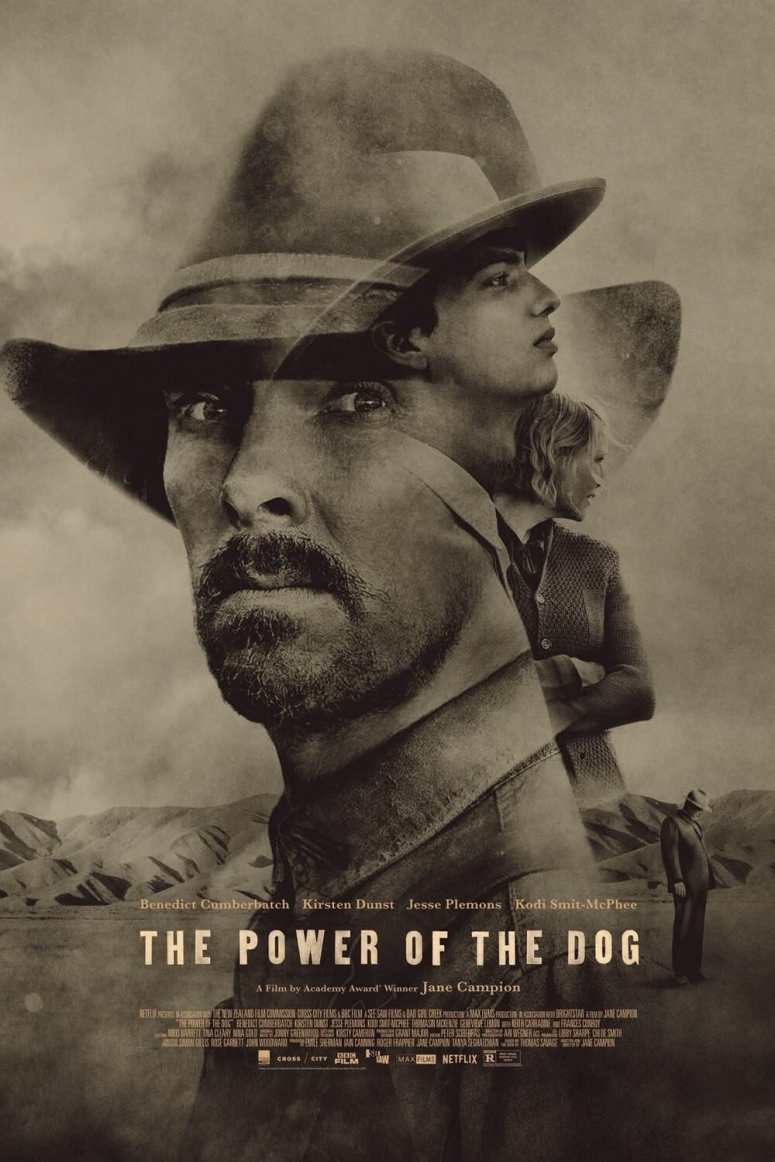
The Power of the Dog
~ A Capsule Movie Review by Allen Kopp ~
The Power of the Dog is a thought-provoking “Western” that you probably didn’t see at your neighborhood multiplex along with all the superhero movies and romantic comedies. It’s an “art” film for grownups, with complex themes and fascinating characters. It’s based on a novel by Thomas Savage and directed by Jane Campion.
The story is set on a cattle ranch in Montana in 1925. Brothers Phil (Benedict Cumberbatch) and George Burbank (Jesse Plemons) own the ranch. They seem to have everything they need—they live in a big house—but it’s a lonely life and a hard one.
Of the two brothers, Phil is definitely the strong one. He’s a bit of a brute and kind of intimidating. He isn’t too particular about his personal hygiene. When George suggests, kindly, that Phil have a “bit of a washup” before he comes to the table for an important dinner with the governor, Phil is offended and doesn’t show up at the table at all.
As the story unfolds, though, we see that Phil is really a diamond in the rough. He has studied classics at Harvard. He knows music; he plays the banjo well. He and George have learned cattle ranching from a person that Phil speaks of often, a fellow referred to as Bronco Henry. We never meet Bronco Henry because he is dead. We learn that Phil is besotted by the deceased Bronco Henry. Was there a special relationship between them? Apparently there was.
There is a middle-aged widow nearby who cooks for the cowhands. Her name is Rose (Kirsten Dunst). Brother George feels sorry for Rose, and when he asks her to marry him, she accepts. She has a willowy, pale-faced son named Peter (Kodi Smit-McPhee), about twenty years old. When Rose marries George and she and Peter move into the ranch house with Phil and George, the plot turns on Peter.
Peter is nothing like the other young men on the ranch. He is artistic. He makes paper flowers for the tables. At first, Phil is contemptuous of Peter, calling him “Miss Nancy.” Phil and Peter avoid being in each other’s company, but that soon changes when Phil makes special overtures to Peter. They begin spending a lot of time together, much to Peter’s mother’s dismay. Phil and Peter ride off together into the hills. Soon they develop a special bond, which might be likened to a father-son relationship or a close, loving friendship. Phil braids a special rope for Peter. Peter tells Phil he wants to be just like him.
The Power of the Dog is, as far as I can see, a perfect movie. It does what movies seldom do. It offers something we have rarely (maybe never) seen before and stretches the boundaries of the cinematic artform. More to the point, it’s a movie for people with functioning brains.
Copyright © 2023 by Allen Kopp

Cemetery Christmas

Cemetery Christmas
~ A Short Story by Allen Kopp ~
Calvin Horne took the wreath out of the back of his car and walked down the hill with it slung over his shoulder like a garden hose to his parents’ grave. It was the day before Christmas and he didn’t want to be in the cemetery; didn’t want to be reminded of death on a joyous holiday. Christmas was about birth, about what’s good in the world.
He hadn’t been especially close to either of his parents. His mother, dead two years, was a difficult and obstinate old woman. The two of them, Calvin and his mother, could hardly be in the same room together without a clash of wills. His father had been dead for twenty years and was only a distant memory.
He trudged down one hill and up another one. It was there, at the top of the next hill, where his parents were buried. His mother had generously offered to buy the plot for him on the other side of her, but he declined the offer. (He wanted simply to vaporize into the air as if he never existed at all.) Now that space was occupied by a stranger that his mother, in all probability, wouldn’t have liked.
His parents had a large and rather ostentatious granite headstone as tall as a man’s head that his mother bought and paid for. In the middle of the stone, at the top, the name Horne was etched in large letters. Below were the names, birth and death dates of Byron and Julia. Under the names were two intertwined hearts with an arrow shot through them and, in fancy script, the ironic words Together Forever. They were together, he was sure, only in the sense that they were both dead.
He took a deep breath, a little winded from his climb up the hill, and pushed the legs of the wreath’s tripod into the soft earth in front of the headstone. Now, if his sister or any other family members came snooping around, they wouldn’t be able to say he hadn’t discharged his duty to his parents at Christmas.
The wreath seemed secure enough to withstand any winter blasts, so he pulled his gloves back on over his frozen fingers and was just about to retrace his steps back to the car, when he heard someone coming.
“I hear voices in the cemetery, don’t you?” a voice said.
He turned and saw a large woman in a fur coat and fur hat coming toward him. “What?” he asked.
“I said I hear voices when I’m in the cemetery. Don’t you?”
He thought she might be making a joke, but he wasn’t sure.
“No, I don’t hear any voices,” he said. “All I hear is quiet.”
“Yes, the quiet of the grave,” the woman said. “Do you need any help?”
“Why, no,” he said. “I was just leaving.”
“What are you doing here today?”
“I came to put a Christmas wreath on my parents’ graves.”
The woman looked down at the headstone and nodded. “They’re dead,” she said.
“Yes, that’s why they’re buried in the cemetery.”
“I’ll bet you were a good son.”
“Well, I can say I at least tried.”
“Do you have other family?”
“A sister and a son.”
“How old’s your son.”
“Twenty-two.”
“What happened to your wife?”
“We got divorced. She’s married to somebody else now.”
“What does she…
“I think that’s enough questions,” he said. “Especially since we don’t know each other.”
“Are you in a hurry to get away?” she asked.
“No more questions, I said.”
“I’ll bet you have a girlfriend waiting for you someplace, don’t you? Or maybe a boyfriend?”
“Let’s just say that’s for me to know and you to find out.”
“Okay. I get the picture. You don’t want to talk to me.”
“Well, it’s cold and it is Christmas.”
“Not today. Today is the day before Christmas. Tomorrow is Christmas.”
“Yeah. Enjoy your walk through the cemetery, or whatever it is you’re doing. I’ve got to be going.”
“Can’t you stay and visit a while?”
“No. I did what I came to do and now I need to go.”
“Haven’t we met before?” she asked. “A long time ago.”
“It isn’t likely.”
“I feel as if I’ve always known you.”
“We’ve never met, I’m sure of it.”
“Do you find me at all attractive?” she asked.
“What kind of a question is that? Of course I don’t!”
“What’s wrong with me?”
“I have to be going.”
He started to move away and she stepped in front of him.
“Could you spare me some change?” she asked.
“No, I can’t spare you any change. I don’t have any change. I might ask why you need change in a cemetery, wearing a fur coat, but the honest truth is I don’t care.”
“That’s not very nice. I thought at first you were a nice man.”
“Well, I’m not!”
“Where is your Christmas spirit?”
“It disappeared as soon as you started talking to me.”
“Don’t you like me?”
“I have no opinion of you one way or the other.”
“My brother, Ogden, will be along to pick me up any minute. He went to buy some cigarettes. When I tell him how you insulted me, he’ll be awfully mad.”
“I didn’t insult you!”
“You did! You said you found me unattractive and you didn’t want to talk to me.”
“If you hadn’t spoken to me first, I would never have said anything to you at all!”
“Well, how are people supposed to get to know one another?”
“They’re not!”
“Can I come home with you?”
“No!”
“I’ll bet you have a beautiful home, don’t you?”
“None of your business!”
“I’ll do anything you want!”
“None of your… I don’t want anything from you except for you to stop annoying me!”
“If you get to know me, I’m sure you’ll like me.”
“Dear Lord, why me?”
She lifted her arms up and put her hands behind his neck, locking her fingers at the back of his head.
“Stop that!” he said. “What do you think you’re doing?”
He took hold of her wrists and forced her to release her grasp.
“You don’t like women at all, do you?” she asked.
“It isn’t any of your business what I like! When I leave here, I’m going straight to the police station and tell them there’s a crazy woman in a bearskin coat accosting people in the cemetery. They’ll send a squad car out here and pick you up.”
“Well, you don’t have to be so unkind about it!”
Down the hill she saw Ogden, her brother, lurking behind a tree. She called to him, he spotted her and began walking up the hill. In less than a minute, he was standing before them.
“Who’s this bozo?” Ogden said with a sneer. With his fat face, fur coat and fur hat, he was the male equivalent of the woman.
“He wanted to leave, but I kept him here,” she said.
“Good work, Bootsie girl!” Ogden said.
“Your names are Bootsie and Ogden?” Calvin asked.
“Yeah, what of it?” Ogden said.
“He insulted me, Oggie!” Bootsie said.
“Oh, he did, did he? How did he insult you?”
“He doesn’t like me. I offered to go home with him and do anything he wants, but he said he’s not interested.”
“Well, that’s not very gentlemanly, is it?”
“Oh, I get it.” Calvin said. “She’s a whore and you’re her pimp.”
“Ooh! Some words are so ugly, don’t you think?” Ogden said.
He pulled a small gun out of his jacket and pointed it at Calvin.
“You’re wasting your time robbing me,” Calvin said. “I only have about two dollars.”
“Prove it!” Ogden said. “Give me your wallet!”
Calvin removed his wallet and handed it to Ogden as if it was something he did every day. Ogden opened it; after he had thoroughly examined its interior, he looked back at Calvin with hatred.
“You’ve got two lousy dollars? And no credit cards? What kind of a loser doesn’t have any credit cards?”
“I always pay for everything in cash.”
“You’re a deadbeat, you know that?”
“I told you it wouldn’t do you any good.”
“How about if I drive you to your bank and you withdraw about two thousand dollars from your account and give it to me and Bootsie here as a Christmas present?”
“What makes you think I have two thousand dollars in the bank?” Calvin said.
“Fellows like you always have lots of money in the bank.”
“The bank is closed for the Christmas holiday.”
“Well, isn’t that that just too convenient!”
Bootsie whispered in Ogden’s ear. His bewildered expression faded and he smiled. “I’ll bet you’ve got an expensive watch, haven’t you?”
“I have a Timex. It cost twenty-nine dollars and ninety-five cents and I’ve had it for six years.
“All right, Mr. Smart Aleck! Hand it over!”
Calvin unfastened the watch and gave it to Ogden with a smile.
“All right!” Ogden said. “I have two dollars from you and a cheap watch. If that’s the best you can do, I’m going to have to kill you and if I do nobody will find your frozen body at least for a couple of days, since it’s a holiday and all.”
“No, don’t kill him,” Bootsie said reasonably. “He’s not worth it. Just let him go.”
“And he’ll go straight to the police.”
“We’ll be long gone by the time they get here.”
“He knows what we look like, for Christ’s sake!”
“So what? Do you really want to spend the rest of your life in the penitentiary? I don’t think I do! Only a crazy person would kill a guy over two dollars and a cheap watch.”
“I can’t just let him go without doin’ nothin’ to him,” Ogden said.
“Just kick his ass good.”
“No, I know!” Ogden said. “I’ll make him strip naked and he’ll have to walk home with his best parts on display for all the world to see.”
“You really are sick, you know that?” Bootsie said. “Nobody’s going to strip naked! It’s too damn cold for that shit!”
“Hey! You know what?” Calvin said. “I just saw two police cars turn into the cemetery. They’ll be on top of us in about one minute!”
Ogden and Bootsie turned all the way around in confusion and, seeing nothing, began running down the hill to get away.
“A couple of professional criminals!” Calvin said to himself and laughed.
He picked up the gun where Ogden had dropped it beside the trunk of a tree and slipped it into the pocket of his coat. He doubted the gun would even shoot, but it would be an interesting piece of evidence to turn over to the police so they could know he wasn’t just making the whole thing up.
Copyright © 2023 by Allen Kopp
The Christmas Guests ~ A Short Story

The Christmas Guests
~ A Short Story by Allen Kopp ~
The party crowd was attentive as tiny Chickpea Knuckles, thirty-seven inches tall, stood beside the Christmas tree on her little platform and sang a medley of Christmas standards in her throaty contralto voice: “Rockin’ ‘Round the Christmas Tree,” “Blue Christmas,” “Jingle-Bell Rock,” “I Saw Mommy Kissing Santa Claus.”
At the end of Chickpea’s act, the audience erupted into enthusiastic applause. Mrs. Griselda Pinkwater, sitting on the front row, beamed with satisfaction, almost as if the applause was for her. She had every right to be pleased, for she was the one had who brought Chickpea to the forefront.
Now that the musical part of the program was finished, everybody stood up. Mrs. Pinkwater became surrounded by well-wishers. Sylvia Peat, her enormous breasts trussed up inside her green silk dress, took hold of Mrs. Pinkwater’s wrist in her talon-like hands. She reeked of her expensive perfume. “Lovely Christmas party, my dear!” she gushed.
“Thank you, my dear!”
“Where did you find the adorable midget singer?”
“You don’t expect me to give away all my secrets, do you?” Mrs. Pinkwater said.
“Do you think she’d sing at my New Year’s soiree?”
“You could always ask her. She doesn’t sing for free, though.”
“Is she terribly expensive?”
“With your millions, I don’t think you need worry about the cost.”
Just then Enid Goode approached from the right. She was as tall and as broad as a female warrior. “Where did you find a family of midgets?” she asked. “You clever thing, you!”
“Well, it’s a long story,” Mrs. Pinkwater said. “My husband and I had the Knuckles family in our home for Thanksgiving dinner. We found them simply entrancing. When I discovered that the father, Quincy Knuckles, was headed for jail, I took pity on them.”
“Oh, dear! I hope the little man didn’t kill anybody!”
“Oh, no. Nothing like that. He busted into a pawn shop.”
“Why did he do that?”
“He saw a banjo in there that he thought belonged to him.”
“A bedroll?”
“No, a banjo.”
“Here comes the Mrs. Carlotta Knuckles, the matriarch of the midget clan,” said Mrs. Pinkwater. “She is so sweet! You will absolutely adore her!”
She snagged hold of Carlotta Knuckles and pulled her into the circle of ladies.
Carlotta was wearing a slinky, gold-colored evening gown that Mrs. Pinkwater had had bought for her. She carried a long cigarette holder, taking occasional puffs on a cigarette that had gone out a long time ago.
“How do you do?” Carlotta said, looking up shyly at the ladies—all in various stages of drunkenness—that surrounded her like a forest of redwood trees.
“Isn’t she just the most precious little thing?” Betty Rowley said.
“What’s it like being a midget?” Shirley Faraday asked.
“They prefer ‘little people’,” Mrs. Pinkwater said. “It’s more respectful.”
“What’s wrong with calling them midgets? That’s what they are, isn’t it? How many are in the family?”
“Besides the incarcerated father, there’s mother, daughter and son.”
“How old is the son?” Enid Goode asked.
“He’s twenty-one, I think.”
“Where is he? I’d love to see him.”
“Twenty-one is a little young for you, isn’t it, Enid?” said Betty Rowley.
“I’ve done a lot worse!” Enid said, and all the ladies laughed.
“Well, he’s really still a boy!” Mrs. Pinkwater said.
Just then the boy in question, Bixley Knuckles, walked past, bearing a tray of drinks over his head. Mrs. Pinkwater tapped him on the shoulder and he turned around and looked at her.
“You don’t have to serve drinks,” she said. “You’re a guest.”
“I like doing it,” he said. “It gives me a chance to hobnob.”
Shirley Faraday ruffled his hair. “He’s so cute I could just eat up him!” she said.
“Hey!” Bixley said. “Hands off!”
“The ladies like you,” Mrs. Pinkwater said.
“Of course they do, but that doesn’t mean they can paw me whenever they feel like it!”
Mrs. Pinkwater leaned over and whispered in Bixley’s ear: “All these dames are crazy and they’re all kind of drunk. Don’t take them too seriously.”
“I should say I won’t!” he said and then he was gone.
“I’d like to wrap him up and take him home,” Shirley Faraday said.
“And what would you do with him when you got him there?” Betty Rowley said.
“I don’t know. I’m sure we’d think of something.”
The crowd of ladies dispersed to freshen their drinks or to use the ladies’ room.
“How are you holding up, dear?” Mrs. Pinkwater asked Carlotta.
“All right, dear.”
A waiter came by with a tray of canapés, bent over and thrust them toward Carlotta.
“Try one,” Mrs. Pinkwater said. “They’re delicious.”
Carlotta took one each hand and began munching on them. “I have something to tell you,” she said, “and I hate to say it.”
“What is it?
“My midget husband, Quincy Knuckles, has escaped from jail.”
“Oh, my goodness! Are you sure? How did it happen?”
“He’s three feet tall. When the guards opened the doors, they were preoccupied and didn’t look down. He escaped right under their noses.”
“Oh, dear!”
“But that’s not the worst of it. When I was in the kitchen a while ago, there was a knock on the back door. I thought it was going to be another liquor delivery, but when I opened the door who do you think was standing there?”
“Let me guess.”
“It was Quincy.”
“Where is he? What did you do with him?”
“I took him upstairs and hid him when nobody was looking.”
“Oh, dear!” Mrs. Pinkwater moaned. “We’re harboring an escaped fugitive!”
“Not only that! He’s cross-dressing!”
“He’s what?”
“He’s dressed as a woman.”
“How is that going to help?”
“The police are looking for a male midget.”
“Keep him hidden and we’ll decide what to do with him when the party is over.”
“He wants to come down and join the party. He’s been in prison since Thanksgiving. He’s lonely.”
“All right, but keep him in the background. If any of my guests begin to suspect he’s more than he seems to be, he’ll have to leave. I won’t have my party ruined.”
“Yes, ma’am,” Carlotta said.
Carlotta introduced her “sister,” Corabelle, from New Orleans, to all the guests. They were charmed as she spoke to them in a soft Southern accent. When one of the male guests, Clifford Clifford, asked Corabelle to dance, she graciously accepted without the slightest hint of embarrassment.
“Where did she learn to dance like that?” Mrs. Pinkwater said to Carlotta as they stood off to the side and watched as Corabelle and Clifford Clifford moved around the floor.
“She’s always been a good dancer,” Carlotta said.
“She moves effortlessly as if she dances every day of her life.”
“What a lovely compliment!” Carlotta said. “I’ll be sure and tell him what you said. He doesn’t very often have a chance to feel good about himself.”
“And where did he get the dress and wig?”
“It’s a long story. He bought them for a lodge function that he attended as a woman. And not one of his lodge brothers recognized him, either!”
“If I didn’t already know he was a man,” Mrs. Pinkwater said, “I’d never suspect.”
“It makes me so proud!” Carlotta said.
When Corabelle finished dancing with Clifford Clifford, others wanted to dance with her but she declined.
“I’m all fagged out for the moment, gentlemen,” she said. “I have to get myself a refresher.”
“Remember I have the next dance!” Finch Baggett called to her.
“You got it, mister!” she said.
“And I have the one after that!” Trent Trill announced.
“Oh, you kid!”
“I never expected her to be so popular with the men,” Mrs. Pinkwater said. “And they’re all married. Their wives are looking on with dissatisfaction, if they’re not too drunk to notice.”
“It’s the novelty of the thing,” Carlotta said.
“And wouldn’t they be surprised to know that the thing is not what they think it is?”
“Oh, you kid!” said Carlotta.
At the buffet table, Bixley spotted Corabelle and they began sparring playfully. When Corabelle got Bixley in a headlock, Mrs. Pinkwater and Carlotta broke them up before they gave away Corabelle’s secret.
“Let’s show them our tumbling moves,” Bixley said. “They’d love it.”
“Can’t,” Corabelle said. “I’m wearing a dress, in case you hadn’t noticed.”
“So?” Bixley said.
“Go get me a glass of that champagne, sonny boy,” she said as she sat down to eat the plate of food the maid prepared for her.
The party didn’t begin to break up until after midnight.
“The best party ever!” one guest after the other said as they thanked Mrs. Pinkwater and went out the door.
“We fooled ‘em,” Quincy said, removing the wig and kicking off the pumps. “That’s the most fun I’ve had in a long time. Get me another glass of that champagne.”
“Not so carefree, mister!” Carlotta said. “You’re a wanted midget, you know.”
“I can be a woman for as long as I have to be.”
“And what happens when they pull off the wig and lift up the dress and discover you’re really a man?”
“I guess I’ll worry about that when the time comes.”
“My husband will be home from his business trip in two days,” Mrs. Pinkwater said. “I suggest the entire midget family stay here until then. I have plenty of room.”
“Oh, we couldn’t impose!” Carlotta said. “Christmas is in three days!”
“You’d be doing me a favor,” Mrs. Pinkwater said. “I hate being alone at night.”
“Your husband wouldn’t want to find us here when he comes home.”
“He won’t mind. He enjoys having company.”
“Well, it’s awfully kind of you, but I don’t know.”
“Quincy can remain your sister Corabelle for as long as you’re here. If the police come snooping around looking for Quincy, just tell them she’s your sister visiting from New Orleans. If he can fool all my party guests, he can fool the police.”
“I think it’s a good idea,” Quincy said. “I don’t relish the idea of being thrown back in the can and spending Christmas in jail.”
“I don’t know how we’ll ever repay you for all your kindness to us,” Carlotta said, on the point of tears.
“Can I sleep in that little bedroom in the attic overlooking the back yard?” Bixley asked. “It makes me feel like the captain of a ship.”
“How do you know about that room?” Mrs. Pinkwater asked.
“I did a little exploring while everybody was busy,” Bixley said. “I didn’t think you’d mind.”
“I can sleep anywhere,” Chickpea said, “as long as there are no snakes.”
Mr. Pinkwater, when he returned from his business trip on the day before Christmas, was not surprised to find the midgets installed in his home, but he was surprised to discover Quincy Knuckles as a woman.
“This is Miss Corabelle Hamilton, from New Orleans, Louisiana, come to spend Christmas in our home,” Mrs. Pinkwater said. “Quincy Knuckles is no more.”
Corabelle stood up and offered her hand to Mr. Pinkwater. “It’s an honor to meet you, sir.”
“I don’t think that’s the same person at all,” Mr. Pinkwater said to Mrs. Pinkwater when they were alone. “I think they’re playing a trick on us.”
“We’re going to have such a lovely Christmas!” Mrs. Pinkwater said. “They’re like the odd children we never had.”
Copyright © 2023 by Allen Kopp
 Literary Fictions