
Author: allen0997

London Paris Rome ~ A Short Story
London Paris Rome
~ A Short Story by Allen Kopp ~
I had one sister, four years older than me. Her name was Ruth, but everybody called her Ruthie. She and I had always occupied different worlds. She stayed in her world (in her upstairs room) and I stayed in mine. I can’t say I really disliked her, but the truth was I didn’t feel much of anything when it came to her. If she went far away, I’d like to know that she was all right, but if I didn’t see her again for a long time—or ever—it wouldn’t bother me much.
When Ruthie graduated from high school, she got married right away to her long-time boyfriend. His name was Lonnie Turkle. He wasn’t good-looking or smart. He wouldn’t, as the saying goes, go far in life, but, as Ruthie would have been the first to point out, nobody cared what I thought.
Within a year of her marriage, Ruthie became a mother to a daughter she named Eulalie. She found out, soon enough, that being a parent was lot of work and almost a constant bother, not nearly as much fun as she thought it would be. She didn’t have nearly as much time, anymore, for going to movies, experimenting with different hair styles and reading romance novels.
Right away she regretted marrying Lonnie. She found him dull and uninspiring. He never read a book. He didn’t have an enquiring mind. As soon as he came home from his job as a sewer worker with the city street department, he installed himself in front of the television and watched one idiotic program after another. The shows he liked best were the reality shows with trashy people in them who were just like him.
By the time I was a senior in high school, Ruthie and Lonnie Turkle were “separated,” meaning that Ruthie was living back home with us. She hadn’t officially filed for divorce, mostly because she didn’t have the money for such an undertaking. She installed herself in her upstairs bedroom and things were just as they were before she got married, except that now she had an extra person in the room with her, her daughter Eulalie, not quite three years old. I liked Eulalie well enough, but she screamed all the time and caused my ears to ache. She was just another squawking female, with which my life abounded.
In March right before my birthday, my English teacher gave me a brochure about a student trip to Europe in the summer. I read the brochure from front to back, indulging in the fantasy that I just might be able to go on the trip if I could get my mother to sign off on the idea. She was the boss. Her word was law.
I gave my mother the brochure when I came home from school and told her I’d really like to see Europe. I figured she’d laugh at me and give me the old razzmatazz about not being the son of a millionaire, but she was surprisingly receptive to the idea. She began figuring how we might manage the “outrageous” (I thought it was reasonable) expense of the trip. She talked it over with grandma and grandma said she would kick in whatever amount I was lacking. After a couple of phone calls and a fifty-dollar deposit, I was “on my way” on what would be a once-in-a-lifetime trip that I would remember to my dying day. It was all so much easier than I thought it would be.
I began telling everybody that I would be going to Europe in the summer. People were mostly happy for me, or, if they weren’t happy, they pretended to be. The one exception was my sister, Ruthie.
At the dinner table, mother wanted to talk about the trip. There were dozens of little details that needed to be considered. The tour people sent a list of things I should have. I would need a new suit for graduation, which came first. The graduation suit would also have to do for the trip. I would also need a new raincoat.
“He gets a new suit and a raincoat and everything?” Ruthie said. When I looked at her, I thought she looked sick. She wasn’t sick, though. Just jealous.
“What’s the matter with you?” mother asked. “Are you having your period?”
“No, it’s not that! I’m just wondering why Mr. Prissypants is getting all this attention, is all!”
“What are you talking about?” mother asked.
“He gets a new suit! He gets a new coat! He gets to go to Europe! Why doesn’t it ever occur to any of you that I might like to go to Europe, too?”
“It’s a student trip,” I said. “You’re not a student.”
“Oh, you make me sick!”
“I thought you would be happy for me.”
“Why should I be happy for you?”
“Aren’t you happy that your brother has a chance to go to Europe?” mother said. “Things like that don’t happen every day of the week.”
“If it had been me instead of him, I’m just wondering if you would have made all this fuss! I already know the answer. You would have said we can’t afford it and that would have been the end of it!”
“We would have done the same for you.”
“I don’t believe it!”
“Jealousy is a very ugly thing coming from you,” mother said. “I never would have expected it from one of my children. You’re better than that!”
“No, I’m not!”
“I can arrange for you to talk to Father Davis, if you think that would help.”
“No, I don’t want to talk to Father Davis! I hate Father Davis!”
“You’re just overwrought now and you’ll say anything to inflict pain. I’d like to believe that I raised my daughter to be bigger than that.”
“Oh, mother, you don’t even know what you’re talking about! You just talk so you don’t have to hear the echo chamber inside your own head!”
“Well, you don’t have to be so insulting!” mother said.
“I’m sorry you’re feeling jealous, Ruthie,” I said.
“No, you’re not! Every time I look at you, you’re gloating because you get to go to Europe and I don’t.”
“I don’t gloat,” I said, trying to keep from laughing. “I don’t even know what it means.”
“I don’t know how much the trip is costing, but I’m sure it’s plenty. When you arrive at a final figure, I think you should sit down and make out a check to me for the same amount.”
“Oh, Ruthie!” mother said. “Why would I do that?”
“Because it’s only fair! If he deserves to go to Europe, then I deserve an equal amount in cash.”
“You’re being so unreasonable!”
“I think she needs to go for some therapy,” I said.
“You shut up! Nobody asked you!”
“Ruthie, there’s no reason for you to be so rude!” mother said.
“If I had that much money, I could get my divorce and get away from this hell hole, out on my own, and my life would start to make some sense!”
“Well, I never thought you’d think of your home as a hell hole,” mother said. “We graciously let you move back home without asking how long you might be staying. You’re no longer a child, you know. A person as old as you are should be out on your own! You have a husband and a family and a home of your own.”
I could tell Ruthie was about to explode. She got up and left the room as if the house was on fire and she needed to escape.
“Are you going to give her the money?” I asked.
“No,” mother said.
“Are you going to tell her she’s washed up here?”
“Maybe.”
“Good. I’ll help her pack.”
“I don’t know when both of my children turned into such smart-asses!” she said.
Ruthie left that night without saying anything to mother or me. She took Eulalie with her, of course. Mother was afraid for Eulalie’s safety. She was afraid she might never see her again.
After a few days, mother called Ruthie at what had previously been her home. Lonnie answered. He sounded drunk.
“She ain’t here!” he said. “I haven’t seen her and I don’t know where she is.”
“If you see her…”
“I won’t! Every day I expect to be served with the divorce papers. I’m through with marriage, I tell you! I’ve had enough and I want out!”
My graduation came and went and we saw nothing of Ruthie. She was supposed to be there on the front row, cheering me on. Mother thought I would be disappointed that my one sister in the world didn’t see me graduate from high school, but it was all right with me that she wasn’t there. There were lots of other people there.
In June I left to go to Europe. My suitcase was so heavy I could hardly carry it, even though I had been careful not to include any unnecessary items. If I bought any souvenirs of the countries I visited, I didn’t know where I was going to put them.
Ruthie didn’t call to tell me goodbye. It was as if I no longer existed for her. She probably hoped the plane I was in would crash into the sea and no bodies found. I knew her and I knew the way she thought.
The trip was everything I hoped it would be and more. I had never been out of the country and had never even flown on a plane before. We spent three nights in New York at a hotel across the street from Central Park before flying on to London. I discovered right away what a sheltered life I had led.
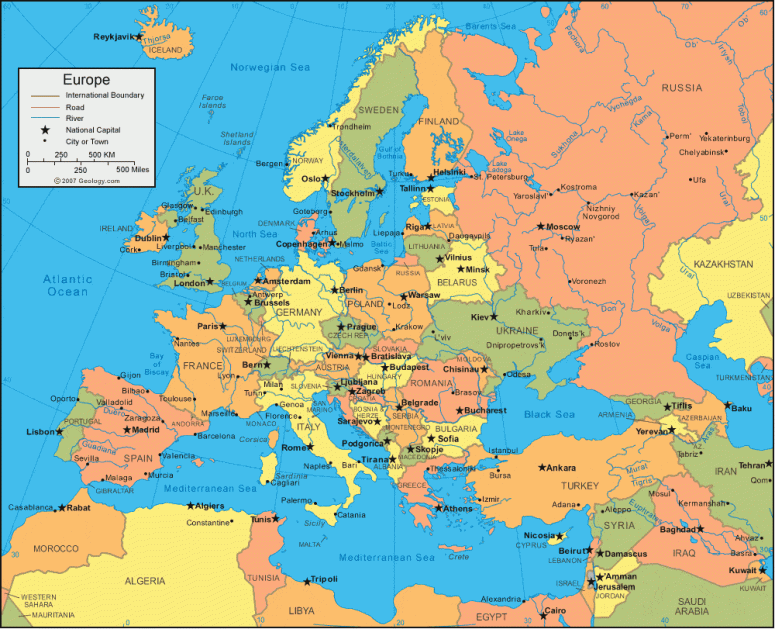
I climbed partway up the steps of the Eiffel Tower until I couldn’t go any higher. I saw the Louvre Museum, the Tower of London, the Sistine Chapel, Westminster Abbey, Shakespeare’s home (and grave) at Stratford-on-Avon, Mozart’s home, the fairy-tale castle of the Mad King of Bavaria, Westminster Abbey, the Palace of Versailles, the ruins at Pompeii, the Roman Forum and Coliseum, the Spanish Steps, the Vatican, the Tyrolean Alps, and so much more. On the way back to the U.S., we stopped for refueling in Iceland late at night.
I sent postcards home and mother wrote me brief letters, mostly to tell me that everything was fine and that my cat missed me. There was no mention in any of her letters of Ruthie.
In August, after I had been home from the trip for about two weeks, mother heard from one of her church friends that Ruthie and Lonnie got back together and were moving to Alaska. Mother immediately thought of Eulalie. What kind of upbringing was that child going to have with a couple of loonies like Ruthie and Lonnie? She got on the phone right away to her lawyer and began looking into ways she might gain custody of her only grandchild. That’s a different story, though.
Copyright © 2024 by Allen Kopp
Map of the World ~ A Short Story

Map of the World
~ A Short Story by Allen Kopp ~
On the first day of the new school term, Joanne Torrance was sullen and unhappy. She wasn’t ready for summer vacation to be over; she wanted to be able to stay at home and do as she pleased all the time. It wouldn’t have mattered to her if school had never taken up again for as long as she lived. She was sure she could learn all she needed to know from reading books and magazines and seeing lots of movies and watching the really important shows on TV like Superman and Lassie and The Three Stooges.
As soon as she met her new teacher for the first time—one Ruby Chinn—she hated her on sight. She had long yellow teeth that showed even when her mouth was closed. She had dyed hair the color of beets that she wore pulled into a severe bun on top of her head that resembled a cake made out of hair and that showed the fleshy folds on the sides of her face and neck. Joanne could have told her how she might adopt a more flattering hairdo to complement her round face, but she didn’t care how ridiculous a person’s hair looked when she despised that person as much as she despised Miss Chinn.
Since it was the first day of the new term and people didn’t know each other very well, Miss Chinn had each person write his (or her, as the case may be) name on the blackboard in colored chalk. After writing his or her name, the person was to turn around and face the class and introduce himself (or herself) in a loud clear voice. The boys were then supposed to bow from the waist and the girls to curtsey. This was a chance for everybody to get to know what face went with what name. Miss Chinn referred to this exercise as an ice breaker.
When Joanne’s turn came, she went to the blackboard and picked up the pink chalk and wrote her name in a neat cursive script underneath the babyish scrawl of the person who went before her. Then she turned around and bowed from the waist instead of curtseying. A howl went up from the class and she flushed with embarrassment.
“No, no, no!” Miss Chinn said impatiently with her forefingers extended, two feet apart, as though measuring the length of a fish she had caught. “What do girls do?”
“Curtsey!” the class said in unison.
“And what do boys do?”
“Bow from the waist!”
“That’s right! Now, Joanne, I have a simple question for you and it isn’t that difficult. Are you a girl or a boy?”
Again a howl of laughter erupted from the class. They were enjoying her discomfort, which went a long way toward relieving the tedium of the first day of class.
“I’m a girl,” she said in a small voice.
“What was that?” Miss Chinn said. “I can’t hear you!”
“I said I’m a girl!”
“Well, you certainly look like a girl, but we all just saw you do the thing that boys do. Now, can you prove that you’re a girl and do what girls do?”
“No.”
“What do you mean ‘no’?”
“I mean I would rather not.”
“And why would you rather not?”
“It’s silly.”
“Not as silly as you are in refusing to do it.”
“I don’t think I have to do it just because you tell me to do it.”
Miss Chinn rolled her eyes and the class laughed again. “If there is one thing I will not tolerate in the classroom,” she bellowed, “it is insolence!”
“You and me both,” Joanne said, but not loud enough for Miss Chinn to hear it.
“You are wasting precious time! Sit down this instant! We’ll deal with this matter later.” She opened her grade book. “I could send you to the principal’s office, but I know he’s busy on the first day and would rather not be bothered, so I’m giving you a failing grade for the day. You may be the only student in the history of this school to get a failing grade for the first day of the new term.”
“Whoo-whoo-whoo!” went the class.
Joanne returned to her seat, wishing she had a pirate dagger to plunge far into the heart of Miss Chinn and everybody else in the class.
The next person to the blackboard to write her name was Veronica Kennedy. She had blonde hair and dimples and a beauty mark on her right cheek. People said she looked like a movie star and would go far in life. She already had breasts and was wearing a brassiere, the outline of which could be clearly seen through her lovely yellow blouse. She wrote her name beautifully with yellow chalk (yellow seemed to be her color) underneath Joanne’s name, and then she turned and faced the class and executed a perfect curtsey, holding her skirt out just far enough so that the edge of her underpants showed. The class erupted in cheers and applause.
“You see?” Miss Chinn said triumphantly. “That is what girls do!”
“Yaw-yaw-yaw!” went the class as Veronica Kennedy smirked with superiority and resumed her seat.
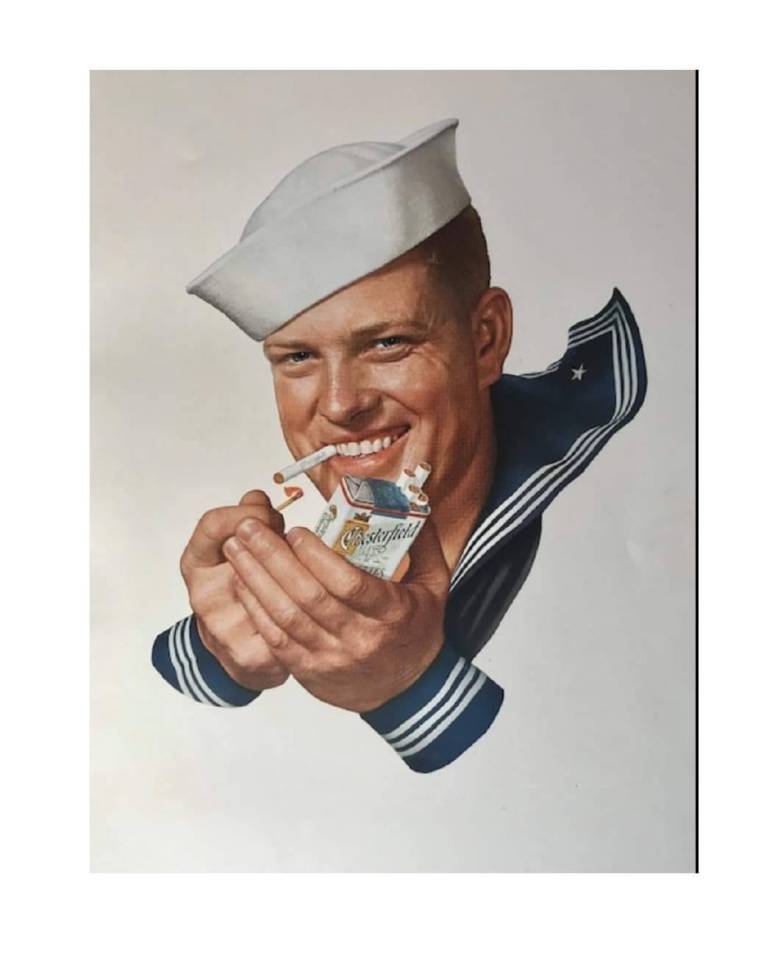
Later in the day, during the social studies lesson, Miss Chinn pulled down a map of the world like a window shade and stood before it with her pointer.
“Now,” she said, “who can tell me where Peru is?”
Joanne was the only person in the class who raised a hand.
“Come now,” Miss Chinn said. “Doesn’t anybody know where Peru is?”
Joanne raised her hand even higher. She was all the way at the back of the room, so maybe Miss Chinn hadn’t noticed her.
“Nobody?” Miss Chinn asked. “Can’t anybody tell me where Peru is? No? It’s in South America. Can anybody tell me where South America is?”
“I can!” Joanne said, waving her hand.
“Who said that?” Miss Chinn asked.
“I did!” Joanne said.
“I believe I’m had quite enough of you for one day,” Miss Chinn said. “You should know by now that we don’t speak in class until we’ve been called on. You haven’t been called on.”
“Hoo-hoooooo!” went the class.
“Now, can anybody tell me where South America is?”
Joanne lowered her hand and slumped down in her chair.
“Nobody? Shame on you! It’s right there!” She pointed to South America, outlining it with the pointer. “And there is Peru!”
During lunch in the school cafeteria, Joanne sat by herself facing the wall. She heard sniggers behind her back and knew they were coming from the next table where Veronica Kennedy and her coterie of followers were sitting. Somebody threw a wet bread ball and hit her in the side of the head, followed by a volley of snorting laughter. She was only half-finished with her lunch, but she didn’t feel like eating the rest of it and so stood up and emptied her tray and went outside.
Rosalie Dunphy was leaning against the side of the building with her head tilted back against the brick and her eyes closed, like a cat sunning itself. She was a large, silent girl with wild unkempt hair who was a couple of years older than anybody else because she had been held back two grades. Joanne knew her slightly from the year before. When she walked up to her, Rosalie opened her eyes and looked at her but didn’t move her head.
“I’d like to poison Miss Chinn,” Joanne said.
Rosalie reached in her pocket and took out a folded-up piece of paper and handed it to Joanne. “I drew this,” she said.
Joanne unfolded the paper and saw there a picture of a witch flying on a broomstick with her heels up in the air and a leer on her face. She was wearing a pointed hat and had a hump on her back and a wart on her chin with hairs coming out of it. It was a perfect likeness of Miss Chinn.
“That’s pretty good,” she said, handing the drawing back to Rosalie.
“I like to draw.”
She stood next to Rosalie against the wall and she somehow felt better and not so alone. “I hate everybody in this school,” Joanne said after a while.
“Come with me,” Rosalie said. “I have something I want to show you.”
She led the way around the building to the long flight of concrete steps that went down from the school grounds to Main Street. The steps were strictly off-limits during school hours, but that didn’t make any difference to Rosalie. She went down near the bottom of the steps and sat down. Joanne followed her and sat next to her.
“You have to promise not to tell anybody about this,” Rosalie said.
“I won’t,” Joanne said.
She reached into her pocket again and took out a package of Lucky Strike cigarettes and a little box of kitchen matches.
Joanne wanted to say is that all, but she said nothing because Rosalie surprised her by taking a cigarette out of the pack and putting it in her mouth and lighting it as expertly as if she had been smoking her whole life.
Rosalie took a deep drag on the cigarette and inhaled the smoke into her lungs. “Ah, that is so good,” she said.
After another drag, she held the cigarette out to Joanne. “Try it,” she said.
“I haven’t ever smoked before,” Joanne said.
“Try it.”
She took the cigarette from her and drew a little of the smoke into her mouth and breathed it out. “That tastes awful,” she said.
“It takes some practice before you’re any good at it,” Rosalie said.
They smoked the cigarette, handing it back and forth, until it was smoked down to the filter. Joanne didn’t like the taste of it at all, but she smiled every time she handed the cigarette back as if she approved and was enjoying it. When they heard the bell ring to go back inside, Rosalie flipped the cigarette butt away out to the street and they went back up the steps unnoticed.
That evening when Joanne was having dinner with her mother, she had been going to tell her that she had smoked her first cigarette at school that day, but she decided it wouldn’t be a good idea. She had already had enough disapproval for one day. Instead she asked her mother if she knew where Peru is.
“Isn’t that in South America?” her mother asked. “They have those strange animals with the long necks.”
“Llamas,” Joanne said.
“That’s it!”
“I’m going to murder Old Cakehead.”
“Who’s that?”
“Miss Chinn, my new teacher.”
“Well, all right,” her mother said. “Just don’t get caught. The trick is to try to make it look like an accident or to make it look like somebody else did it. Somebody you don’t like.”
At ten o’clock Joanne got into bed, but before she turned off the light she looked at the map on the wall of her room that had been there for as long as she could remember. It was somehow reassuring to look at it every night before she went to sleep. She loved the colors—the pinks, oranges, browns, greens, yellows—surrounded by a dazzling expanse of blue that was the ocean. And, yes, from looking at the map every night of her life, she knew where Peru was and just about every other country in the world. She knew a lot more than some people were willing to give her credit for.
Copyright © 2024 by Allen Kopp
At the River ~ A Short Story

At the River
~ A Short Story by Allen Kopp ~
(This short story has been published in The Sim Review.)
All day long he had nothing to do. His legs didn’t work so well anymore; neither did his eyes or his ears. He slept at night and got up in the morning and there was somebody always there, sometimes a stranger he had never seen before, to help him get himself into the bathroom and dressed and downstairs to breakfast, where he sat with thirty or forty others just like him, making a mess of his oatmeal and eggs and not saying anything. After breakfast somebody always sat him down in a comfortable spot in the solarium or the TV room and he just sat there, usually all day, until they came and got him for the next meal. After that it was time to get into bed and sleep again and wake up again and get dressed and go down for breakfast and do the same thing all over again; again and again as if that was what he was put on the earth for: a lot of nothing that seemed to have no end. Whoever said life was short?
He wondered what happened to the people he used to know. Didn’t he have a wife and a couple of children? Didn’t he have at one time some grandparents, uncles and aunts, a mother and father, a sister and a couple of brothers? What happened to all of them? Did he just dream them up? Oh, yes, that’s right: one after the other they all died. He came to see life as a kind of lottery: the winners went on ahead and the losers had no other choice but to stay behind. In the end there would be one loser left, and he was it. When they were children and they played tag or kick-the-can or hide-and-seek, somebody always had to be “it.” He didn’t like being “it” then, and he didn’t like it now.
Since he had no current life to speak of, he dwelt mostly in the past. Once, when he was eight years old, he and his whole family—including grandparents, aunts, uncles and cousins—went on a camping trip to a river. The men went fishing while the women went in swimming. He had never fished and wasn’t interested in learning, so he stayed with the women. His mother told him he didn’t need to be embarrassed about staying with the women, but somebody always teased him about it and it hurt him enough that he thought he should probably learn to fish so it wouldn’t happen again. His mother took his swimming trunks out of her suitcase and gave them to him and told him to go into the tent and take everything off and put on the trunks and come back out as soon as he could because they were all waiting to go in swimming.
After he put on the trunks, he was ashamed of the way he looked. His arms and legs were a pale yellow color and as thin as sticks. His chest was ugly and not at all manly. His stomach stuck out farther than he would have liked. He imagined that he looked like a monkey without any hair, a shaved monkey. He couldn’t let anybody see him almost naked with just a strip of red cloth around his middle. He stayed in the tent until his mother came and pulled him out, looking plenty silly herself in her green swimsuit and matching bathing cap that wrinkled the skin on her forehead. When he insisted that he had to stay in the tent because he felt sick, she slapped at him and told him she was in no mood for any of his nonsense. He slapped her back on the arm, which later he regretted. He could tell that she wasn’t quite herself; her tongue seemed thick in her mouth and her movements were jerky; she had been drinking. She dragged him out into the sunlight and held him to her hip as if she thought he might get away if she let him go.
Nobody looked at him in his silly red swimming trunks so he started to relax. He went into the water up to his elbows and then got back out and sat on a towel in the shade on the bank. The women were splashing around in the middle of the river, talking and laughing. The older kids were playing in a spot farther off, screaming and trying to hold each other under. He wanted no part of any of them.
He realized after a while that he couldn’t just sit there all day while everybody else was having fun, so he went back to the water. He waded in slowly until he was up to his chest and then, taking a quick look over his shoulder, began walking downriver. He walked until he was out of sight and hearing of the others.
He went farther and farther, staying in the middle of the river. The farther he went the deeper the water became. It was up to his breastbone and then past his shoulders to his neck. When he looked down all he saw was green-black murkiness; he could no longer see his feet, but still he kept going.
Every couple of feet he advanced, the water came closer to swallowing him up. It was up to his chin and then to just beneath his mouth. If he stepped off a drop-off that he couldn’t see, he would go under. He knew the drop-off was there, up ahead, waiting for him; he could see it without seeing it. All he had to do was keep going and he would find it. He would drown because he had never learned to swim. And even if he had had a chance to yell before he drowned, nobody would hear him because they were all too far away. He knew, even at his young age, that he was flirting with death.
As he stood in the water up to his mouth—unable to swim if he should go under—he looked over at the river bank; at the sky and the wild foliage that began on the other side of the trees. He was watching some birds doing acrobatic loops in the air when he noticed a smell in the air, a smell that he realized had been hanging over him all day. It seemed to him to be the smell of death. He thought for a moment that it was his own death he had been smelling, but as he turned around and began walking back upriver he knew it was somebody else’s.
When he got back to camp, everybody who had been in the water earlier was now out. His mother, as he was soon to find out, had had an argument with her younger sister and swam off by herself to another part of the river. Everybody expected her to come back in a few minutes, after she cooled off, but more than an hour had gone by and nobody had seen her. They were starting to get a little worried.
After another hour or two, they were certain something bad had happened, or she would have come back on her own. Somebody drove to the nearest phone and called for help. The police came in due time and, after they had asked their myriads of questions, conducted a search of the river. They found her body near some bluffs where it had been swept by the current and become lodged against some rocks. The green bathing cap was what they saw that led them to her.
His mother’s drowning was the terrible event of his life, the one event by which all other events were measured; the event that changed everything. It was his primer in death—the death that prepared him for all the others, including his own.
Not a day—and barely a waking hour—had gone by in his life that he didn’t think of her. She was and always would be the unknowable thirty-three-year-old wife and mother of four and he, the frightened eight-year-old boy clinging to her memory. He had—and always would have—unanswered questions that only she could answer.
After dinner he had a sinking spell; he blacked out on the way to his room and fell in the hallway. The nurses got him to his room and into bed and called his doctor.
He had been dozing in the darkened room when he opened his eyes and saw a nurse he had never seen before standing beside his bed. He smiled at her and she smiled back.
“I knew you would come,” he said.
“Of course I came.”
“Where’s the green bathing cap?”
“This is my day not to wear it.”
“You don’t look a day older.”
“That’s the way it is. You look much older.”
“Isn’t it awful?”
“Don’t talk now. The doctor is on his way.”
She straightened the blanket around his shoulders and went to the window and pulled back the curtain and looked out. “It’s starting to rain,” she said.
“You won’t leave again?” he asked.
“No,” she said. “I’ll be right here.”
Copyright © 2024 by Allen Kopp


The Literary Hatchet, Issue 37

The Literary Hatchet, Issue 37
The Literary Hatchet is an independent international journal devoted to emerging and established voices crafting provocative short fiction and thoughtful poetry and prose. Published three times a year! (Stefani Koorey, editor; Eugene Hosey, editor; Michael Brimbau, editor.)
In Issue 37, we are proud to present 144 pages, 13 short stories, 35 poems, and 7 works of original art/humor from authors and artists worldwide!
Available for purchase for $12 a copy at this link on Amazon:
*****
(I have three short stories published in Issue 37 of The Literary Hatchet: “Patrick White,” “Young Father Underground,” “When Woolworth’s Closed Its Doors.” ~ Allen Kopp
 Literary Fictions