My Favorite Christmas Movie

My Favorite Christmas Movie ~ Remember the Night

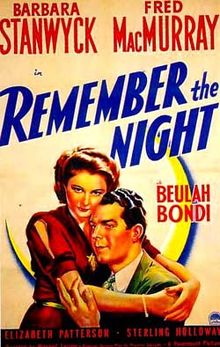
I don’t have to tax my brain very hard to think of a bunch of Christmas-themed movies, movies that are either about Christmas or that revolve in some way around the Christmas season.  Movies that immediately come to mind are Meet Me in St. Louis, Miracle on 34th Street, The Bells of St. Mary’s, A Christmas Story, A Christmas Carol, Meet John Doe, A Tree Grows in Brooklyn, The Apartment, Christmas in Connecticut, Holiday Inn, The Polar Express, and many others. My favorite Christmas movie, though, and one that I’ve seen maybe thirty times, is a little gem from 1940 called Remember the Night, with Barbara Stanwyck as a girl thief who runs afoul of the law at Christmastime, and Fred MacMurray as the straight-arrow prosecuting attorney who just might redeem her. 

The character Barbara Stanwyck plays is a charming and not-quite-decent girl named Lee Leander, who is caught stealing expensive jewelry right before Christmas and ends up in jail. Her trial is being held over until after the holidays, so it seems she’s going to have to spend Christmas behind bars. John Sargent (played by Fred MacMurray), the prosecutor in her case, takes pity on her and bails her out at least until her trail will resume after Christmas.  Since she has no place to go, he offers to take her with him to Indiana to spend Christmas. It turns out that Lee is also from Indiana, so she is eager to return there with him. 

After a memorable road trip and one stop along the way at Lee’s hateful mother’s house, where it turns out Lee isn’t wanted, they end up at John’s Indiana home which, as it turns out, is everything a home should be. John has a mother (played by Beulah Bondi), and an aunt, (played by Elizabeth Patterson) and they have an odd but lovable hired man named Willy (played by Sterling Holloway). These are warm, quirky characters, and you will immediately feel a connection with them. They are the kind of people we have all known in the past, or wish we had known.

John’s family welcomes Lee with open arms and treats her like family during the few days she is with them. They gradually come to learn of her troubles back in the city and that she is likely to end up in jail. John’s well-intentioned mother has a talk with Lee and makes her promise she won’t do anything to spoil John’s career, which he has worked so hard to get. Lee assures her that there is nothing between her and John and that when they return to the city she won’t ever see him again. 

On their way back to the city after Christmas, Lee and John discover they’ve fallen in love. The Christmas she has spent with decent John and his decent family has changed her and has made her want to go straight after her life as a thief. What happens in the courtroom when her trial resumes might not be what you expected, but it is fitting to the characters and the situation and we see that it’s exactly the conclusion they’ve been headed toward all along.   

Remember the Night has sentiment but is never hokey or heavy-handed. It’s sweet but not overly sweet. The characters and situations are believable and the dialogue is crisp and funny. It’s one of those rare movies where all the elements come together in a perfect blend.  Barbara Stanwyck and Fred MacMurray appeared together in several films, but I think they were never better than in this one. If it’s a Christmas movie you’re wanting—and likely one you haven’t seen before—it’s Remember the Night from 1940. You might even want to see it more than once.

Copyright © 2011 by Allen Kopp
“Stopping by the Woods on a Snowy Evening” by Robert Frost


Stopping by the Woods on a Snowy Evening ~
A Classic American Poem by Robert Frost (1874-1963)

Whose woods these are I think I know.
His house is in the village though;
He will not mind me stopping here
To watch his woods fill up with snow.
 
My little horse must think it queer
To stop without a farmhouse near
Between the woods and frozen lake
The darkest evening of the year.
 
He gives his harness bells a shake
To ask if there is some mistake.
The only other sound’s the sweep
Of easy wind and downy flake.
 
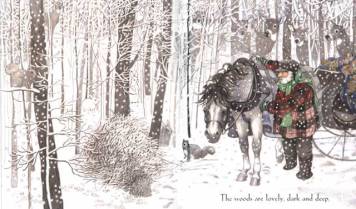
The woods are lovely, dark and deep.
But I have promises to keep,
And miles to go before I sleep,
And miles to go before I sleep.
 

“Snow Flakes” by Nathaniel Hawthorne

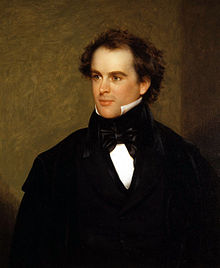
Nathaniel Hawthorne (1804-1864)

Snow Flakes ~ A Classic American Short Story by Nathaniel Hawthorne 

There is snow in yonder cold gray sky of the morning, and, through the partially frosted window-panes, I love to watch the gradual beginning of the storm. A few feathery flakes are scattered widely through the air, and hover downward with uncertain flight, now almost alighting on the earth, now whirled again aloft into remote regions of the atmosphere. These are not the big flakes, heavy with moisture, which melt as they touch the ground, and are portentous of a soaking rain. It is to be, in good earnest, a wintry storm. The two or three people, visible on the side-walks, have an aspect of endurance, a blue-nosed, frosty fortitude, which is evidently assumed in anticipation of a comfortless and blustering day. By nightfall, or at least before the sun sheds another glimmering smile upon us, the street and our little garden will be heaped with mountain snow- drifts. The soil, already frozen for weeks past, is prepared to sustain whatever burden may be laid upon it; and, to a northern eye, the landscape will lose its melancholy bleakness and acquire a beauty of its own, when Mother Earth, like her children, shall have put on the fleecy garb of her winter’s wear. The cloud-spirits are slowly weaving her white mantle. As yet, indeed, there is barely a rime like hoarfrost over the brown surface of the street; the withered green of the grass-plat is still discernible; and the slated roofs of the houses do but begin to look gray, instead of black. All the snow that has yet fallen within the circumference of my view, were it heaped up together, would hardly equal the hillock of a grave. Thus gradually, by silent and stealthy influences, are great changes wrought. These little snow-particles, which the storm-spirit flings by handfuls through the air, will bury the great earth under their accumulated mass, nor permit her to behold her sister sky again for dreary months. We, likewise, shall lose sight of our mother’s familiar visage, and must content ourselves with looking heavenward the oftener.Now, leaving the storm to do his appointed office, let us sit down, pen in hand, by our fireside. Gloomy as it may seem, there is an influence productive of cheerfulness, and favorable to imaginative thought, in the atmosphere of a snowy day. The native of a southern clime may woo the muse beneath the heavy shade of summer foliage, reclining on banks of turf, while the, sound of singing birds and warbling rivulets chimes in with the music of his soul. In our brief summer, I do not think, but only exist in the vague enjoyment of a dream. My hour of inspiration–if that hour ever comes–is when the green log hisses upon the hearth, and the bright flame, brighter for the gloom of the chamber, rustles high up the chimney, and the coals drop tinkling down among the growing heaps of ashes. When the casement rattles in the gust, and the snow-flakes or the sleety raindrops pelt hard against the window-panes, then I spread out my sheet of paper, with the certainty that thoughts and fancies will gleam forth upon it, like stars at twilight, or like violets in May,– perhaps to fade as soon. However transitory their glow, they at least shine amid the darksome shadow which the clouds of the outward sky fling through the room. Blessed, therefore, and reverently welcomed by me, her true-born son, be New England’s winter, which makes us, one and all, the nurslings of the storm, and sings a familiar lullaby even in the wildest shriek of the December blast. Now look we forth again, and see how much of his task the storm-spirit has done.

Slow and sure! He has the day, perchance the week, before him, and may take his own time to accomplish Nature’s burial in snow. A smooth mantle is scarcely yet thrown over the withered grass-plat, and the dry stalks of annuals still thrust themselves through the white surface in all parts of the garden. The leafless rose-bushes stand shivering in a shallow snow-drift, looking, poor things! as disconsolate as if they possessed a human consciousness of the dreary scene. This is a sad time for the shrubs that do not perish with the summer; they neither live nor die; what they retain of life seems but the chilling sense of death. Very sad are the flower shrubs in midwinter! The roofs of the houses are now all white, save where the eddying wind has kept them bare at the bleak corners. To discern the real intensity of the storm, we must fix upon some distant object,–as yonder spire,-and observe how the riotous gust fights with the descending snow throughout the intervening space. Sometimes the entire prospect is obscured; then, again, we have a distinct, but transient glimpse of the tall steeple, like a giant’s ghost; and now the dense wreaths sweep between, as if demons were flinging snowdrifts at each other, in mid-air. Look next into the street, where we have seen an amusing parallel to the combat of those fancied demons in the upper regions. It is a snow-battle of school-boys. What a pretty satire on war and military glory might be written, in the form of a child’s story, by describing the snowball-fights of two rival schools, the alternate defeats and victories of each, and the final triumph of one party, or perhaps of neither! What pitched battles, worthy to be chanted in Homeric strains! What storming of fortresses, built all of massive snowblocks! What feats of individual prowess, and embodied onsets of martial enthusiasm! And when some well-contested and decisive victory had put a period to the war, both armies should unite to build a lofty monument of snow upon the battle-field, and crown it with the victor’s statue, hewn of the same frozen marble. In a few days or weeks thereafter, the passer-by would observe a shapeless mound upon the level common; and, unmindful of the famous victory, would ask, “How came it there? Who reared it? And what means it?” The shattered pedestal of many a battle monument has provoked these questions, when none could answer.

Turn we again to the fireside, and sit musing there, lending our ears to the wind, till perhaps it shall seem like an articulate voice, and dictate wild and airy matter for the pen. Would it might inspire me to sketch out the personification of a New England winter! And that idea, if I can seize the snow-wreathed figures that flit before my fancy, shall be the theme of the next page.

How does Winter herald his approach? By the shrieking blast of latter autumn, which is Nature’s cry of lamentation, as the destroyer rushes among the shivering groves where she has lingered, and scatters the sear leaves upon the tempest. When that cry is heard, the people wrap themselves in cloaks, and shake their heads disconsolately, saying, “Winter is at hand!” Then the axe of the woodcutter echoes sharp and diligently in the forest; then the coal-merchants rejoice, because each shriek of Nature in her agony adds something to the price of coal per ton; then the peat-smoke spreads its aromatic fragrance through the atmosphere. A few days more; and at eventide, the children look out of the window, and dimly perceive the flaunting of a snowy mantle in the air. It is stern Winter’s vesture. They crowd around the hearth, and cling to their mother’s gown, or press between their father’s knees, affrighted by the hollow roaring voice, that bellows a-down the wide flue of the chimney. It is the voice of Winter; and when parents and children bear it, they shudder and exclaim, “Winter is come! Cold Winter has begun his reign already!” Now, throughout New England, each hearth becomes an altar, sending up the smoke of a continued sacrifice to the immitigable deity who tyrannizes over forest, country side, and town. Wrapped in his white mantle, his staff a huge icicle, his beard and hair a wind-tossed snow-drift, he travels over the land, in the midst of the northern blast; and woe to the homeless wanderer whom he finds upon his path! There he lies stark and stiff, a human shape of ice, on the spot where Winter overtook him. On strides the tyrant over the rushing rivers and broad lakes, which turn to rock beneath his footsteps. His dreary empire is established; all around stretches the desolation of the Pole. Yet not ungrateful be his New England children—for Winter is our sire, though a stern and rough one—not ungrateful even for the severities, which have nourished our unyielding strength of character. And let us thank him, too, for the sleigh-rides, cheered by the music of merry bells; for the crackling and rustling hearth, when the ruddy firelight gleams on hardy Manhood and the blooming cheek of Woman; for all the home enjoyments, and the kindred virtues, which flourish in a frozen soil. Not that we grieve, when, after some seven months of storm and bitter frost, Spring, in the guise of a flower-crowned virgin, is seen driving away the hoary despot, pelting him with violets by the handful, and strewing green grass on the path behind him. Often, ere he will give up his empire, old Winter rushes fiercely back, and hurls a snow-drift at the shrinking form of Spring; yet, step by step, he is compelled to retreat northward, and spends the summer months within the Arctic circle.

Such fantasies, intermixed among graver toils of mind, have made the winter’s day pass pleasantly. Meanwhile, the storm has raged without abatement, and now, as the brief afternoon declines, is tossing denser volumes to and fro about the atmosphere. On the window-sill, there is a layer of snow, reaching half-way up the lowest pane of glass. The garden is one unbroken bed. Along the street are two or three spots of uncovered earth, where the gust has whirled away the snow, heaping it elsewhere to the fence-tops, or piling huge banks against the doors of houses. A solitary passenger is seen, now striding mid-leg deep across a drift, now scudding over the bare ground, while his cloak is swollen with the wind. And now the jingling of bells, a sluggish sound, responsive to the horse’s toilsome progress through the unbroken drifts, announces the passage of a sleigh, with a boy clinging behind, and ducking his head to escape detection by the driver. Next comes a sledge, laden with wood for some unthrifty housekeeper, whom winter has surprised at a cold hearth. But what dismal equipage now struggles along the uneven street? A sable hearse, bestrewn with snow, is bearing a dead man through the storm to his frozen bed. O, how dreary is a burial in winter, when the bosom of Mother Earth has no warmth for her poor child!

Evening–the early eve of December–begins to spread its deepening veil over the comfortless scene; the firelight gradually brightens, and throws my flickering shadow upon the walls and ceiling of the chamber; but still the storm rages and rattles, against the windows. Alas! I shiver, and think it time to be disconsolate. But, taking a farewell glance at dead Nature in her shroud, I perceive a flock of snow-birds, skimming lightsomely through the tempest, and flitting from drift to drift, as sportively as swallows in the delightful prime of summer. Whence come they? Where do they build their nests, and seek their food? Why, having airy wings, do they not follow summer around the earth, instead of making themselves the playmates of the storm, and fluttering on the dreary verge of the winter’s eve? I know not whence they come, nor why; yet my spirit has been cheered by that wandering flock of snow-birds.

“One Christmas Eve” by Langston Hughes

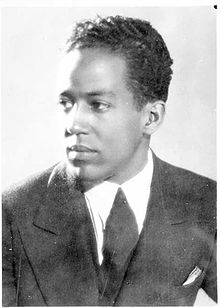
Langston Hughes (1902-1967)

One Christmas Eve ~ A Classic American Short Story by Langston Hughes

Standing over the hot stove cooking supper, the colored maid, Arcie, was very tired. Between meals today, she had cleaned the whole house for the white family she worked for, getting ready for Christmas tomorrow. Now her back ached and her head felt faint from sheer fatigue. Well, she would be off in a little while, if only the Missus and her two children would come on home to dinner. They were out shopping for more things for the tree which stood all ready, tinsel-hung and lovely in the living-room, waiting for its candles to be lighted.

Arcie wished she could afford a tree for Joe. He’d never had one yet, and it’s nice to have such things when you’re little. Joe was five, going on six. Arcie, looking at the roast in the white folks’ oven, wondered how much she could afford to spend tonight on toys. She only got seven dollars a week, and four of that for her room and the landlady’s looking after Joe while Arcie was at work.

“Lord, it’s more’n a notion raisin’ a child,” she thought.

She looked at the clock on the kitchen table. After seven. What made white folks so darned inconsiderate? Why didn’t they come on home here to supper? They knew she wanted to get off before all the stores closed. She wouldn’t have time to buy Joe nothin’ if they didn’t hurry. And her landlady probably wanting to go out and shop, too, and not be bothered with little Joe.

“Dog gone it!” Arcie said to herself. “If I just had my money, I might leave the supper on the stove for ‘em. I just got to get to the stores fo’ they close.” But she hadn’t been paid for the week yet. The Missus had promised to pay her Christmas Eve, a day or so ahead of time.

Arcie heard a door slam and talking and laughter in the front of the house. She went in and saw the Missus and her kids shaking snow off their coats.

“Ummm-mm! It’s swell for Christmas Eve,” one of the kids said to Arcie. “It’s snowin’ like the deuce and mother came near driving through a stoplight. Can’t hardly see for the snow. It’s swell!”

“Supper’s ready,” Arcie said. She was thinking how her shoes weren’t very good for walking in snow.

It seemed like the white folks took as long as they could to eat that evening. While Arcie was washing dishes, the Missus came out with her money.

“Arcie,” the Missus said, “I’m so sorry, but would you mind if I just gave you five dollars tonight? The children have made me run short of change, buying presents and all.”

“I’d like to have seven,” Arcie said. “I needs it.”

“Well, I just haven’t got seven,” the Missus said. “I didn’t know you’d want all your money before the end of the week, anyhow. I just haven’t got it to spare.”

Arcie took five. Coming out of the hot kitchen, she wrapped up as well as she could and hurried by the house where she roomed to get little Joe. At least he could look at the Christmas trees in the windows downtown.

The landlady, a big light yellow woman, was in a bad humor. She said to Arcie, “I thought you was comm’ home early and get this child. I guess you know I want to go out, too, once in a while.”

Arcie didn’t say anything for, if she had, the landlady would probably throw it up to her that she wasn’t getting paid to look after a child both night and day.

“Come on, Joe,” Arcie said to her son, “let’s us go in the street.”

“I hears they got a Santa Claus downtown,” Joe said, wriggling into his worn little coat. “I wants to see him.”

“Don’t know ‘bout that,” his mother said, “but hurry up and get your rubbers on. Stores’ll all be closed directly.”

It was six or eight blocks downtown. They trudged along through the falling snow, both of them a little cold. But the snow was pretty!

The main street was hung with bright red and blue lights. In front of the City Hall there was a Christmas tree but it didn’t have no presents on it, only lights. In the store windows there were lots of toys—for sale.

Joe kept saying, “Mama, I want…”

But mama kept walking ahead. It was nearly ten, when the stores were due to close, and Arcie wanted to get Joe some cheap gloves and something to keep him warm, as well as a toy or two. She thought she might come across a rummage sale where they had children’s clothes. And in the ten-cent store, she could get some toys.

“O-oo! Lookee…,” little Joe kept saying, and pointing at things in the windows. How warm and pretty the lights were, and the shops, and the electric signs through the snow.

It took Arcie more than a dollar to get Joe’s mittens and things he needed. In the A&P Arcie bought a big bag of hard candies for forty-nine cents. And then she guided Joe through the crowd on the street until they came to the dime store. Near the ten-cent store they passed a moving picture theatre. Joe said he wanted to go in and see the movies.

Arcie said, “Ump-un! No, child! This ain’t Baltimore where they have shows for colored, too. In these here small towns, don’t let colored folks in. We can’t go in there.”

“Oh,” said little Joe.

In the ten-cent store, there was an awful crowd. Arcie told Joe to stand outside and wait for her. Keeping hold of him in the crowded store would be a job. Besides she didn’t want him to see what toys she was buying. They were to be a surprise from Santa Claus tomorrow.

Little Joe stood outside the ten-cent store in the light, and the snow, and people passing. Gee, Christmas was pretty. All tinsel and stars and cotton. And Santa Claus a-coming from somewhere, dropping things in stockings. And all the people in the streets were carrying things, and the children looked happy.

But Joe soon got tired of just standing and thinking and waiting in front of the ten-cent store. There were so many things to look at in the other windows. He moved along up the block a little, and then a little more, walking and looking. In fact, he moved until he came to the white folk’s picture show.

In the lobby of the moving picture show, behind the plate glass doors, it was all warm and glowing and awful pretty. Joe stood looking in, and as he looked his eyes began to make out, in there blazing beneath holly and colored streamers and the electric stars of the lobby, a marvelous Christmas tree. A group of children and grown-ups, white, of course, were standing around the big jovial man in red beside the tree. Or was it a man? Little Joe’s eyes opened wide. No, it was not a man at all. It was Santa Claus!

Little Joe pushed open one of the glass doors and ran into the lobby of the white moving picture show. Little Joe went right through the crowd and up to where he could get a good look at Santa Claus. And Santa Claus was giving away gifts, little presents for children, little boxes of animal crackers and stick-candy canes. And behind him on the tree was a big sign (which little Joe didn’t know how to read). It said, to those who understood, MERRY XMAS FROM SANTA CLAUS TO OUR YOUNG PATRONS.

Around the lobby, other signs said, WHEN YOU COME OUT OF THE SHOW STOP WITH YOUR CHILDREN AND SEE OUR SANTA CLAUS. And another announced, GEM THREATRE MAKES ITS CUSTOMERS HAPPY—SEE OUR SANTA.

And there was Santa Claus in a red suit and white beard all sprinkled with tinsel snow. Around him were rattles and drums and rocking horses which he was not giving away. But the signs on them said, (could little Joe have read) that they would be presented from the stage on Christmas Day to the holders of the lucky numbers. Tonight, Santa Claus was only giving away candy, and stick-candy canes, and animal crackers to the kids.

Joe would have liked terribly to have a stick-candy cane. He came a little closer to Santa Claus, until he was right in front of the crowd. And then Santa Claus saw Joe.

Why is it that lots of white people always grin when they see a Negro child? Santa grinned. Everybody else grinned, too, looking at little black Joe, who had no business in the lobby of a white theatre. Then Santa Claus stooped down and slyly picked up one of his lucky number rattles , a great big loud tin-pan rattle such as they use in cabarets. And he shook it fiercely right at Joe. That was funny. The white people laughed, kids and all. But little Joe didn’t laugh. He was scared. To the shaking of the big rattle, he turned and fled out of the warm lobby of the theatre, out into the street where the snow was and the people. Frightened by laughter, he had begun to cry. He went looking for his mama. In his heart he never thought Santa Claus shook great rattles at children like that—and then laughed.

In the crowd on the street he went the wrong way. He couldn’t find the ten-cent store or his mother. There were too many people, all white people, moving like white shadows in the snow, a world of white people.

It seemed to Joe an awfully long time till he suddenly saw Arcie, dark and worried-looking, cut across the sidewalk through the passing crowd and grab him. Although her arms were full of packages, she still managed with one free hand to shake him until his teeth rattled.

“Why didn’t you stand where I left you?” Arcie demanded loudly. “Tired as I am, I got to run all over the streets in the night lookin’ for you. I’m a great mind to wear you out.”

When little Joe got his breath back, on the way home, he told his mama he had been in the moving picture show.

“But Santa Claus didn’t give me nothing,” Joe said tearfully. “He made a big noise at me and I runned out.”

“Serves you right,” said Arcie, trudging through the snow. “You had no business in there. I told you to stay where I left you.”

“But I seed Santa Claus in there,” little Joe said, “so I went in.”

“Huh! That wasn’t no Santa Claus,” Arcie explained. “If it was, he wouldn’t a-treated you like that. That’s a theatre for white folks—I told you once—and he’s just a old white man.”

“Oh…,” said little Joe.

The Truth About Lizzie Shennick


The Truth About Lizzie Shennick ~ A Short Story by Allen Kopp

(Published in Yesteryear Fiction.) 

Every morning Miss Frid opened her book and called roll, going down the list: Harry Abbot, Maxine Abernathy, Beryl Barrister, Donald Best, Roy Brewster, Virgie Carrow, George Crawford…and so on to the end.  Every morning at least one or two were absent, but every morning there was one who was always absent.  

“Does anybody know Lizzie Shennick?” Miss Frid had taken to asking the sea of slack-jawed faces staring at her. “Has anybody seen Lizzie Shennick? Does anybody know the whereabouts of Lizzie Shennick?”

Since any inquiries had failed to provide a satisfactory explanation, Miss Frid decided to do some investigating on her own. When she was in the principal’s office one morning before anybody else had arrived, she took a forbidden look into the registration file. She found the address she was looking for, memorized it, and went back to her classroom and wrote it down before she forgot it.

A few days later, on a sunny Saturday morning, she got into her old Nash Rambler and drove across town. With the aid of a map, she found the street she was looking for and drove along it slowly, looking for the right number. The houses were big and old and in some places boarded up or falling down.

The house she was looking for was set back from the street and obscured by trees and thick foliage. She parked the Nash and got out and approached the gate of the chain-link fence that surrounded the property. When she tried to open the gate it fell off its hinges but she didn’t let that stop her. She walked up the front steps to the door and rang the bell.

In a few moments a woman came to the door and opened it. She was, Miss Frid thought, Lizzie Shennick’s mother. She was thin and rather on the young side with strange beet-red hair parted down the middle of her head. The hair swept out in waves on both sides away from the part and crashed over each ear like a huge wave in suspended motion. How she achieved this effect was not immediately apparent.    

“Yes?” the woman—she went by the name of Griselda—said to Miss Frid in a voice that indicated she had rather been expecting her.

Miss Frid identified herself and explained she was Lizzie Shennick’s teacher from school. “Are you the mother?” she asked Griselda.

“Well, some would say yes and some would say no.”   

“I wonder if I might inquire why Lizzie is enrolled in school but never attends,” Miss Frid said, careful not to sound priggish or inflammatory.

Griselda motioned Miss Frid inside and closed the door. “Lizzie isn’t like other children her age,” she said.

“Is she ill?” Miss Frid asked.

“It’s not an illness. It’s a condition.”

“Maybe you’d better explain to me what you’re talking about.”

Griselda motioned for Miss Frid to follow her through the dark house and into the kitchen, where a large window opened onto the back yard. She directed Miss Frid’s attention out the window.

Miss Frid saw, or believed she saw, a gorilla dressed in a red dress with little white flowers on it jumping up and down on a trampoline. The gorilla jumped very high, with grace and precision, and landed delicately on first one foot and then the other, and then on both feet. With each jump her dress billowed out to reveal white underpants.

“Why, that’s astounding!” Miss Frid said. “How do you get a gorilla to do that?”

“It’s not what it appears to be,” Griselda said.

“Why, what do you mean?” Miss Frid asked.

“That’s our Lizzie.”

Miss Frid looked at her with disbelief. “Wait a minute! Are you telling me your daughter is a gorilla?”

“She hasn’t always been a gorilla. Sit down and I’ll make you a cup of tea and try to explain it the best I can.”

She set the water on the stove to boil and the two of them sat down at the table. Griselda lit a cigarette and blew out a stream of smoke; she seemed to be trying to think of how, or where, to begin.

“We just moved here from a long way off a few months ago,” she said, picking a particle of tobacco off her tongue. “We had been noticing a change in Lizzie for some time, but it was very gradual. The doctor said it was a hormonal thing. He said she would get over it.” 

“What kind of a change?” Miss Frid asked.

“At first it was hair growing on her face and arms and then all over her body. We tried to keep the hair off using depilatory creams, but it was no use. The hair came right back, thicker than before.”

“I can see how that would be a problem,” Miss Frid said. “For a young girl, I mean.”

“Then her body began thickening through the arms and shoulders. Her head got bigger and her mouth widened; her teeth grew longer and more ferocious looking. Her strength increased every day; she could bend a metal bar in half without even trying. She didn’t seem to be aware at first at what was happening to her. She would look at herself in the mirror and see herself as she used to be, before she started changing. We started keeping her in the house all the time so people wouldn’t stare and laugh at her and ask questions. There was really nothing we could do except hope the situation would reverse itself, which is what I prayed for every day. After about a year and a half of very slow change, the transformation speeded up—became more pronounced. You could see her becoming a little more gorillafied every day. And then, by the middle of the summer, the change was complete—she was all gorilla. After that, I gave up all hope she would ever change back into a regular girl again.”

“I see now why she didn’t want to go to school with all the non-gorilla children,” Miss Frid said sympathetically.

“Oh, she wants to go to school, all right, all right! We just thought it would be too cruel to send her to a school where she was the only gorilla. Think how she would be stared at! Children can be so cruel!

“Have you thought about sending her to a special school? A place where she could be with her own kind?”

“And what kind is that exactly? Do you have a name for it?”

“Well, I—“     

“Neither do I. We’ve given up on the idea of school altogether. She’s training now for a circus career.”

“The trampoline?”

“The trampoline is part of her acrobatic act—she also does a song and dance routine—but I figure her best chance for success is with the freak show. She could headline with Crab Girl and Skeleton Boy and the Human Sponge. With the proper buildup, I think she could be quite the sensation. If people are going to stare at her and point and laugh and be amazed, they’re going to have to pay a price for the privilege.”

“A child should go to school, even if she is a gorilla.”

“She can learn everything she needs to know in the circus. Besides, they have an old woman that teaches the kids their lessons, even the freak kids. The circus is in her blood. I was in the circus as a clown when I was carrying her. Something happened to me in that circus that I believe—that I know—is the reason for Lizzie being the way she is.”

“What could possibly–?”

“We were performing one night to a full house. I was in the main ring going through my routines with a couple of other girl clowns. We were juggling bowling pins and doing some acrobatic stunts when suddenly there was a loud scream from the audience. Everybody stopped what they were doing and turned toward the scream. That’s when we saw that one of the gorillas—his name was Hugo—got loose from his trainer. He was running frantically, swiping at people with his big hands. Nobody knew what had provoked him. Everybody was running and screaming, trying to get out of his way. He came running toward the ring where we were as if he knew what he was after. I ran from him, the same as the other clowns, but he caught me by my back hair and dragged me down. Everybody who saw it happen thought I was a goner. I thought I was a goner too.”

“What did you do?”

“There I was on my back on the ground. I knew not to scream or struggle; I pretended I was dead. Hugo had me pinned with his upper body; I could feel his hot breath on my face. The trainers were yelling to try to get him away from me and leave me alone, but he just ignored them. When I dared to open my eyes a little, Hugo’s face was just above mine. I saw he was terrified and confused; he didn’t know what to do. It was him against everybody else. And then suddenly he did an unexpected thing: He began whimpering and stroking the side of my head. When the trainers approached him, he growled at them and flailed out his arms.”  

“How did they get you away from him?”    

“They were going to throw a net over him and pull him away, but he began nuzzling the side of my head with his snout and nibbling on my ear. They thought he was hurting me, biting me, but he wasn’t doing anything of the kind. And then he leaned all the way over and kissed me on the mouth. It was the sweetest, gentlest kiss! You would never know that such a huge monster of an animal could be so gentle. In just a few seconds he had developed this—I don’t know—kind of protective bond with me. I felt it too and was no longer afraid of him as I had been. I just knew then that he wasn’t going to hurt me.”

“Were they able to get him away from you then?”

“One of the clowns—the one named Beauchamp—always carried a small gun wherever he went. Beauchamp was standing about fifty yards behind Hugo and couldn’t see what was really going on. Like everybody else, he thought Hugo was hurting me. He took out his gun and shot Hugo in the back and killed him. I saw the surprised look on Hugo’s face when he was hit. Of course he fell forward on top of me but they pulled him off before his body crushed me to death.”

“And that’s why Lizzie turned into a gorilla,” Miss Frid said to herself.

“When she was born a few months later, she seemed normal in every way, but I always knew in my heart that she would be marked in some way.”

Before Miss Frid left, she wanted to speak to Lizzie (never having conducted a conversation with a gorilla before), but Griselda thought it best if Lizzie didn’t know about Miss Frid’s visit. The less she was reminded of school, the quicker she would be able to forget about attending. Miss Frid told Griselda she hoped they would reconsider sending Lizzie to school, gorilla or not, but Griselda said they had already made up their minds that Lizzie was going into the circus as soon as she could, when the new season began. Having no reason to stay any longer, Miss Frid thanked Griselda for telling her the long-in-coming truth about Lizzie Shennick and stood up to go. As she was going out the door, she said with regret that she would tell everyone at school that Lizzie would not—and would never—be coming to school. She wouldn’t tell people the real reason for Lizzie not coming to school, but she would tell them something they would be able to believe and comprehend. She had always been able to make up a good story. 

Copyright © 2011 by Allen Kopp   
Happy Thanksgiving!

Psalm 100 ~


“Make a joyful noise unto the LORD, all ye lands. Serve the LORD with gladness: come before His presence with singing. Know ye that the LORD He is God: it is He that hath made us, and not we ourselves; we are His people, and the sheep of his pasture. Enter into His gates with thanksgiving, and into his courts with praise: be thankful unto Him, and bless His name. For the LORD is good; His mercy is everlasting; and His truth endureth to all generations.”


Sometimes I’m Happy

Sometimes I’m Happy ~ A Short Story by Allen Kopp

(Published in Buzzard Picnic Magazine.)

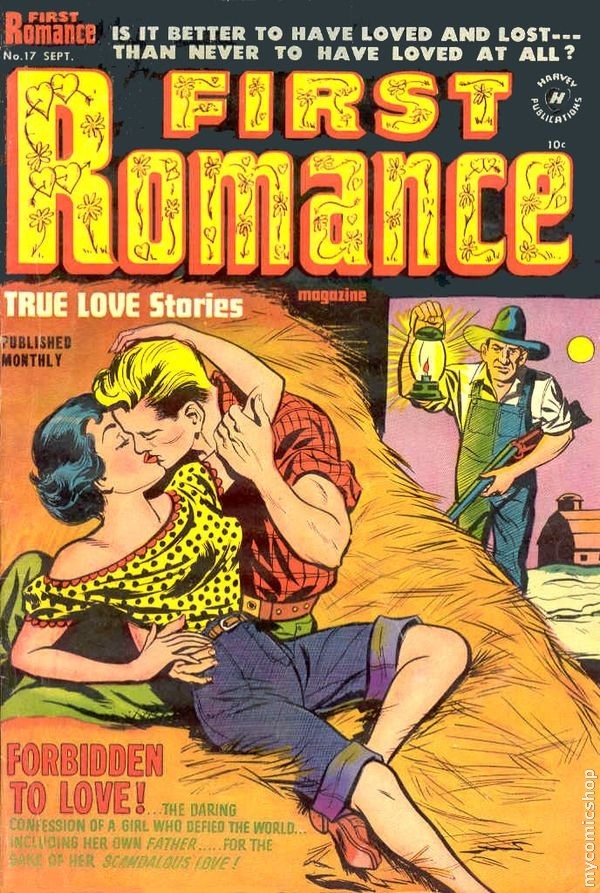
Arlene Danker had been down to the little market and was on her way back home, pulling her wheeled basket. One of the wheels had developed a squeak that it didn’t have before. In the basket were milk, bread, a one-pound bag of peanuts in the shell, light bulbs, cat food, a carton of Lucky Strike cigarettes with filter tips, and a romance magazine. She would have to hide the romance magazine as soon as she got home and not let anybody see it.

About halfway home, she stopped on a corner in the shelter of an overgrown cedar tree to rest for a minute and get a quick look at the magazine. She looked around to see if anybody was coming and, seeing no one, opened the magazine to a random page. There was a story entitled “How to Improve Your Love Life,” with a big picture that covered a whole page. In the picture, a man and a woman were sitting on a couch in front of a fire looking into each other’s eyes.  The woman was wearing a low-cut red dress and had hair the color of a lemon. The man had shiny black hair streaked with gray and an eye patch over one eye, making him look sinister and foreign. If he spoke, he would have a voice like Conrad Veidt. A few pages over was another story, “I am in Love with My Father Confessor and Afraid My Husband is Going to Find Out.” She read the first few sentences of that story, but she stopped reading when she heard somebody coming.

It was only the mailman, a young one she had never seen before. His uniform didn’t fit him well; he looked like a child playing dress-up. They used to have the same mailman all the time, but he was gone now and in his place was a series of young ones. This one looked bored and unfriendly and unhappy. She was going to smile at him and say something pleasant, but he didn’t even look at her. She couldn’t imagine that he would last very long in the job.

When the mailman was past, she put the romance magazine in the pocket of her coat and continued on her way, pulling the cart behind her. Most of the remaining three blocks were uphill and she had to take them slow because she had just turned seventy-five and didn’t have the stamina she once had.

She passed a house where several small children were playing some rowdy game in the front yard, seemingly trying to out-scream each other. As she walked past, they stopped what they were doing and stared at her. One of them said something in a shrill voice and the others laughed, but she didn’t catch what it was he said; it sounded like foot the shoat faster, but it couldn’t have been that because it didn’t make any sense. Whatever it was, though, they seemed to find it funny.

By the time she got home, she was out of breath and her calf muscles ached. She opened the door and bumped the cart over the threshold. Hazelnut, her daughter, came to the kitchen doorway and looked at her, fists on hips. She was still wearing her silk Japanese lounging pajamas with the dragon on the chest and the white crinoline bag she wore on her head at times to protect her hairdo.   

“It takes you one solid hour to walk to the store and back?” Hazelnut said. “I ask you to do one little thing!”

Arlene squeaked the cart into the kitchen past Hazelnut, who was a good six inches taller than she was. Sitting around the breakfast table were Addison, Hazelnut’s husband, and Addison and Hazelnut’s grown children, Duncan and Lorraine.

Lorraine was a bored twenty-three; she believed that any favorable opportunities in life had passed her by since she remained unmarried and still lived in her parent’s house. Duncan, who with his fair good looks was nothing like either of his parents, had just turned twenty. He had little ambition in life beyond increasing the size of his chest and biceps. Addison was reading the personal ads in the morning newspaper to keep from having to talk to his children.

Arlene wheeled the cart past the table without looking at any of them and stopped at the refrigerator to put the milk away.

“I hope you remembered my cigarettes,” Hazelnut said. “I don’t see them anywhere.”

Arlene picked the carton—which had become buried under the other items—out of the cart and handed it over. Hazelnut grabbed at it like a person dying of thirst in the desert who was being offered a drink of water. In just a few seconds, she had the carton torn open and a cigarette in her mouth. She lighted it and exhaled a stream of smoke and sat down at the table.

“Must you?” Addison asked. “While I’m eating?” He fanned the air with the folded-up newspaper.

“What’s that you’ve got there, sticking out of your pocket?” Hazelnut asked Arlene, pointing to the romance magazine.

“Nothing,” Arlene said. She had for the moment forgotten the magazine. She clamped her arm down on it to hide it. “Just something I picked up at the store.”

“I hope you’re not spending good money on those trashy magazines.”

“Nope.”

“You may have money to spare, but if you do you’re the only one. If you have a big stash of secret money somewhere to draw on, I’d like to know about it.”

“You should know by now you can’t hide anything from her,” Lorraine said. Having finished her breakfast, she was examining parts of her face closely in a tiny round mirror. “She always spots everything. I think she should join the FBI.”

“I think she should stop smoking,” Addison said, “or go pick out her coffin.”

“I’ll have you know I had a chest x-ray last fall,” Hazelnut said, “and the doctor said it was clear and fine. He said my lungs are perfectly healthy.”

“He got the x-rays mixed up with somebody else’s,” Duncan said and laughed. When Hazelnut glared across the table at him, he closed the gap in his bathrobe to cover his chest.

“Just don’t you worry about it,” Hazelnut said. “I’ll outlive all of you.”

“Some people are too mean to die,” Addison said.

In a moment of defiance, Arlene took the magazine out of her pocket and laid it face-up on the table for all to see. “I don’t care,” she said. “I’m not a child. Why should I hide it?”

“I’m disappointed in you,” Hazelnut said, regarding the magazine with distaste. “If you have to waste money, can’t you at least waste it on something worthwhile?” She picked up the magazine and opened it and turned a few pages. “This is just filth.”

“I’ll leave it hidden in my room and you won’t have to see it,” Arlene said.

“Yes, but I’ll know it’s there all the same.”

“Poor Grandma,” Lorraine said. “Foiled again in her efforts to read sexy stories.”

“This is not a prison,” Addison said. “She can read whatever she likes. I’ll pay for the magazine.”

“She’s my mother and you just stay out of it!” Hazelnut said. “Anyway, I say what goes in this house.”  

“I’d be happy to share my pornography with you, Grandma,” Duncan said.

“Any time you bring pornography into this house, mister,” Hazelnut said, “you can pack your bags and catch the afternoon train.”

“Hey, that doesn’t sound like a bad idea!”

“When you and your brother were little,” Arlene said, speaking to Hazelnut but in a rather indirect way, “I covered up for the two of you all the time. One time you dented the fender of your father’s new car with your bicycle. When he saw it, he was furious. I knew you had done it, but I convinced him that it happened on the parking lot at work.”

“We’ve heard all this stuff a million times before,” Hazelnut said with a sigh.

“When you were in fourth grade, you stole a five-dollar bill out of the teacher’s desk at school. When they called me and told me, I said I didn’t believe you had done it, but then they found the money in your shoe where you had hidden it. They wanted your father and me to come to the school to meet with the principal, but I told them your father was on a business trip and couldn’t make it. I didn’t want him to know you would steal money from the teacher.”

“I don’t remember that,” Hazelnut said. “Are you sure it wasn’t someone else?”  

“I always knew she was a criminal,” Lorraine said to Duncan behind her hand.    

“When you were in the eighth grade, you and two other girls were caught smoking cigarettes in the rest room at school. They were going to suspend you for three days, but I begged them not to do it because your grades weren’t very good and I was afraid you would get behind in your studies and wouldn’t get promoted to the next grade.”

“She’s been smoking since eighth grade?” Duncan asked. “That’s about sixty or seventy years, isn’t it?”

“And then there was that time in high school when you and your friend Norma Holliday were caught shoplifting costume jewelry from a store downtown. The store detective called the police and I had to come down to the police station and get you. They were going to make you stay overnight in a cell to teach you a lesson, but I pleaded with them to let me take you home. I told them you would be terrified if you had to spend the night in jail.”

“I think I see a pattern here,” Addison said.

“All right, all right!” Hazelnut said. “That’s enough! Keep the damn magazine! I don’t care!”

She picked the magazine up and hurled it through the air. Arlene, still standing in front of the refrigerator, threw her arms up to keep the magazine from hitting her in the face; it struck her on the shoulder and fell to the floor.

Hazelnut doubled up her fists and her face contorted with anger. “You always do that to me!” she said. “Can’t I even have an opinion in my own house without having you try to make me look like a fool? I don’t like trashy magazines! What is the crime in that?”

Addison shrugged his shoulders and threw his hands up in a melodramatic gesture and rolled his eyes, eliciting a laugh from Duncan.

“Oh! You always take the side against me, don’t you?” Hazelnut said. She ran from the kitchen and up the stairs to her bedroom and slammed the door. 

“It’s that time again,” Addison said, but nobody knew exactly what he meant. He wiped his mouth and finished his coffee and went out the back door and drove away in his car. He would be gone all day until far into the night.

“Gentlemen, sheathe your swords!” Lorraine said, and then she too got up and left.   

Arlene was left alone in the kitchen with Duncan. He gave her a little nod and a knowing smile that seemed to say, “You and I are alike and we’re not like them.” He continued to eat his breakfast, glad for the stillness, while Arlene opened a can of cat food and spooned it into the cat’s bowl in the corner. The cat, hearing the sound he liked best, came running from another part of the house and began gobbling the food as if he hadn’t eaten in a week.  

She poured herself a cup of coffee and sat down to the table. She spread the magazine open before her and turned to the first page. She was going to read the whole thing from front to back and not skip anything—not even the ads about relieving menstrual pain and getting rid of acne. It was her magazine and she was going to do with it as she damn well pleased—even if it took all day.

Copyright © 2011 by Allen Kopp

Mars Grand Canyon

 
Valles Marineris on Mars ~ A Future Tourist Destination

The largest canyon on any planet in our solar system is Valles Marineris on Mars. It is about 1864 miles long (roughly the distance across the United States from ocean to ocean), 375 miles across in places, and nearly five miles deep. The Grand Canyon in Arizona, by comparison, is about 500 miles long, 18.64 miles across at its widest, and a little over a mile deep. The accompanying picture shows Valles Marineris on the surface of Mars from space.

Anna May Wong (1905-1961)

Anna May Wong (1905-1961) ~ The First Asian Star of American Movies

Of the many unique screen personalities that Hollywood gave to the world during the 1920s and ‘30s, one of the most compelling was Anna May Wong. During her long and varied career, she worked in both sound and silent films, on the stage, in radio, and on television. 

A third-generation Chinese-American, Anna May Wong was born Wong Liu Tsong in Los Angeles in 1905 to a laundryman and his wife. At an early age she became infatuated with the movies and began acting in films. During the silent era she appeared in “The Toll of the Sea” in 1922 (one of the first color films) and opposite Douglas Fairbanks in “The Thief of Bagdad” in 1924. She became a fashion icon and by the age of 19 had achieved international stardom.   

Frustrated with being typecast in 1920s Hollywood, she left for Europe where she found plenty of acting work. During the next few years she split her time between the United States and Europe, appearing in such films as “Daughter of the Dragon” and “Daughter of Shanghai.” In 1932 she appeared opposite Marlene Dietrich in the memorable train-bound saga, “Shanghai Express.” 

In the mid-1930s she wanted to play the lead in the upcoming film production of “The Good Earth,” based on the famous novel by Pearl S. Buck about Chinese peasant life, but studio executives refused to even consider her for the part, saying she didn’t conform to the occidental view of what an oriental woman should look like. The part went instead to non-Asian actor Luise Rainer, who went on to win an Academy Award for best actress for her portrayal. 

During the late 1930s, Anna May Wong starred in several “B” movies for Paramount studios, in which she gave positive portrayals of Chinese-Americans.  She paid less attention to her acting career during World War II, choosing instead to devote her time and energies to helping the Chinese cause against Japan. After the war, she returned to the public eye with appearances on the emerging medium of television. She became the first Asian actor to have her own television series in 1951, called “The Gallery of Madame Liu-Tsong.”   

She was planning a return to films with an appearance in “The Flower Drug Song” in 1961 when she died of heart disease at the age of 56. For decades after her death, she was remembered mainly for her stereotypical screen performances, but in recent years she has gained new appreciation for her lilting speaking voice, her beauty and poise, and her unique contribution to film. 

Copyright © 2011 by Allen Kopp

Five-Finger Discount

 
Five-Finger Discount ~ A Short Story by Allen Kopp

(Published in Superstition Review.)

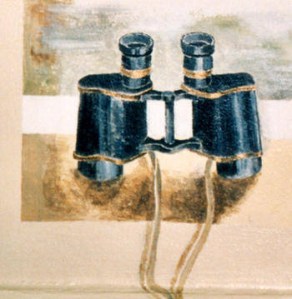
Dot loved her binoculars. Through them she looked at anything and everything. She looked at the sky and the clouds, the moon and the stars. If she saw a bird in flight, she followed it until it flew out of sight. She looked at herself in the mirror and at her feet as she walked; at her sister as she ate tuna fish from the can and as she put on lipstick; at squirrels as they played underneath the trees and the tom cat as he walked slowly from the shed to the house and back again; her mother as she slept in the bed and as she stirred soup on the stove; Toots as he cracked walnuts or pushed a wheelbarrow full of fertilizer from one side of the yard to the other; cars on the road, coming toward her with startling clarity; the dog as it scratched its fleas; trains going by on the tracks behind the house.  

A few days after acquiring the binoculars (she stole them from a parked car at the fairgrounds), Dot was lying on her stomach in the back yard watching a pair of identical starlings drinking from the dog’s water pan. They sat on the edge of the pan about six inches apart and took turns drinking. When they weren’t drinking, they were looking around to make sure they were safe. They didn’t know it yet, but the gray striped cat known as Dutch was stalking them from behind the trunk of a tree about fifteen feet away. He was crouched down, his back legs quivering, ready to pounce when the time was right. Just then, and far too noisily, somebody came up behind Dot from the house. The starlings flew off and the cat jumped into the bushes. Dot didn’t have to turn around to know it was her sister Lennie.   

“Don’t you ever get tired of looking through those spy glasses?” Lennie asked.

“No,” Dot said. “Look what you did.”

“I want you to go to town with me,” Lennie said. “Put your jacket on.” She dropped the jacket over Dot’s shoulder.

“I don’t want to go to town,” Dot said. “I’m busy.”

“Come on. Get up off the ground. Toots is giving us a ride.”

“Oh, all right. Do you have any money?”

“A little,” Lennie said.

“Will you buy me a goldfish?”

“What do you want with a goldfish?”

“For a pet. What else?”

“The cats will eat it. You know cats.”

“I don’t care. I want one anyway.”

“What’s the use of spending money on a goldfish if it’s going to end up in a cat’s stomach?”

“Come on!” Toots yelled from the porch. “I haven’t got all day!”

Dot stood up and put the binoculars on their string around her neck. She slipped into her jacket and she and Lennie went and got into the truck. Dot, since she was the youngest, sat next to Toots and Lennie sat next to the window. Toots started the engine and headed out for the highway into town. 

“I think I’ll fix my hair in a French roll,” Lennie said.  “What do you think?”

“It doesn’t matter to me,” Dot said. She was watching oncoming cars through the binoculars.

“I want to get some new panties and some lipstick and some emery boards and some conditioner for my hair,” Lennie said.

“I want to get a goldfish,” Dot said. “I think I’ll get two. A boy and a girl.”

“You two are never satisfied, are you?” Toots said. “Always wanting things you can’t have.”   

“Who says I can’t have them?” Lennie asked.

Toots let Dot and Lennie out at the intersection where the bank and the used car lot were. “You’ll have to walk back home,” he said, “or hitch a ride with somebody, because I’m not going to be back until tonight.”

“Where’s he going?” Dot asked Lennie as he drove away.

Lennie shrugged and opened her purse and took out some cigarettes. She took one out of the pack for herself and one for Dot. They lit up and headed down the street to where the good stores were.

They went first to the cut-rate department store known as Dunlap’s. They threw their cigarettes into the gutter in front of the store and went inside and found their way to the ladies’ department on the second floor. A fat saleslady with a round face and little pinched-up eyes went over to them as soon as she saw them and asked if they needed any help. Lennie looked at the woman and shook her head and walked on.

She found a round table full of ladies’ underpants and picked up a pair of pink ones and a pair of yellow ones and handed them to Dot. Dot slipped them inside her jacket and they walked on to the swimsuits. 

Lennie picked up a brightly colored two-piece swimsuit. She held the two pieces of the swimsuit up against her body to see how it was going to look on her. “How do I look?” she asked.

Dot stood back a few feet and looked at Lennie through the binoculars.  “You look like you should be arrested,” she said.

Lennie put the swimsuit back and they walked on to a table of ladies’ rubber swim caps; there were many laid out on the table in a lot of different colors and styles. Lennie picked up a yellow one with green scallops that looked like flowers. She looked at it inside and out and then set it back down and looked at Dot and nodded her head. Dot went over to it and picked it up and hid it inside her jacket along with the underpants.

They were headed toward the stairs to go back down to the first floor, when the same saleslady as before came out of nowhere and held her hand out to stop them. Her face was hard and sour. She leaned over toward Dot to keep anybody else from hearing. “Did I just see you put something inside your jacket?” she asked.

“No,” Dot said, shaking her head emphatically.  

“Well, I’m pretty sure you did, but I’ll give you the benefit of the doubt this time. I just want to warn you, though, if I ever see you in this store stealing things or trying to steal things, I will call the law. Do you understand me? Shoplifting is a very serious crime.”

Lennie smiled coolly at the woman and took Dot’s hand protectively and the two of them started down the stairs.

“I’ll be keeping my eye out for you!” the woman said. “I wasn’t born yesterday!”   

“Imagine that,” Lennie said when they were outside the store.

“What does ‘born yesterday’ mean?” Dot asked.

“It’s just something grownups say to make them think they’re smarter than you are,” Lennie said.

“I didn’t like her. She scared me.”

“I didn’t like her either.”  

“Do you think she’ll tell on us?”

“I don’t know how she could. She doesn’t know who we are.”  

They went down the street to the variety store and went inside. Lennie went to the cosmetics counter and Dot to the back part of the store where they kept the pet supplies. She found the goldfish tank and stood in front of it looking at the myriads of goldfish swimming around inside. Some were black, some white, some gold, and others were combinations of spotted and speckled colors. Some were no more than three-quarters of an inch long, while others seemed very big in comparison. A few of them had long tails that seemed to drag them down as they swam. Dot watched with fascination. 

A high school girl named Freda Stamm worked in the pet department. She was a big girl with a fuzzy head of hair growing down almost to her eyebrows, causing her to have the nickname “werewolf.” When she saw Dot looking at the fish, she went over to her and asked if she could be of assistance.  

“I’d like two goldfish,” Dot said. “A boy and a girl.”

“Do you know which two, or just any two?” Freda asked. She picked up a little net with a long handle on it and started to stick it into the tank.

“Oh, I guess I’m just looking today,” Dot said. “I’m with my sister and I don’t have any money.”  

“Well, you’ll have to come back when you have some money, then, won’t you?” Freda said.   

“If I buy a boy and a girl, will they have babies?”

“Under the right conditions they would. We’ve got a little book that tells all about them.”

“How much is the book?”

“It’s included in the price of the fish.”

Lennie came up behind Dot and tapped her on the shoulder. “I knew right where you’d be,” she said. “Looking at those silly old goldfish.”

“Did you ever see anything so beautiful?”

“Well, yes, I believe I have.”

“I want one that’s all different colors.”

Lennie handed Dot some things she had picked up, a comb and a little package of emery boards and a bottle of nail polish and a pack of gum. Dot took them and hid them inside her jacket.  

“While we’re here, don’t you want to get anything for yourself?” Lennie asked.

“No,” Dot said. “The fish is all I want.”

They left the variety store and when they were outside again on the sidewalk, Dot took the swim cap out of her jacket and tugged it onto her head. “How do I look?” she asked, pushing her hair up inside.     

“You look like a crazy person,” Lennie said.

“How about if you give me this?” Dot asked. She stopped to admire her reflection in a window, turning her head from side to side.   

“I’m not giving it to you, but I’ll let you wear it sometime.”

“Oh, what do you need a swimming cap for?”

“Well, I guess I need it about as much as you do!”

They headed down the street in the direction of the drug store. Lennie, when she saw a boy she recognized from high school coming toward her on the sidewalk, hurried to get a cigarette out of her purse. She wanted the boy to see her smoking and think she was sophisticated. She got the cigarette lit and gave him a breezy little smile just in time before he passed by, but he didn’t even look at her.   

When they went inside the drugstore, a woman in a tight skirt up on a ladder behind the counter turned and looked at them. Lennie saw right away that the woman had her hair arranged in a French roll. She tugged Dot’s arm to get her attention.

“That’s how I want my hair to look,” Lennie said. “Isn’t it stunning?”  

“Oh, what’s so hot about that?” Dot said. She was bored already. She went over to look at the magazines.

Lennie went to the cosmetics counter and began looking at the display of lipsticks. She picked up a tube and took the cap off to get a better look. The woman got down off the ladder and stood behind the counter in front of Lennie.

“What color would you recommend for my complexion?” Lennie asked her.

“Something dark,” the woman said. She looked much worse up close than she had from a distance. She had pockmarks on her face and an ugly misshapen nose like a prizefighter. She reached over and plucked a tube off the display and handed it to Lennie. It was something called flaming orange. “Go ahead and try it if you want,” she said.

Lennie tilted the oval mirror on the counter so she could get a better look at herself. She coated her lips with the flaming orange and blotted them on a piece of tissue the woman gave her. 

“How does it look?” she asked.  

“Oh, I think it’s just the appropriate shade for your coloring,” the woman said.  

“It makes you look like a clown,” Dot said. She had come up behind Lennie carrying a couple of comic books she wanted to buy.  

“Oh, who asked you?” Lennie said.  “I’m sure you don’t know the first thing about it.”  

“Would you like to try a different color?” the woman asked.

“No, I’ll take this one,” Lennie said.

“Will that be all today?”

“I want these,” Dot said. She laid the comic books on the counter. One was Submariner and the other was The Invincible Iron Man.  

“Oh, all right,” Lennie said. “I want a pack of Pall-Malls, too.”

“I thought you smoked Luckys,” Dot said.

“Well, today I’m smoking Pall-Malls.”

Lennie paid for the things out of the scant stash of money in her purse, and she and Dot went back out to the glaring sunshine of the street.

“I bet you could have got that lipstick without paying for it,” Dot said.

“With that woman looking at me the whole time?”

“You could have pretended to have a fit and when the woman went to get a doctor you could have slipped the lipstick inside your underwear.”

“Don’t you think that’s a lot of trouble to go to for a tube of lipstick?”

“Well, it depends on how much you want it, I guess.”

They walked around aimlessly for a while, looking at window displays, until they found themselves in front of the Blue Note Café, where they could smell hamburgers cooking.  

“I’m hungry,” Dot said. “Can we get something to eat?”

“Why not?” Lennie said. “You only live once.”

“What does that mean?”

They went inside and sat at a booth near the front. A waitress in a pink uniform brought them each a glass of water and waited for them to say what they wanted so she could write it down.

“I want a hamburger,” Dot said, looking at the waitress through the binoculars, “a Coke and a hot-fudge sundae for dessert.”

The waitress wrote that down and turned to Lennie.

“I just want a grilled cheese sandwich,” Lennie said. “I’m watching my figure.”

“Anything else?”  

“You can get me an ashtray, honey, if you don’t mind.”

The waitress went to a nearby table and picked up an ashtray and set it down in front of Lennie.

“I know you,” Lennie said to the waitress.

“What?”

“Don’t you go to Calvin High?”

“I used to. I graduated.”

“I used to see you every day at school.”

“Funny,” the waitress said, “I don’t think I’ve ever noticed you before.”

“Do you think they’d hire me here? As a waitress?”

“Well, I don’t know. You could talk to the manager about it. I think they only want girls with experience, though.”

“I’ve got lots of experience,” Lennie said. 

After the waitress went away to place their order with the cook, Lennie said, “That snooty bitch! We used to be good friends in school, and now she pretends to not even know who I am.”

“Maybe she doesn’t recognize you with that orange lipstick,” Dot said. “And why did you tell her you have experience? You know that’s a lie.”

“Well, I do have experience, but I didn’t say what kind of experience. You haven’t learned yet how you can bend the truth a little without ever telling a lie. You’ll learn that as you get older.”

“Lurlene is right,” Dot said. “You are a bad influence on me.”

“Well, we do what we must,” Lennie said, checking her reflection in the window and lighting a cigarette.

After they finished their lunch and the waitress brought the check, Lennie discovered she didn’t have enough money to pay since buying the things in the drugstore.

“Don’t worry,” Dot said. “We’ll just make a run for it.”

The lunch rush was over, and most of the people who were in the café earlier had left. There were just four or five old ladies sitting at a table toward the back, drinking coffee and gossiping. Only one waitress was behind the counter, and the cashier had stepped out back for a moment to have a cigarette. When a clatter of dishes erupted from the kitchen, obviously signaling an accident of some kind, the waitress disappeared through the swinging doors in the back.

“Now!” Dot said.

She bent over from the waist, as though that would make her less noticeable, and made for the door, with Lennie right behind her. When they were outside, they ran down to the next block and turned the corner, in case somebody from the café was coming after them.

“I think we just had a free lunch,” Dot said with a laugh.

“I hope that waitress has to pay for it herself,” Lennie said. “That would just about serve her right for pretending she didn’t know me.”

They went down to the end of the street to where the dance hall and casino used to be before they burned down. They turned the corner and there, up ahead at the next intersection, they saw where a crowd of people had gathered.

An old man in a blue sedan had swerved to avoid hitting a small boy on a bicycle and ran his car up on the sidewalk and smashed into a light pole. The old man was waving his arms and berating the boy while a policeman tried to calm him down. The boy stood behind the policeman and smirked at the old man, ready to run if need be.

Lennie didn’t want to go too near the crowd but Dot wanted to go see what was going on. She left Lennie standing underneath an awning while she pushed her way forward to get a good look. Bored with the whole scene, Lennie took a cigarette out of her purse and was lighting it when she felt a tap on the shoulder. She turned and saw Newton Milbank looking at her with his strange orange eyes.

“Hello, sweetness!” Newton said.

“Newton, what are you doing here?” Lennie asked, genuinely surprised to see him.

She knew Newton from high school. She never liked him very much. He wasn’t very good-looking and he always had a funny smell. His ears stuck out and he was from one of the notoriously poor families in town with at least a dozen brothers and sisters. He looked better to her now, though, somehow. His complexion had cleared up and his hair looked clean. She didn’t mind flirting with him a little bit. She looked up at him and blew smoke in his face. She hoped he would notice the orange lipstick.

“I just met with my parole officer,” Newton said.

“Oh, my goodness!” Lennie said. “Are you some kind of a big-time hoodlum? Do I need to be afraid?”

“You would never need to be afraid of me,” Newton said. “I was always hoping to meet up with you again, ever since high school. I’ve thought about calling you up.”

“Well, why didn’t you just do it, then? I’m in the book.”

“Would you like to go someplace and have a drink with me?”

“Do you mean right now?”

“What better time?”

“I’ve got my little sister with me and we were just about to go home.”

“We can drop her someplace and go on from there. Wait a minute. There’s somebody I want you to meet.”

He walked a few feet away and came back pulling a dark-haired young man by the arm. “Lennie,” he said, “this is my friend, Stegg Lucy. Stegg, this is Lennie Miggles. I’ve known her since high school.”

“Hello,” Stegg said, looking past Lennie’s shoulder.

“How do you do?” Lennie said.

As Stegg shook Lennie’s hand, a kind of electrical charge went through her, from the top off her head to the tip of her toes. She was immediately taken with him, from his sullen eyes and his pouty mouth to the black stubble on his face.

“Lennie has her sister with her,” Newton said to Stegg. “I was just telling her we could swing by and take the sister home and then go on to the party from there.”

“The sister can come, too, if she wants,” Stegg said.

“I’m afraid she’s still quite a child,” Lennie said, happy to have a reason to speak directly to Stegg.

“Oh,” Stegg said, turning away with disinterest.

“You didn’t say anything about a party,” Lennie said.

“Well, we hadn’t definitely decided on going,” Newton said. “We didn’t want to go unless we had dates.”

“Ask her if she’s got a friend,” Stegg said to Newton.

The incident involving the old man and the boy on the bicycle was coming to a conclusion and the crowd beginning to disperse. Dot saw where Lennie was standing talking to Newton and went over to her.

“That was great!” she said. “I thought that old man was going to kill that kid.”  

“I want you to meet some friends of mine,” Lennie said to Dot, “Newton and Stegg.”

“Hi there!” Newton said.

“I’m ready to go home now,” Dot said, ignoring Newton.

“She is kind of young,” Stegg said speculatively. “Why does she wear that thing on her head?”

Lennie laughed a little too loud. “Oh, you know kids,” she said. “She always likes to do that which is odd and unexpected.” 

“I like it,” Dot said. “I’m going to sleep with it on tonight. Tomorrow I’m going to stick my head under water with it on and see if it keeps my hair dry.”

“She’s just at that age, you know,” Lennie said. 

“When are we going home?” Dot asked.

“Well, there’s been a change of plan,” Lennie said. “You’re going home, but I’m not.”

“What do you mean? Where are you going?”

“I’m going to a party with these two gentlemen.”

“What kind of a party?”

“A social gathering of friends. Isn’t that what a party is?”

“Lurlene won’t like it.”

“Oh, she won’t mind,” Lennie said. “She’s always saying she wished I would get out of the house more often.”

“Who’s Lurlene?” Newton asked.

“She’s our mother,” Dot said, looking down at the ground.

“Well, what are we waiting for?” Stegg said. “Let’s get this show on the road.”

Newton’s car was parked a couple of blocks away. As they were walking toward it, Dot pulled on Lennie’s arm.

“I don’t want to go with them,” she said.

“You can walk home, then,” Lennie said. “You know the way. You’re not a baby.”

“I don’t want you to go with them, either.”

“Well, now, isn’t that just too bad?”

When they came to Newton’s car, Lennie, Stegg and Newton piled into the front seat while Dot got into the back. Newton started the car with a roar and a satisfied grin and they were off.

“Just where is this party?” Lennie asked.

“It’s at a friend’s house,” Newton said. “You don’t know him. We’ll introduce you.”  

“Will there be lots of people there?”

“I think it will be kind of intimate,” Stegg said.

“Now, wait a minute,” Lennie said. “Who will be there besides you two and this friend?”

“There’ll be other people there,” Newton said. “Don’t worry about it.”

“Will there be other girls there besides me?” Lennie asked with a laugh.

“Well, of course there will be,” Newton said. “What do you think I am?”

“I don’t think you should go,” Dot said from the back seat. “You’ve got things to do at home.”

“What things?” Lennie asked.

“You’re supposed to wash your hair tonight.”

“I can do that anytime, silly.”  

Lennie gave Newton directions, and in just a few minutes he came to her house and pulled up at the front gate. He put the car in gear and revved the engine and he and Stegg laughed for some unknown reason.

“I’ll be home after while,” Lennie said to Dot to let her know she was supposed to get out.  

“What do you want me to tell Lurlene?”

“Tell her whatever you want,” Lennie said. “Tell her not to wait up.”

Newton and Stegg laughed again.

“Something about this just doesn’t seem right,” Dot said as she got out of the car and closed the door, but Lennie didn’t hear her because Newton was saying something funny about the shock absorbers on his car.

For the moment Dot had forgotten about the binoculars but, when she remembered them on the string around her neck, she raised them and watched Newton’s car as it receded into the distance. She saw the three heads, Lennie’s head between Newton’s and Stegg’s. She saw Stegg put his arm around Lennie and Lennie turn toward him. Then she saw Stegg and Lennie kissing on the lips, just as plain as day, exactly as it was done in the movies.

“They were just waiting for me to get out of the car so they could do that,” Dot said to Dutch, who went to meet her when he saw her getting out of Newton’s car. 

When she went into the house, Lurlene was making a pitcher of martinis.

“Where’s Toots?” she asked, a glass in one hand and the pitcher in the other.

“I don’t know,” Dot said. “He doesn’t tell me anything.”

“Where’s Lennie?”

“Don’t ask me.”

She went into her bedroom as fast as she could and closed the door before Lurlene had a chance to ask any more questions. She knew the next question was going to be about the swim cap and she didn’t want to have to explain.

 She kicked off her shoes and lay down on the bed and looked up at the ceiling and took a few deep breaths. She was feeling tired after her afternoon in town and it felt good to be at home, in her own room, by herself at last.

She heard Lurlene singing to herself in the other room. She closed her eyes and imagined Lurlene sitting down on the couch with her drink and putting her feet up and lighting a cigarette. After a couple of minutes, she opened her eyes and picked up her new comic book, The Invincible Iron Man, and opened it. She turned to page one and began reading from the beginning. By suppertime she would have read nearly the whole thing. She was not going to be able to resist it.   

Copyright © 2011 by Allen Kopp