The Conjuring ~ A Capsule Movie Review

The Conjuring poster

The Conjuring ~ A Capsule Movie Review by Allen Kopp 

The Conjuring is a ghost story that, we are told at the beginning, is based on a true story. A working-class couple, Carolyn and Roger Perron (played by Lili Taylor and Ron Livingston), buy a large old house (built in the 1860s) in a rural part of Rhode Island. The house, it seems, has an ugly past that the Perrons don’t know about. They have five children, all girls (ranging in age from about five to about sixteen). They are a happy family but soon things start to happen in their new home that they find very unsettling. Their dog, afraid to enter the house from the beginning, puts up a fuss barking and dies mysteriously in the night. Doors open and close by themselves. Mrs. Perron experiences strange bruises on her body that can’t be explained. All the clocks in the house inexplicably stop at 3:07 a.m. every morning. Pictures the Perrons place on the wall of their children are flung down and broken for no apparent reason. Mr. Perron discovers a creepy cellar that had been boarded up for some reason. The children wake up in the night, believing someone is in the room with them. One of the children feels a definite tugging on her leg while she is sleeping but when she wakes up no one is there.

Mrs. Perron asks paranormal investigators Ed and Lorraine Warren (Patrick Wilson and Vera Farmiga) to come and take a look at the house to try to figure out what is going on. They have worked on many cases of this kind before and usually find a “haunting” to be caused by something that can easily be explained. Not this time, however. Lorraine Warren is a medium; as soon as she goes into the house, she feels it is occupied by a malevolent spirit.

The Warrens discover that the Perrons’ house was the scene of a very horrific occurrence many years earlier involving Satan worship, human sacrifice, suicide, and several unexplained deaths. The spirit that remains in the house wants to possess Mrs. Perron to get her to kill her children. The spirit’s aim is for the entire Perron family to die, which, apparently, will help it to gain favor with Satan. It will do no good for the Perrons to leave, they are told; the spirit has attached itself to them and will go wherever they go.

The Conjuring seems like pretty familiar territory. How many movies and TV shows have there been about an unsuspecting family moving into an interestingly creepy old house that harbors a secret from the past? It always starts out happily enough and then turns dark and edgy as the spirit begins to manifest itself to the innocent occupants of the house. Isn’t this kind of a cliché by now? I was expecting some twist at the end of The Conjuring, such as in Insidious, but there is no such twist. It’s well made and has some interesting characters, but offers up nothing new. It is still worth seeing, though, especially if you, like me, are a fan of haunted house movies.

Copyright © 2013 by Allen Kopp

Quotes by Oscar Wilde

Oscar Wilde (1856-1900)

Irish playwright Oscar Wilde was born in 1856 and died in 1900, his health broken from time he spent in prison. He was a controversial figure in his time and was known (among other things) for his witty and profound epigrams.

~~~

“All of us are in the gutter but some of us are looking at the stars.”

 ~~~

“Ordinary riches can be stolen; real riches cannot. In your soul are infinitely precious things that cannot be taken from you.”

~~~ 

“Most people are other people. Their thoughts are someone else’s opinions, there lives a mimicry, their passions a quotation.”

~~~ 

“A man who does not think for himself does not think.”

~~~ 

“By giving us the opinions of the uneducated, journalism keeps us in touch with the ignorance of the community.”


Composition 9 ~ A Painting by Wassily Kandinski

Composition 9 by Wassily Kandinski

Russian painter Wassily Kandinski was born in 1866 and died in 1944. He is credited with painting the first purely abstract works and was one of the most influential artists of the twentieth century. He started out as a lawyer and didn’t begin painting until the age of thirty. Having lived in Germany, he returned to Russia in 1914 after the start of World War I. He was unsympathetic to the official theories on art in Communist Moscow and returned to Germany in 1921. He taught at the Bauhaus school of art and architecture until the Nazis shut it down in 1933. He then moved to Paris, where he became a French citizen and lived until his death in 1944.

All I Have

All I Have image 3

All I Have ~ A Short Story by Allen Kopp 

It came to Mrs. Russ in a dream. She came awake and sat up in bed as if a light had been turned on inside her head. It was like this: she was all alone in the world and her life really hadn’t amounted to much. She had been grasping and selfish her entire life, rarely thinking of others. There might still be a chance for her to do some good, though. She would sell everything she had and give the money to the poor, just like it says in the Bible. She would start by deeding the house to the church. When she had her attorney, Vernon Bluet, on the phone, she told him what she planned to do.

“And where are you going to live after you’ve given your house away?” he asked.

“Don’t you see?” she said. “That’s the whole thing. I will be taken care of.”

“By whom?”

“You’re not a religious man, are you?”

“Religion and the law don’t mix.”

“Maybe they should.”

“It’s your house to do with as you please,” he said, “but I would just like to know why you want to give it away.”

“It seems the right thing to do.”

“You had a religious experience.”

“Of sorts.”

“The voice of God spoke to you and told you to sell all your possessions.”

“Well, when you put it that way, I suppose that is what happened.”

“After you’ve sold everything you have, then what?”

“I’ll give the money to the poor.”

“And then you’ll be one of the poor.”

“Maybe so, but I’ll be assured of a place in heaven.”

“Is that what you believe?”

“Yes. Don’t you?”

“I don’t know what I believe. When it comes to religious matters, I know nothing.”

“I like a man who admits he knows nothing,” she said as she stuck a cigarette in her holder and lit it.

“I knew your husband. He was a very practical man. I don’t think he would approve of what you want to do.”

“He isn’t in a position to either approve or disapprove, though, is he?”

“May I give you a word of advice?”

“Only if you must.”

“Wait one week.”

“That won’t make any difference. I’ve already made up my mind.”

“If you were my own mother,” he said hesitantly.

“Yes?”

“If you were my mother I’d advise you to see a doctor to make sure you haven’t had a stroke that has impaired your judgment.”

She laughed as if he had made a joke. “I can assure you there’s nothing the matter with me,” she said. “I’ve never felt better.”

“Will you agree to have a thorough physical examination before we proceed with this? As a personal favor to me?”

“I just had one,” she said, “not three months ago.”

“Have another one.”

“I want you to start the ball rolling to deed my house over to the church. When that’s taken care of, I’ll decide what to do with everything else.”

She emptied out the closets upstairs, unearthing some garments she hadn’t seen in over thirty years. She threw away the things that she thought nobody would want and boxed up the rest to give to charity. She kept out one change of clothes for herself, a pair of shoes, and a few personal items.

A man who dealt in antiques and second-hand furniture was interested in buying most of the furniture, especially the dining room table, chairs, and sideboard that were over a hundred years old and the beds, dressers and chest of drawers in two of the bedrooms upstairs. (He knew someone else who would buy all the rest of the stuff, including the cast-off furniture in the attic and the old piano that hadn’t been played in fifty years.) When a price was agreed upon, she told him to send the check to the church as a charitable donation for the poor with her name attached, which he agreed to do before his men came to pick up the stuff.

The auction people made an inventory of everything else in the house, which would all be sold in one day at public auction. They arranged all the most valuable items in the living room and dining room: family heirlooms, an antique violin that belonged to her uncle, china and silver, her husband’s book and music collections, gun and coin collections, paintings, artifacts, bric-a-brac, and objets d’art. They took pictures to be used in flyers and newspaper advertising.

It rained the day of the auction, but that didn’t keep people from coming. At first there were about thirty, which increased to fifty, then eighty and then more than a hundred. People were allowed to come into the house and look over the items to be auctioned before the bidding began.

From the beginning the auction was a success. Items sold briskly and brought handsome prices. Mrs. Russ stood to the side with a smile on her face, her hands folded in front of her. She didn’t know most of the people but recognized a few of them from the neighborhood. The minister from her church, the Reverend Frankie Finkle, was in attendance and purchased an antique crystal vase and a table lamp.

When nearly all the items had been sold and the sale was coming to an end, Vernon Bluet, her attorney, stopped by.

“The sale has exceeded our expectations,” she said to him happily as he came through the door.

“There isn’t anything you want to keep for yourself?” he asked, looking around.

“Not a thing,” she said. “I won’t need anything where I’m going.”

“And where is that?” he asked. “Heaven?”

She didn’t answer but only smiled her mysterious little smile.

“I just hope you know what you’re doing and don’t come to regret it,” he said.

She arranged to meet with him the next day at three o’clock to sign the papers to complete the transfer of the house.

After the auction was over and all the people had left, she walked through the house she had lived in for over fifty years, marveling at how different the rooms seemed after they had been stripped of all that had given them character. It was just four walls and nothing more. It meant nothing to her.

That night she slept on a pallet on the floor in her bedroom, reduced to the bare necessities. It would be the last night she spent in the house. Now it belonged to somebody else.

On her way to the attorney’s office the next day, she stopped at the bank to get the deeds to her house and car from her safety deposit box. When she arrived at his office, he was waiting for her. He greeted her warmly and showed her to a comfortable chair.

“Any regrets?” he asked her.

“Not one.”

He showed her where she needed to sign and in a matter of a few minutes the transaction was completed. She signed her car over to him, as well as the house, and gave him all her keys. Before she left, he insisted that she take a glass of brandy with him, since it was unlikely they would ever meet again.

“What now?” he asked.

“I feel wonderful,” she said. “Free of encumbrances for the first time in my life.”

“It isn’t practical, though, to feel that way,” he said.

“Practical isn’t always the same to everybody,” she said.

“You’re going to need at least some money. Cab fare?”

“I don’t need it,” she said. “I’ll walk.”

“As a favor to me, take this.” He opened his desk drawer and counted out five one-hundred dollar bills and handed them to her.

“I don’t want any money,” she said firmly.

“Indulge me.”

She took the money with a shrug and stuffed it into her purse and stood up. They shook hands and then she was gone.

She walked five blocks until she came to a bus stop. She waited and when a bus came along she boarded it and took a seat beside the window. She didn’t know where the bus was going but it didn’t matter. She still believed all would be revealed. All she had to do was go where she was directed.

The other people on the bus seemed dazed and lifeless, as if they had just come from waging battle. The bus crept onward through traffic, stopping frequently to discharge or take on passengers. Soon they entered a part of the city Mrs. Russ had never seen before or hardly knew existed. On both sides of the streets were dilapidated tenement buildings, pool halls and taverns. Some of the buildings looked as if their insides had been bombed out.

At an intersection, a car on the cross street failed to stop at the stoplight and rammed into the side of the bus. The bus driver dismounted and, waving his arms, engaged in furious conversation with the driver of the car, who seemed to be drunk. The passengers came alive, standing up to see what was happening and chattering excitedly.

The car hitting the bus caused Mrs. Russ to strike her head on the metal frame that went around the window. She covered her eyes, experienced a moment of dizziness, and when she took her hands away she didn’t know where she was or why she was on a bus. She never rode on buses!

The passengers filed off the bus to wait for another bus to come along and pick them up, which might take as long as a half-hour. While they were standing in a bunch on the sidewalk, Mrs. Russ disengaged herself from the others and walked away.

She walked three or four blocks, not knowing where she was going but knowing only that she wanted to go home. Her feet hurt, she was tired, and she had a headache. The worst part, though, was not knowing where she was going or why. There was a gap in her consciousness. Something happened but she couldn’t quite fit the pieces together. She tried to remember if she had been sick or had an operation.

She walked until she believed she couldn’t walk any farther. She believed for a while that someone was following her but when she turned around and looked behind her, no one was there. A man standing in a doorway looked at her; he smiled in what she thought was a suggestive manner and flicked cigarette ashes at her. She clutched her purse to her chest and walked on.

When she came to a hotel on a corner, she went into the lobby. It seemed cool and quiet, somehow inviting, after the street. The desk clerk saw her come in and put down the newspaper he was reading. He was bored and hoping for a little diversion.

“May I help you?” he asked.

“This is a hotel?”

“That’s what the sign says.”

“I want a room for the night.”

“You can have anything you want as long as you pay for it in advance.”

She gave him a confused look and opened her purse, seeing the wad of bills just inside that she didn’t know she had. She took them out and, after counting them, handed him a hundred-dollar bill.

“I don’t have change for that,” he said. “I’ll have to owe you.”

She nodded her head. He gave her a key and pointed up the stairs.

“Up one flight and down the hall on your right.”

She took the key gratefully and found the room and let herself in. After she had locked the door behind her, she took off her shoes, sat down and took a few deep breaths. She felt better now that she was in a room by herself, off her feet, and with nobody looking at her. After she sat quietly for a few minutes, she would be all right again.

She nodded off and woke up to a siren on the street outside the hotel. She jumped to her feet and ran to the window. It was raining now and nearly dark. And in the drops of water on the pane of glass before her eyes were all the missing pieces, now found.

Copyright © 2013 by Allen Kopp 

The Lone Ranger ~ A Capsule Movie Review

The Lone Ranger poster

The Lone Ranger ~ A Capsule Movie Review by Allen Kopp 

The Lone Ranger bears little resemblance to the 1950s TV series of the same name, except for The William Tell Overture. It has Armie Hammer (who played the upper-crust Winklevoss twins in The Social Network and J. Edgar Hoover’s gay love interest, Clyde Tolson, in J. Edgar) as John Reid, the Lone Ranger, and Johnny Depp as the laconic Comanche, Tonto, who, when he speaks, usually says something funny.

John Reid is a lawyer fresh from the East who goes West in the 1860s, after the Civil War. His brother, Dan, is a Texas Ranger and the only likely hero in the family. John Reid’s fate becomes entwined with the repulsive outlaw Butch Cavendish, who, on his way by train to be hanged, is freed by his gang of outlaws. Dan deputizes John Reid as a Texas Ranger. Dan’s wife, Rebecca, has always been in love with John, even though she married Dan. When Dan is killed in an ambush with Butch Cavendish’s gang, John Reid takes up the fight, with Tonto to aid him. We learn along the way that Tonto’s past is a sad one. He did something stupid and feckless when he was younger that resulted in his entire village being slaughtered. He has a lot to atone for. That’s why he’s so odd!

A subplot involves a corrupt railroad tycoon named Cole (played by Tom Wilkinson, the man who seemingly can play anything) who has plans to control, not only all the railroads in the West, but also all the silver. Cole has a hankerin’ for Rebecca. We discover that he and Butch Cavendish are brothers. What a nasty pair they are!

The Lone Ranger has plenty to recommend it, including lots of action on trains and some beautiful Western scenery in and around Monument Valley. Helena Bonham Carter has a funny bit as the madam of a brothel with a Western drawl and an artificial leg made out of ivory, with a built-in gun that she shoots out the bottom of her foot. (She has Butch Cavendish to thank for the loss of her leg.) Don’t try to pay too much attention to what is going on, because the story is muddled at times. Just empty your mind (for some that will be easy) and enjoy the ride. It is, after all, a summer movie. Thinking isn’t allowed in the summer, remember?

In the end, the white-hatted Lone Ranger (on his white horse, Silver) and Tonto ride off together, a couple of misfits. They complement each other because they are so different…or are they? One thing is certain: if this movie makes enough money, they are sure to be back in a sequel.

Copyright © 2013 by Allen Kopp
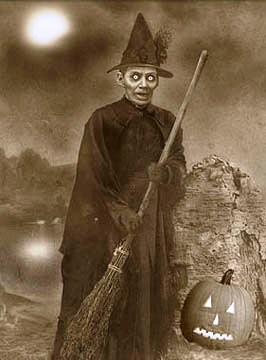
Training Wheels

Training Wheels image 2

Training Wheels ~ A Short Story by Allen Kopp

Gee was allowed to ride four blocks on the sidewalk toward the school to the stone fence and back. He didn’t want to go any farther than that, anyway, because the Hedgepeth brothers were just beyond that. They threw rocks at him and called him names and he was afraid of them.

He didn’t have a full-sized bike yet because he was only seven and small for his age. He had a half-sized bike. It was really a girl’s bike but he didn’t mind because it was comfortable and easy to ride. The bike had been equipped with training wheels up until a few days ago, but a bigger kid in the neighborhood took them off for him. He was proud of being able to ride without them.

He had just reached the stone fence and was about to turn around and go back when he noticed a man leaning against the fence looking at him. He was in the shade under an overhang of leaves, so Gee couldn’t see his face very well.

“Hello,” the man said, as Gee was making the turn-around maneuver on the narrow sidewalk.

“Hi,” Gee said, looking quickly at the man and then looking away.

“How are you today?”

“I’m all right,” Gee said.

“I bet you don’t know who I am.”

“Who?”

“Would it surprise you very much if I told you I’m you, fifty years from now?”

Gee laughed a little bit because he didn’t know what else to do. “That’s silly,” he said.

“Why is it silly?”

“How could you be me when I’m right here?”

“I don’t know,” the man said. “Except to say that time is a river.”

“I don’t know what that means,” Gee said.

“I know you don’t. I don’t know what it means, either. It’s just what I’ve been told.”

“Do you live in that house?” Gee asked, pointing to the house with the stone fence around the yard.

“No,” the man said. “I don’t live anywhere around here anymore.”

“So you’re just visiting?”

“Yes, I’m visiting you.”

“Does my mother know you?”

“Yes, she knows me. About as well as anybody could.”

“I’d better get going. If I don’t come back right away, she’ll come looking for me.”

“Tell her hello for me.”

“What’s your name?”

“My name is the same as yours.”

Gee looked at the man’s face but still couldn’t see it very well. “I don’t know what you’re talking about,” he said. “Are you a friend of the family?”

The man laughed. “In a way,” he said. “You’ll understand when you’re older.”

“I think I’ve heard that one before,” Gee said.

“Before you go, I want to tell you something that won’t mean anything to you now but will when you’re older.”

“What is it?” Gee asked.

“You’ll be married three times. You’ll save yourself a lot of grief if you skip the first one.”

“I’m not ever getting married.”

“Don’t go into business with a partner named Alonso. He’s a crook. The business fails and you lose all your money.”

“I don’t know anybody named Alonso.”

“After your father dies, your mother will want to marry a man named Bartlett. Whatever you do, don’t let that marriage take place. He wants to marry her for all the wrong reasons.”

“Would you like to come home with me and tell her yourself?”

“No, I can’t do that.”

“Why not?”

“I’m here to see you. Not her.”

“Okay. I’m going now.”

“Try to remember the things I told you, even though they don’t mean anything to you now. Write them down when you get home and put them away someplace safe where you’ll be able to see them in twenty or thirty years.”

“Twenty or thirty years?” Gee said. It seemed to him like all the time in the world. His young mind couldn’t grasp that much time.

That evening when they were having dinner, mother said, “Millie called me and told me she saw you talking to an old man on the sidewalk today.”

“Yes,” Gee said. “He was just standing there on the sidewalk when I rode past on my bike.”

“What did he say to you?”

“Nothing much. He just asked me how I was and he told me he used to live here a long time ago.”

“He wasn’t trying to mess with you, was he?” daddy asked.

“No.”

“Did he say anything dirty to you?” mother asked.

“No! He was just a nice old man.”

“You’ll be sure and tell me if anybody bothers you, won’t you?”

“He didn’t bother me.”

“I’m going to call the sheriff and tell him there’s an old man hanging around the neighborhood bothering kids,” daddy said. “They can at least keep an eye out for anybody that looks suspicious.”

“I don’t think he’ll be back,” Gee said.

He watched his father chewing and he knew he wasn’t paying any attention; he was already in some other place. His mother sipped her iced tea daintily with a cigarette in her fingertips as a fly buzzed around the table and lighted on the plate of sliced tomatoes.

Copyright © 2013 by Allen Kopp
The Rainbow ~ A Capsule Book Review

The Rainbow cover

The Rainbow by D. H. Lawrence ~ A Capsule Book Review by Allen Kopp 

When English writer D. H. Lawrence’s novel, The Rainbow, was first published in 1915, it was hailed as obscene and Lawrence himself was labeled a pornographer. The book was banned in many quarters while the righteous of the day took great pleasure in making a public display of burning it. It wasn’t available in England and the United States for many years after its publication, except in an “expurgated” version, meaning that somebody went through the book and took out the parts they considered “offensive.”

Readers nowadays will not understand what all the fuss was about when The Rainbow was first published nearly a hundred years ago. We live in a permissive age where any words might be spoken for public consumption; anything might be seen on TV or in movies or written about in magazines, newspapers and books. All the rules, all the taboos, seem to have been lifted, and nothing is sacred anymore. The Rainbow seems very mild by today’s standards. Lawrence only suggests that his characters engage in sexual activity. (He was, possibly, the first “mainstream” English writer to do this; thus all the furor.) His heroine in The Rainbow, Ursula Brangwen, sees her boyfriend (to whom she is engaged but doesn’t marry) naked while he is bathing, sleeps with him in his hotel room while pretending to be his wife, and has outdoor sex with him. There are no steamy details; the sex is only implied. This is no Peyton Place. Any of the words connected with sex are never used.

The Rainbow is a multi-generational story of a fictional English family, the Brangwens. It begins with Tom Brangwen, a gentleman farmer who marries a strangely detached Polish woman named Lydia. She is a widow, older than Tom, with a daughter from her previous marriage named Anna. When Anna is older, she marries her stepfather’s nephew, Will Brangwen. If Anna and Will have nothing else together, they have sexual compatibility; they end up having nine children, the oldest of whom is Ursula. She becomes the focal point of the second half of the novel.

As Ursula Brangwen becomes older, she longs to break free from the conventions and constraints that she believes have held women back for so long. She isn’t content to live as other women of her class have lived. She is a “modern” woman of the early twentieth century. She seeks a teaching career (with disastrous results), a college degree (she fails her final exams), and marriage (she decides she can’t go through with it) to a handsome young military man named Anton Skrebensky, a veteran of the Boer War. After The Rainbow ends, Ursula’s story is continued in the novel Women in Love, which was published in 1920.

Much of The Rainbow is taken up with the interior lives of its characters, meaning that we are constantly being told what they think and how they feel, rather than what they are doing or saying or what they are having for dinner. If this sounds like tedious reading, it isn’t. It isn’t a difficult book to read for those who are so inclined, although a little long at 515 pages.

D.H. Lawrence was plagued by ill health throughout much of his life and died at age 45 of tuberculosis in 1930. If he failed to achieve the acclaim and success that he deserved during his lifetime, he is today hailed as a giant of twentieth century English writing. The Rainbow is one of his most famous and enduring works. 

Copyright © 2013 by Allen Kopp

Skeleton Woman ~ A Painting by Fernando Botero

Skeleton Woman by Fernando Botero

Colombian painter Fernando Botero was born in 1932 and is still living. He paints in a “figurative” style, meaning that his subjects (men, women, animals, scenes of daily life, nature, etc.) are exaggerated, disproportionate, and often grotesque. His paintings are owned by collectors and displayed in museums throughout the world.

Happy Fourth of July!

HAPPY FOURTH OF JULY TO EVERYONE!

MY COUNTRY TIS OF THEE

SWEET LAND OF LIBERTY

OF THEE I SING!

AMERICA, AMERICA,

GOD SHED HIS GRACE ON THEE

AND CROWN THY GOOD WITH BROTHERHOOD

FROM SEA TO SHINING SEA!

America the Beautiful

America 1
 

America the Beautiful

O beautiful for spacious skies,
For amber waves of grain,
For purple mountain majesties
Above the fruited plain!
America! America!
God shed his grace on thee
And crown thy good with brotherhood
From sea to shining sea!
 
O beautiful for pilgrim feet
Whose stern impassioned stress
A thoroughfare of freedom beat
Across the wilderness!
America! America!
God mend thine every flaw,
Confirm thy soul in self-control,
Thy liberty in law!
 
O beautiful for heroes proved
In liberating strife.
Who more than self their country loved
And mercy more than life!
America! America!
May God thy gold refine
Till all success be nobleness
And every gain divine!
 
O beautiful for patriot dream
That sees beyond the years
Thine alabaster cities gleam
Undimmed by human tears!
America! America!
God shed his grace on thee
And crown thy good with brotherhood
From sea to shining sea!
 
O beautiful for halcyon skies,
For amber waves of grain,
For purple mountain majesties
Above the enameled plain!
America! America!
God shed his grace on thee
Till souls wax fair as earth and air
And music-hearted sea!
 
O beautiful for pilgrims feet,
Whose stem impassioned stress
A thoroughfare for freedom beat
Across the wilderness!
America! America!
God shed his grace on thee
Till paths be wrought through
wilds of thought
By pilgrim foot and knee!
 
O beautiful for glory-tale
Of liberating strife
When once and twice,
for man’s avail
Men lavished precious life!
America! America!
God shed his grace on thee
Till selfish gain no longer stain
The banner of the free!
 
O beautiful for patriot dream
That sees beyond the years
Thine alabaster cities gleam
Undimmed by human tears!
America! America!
God shed his grace on thee
Till nobler men keep once again
Thy whiter jubilee!
 
laba.ws_USA_Independence_Day