Author: allen0997

1951 Pontiac Chieftain Sedan Delivery Car
1951 Pontiac Chieftain Sedan Delivery Vehicle


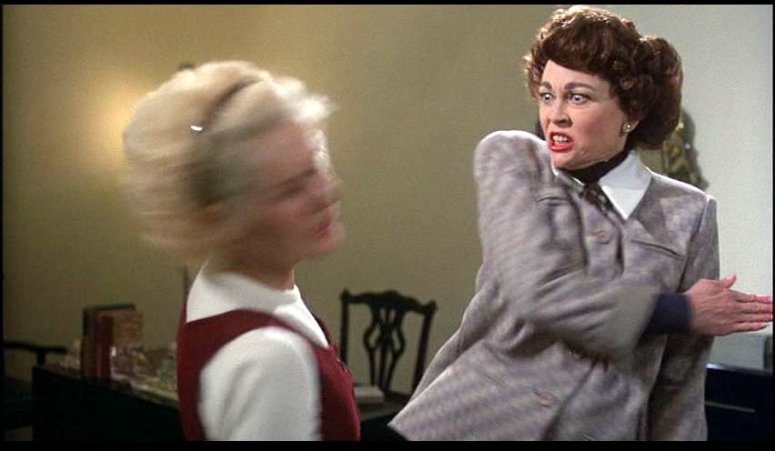
Mommie Dearest (1981)
Joan Crawford (played by Faye Dunaway) practices her parenting skills with daughter Tina in Mommie Dearest (1981).
To the Lighthouse ~ A Capsule Book Review
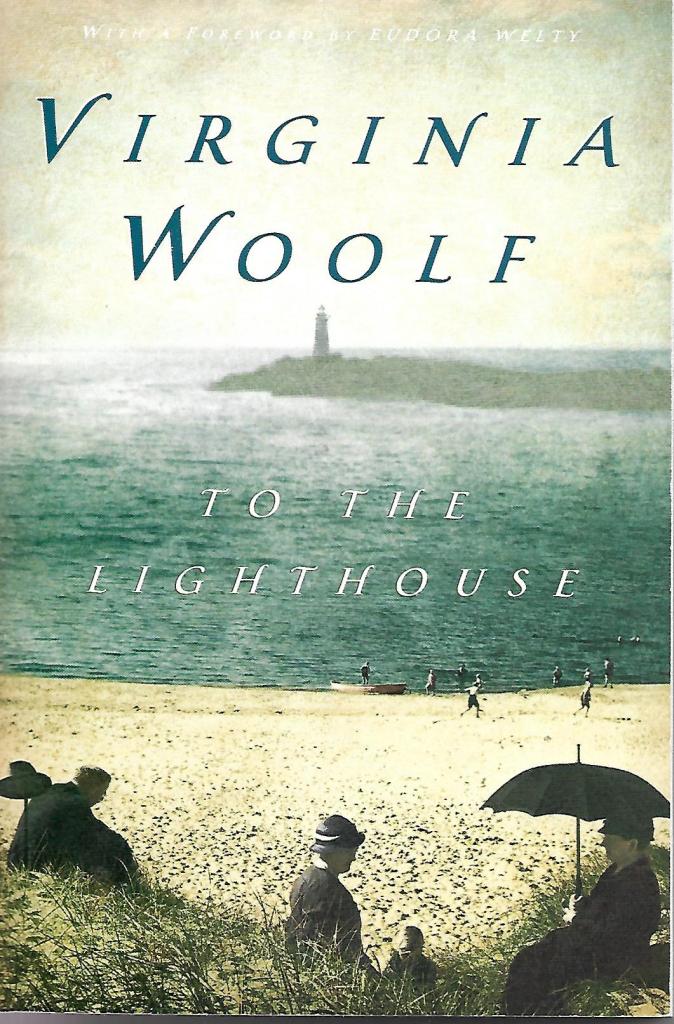
To the Lighthouse ~ A Capsule Book Review by Allen Kopp
Modernist English author Virginia Woolf was born in 1882 and died in 1941, age 59, a suicide by drowning. Her acclaimed novel To the Lighthouse (number 15 on the Modern Library’s list of the greatest novels of the twentieth century) was published in 1927. There is no plot, action or story to speak of in To the Lighthouse. The narrative consists of philosophical introspection (thoughts and observations) of the characters. This was a technique pioneered by modernist writers Marcel Proust and James Joyce.
The novel is set on the Scottish island of Skye between 1910 and 1920. (We aren’t told where the story is set, or when, but we can find out by reading background information on the Internet.) The Ramsay family is “vacationing” in a seaside house on the island. Mrs. Ramsay is fifty and we are constantly told how beautiful she is (or how beautiful people think she is). Mr. Ramsay is a stuffy, grouchy philosophical professor and writer. The Ramsays have eight children, among them James, who dislikes his father. They have several “guests” staying with them, including the young painter, Lily Briscoe, who knows that her paintings will end up in the attic; Charles Tansley, who asserts that women can’t paint or write; Augustus Carmichael, a poet who riles Mr. Ramsay by asking for a second helping of soup; Paul Rayley and Minta Doyle, two acquaintances with whom Mrs. Ramsay is practicing her matchmaking skills.
The second part of the novel takes place ten years later. The Ramsays return to the house on the Island of Skye for the summer, but there have been some changes to the dramatis personae. Mrs. Ramsay has died in the interim. Prue Ramsay, the Ramsays’ daughter, has married and died in childbirth. And then there’s that awful war, the Great War, in which Andrew Ramsay has died in France, blown up by a shell.
At the end of the book, the long-awaited trip to the Lighthouse takes place, with Mr. Ramsay, James Ramsay and Cam Ramsay in attendance. Lily Briscoe remains behind on the lawn, watching the Ramsays’ boat from a distance. She is still trying to paint without much success, possibly the same picture she was painting ten years earlier. She has never married and, as she watches the boat, she decides she will marry Mr. Ramsay, now in his seventies. Good luck with that, Lily.
What can you say about Virginia Woolf? Of twentieth century English writers, she is the most cerebral. To the Lighthouse cannot be said to be light reading. It requires concentration and a dedicated effort to make it through to the end. I’ve read it twice and the second time was no easier than the first. If you like a book where absolutely nothing happens, except what goes into inside people’s heads, you’ll love To the Lighthouse.
Copyright © 2018 by Allen Kopp
A Place in the Sun (1951)
“I know you want to kill me, George, don’t you? You want to hit me in the head with that oar and drown me so you can be with Angela Vickers, the little debutante who doesn’t whine and doesn’t wear saddle oxfords.”

Ring the Night Bell

Ring the Night Bell ~ A Short Story by Allen Kopp
(Published in the online publication Short-Story.Me under a different title.)
I knew Mrs. Beaufort on sight. She was a faded, middle-aged woman who had probably been pretty in her day, except that her day was past. I was surprised when she called me on the telephone and asked me to come out to her house. Strictly business, she said. I knew there would be money involved—quite a lot of money, I hoped—so I told her I’d be there at the time she indicated. I had experienced several reversals—failures, if you know what I mean—so I had been praying for just the kind of opportunity I hoped this would be: one that would pay me a maximum amount of money with a minimum amount of involvement and risk.
I had been doing some investigative work for years that allowed me to remain on the sidelines of the criminal underworld. I could go either way—I could tip off the police or I could perjure myself in court; I could provide a hiding place for somebody on the lam or help a murderer get across the border if there was enough in it for me. I had done some work for Mrs. Beaufort’s husband. Work he called “under the table” because it was work he didn’t want anybody to know about. That’s how Mrs. Beaufort knew about me and my reputation.
I had a feeling it would not be a good idea for people to see my car parked at Mrs. Beaufort’s house, so I took the bus out there and when I got off the bus I walked about four blocks to her place. It was raining but I was prepared for it; I was wearing a raincoat and a hat and carrying an umbrella. I looked as nondescript as I could.
The Beauforts lived in the biggest, fanciest house I had ever seen. It was like a house out of a dream, the kind of house that rich people in movies live in. There must have been thirty or forty rooms. When I rang the bell, I expected a butler to open the door, but Mrs. Beaufort opened it herself. She smiled at me and waved me in with the gracious air of a hostess. She took my coat and hat and ushered me into the most beautiful sitting room I had ever seen and pointed to a white sofa where she wanted me to sit. When I was comfortable, she offered me a glass of champagne. I had tasted champagne once or twice before in my life. She gave me the impression she had it every day of her life.
While sipping champagne—she made sure my glass stayed nearly full—we talked idly of this and that: the weather and the stock market, music and movies. I found her a smart and witty woman—a good companion on a rainy night when all you want is somebody to talk to. Pretty soon we were swapping stories of our childhoods and telling each other things we ordinarily would never tell anybody. She had been a tomboy who hated music lessons and briefly, in her youth, entertained the notion of becoming a nun. I told her the sad tale of my disadvantaged youth and how I had run away from home and lied about my age to get a job as a longshoreman. What I told her was mostly true but I wasn’t above adding a few embellishments.
After I had been sitting on the white sofa for an hour or so and the big grandfather clock chimed, reminding me of the passage of time, I suddenly remembered I was there for a reason other than reminiscing about my past. I asked Mrs. Beaufort what it was she had wanted to see me about.
She became serious and sat down beside me. She said she liked me and trusted me. She told me her husband had spoken well of me on several occasions and had found me reliable and amenable. I thanked her for the compliment and set my glass on the side table.
She and her husband had been married nearly twenty-five years, she said. They had had two daughters, one of whom died in an automobile accident at the age of seventeen. They owned six food processing plants and were about to open two more. Business had never been better. Money was pouring in every second of the day.
“That’s fine,” I said, “but what does it have to do with me?”
Her husband, she continued, had told her he wanted a divorce. He had started seeing a younger woman and had found that, even at his advanced age (he was fifty-two) he was still capable of feeling emotion.
“Isn’t that ridiculous?” Mrs. Beaufort asked, looking me steadily in the eye. “Feeling emotion? It sounds like an impressionable schoolgirl.”
“It takes all kinds,” I said.
“I don’t want to divorce my husband,” Mrs. Beaufort said. “A divorce would be ruinous to my business that I’ve built up over all these years and also ruinous to my family. I have to consider my only surviving daughter and her future happiness. I don’t want her to have the stigma of divorced parents hanging over her head.”
“Yes, I can see that,” I said.
“Since you are a reliable and a discreet man and you have a reputation for getting a job done, I was hoping you would be able to put me onto someone who could put my husband out of the way.”
“What do you mean ‘put out of the way’?”
“I mean exactly what you think I mean, Mr. Tyler.”
“Wait a minute,” I said, suddenly on my feet. “That’s way out of my line. I may be willing to bend the law one way or another to suit the situation but I don’t go in for that sort of thing. Do you think I want to spend the rest of my life in prison?”
“Of course not, Mr. Tyler. Nobody wants that. If a thing were to be done properly, there would be no fear of going to prison.”
“I really think I ought to be going,” I said. “It’s been, uh, interesting, but when you start talking about something as serious as—“
Mrs. Beaufort laughed. “You should hear yourself,” she said. “You sound like a silly naïf.”
“Like a what?”
“Here, have another glass of champagne and we’ll talk over my proposition.”
Mrs. Beaufort was willing to pay upwards of fifty thousand dollars to have her husband and his mistress killed. Ideally, she wanted it to look like a murder-suicide. The jealous older man discovers his paramour has been maintaining an open-door policy where old boyfriends are concerned. He flies into a rage and shoots said paramour in the head while she is sleeping and then turns the gun on himself—as simple as that. There would be no one to blame because both parties involved would be dead; no one snooping around asking questions.
If I could connect Mrs. Beaufort with someone who would do the job, she would pay me ten thousand dollars; forty thousand would go to the trigger man. If, on the other hand, I decided I was capable of doing the job myself, the entire fifty thousand would be mine. She hoped I would do the job myself, because, well, it just seemed better not to involve another party if we didn’t have to.
I told her I would think over the proposition. Fifty thousand was certainly an attractive sum and would give me the chance to get away and start afresh in a new locale, but I had to admit I didn’t relish the idea of killing two innocent people in cold blood.
“Not innocent,” she said. “And think of it as just another job, a job for which you will be handsomely rewarded.”
After a couple more glasses of champagne, I said that, yes, of course, I would be happy to do the job myself. I didn’t see how I could turn down fifty thousand dollars.
“Oh, I’m so glad!” she said, clasping her hands together like a schoolgirl. She poured her own glass full and proposed a toast. “To the success of our little venture,” she said. We clicked glasses and laughed.
When I left Mrs. Beaufort’s house that night, we were both happy and giddy. She was about to be relieved of a philandering husband who was all too willing to wreck her business and her life—also her daughter’s life—and I was about to make the biggest score of my life. I saw dollar signs before my eyes.
She told me to do nothing until I heard from her; she would know when the time was right to proceed. I waited almost two weeks and was starting to think the deal was off when she called me up late one night and woke me out of a sound sleep. She asked me if I could meet her the next evening at the Embassy Club at eight o’clock. I told her I’d be there at whatever time she said and then I rang off and went back to sleep.
The reason we were meeting at the Embassy Club, I discovered that next night, was because that’s where Mrs. Beaufort’s husband’s paramour (or mistress, whatever you want to call her) worked as a singer. Her name was Adele Kluge. Mrs. Beaufort wanted me to get a good look at her.
At the Embassy Club we were all smiles. We sat at a cozy little booth and made small talk and drank martinis like they were going out of style. We had dinner and then the floorshow began. The small orchestra came out and warmed up with a couple of mellow numbers and then the lights went down and the featured singer came out onto the little stage and waited for her musical intro.
When the lights came up enough for me to get a good look at Adele Kluge, I had to admit that Mr. Beaufort had good taste in dames. She was smart and elegant-looking, not cheap or flashy. She was maybe thirty-eight or forty years old, a mature woman and not a flighty young girl. She had chestnut-colored hair and looked stunning in a tasteful black-and-white gown. Her voice was polished and mellow and the orchestra was good too.
During Adele’s act Mrs. Beaufort was ill at ease; she wouldn’t look directly at Adele. She stared hard at the table or looked off to the side where the waiters came and went. When Adele was finished and left the stage to politely enthusiastic applause, Mrs. Beaufort was her old smiling self again.
“She’s good,” I said. I couldn’t resist.
“Do you think you’ll know her when you see her again?” Mrs. Beaufort asked me.
“Of course,” I said.
When we left the Embassy Club, Mrs. Beaufort asked me to drive her home. I pulled into her driveway and stopped at the front door, expecting her to get out, but she put her hand on the door handle and looked over at me and smiled sweetly.
“Would you mind coming in?” she asked. “I don’t feel like being alone.”
As we went up the steps in the dark to her front door, she held on to my arm a little more than was necessary. I could tell right away that she was putting on the helpless female act. I was determined to maintain my professional demeanor. She was just a person I was doing some work for; I wasn’t interested in more than that.
Once we were cozily inside with all the lights on, Mrs. Beaufort made some coffee and showed me a picture of her daughter that had been taken two years earlier. Stephanie was a pretty girl in an ordinary way. She had dark hair and a pleasing face with a hint of sadness around the eyes that told me she was something more than just a rich man’s spoiled daughter. I could tell that all Mrs. Beaufort’s hopes were riding on Stephanie.
After that, our conversation took a more serious tone. Mrs. Beaufort had decided that a week from Friday, the twenty-first, was when she wanted the murders to take place. That was only a week and a half away. Friday night was Mr. Beaufort’s night for recreation away from business. He would play poker with his poker club until midnight or so, and then he would go to Adele Kluge’s apartment on the eighteenth floor of the Marquand apartment building.
This was the way Mrs. Beaufort had it planned: I was to go to Adele Kluge’s apartment at around eleven-thirty and shoot her in the head while she slept in her bed. Then I would wait in the dark until Mr. Beaufort arrived and when he did I would kill him before he discovered Adele’s body. The best part of the plan, according to Mrs. Beaufort, was that I would kill them both with Mr. Beaufort’s own gun, which would be certain to be covered with his own fingerprints because it was his favorite gun and he was known to carry it with him on business trips for protection. When I asked Mrs. Beaufort how I was to acquire this gun, she went into another room and came back carrying a leather holster with the gun in it. I unfastened the holster to get a look at the gun; she warned me against touching it with my bare hands.
I was starting to get a sick feeling about killing Mr. Beaufort and Adele Kluge. When Mrs. Beaufort and I had talked about it earlier, it didn’t seem real to me, but now, since we had settled on a date, it was too real for comfort and I was thinking that I was probably too squeamish to pull that kind of a job—fifty thousand dollars notwithstanding. I kept my I-don’t-think-I-can-do-it thoughts to myself, though, and after a while I was comforted by the thought of the money I was going to get.
I didn’t know how I was going to break into Adele Kluge’s apartment without being seen or heard, but Mrs. Beaufort told me not to worry; she had a key to Adele’s door. When I looked at her with wonder and asked her how she came to have a key, she just laughed and told me it was one of her secrets that she didn’t care to divulge.
I told Mrs. Beaufort I was going to need some money in advance for a job that difficult and she didn’t give me any argument. She said she would have twenty-five thousand dollars in cash delivered to me before the twenty-first, and she would pay me the rest of the money after the job was done. She didn’t say how she would have the money delivered, but she seemed to have thought of everything so I let it go at that.
That night I spent a nearly sleepless night. I kept seeing Adele Kluge on that stage singing her songs; I hated to be the one to bring down the final curtain on her act.
True to her word, Mrs. Beaufort had twenty-five thousand dollars delivered to me on Thursday the twentieth in a neatly wrapped parcel. I knew the delivery boy didn’t have any idea what was in the package. I took it from him and ran into the bedroom and closed the door, even though I was alone, and pulled down the curtain and ripped the package open. I had never seen that much green before. It was the most beautiful salad I had ever laid my eyes on. And it was only half of what I was going to get.
The next day I was calmer than I thought I would be. I slept away half the morning and when I got up I walked to a café down the street and had eggs and ham. When I left the café, I knew I would be restless if I went back home, so I went to an early matinee and sat in the balcony and completely lost myself in the picture.
After that I went to a quiet little bar and had a couple of beers. The beers made me sleepy, so I went home and went to sleep on the couch. When I woke up, it was after dark and raining again and I had the jitters. I felt the way an actor must feel before he goes on the stage for the first time. I hoped I could keep from getting rattled and remember what I was supposed to do.
About ten o’clock I started getting ready. I dressed all in black, including black sneakers. I put the gun in the holster in my pants pocket and the key to Adele’s apartment in my other pocket. I rolled my gloves together with my ski mask and put them in the pocket of my raincoat. I put on my hat and looked all around my apartment—I don’t know what I was looking for—and turned off the lights and went out the door.
I walked down the street a couple of blocks to a cab stand where I got a cab and took it to the neighborhood of the Marquand apartments. I knew better than to have the driver let me out right in front of the building, so I got off at a drugstore a couple of streets over. I cut through a connecting alley and approached the Marquand building from the rear.
I went into the lobby breezily as if I belonged there. As I walked past the sleepy night watchman sitting behind a desk, he gave me a glance but I was careful not to look directly at him. I went to the elevator and up to the eighteenth floor.
At this point I told myself I could still cancel the operation if things didn’t look good; for example, if somebody was standing waiting for the elevator and got a good look at my face. I saw no one, though, and as I padded down the carpeted hallway looking for apartment 1806, I didn’t hear a sound.
When I found the door to Adele’s apartment, I stood there for a moment breathing deeply, trying to slow down the beating of my heart. I slipped on the gloves, took off my hat and pulled the ski mask over my face, put my hat back on, and pulled the gun out of its holster. Before I put the key into the lock to open the door, I glanced at my watch—it was exactly eleven-thirty.
The door opened effortlessly and I stepped out of the half-light of the hallway into the darkness of Adele’s apartment. I closed the door silently and returned the key to my pocket before I lost track of it and dropped it. I waited a couple of minutes for my eyes to adjust before I proceeded down the hallway to the right.
I came to a door that was partway closed—obviously the bedroom where Adele lay sleeping—and pushed the door opened with my left hand, holding on to the gun in my right hand.
There was just enough light in the room for me to be able to see the bed and Adele lying in it. She lay on her back with her arms outstretched; it was so quiet in the room I could hear the sound of her breathing, almost like a dainty little snore. I approached the bed from the left. She was lying toward the right side, with her head canted slightly toward the wall. I leaned over the side of the bed and put the gun within two inches of her head and pulled the trigger; she was dead instantly as the bullet entered her brain. I knew from the expression on her face that she felt nothing and knew nothing. That knowledge would comfort me in the days to come.
As I looked around the room for a place to hide, I told myself I was halfway home and this would soon be over. I was afraid that a neighbor might have heard the gunshot and would come running or, worse, call the police, but nothing happened; everything was as quiet as before.
On the other side of the room opposite the bed I saw a door that was obviously a closet. I crossed the room and opened the door and stepped inside and pulled the door closed, but still opened enough that I could see out into the bedroom. I felt oddly secure inside the closet, as if this was all in the past and I was only remembering it.
I waited inside the closet for maybe a half-hour, with only the sound of my own breathing, when I heard the door to the apartment open and close softly. I knew it was Mr. Beaufort and he was exactly at the time I expected. When he came into the bedroom, he didn’t turn on a light—another lucky break for me—and I could tell he was trying to keep from waking Adele.
He went into the bathroom and closed the door and turned on the bathroom light. I could hear the toilet flush and water running in the sink. In a minute he came out of the bathroom and stood beside the bed looking down at Adele. I thought he must know that something was amiss with her, but he turned his back to the bed and began unbuttoning his shirt. He removed his shirt first and then his shoes and pants and then he moved to the bureau and opened the drawer and took out a pair of pajamas. He was partway bent over from the waist when I moved up behind him like a disembodied spirit and shot him in the right temple. I knew he was dead right away, probably before he hit the floor.
With Mr. Beaufort dead at my feet and Adele Kluge dead in the bed, I let out my breath, not realizing until that moment that I had been holding it in. I took off my hat just long enough to take the ski mask off, put my hat back on, rolled up the ski mask and put it in my pocket. I bent over Mr. Beaufort’s body and pressed the gun into his right hand, molding his fingers around it.
“It’s nothing personal,” I whispered into his right ear.
I took a quick look around the room to make sure I hadn’t forgotten anything and then I moved through the dark apartment back to the door. I listened at the door for a moment and, hearing nothing, opened it and moved out into the hallway. As I closed the door, I made sure it locked.
Walking back up the hallway to the elevator, I took off the gloves and stuffed them into the pocket of my coat and ran my fingers through my hair. If I met anybody, I didn’t want to look disheveled. I didn’t want anybody to be taking a second look at me for any reason.
When I got off the elevator in the lobby, the night watchman was asleep in his chair and didn’t see me. I went out the door, took a deep breath of the night air, and began walking down the street. I had the sensation of being alive and that there was nothing better. I walked for several blocks through the deserted streets. I just wanted to keep moving. I didn’t feel like being still.
When I came to a phone booth at an intersection, I called Mrs. Beaufort, as we had planned. She answered the phone on the first ring.
“Hello,” she said in her quiet voice.
“The day is done,” I said.
She said nothing. All I heard was the click as she hung up the phone.
I was feeling hungry—I felt like I hadn’t eaten in days—so I stopped at a greasy-spoon diner and wolfed down a couple of hamburgers. After I left the diner, I walked and walked through unfamiliar streets until about two-thirty in the morning. When I spotted a cab, I flagged it down and went back to my apartment.
The next day I was asleep when the morning editions of the newspapers came out, but there was plenty of coverage in the afternoon editions. Millionaire businessman Everett Beaufort was found slain, along with a female companion, in a luxury apartment belonging to the female companion. There was no sign of forced entry, no sign of a struggle. Nothing was stolen from the apartment. Police were investigating the crime but so far had no leads and no suspects. One police detective at the scene, when interviewed, said it appeared the male victim had shot the female victim in the head and then killed himself. It was too early in the investigation, however, to know for sure exactly what happened.
About six in the evening when I was dressing to go out, there was a knock at my door. It was the same delivery boy as before with a parcel identical to the one he had delivered two days earlier. It was the other half of my fifty thousand dollars. I was happy to be able to mark the account “paid in full” and to be finished with Mrs. Beaufort forever.
Mrs. Beaufort wasn’t finished with me, though. She called me every day for two weeks, sometimes two or three times a day. She had taken to calling me in the middle of the night. She was distraught and said she couldn’t live with what she had done. She was going to go to the police and tell them everything. She was gong to commit suicide.
I tried to be patient with her, but I had to admit my patience was running thin. I tried to give her the old pep talk. I told her to think of her daughter’s future happiness. I told her the news reports of the incident looked good, very much in our favor, and she had nothing to worry about. And, anyway, I said, we shouldn’t be talking about this on the phone. We shouldn’t even be talking at all. We didn’t want the police to connect the two of us in any way. It was safer for both of us if we just went our separate ways.
One Sunday evening when I was planning on staying at home and going to bed early, she called me and told me she had to see me, she had to talk to me. I could tell from the sound of her voice that she had been drinking heavily. I drove out to her place and parked on the street a couple of blocks over and walked the rest of the way.
She was in a terrible state when I got there, crying and very drunk. I told her she was staying at home too much alone; she needed to get out and have some fun. She had most of the money in the world and she could do whatever she wanted, go anyplace, buy anything. She had every reason to be happy.
She said she was going to the police the next day; she planned on telling them everything. It was the only way out. They would come and pick me up unless I left town; she wanted to warn me.
I slipped a bottle of pills out of my pocket that I had brought with me. I hadn’t been sure if I was going to use them, but I brought them with me anyway. It was a powerful sedative; there was a warning on the bottle not to take them while drinking alcohol.
I gave her the bottle of pills and told her they would make her feel better, much better than alcohol. They would help her to sleep and make her forget all her troubles. She was grateful; she took two or three of the pills at first and washed them down with her vodka martini.
I stayed with her for several more hours. She talked and swilled liquor; I remained sober and listened. Occasionally she took a couple more of the pills, as if she didn’t know what she was doing or had forgotten how many she had already taken. By four in the morning she had taken almost all the pills and was unconscious. I figured that with the pills and the alcohol she would be dead by the time the sun was up.
The next day the story was all over the papers. The bereaved widow of Everett Beaufort had been found unconscious by her maid at around eight o’clock in the morning. By the time a doctor was summoned, Mrs. Beaufort was dead. All indications were that she had committed suicide. A daughter, Stephanie Beaufort, age nineteen, was the only surviving member of the Beaufort family.
I had my fifty thousand dollars and could take it easy for a while. I planned on going out West—possibly to San Francisco—and starting my own private detective agency, but I decided for the time being I would stay put. Stephanie Beaufort interested me. She was one of the richest girls in the country and was all alone. I watched the newspapers for any news of her. I had even spotted her a few times. She looked better in person than she did in her pictures. One day soon I planned on approaching her on the street and introducing myself. She would be hostile at first, thinking I was a reporter, but I would tell her I knew her parents; I would extend my condolences and offer my services. She was sure to warm up to me in time.
Copyright © 2018 by Allen Kopp
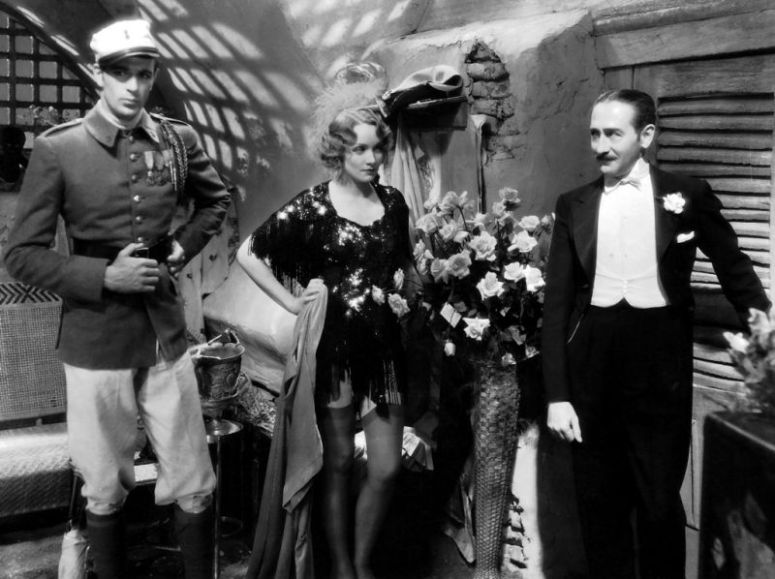
Morocco (1930)
In exotic Morocco, Amy Jolly (Marlene Dietrich) is a café singer in love with devil-may-care Legionnaire Tom Brown (Gary Cooper), while a millionaire (Adolph Menjou) offers her the world.