Six Formidable Females Wearing Intimidating Hats
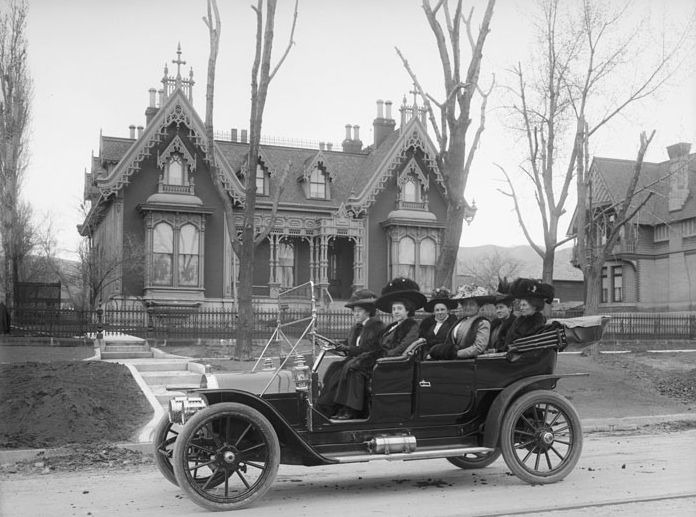

Six Formidable Females Wearing Intimidating Hats

The Truce ~ A Capsule Book Review by Allen Kopp
Mario Benedetti was a Uruguayan writer who lived from 1920 to 2009. Although not well known in the English-speaking world, he is considered one of the most important Latin American writers of the second half of the twentieth century. His novel, The Truce, was first published in 1960. The 2015 Penguin Classics edition was translated from Spanish to English by Harry Morales.
The subtitle of The Truce is The Diary of Martín Santomé. Martín Santomé is the common man protagonist of The Truce and, as such, he is subject to all the ills and foibles of being alive. He doesn’t have a lot of money and isn’t especially smart or well educated. He has spent his life toiling in a tedious accounting job (“…that sentence of being ensnared in something unimportant for eight hours, something which inflates the bank account of those useless people who sin by the mere fact of being alive…”). At forty-nine, he is a few months away from retirement, but, instead of looking forward to retirement, he doesn’t know how well he is going to take to it.
Martín’s private life is no more exemplary than his professional one. He has been a widower since age twenty-eight. (His wife, Isabel, was twenty-five when she died of complications of childbirth.) He has had perfunctory affairs with women, one-night stands, but nothing that lasts. His three grown children (Esteban, Blanca and Jaime) live with him but he is not good at understanding them or communicating with them. When his son Jaime confesses to him that he is gay, he writes: “My son is a queer. A queer…I would have preferred that he turn out to be a thief, a morphine addict or an imbecile. I would like to feel pity for him, but I can’t.”
There is a young woman half his age with whom he works in his office. Her first name is Laura, but he refers to her always by her last name, Avellaneda. He is drawn to her in a way that is new for him. When he discovers the attraction he feels for her is reciprocated, the two of them begin a tentative affair. It is this affair that forms the emotional core of the novel.
Avellaneda and Martín rent an apartment together, but their happiness seems as fragile as a helium balloon. He knows he is not the man he once was. The difference in their ages bothers him more than it does her. If they remain together for any length of time, will she end up dumping him for a younger man? Adding to his anxieties is the feeling that his own children, especially Esteban, disapprove of his seeing a woman other than their mother.
Instead of chapters, The Truce is divided into diary entries, making it very easy to read in Martín Santomé’s first-person voice. And, although set in the exotic (to us) locale of Montevideo, Uruguay, it could be anywhere. Its themes of loneliness, love and loss are universal.
Copyright © 2018 by Allen Kopp
1953 Oldsmobile Super 88 Hardtop

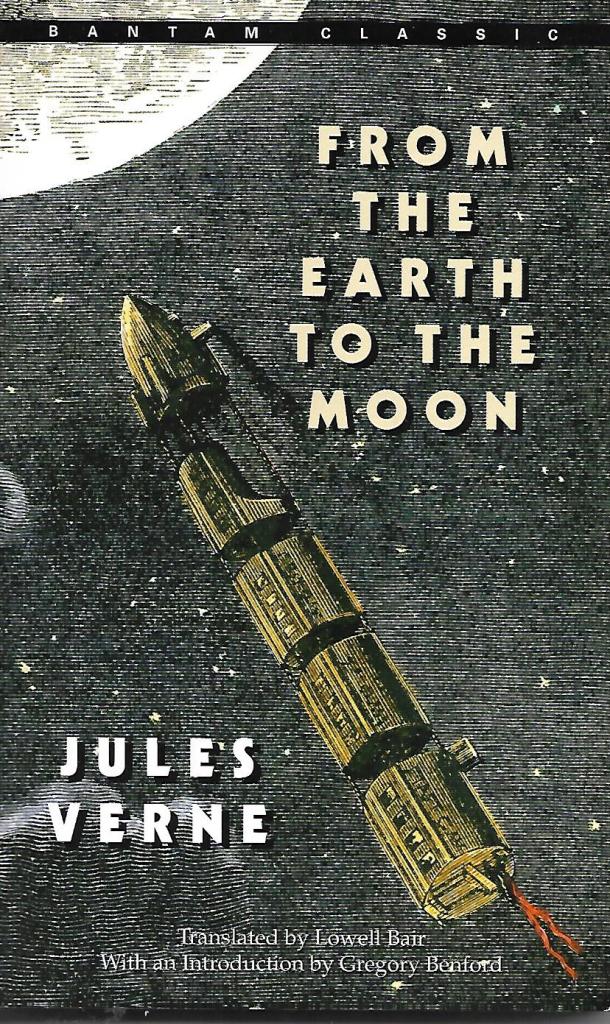
From the Earth to the Moon ~ A Capsule Book Review by Allen Kopp
From the Earth to the Moon is an 1865 science fiction/fantasy novel by Jules Verne. Even though Jules Verne was a Frenchman and wrote in French, the novel is set in America because that is where people think big and accomplish the impossible.
The Civil War has ended and American military men are unhappy that there’s nobody else to fight. But, wait a minute, there’s some other way for these people to expend their excess energy. The president of the Baltimore Gun Club, one Impey Barbicane (with a name like that, we know we’re not being serious), comes up with the interesting idea of shooting a projectile all the way to the moon out of a cannon. It won’t be easy, of course, but these are Americans, and they don’t know the meaning of “impossible.”
Soon people all over the world are fascinated by the idea of sending a vessel to the moon. Most think it’s a good idea whose time has come, but there are always the naysayers who are sure it’s a disaster in the making. Donations come pouring in from every part of the globe, in the millions, to finance the expensive project.
It’s going to take a very large cannon to shoot a projectile with enough force to traverse the quarter-of-a-million miles between the earth and the moon. It is decided, after much thought and research, that the cannon will have to be nine hundred feet long, buried in the ground, and will be ignited with something known as guncotton. The place chosen for the cannon is Florida because it’s part of the United States proper and is below the twenty-eighth parallel, which is necessary to allow for the best shot at the moon. And, since the moon and the earth are constantly moving, the projectile must be launched at a certain time to be capable of reaching the moon. Many thousands of people, from all over the world, are fascinated by the prospect of a vessel traveling to the moon and converge on Florida, making a city out of a wasteland.
Many chapters are devoted to the construction of the cannon and the logistical problems that must be overcome to send a vessel to the moon. In the spirit of American adventurism, no problem is too difficult. As the date for the launch approaches, Impey Barbicane and two other of his associates decide they will make the trip more interesting by placing themselves in the projectile and riding along to the moon. After they figure out problems of food, water and air, there isn’t anything that will stop them. Are there people on the moon and, if so, how will they receive men from earth? Are there fearsome animals that might be dangerous? The intrepid trio take along firearms just in case.
From the Earth to the Moon is interesting because it’s written by a master of the fantasy/fantastic genre and is a nineteenth century Frenchman’s view of America, complete with boastful characters who love to fight and never shrink from a challenge. There’s lots of humor in the novel and a lightness to the proceedings. We never once think that Impey Barbicane and his two compatriots will die in the vessel or that they won’t be able to return safely to earth. There is no death in a book like this. Death is not part of the equation.
Copyright © 2018 by Allen Kopp



 Literary Fictions