Emperor Hadrian mourns the drowning death of golden youth Antinous on the banks of the Nile in 130 A.D.
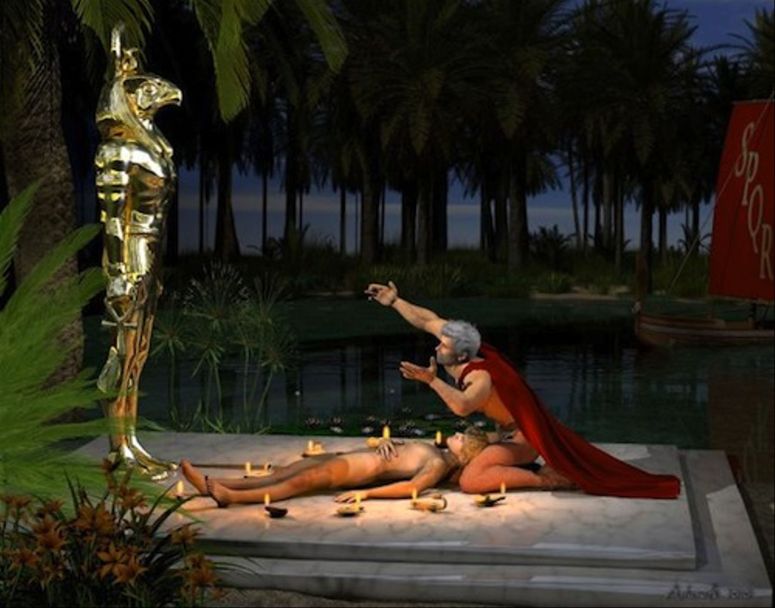

Emperor Hadrian mourns the drowning death of golden youth Antinous on the banks of the Nile in 130 A.D.
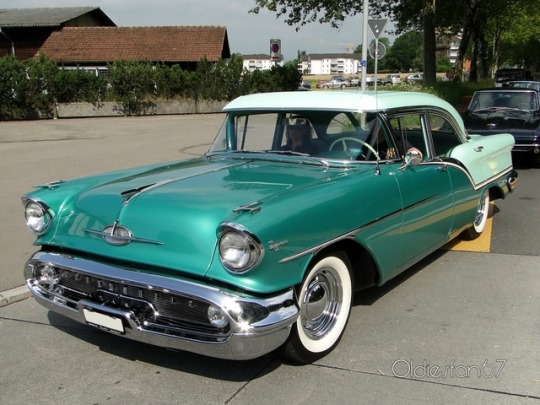
1957 Oldsmobile Golden Rocket Super 88
Kay Francis is a bejeweled society lady thrilled to be robbed by suave jewel thief William Powell in Jewel Robbery (1932).

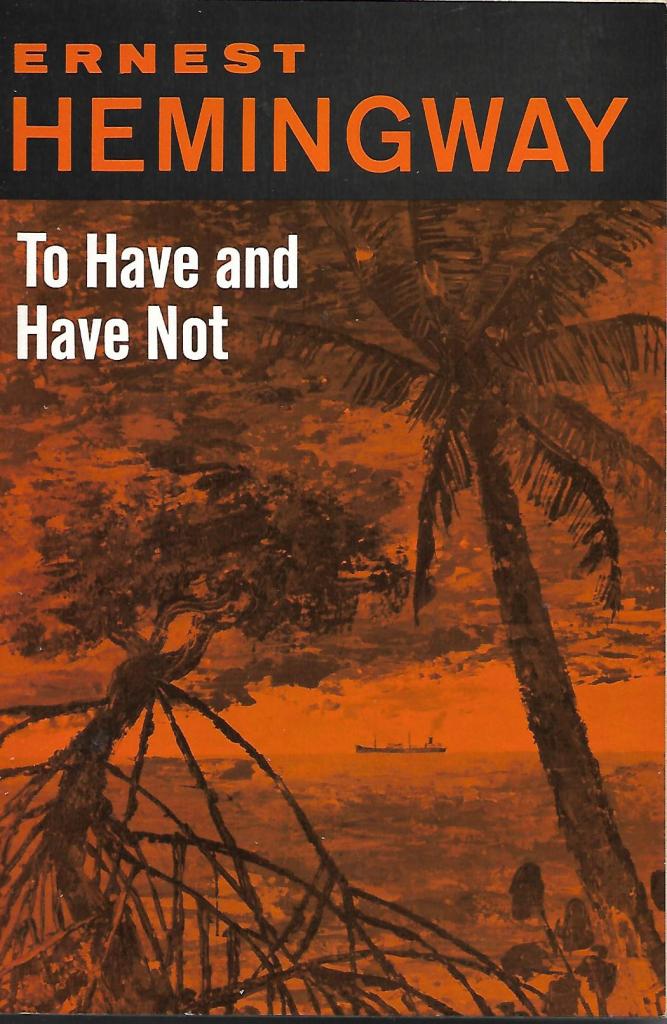
To Have and Have Not ~ A Capsule Book Review by Allen Kopp
Harry Morgan is the working-class hero of Ernest Hemingway’s 1937 novel, To Have and Have Not. He has a frowzy, overweight, bleach-blonde wife named Marie (very unlike Lauren Bacall) and three young daughters. He owns a fishing boat for hire that runs between Cuba and Key West, Florida. Ordinarily he makes a living by taking rich tourists on deep-sea fishing expeditions, but the Depression is on and times are hard.
When a tourist runs out without paying him after a three-week run on his boat, Harry is forced to resort to extreme measures (illegal activity) to support himself and his family. First he smuggles Chinese immigrants into Florida from Cuba. When this doesn’t work out very well, he begins to smuggle different types of illegal contraband between the U.S. and Cuba, including alcohol and Cuban revolutionaries. In an encounter with Cuban authorities over a shipment of booze, he is shot in the arm and has to have it amputated. Losing an arm is not the worst that happens to him.
Harry, his family and friends are among the “have nots” of Key West who are struggling to get by. We also get a glimpse of some of the “haves” on their yachts, who don’t have much to do with the story but add an interesting contrast to Harry Morgan and his friends and associates. As with many novels written during the 1930s, there is an element in To Have and Have Not of social inequality and political unrest.
The novelist, Richard Gordon, is a character in the novel who doesn’t have much to do with what is going on and doesn’t seem to serve any real purpose. He has written three successful books and is working on another one. He spends a lot of his time drinking in a bar and hobnobbing with the locals. He and his unhappy wife, Helen, both seem to be drifting into infidelity with other partners. Was Hemingway writing about himself in the character of Richard Gordon? What is he saying here?
Background information tells us that To Have and Have Not started out as two short stories and a separate novella. As interesting as the book is and as much fun as it is to read, it still has that “cobbled together” feel of a novel made up of different parts. It doesn’t really have the “flow” and cohesiveness that a book by a major writer should have, but it’s Hemingway and apparently Hemingway could get away with it. The 1944 Warner Bros. movie of the same name with Humphrey Bogart and Lauren Bacall bears little resemblance to Hemingway’s novel. The movie makers took the title and the fishing boat and did away with most of the rest of the story. That’s what movies do to books.
Copyright © 2018 by Allen Kopp
Albany Rural Cemetery (1849) by James McDougal Hart (1828-1901)

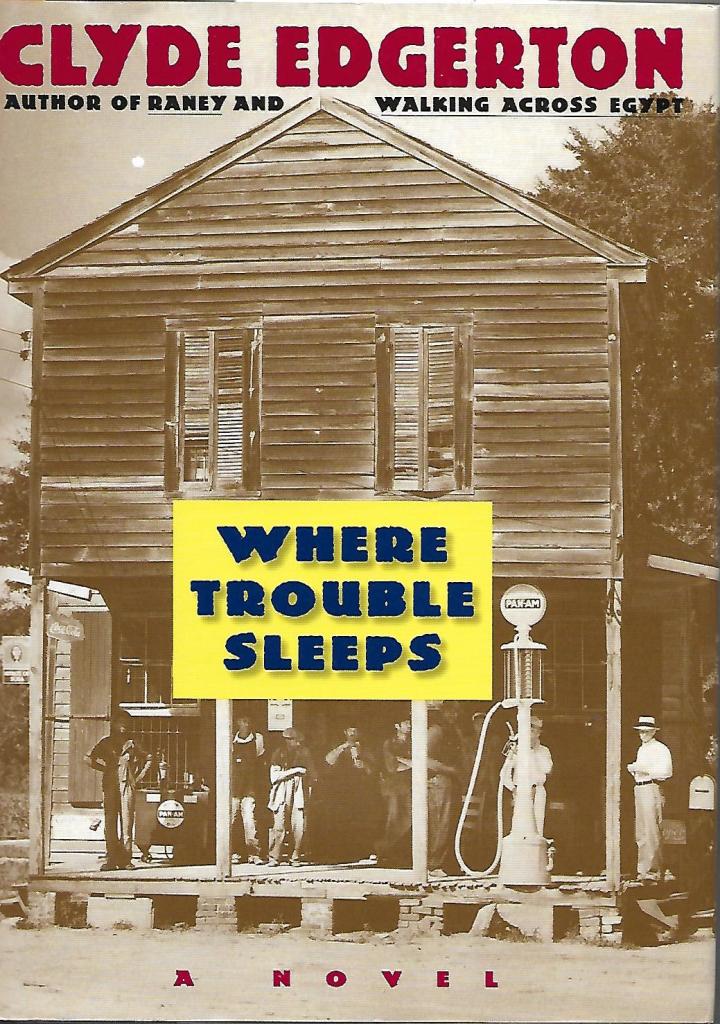
Where Trouble Sleeps ~ A Capsule Book Review by Allen Kopp
Clyde Edgerton’s Where Trouble Sleeps is an unserious novel about small-town Southern life, set in Listre, North Carolina, in the innocent year of 1950. The town of Listre is so small it has one blinker light at its main intersection. The houses, church and small businesses of the town are arranged in the four corners around the blinker light.
There’s an interesting story about how the blinker light came into being. I’m glad you asked that question. You see, there was this runaway mule that didn’t want to do any more plowing and, as it was running to try to get away, it collided head-on with a truck. Sadly, the mule was killed but the good part of the mule-truck head-on collision was that the blinker light came into being.
For such a small town, there are plenty of colorful characters to go around. There are the three Blaine sisters—Bea, Mae and Dorothea—who own a tiny store (they live in the basement underneath the store). They are three dedicated spinsters, but when Dorothea was 58 years old (she’s 70 when the action of the story takes place), she decided to marry a man named Claude T. Clark. The two remaining sisters think the marriage is a mistake and they don’t think much of Claude T. Clark because he wears a big diamond ring and buys a new Cadillac every year. Dorothea is secretary at the Baptist church and, since she has a sprained ankle, she decides to live in her office at the church, an arrangement that causes a certain amount of consternation among church members.
Train’s garage/filling station is a place for men of Listre to gather, swap stories, and stand around drinking Blatz beer. Train is paralyzed and confined to a wheelchair, having been injured in World War II. Train owns a 16-year-old bulldog named Trouble who lives at the station and sleeps a lot. He infallibly predicts the weather by his choice of sleeping spots: if he sleeps inside, it will rain; if outside it won’t rain.
Alease Toomey is a respectable, Christian woman with a six-year-old son named Stephen and a no-account, alcoholic brother named Raleigh who causes her plenty of trouble. She doesn’t have a very happy marriage because her husband, Big Steve, works all the time and doesn’t pay enough attention to her. Alease is not above being attracted to the handsome stranger in town and flirting a little bit and maybe going even farther than flirting.
Cheryl Daniels is a pretty, nineteen-year-old waitress who lives with her parents and her younger brother named Terry. Whenever men see Cheryl, they want to stick around Listre. The Baptist minister, Preacher Crenshaw (fat wife and five children), has developed a very strong attraction for Cheryl and convinces himself he is in love with her. He must struggle with temptation the same way Christ did in the desert. When he writes a love letter to Cheryl (which he doesn’t mail), it’s seen by the church secretary, Dorothea Clark, setting Preacher Crenshaw up for some possible big trouble.
Into this morass of innocence and small-town respectability comes Jack Umstead (calling himself Delbert Jones), driving a stolen Buick Eight. Jack Umstead/Delbert Jones has trouble in mind and he’s definitely looking to score in Listre, one way or another. Might he accomplish this with blackmail or with out-and-out, old-fashioned robbery? He ingratiates himself to the people of Listre, even going so far as to join the Baptist church, but, of course, everything he tells them about himself is falsehood. He begins romancing Cheryl Daniels and establishes an ongoing flirtation with Alease Toomey. When he decides to rob the Blaine sisters’ store during a thunderstorm, he has probably taken on more than he can handle, or, as my mother would say, he bit off more than he could chew.
Southern writer Clyde Edgerton can count me among his fandom. He’s written about ten books, I’ve read all of them, and I wish he would write more. His last book, The Night Train, came out in 2011, so possibly he is finished writing novels. At age seventy-four, maybe he has decided to take a rest.
Copyright © 2018 by Allen Kopp
 Literary Fictions