The Most Beautiful Suicide

In 1947, 20-year-old Evelyn McHale leapt to her death from the 86th floor observation deck of the Empire State Building. Her body landed on the roof of a limousine parked at the curb. A photographer who happened to be nearby snapped her picture. Time magazine dubbed the picture “the most beautiful suicide.” 

Darkness at Noon ~ A Capsule Book Review

Darkness at Noon ~ A Capsule Book Review by Allen Kopp 

Arthur Koestler was a Hungarian-born British writer who lived from 1909 to 1983. He was a Communist who quit the Communist party when he became disillusioned with Stalinism. This personal experience forms the basis for his most famous novel, Darkness at Noon, published in 1940.

Nicholas Rubashov is the fictional protagonist of Darkness of Noon, the “one against many.” He is a man in his fifties, once an important party figure, one of the men who built the Party (Communist) up. When he objects to the direction the Party is taking, however, he engages in “counter-revolutionary” activities. He ends up in prison to await his fate, which is certain from the outset.

In his tiny prison cell, Rubashov has plenty of time for reflection. He recounts his past life, the experiences that has brought him to his present state, and the people he betrayed along the way, including a loyal secretary named Arlova with whom he was romantically involved. He did all the things a Party member was supposed to do, until he had a change of heart and came to believe the Party was ruining the country with its philosophy of “the end justifies the means” and “the individual doesn’t matter—only the state matters.” In other words, he believed the Party was sacrificing the present for the future.

While in prison, Rubashov has many interrogations, which become increasingly brutal. At first his interrogator is Ivanov, an old friend. Ivanov doesn’t take a hard enough line with people like Rubashov, so he is killed and replaced by Gletkin, a young, ruthless, heartless, not-very-bright Party man who doesn’t believe in sentiment or in the importance of old friendships. Gletkin has only one goal in mind with people like Rubashov: to seal his fate and hasten his inevitable conclusion.

Darkness at Noon is bleak reading but only moderately difficult to read, despite its heavy subject matter. It’s not for everybody, of course, but is considered one of the great novels of the twentieth century, a story about an “individual” in a system in which the individual doesn’t matter. It is not light reading, but it moves along at a fairly rapid pace and is under 300 pages long; in the hands of another writer, I can see how it might easily have been twice as long.

Copyright © 2018 by Allen Kopp

The Nun ~ A Capsule Movie Review

The Nun ~ A Capsule Movie Review by Allen Kopp 

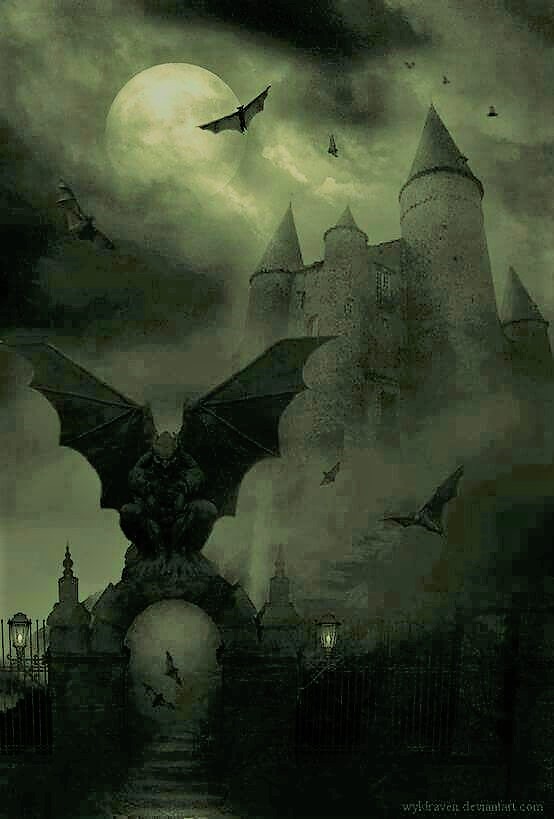
The Nun is set in 1952 in a spooky castle/convent in a remote part of Romania. The castle has a history of its own; it was built in the Middle Ages by a duke who was a practitioner of black magic and who wrote books on demonology and witchcraft. After the castle became a nunnery, the nuns engaged in perpetual prayer (adoration) to keep the evil spirits away. (Why didn’t they just leave?)

A young nun has apparently committed suicide in a disturbing manner at the Romanian convent. The Vatican has sent a middle-aged priest, Father Burke (Demian Bichir) to investigate. Father Burke has a history of dealing with cases that involve or seem to involve demonic possession. With him is a young novitiate (a nun who hasn’t taken her final vows) named Sister Irene (Taissa Farmiga).  Sister Irene has a history of “visions,” so that apparently is what qualifies her to help with the investigation of the nun’s suicide. Father Burke and Sister Irene are guided by a young man who calls himself Frenchie, a French-Canadian living near the convent; he’s the one who found the body of the nun who apparently committed suicide. He has put the body in the ice house to help preserve it, but when he takes Father Burke and Sister Irene to see it, it (the dead body) has moved from a lying to a sitting position.

Well, as might be expected, an evil spirit, a demon, is at work in the convent. This spirit takes the form of a grotesque nun named Valak, whom we saw briefly in the earlier movie The Conjuring 2. Valak doesn’t take kindly to people from the church trying to exorcise her. She will fight back with everything she has. Will she prevail over Father Burke and Sister Irene? I wouldn’t count on it, since they have the force of “good” on their side. They also have an ancient holy relic containing the blood of Christ. Now, that I would like to see!

If you’ve seen The Conjuring and The Conjuring 2 and enjoy horror movies of this kind, you will probably find The Nun worth your time, even though there isn’t much new here that we haven’t already seen in other movies. Ever since movies like Rosemary’s Baby and The Exorcist, hellish demons are a staple of American movies. They’re going to be around for a long time until people stop paying money to see them. Isn’t it better to see demonic possession on the movie screen than to experience it yourself? From what I’ve heard, I think it’s an experience that none of us want to know firsthand.

Copyright © 2018 by Allen Kopp