
Author: allen0997

The Car Thief ~ A Capsule Book Review
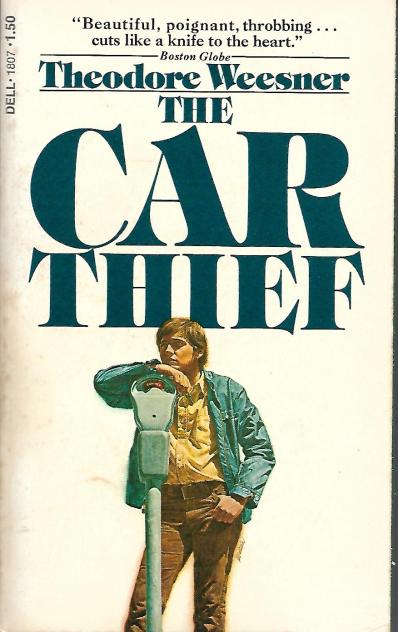
The Car Thief ~ A Capsule Book Review by Allen Kopp
Theodore Weesner’s 1972 novel, The Car Thief, is a slice-of-life, coming-of-age story about a troubled sixteen-year-old named Alex Housman and his (what is now called) dysfunctional family. It is set in Detroit, Michigan, in the early 1960s. Alex has a younger brother named Howard, a well-intentioned but alcoholic father who works in a car factory, and a mother who is, at best, a flighty floozie who has other things on her mind than being a good mother. She leaves home, presumably to be with another man, and leaves her two sons to the questionable care of their father.
Alex Housman is plenty smart enough, but he is what you might call an underachiever and, if that isn’t bad enough, he skips school and steals cars. He doesn’t try to make money from the cars he steals; he just drives them around for a while and then ditches them. When asked why he steals cars, he doesn’t have an answer, except to say that maybe he’s only showing off. The law eventually catches up with him and he ends up in a detention home. It will be determined later in court whether or not he will be sent on to boys’ vocational school instead of being allowed to go back home.
It’s while Alex is in the detention home that he finds a kind of peace he hasn’t known before. He finds satisfaction in the menial work he is given to do, and he develops a camaraderie of sorts with some of the other inmates. When he goes back home and returns to school, he finds that nothing has changed, but only worsened. He has missed so much school that he fails all of his classes except one. He feels alienated and excluded at school. He is drawn to a girl or two but scares them away with his unexplainable behavior. He decides to steal another car.
In the meantime, Alex’s younger brother Howard has gone to live with their mother, leaving Alex alone with his father. It’s when Alex goes to visit Howard on a summer weekend that he uncovers some painful truths about his family, not only his mother and father but also about Howard.
Car Thief is a serious and well-written portrait of teenage “acting out.” Alex Housman is not a devilishly clever teen like Holden Caulfield or a privileged brat like so many teens we have seen in movies and books but a troubled boy of the working class. What is really at the root of all his problems? What will it take to free him from his compulsion to steal cars? What will it take him to keep him from ruining his life and ending up in the penitentiary? Will the decent in him prevail in the end?
Copyright © 2019 by Allen Kopp
Chernobyl ~ A Capsule TV Review
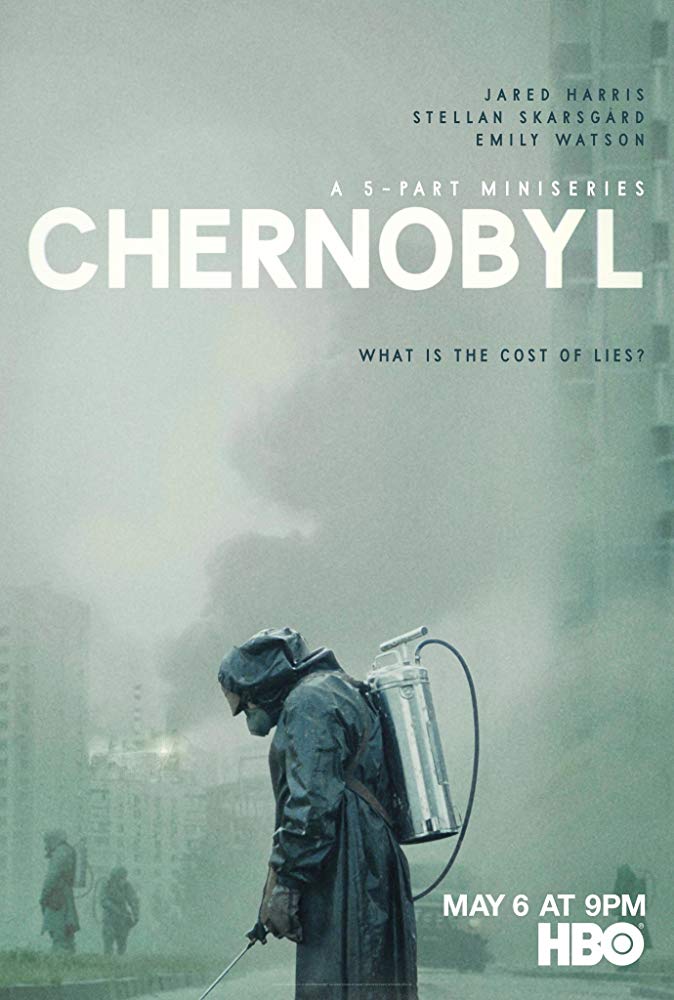
Chernobyl ~ A Capsule TV Review by Allen Kopp
On April 26, 1986, a nuclear power reactor exploded and melted down at Chernobyl, Ukraine, Soviet Union, releasing deadly radiation into the air that was detected the next day as far away as Sweden. It was an accident, as accidents very often are, that was never supposed to happen. The Soviet Union didn’t want the world to know about the accident and tried to cover it up—not only that it happened but that it was as bad as it was. Over time the toll on people, animals, crops, forests, and the environment would be incalculable.
HBO’s five-episode series, Chernobyl, is a grim dramatization of the explosion and meltdown and the events that followed, including the politics, the obfuscation, the lies, the temper tantrums, and the hunt for a scapegoat. It makes for great TV viewing, if you don’t mind seeing graphic human suffering. It’s more disturbing than any horror movie because it’s real-life horror instead of the product of a writer’s imagination. Sometimes you just have to look away (or fast-forward or mute), as, for me, when pets were being killed because they, as everything else, was contaminated with radiation.
Chernobyl has an authentic Soviet Union look and feel, instead of a slick Hollywood feel. Everything, down to the smallest detail (clothes, shoes, hairstyles, interior furnishings, etc.), looks absolutely authentic. Every character, no matter how small (the old woman milking the cow, for example) seems perfect for the time, the place and the situation. If you’re looking for something seriously good to watch on TV this summer, I don’t think you’ll do better than Chernobyl.
Copyright © 2019 by Allen Kopp
1919 ~ A Capsule Book Review
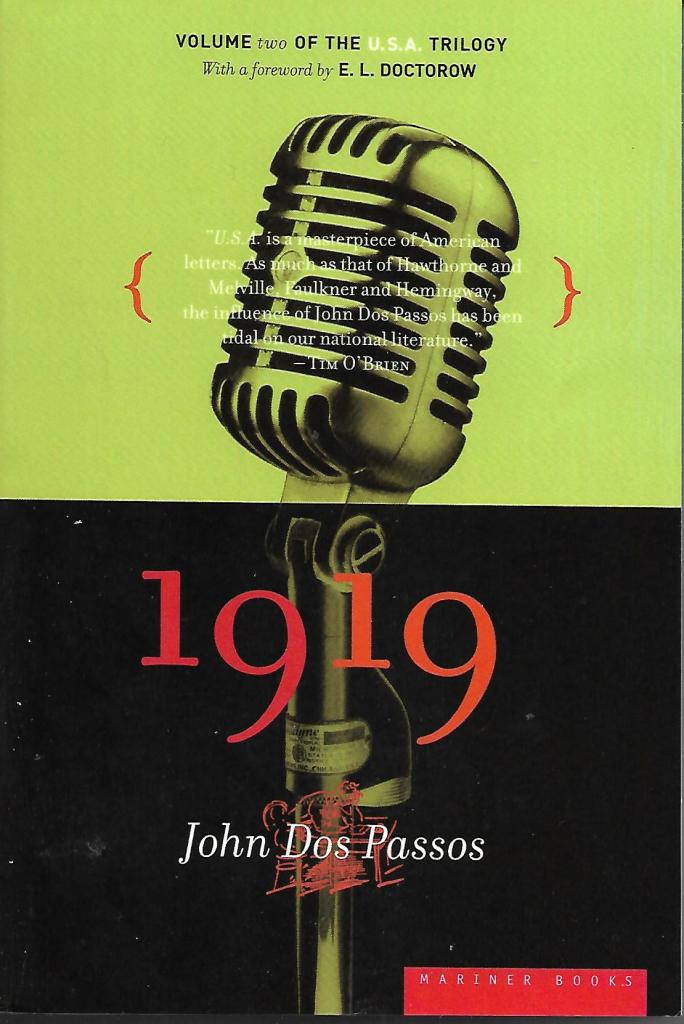
1919 ~ A Capsule Book Review by Allen Kopp
American writer John Dos Passos wrote three novels in the 1930s that is really one extended novel of 1200 pages that came to be known as the trilogy U.S.A. The three installments of the U.S.A. trilogy are The 42nd Parallel (1930), 1919 (1932), and The Big Money (1936). U.S.A. is a saga of American life as seen through the eyes of some of its more ordinary everyday people: a sailor, a set designer, a stenographer, a marketing man, a college man, a labor activist, a pampered Texas belle, a mechanic, etc. Life for these characters is at times cynical, gritty, ugly, difficult, frightening, tiresome, worrisome, unglamorous, prosaic, confusing and confounding.
The Great War (“The War to End All Wars”) was the overlying event in American life in the late teens. Woodrow Wilson ran for (and won) the presidency in 1916 with the promise to keep America out of the European war, but it was drawn in eventually, anyway. In 1919, we see some of the characters who were introduced in The 42nd Parallel living in Paris in pursuit of the war effort. It seemed it was the thing to do for stylish young women to go to Paris and volunteer their services, more in the pursuit of glamor or having a good time or finding a suitable man than out of a sense of service to mankind.
Another important topic in the novel is socialism and the impending (it was believed) worldwide workers’ revolution. With the revolution in Russia in 1917 and then with the Great War, many people believed the stage was being set for the world (and the United States) to abandon capitalism and democracy and revert to a system of government for the people (the workers) and not for a few elites to accrue wealth. (Background information reveals that John Dos Passos was himself an ardent leftist.)
The U.S.A. trilogy is a landmark of American fiction, although it’s not what we might call a people pleaser or a bestseller. It’s accessible to the modern reader and well worth the time and effort to read it, but it doesn’t have a central character that we (the reader) might root for, and there is really no plot to speak of because the story moves around from one character and one situation to another. And, then, there are the Camera Eye and Newsreel sections, which are described as “experimental” (many people are put off, including me, by the word “experimental” when it’s applied to fiction). There’s plenty here of interest, though, especially if you are a student of literature or American fiction of the twentieth century.
Copyright © 2019 by Allen Kopp
 Literary Fictions