

Author: allen0997


Billy Budd, Sailor ~ A Capsule Book Review
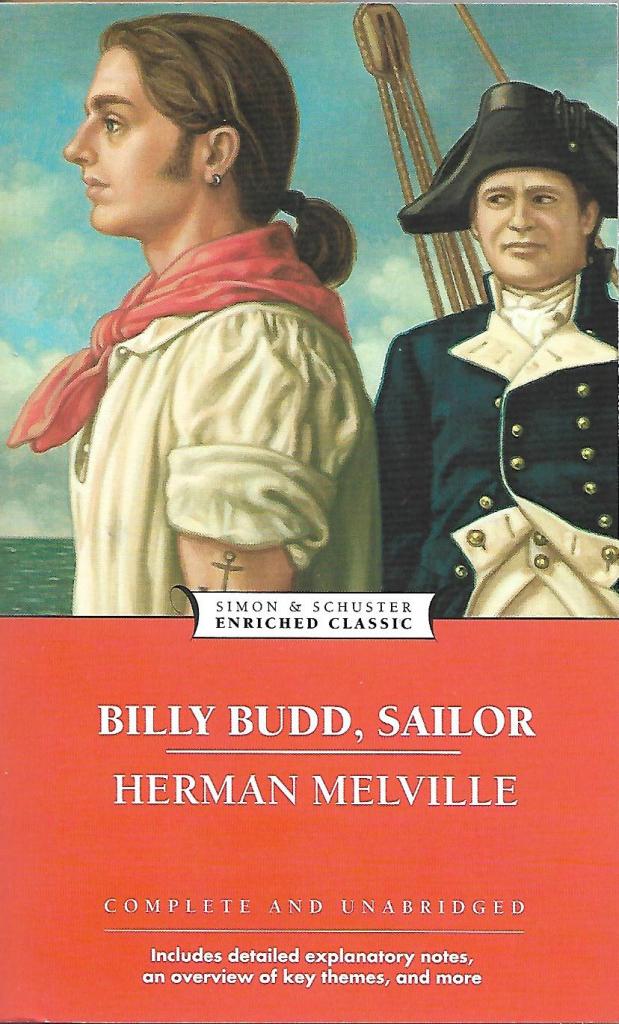
Billy Budd, Sailor ~ A Capsule Book Review by Allen Kopp
American author Herman Melville (1819-1891) wrote his last novel, Billy Budd, Sailor, toward the end of his life and it wasn’t published until more than thirty years after his death. As with his contemporary, Edgar Allan Poe (1809-1849), Melville wasn’t recognized as a literary genius until after he was in his grave.
Billy Budd, Sailor is set on board a British man-of-war (battleship) in the 1790s. It is a serious exploration of the ethics of capital punishment, the rights of the individual versus the good of the collective, and the what happens when a “decent” man is confronted with a situation where what he “feels” to be right (his conscience) is in conflict with what the law is saying must be done.
Billy Budd is twenty-one years old. He is “impressed” into naval service on a British man-of-war, the Bellipotent; this means he is forced to serve against his will as if he is a slave. (This was a common practice during these times.) Billy possesses great physical beauty, a child-like innocence, and charm; he is well-liked and even loved by most of the other sailors and also the officers on the Bellipotent. There is something about him that is almost noble. He is more than once likened to Christ. His only defect, as far as anybody can see, is a stutter that manifests itself at inopportune moments.
Naval commanders are more than usually aware of mutiny at the time of Billy Budd, Sailor, because a couple of mutinies have occurred that are still fresh in everyone’s minds. Enter John Claggart, the master-at-arms on board the Bellipotent. He is the snake in Billy Budd’s garden whose mission it is to corrupt innocence. He goes to the captain of the Bellipotent, Captain Edward Fairfax Vere, with stories that Billy Budd has been making remarks that could incite mutiny among the men. Anybody who knows Billy Budd knows this not to be true. Is it just that Claggart is envious of Billy Budd’s good looks and his popularity among the men and is out to “get” him?
When Captain Vere brings Billy Budd and John Claggart together and Billy Budd hears what Claggart is saying about him, he punches him once in the face; with just this one blow, Claggart falls to the floor dead. Now Captain Vere is faced with a dilemma. Will he follow the law, which calls for the execution of the offender, or will he allow his personal feelings for Billy Budd to stand in the way of his “duty?”
Billy Budd, Sailor is not an easy novel to read or comprehend. A great piece of writing though it may be, it’s not always “enjoyable” reading. Melville’s style of writing (the style of the time in which is was written) is wordy; he makes far too many digressions and parenthetical statements for the narrative to flow smoothly. Our interest is constantly challenged. How many readers just give up and don’t finish reading the book to the end? I doubt if Herman Melville cared or gave it much thought.
Copyright © 2019 by Allen Kopp

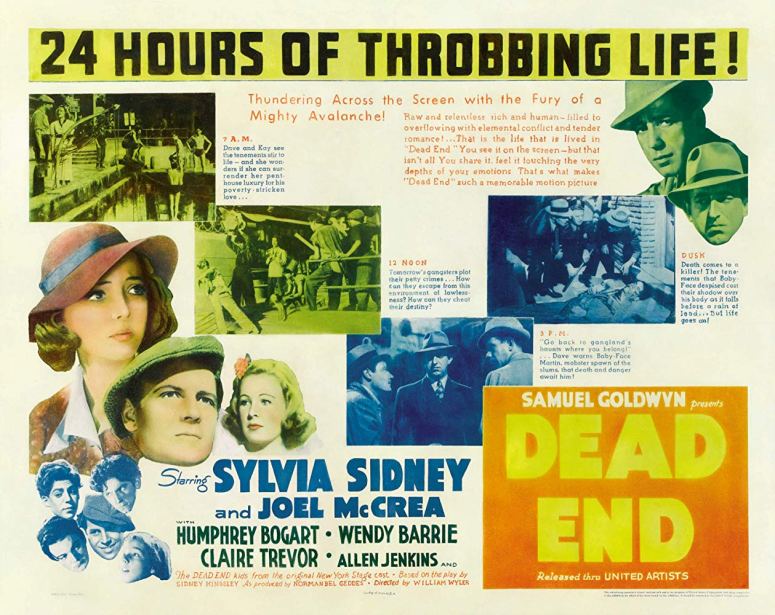
The City and the Pillar ~ A Capsule Book Review
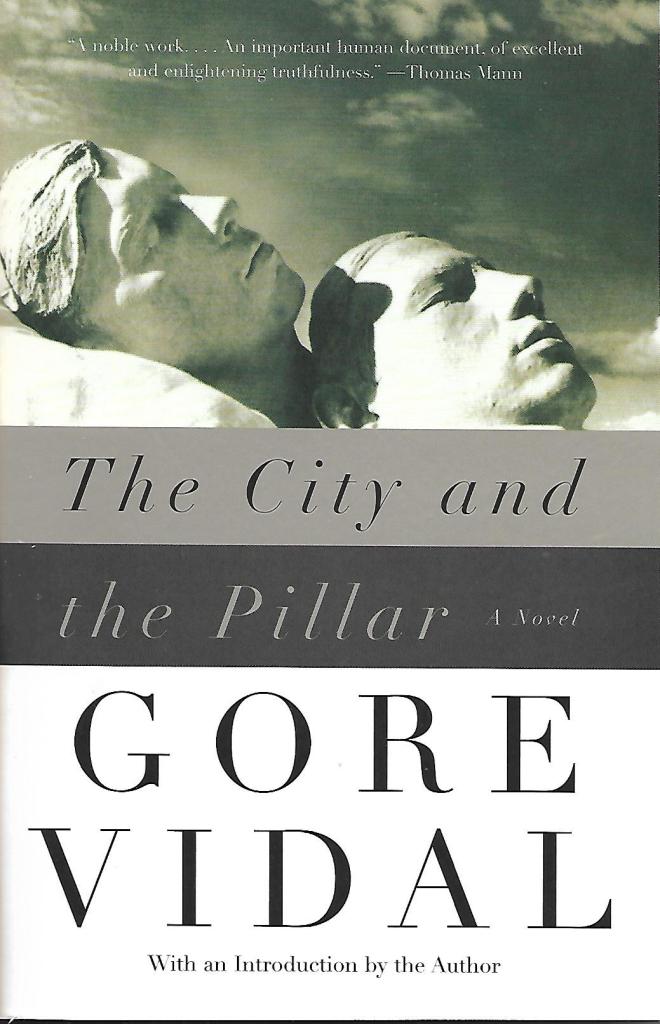
The City and the Pillar ~ A Capsule Book Review by Allen Kopp
Jim Willard and Bob Ford are high school friends, growing up together in Richmond, Virginia, in the 1930s. Bob is one year older than Jim; when Bob graduates from high school, he and Jim spend the night together at the river in a falling-down “slave cabin.” During that one night before Bob goes off “to sea,” Jim and Bob do more than sleep. They have a never-to-be-forgotten (by Jim) and much-hoped-for (by Jim) sexual encounter. Of course, they are both “straight,” but that doesn’t keep them from commemorating their friendship with (then-taboo) homosexual sex. To Bob, their night of sexual adventuring has little or no meaning; to Jim it is of monumental significance.
After their one night together, Bob goes off on his seafaring adventures. For the next seven years or so, Jim carries around the memory of his night at the river with Bob. He believes, even though they both go their separate ways after high school, that he and Bob will get together again one day and will be together always. We, the reader, know this is never going to happen.
Jim has plenty of adventures while he is pining for Bob. He ends up in Hollywood, where he has a gay affair with a closeted gay movie star. (This is the most unrealistic part of the novel.) During World War II, he finds himself doing military duty but he never goes overseas and never sees any fighting. When he develops health problems, including rheumatoid arthritis, he is honorably discharged from the service.
Jim’s athleticism and masculinity, his “butchness,” are stressed throughout the novel. He is such a good tennis player that he makes his living for a time as a tennis instructor. Even though he is essentially “in love” with a man from his past, he is always masculine, never fitting into the stereotypes of gay men that were prevalent during the time this book was published (1947). He is not self-loathing because he is “different” and doesn’t destroy himself, either through drinking, pills, promiscuous sex, or self-pity. For that reason, The City and the Pillar by Gore Vidal (1925-1912) is a groundbreaking novel because it is a positive portrayal of a proudly gay man, written at a time when such a thing hardly existed.
Copyright © 2019 by Allen Kopp

 Literary Fictions