Other Voices, Other Rooms ~ A Capsule Book Review

Other Voices, Other Rooms ~ A Capsule Book Review by Allen Kopp

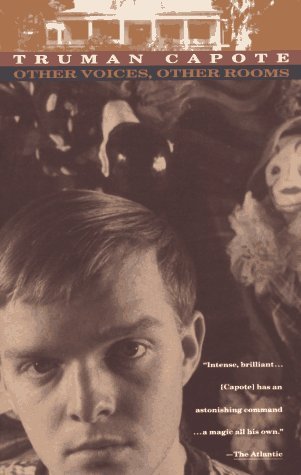
Truman Capote (1925-1984) is one of those twentieth century American writers whose life nearly overshadows his work. In the 1960s and ‘70s he became a media celebrity and a New York fixture of the jet-setting social scene. He counted as his friends politicians, actors, artists, entertainers, and other writers (to whom he wasn’t always very charitable). He was known for his fey wit, his eccentricity, and his alcoholism, which eventually ended his life prematurely at age fifty-nine.

He was only twenty-three or so when he published his famous coming-of-age novel, Other Voices, Other Rooms. It is a floridly descriptive account of an odd thirteen-year-old boy named Joel Harrison Knox (Capote himself). Joel lives with eccentric relatives in New Orleans in, it is to be supposed, the 1940s. When his mother dies, his New Orleans guardian receives a letter from his father (supposedly), inviting Joel to come and live with him in another (unidentified) Southern state.

The place that Joel goes to live is called Skullys Landing, or simply “the Landing.” It is an old house without electricity on the edge of a swamp. It seems the swamp is reclaiming the house; it is slowly sinking (four inches last year). It is the perfect Southern Gothic setting.

The residents of the Landing are—you guessed it!—even more eccentric than the relatives Joel left behind in New Orleans. There’s Zoo, the black girl in her twenties who keeps house for the family. She has a scar on her neck where a bad man tried to slit her throat. She lives in fear that the man will escape from jail and finish the job. Zoo is kind to Joel, so the two of them become friends. Miss Amy is Joel’s stepmother; she is married to Joel’s father and is something of a nonentity. And then there’s flamboyant, fluttery, kimono-wearing Cousin Randolph. He apparently owns the Landing. He talks a lot about the past in flowery language because his present life is that of a shut-in.

But what of Joel’s father? Why is everybody being so mysterious about him? It takes a while for Joel to unravel the mystery of his father. The father does indeed exist but he’s a helpless invalid. (He didn’t write the letter inviting Joel to come and live with him; it was written by Randolph.)

In a long monologue (soliloquy?), Randolph tells the sordid story of the boxer Pepe Alvarez, a woman whom Randolph claimed to be in love with named Delores, Randolph himself, Joel’s father, Miss Amy, and how they all arrived at the point where they are now.

Joel meets other colorful characters while he’s living at the Landing: the rough-and-tumble, acid-tongued tomboy Idabel Thompkins, with whom he plans to run away; the black midget man over a hundred years old named Jesus Fever (he’s Zoo’s grandfather or something); Miss Wisteria, the vivacious, midget circus performer with whom Idabel becomes infatuated.

Other Voices, Other Rooms was a literary sensation when it was first published in 1948, mostly because Truman Capote was only twenty-three years old, it was his first novel and it launched his literary career. It is an essential work in the canon of twentieth century American fiction, not to be missed.

Copyright © 2020 by Allen Kopp       
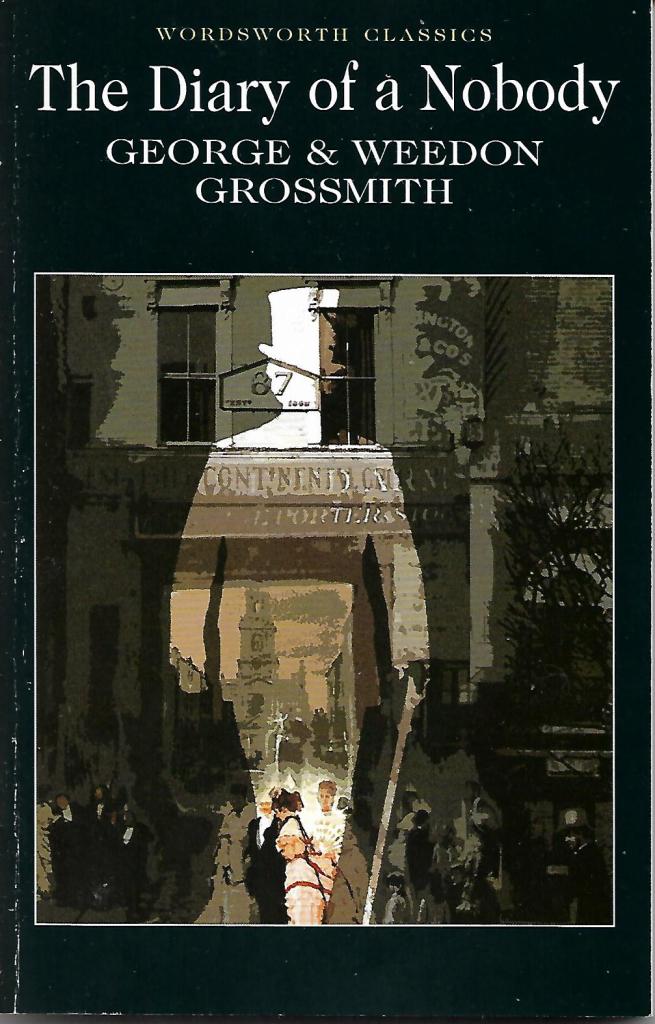
The Diary of a Nobody ~ A Capsule Book Review

The Diary of a Nobody ~ A Capsule Book Review by Allen Kopp

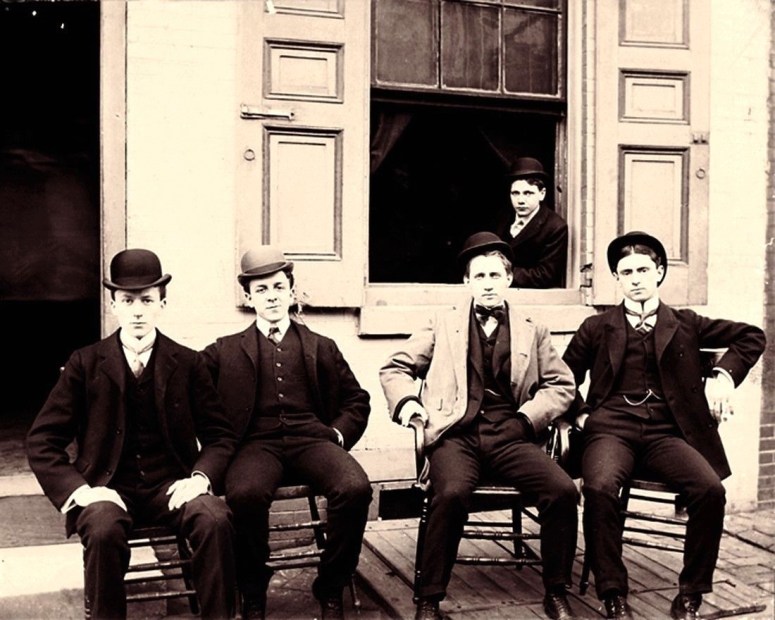
Charlie Pooter is a middle-aged, middle-class Englishman living his proper English life in the 1880s. He has a wife named Carrie and two bosom friends named Mr. Gowing and Mr. Cummings. He also has an exasperating twenty-year-old son named Lupin Pooter. Charlie and his son Lupin almost always find themselves on opposite sides of any issue. Lupin is brash, irreverent, spontaneous and impulsive, all qualities his father deplores.

Charlie is a clerk in an accounting firm. He has an almost reverential respect for his company and for his boss, Mr. Perkupp. He believes that Mr. Perkupp is infallible in all things, almost god-like. He calls Mr. Perkupp his “principal” and his “superior.” We, the reader, see Mr. Perkupp as a company functionary and nothing more, completely unworthy of adoration.

In an attempt to document his thoroughly mundane and uneventful life, Charlie Pooter undertakes the writing of a diary. This diary is the odd little novel called The Diary of a Nobody by a writer named George Grossmith. (The book contains illustrations by Weedon Grossmith, brother of George.) We are told in the background information that George Grossmith was more of a musical performer and an actor than a writer, but he wrote this novel and it has endured for more than 130 years. I never heard of it until recently.

The novel is all diary entries and many of the entries deal with Charlie Pooter being bettered and outdone by his wife, his son, his friends, the servant, or just about anybody else he comes into contact with. Charlie means well, but he is feckless and not very bright. (When he’s leaving a room, trying to be dignified, he will more likely than not catch his foot on the edge of the rug and fall down.) His fondest hope in life is that Mr. Perkupp with take Lupin into his office. When this dream is realized, Lupin discovers right away that he is made for better things. He is never going to be happy with the kind of bowing-and-scraping, subservient life that is good enough for his father.

The Diary of a Nobody is a satire, breezy, light reading, fun to read and entertaining. It may be just the thing you’re looking for after you’ve finished War and Peace.

Copyright © 2020 by Allen Kopp
Cleanness ~ A Capsule Book Review

Cleanness ~ A Capsule Book Review by Allen Kopp

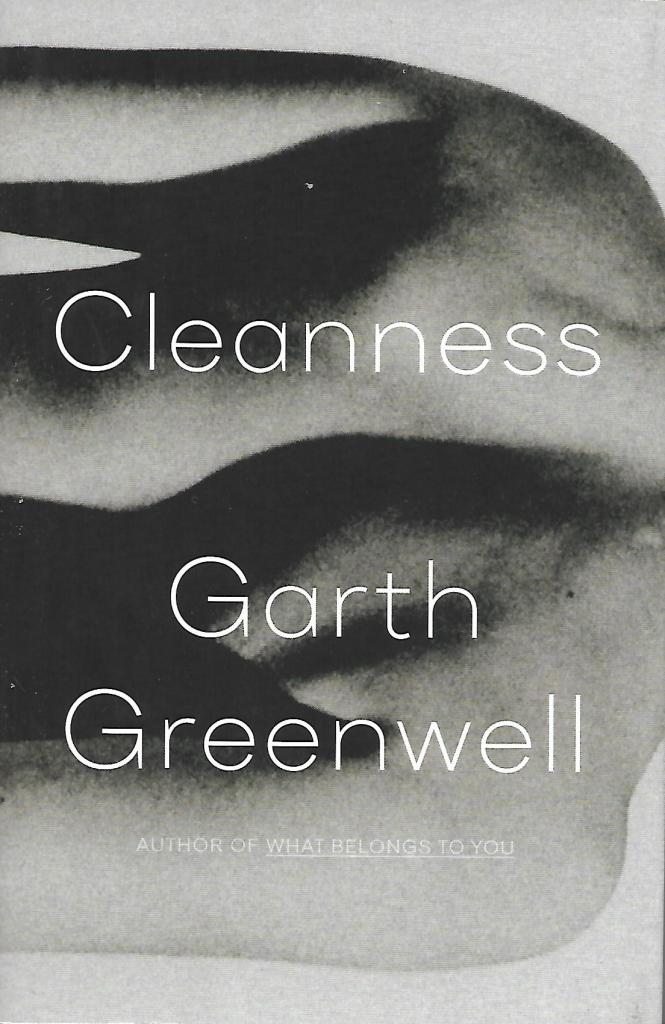
American author Garth Greenwell’s (born 1978) new novel, Cleanness, is told in the first-person voice of an American high school teacher in present-day Sofia, Bulgaria. The narrator of Cleanness never tells us his name. He is only ever known to us as “I” or “me.” Since I don’t know anything about Garth Greenwell, I strongly suspect he’s writing about himself and his own experiences in Bulgaria, since he seems to know the country—and the city of Sofia—so well.

Cleanness is more a collection of interrelated short stories than a plot-driven novel. Each chapter (story) is told in the same voice, the same point of view, but each story could stand alone. There is no plot to speak of, but that doesn’t mean it’s a dud as a novel. Each chapter is compelling in its own right; you don’t know where the whole thing is going until the end. At the end, we get a sense of completeness, of wholeness.

The narrator of  Cleanness is gay but, since he lives in a former communist country that is not particularly welcoming to the gay way of life, he mostly is “closeted,” adhering, as a teacher of high school students, to a code of ethics. He never touches, or becomes too familiar with, any of his male students, no matter how much he might want to. In one chapter near the end of the book he and two of his male students go out drinking in clubs to celebrate his leaving; he is attracted to the older of the two boys, who is about eighteen (and the feeling seems to be reciprocated), but it never goes any farther than dancing together and flirting.

The narrator never mentions his age, but we assume he is in his thirties. He is not a particularly happy man. He alludes to, obliquely, an unhappy childhood that has left him scarred. We get the sense that he’s teaching school in Bulgaria to escape an unhappy life. He says he likes living abroad, so he is in a way a disaffected American. He has a “boyfriend,” known only as “R,” who is younger and from Portugal. He and R. are in love, the narrator says, but it’s a love that’s not going to work out, we see, because R. is young, unsettled, and doesn’t seem to know what he wants.

A couple of the chapters are intensely sexual. In one, the narrator (in trying to recover from a broken heart) has an encounter with an older man he has met on the Internet. The older man is frightening because he is a sadist who likes to inflict pain on his sexual partners. This episode ends up being repellent and distasteful. In another episode, the narrator meets a man who recognizes no limits when it comes to sex. He doesn’t care if his sexual partners are “old and ugly.” He doesn’t care if he gets sick; he only lives for the moment and wants only to be “used.” (This is a not a book I’d recommend to my ninety-year-old mother.)

Garth Greenwell’s previous novel, published in 2016, is What Belongs to You, which is also about an American man teaching high school in Sofia, Bulgaria. It also is told in the first-person point of view. The narrator, it seems, in both novels is the same. Cleanness if not exactly a continuation or a sequel to What Belongs to You, but the two books are enough alike to make a matched pair. For my money, the first book is the stronger of the two. It will be interesting to see what Garth Greenwell does for his next novel. Will he set it in Sofia, Bulgaria again, or some other highly unusual, foreign locale?

Copyright 2020 by Allen Kopp