

Author: allen0997
The Maltese Falcon ~ A Capsule Book Review

The Maltese Falcon ~ A Capsule Book Review by Allen Kopp
In 1930 San Francisco—that city of hills and fog by the bay—Brigid O’Shaughnessy (if that’s really her name) believes she is in danger and goes to detective Samuel L. Spade to protect her. She’s young and attractive, as you might expect, and Sam Spade knows his way around with the dames. She tells him a story that’s all lies, but it doesn’t matter very much to Sam because she pays him well and he’d like to get to know her better, if you know what I mean.
The truth is, as Sam Spade learns later, the lovely Miss O’Shaughnessy has fallen in with a band of cutthroats and thieves, and she might be the worst of the lot. (“I’ve been bad, Sam,” she says. “Worse than you know.”) Among those posing a threat to her, we have Casper Gutman, the genial fat man who is so corpulent he seems to be made of bubbles strung together. Then there’s Joel Cairo, an effeminate “Levantine” (a person from the area of Turkey or Egypt) who is sweet on Casper Gutman’s gun-wielding psycho named Wilmer.
Brigid O’Shaughnessy, Casper Gutman, and Joel Cairo all want the Maltese Falcon so badly they will kill for it, or do whatever it takes to possess it. Just what is the Maltese Falcon? It’s a foot-high statuette that has been kicking around since the sixteenth century. It’s laden with precious stones, incalculably valuable, and has been covered over with a thick layer of black varnish to disguise what it really is from those who covet it. The falcon was originally intended, all those centuries ago, as a tribute to the King of Spain from a wealthy order of knights, but the King of Spain never received it, and it has subsequently been bandied about from owner to owner in all that time.
So, Sam Spade the detective is drawn into this knotted web of intrigue because Casper Gutman promises him a wad of money if he can deliver the falcon into his (Gutman’s) hands, but also because Brigid O’Shaughnessy is such a tasty dish of femaleness. Has Spade taken on more than he can handle in dealing with these desperate characters? Will he get the money promised him? Will he get the girl? Will the desperate characters get what they want and play nice and go away when it’s all over? Don’t count on it.
Dashielle Hammett, American novelist, lived from 1894 to 1961. The Maltese Falcon is his most famous and best-known work. It is the detective story that has served as the model for detective stories ever since it was first published in 1930. It is so highly regarded that it’s number 56 on the Modern Library’s list of the Hundred Greatest Books in English of the Twentieth Century. The 1941 movie version, with Humphrey Bogart and Mary Astor, is a perfect example of how a movie should be made from a book. Sydney Greenstreet as Casper Gutman is cinematic perfection, along with bug-eyed Peter Lorre as Joel Cairo. They’ll kill you if you keep them from getting what they want or, at the very least, slip you a mickey, from which you’ll wake up on the floor in twelve hours or so.
Copyright 2020 by Allen Kopp

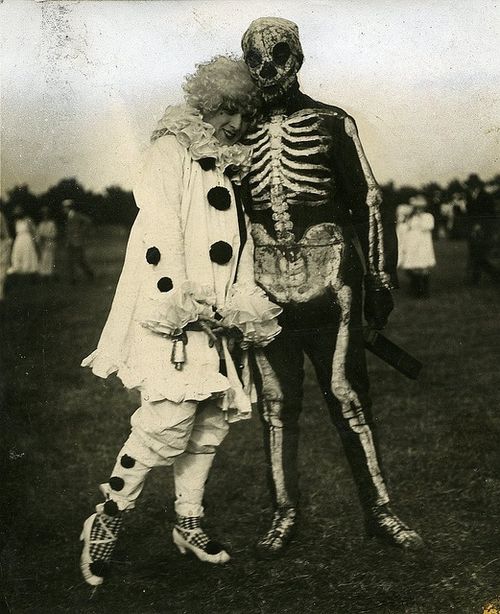
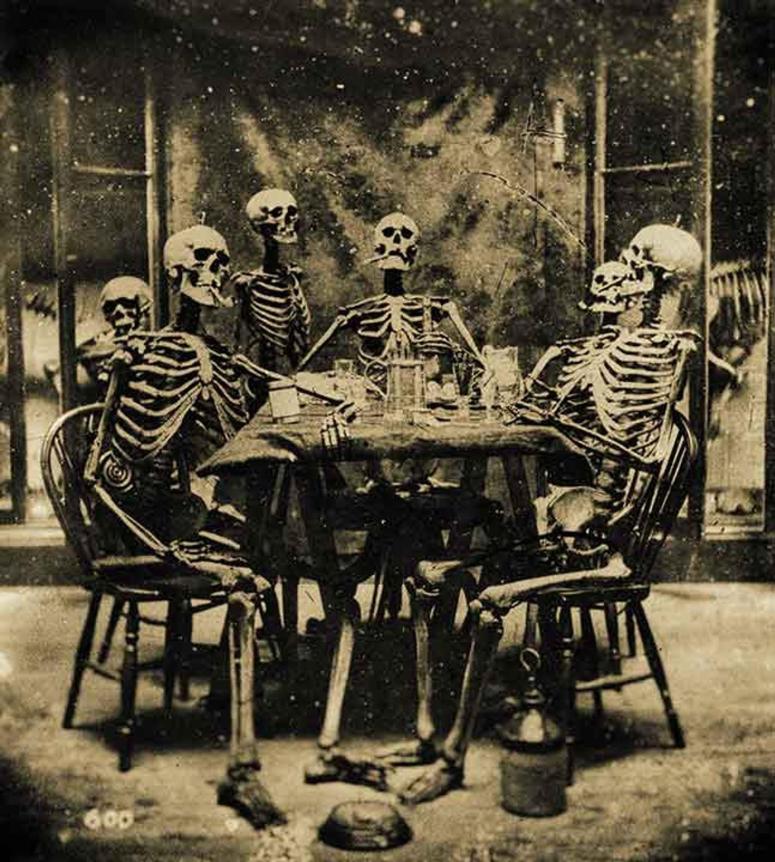
Spiritus

Spiritus ~ A Ghost Story by Allen Kopp
(This is a re-post. It has been published in The Literary Hatchet.)
My name is Igor Dillingham. In 1893 I was twenty-one years of age. I was twenty-one then and I’m twenty-one now. Twenty-one I shall always be. Every time I look at myself in a mirror, I see my twenty-one-year-old self looking back at me. I will never be forty or sixty or eighty, but always the same as I am now, for I am dead and I dwell in the spirit world.
A lot of years have gone by, I know, although time, the passage of years, means nothing to me. I still dwell in our old house. The house, old as it is, is also big. I forget exactly how many rooms there are in it but, since I am the only one left, all the rooms belong to me. The house, I was told, was built a long time ago by a rich man with many children. All of the original family are gone—I’ve never met any of them—and I have never encountered any of them in the spirit world. They have all moved on, as the saying goes.
Now the house is falling down in places. The paint is all gone, the wood is old, ugly and gray, the roof has holes in it; mice, bats and spiders are my eternal companions. I hear, always, the flutter of wings above my head as birds nest in the attic. Some of the windows are broken out, but it makes no difference to me because I am a spirit and spirits don’t mind the cold wind and rain.
Sometimes I go out of the house, but the truth is I have no place to go. On occasion, just to prove to myself that I still can, I go outside and travel a mile or two in any direction. In these little forays out into the world, I never see a living person but only wild animals and birds, which is altogether fine with me. Animals, even if they can’t see me, sense that I’m there and are not afraid.
The road that leads down to our house was washed out in a flood forty years ago. Nobody bothered to build the road back. Even if people could get down here, they have no reason to do so. It is a place completely shut off from the world and forgotten. I think isolated is the word. If I saw a living person who wasn’t a spirit, like me, I wouldn’t know what to do. I suppose I’d run and hide and make sure I gave him good enough reason to want to leave.
In my aloneness, I am sometimes reminded of the people I once knew when I was alive. I had a sister, Sobriety, and a brother, Claxon. Sobriety had an enormous head; she was what’s known as hydrocephalic. She stayed in a crib in an upstairs room most of the time, tended only by a mute servant that mother employed. I used to go into her room to visit her and try her to keep from feeling lonely, but I’m not sure if she ever knew I was even there. Mother sold her to a traveling freak show when she was about twelve years old for fifty dollars. After the freak show people took her away, I never saw her again. I don’t know what ever became of her but I hope one day I will meet her in the spirit world and rejoice to see that she is cured of her affliction.
My brother Claxon was covered with a scaly growth all over his body that made him look like a human frog. He never spoke in words but he made croaking sounds and he knew how to laugh. He was my closest friend; he and I communicated without words in the way of brothers. One day he made the mistake of defying mother in a very bad place—at the top of the stairs. She rushed him and pushed him. He fell all the way to the bottom of the stairs and broke his neck. He died later the same day. She didn’t want anybody to know what she had done, so she buried him in the hog yard out back before anybody had a chance to ask any questions. I nailed together a small cross and put it over the place where I thought he was buried, but the hogs trampled it into the mud.
Claxon wasn’t the first person mother killed, nor would he be the last. When I was six years old, she poisoned the man who was my father, or the man I believed was my father. She claimed he became sick in the night of unknown causes and was dead by the rising of the sun. She collected on his life insurance and become a modestly wealthy woman. That’s when she realized how profitable death could be for her.
She soon married another man with whom she had been communicating through a lonely hearts club. After six months of marriage, she murdered him by dropping a meat grinder on his head and claiming it was an accident. He didn’t have life insurance, but he had over a thousand dollars in a bank account and a small horde of silver coins, all of which became hers as his grieving widow.
About the time mother killed her second husband, she hired an itinerant worker to do small jobs for her. She had him tend the garden, paint the barn and mend the fence before she took him into her bed. He was her plaything for a few weeks, until he became tiresome to her and then she poisoned him—making certain first, however, that he had no relations who might come looking for him later.
There were others after that. She placed an ad in a newspaper in the city for single gentlemen who might be interested in the pastoral life on a lush farm away from the hustle-bustle of the city. With a small investment of a thousand dollars, they might “buy into” a growing enterprise that had unlimited potential for growth and profit.
I don’t know how many “gentlemen” mother lured away from the city and killed, but I do know our hog yard out behind the barn became quite crowded with rotting corpses, while the wad of cash she kept hidden underneath the floorboards in her bedroom grew ever larger.
I was the only living witness to mother’s depredations, but she thought I was too stupid to see anything, to know anything. From the time I was eight years old, I began writing everything down: names and ages of the people who ended up in the hog yard, where they came from, physical characteristics (bald, wears glasses, speaks with a stutter, speaks with an accent, missing fingers on right hand), how much money they brought to the “enterprise” and anything else I could see that set each one apart from the others. I also added to the record the details of how she sold Sobriety to a traveling freak show for fifty dollars and how she pushed Claxon down the stairs and broke his neck. I spared none of the distasteful details.
By the time I was a grown man, I had filled an entire notebook with these observations. If mother killed me, as I was certain she would one day, I hoped that my notebook would end up in the proper hands and justice would be served.
She was gone for three days and didn’t tell me where she was going. When she came back, she had a new husband, a man named Jules DuFray. He was slick, well-dressed, the opposite of a farming man; he wore suits instead of overalls, even all the way out here where nobody ever saw him. I don’t know whatever possessed him to want to marry a pizzle-faced old harridan like my mother, but there you have it. She had always had a way with men. There’s no accounting for tastes, I suppose.
For several days I stayed out of mother’s way, keeping to myself in my room or in the woods. She and her new husband spent most of their time in mother’s bedroom with the door closed. When I passed by in the hallway, I could hear them grunting, breathing, groaning. When we all sat down to dinner (cooked by a moronic “serving girl” that mother hired with one of her newspaper ads), mother was polite and subdued, almost as if she had been drugged. I knew she was putting on an act for her new husband, while all the time hatching some scheme in her head that would bring her enough money to live like the queen she imagined herself to be.
When I saw the cans of kerosene she had stored under the stairs, I knew that her plans involved burning the house—with me in it, of course—and then collecting on the insurance. She would make it look so convincingly like an accident that she would fool anybody who needed fooling.
I was afraid to go to bed and go to sleep, afraid that I would wake up and the house would be burning and it would be too late for me to get out. I sat in a chair in my room, fully clothed, dozing lightly, clutching my notebook, ready to escape the house at the first sign of smoke or fire.
Finally I could stand it no longer, this waiting for mother to kill me, waiting for the house to go up in flames. One morning I set out on the road for the nearest town, over ten miles away, to deliver my notebook to a man of the law, a person of authority who could set about bringing mother’s killing to an end.
I hitched rides part of the way, so I came to the town of Wadsworth by noontime. I asked an old man sweeping the sidewalk in front of a store where I might find the sheriff. He told me what I needed to know and in a half-hour I was sitting across a desk from an old man wearing a badge. I gave him my notebook and told him my fantastic story, or as much of it as I could get out without crying. He listened to me with unremitting seriousness and told me he would read every word of what I had written and look into my allegations as soon as time permitted. He gave me some water and some jailhouse food and, after I had rested for a while, I began the long walk back home.
Mother was waiting for me. She somehow knew where I had been and who I had been talking to. Without a word, she split my head with an ax and then hit me with a cane until I was dead as I lay on the floor. I felt my spirit leave my body and go up through the ceilings and floors of the house to the attic. It is here I have been ever since.
Mother and her new husband Jules DuFray got away before the sheriff and his men arrived. I don’t know where they went, but my mother, true to her fashion, disappeared as completely as if she had never existed. I’d like to think that she somehow, somewhere, met justice, but I’m more inclined to believe she just transferred her activities to another location.
I stood at the attic window and watched the men exhume the thirty or so bodies from the hog yard. When they were all finished collecting bodies and collecting evidence from the house, they put a heavy padlock on the front door and left. They didn’t know I was still here, and if they had known they wouldn’t have cared. I was as nothing, a tiny puff of air that disappears as soon as you see it.
Copyright © 2020 by Allen Kopp

The Postman Always Rings Twice ~ A Capsule Book Review
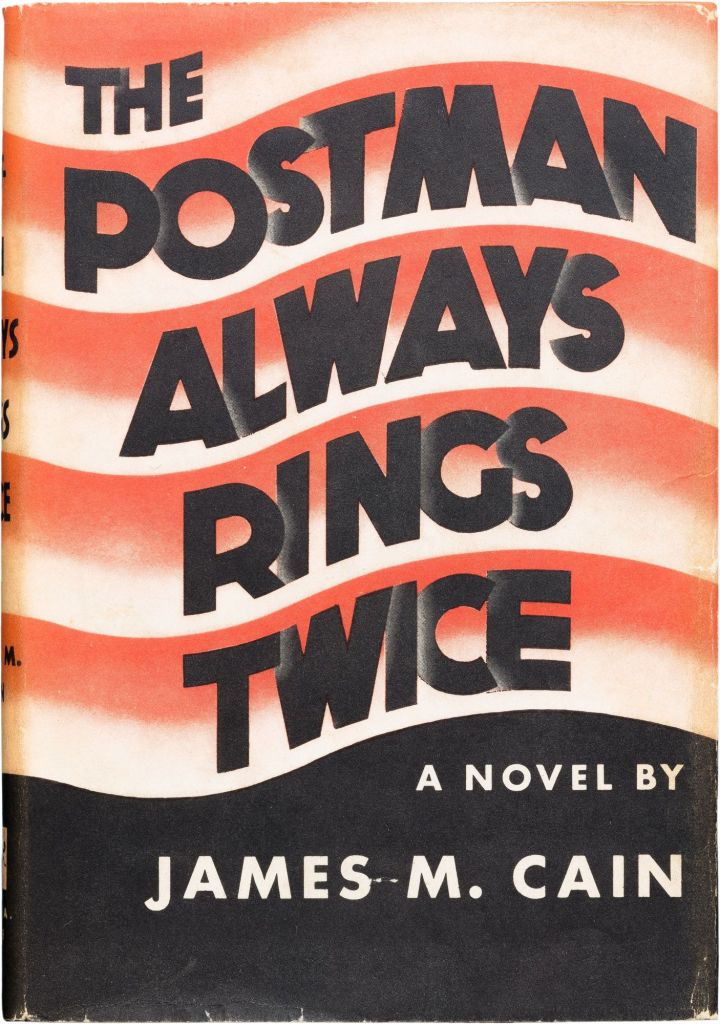
The Postman Always Rings Twice ~ A Capsule Book Review by Allen Kopp
James M. Cain was an American author who lived from 1892 to 1977. His 1934 crime novel, The Postman Always Rings Twice, is an ironic and steamy (for its time) story of adultery and murder set in a California roadside restaurant. Even though it’s a “genre” novel, it’s ranked number 98 on the Modern Library’s list of the hundred greatest books in English of the twentieth century.
Cora Smith is a self-described “cheap trollop from Des Moines.” She goes to California seeking movie stardom, but when the movies don’t quite work out for her, she marries an older man, an unattractive Greek named Nick Papadakis, who she describes as “smelly and greasy.” Even though Nick doesn’t make Cora’s pulse race, he can provide her with some security, a job and a home. He owns his own business, a thriving roadside diner called Twin Oaks. Cora can work out her life slaving away there, cooking and slinging hash.
Along comes a drifter by the name of Frank Chambers. He is narrating the story in his first-person voice. Frank sees right away that Cora is unhappy; the two of them begin a clandestine love affair. Cora tells Nick she is desperate; she wants out of her marriage with Nick, but if she leaves, where will she go? They decide they will kill Nick and make it look like an accident. With Nick dead, the two of them will be free to sell Twin Oaks and take the money and go away together somewhere.
Frank and Cora plot to kill Nick in the bathtub. Frank will hit him in the head while he’s taking a bath; he’ll go under and drown; it will look like an accident, except that when the time comes it doesn’t go off as planned and Nick is injured. Frank and Cora are badly shaken, spooked at how close they came to committing the crime of murder and being found out. They are relieved that Nick will live and happy that he has to spend a week convalescing in the hospital, giving the two of them the chance to sleep together in the same bed while he’s away.
When Nick returns to Twin Oaks from the hospital, he realizes he has had a brush with death and is once again ready to embrace life to the fullest. He wants Cora to have to baby. In the funniest line in the book, Cora says: “I can’t have no greasy Greek child, Frank.” Murder is back on the table.
The second attempt to kill Nick is successful. This time, it’s an elaborately staged auto accident on a mountain road. Nick dies, but Frank is (unexpectedly) severely injured. When a canny prosecutor learns the facts of the case, he sees through Frank and Cora’s story that it was all an accident and knows that they killed the Greek. He makes Frank and Cora turn on each other.
There are a couple more ingenious plot twists but, suffice it to say, things do not go well for Frank and Cora. There is no happy ending in the noir world they inhabit.
The Postman Always Rings Twice is a slice of Americana, a small literary gem from the 1930s. (Never mind that it was naughty enough to be banned in Boston.) The book translated well to the screen in a movie adaption from 1946, with Lana Turner and John Garfield thoroughly believable as murderous lovers.
Copyright © 2020 by Allen Kopp

 Literary Fictions