

Author: allen0997
Flowers by Night ~ A Capsule Book Review

Flowers by Night ~ A Capsule Book Review by Allen Kopp
Set in Japan in the 1820s, Flowers by Night, by Lucy May Lennox, is a fascinating glimpse into an exotic Asian culture of two hundred years ago. Tomonosuke is of the samurai class, but he’s not an especially important samurai. He works as a sort of accountant in the office of the exchequer. He’s in his early thirties and he has a wife named Okyo. They have been married for five years but have no children because they aren’t interested in each other sexually.
Ichi is an “anma,” a blind masseur, only twenty years old. He went blind in childhood as a result of a fever and a rash. His family disowned him when he went blind, so he has no standing in society. He is a “non-person,” but he has learned to be self-reliant and to support himself by giving massages and performing as an amateur musician. He is a member of the Todoza, a guild of blind men. (Most of the Todoza members are moneylenders and for that reason are generally disliked.)
When samurai Tomonosuke meets blind masseur Ichi by chance, he is drawn to him because of his beautiful face and pays him for a massage. After several meetings, their “business” relationship turns sexual. (We are told in the background information for Flowers by Night that sexual relations between men were not only common, especially among the samurai class, but accepted and acceptable, during this period in Japanese history.)
Tomonosuke and his wife Okyo, along with Okyo’s maid, Rin, are relocated to the city of Edo (present-day Tokyo), and Ichi tags along to be near his beloved Tomonosuke. (Ichi lived in Edo before and knows his way around.) Tomonosuke and Okyo are adjusting to life in the city when tragedy strikes.
Tomonosuke is falsely accused of embezzlement (set up by a fellow employee) and is jailed. He is waiting to be executed, he believes, when an earthquake, followed by a fire, strikes Edo. (Fires are so common in Edo that they are called “flowers of Edo.”) The jail where Tomonosuke is being held collapses in the earthquake and Tomonosuke is freed, along with the help of Okyo, Rin and Ichi. All four of them flee Edo since Tomonosuke is a wanted man. They travel, under cover, with a band of itinerant musicians. In their travels, they experience much hardship, including brutal winters (many feet of snow) and near starvation.
In the meantime, we learn that Okyo and Rin have been involved in a long-term lesbian relationship. Rin had been sold as a child to a brothel; Okyo rescued her and vowed to always take care of her. So, we have an unusual foursome: Tomonosuke and his blind lover Ichi and Okyo and her young lesbian lover Rin. The four of them together form a strong bond and, in their highly unusual circumstances, vow to always remain together, no matter what. They become a family in an uncaring and inhospitable world. Okyo feels compelled to produce an heir (especially important in an Asian culture at this time) and, since her husband Tomonosuke doesn’t have sexual relations with her, this is not going to be possible. Tomonosuke and Okyo come to believe in time that a wise expedient is to have the Tomonosuke’s blind lover Ichi conceive a child with Okyo. “Will the child be blind also?” Rin innocently asks. “Of course not!” Okyo tells her. “He wasn’t born blind!”
I haven’t ever read anything like Flowers by Night before. It’s a story about courage, about being on the outside and overcoming the odds in a world that is betting against your survival. More than that, it’s about the bonds that people can form with each other to make life a little more bearable. Highly recommended.
Copyright © 2021 by Allen Kopp
Leave Charlotte Vale Behind
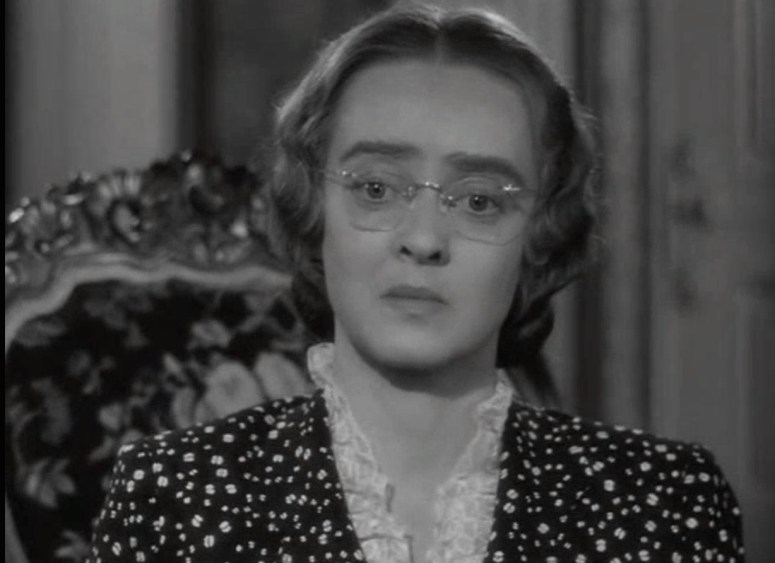
Leave Charlotte Vale Behind ~ A Short Story by Allen Kopp
After washing her hair in the kitchen sink, grandma sat down at the kitchen table before her little round mirror from Woolworth’s to “pin it up.” She twisted each strand of wet hair expertly around the index finger of her right hand and when the strand was a perfect coil she secured it with not one, but two, bobby pins crossed like tiny swords, which she opened with her teeth.
When she was finished, her hair was all-over coils arranged in rows like planted crops. From a distance she looked to have been snatched bald-headed and her hair replaced by a brown skull cap.
She would never have gone outside the house with her hair pinned up that way, so, while the hair dried, she tied it up with a colorful scarf and left the two ends of the scarf sticking up over her forehead like the antennae on an insect.
“What do you think?” she asked Evan.
“That scarf is so cute!” he said.
She lit one of her Pall Mall menthol cigarettes and, balancing it on her favorite ashtray, began applying makeup. She started with a thick layer of face powder all over her face, and then she drew on her eyebrows in graceful arcs over each eye.
“That looks so good!” Evan said. “You look like a movie star!”
“Now for some color,” she said.
She put a spot of rouge on each cheek and then spread it out, blending it in, with her fingertips.
Next came the lipstick. She outlined her lips with the audaciously red stuff and then smacked her lips together several times to even it out, after which she blotted with a limp Kleenex that she produced from the pocket of her house coat.
“Not bad if I do say so myself,” she said, turning her head this way and that before the mirror.
“What time is Finis coming for dinner?” Evan asked.
“About six. He’s bringing dessert.”
“Did he say what?”
“It’ll be something good, you can be sure of that.”
Evan liked grandma’s boyfriend Finis. He was over seventy, tall and thin, a real snappy dresser. He always wore a suit, tie and shiny shoes. He told funny stories about when he was married to one Siamese twin (he wanted to marry the other twin but didn’t want to go to jail for bigamy), and when he worked for gangsters (he got out before members of a rival gang had him killed). Some of his stories were hard to believe, but they were always worth listening to.
“Why don’t you marry Finis?” Evan asked. “Then he’ll already be here at dinnertime and he won’t have to come from someplace else.”
“We’ve talked about it,” grandma said, “but we both like our freedom too much. I don’t want to be tied down and neither does he.”
“How long has grandpa been dead?”
“Seventeen years. You weren’t even born yet.”
“Don’t you miss having a husband?”
“Not anymore.”
Grandma started to put away the mirror and cosmetics, but Evan pointed to his own lips.
“Well, all right,” she said. “Come on over here.”
She set him on her left thigh and, with her left arm around his shoulders, applied lipstick to his lower and then his upper lip with her right hand and then had him smack his lips together the way she showed him.
“How’s that?” she asked.
“Perfect!” he said, looking at himself in the mirror. “I want some eyebrow pencil, too, though. My eyebrows have been so uninteresting lately.”
“Just a little bit,” she said. “We don’t want to ever forget that you’re a boy.”
“I won’t forget it,” he said.
In the space between the table and the refrigerator he minced around, pretending to be a girl, making grandma laugh. He didn’t mind cutting up that way with grandma and Finis, but he wouldn’t want just anybody to see him.
“I’m going to get my wig!” he said.
He ran upstairs to his room and dug the wig out of the bottom drawer of the dresser and put it on in front of the dresser mirror. The wig was long and red, rather shopworn and dusty, but it did make him look like a bonafide girl.
He ran back downstairs to the kitchen to show grandma.
“How do I look?” he asked.
“Stunningly beautiful,” grandma said.
“My name is Charlotte Vale,” he said. “I don’t believe we’ve met.”
“I’m only your old grandma.”
“Oh, yes, that’s right! I remember now!”
“I want you to walk to the store and get a few things.”
“Can I go as Charlotte?”
“You can go as Al Capone if you want to. Now, are you listening? Here are the things I want: a quart of milk…”
“A quart of milk. Check.”
“…a pound of butter…”
“A pound of butter. Check.”
“…a loaf of white bread…”
“A loaf of white break. Check.”
“…and two packs of Pall Mall menthol cigarettes.”
“Two packs of Pall Mall menthols. Check.”
“Can you remember all that without a list?”
“Of course, I can,” he said. “I made it all the way through retarded school, remember?”
She gave him the money and he ran out the kitchen door, the long red hair flying.
When he went into the store, nobody looked at him, but he wouldn’t have been surprised if they had. He felt a little funny as a girl, out in public, but it was only because he wasn’t used to it. He liked the feeling he got from being somebody else. He couldn’t keep from smiling.
He went to the back of the store to get the milk, butter and bread. Then he had to stand in line up front to pay and to get the Pall Mall menthols.
When his turn came, the sour-faced cashier looked at him and then looked away without interest.
“Anything else?” she asked, after ringing up the purchases.
“Two packs of Pall Mall menthol cigarettes.”
She reached around on the other side of the cash register and pulled the two packs of cigarettes out of a rack.
“You don’t ever want to start smokin’ them things,” she said. “They’ll kill ya.”
“They’re for my grandma.”
He paid the money and held out his hand for the change. She put the things into a large bag and folded down the top of the bag and handed it to him.
“Have a nice day,” she said without expression.
When he got home, grandma and Finis were sitting at the kitchen table, laughing and smoking. Grandma had combed her hair out and it was sticking up all over her head. Too much curl, she’d say.
“Who is this enchanting child?” Finis said when Charlotte entered the room.
“That’s my young granddaughter, Charlotte Vale,” grandma said, “visiting from out of town.”
Finis stood up and made a show of shaking Hester’s hand. “So happy to make your acquaintance, my dear!” he said.
The song Amapola was playing on the radio. Finis took hold of Charlotte’s hands and danced her vigorously all over the kitchen until they both collapsed into chairs.
Charlotte wanted something a little fancier for dinner than walking-to-the-store clothes, so she went upstairs and put on a dark-green dress that she found in one of grandma’s trunks in the attic. Since it was a dress for a fully grown lady and since Charlotte was only eleven years old, the dress was a little too big and went all the way to the floor. It didn’t matter, though, because it was elegant. Perfect for a cruise to Buenos Aires and a shipboard romance.
Grandma cooked spaghetti and meatballs for dinner; she had a bottle of rosé wine to go with it. She let Charlotte taste the wine and drink almost a whole glass of it, but then she replaced the wine with iced tea. She didn’t want to be responsible, she said, for turning her grandson into an alcoholic.
“Granddaughter,” Finis said.
“Oh, that’s right! I almost forgot!”
“I’m not really a girl,” Evan said. “I just like pretending sometimes.”
“We know,” grandma said.
“A man wears many masks in his lifetime,” Finis said. “Whatever the moment calls for. When I was a young fellow in college, my friends and I used to get all made up as women and go downtown on the bus. We could flirt like nobody’s business! We could have had any number of dates. It was fun and it felt good!”
“I’ll bet you made the prettiest girl,” grandma said.
She set the big bowl of spaghetti and meatballs in the middle of the table and let Finis and Evan help themselves. They ate until the bowl was nearly empty.
“Best spaghetti I ever ate,” Finis said.
Before grandma cut the cherry pie that Finis brought for dessert, she brought a letter out of her apron pocket and set it on the table by her plate.
“I had a letter from your mother today, Evan,” grandma said.
“Oh?”
“She’s asking me for money again. She’s out of the hospital, but she’s seeing a new psychiatrist and she says he’s more expensive than the others.”
“I think it’s time for her to stand on her own and stop asking you for money!” Finis said.
“The money’s not all,” grandma said, looking directly across the table at Evan. “There’s something else.”
He knew he wasn’t going to like what she was about to say.
“She has a new boyfriend. They’re going to be married right away because she’s going to have a baby.”
“Uh-oh!” Finis said.
“Who is she marrying?” Evan asked. “Is he a mental patient too?”
“She didn’t say, but you’ll be able to find out for yourself soon enough.”
“Why?”
“She wants you to come home.”
“What?”
“She wants me to put you on the bus on Saturday morning.”
“I don’t want to go! I want to stay here with you and Finis!”
“I know you do, but…”
“But what?”
“She’s your mother and you’re a minor. Where you live is not up to you; it’s up to your mother.”
“Why can’t she just leave me alone?”
“She wants you to start school when the new school year begins.”
“I won’t go!”
“We can take him down in my car,” Finis said. “He doesn’t have to ride on the bus.”
“It’s more than two hours each way,” grandma said.
“I know. I don’t mind.”
“I won’t go!” Evan said. “I’ll run away!”
“And where will you go?”
“I’ll join the circus!”
“What would you do in the circus? Be a tightrope walker?”
“No, I’ll be a He-She in the freak show.”
“But you’re not a He-She. You’re a perfectly normal boy.”
“I’m not normal! I don’t want to be normal if it means I’m like everybody else! I want to be a He-She!”
“All right, then! Be a He-She! Suit yourself!”
“You don’t have to go today or tomorrow,” Finis said. “You have a few more days. Try to enjoy the time you have left.”
“Finis is right,” grandma said. “Let’s have some cherry pie.”
“I don’t want any pie!” Evan said. “I’m going to bed!”
“But cherry pie is your favorite!”
“No, it isn’t!”
He went upstairs to his room, making sure to slam the door loud enough so that grandma and Finis would hear it in the kitchen.
Although it wasn’t quite seven o’clock, he closed the blinds and put on his pajamas, got into bed and covered up his head. How could that bitch (his mother) marry some jackass and then expect him (Evan) to go back home and live with them while she had a stupid baby? He hoped the baby was a freak with two heads. It would be exactly what the bitch deserved.
When Evan awoke in the morning, he swore he was going to be Charlotte Vale the whole time he had left at grandma’s house. If anybody told him to go change back into Evan, he was going to refuse. Even though he was only eleven, he had some rights. If he was too young to have his way about where he lived, at least he could stand up for himself about something as elemental as being a He-She.
As Charlotte, he rode the bus all over the city, by himself, for hours. He loved the city: the crowds and traffic, the buildings, the noise and excitement. He and grandma had had a good time during his stay, seeing all the latest movies, shopping in the stores and eating at the restaurants. Grandma was from the small town, too, but she had lived in the city for thirty years and couldn’t imagine living anyplace else.
Saturday morning came quicker than Evan hoped it would. He awoke early and took a bath and washed his hair. Then, sitting in his underwear before the dresser mirror, he put on heavy rouge, eyebrow pencil and lipstick. When he was satisfied with the way he looked, he slipped a dress on over his head; not the fancy green dress for the cruise to Buenos Aires, but a more sensible, daytime dress of yellow and blue.
When he went down for breakfast with his packed suitcase, Finis had already arrived and was sitting at the table smoking a cigarillo and drinking tea.
“Hello there, Evan,” Finis said.
“It’s Charlotte. Charlotte Vale.”
“Oh, yes. I forgot for the moment.”
“From now on I’m Charlotte. Evan’s dead. Don’t you think the circus freak show would be happy to have me as a He-She?
“I can’t say,” Finis said. “I think eleven is probably a little young for a He-She.”
“I won’t always be eleven.”
“You’re going home today for the first time in three months, Evan,” grandma said.
“Not Evan. Charlotte.”
“Don’t you think it would be best to go home as Evan and leave Charlotte Vale here? She’ll still be here when you get back.”
“No! You’ve already told me I don’t have any choice about going. If I have to go, I’m going as Charlotte. Evan’s dead, I said.”
“All right. If you say so. Evan’s dead.”
“Won’t mother be surprised when she sees I’ve turned into a He-She?”
“We’ve better get a move on,” Finis said. “We’ve got a long drive ahead of us.”
Copyright © 2021 by Allen Kopp


The Confessions of Young Nero ~ A Capsule Book Review
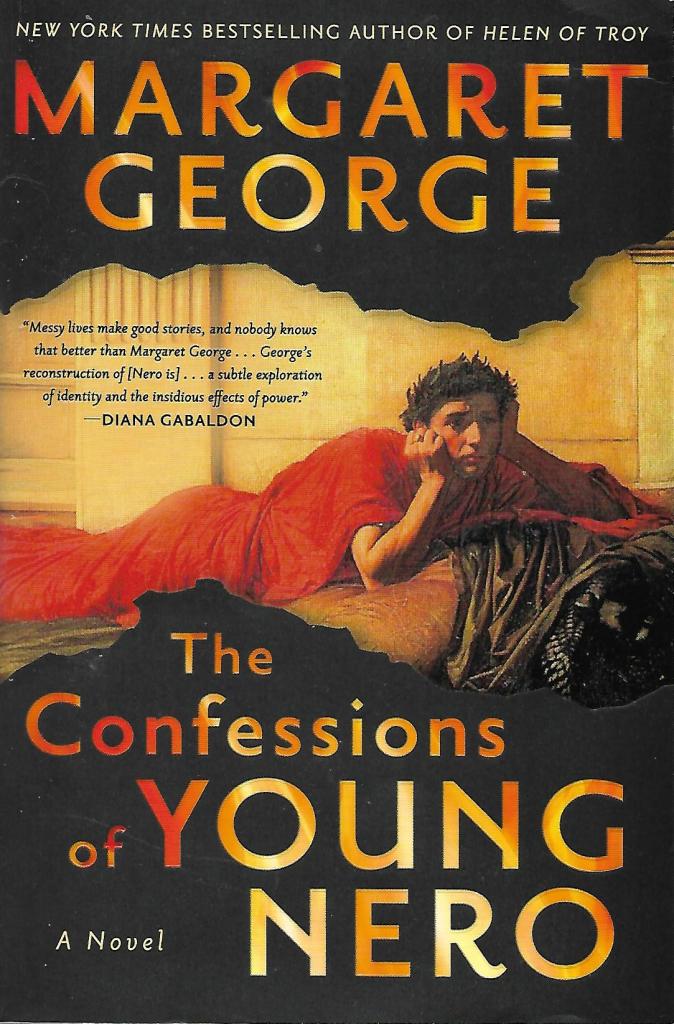
The Confessions of Young Nero ~ A Capsule Book Review by Allen Kopp
The Emperor Nero (real name Nero Claudius Caesar Augustus Germanicus) was born in the year 37 AD and died at age thirty in 68 AD. He became the fifth Roman emperor in 54 AD at the age of seventeen.
History for the most part has not been kind to the Emperor Nero. Historians, writing about Nero in the decades after his death, advanced the narrative that he was an over-the-top lunatic, whose cruelty, depravity and sexual excesses brought the Roman Empire to its knees. He reportedly had sexual relations with his own mother, Agrippina, and had her killed five years into his reign. He is believed to have tortured and killed thousands of Christians and earned the distinction of being designated the “Beast” in the Book of Revelations. He had poisoned (or otherwise murdered) anybody who challenged his authority. He spent money lavishly and lived luxuriously. He murdered his wife, Poppea, and then, feeling remorseful, marring a surgically altered boy who resembled Poppea. It might be said that he was a perfect example of the adage: Absolute authority corrupts absolutely.
Nero certainly did have his own mother, Agrippina, killed (as a desperate act of self-preservation), but the rest of the ugly stories about him might only be based on rumor, innuendo and fabricated tales. Historians didn’t like him because he was popular with the common people (but not the aristocrats and the elites). He was an unconventional emperor who engaged in sports competitions, musical performances, chariot racing and other activities deemed unworthy of an emperor.
The historical novel The Confessions of Young Nero, by Margaret George, is an attempt to set the record straight about the real Nero: what he was really like, instead of what his enemies and detractors thought of him and his reign. One of the reasons the common people liked him was because he engaged (at great expense) in many public-works projects, including bathhouses, stadiums, theatres and other entertainment venues. He sometimes gave away expensive “gifts” (including tracts of land and horses) to people who attended sporting events. As an artist (poet and musician), he promoted the arts and public performance. As a military leader (but never on the field of battle himself), he scored impressive victories against foreign enemies, including in Britain and Parthia.
The Confessions of Young Nero is over 500 pages long, but it is only half the story of Nero’s life, told in his first-person voice. The second book, also over 500 pages, is The Splendor Before the Dark. As author Margaret George explains in her lengthy Afterword, The Confessions of Young Nero is her attempt at an honest portrayal of the life of a fascinating, controversial, long-ago historical figure who has been frequently misunderstood, maligned, and misinterpreted by history.
Copyright © 2021 by Allen Kopp

Some Words of Wisdom for the Beginning of the Year
~ Some Words of Wisdom for the Beginning of the Year ~
Every man should be born again on the first day of January. Start with a fresh page. Take up one hole more in the buckle if necessary, or let down one, according to circumstances; but on the first of January let every man gird himself once more, with his face to the front, and take no interest in the things that were and are past. ~ Henry Ward Beecher
We will open the book. Its pages are blank. We are going to put words on them ourselves. The book is called Opportunity and its first chapter is New Year’s Day. ~ Edith Lovejoy Pierce
One resolution I have made, and try always to keep, is this: To rise above the little things. ~ John Burroughs
Be always at war with your vices, at peace with your neighbors, and let each New Year find you a better man. ~ Benjamin Franklin
Year’s end is neither an end nor a beginning but a going on, with all the wisdom that experience can instill in us. ~ Hal Borland
Learn from yesterday, live for today, hope for tomorrow. ~ Albert Einstein
You have done what you could — some blunders and absurdities have crept in. Forget them as soon as you can. Tomorrow is a new day. You shall begin it serenely and with too high a spirit to be encumbered with your old nonsense. ~ Ralph Waldo Emerson
It is never too late to be what you might have been. ~ George Eliot
What the New Year brings to you will depend a great deal on what you bring to the New Year. ~ Vern McLellan
Twenty years from now you will be more disappointed by the things that you didn’t do than by the ones you did do. So throw off the bowlines. Sail away from the safe harbor. Catch the trade winds in your sails. Explore. Dream. Discover. ~ Mark Twain
Drop the last year into the silent limbo of the past. Let it go, for it was imperfect, and thank God that it can go. ~ Brooks Atkinson
Never look back unless you are planning to go that way. No man is rich enough to buy back his past. ~ Oscar Wilde
Reflect upon your blessings, of which every man has plenty, not on your past misfortunes, of which all men have some. ~ Charles Dickens
For eleven months and maybe about twenty days each year, we concentrate upon the shortcomings of others, but for a few days at the turn of New Year we look at our own. It is a good habit. ~ Arthur H. Sulzberger
Cemetery Christmas

Cemetery Christmas ~ A Short Story by Allen Kopp
Calvin Horne took the wreath out of the back of his car and walked down the hill with it slung over his shoulder like a garden hose to his parents’ grave. It was the day before Christmas and he didn’t want to be in the cemetery; didn’t want to be reminded of death on a joyous holiday. Christmas was about birth, about what’s good in the world.
He hadn’t been especially close to either of his parents. His mother, dead two years, was a difficult and obstinate old woman. The two of them, Calvin and his mother, could hardly be in the same room together without a clash of wills. His father had been dead for twenty years and was only a distant memory.
He trudged down one hill and up another one. It was there, at the top of the next hill, where his parents were buried. His mother had generously offered to buy the plot for him on the other side of her, but he declined the offer. (He wanted simply to vaporize into the air as if he never existed at all.) Now that space was occupied by a stranger that his mother, in all probability, wouldn’t have liked.
His parents had a large and rather ostentatious granite headstone as tall as a man’s head that his mother bought and paid for. In the middle of the stone, at the top, the name Horne was etched in large letters. Below were the names, birth and death dates of Byron and Julia. Under the names were two intertwined hearts with an arrow shot through them and, in fancy script, the ironic words Together Forever. They were together, he was sure, only in the sense that they were both dead.
He took a deep breath, a little winded from his climb up the hill, and pushed the legs of the wreath’s tripod into the soft earth in front of the headstone. Now, if his sister or any other family members came snooping around, they wouldn’t be able to say he hadn’t discharged his duty to his parents at Christmas.
The wreath seemed secure enough to withstand any winter blasts, so he pulled his gloves back on over his frozen fingers and was just about to retrace his steps back to the car, when he heard someone coming.
“I hear voices in the cemetery, don’t you?” a voice said.
He turned and saw a large woman in a fur coat and fur hat coming toward him. “What?” he asked.
“I said I hear voices when I’m in the cemetery. Don’t you?”
He thought she might be making a joke, but he wasn’t sure.
“No, I don’t hear any voices,” he said. “All I hear is quiet.”
“Yes, the quiet of the grave,” the woman said. “Do you need any help?”
“Why, no,” he said. “I was just leaving.”
“What are you doing here today?”
“I came to put a Christmas wreath on my parents’ graves.”
The woman looked down at the headstone and nodded. “They’re dead,” she said.
“Yes, that’s why they’re buried in the cemetery.”
“I’ll bet you were a good son.”
“Well, I can say I at least tried.”
“Do you have other family?”
“A sister and a son.”
“How old’s your son.”
“Twenty-two.”
“What happened to your wife?”
“We got divorced. She’s married to somebody else now.”
“What does she…
“I think that’s enough questions,” he said. “Especially since we don’t know each other.”
“Are you in a hurry to get away?” she asked.
“No more questions, I said.”
“I’ll bet you have a girlfriend waiting for you someplace, don’t you? Or maybe a boyfriend?”
“Let’s just say that’s for me to know and you to find out.”
“Okay. I get the picture. You don’t want to talk to me.”
“Well, it’s cold and it is Christmas.”
“Not today. Today is the day before Christmas. Tomorrow is Christmas.”
“Yeah. Enjoy your walk through the cemetery, or whatever it is you’re doing. I’ve got to be going.”
“Can’t you stay and visit a while?”
“No. I did what I came to do and now I need to go.”
“Haven’t we met before?” she asked. “A long time ago.”
“It isn’t likely.”
“I feel as if I’ve always known you.”
“We’ve never met, I’m sure of it.”
“Do you find me at all attractive?” she asked.
“What kind of a question is that? Of course I don’t!”
“What’s wrong with me?”
“I have to be going.”
He started to move away and she stepped in front of him.
“Could you spare me some change?” she asked.
“No, I can’t spare you any change. I don’t have any change. I might ask why you need change in a cemetery, wearing a fur coat, but the honest truth is I don’t care.”
“That’s not very nice. I thought at first you were a nice man.”
“Well, I’m not!”
“Where is your Christmas spirit?”
“It disappeared as soon as you started talking to me.”
“Don’t you like me?”
“I have no opinion of you one way or the other.”
“My brother, Ogden, will be along to pick me up any minute. He went to buy some cigarettes. When I tell him how you insulted me, he’ll be awfully mad.”
“I didn’t insult you!”
“You did! You said you found me unattractive and you didn’t want to talk to me.”
“If you hadn’t spoken to me first, I would never have said anything to you at all!”
“Well, how are people supposed to get to know one another?”
“They’re not!”
“Can I come home with you?”
“No!”
“I’ll bet you have a beautiful home, don’t you?”
“None of your business!”
“I’ll do anything you want!”
“None of your… I don’t want anything from you except for you to stop annoying me!”
“If you get to know me, I’m sure you’ll like me.”
“Dear Lord, why me?”
She lifted her arms up and put her hands behind his neck, locking her fingers at the back of his head.
“Stop that!” he said. “What do you think you’re doing?”
He took hold of her wrists and forced her to release her grasp.
“You don’t like women at all, do you?” she asked.
“It isn’t any of your business what I like! When I leave here, I’m going straight to the police station and tell them there’s a crazy woman in a bearskin coat accosting people in the cemetery. They’ll send a squad car out here and pick you up.”
“Well, you don’t have to be so unkind about it!”
Down the hill she saw Ogden, her brother, lurking behind a tree. She called to him, he spotted her and began walking up the hill. In less than a minute, he was standing before them.
“Who’s this bozo?” Ogden said with a sneer. With his fat face, fur coat and fur hat, he was the male equivalent of the woman.
“He wanted to leave, but I kept him here,” she said.
“Good work, Bootsie girl!” Ogden said.
“Your names are Bootsie and Ogden?” Calvin asked.
“Yeah, what of it?” Ogden said.
“He insulted me, Oggie!” Bootsie said.
“Oh, he did, did he? How did he insult you?”
“He doesn’t like me. I offered to go home with him and do anything he wants, but he said he’s not interested.”
“Well, that’s not very gentlemanly, is it?”
“Oh, I get it.” Calvin said. “She’s a whore and you’re her pimp.”
“Ooh! Some words are so ugly, don’t you think?” Ogden said.
He pulled a small gun out of his jacket and pointed it at Calvin.
“You’re wasting your time robbing me,” Calvin said. “I only have about two dollars.”
“Prove it!” Ogden said. “Give me your wallet!”
Calvin removed his wallet and handed it to Ogden as if it was something he did every day. Ogden opened it; after he had thoroughly examined its interior, he looked back at Calvin with hatred.
“You’ve got two lousy dollars? And no credit cards? What kind of a loser doesn’t have any credit cards?”
“I always pay for everything in cash.”
“You’re a deadbeat, you know that?”
“I told you it wouldn’t do you any good.”
“How about if I drive you to your bank and you withdraw about two thousand dollars from your account and give it to me and Bootsie here as a Christmas present?”
“What makes you think I have two thousand dollars in the bank?” Calvin said.
“Fellows like you always have lots of money in the bank.”
“The bank is closed for the Christmas holiday.”
“Well, isn’t that that just too convenient!”
Bootsie whispered in Ogden’s ear. His bewildered expression faded and he smiled. “I’ll bet you’ve got an expensive watch, haven’t you?”
“I have a Timex. It cost twenty-nine dollars and ninety-five cents and I’ve had it for six years.
“All right, Mr. Smart Aleck! Hand it over!”
Calvin unfastened the watch and gave it to Ogden with a smile.
“All right!” Ogden said. “I have two dollars from you and a cheap watch. If that’s the best you can do, I’m going to have to kill you and if I do nobody will find your frozen body at least for a couple of days, since it’s a holiday and all.”
“No, don’t kill him,” Bootsie said reasonably. “He’s not worth it. Just let him go.”
“And he’ll go straight to the police.”
“We’ll be long gone by the time they get here.”
“He knows what we look like, for Christ’s sake!”
“So what? Do you really want to spend the rest of your life in the penitentiary? I don’t think I do! Only a crazy person would kill a guy over two dollars and a cheap watch.”
“I can’t just let him go without doin’ nothin’ to him,” Ogden said.
“Just kick his ass good.”
“No, I know!” Ogden said. “I’ll make him strip naked and he’ll have to walk home with his best parts on display for all the world to see.”
“You really are sick, you know that?” Bootsie said. “Nobody’s going to strip naked! It’s too damn cold for that shit!”
“Hey! You know what?” Calvin said. “I just saw two police cars turn into the cemetery. They’ll be on top of us in about one minute!”
Ogden and Bootsie turned all the way around in confusion and, seeing nothing, began running down the hill to get away.
“A couple of professional criminals!” Calvin said to himself and laughed.
He picked up the gun where Ogden had dropped it beside the trunk of a tree and slipped it into the pocket of his coat. He doubted the gun would even shoot, but it would be an interesting piece of evidence to turn over to the police so they could know he wasn’t just making the whole thing up.
Copyright © 2020 by Allen Kopp
 Literary Fictions