

Author: allen0997
Mr. Bridge ~ A Capsule Book Review
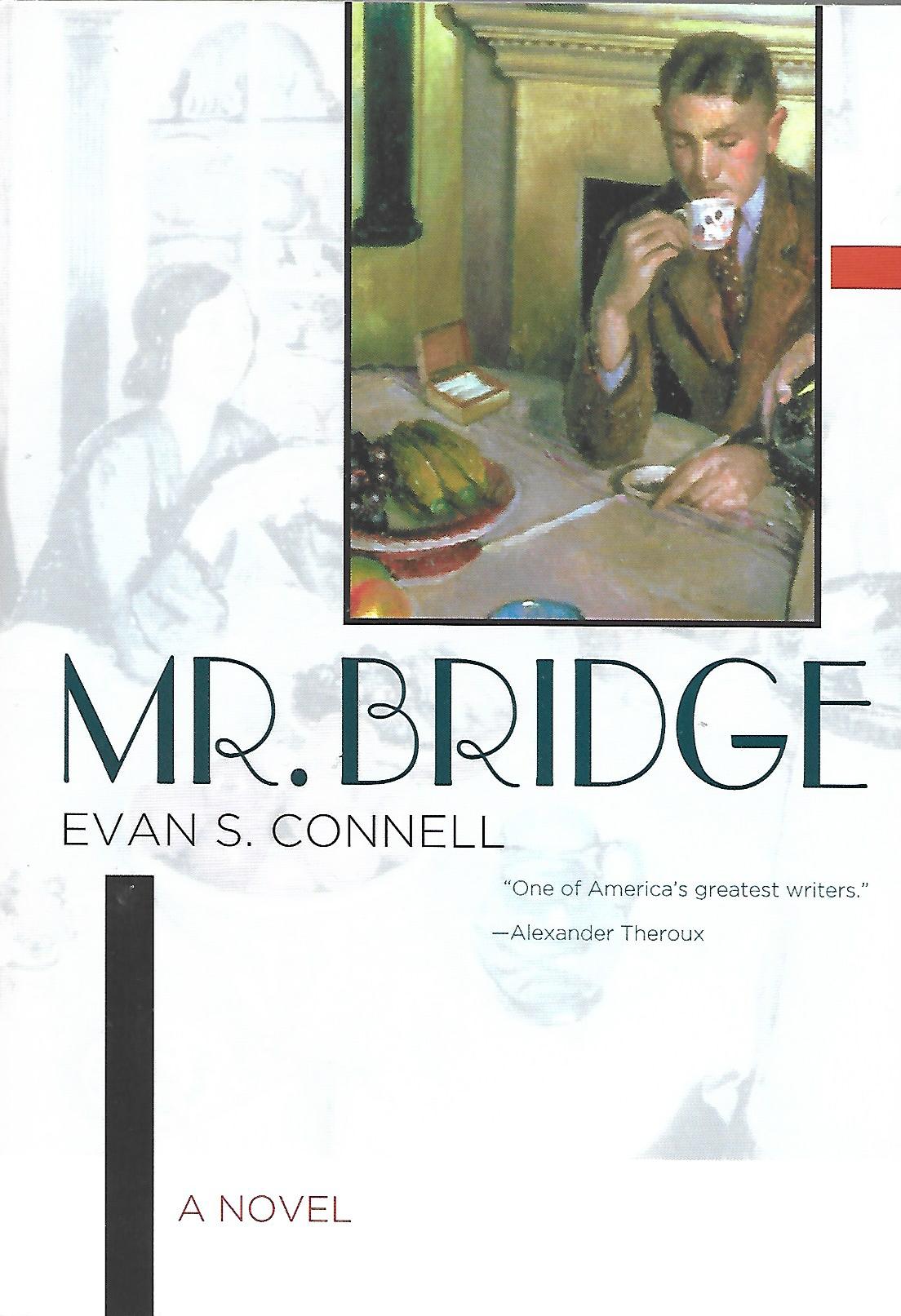
Mr. Bridge ~ A Capsule Book Review by Allen Kopp
Evan S. Connell was an American writer who lived from 1924 to 2013. His 1969 novel, Mr. Bridge, is a continuation of Mrs. Bridge (published in 1959), and follows the lives of the Bridge family of Kansas City, Missouri, from the 1930s through World War II. Mr. Bridge is technically not a sequel to Mrs. Bridge, because Mr. Bridge is set at an earlier time than Mrs. Bridge, even though it was written ten years later. (You got that?)
Walter Bridge is the father of three children approaching adulthood: Carolyn, Ruth and Douglas. Carolyn is the smart, sensible one who enrolls in college. Ruth is the rebellious one, inclined to flaunt convention. Douglas, the youngest of the three, climbs trees and digs holes; when he sees a movie about airplane pilots, he wants to be a pilot, even though he is only twelve.
Mr. Bridge (the character, not the novel) is a hard-working lawyer. He subscribes to the theory that hard work equals success, and success equals material wealth, happiness and comfort for his wife and children. His wife, India Bridge, is a country club matron, a sheltered woman who has never seen a fortune cookie and who knows little about the world. She lives in an insulated world of privilege and class. She looks to her husband for cues on how to behave, what to think, what to like or dislike, etc. She leaves the running of her household to her black cook-maid-housekeeper, Harriet, so she has lots of time to go shopping and have lunch with her friends. The thing about Harriet is that she has an unsavory boyfriend named Couperin and a penchant for too many martinis.
Living in a world dominated by women and children, Mr. Bridge must, by necessity, be the stalwart male. He is all the things that one might expect for a man of his time (1930s and ‘40s) and place (Midwest United States.) He is politically conservative (Franklin Roosevelt makes him cringe) and he believes that people of minorities are better off left in their own place. Today he would be called a racist. He belongs to a definite, identifiable class, a dying breed even in the 1940s.
Mr. Bridge is a loosely structured, episodic novel that, in the hands of a master writer like Even S. Connell, is a fascinating reading experience from the American realist school of writing. Later novels about life in suburbia were often drenched in sex and secret love affairs. There’s nothing like that in Mr. Bridge. Just solid writing and a set of compelling, believable characters and situations.
Copyright © 2021 by Allen Kopp



Death and the Afterlife: A Chronological Journey from Cremation to Quantum Resurrection ~ A Capsule Book Review
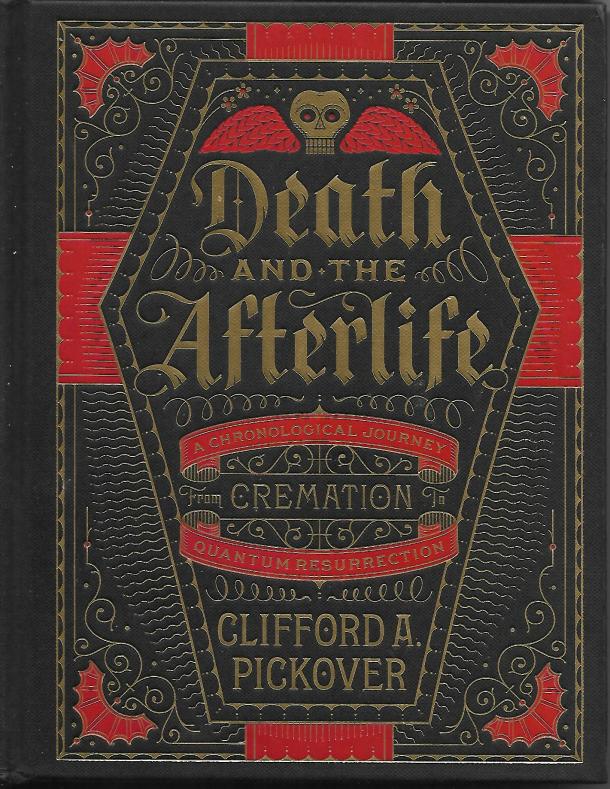
Death and the Afterlife: A Chronological Journey from Cremation to Quantum Resurrection ~ A Capsule Book Review by Allen Kopp
Death and what comes after have fascinated people for as long as people have existed. When we die, are we cast into a dark oblivion, or do our personalities survive in another place? Are we rewarded for our good deeds and punished for our bad deeds? Will we be born again in another body? Do heaven and hell exist? Where do we go if we’re not good enough for heaven and not bad enough for hell?
Death and the Afterlife will not answer any of these questions, but it is a book that deals with a wide range of topics associated with the science and sociology of death, dying and the afterlife, including such fascinating topics as vampires, zombies, euthanasia, embalming, executions, seances, reincarnation, resurrection, sin eaters, death masks, transhumanism, brain death, near-death experiences, electronic voice phenomena, quantum immortality, thanatourism (visiting sites of suffering and death such as Nazi death camps), death of the universe, and many other topics.
Each entry is only one page long, accompanied by an appropriate painting or drawing on the opposing (left-hand) page. At the end of the book is a list of references that might be consulted for further reading.
Did you know:
- Certain cultures, going back to the Neolithic Age (13,000 years ago), practiced what was known as “sky burial.” This means that the bodies of the deceased were cut into small pieces, including the bones, and left out on a ledge or hilltop for scavenger birds to carry away.
- Before Napoleon Bonaparte’s death in 1821 at the age of 51, he insisted that an autopsy be performed on his body, the results of which, he believed, would help his son. He was found, during autopsy, to have stomach cancer.
- Since 1960, the number of autopsies has declined because doctors are afraid of medical malpractice suits.
- During the 17th and 18th centuries, “plague doctors,” who often weren’t doctors at all, wore frightening “beak masks.” The idea was to fill the beak of the mask with aromatic spices or fragrant perfumes, which were thought to prevent the wearer from breathing the plague in through the nose or mouth.
- Walking Corpse Syndrome (WCS) is a mental disorder in which the sufferer believes he is dead, but still living, or that some of his organs have been removed.
- During the 18th century, fear of premature burial (burial of somebody who wasn’t really dead) led to the rise of “safety coffins,” equipped with air pipes and bells. (Make sure I’m dead first.)
- In the 13th century, the bubonic plague, originating in Asia, swept through Europe, killing roughly two-thirds of the population. The plague, the greatest biomedical disaster in human history, was still causing problems in Europe five hundred years later.
- Experiments show that the soul contained in a person’s body weighs seven-tenths (0.7) of an ounce. This weight was arrived at by weighing tuberculosis victims at the moment of death and comparing it with the weight before death.
- Ondine’s curse is a mental disorder in which a person forgets to breathe while sleeping and dies. It’s named after a water nymph from folklore who is cursed with having to remember to breathe.
- French painter James Tissot in 1890 painted a famous painting called What Our Lord Saw from the Cross. It is the artist’s vision of what Christ might have seen from the cross while being crucified.
- While Joseph-Ignace Guillotine did not invent the guillotine (decapitation device), as many people have been led to believe, he promoted its use as a humane method of execution in France in the 1790s. “My machine will take off a head in a twinkling,” Dr. Guillotine stated, “and the victim will feel nothing but a refreshing coolness.”
- Saint Vincent Pallotti (1795-1850) was an Italian saint who helped the poor in Rome. When his body was exhumed a hundred years after his death, it was found to show no signs of decay, a sign of true holiness.
Copyright © 2021 by Allen Kopp

 Literary Fictions