
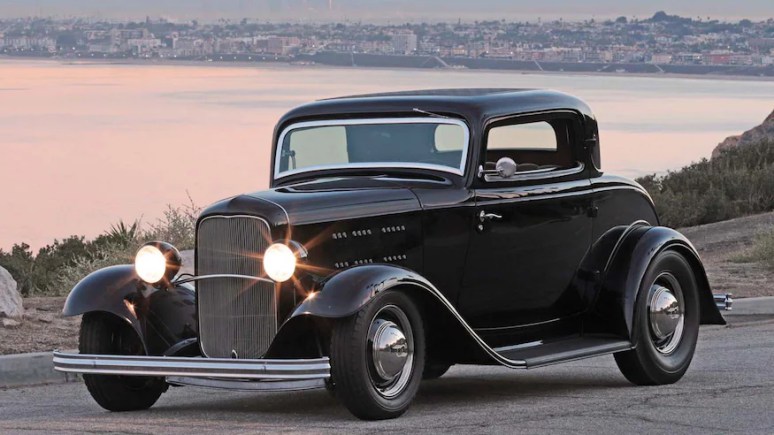
Keep the Car on the Road
~ A Short Story by Allen Kopp ~
The mother was without warmth for her children. She treated them the same as she would any livestock. On the other hand, it must be admitted that she never mistreated them. She mended their clothes and cooked their meals and made sure no harm should come to them.
It was 1932. Woe lay upon the land. The farm used to be a going concern, but the topsoil had blown away. Nothing would grow anymore. The land was cursed, people said. Those who could left the land behind.
Ellsworth was sixteen, the oldest of the four children. One day the mother had a talk with Ellsworth that she didn’t want the others to hear.
“It’s time you left home and got out on your own,” she said.
“What do you mean?” he asked.
“You know what things have been like the last few years. We can’t carry you no longer. You’re the oldest. You need to take care of yourself. We don’t have any money coming in. We can’t take care of you no more. We have to think of the little ones.”
“Do you mean you’re making me leave?”
“You’re a man now. It’s time.”
“I never thought you would make me leave.”
“It’s with our good wishes. Your paw and me.”
“When do I have to go?”
“Don’t you think it’s better to just make a clean break?”
“But where can I go?”
“That’s for you to figure out.”
He began thinking about where he would go and what he would do. He packed his few meager belongings in his little valise and set the valise at the foot of his bed. He didn’t go the next day, but the day after, which was a Saturday.
He didn’t say anything to anybody. He knew the mother was looking at him, but she didn’t speak to him again after her talk with him. He said nothing to the father. There was nothing to say.
The sister and the two brothers were out in the back yard. He had been going to say goodbye to them, but he decided against it. The sister would cry, and the two brothers would be uninterested and unaffected. If there was any one thing that Ellsworth wanted to say to them, it was that their time was coming.
On a Saturday morning, without looking back, he left the only home he had ever known. He didn’t care if he never saw the place again, or the people in it.
He walked for hours without stopping. His legs seemed to move independently of the rest of his body. Finally he stopped at a small country store and bought a bottle of milk and a sandwich. He sat in the peaceful shade of an oak tree across from the store and ate. It was as fine a feast as he had ever eaten.
Yes, he had a little money that he had been saving secretly for years. It was all he had in the world. Thank God he had it now, or he would have been cast out without a penny. Little did the mother care, or the father. He thought of them now as a couple of selfish pigs. Without giving it a thought, they had had more children than they could reasonably care for. It would serve them right if they all starved now.
After eating, he kept on walking, trying to clear his mind of disturbing thoughts. He felt better now. He was cheered by the thought that he was on his own in the world for the first time in his life. And he would not fail. Failing would mean that he would die, and he didn’t want to die. Not yet anyway.
He kept walking after dark, unafraid of anything that might be out there that he couldn’t see. When he thought it was about ten o’clock, he stopped beside the road and found a spot where he might reasonably make a bed, on top of a little hillock covered with thick grass. He lay down in the grass and, finding it cool and dry and soft, soon went to sleep.
When the sun was just starting to come up, the birds woke him. He sat up with a start, not knowing at first where he was. In a rush it all came back to him. He no longer had a real bed. From now on, he would have to make his bed wherever he could. He no longer had a home. There was no longer a kitchen table where he could sit down and eat his breakfast. He started to cry a little bit and was glad there was nobody there to see him.
He continued to walk the way he started out. He didn’t know where he was going or what he would do when he got there, but the thought came into his head that God was watching out for him and would show him the way. He hoped it was true.
He walked again for hours. He had never walked so much in his life. It seemed he had walked a thousand miles and had been gone from home for weeks, but the truth was it had only been two days. He wished he had a watch so he might know the time. He would have to tell time the old-fashioned way by looking at the progress of the sun across the sky.
He didn’t know where he was. For all he knew, he might have crossed over into another state. He came to a small town that had a main street and a few stores. Ravenously hungry, he went into a diner. Two old men sitting on stools at the counter turned and looked at him and then looked away.
He sat at a crooked table with an oilcloth cover. A waitress brought him a glass of water and a menu. He gulped the water and asked for more.
“Been walkin’ a long way?” she asked.
“Yes, ma’am.”
“We have fried catfish today or beef stew with cornbread.”
“I’ll take the beef stew with cornbread.”
“I trust you have the money to pay.”
“I can pay.”
“Good. We get people in here who seem to think otherwise.”
“They’re hungry and the don’t have no money.”
“I guess so,” the waitress said.
He ate slowly. He was in no hurry to start walking again. His legs and his feet hurt, and he felt more tired than he had ever been before in his life. He didn’t know how much longer he could keep walking without knowing where he was going.
When he left the diner, he wanted only to find a place to rest, but he kept walking. Around dark, he came to the town of Warfield. It was a bigger town than he had yet seen. There was a constant commotion of automobiles; a town square with a courthouse, a hotel, a restaurant, and stores.
He sat down on a park bench in front of the court house and counted out his money. When he saw how little he had left, he cursed being poor and he cursed the failed farm that spawned him. He cursed his family, who caused him to be in such a terrible fix with no home to call his own. He wished he might die and not have to go on. He just didn’t have the will to go on.
He knew it was a terrible extravagance, but he wanted to get a room in the hotel. He wanted a hot bath and to sleep in a bed again, maybe for the last time. If he had a room, he could die in it if he chose to do so, quietly and privately.
Bucking up his nerve, he went inside and asked the desk clerk for a room.
“How old are you?” the desk clerk asked.
“Sixteen.”
“By yourself?”
“Yes, sir.”
“I can’t let you have the room unless you pay in advance.”
He laid the bills out on the counter and was given the key to a room on the fourth floor.
“Checkout time two p.m. If you’re not out by then, you pay for another day.”
The room was small but clean. Besides a neatly made bed with a pink chenille bedspread, there was a dresser with a spotted mirror, a chair and a small table. There were two windows looking out on the brightly lighted town square. Best of all, though, the room had its own bathroom.
He had never stayed in a hotel room before. He had never even seen a hotel room, and this one was his for as long as he paid for it.
He went into the bathroom and filled the tub with hot water. He stripped off his dirty clothes and submerged himself all the way in the water, including his head. He washed himself all over from head to toe with the lavender-smelling soap and when he was finished he did it all again.
When he was finished bathing and, wearing only his underwear, he got into the big bed and pulled the covers up to his chest. He turned off the light. There was a pleasant glow from the streetlamps four floors down. The sheet was cool on his skin. He had never known such luxury and comfort.
Tired as he was, he couldn’t keep from thinking. He wondered what his sister and brothers were doing and if they had eaten a good supper. He thought of the mother bustling around in the kitchen and the father sitting at the table smoking his pipe. He wished they could see him now.
Now that he was alone and lying in comfort, he was better able to make his plans. He had the room for one day. He had just enough money to get it for a second day. That should give him plenty of time to do what he had to do. It made him a little sad to think about ending his life, but he didn’t know what else to do. He didn’t know yet how he was going to do it—he had never even thought about it before—but when the time came he’d know what to do.
The next morning he awoke and dressed himself in the clean pants and shirt he had packed in his bag. Then, feeling hungry, he went down to the hotel lunchroom and had a light breakfast of toast and coffee. Then he went to the front desk and asked to keep the room for one more day. That left him about enough money for two more meals, as long as they were small ones.
When he was crossing the lobby to go back up to his room, a man in a dark suit stopped him. His heart leapt because he thought he was in some kind of trouble.
The man steered him to a chair. “You mind if I ask you a couple of questions, big fella?” he asked.
“What about?”
“Are you staying in this hotel?”
“Yes.”
“For how long?”
“Until tomorrow.”
“You with your folks?”
“Folks?”
“Yeah. Your parents or your family.”
“No, I’m not with anybody.”
“Here alone?”
“That’s right. Say, why are you asking me all these questions? I didn’t do anything.”
“Nobody said you did.”
“Well, if you’ll excuse me, I’ll be on my way.”
“If you don’t mind my asking, where are you headed?”
“Up to my room.”
“That’s not what I meant. When you leave the hotel, what is your destination?”
“I haven’t got one.”
“Well, you must be going somewhere.”
“I’m going to the city.”
“What city?”
“It doesn’t matter. Any city.”
“And what do you plan on doing when you get to the city?”
“Get a job.”
“What kind of a job?”
“I don’t know. Any job I can find.”
“Can you drive?”
“Drive what?”
“A car! What else?”
“No. I haven’t ever drove.”
“You haven’t ever driven. You must speak proper English.”
“No. The answer is no. I don’t know how to drive a car.”
“Would you like to learn if you had the chance?”
“I guess so.”
“I need a driver. If you can assure me you’re not wanted by the law, I can teach you to drive. It’s not hard. All you have to do is keep the car on the road and make sure you don’t run into anything.”
“You would pay me?”
“Well, I don’t expect you to work for me for nothing.”
“Yes, sir.”
“How old are you?”
“I’m sixteen.”
“Could you leave tomorrow?”
“I had something I was going to do tomorrow, but it can wait.”
“Meet me in the lobby at nine in the morning. We’ll have breakfast and then we’ll get started.”
Driving was easier than he expected. He surprised even himself with how steady and unafraid he was behind the wheel. After a couple of hours of “training” on country roads, they were off to St. Louis.
“There’s nothing to driving,” the man said. “Just keep the car on the road and don’t run into anything. You have to always watch out for the other fellow because you never know what he’s going to do. It’s not that hard. Just don’t get nervous. You’ll be fine.”
“What will do when we get to St. Louis?” Ellsworth asked.
He wanted to ask a lot more questions, but the man, his new-found employer, put his head against the seat back and went to sleep. And then it started to rain. He couldn’t keep from smiling. He was driving a car in the rain. It was the happiest moment of his life.
Copyright © 2023 by Allen Kopp
 Literary Fictions