The Door That’s Always Closed ~ A Short Story by Allen Kopp
My name is Charles Anson. I moved in with my mother after my father died. At first I hated the idea of living with my mother at the age of thirty-seven, but soon I got used to it and thought of her home as my own. And I have to admit, my life was easier there. She had a cook and a housekeeper, so I no longer had to buy or cook my own food or do any housecleaning, which I was never very good at, anyway.
My mother was in her mid-forties when I was born. She was always older than the mothers of my friends, more like a grandmother. She had developed a bad heart in the years after my father’s death and told me she was happy to have me there with her—I was her only family that counted, she said—even though we argued at times about things I did that she didn’t like: I drank too much and I sometimes didn’t bother to call her when I wasn’t coming home. At those times, I had to remind her that I was no longer fifteen years old. She had to relinquish what she considered her “rights” as a mother and treat me with the respect I deserved as an adult.
She was known for her temper, which my father could tell you about if he was here. I remember when I was little and heard them fighting in the night. It wasn’t unusual to hear yelling, breaking glass or splintering of wood. When my father got enough of my mother goading him, he would end up throwing a vase or something at her head. In the morning when I asked what had happened, my mother would laugh and say my father had a little accident while sleepwalking. I knew it wasn’t the truth but it was a good way to gloss over an ugly situation.
I went to work every day and when I came home my mother was there and dinner was on the table and all was well. After dinner, I would usually step out if I felt like it, even though I knew my mother was jealous if I didn’t spend all my free time with her. In the evenings she watched old movies on TV and was happy to have me sit and watch with her, but it wasn’t my idea of a good time. I can only take so many Depression-era comedies with wisecracking dames and maids masquerading as madcap heiresses.
Most of the time when I came home from a night on the town, sometimes at one or two in the morning, my mother would have the TV and all the lights on, but would have retired to her room. This made her feel safer when she was alone, she said. I would turn everything off, starting with the TV, and make my way to bed, sleep for about four hours, get up and begin my day all over again, as so many of us working stiffs do. My mother had told me I didn’t even need to work, that she had plenty of money for us both to live on, but I couldn’t see myself hanging around all day with just her to talk to and having to ask her for money anytime I wanted to go out and have a few drinks.
On weekends I always tried to spend either Saturday or Sunday with my mother, just the two of us. She liked to go for a drive and I would very often take her to the cemetery where my father was buried and then take her to a good restaurant for lunch. If it was a Sunday, we would try to take in a museum or a concert. If I ever had the idea of going to a movie theatre and seeing a movie, she said she preferred seeing them on TV. When I told her that most people who liked movies wanted to see them at the theatre and not on TV, she only shook her head. The movie screen gave her a headache, she said, and she didn’t like the smell of popcorn.
All in all, my life was agreeable. I didn’t spend most of the money I made, so I was able to invest. The market was doing well, so I did well. I didn’t miss the things I didn’t have that other people had, like a marriage and children. I had learned early in life that not everybody in the world is the same and I found it out more and more as I got older. What’s right for most people is not right for everybody.
My mother went on for years with her bad heart, but she came to a point where she couldn’t go on any longer. She looked pale and drawn all the time and spent most of her time lying down. She stopped fixing herself up and having her hair done up. Some days she didn’t even bother to get dressed.
She went to the hospital for a few days and when she came home she said she was never going back, no matter what. She wanted to be in the privacy of her own home and not have a bunch of strangers around her at the end. I hired a nurse to be with her during the day when I was at work and a different nurse at night. They just did their work quietly and effectively and didn’t bother me. I paid them when the time came and left them to do whatever needed to be done.
I decided to quit my job in early summer. I didn’t need to work, as I said before, and all the time I was away I was worried that the end would come for my mother and I wouldn’t be there when she needed me. I dismissed both nurses and told them I would take over from there.
My mother moved into one of the guest bedrooms—she didn’t want to mess up her own room where all her treasures were—and became entirely bedridden. Her doctor sympathized with her desire to be at home and gave me lots of pills to give to her. He told me I didn’t have to hold back in administering her medicine and nobody would ever know the difference. I knew what he was saying without further explanation.
We kept her heavily sedated and I knew she wasn’t in any pain. Every so often she would open her eyes and look at me and I knew she was happy with the way things had turned out. She died peacefully on a hot afternoon in August. She was breathing and then she wasn’t. I hoped that when my time came, I would die so simply and easily.
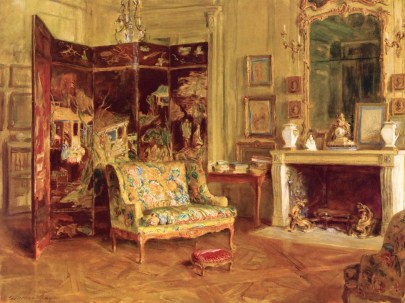
When a loved one dies, there are certain things that need to be done. I was supposed to call the doctor and get a death certificate and then call the funeral home and have them come and take her body away. I found I wasn’t able to do those things, though. I could not speak the words to anybody that she was dead. All I did was close the heavy drapes in the room where she lay and close the door to the room and lock it. I placed a beautiful Chinese screen she was fond of in front of the door to make it seem there was no door there at all.
I knew I would eventually have to have her taken away, but for now I just wasn’t able to disturb her at her rest. The bed in which she lay seemed more the place for her than a casket on display in a funeral home and then a grave. Some people would say I was crazy to do what I did, and maybe I was. It was my way of keeping her with me.
I suppose I was lonely and always had been. I realized after my mother was dead that she was the only person in the world who ever kept me from feeling lonely. I had friends, of course, but not close friends, and when I was away from them I didn’t care if I ever saw them again. I was indifferent toward them, as I had been indifferent toward many things and people in my life.
I kept the apartment dark and I started drinking heavily and taking my mother’s medications. If I didn’t know what they were for, it didn’t make any difference. If I took too many and didn’t wake up, it was all the same to me. I was in a state between living and dying.
Then, after a few weeks, I suppose I snapped out of it, at least partway. I looked at myself in the mirror and vomited. After that, I cleaned myself up and went out and had a good meal in a restaurant. The next day I hired some cleaning people to come in and clean the apartment and air everything out from top to bottom. I kept the door to my mother’s room locked, of course.
I began eating regular meals again and gained some weight. I bought some cook books and learned to fix dishes I had never fixed before, like standing rib roast and lemon trout almondine. I bought myself some new clothes and began going out more, but almost always alone. I walked farther than I ever walked before. I went to movies and different restaurants that were new to me and sometimes I went to church and sat in the back and listened and watched the people.
In the evenings I would pass the time reading novels, listening to classical music or watching old movies on TV as my mother had loved to do. I became as knowledgeable in movie lore as she had ever been. I saw the films of Ramon Novarro, Ruth Chatterton, and Kay Francis.
To keep from feeling so alone, I bought a life-sized human female doll. It was supposed to be a substitute companion for lonely men, but that’s not what I wanted it for. I wanted it to resemble my mother. I put makeup on it to make it look older, put one of my mother’s wigs on it and dressed it in my mother’s clothes. I created an illusion. At night in the dark, with just the light from the TV screen, it seemed as if my mother was sitting there. I knew she would have been pleased.
From there I took the next logical step and began dressing in her clothes myself. It made me feel close to her as though I were absorbing her essence into my body. She wasn’t a rotting corpse behind a closed door. She was right there with me and had been all the time.
After I dressed in her clothing a few times, I started experimenting with makeup. I applied it to my own face exactly as she would have applied it to her own. She had a couple of wigs on the top shelf of her closet and I got them down and tried them with different outfits. I would spend the entire day dressed as her. If it made me feel better and less alone, what did it hurt?
As I stood and looked at myself in her full-length mirror, I realized for the first time how much like her I was. My face was the same shape as hers, down to the dimple in my chin, and I had the same coloring. My beard stubble was light and nonexistent for at least a day after I shaved. I was the embodiment of my mother. I saw nothing of my father in me. He had been large with fleshy ears and a nose like a lump of cauliflower. When I was a child, I used to wonder how the two of them ever came to be together.
I spent hours practicing her walk, her laugh, the way she spoke, lit a cigarette or downed her vodka and tonic. I could match her signature so well that nobody would have been able to tell it wasn’t hers. But why was I doing all this? Was it just passing the time and keeping myself from feeling lonely, or was it something else?
One day when I was feeling brave and more than a little bold I decided to try a little experiment. Dressed as my mother—in her clothes, shoes, wig, hat and coat—I went down in the elevator and down the street to the market on the corner and bought a bag of groceries. I expected people to take one look at me and know I was a charlatan. If anybody noticed me at all, though, they didn’t give me a thought. It was exactly the effect I hoped for.
On my way home, a neighbor woman put her hand on my arm and stopped me on the sidewalk.
“I heard you were sick, Mrs. Anson,” she said. “I’m glad to see you looking so well.”
“I’m much better now,” I said. “My son has been taking care of me.”
I began going out more as my mother. People who had known her for years weren’t able to tell the difference. I kept them from looking at me too closely but, even if they had, I don’t think they would have suspected anything. People see what they want to see and are not all that observant.
Take my mother’s lawyer, for example. He had some documents he wanted her to sign. Now, my mother and her lawyer had known each since high school. Making him believe I was her would be the ultimate test. I was sure I could do it, but I was little anxious he would take one look at me and think I was attempting to perpetrate some kind of swindle. I knew I was taking a chance, but I was willing to risk it.
I didn’t need to worry. The lawyer held onto my gloved hand longer than was needed and led me to a chair in front of his desk.
“I’ve never seen you looking so radiant,” he said.
“Thank you,” I said, looking away.
“I don’t know how you do it.”
“Broccoli and blueberries.”
“It has to be more than that.”
“Well, we all have our little secrets.”
“You can’t fool me about your age. I know exactly how old you are because I’m the same age.”
“It’s only a number,” I said. “I stopped counting a long time ago.”
After I signed the papers, he invited me to lunch but I lied and told him I had an appointment to see my doctor. I wasn’t sure I could keep up the illusion through a long, liquor-infused lunch.
When I went out of the apartment now, about half the time it was as my mother. People were attentive and polite to a well-dressed woman alone. I got the best tables in restaurants and some man or other was always more than willing to give me a seat on a crowded subway or bus. People lit my cigarettes, opened doors for me and held elevators. I could always get a smile out of even the most sour-faced old buzzard.
Sometimes, but not often, I thought about my mother lying on the bed in that room behind the screen. I couldn’t visualize her as a rotting corpse. You hear stories about a dead body being closed up in a house and people realizing it’s there only because they can smell it. There had been no odors in my apartment and no complaints from any of the neighbors. I had heard stories about the bodies of saints that aren’t subject to the laws of decay. I could almost believe that my mother was one of those. Wondrous are the workings of heaven and not of nature.
I dreamed often about my mother, a happy dream in which I could hear her voice and see her laughing face. She was always excited about something she had seen or read, a trip she was taking, a play she was going to see or an old friend she had met again by chance. She was the only truly good person I had ever known. Everybody loved her.
When I was myself, Charles, I felt dull and uninteresting. My clothes were ill-fitting, no matter how much I paid for them or with what care I chose them. In dealings with other people, I was a nonentity. I had no desire to see them or be with them.
I went to a lecture on Nebuchadnezzar at the museum, not as my mother but as myself. There I ran into an old acquaintance named Freda Hobart. We had gone around together for a while right after college. It was never what I would have called a romance but more just something I did back then because it’s what everybody else was doing. After the lecture we had a drink and talked over old times. Freda told me she had been married and divorced two times. When I asked her if she thought she was ever going to get it right, she just laughed.
She gave me her phone number and a few days later, when I was feeling low, I called her and we spent the next couple of hours filling each other in on our lives. We went out to dinner the next day and a couple of days after that we went to a piano recital. She told me on our second outing that she had never stopped thinking about me and hoped we would somehow meet again. When I said I was surprised that she had ever given me another thought, she laughed and said my modesty was one of the things she had always loved about me.
We started spending a lot of time together. Since we were both alone, getting married seemed the next logical step. I was no way in love with her, but we were compatible and I didn’t relish the idea of spending the rest of my life with nobody to talk to or eat dinner with. When I asked her if she’d like to get married, she didn’t hesitate before saying yes.
She started making demands on me, though, telling me how “things” were going to be after we were married. When she told me I’d have to give up the apartment, I refused.
“We don’t need ten rooms for just the two of us,” she said.
“I’m not moving,” I said. “This is my mother’s apartment. She expects me to keep it up for her while she’s away.”
“Isn’t your name on the lease?”
“It doesn’t matter if it is or not. I’m not moving.”
“You’re being childish.”
“Women always say that men are being childish when they refuse to do as they’re told.”
We had a terrible argument, during which she demanded that I open the door to the room behind the Chinese screen.
“It hasn’t been opened in years,” I said.
“I want to see what’s in it.”
“Maybe it’s none of your business. Did you ever think of that?”
“It seems that since we’re to be married,” she said, “your business is my business.”
“Not always,” I said.
She cried, said I was “unnatural,” said she was glad she found it out before she made the mistake of marrying me. She threw a Chinese figurine at my head and stormed out the door. The next day when she called—or any day after that—I wouldn’t accept her calls.
It was for the best, I knew. A bad marriage was worse than no marriage at all. I didn’t feel like giving up half of everything I had to her in a divorce settlement. It was never going to happen.
After that, I came to an important decision. I drowned Charles in the bathtub, burned his tuxedo as a symbolic gesture, and vowed to live the rest of my life, however long that might be, as Margaret, mother of Charles. She would be so happy to know she was living again through me. If anybody asked me about Charles, I would say he had gone abroad to pursue his own interests and I didn’t know when he would be coming back.
I knew that one day I would die and there would be nobody to close the door and lock it for me the way I had done for her. That day might come sooner than I expected because of the way I had abused my body. I didn’t like to think about strangers coming into my house and finding me and then finding her and learning our secret.
After eight years, I unlocked the door and opened it. I stood there in the doorway of the darkened room, dust particles swirling around my head, and looked at her lying in the bed. She looked lovely, exactly as she had looked on that day in August when she stopped breathing.
I picked her up in my arms and carried her into the living room and set her on the couch, propping her up with the big pillows she had bought herself. Her head tilted forward a little and I knew she was comfortable. I sat down beside her and put my arm around her.
“I have so much to tell you,” I said.
With a gesture of impatience, she let me know she wanted to save the talk for later. Now she wanted to watch TV. It had been such a long time.
An old black-and-white movie from the 1930s was just beginning. We had seen it before, but it didn’t matter. I was the kind of thing we liked. I took off my shoes, brought my feet up, and nestled my head on her shoulder. The bad times were gone. The good times were back again.
Copyright 2017 by Allen Kopp






 Literary Fictions