What Belongs to You ~ A Capsule Book Review

What Belongs to You ~ A Capsule Book Review by Allen Kopp

He’s an American teacher living in Sofia, Bulgaria, teaching English at a prestigious American school. We never know his name. He is telling the story in his first-person voice. The story revolves around the narrator’s destructive relationship with a rent boy named Mitko, and, while their relationship is a sexual one, we never have to suffer through any explicit details.

The narrator comes to love Mitko, knowing all along that he is a user, a liar, and a self-aggrandizing manipulator; he is charming and good-looking and he knows how to use these qualities to his benefit. He can also at times be menacing and threatening when he doesn’t get his way. We see a portrait here of a mentally unbalanced young man who knows how to manipulate people to achieve his ends.

We come to see that Mitko has a terrible life, and, despite his youth, is in failing health. While the narrator tries to live a respectable life in his apartment, going to work every day, Mitko shows up periodically at his doorstep whenever he wants something. He frequently lies to get money, which makes him an extortionist, among all the other things he is. The love that the narrator feels for Mitko soon turns to pity as he sees that Mitko is falling apart. He cannot deny Mitko anything, knowing all along that lies and betrayal are a part of everything Mitko does.

While What Belongs to You is the story of a friendship, it is also a story about the nature of destructive and obsessive love. One of the best novels I’ve read in a while and unlike anything I’ve read before. Written in a unique, compelling and accessible style by a writer named Garth Greenwell. There are a lot of words in this novel, but never too many, always just right. Every word rings true.

The first-person narration is all introspective but never self-indulgent or whiny, as it could have been. On a different level, it’s a story, which I found fascinating, about life in modern-day Bulgaria, a country of 7.2 million in southeast Europe, a country that is collapsing and crumbling in many ways, a country that has lived through Soviet occupation, a country that is not what it once was. As a stranger in a strange land, the narrator navigates his way through two different health clinics, knowing only a smattering of the language, the public transportation system, and everyday life in a foreign capital. Some books are so good and so different from anything else that reading them is like being given a gift. This is one of them.

Copyright © 2017 by Allen Kopp 

At the Rise of the Hill

At the Rise of the Hill ~ A Short Story by Allen Kopp

(Published in The Literary Hatchet.)

Freddy Chickwell’s mother called him at seven o’clock on Sunday morning, before he was even out of bed.

“I need you to come over right away!” she said.

“I can’t, mother!” Freddy said. “It’s too early. I don’t even have my eyes open yet.”

“You’re going to want to see this.”

“What is it?”

“I can’t tell you on the phone. You have to see for yourself.”

“I’m going back to bed, mother. Please don’t call me until the sun is all the way up.”

“I never ask you for anything,” she said pitifully. “I’m asking you this one thing politely.”

“I’ll come, but only if there’s bacon and French toast.”

“How can you think of food at a time like this?” she asked.

“A time like what?”

He lay back on the bed and groaned. He had planned on going back to sleep but now that he was wide awake, he got up and dressed himself. He hated jumping out of bed and driving someplace first thing in the morning, but it appeared he had no other choice.

As he drove the six miles to his mother’s house, he thought of the different things that might have elicited such a call at an early hour: a large rat (spider) in the basement (bathtub); a bill that came in the mail for a large sum that she says she doesn’t owe and has no intention of paying; Aunt Jeanette has a tumor on her gallbladder; a large crack has appeared overnight in the foundation.

He pulled into the driveway and his mother came out the front door and down the steps, toward his car in a pink terrycloth bathrobe and fuzzy slippers; her hair was sticking out in spikes.

“Prepare yourself!” she said.

“For what?” he asked.

“He’s come back!”

“Who has?”

“Need you ask?”

Freddy walked into the house behind her and there, sitting in the living room in the middle of the couch, was his father, who had been dead for a year. Freddy looked at his father and his father looked at him. There were no words.

His mother motioned Freddy into the kitchen. “What do you suppose is going on?” she asked.

“Who is that?” Freddy asked.

“Who do you think it is?”

“Well, I know who it looks like!”

“He’s been raising all kinds of Cain with me ever since he came back.”

“Why?”

“He says I went off and left him.”

“Left him where?”

“I told him I would never do that.”

“Mother, something’s not right here,” Freddy said. “People don’t just come back from the dead after a year.”

“Apparently some of them do!”

“Is he a ghost?”

“I don’t think so. He ate a big breakfast and then had to go to the bathroom. I don’t think ghosts do that.”

“If he’s not a ghost,” Freddy said, “it must mean he was never dead in the first place. How do you account for it?”

“I don’t account for it! I saw him go into his grave.”

“The only other explanation I can think of is that he’s a zombie come back to eat our flesh.”

“Oh, I don’t think he would ever do that!”

“I’m calling the police,” Freddy said.

“And what could they do?” mother asked. “They’d never believe he was dead in the first place. They’d just think we were a bunch of lunatics.”

“Then call his doctor.”

“He died, too. Right after your father.”

“Maybe he’s a hallucination that we’re both having,” Freddy said. “We were both so poisoned by the man all the years he was alive that we’re being affected by him from beyond the grave.”

“I just don’t know,” mother said. She sat down at the table with her cup of tea, lit a Pall Mall cigarette, and sniffled back tears. “I cared for your father while he was alive—truly I did—and I missed him after he was gone, but now that I’ve become used to having my freedom, I just don’t think I can go back to the way things were before.”

“I’m hungry,” Freddy said. “I haven’t had any breakfast.”

He ate quickly, pushed the plate back when he was finished eating, and fanned away his mother’s cigarette smoke. “Now that I’ve had a little time to think about this dispassionately,” he said, “I’ve decided on a plan of action.”

“What is it?” she asked anxiously.

“We’ll kill him. It’s as simple as that.”

“Oh, Freddy! Your own father?”

“Well, he’s already dead, isn’t he? If you kill somebody who’s already dead, it’s not really wrong, is it? Not really a crime?”

“I’m not sure how the law would look at it,” mother said. “Killing is killing, whether the person you kill is already dead or not.”

“I don’t expect you to do any killing. I’ll do it.”

“But how? I don’t want a mess in the house that I’ll have trouble explaining later.”

“Remember Echo Hill?”

“That old place? I haven’t been there for years.”

“I haven’t, either. If it’s like it was when I was in high school, it would be the perfect place to kill a person that’s already dead.”

“Oh, Freddy, I just don’t know about this.”

“Remember how they used to tell us kids how dangerous it was to go up there because of the air holes?”

“What are air holes?”

“It’s places where you can fall through the earth down into the old mine if you’re not careful. There are probably some new ones that have formed since.”

“That sounds dangerous!”

“Yes, but it’s the perfect place to hide a body. If a body falls down an air hole, it would never be found. The old mine is as big as the whole town and there’s deep water in places.”

“It sounds very forbidding.”

“We can take him for a Sunday drive up to Echo Hill. We’ll get him out of the car and walking around, and—boom!—he’s gone down an air hole. Just like that.”

“And what if somebody sees us?”

“They won’t, and if they do they won’t know what they’re seeing.”

“While I’m getting dressed,” she said, “you go in and visit with your father.”

Freddy went into the living room and sat down in the chair facing the couch. “How have you been doing?” he asked father.

“There’s some weeds growing along the back fence,” the old man said. “Somebody needs to get out there and pull them up, and I guess that somebody is going to be me.”

“I wouldn’t worry about any weeds, if I were you,” Freddy said.

“The whole place is goin’ to hell!”

“So, tell me. What have you been doing this past year?”

“What do you mean?”

“Well, you’ve been…away, haven’t you? I just wondered what things were like where you were.”

The old man looked at Freddy with something like contempt. “What things?” he asked. “I don’t know what you’re talking about.”

Mother came down from upstairs wearing a yellow pantsuit and matching wig that made her look like Doris Day. “Well!” she said brightly. “How are we getting along?”

“About like always,” Freddy said. “Not much in the way of communication.”

She bent over toward the old man and said very loud, as if being dead for a year might have made him partially deaf, “We thought it would be lovely to go for a little drive! It’s such a beautiful day!”

“Huh?” the old man said.

“Remember Echo Hill? We used to go up there for picnics with Betty and Waldo when we were young.”

“I don’t know what you’re talking about,” the old man said. “I never did.”

“Wouldn’t you like to get out of the house? Go for a little drive?”

The two of them together helped the old man off the couch, out the door and into the car. With him installed in the back seat, mother got into the front seat with Freddy.

“I just don’t know about this,” she said as Freddy started the car.

“It’ll be all right,” he said. “I think I know what I’m doing.”

He drove out to the edge of town, past the bowling alley, the abandoned funeral home, the roller rink, a used car lot, a couple of taverns, and into farm country, where there were barns, silos, cows and young horses grazing in fields.

“Not much traffic today,” Freddy said.

He looked in the rearview mirror and saw that the old man was asleep in the back seat, his head lolled to the side.

“Isn’t this fun?” mother said. “I just love going for a drive in the country on a pretty day!”

Freddy came to the turnoff to go to Echo Hill, and it was exactly as he remembered it. “Won’t be long now!” he said.

He took a couple of turns onto old country roads that became narrower and more tree-encroached. Finally, he came to the end of the blacktop and turned onto a dirt road. There was a gate across the road, long-since fallen into disuse.

“Just like pioneering days!” mother said. “This reminds me of my childhood!”

At the big hill, the road was very rough; Freddy slowed to ten miles an hour to prevent any damage to the tires.

Mother rolled down the window. “Just smell that country air!” she said. A bumble bee flew in and she screamed.

After what seemed a very long, slow climb, Freddy came to the top of the hill from which one could see into the next state. The dirt road ended there, so he pulled the car onto a little rise off to the right that seemed dry and firm and didn’t have a lot of weeds growing on it. It was a place where he could easily turn around when the time came.

“How about if we get out here and scout around a bit?” Freddy said, giving mother a wink.

He started to open the door but was arrested by a sound that he didn’t identify, a sound of dirt sifting. Then the front end of the car lurched forward significantly.

“What on earth!” mother said.

Freddy wanted to see what was happening to the front end but, as he put his hand out to open the door, the ground gave way and the car slid downward, front end first, into a hole just big enough to admit one mid-sized car.

Down, down, down went the car, into darkness complete. Mother gasped and grabbed onto the dashboard as if she could arrest the car in its flight. The old man in the back didn’t make a sound. Freddy had a few seconds before the car hit the water in which it all became clear, all the pieces of the puzzle fit into place. Everything that had ever happened—his whole life—had been preparing him for this moment when it would all come to end.

Copyright © 2017 by Allen Kopp

The Deuce ~ A Capsule TV Review

The Deuce ~ A Capsule TV Review by Allen Kopp

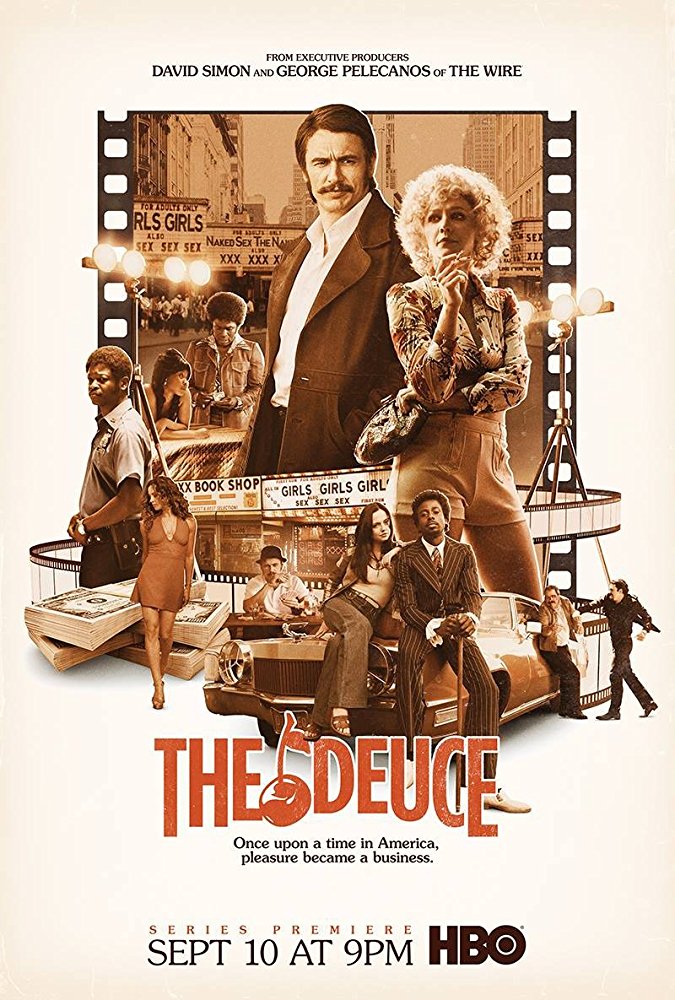
The new HBO series, The Deuce, set in New York City in the early 1970s, shows us the underside of the city: the sleaze of Times Square, the sex for sale, the rampant drug use, the pornography. If you go a little deeper, you see the lives of the people involved in these activities. Twins Vincent and Frankie (both played by James Franco) live on the edge. Vincent is a barman with an unfaithful wife (he is also unfaithful to her), two small children, and a load of debts. Frankie is an irresponsible gambler, in debt to loan sharks, who doesn’t mind leaving his gambling debts for Vincent to pay. Vincent is looking to improve his lot in life and be his own boss; he takes over the management of an unpopular bar and believes he can turn it around by making his waitresses wear skimpy outfits while they serve the customers. Neither Vincent or Frankie are the opera-loving, wine-sipping types with stock portfolios.

The most interesting character is “Candy” (played by Maggie Gyllenhaal.) Candy, whose real name is Eileen, is a not-so-young prostitute who works the streets of Times Square at night. Some of the “pimps” want to manage Candy, but she works independently. We know that Candy is taking a terrible chance every night, but she seems to know how to take care of herself and she has a young son to support. When Candy sees how lucrative pornography is for some people, but not for others, she takes steps to become involved in the pornography industry, which is a step up from being a whore.

The other whores, besides Candy, have pimps to “manage” them. The pimps are alternately caring and viciously brutal if something goes amiss with their money, so the whores are, with good reason, afraid of their pimps, while, at the same time, adoring them. When Lori gets off the bus from Minnesota, the pimp named C.C. takes her under his wing. Lori is no innocent, though; she has been whoring in Minnesota since she was sixteen and can teach C.C. a thing or two. Ashley, one of C.C.’s proteges, is jealous of Lori because of the interest that C.C. shows in her. Innocent-seeming Darlene, whore though she is, becomes interested in great literature through one of her “regulars.” Abby is a college dropout, who, while drifting, drifts into Vincent’s sphere. Will she become Vincent’s new girlfriend or will she herself turn to prostitution?

The world of The Deuce is the world of Taxi Driver and Midnight Cowboy. These are people living on the fringe, outside the law. Three episodes have aired so far, so there is much more to come and, after season one, there’ll be a season two. We’re definitely hooked.

Copyright © 2017 by Allen Kopp

Jesus, a Biography from a Believer ~ A Capsule Book Review

Jesus, A Biography from a Believer ~ A Capsule Book Review by Allen Kopp

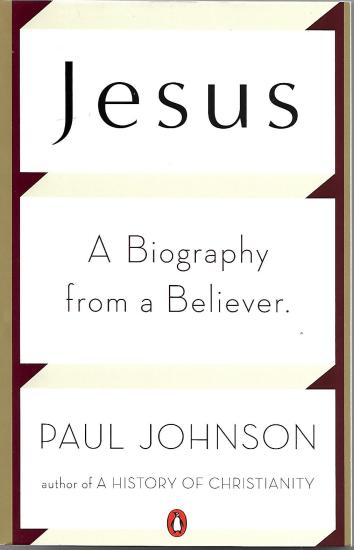
Jesus, A Biography from a Believer by Paul Johnson is exactly what it says it is: a concise, reverent chronicle of the life and times of Jesus of Nazareth, the most influential person who ever lived. He was without politics or national identity. He was a revolutionary, a threat to the status quo because they didn’t understand him. They didn’t understand that his kingdom was not of the world, but a kingdom of heaven. He didn’t come to the earth to lay down a set of rules for people to follow. He came to prepare people, anyone who believed in him, for the next world. He extolled the lowly and the powerless among men, the weak and the poor. Whoever is last shall be first, he said. He loved people from all strata of society and would always take the time to talk to anybody who wanted to speak to him. He spoke in a way that was easy for people to understand. His speech was poetic but never lofty or scholarly. People were drawn to him because of his easy and open manner. And then there were the miracles. He performed miracles sparingly and only when he thought the occasion warranted it. He didn’t want to be thought of as a wizard or a magician. Those who saw him perform miracles became easy believers, but he knew that most people would never have the benefit of seeing the miracles firsthand. In people, what he most admired were humility, sincerity, but, above all, faith.

If there’s nothing much new in this book that we didn’t already know, we at least get a feeling of what Jesus was really like as a man. He knew that people were weak and flawed and corrupt—he lived in a corrupt world—but he forgave those who could believe in him. If you already have faith, reading this book will strengthen your faith.

Copyright © 2017 by Allen Kopp    

Boy Erased ~ A Capsule Book Review

Boy Erased ~ A Capsule Book Review by Allen Kopp

Boy Erased is a nonfiction book, a “memoir,” by a writer named Garrard Conley. It is a first-hand account of a Christian-based therapy program whose goal is to turn homosexual people (male and female) into heterosexual people.

In 1973, the American Psychiatric Association declassified homosexuality as a mental illness. However, that didn’t stop the formation of Love in Action (LIA), a nondenominational fundamentalist Christian organization that promised to cure all LGBT (lesbian, gay, bisexual, transgender) congregants of their “sexual addictions.”

Garrard Conley is the “boy” in question. He is from a strictly religious, Missionary Baptist family in Arkansas. His father is a fundamentalist minister who believes in a strict interpretation of God’s word. When Garrard realizes he’s gay, he has to keep it a secret because he knows his parents will never understand or accept his sexuality. They discover the truth about him when he is a college student. They view homosexuality as a “condition” or an “addiction” like alcoholism that can be “cured” through prayer and counseling. (LIA uses some of the techniques of Alcoholics Anonymous.) Garrard’s father tells him he will not continue to finance his education unless he submits to “ex-gay” therapy and becomes “cured.”

The therapy consists of first writing about and then talking through one’s sexual feelings in front of a group of strangers, feeling contrite and ashamed, and praying that God will make you “pure.” The idea is to remove all temptation and sinful thoughts that lead to sinful acts that will assure the practitioner will spend eternity burning in the fires of hell. It is a kind of brainwashing that sometimes leaves participants suicidal. There is no evidence, from a scientific point of view, that a person’s sexual orientation can be changed in this way.

Boy Erased is an interesting story about what one young man went through in an effort to please his parents and make himself acceptable in the eyes of the world. A better idea might have been to provide “re-orientation” therapy and counseling to the parents to get them to accept their son and his sexuality. The upshot of the book is that ex-gay therapy doesn’t work and apparently does more harm than good.

Copyright © 2017 by Allen Kopp  

It ~ A Capsule Movie Review

It ~ A Capsule Movie Review by Allen Kopp

Early in It, a small boy named Georgie has an encounter with a strange, though interesting, clown in a storm drain during a rainstorm. That’s the last that’s seen of little Georgie. His older brother Bill misses Georgie terribly and refuses to believe he’s dead. Bill and his group of adolescent friends (all troubled in some way) believe there’s something terrible going on in the little town of Derry, Maine, in the late 1980s. There are far too many missing kids and nobody knows what’s happened to them. The self-absorbed adults in the town don’t seem very interested in solving the mystery, so it’s left to Bill and his friends to confront the evil force, whatever it is. Welcome to the world of Stephen King. It is based on his massive, 1200-page novel.

There’s a pattern to the bad things that happen in the town. In 1908, an ironworks exploded, killing over a hundred people. Every twenty-seven years since 1908, tragedies have occurred. It’s now 1989 and that’s twenty-seven years since the latest town tragedy in 1962. By studying maps, the boys figure out that the places where the tragic events occurred all have something in common: they are all connected via the town’s sewer system and a thing called the well house. Just where is this well house, and how do the boys find it?

The clown, Pennywise, is by far the most interesting character in It. He is the personification of the evil force in the town. He lives in the town’s labyrinthine sewer system. Depending on your own perception of clowns (I like them), Pennywise is grotesque, scary, fascinating, creepy, compelling, or silly. Maybe all of these things.

Most of the characters in It are like cardboard cutouts. Some of the kid actors who play the parts talk so fast that we don’t understand a lot of what they say and they aren’t very convincing or likeable, with the exception of stuttering Bill and the one girl in the group, Beverly, who has to fight off the advances of her creepy, leering father.  If you are a Stephen King fan, you will probably love this film adaptation of one of his most famous works. If you are not a Stephen King fan, you might find the onscreen horror of the ho-hum, obvious kind involving thirteen-year-olds and things jumping out at you in the dark.

We don’t know until the end of It that we have just seen chapter 1 of the story, meaning there will be more. The young girl who plays Beverly in the movie looks very much like the fortyish actress Amy Adams, so I’m figuring that Amy will be in the next movie playing Beverly as she would now look in the year 2017. And Pennywise? He’ll be back! He may be down but not out. Oh, that clown!

Copyright © 2017 by Allen Kopp
Suffused with Light

Suffused with Light ~ A Short Story by Allen Kopp

Phillip Call awoke at the usual time, washed the sleep from his eyes, brushed his teeth and dressed himself. He went into the kitchen, expecting to see his mother sitting at the table drinking coffee, but she wasn’t there. Neither was she on the couch in the living room, in her bedroom, or anyplace else in the house. She hadn’t told him she was going to be gone. He wondered where she was but he wasn’t worried.

He was twelve years old and in the seventh grade. He didn’t like school very much but he tried to make the best of it. He was a fair student, better in English and reading than in math and science. In a few years when he was finished with school, he wanted to go into the navy and have a different kind of life where he would see places like Italy and South America.

He never knew his father. His mother had been married, but not to Phillip’s father, and then the man she was married to left and was seen no more. He knew she wasn’t a very good mother. She took pills, chain-smoked cigarettes, and drank whiskey and wine. Some days she didn’t even get out of bed or she laid on the couch all day in front of the TV. She had moods where she cried and yelled at him for no reason, only because he was there, and at those times he tried to stay away from her.

He had a piece of toast with jelly and set out to school. He was going to write his mother a note for her to see when she came home, but she would know that he got himself up and off to school and would be home at the usual time.

The day at school was uneventful. In his usual quiet way, he didn’t speak to anybody and nobody spoke to him. He had a spelling test, on which he scored a hundred percent, and a math quiz. Two eighth grade boys got into a fistfight in the cafeteria and had to be pulled apart. He spent the hour in study hall reading out-of-town newspapers on sticks. All in all, a very routine day. Nothing to write home about.

When he got home, his mother still wasn’t there. He looked for a note that she might have written, but there wasn’t any. He dug up something to eat for supper, did his homework and watched TV until bedtime. He expected her to come home all evening but she didn’t.

The next morning when he got up, she was sitting on the couch in her bathrobe. She was crying, smoking her Camels and drinking shots of whiskey. When he walked into the room, she didn’t look at him.

“Where were you, mother?” he asked. “I was worried.”

“I couldn’t take care of a kid,” she said, sobbing. “I hated to do it but I couldn’t go on any longer.”

“What?”

He stood right in front of her and still she didn’t look at him.

“I’ll have to tell them it was an accident. That I found him that way.”

“I don’t know what you’re talking about,” he said.

“I didn’t really poison him. He took those pills by mistake. He had a toothache and he thought it was something for the toothache.”

“Who are you talking about?” he asked.

He spoke in a very loud voice and she didn’t hear him. He waved his arms and she didn’t see him.

“Then he turned over and his face was smashed into the pillow,” she sobbed. “He couldn’t breathe. Poor little thing!”

“Mother!” he said. “Why won’t you answer me?”

“Now I can get away somewhere and start over. I’ll just have myself to take care of and I’ll get along fine. I’ll get myself cleaned up and forget all this happened.”

Somebody came quietly up behind him and touched him on the shoulder. When he turned to look, he saw a man whose face was a bright spot of light. He could only see the outline of the head, ears and a neat brown haircut.

“Who are you?” Phillip asked. “How did you get in?”

“It doesn’t matter,” the man said.

“Are you my grandpa?”

“No.”

“Why can’t I see your face?”

“You’re to come with me now.”

“Where?”

“Away from here.”

As the man began to lead him away with a gentle pressure on the shoulder, Phillip turned for a last look at his mother, who saw and heard nothing.

“What about her?” Phillip asked.

“She’s already said her goodbyes,” the man said.

Copyright © 2017 by Allen Kopp

His Master’s Voice

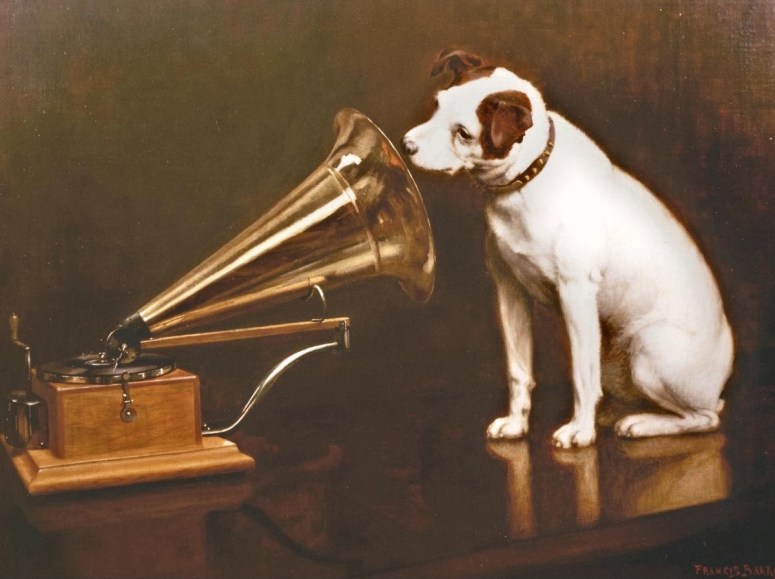
On July 10, 1900, “His Master’s Voice” was registered with the U.S. Patent Office as the trademark for the Victor Recording Company (later known as RCA Victor). The painting of a terrier named Nipper looking into the horn of a phonograph machine is by British artist Francis Barraud.  The image became an icon and one of the most recognized corporate trademarks of the 20th century and beyond.