When He Saw They Were Dead

When He Saw They Were Dead ~ A Short Story by Allen Kopp

(This ghost story I wrote was published in an anthology called Legends: Paranormal Pursuits 2016, by Grey Wolfe Publishing.)

His name was Edgar Delong and in 1921 he was fifteen years old. He had an accident in his sleep and his mother and father wouldn’t stop laughing at him. They called him baby and said he ought to be ashamed of himself. They kept it up all day. Finally he went and got a shotgun they didn’t know he had and, at seven minutes after four in the afternoon, he shot both of them in the chest, his mother first and then his father. When he saw that they were dead, he went up the stairs in the old house to the attic. He found a rope, climbed up on a table and tied one end of the rope to a rafter and the other end around his own neck. After pulling on the rope to make sure it would hold at both ends, he stepped off the table into the void. As he strangled to death he said, “This is the thing I’ve always wanted.”

It was written up in all the newspapers. People loved talking about it, recounting and embellishing all the details. The house where it happened stood vacant for years and was said to be haunted. Weeds grew up in the yard. Small boys threw rocks at the windows. The front porch began to sag. People claimed to hear demonic laughing coming from the house, gunshots and screams.

Finally a man bought the house and fixed the sagging porch, the broken windows, the missing shingles and the peeling paint. He lived with his large family in the house for more than twenty years. Then there were other families after that to put their imprint on the character of the house. The day would come when the only people who remembered Edgar Delong and what he had done were the superannuated.

Edgar Delong still existed, though, in the world the living cannot see. Every day in the house his mother and father laughed at him and every day he went and got the shotgun they didn’t know he had and, at seven minutes after four in the afternoon, shot both of them to death, first his mother and then his father. Every day he heard the startled cry from his mother right before he shot her and the strangled shout from his father. Every day he climbed the creaking old stairs to the attic, tied a rope around his neck and hanged himself. Every day he relived the whole thing, even though he was dead. Every day the same, the days unending.

More than eighty years after the death of Edgar Delong, a writer named Charles Delong rented the house for the summer. He was the grandson of Edgar Delong’s father’s brother and, so, a cousin of Edgar Delong. He had grown up hearing the stories and, when he began researching and writing a book about sensational murders, he knew he had to include a chapter in the book on the Delong double murder and suicide. He believed that by living in the house, if just for a few weeks, he would feel close to Edgar Delong and would understand him a way that no other living person could.

The house proved a wonderful inspiration to Charles Delong. While he didn’t believe in ghosts, he did believe that something of Edgar Delong remained behind in the house. Using newspaper accounts and photos of the day, along with family reminiscences and his own grandfather’s diary, he wrote an inspired and chilling account of the crime, to which he added a personal slant. “I am related by blood to the murderer,” he wrote, “and am writing about his crime in the house in which it occurred.”

He finished his book ahead of schedule and was sure it would be a success. He sent it off to his publisher and began working on his next book, a novel and a complete departure from crime. He still had a couple of weeks on his lease in the Delong house—which technically hadn’t been the Delong house for decades, although he still thought of it in those terms. He stocked up on groceries and planned to spend a quiet time alone.

Except that he wasn’t alone. Edgar Delong, his murderous young cousin, was there in the house with him, watching him, standing behind him, sometimes touching him on the shoulder or the back of the head. Edgar Delong would make himself known to Charles Delong when he believed the time was right.

The house had a soporific effect on Charles Delong. He took to taking naps on the couch in the afternoon, hearing only the ticking of the clock, the wind outside rustling the trees or the faraway barking of a dog. One afternoon during one of these naps he was made to see the thing that happened every day at seven minutes after four. He thought he was dreaming as he saw Edgar Delong emerge from the back of the house bearing a shotgun and walk with it toward his parents as they sat in the room they called the parlor. His mother drew back instinctively and gave a startled cry when Edgar shot her. His father began to stand up and emitted a strangled shout as the bullet entered his chest.

After he had killed them both, Edgar Delong turned to his cousin Charles Delong and said, “It’s always the same.”

Still believing he was dreaming, Charles Delong said, “I don’t understand.”

“Every day the same. They laugh at me and I keep killing them but I can’t make them stop.”

“None of this is real,” Charles Delong said. “You’re a figment. You don’t exit.”

“Maybe it’s a figment to you. To me it’s real and I can’t stop. I want to stop. I want you to help me to stop.”

“How can I do that?”

“Let me come into your body so I can have the means to leave this house.”

“No, I would never do that! It’s impossible!”

“I can make you see it every day. Live it every day. As I do.”

“No, it’s out of the question!”

“You wanted to know what it was like to be me.”

“You’re a murderer. I don’t want to be you.”

“We’re cousins. We’re the same blood.”

“No!”

“I’m going up to the attic now and hang myself, as I have thousands of times before. I want you to come along and watch.”

“No!”

“I think we’ve reached the point where there’s no longer a choice,” Edgar Delong said and raised the gun and shot his cousin Charles Delong squarely in the chest.

The body of Charles Delong wasn’t found for five days. When the police were called in to investigate and were unable to find a murder weapon or a motive, they deduced that the murderer was somebody that Charles Delong knew and had willingly admitted to the house.

And so it continued. Every day at seven minutes after four in the afternoon, Edgar Delong shot and killed first his mother and then his father, after which he climbed the stairs to the attic and hanged himself from a rafter. The only difference now was that he had his cousin Charles Delong there to experience the whole thing with him. Without end and ad infinitum. 

Copyright © 2017 by Allen Kopp
Fatty’s in Trouble

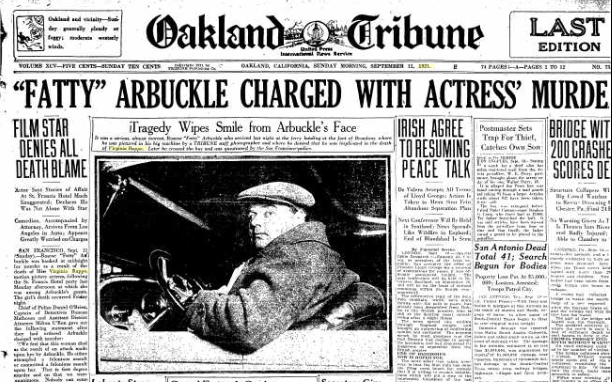
Silent film comedian Roscoe “Fatty” Arbuckle was at the top of his profession. He was the first movie star to make a million (tax-free) dollars a  year. His world came crashing down on a September day in 1921. At a party he threw in a San Francisco hotel room, a party girl and would-be actress named Virginia Rappe was injured and died a couple of days later. People said that Fatty raped her and, because he was so heavy, ruptured her bladder, leading to peritonitis. Fatty became the symbol for all that was corrupt in Hollywood. People were ready to believe the worst of him without finding out what really happened. The story became a nationwide sensation. Innuendo and rumor became accepted as fact, just as they are today. Fatty was eventually cleared by a jury in his third trial, but his career was essentially over. Motion picture distributors and exhibitors wanted nothing more to do with him. His name was tainted by scandal. He died in his mid-forties, some said of a broken heart. 

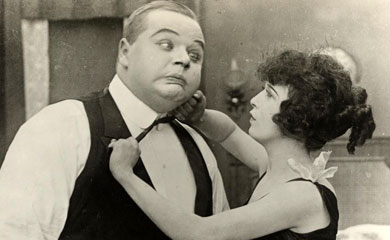
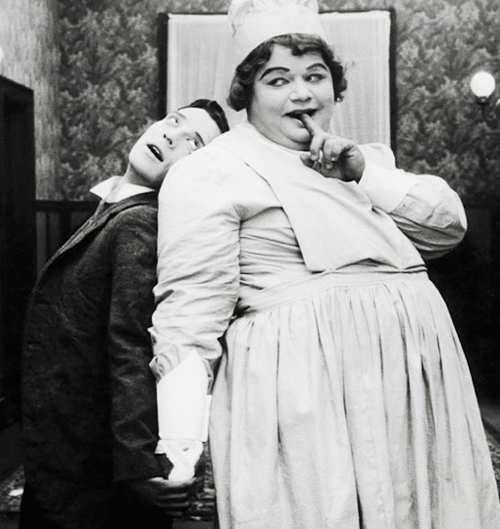
Fatty Arbuckle and his frequent costar, Miss Mabel Normand.

Losing Battles ~ A Capsule Book Review

Losing Battles ~ A Capsule Book Review by Allen Kopp

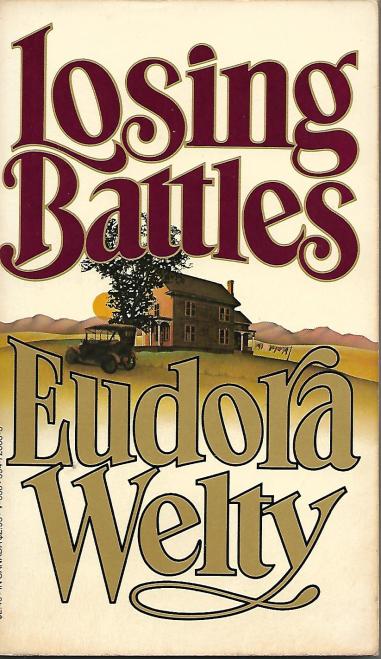
It’s Granny Vaughn’s ninetieth birthday. Her large Mississippi family has gathered on a hot Sunday in August to mark the occasion. It’s the Depression era, 1930s, and nobody has much money, but Beulah Renfro, Granny Vaughn’s granddaughter, spreads a sumptuous meal for the hundred or so attendees. They eat like it’s going out of style.

Jack Jordan Renfro is the star of the reunion. He has plenty of aunts, uncles, cousins—besides his parents, his sisters and his granny—to fawn over him. He just got out of the penitentiary. We learn that he escaped the day before he was supposed to be released because he didn’t want to miss granny’s birthday celebration. He also has a wife named Gloria and a baby daughter, Lady May. Gloria was his schoolteacher he married before he went into the penitentiary. Gloria was an orphan child; nobody knows for sure who her parents were. One of the surprising things that’s revealed during the reunion is that she and Jack might be first cousins.

There are some surprise guests at the reunion, some old-time preaching, some arguing and much laughter, but, more than anything, there’s talk: talk about how Jack came to be sent to the penitentiary; talk of an old-maid schoolteacher, Miss Julia Mortimer, who has just died and whose funeral will be the day after the reunion; almost everybody at the reunion went to school to Miss Julia and they have stories to tell of her hardness and her dedication to teaching. There’s also talk of hard times and good times and bad times, births and deaths. Everybody likes to talk and they all have much to say.

Losing Battles is an unconventional novel because it takes place all in one day and part of the next day, which means there isn’t much story or plot. Get a hundred people from your family together for one day and then write down everything they say and do during that one day, and you’ll know what I mean. It’s an interesting book because of its setting (the South during the 1930s) and because it was written by a venerated American writer (her last novel), but it could have been more interesting if the action had been opened up a little bit, making the story less static.

Copyright © 2017 by Allen Kopp
The Bride of Frankenstein (1935)

 ~ The Bride of Frankenstein ~

“The Monster demands a mate!” 

Made in 1935, starring Boris Karloff, Elsa Lanchester, Colin Clive, Valerie Hobson, Ernest Thesiger, Dwight Frye. Directed by James Whale. 

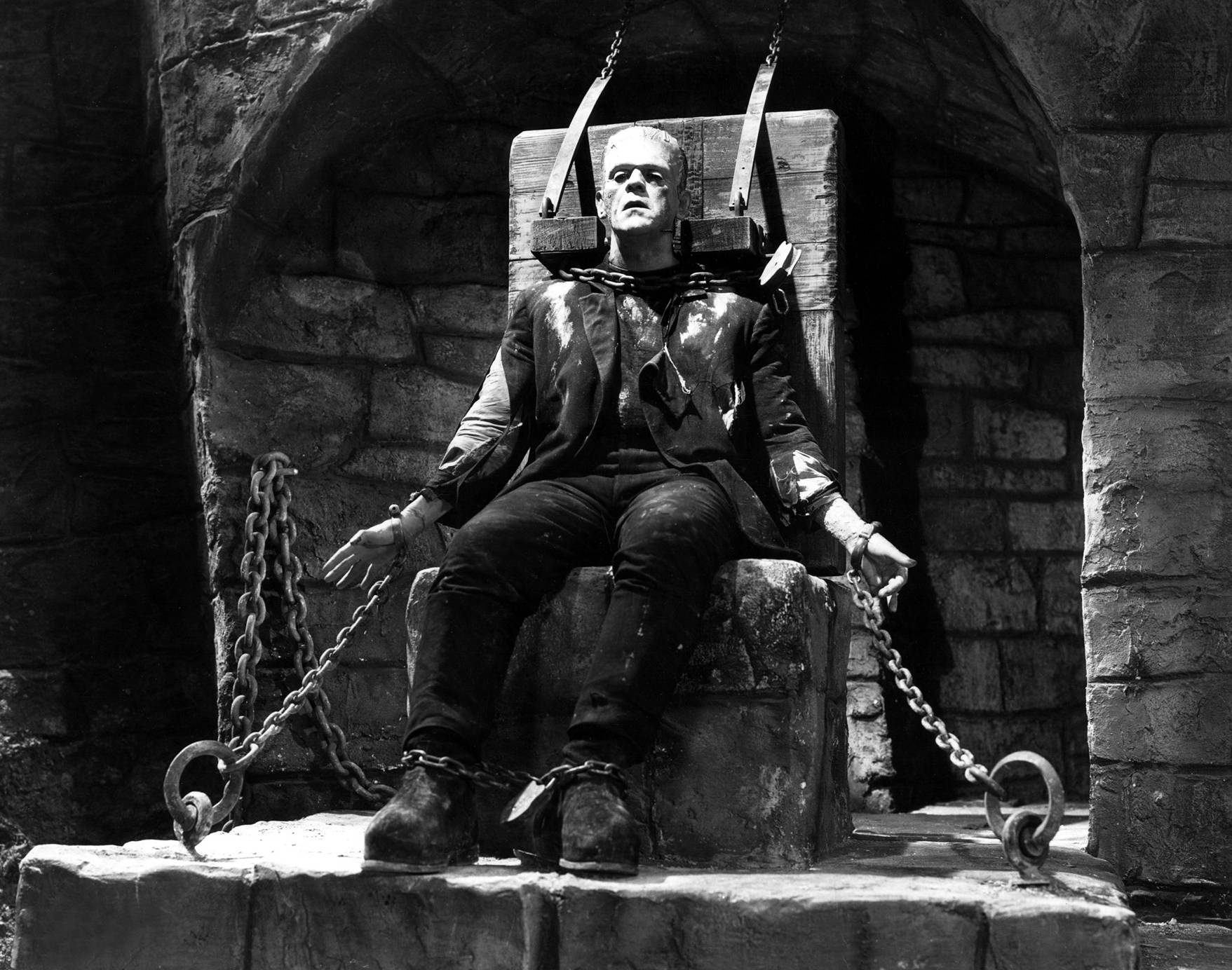
Boltneck
Mr. Boltneck
Yes, he's horrible, but he's also lonely.
Yes, he’s horrible, but he’s also lonely.
He lives in a castle on a lonely mountaintop.
Those two brilliant mad scientists put their mad brains together and decide the monster needs a mate.
Those two brilliant mad scientists, Dr. Pretorius and Dr. Victor Frankenstein, put their mad brains together and decide the monster needs a mate.
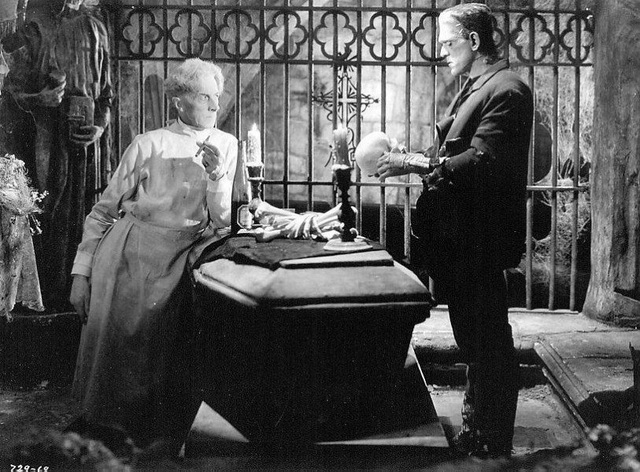
Dr. Pretorius and the monster confer in the crypt about a suitable candidate for the monster's mate.
Dr. Pretorius and the monster confer in the crypt about a suitable candidate.
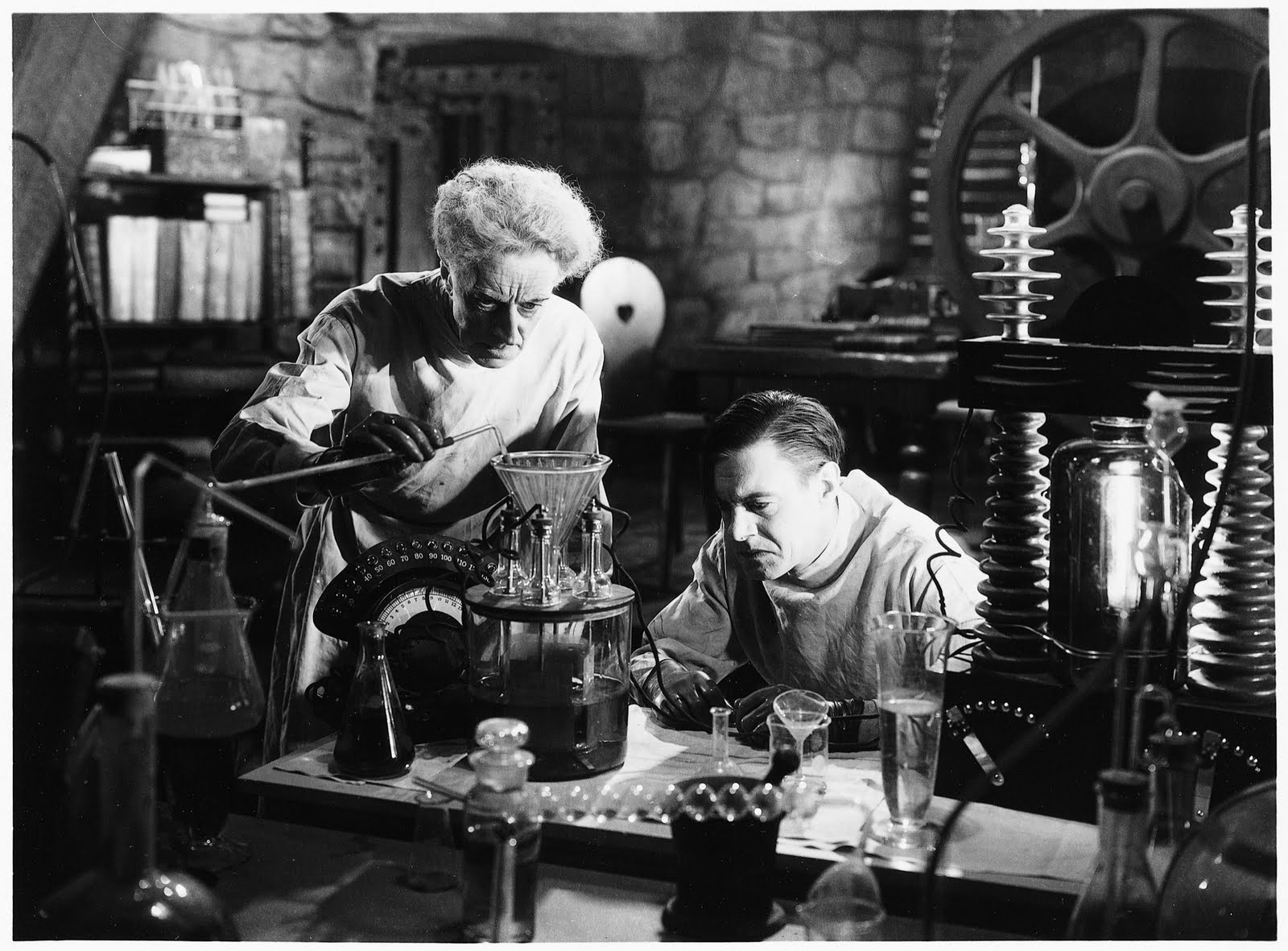
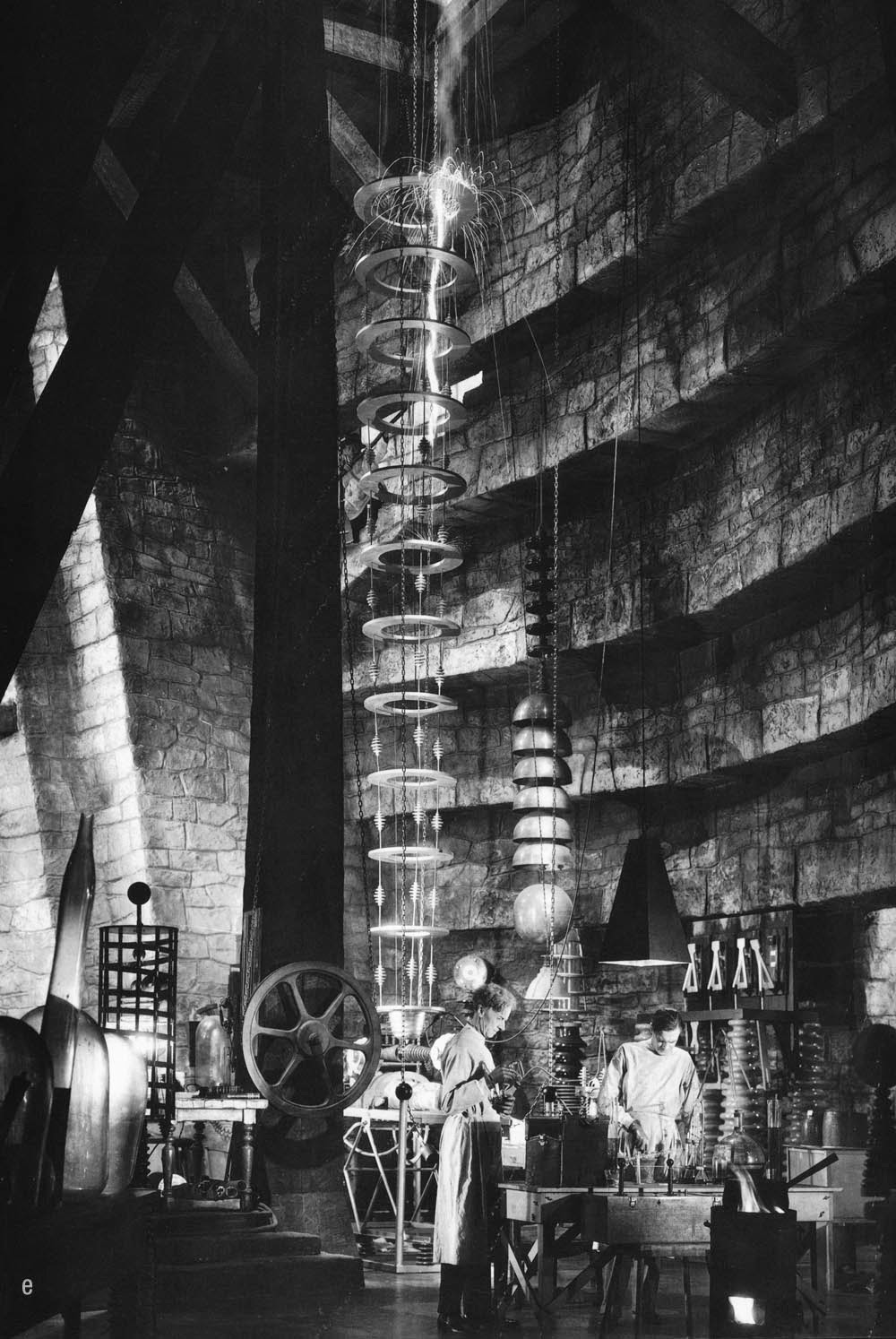
The mad scientists at work.
Dr. Pretorius and Dr. Frankenstein at work.
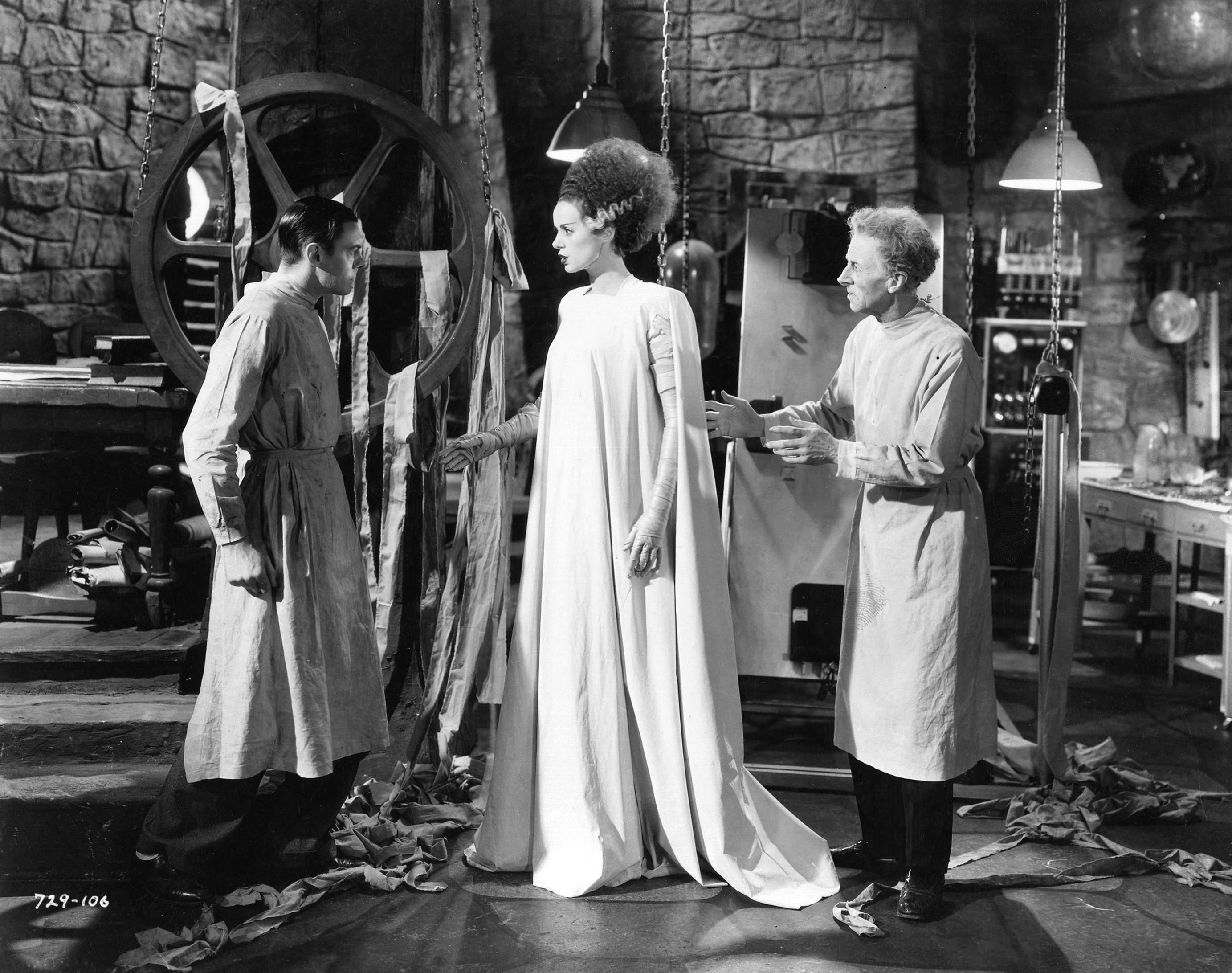
Finally, after much work, the finished product. Only two mad scientists could make a woman look like that.
I'm afraid she's going to be difficult.
I’m afraid she’s going to be difficult.
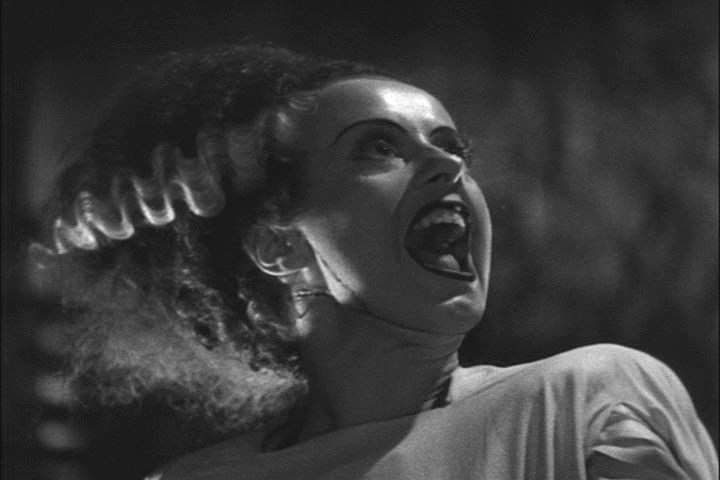
You can't help falling in love with her, though.
You can’t help falling in love with her, though.

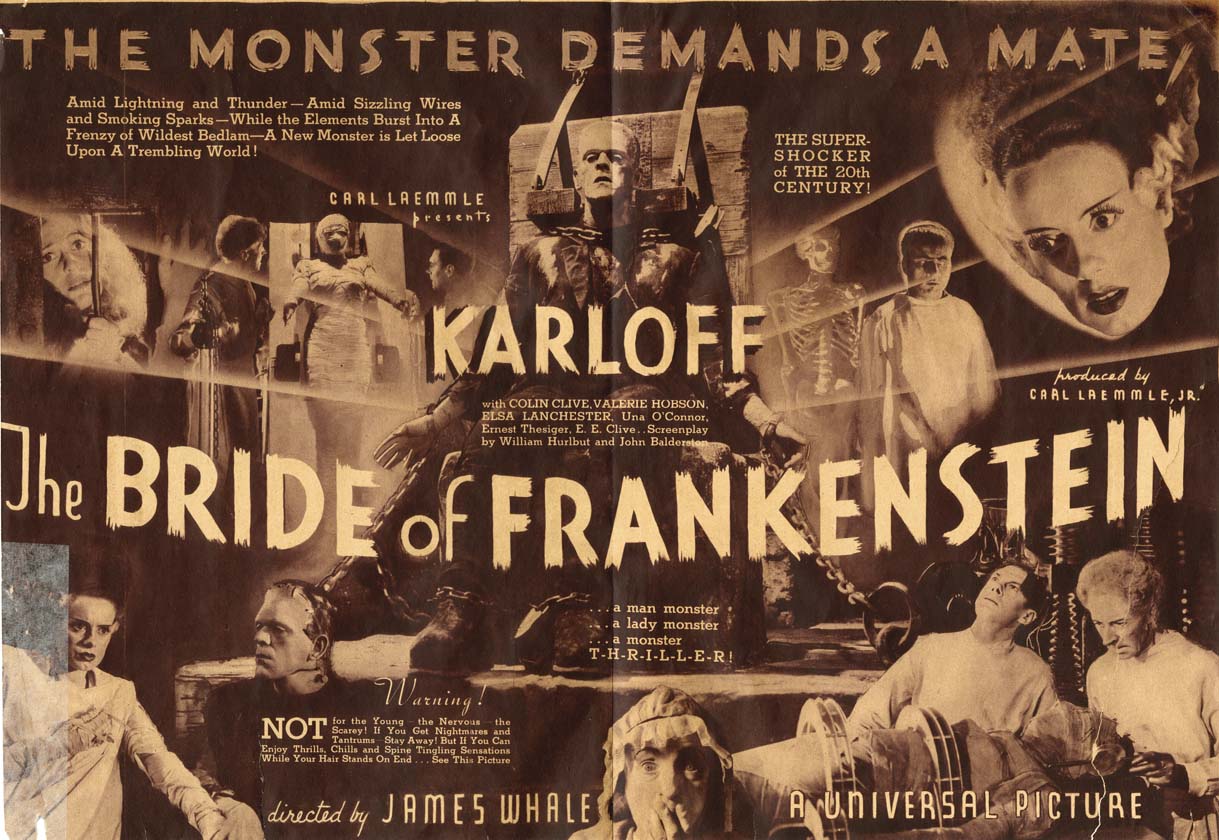
Bride of Frankenstein original poster


Blade Runner 2049 ~ A Capsule Movie Review

Blade Runner 2049 ~ A Capsule Movie Review by Allen Kopp

The 1982 sci-fi classic Blade Runner is notable for its spectacular futuristic vistas, its haunting music score and brooding tone. You probably know (or maybe you don’t) that the story in Blade Runner is about those delightful synthetic humans called “replicants” that are so close to being real that nobody can tell them apart. Replicants were manufactured as a disposable work force, but, only trouble is, they were so highly evolved that they developed a will of their own, staged an insurrection, and murdered a lot of real humans, after which the manufacture of replicants was banned. (We saw this same premise used, but not as effectively, in the HBO television series Westworld.)

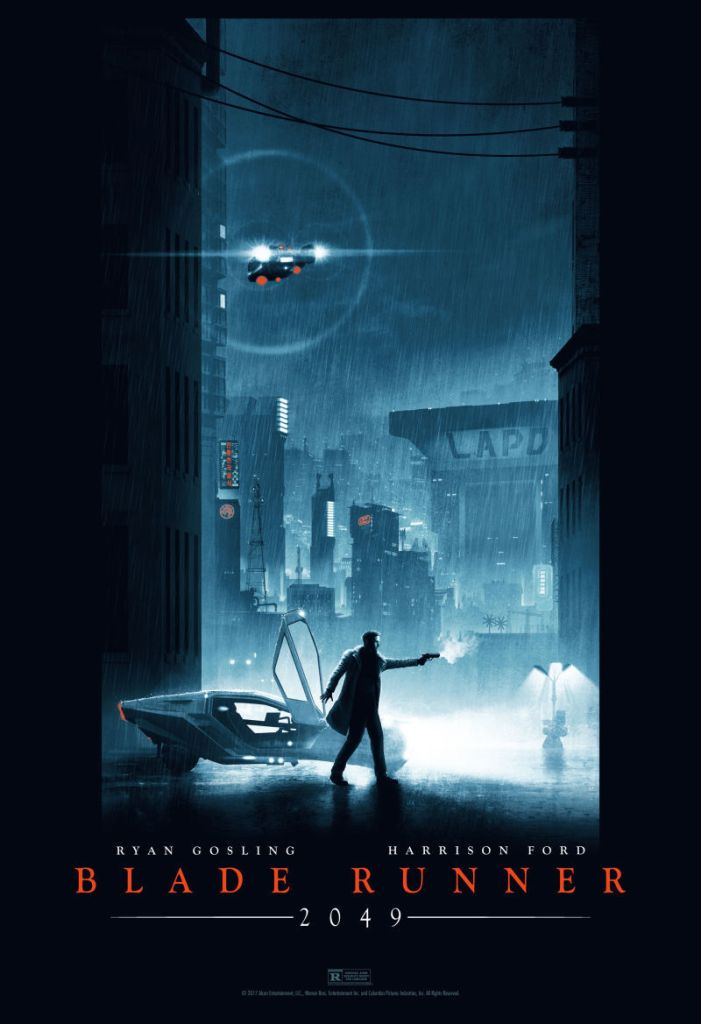
Now, thirty-five years later (can it really be that long?), there is Blade Runner 2049, a sequel, of sorts, to the earlier movie. The main character is called K (played by Ryan Gosling). He doesn’t have a name because he is himself a replicant, but he’s the good kind, not the kind that goes around murdering humans. K is a Blade Runner, meaning it’s his job to hunt down and kill the replicants that are still living and walking in the world, disguising themselves as real people. K is so human-like that he has human emotions. This is going to get him into trouble.

Before the production of replicants was banned all those years earlier, the mad scientists who made them added a new wrinkle: a replicant woman was able to mate with a human man and have a child, which is exactly what happened. Remember the character Deckard (Harrison Ford) from the 1982 Blade Runner movie? At the end of that movie, he fell in love with a replicant named Rachel and absconded with her. It turns out that Rachel was one of those replicants who could have a baby with a human father. Well, we find out in Blade Runner 2049 that, not only did Rachel have a baby by Deckard, she had twins, a boy and a girl, after which Deckard disappeared. Can K be the half-human/half-replicant boy that was born to Rachel and Deckard thirty years earlier? If he is, where is the twin sister? What happened to her?

In Blade Runner 2049, K spends a lot of time literally flying around in these futuristic cityscapes to a pounding (heavy on the kettle drums) music score, looking for pieces to the mystery that consumes him. Holograms are very popular in this world. There are holograms of Elvis Presley, Liberace and Frank Sinatra, and holograms just about every place else, including a fifty-foot-tall, pink, naked lady with blue hair by the side of the road who promises that you will see everything you want to see and hear everything you want to hear. Oh, and one of the most prominent features of this world is that it’s dark all the time and rainy because, well, the atmosphere has been messed up.

There’s lots of information thrown at the audience in Blade Runner 2049, maybe too much, which makes the story murky at times. (For example, what do the beehives mean?) The writing could have been tighter and the length could have been shortened by thirty or forty minutes. Otherwise, it’s a wild sci-fi trip to a dystopian future world that you might have to see more than once to absorb everything in it.

Copyright © 2017 by Allen Kopp